Answer Court Motion For Summary Judgment
Description
Get your form ready online
Our built-in tools help you complete, sign, share, and store your documents in one place.
Make edits, fill in missing information, and update formatting in US Legal Forms—just like you would in MS Word.
Download a copy, print it, send it by email, or mail it via USPS—whatever works best for your next step.
Sign and collect signatures with our SignNow integration. Send to multiple recipients, set reminders, and more. Go Premium to unlock E-Sign.
If this form requires notarization, complete it online through a secure video call—no need to meet a notary in person or wait for an appointment.
We protect your documents and personal data by following strict security and privacy standards.

Make edits, fill in missing information, and update formatting in US Legal Forms—just like you would in MS Word.

Download a copy, print it, send it by email, or mail it via USPS—whatever works best for your next step.

Sign and collect signatures with our SignNow integration. Send to multiple recipients, set reminders, and more. Go Premium to unlock E-Sign.

If this form requires notarization, complete it online through a secure video call—no need to meet a notary in person or wait for an appointment.

We protect your documents and personal data by following strict security and privacy standards.
Looking for another form?

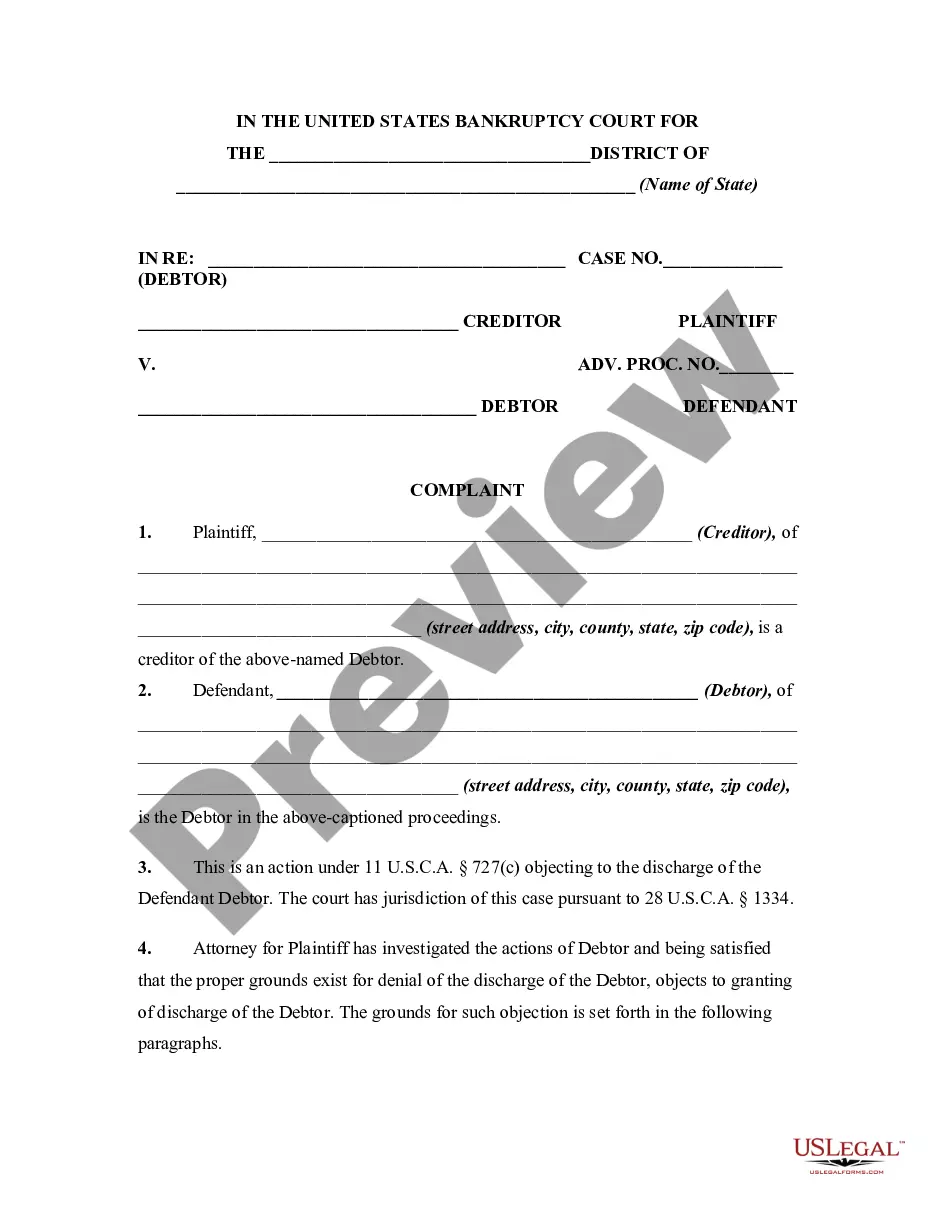




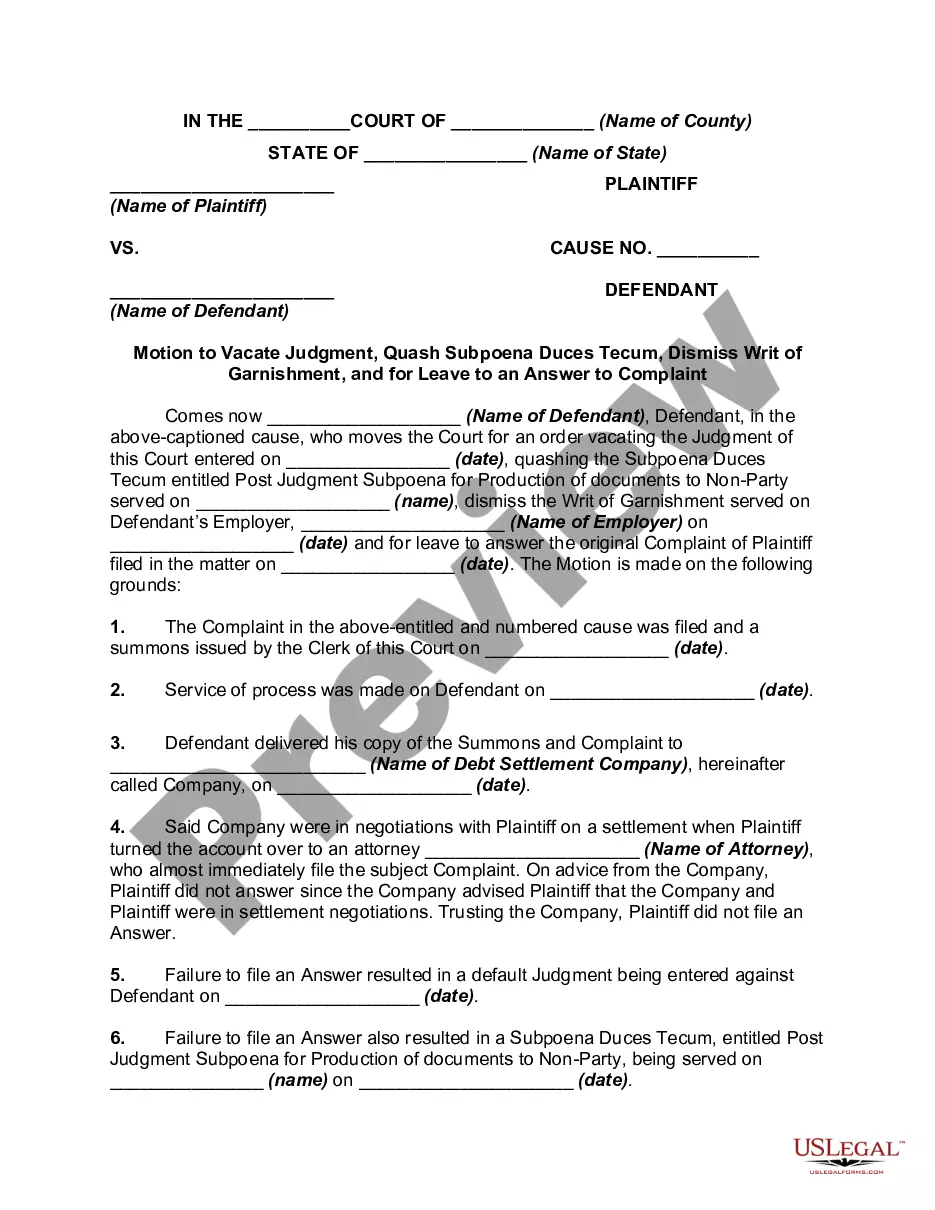
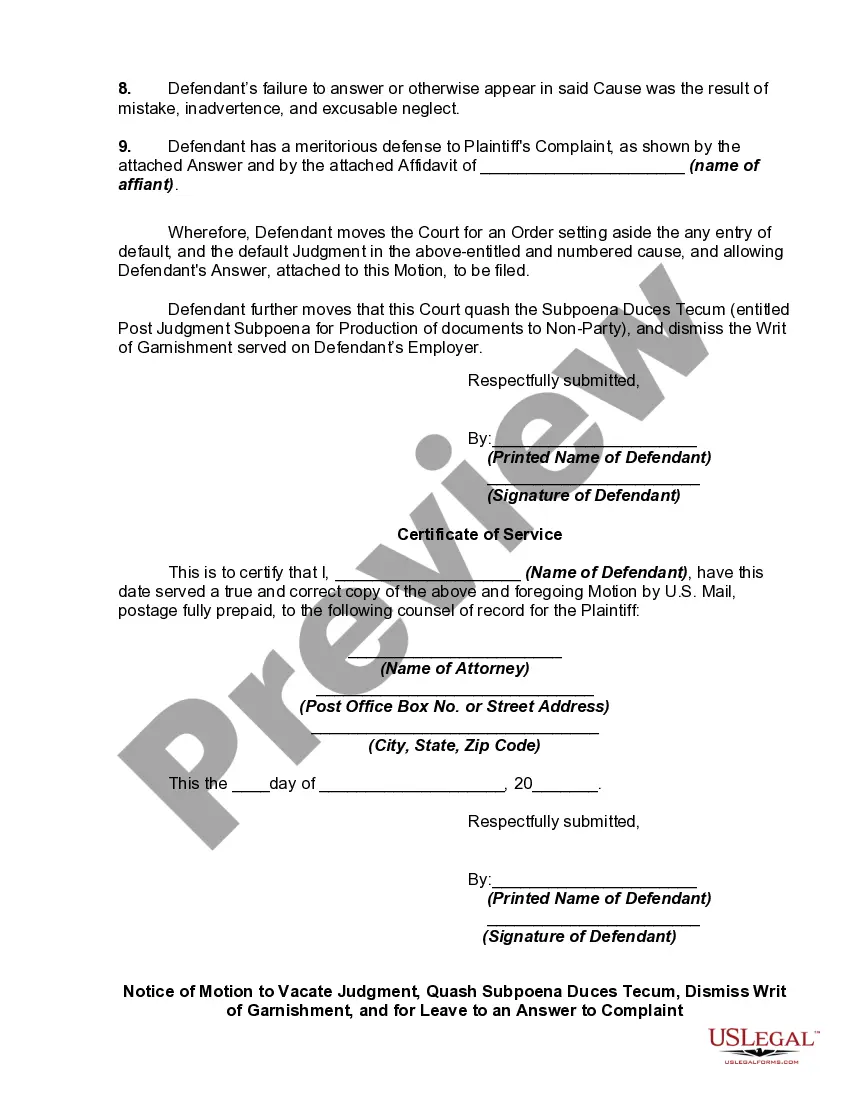
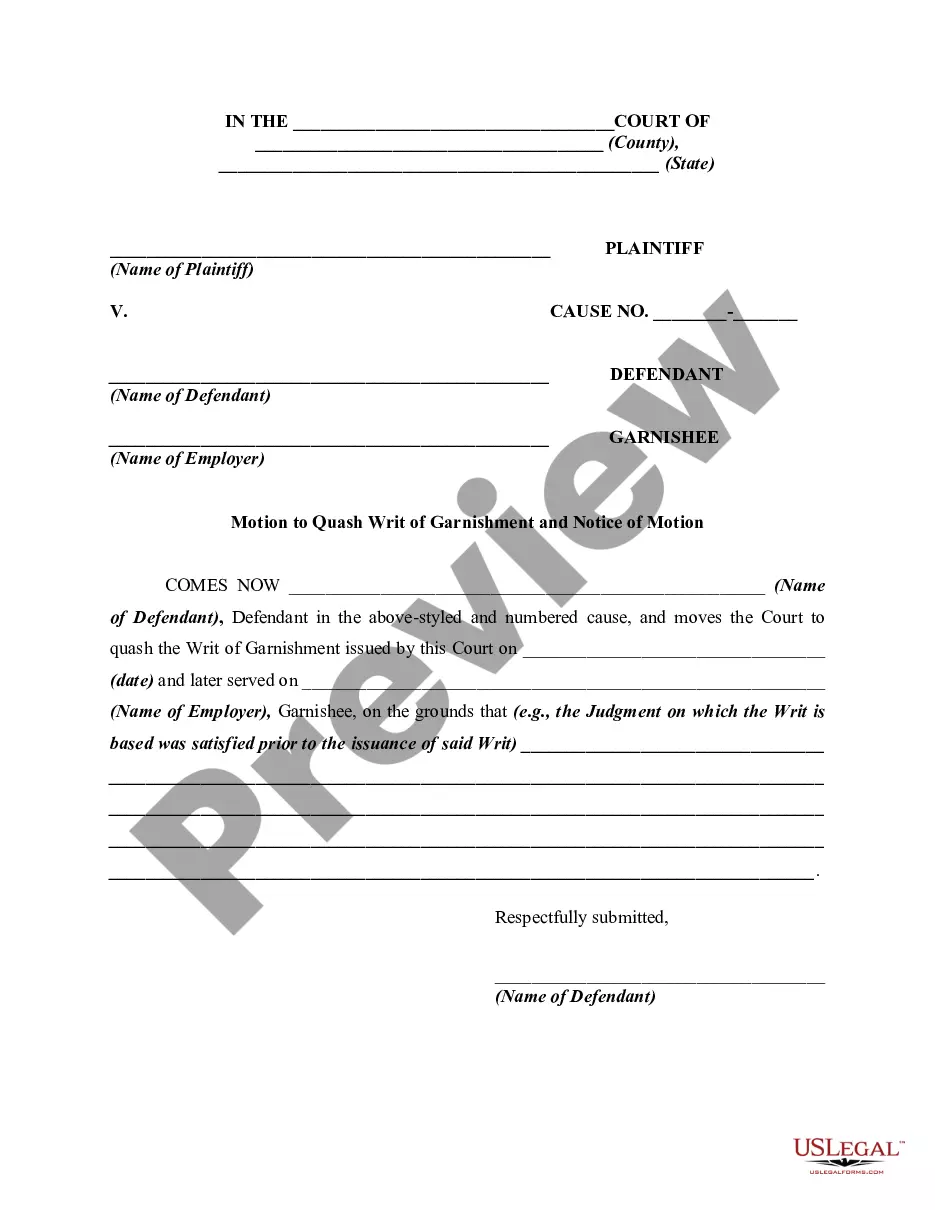
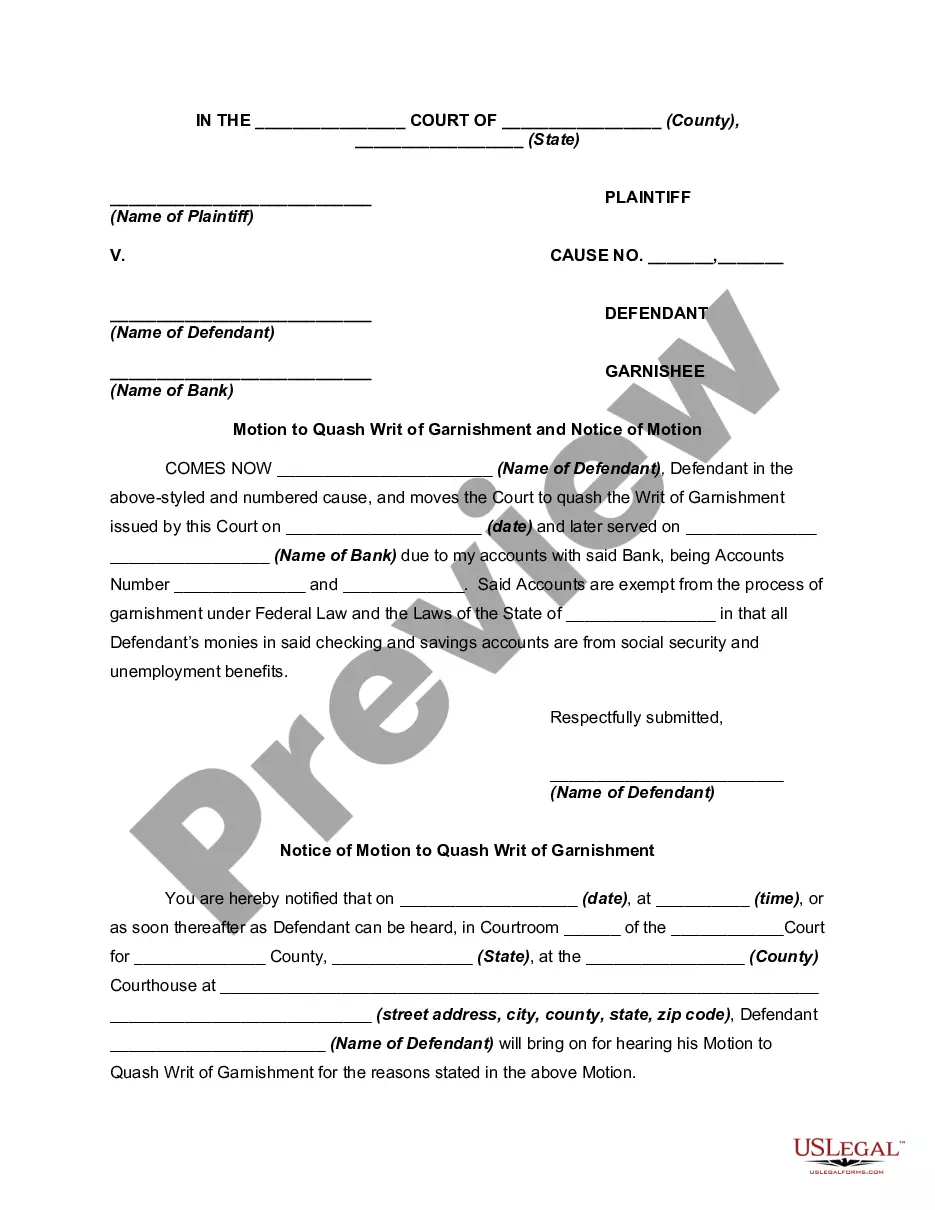
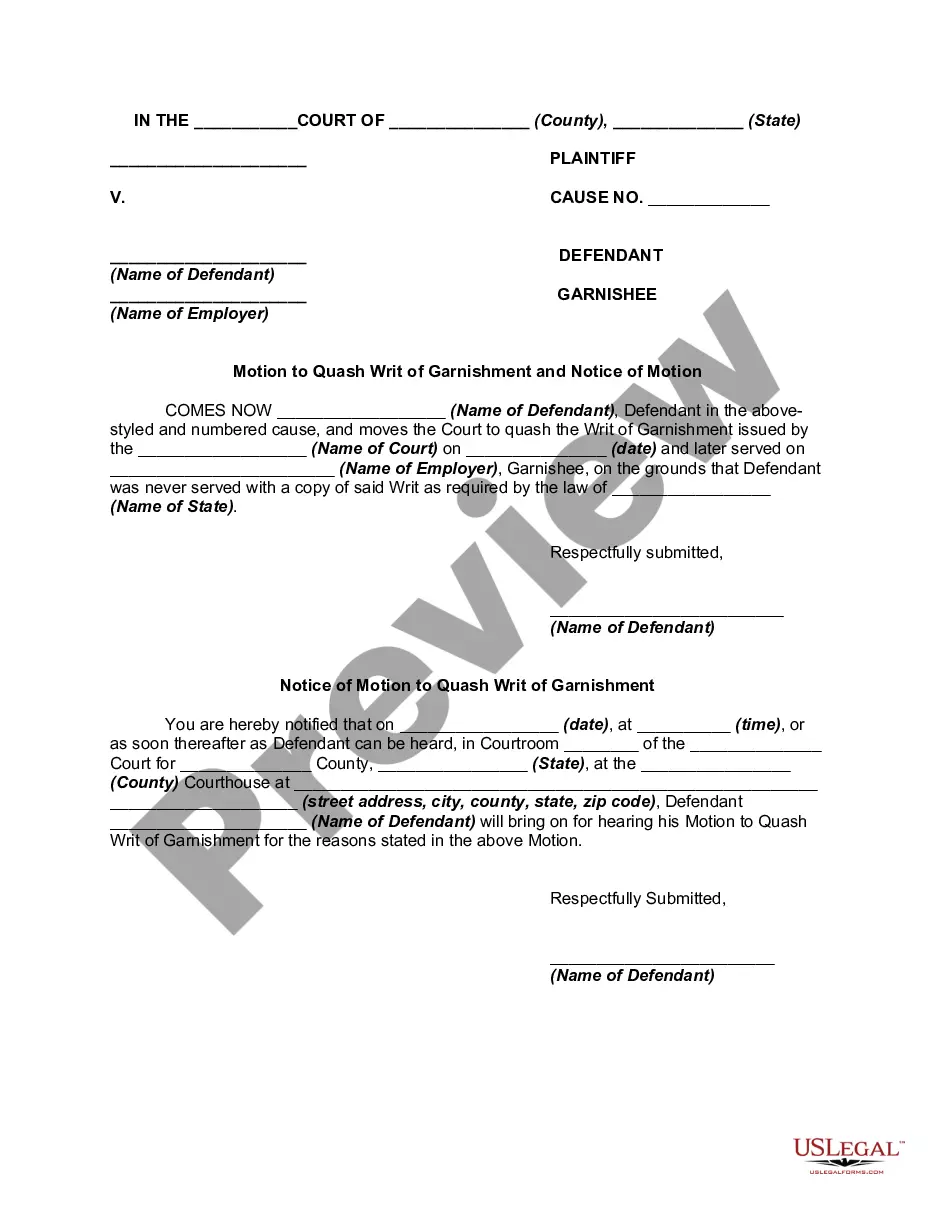
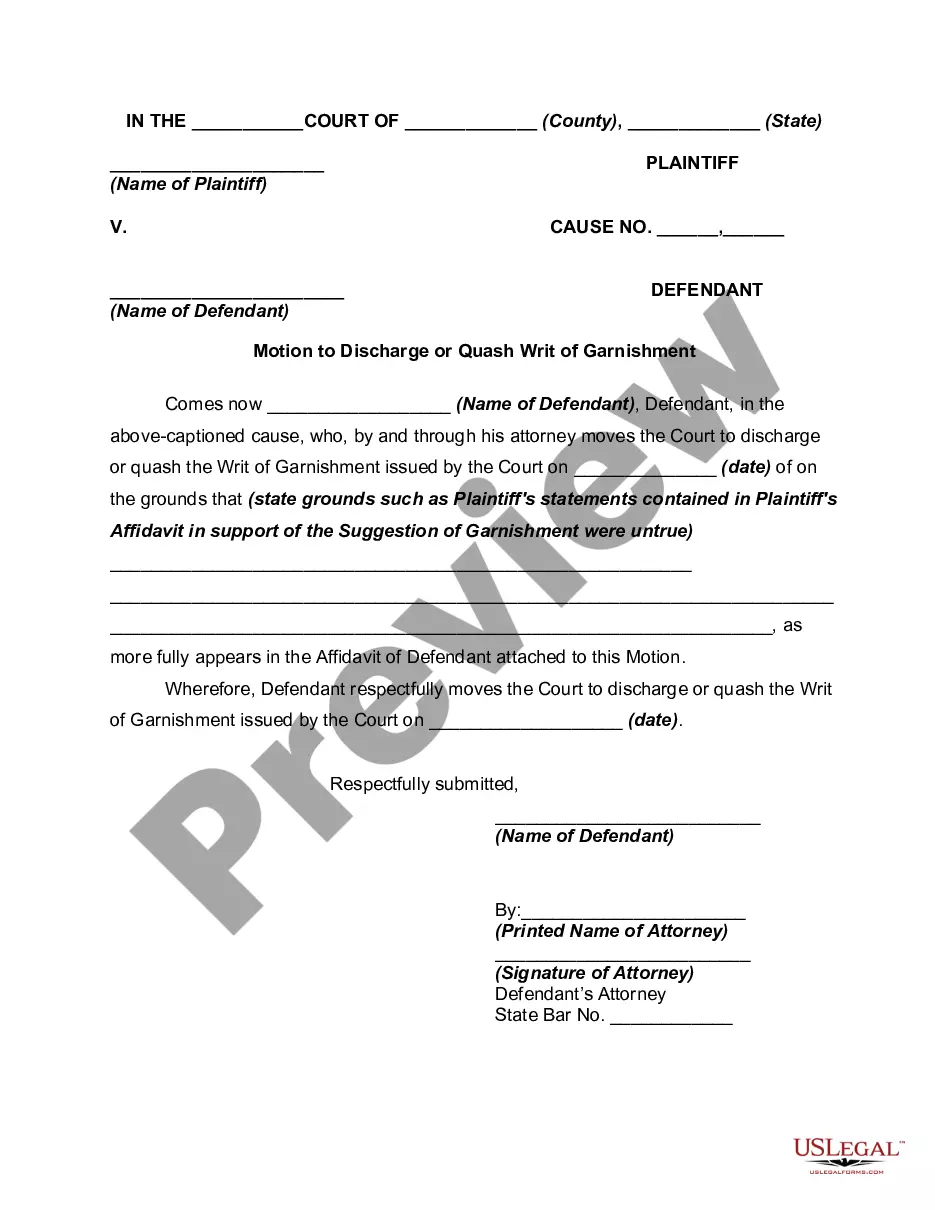
How to fill out Motion To Vacate Judgment, Quash Subpoena Duces Tecum, Dismiss Writ Of Garnishment, And For Leave To File An Answer To Complaint?
The Response Court Motion For Summary Judgment you observe on this page is a versatile legal template crafted by experienced attorneys in accordance with federal and local statutes and regulations.
For over 25 years, US Legal Forms has supplied individuals, entities, and legal professionals with more than 85,000 certified, state-specific forms for any business and personal situation. It’s the quickest, simplest, and most trustworthy way to acquire the documents you require, as the service ensures the utmost level of data confidentiality and antivirus protection.
Subscribe to US Legal Forms to have validated legal templates for all of life's circumstances at your fingertips.
- Search for the document you need and assess it.
- Examine the file you looked for and preview it or review the form description to verify it meets your requirements. If it doesn’t, utilize the search feature to find the suitable one. Click Buy Now when you have located the template you need.
- Subscribe and Log In.
- Select the pricing plan that fits you and create an account. Use PayPal or a credit card to make a quick payment. If you already possess an account, Log In and check your subscription to proceed.
- Obtain the editable template.
- Choose the format you prefer for your Response Court Motion For Summary Judgment (PDF, Word, RTF) and download the sample to your device.
- Complete and sign the document.
- Print the template to fill it out by hand. Alternatively, use an online multifunctional PDF editor to quickly and accurately complete and sign your form.
- Download your documents again.
- Reuse the same document whenever necessary. Access the My documents tab in your profile to redownload any previously saved forms.
Form popularity
FAQ
When responding to a request for summary judgment, it is vital to evaluate the arguments made and prepare a structured opposition. You should present evidence showcasing that a factual dispute exists. A well-prepared response to your court motion for summary judgment can significantly impact the judge's decision.
The odds of winning a summary judgment depend on the strength of your evidence and legal arguments. Generally, courts grant summary judgment when there is no genuine dispute of material fact. To confidently answer your court motion for summary judgment, it's essential to have a robust case supported by clear evidence.
-- A motion for summary judgment may be brought before either a master or a judge ?at the option of the moving party? (para 2). In the circumstances specified under r. 20.04(4), a motion brought before a master may be adjourned to be heard by a judge who can exercise those powers.
Examples of summary judgement motions John says that Linda ran a red light and caused the crash. John happens to have a video of Linda running the red light and crashing into him. John's attorney files a motion for summary judgment claiming that: There are no material facts that can be reasonably disputed.
In a summary judgment, one party may contend there are no facts that need to be decided, or the parties may agree on what the facts are. Either side (and sometimes both sides) may bring a motion for summary judgment arguing that they are entitled to a judgment in their favor without a trial.
The chance of success in these cases is less than 10% [1]. Another study found that summary judgment is mostly granted in Title VII cases, for example, cases involving equal pay or employment discrimination [2]. When it comes to federal cases, summary judgments are filed in 17% of total cases.
Stated differently, to successfully defend against summary judgment the non-moving party (you) should seek to demonstrate that indeed there are material facts in dispute. Alternatively, the non-moving party (you) can argue that the undisputed facts support a judgment as a matter of law in your favor.