Foreclosure Excess Proceeds Formula
Description
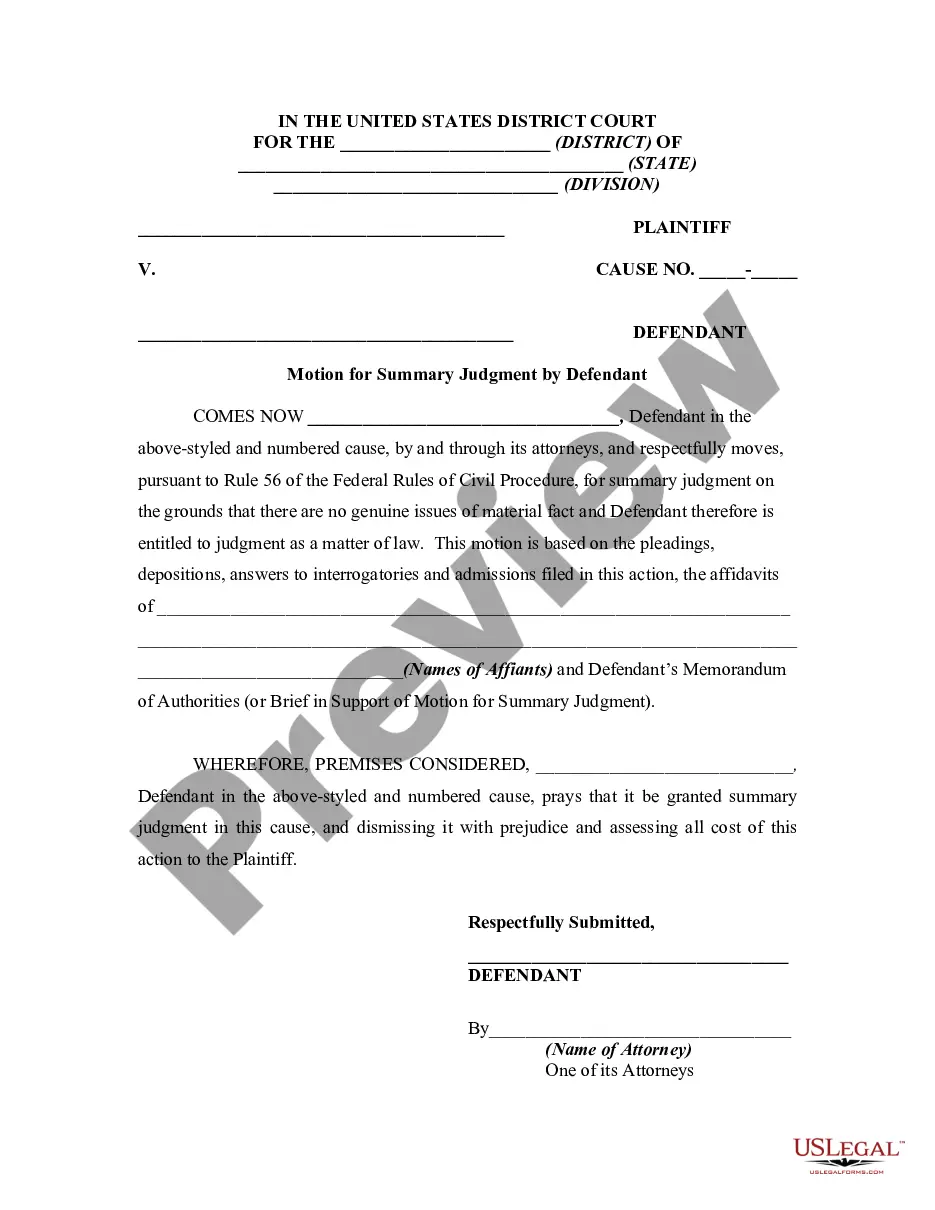
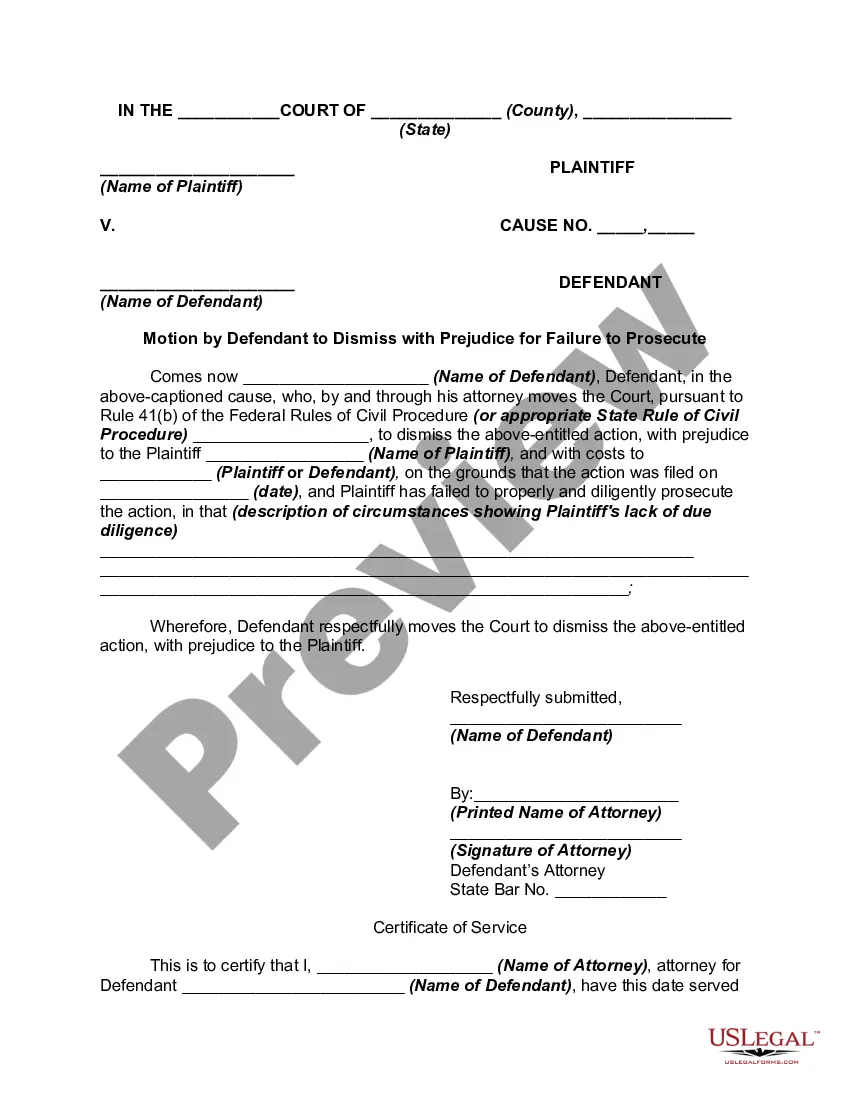
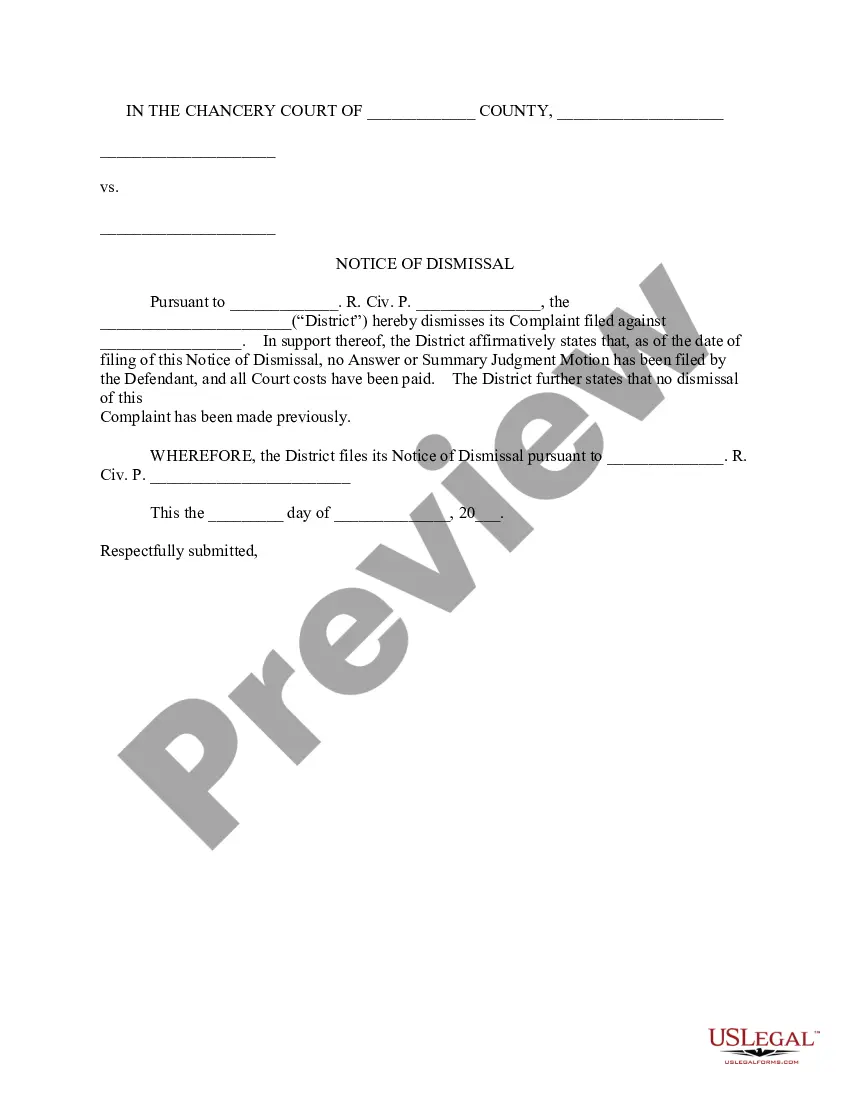
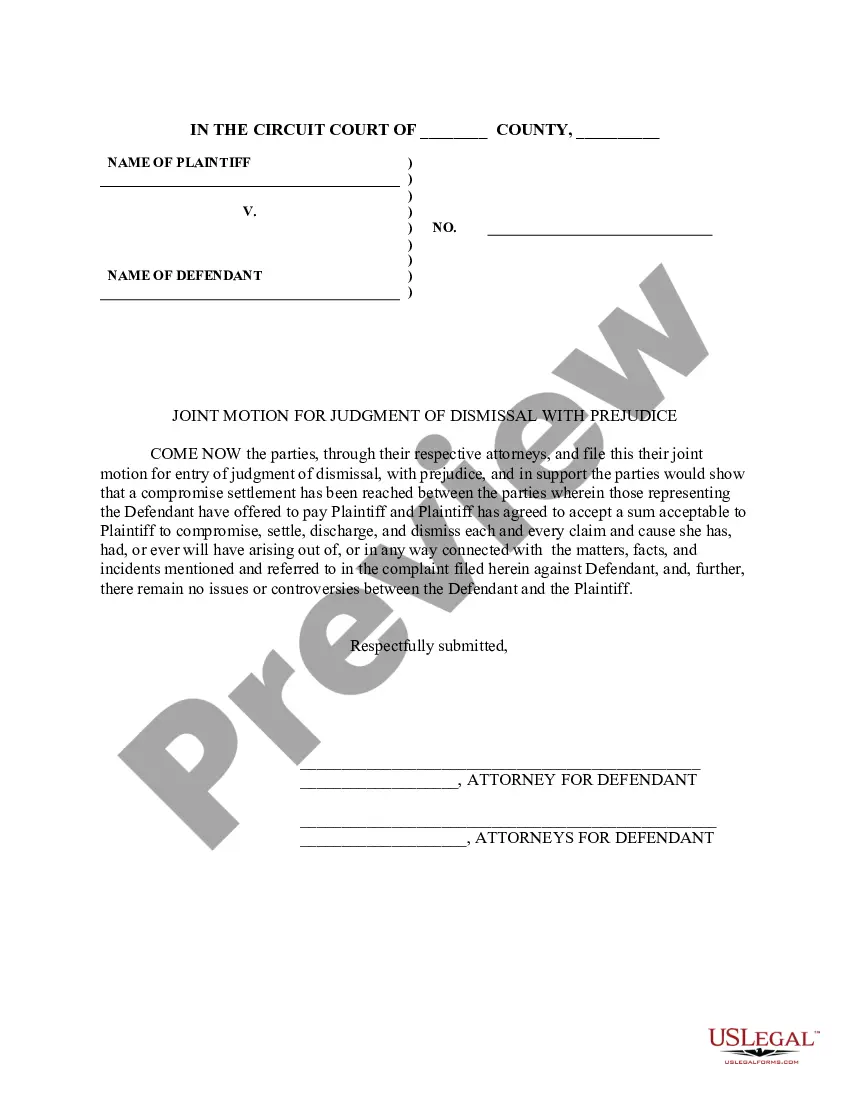
Get your form ready online
Our built-in tools help you complete, sign, share, and store your documents in one place.
Make edits, fill in missing information, and update formatting in US Legal Forms—just like you would in MS Word.
Download a copy, print it, send it by email, or mail it via USPS—whatever works best for your next step.
Sign and collect signatures with our SignNow integration. Send to multiple recipients, set reminders, and more. Go Premium to unlock E-Sign.
If this form requires notarization, complete it online through a secure video call—no need to meet a notary in person or wait for an appointment.
We protect your documents and personal data by following strict security and privacy standards.

Make edits, fill in missing information, and update formatting in US Legal Forms—just like you would in MS Word.

Download a copy, print it, send it by email, or mail it via USPS—whatever works best for your next step.

Sign and collect signatures with our SignNow integration. Send to multiple recipients, set reminders, and more. Go Premium to unlock E-Sign.

If this form requires notarization, complete it online through a secure video call—no need to meet a notary in person or wait for an appointment.

We protect your documents and personal data by following strict security and privacy standards.
Looking for another form?



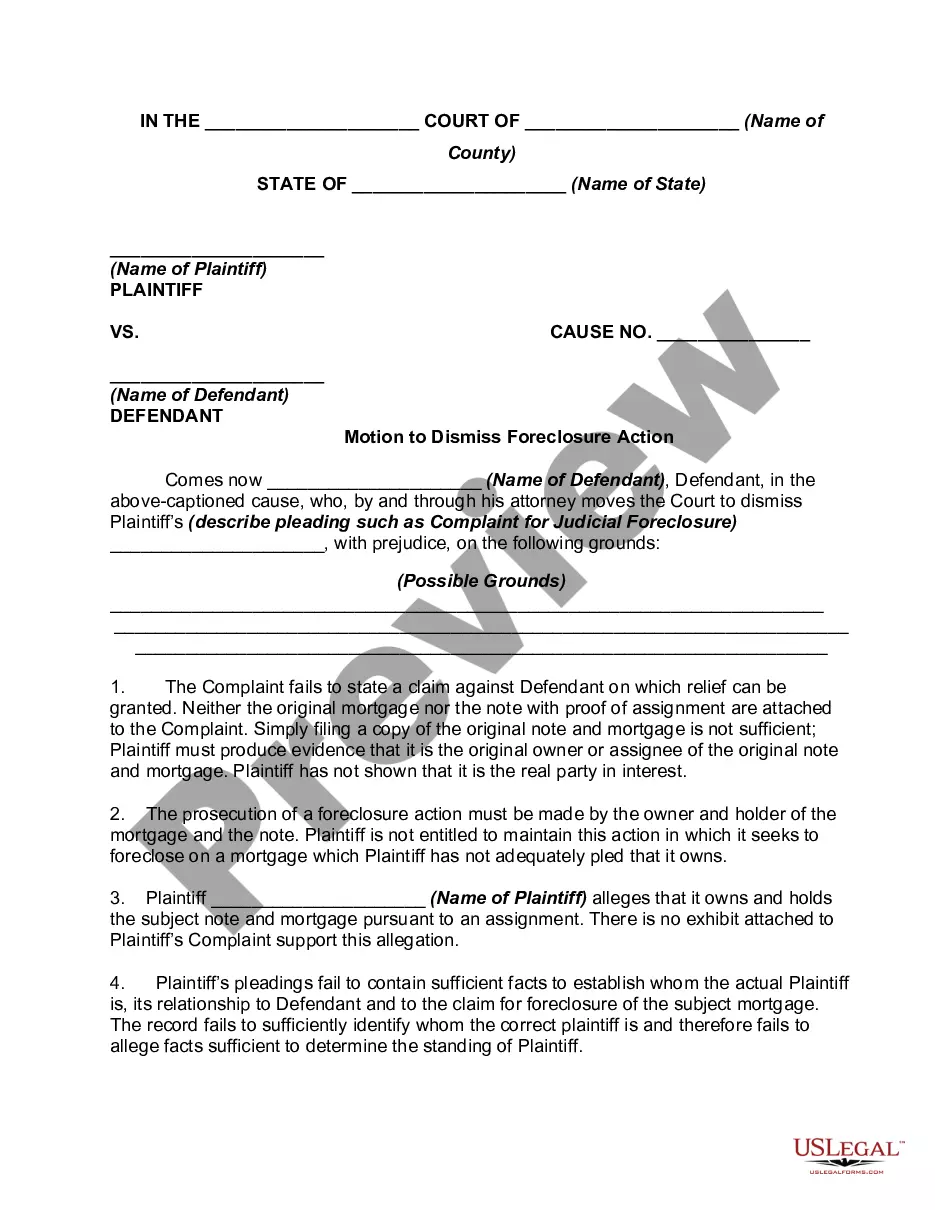
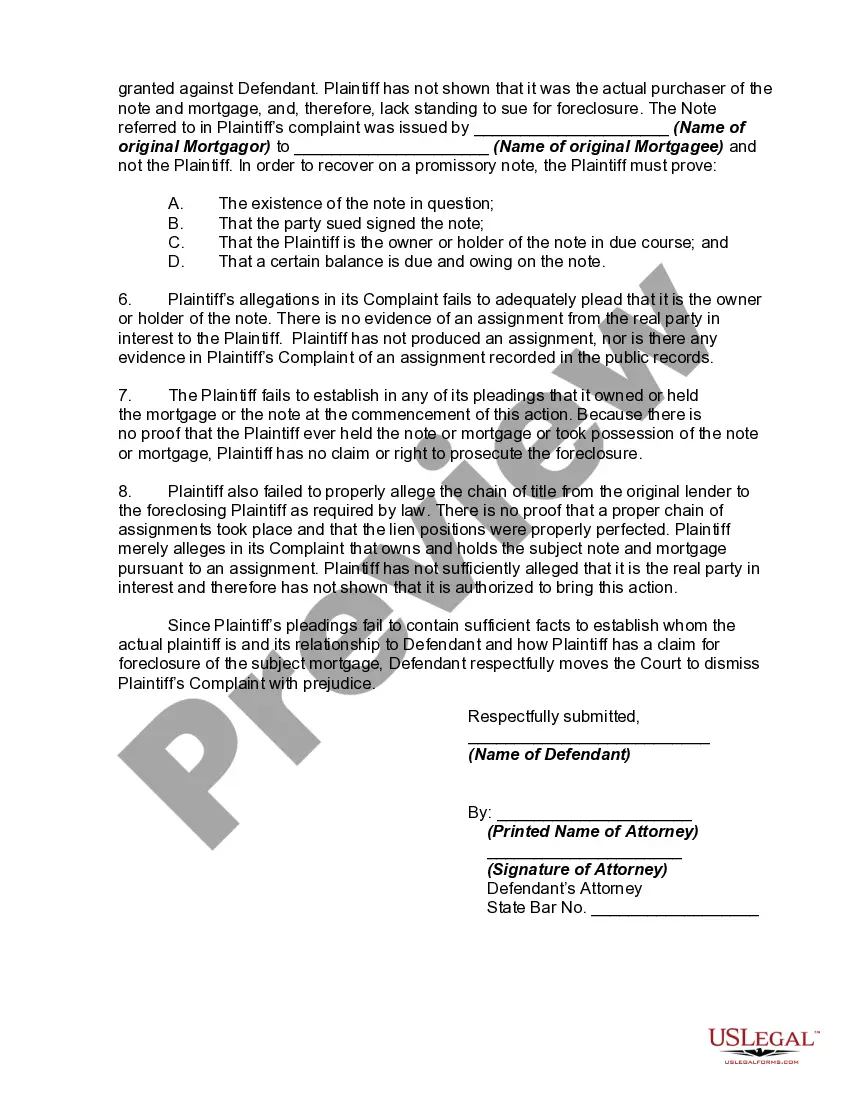
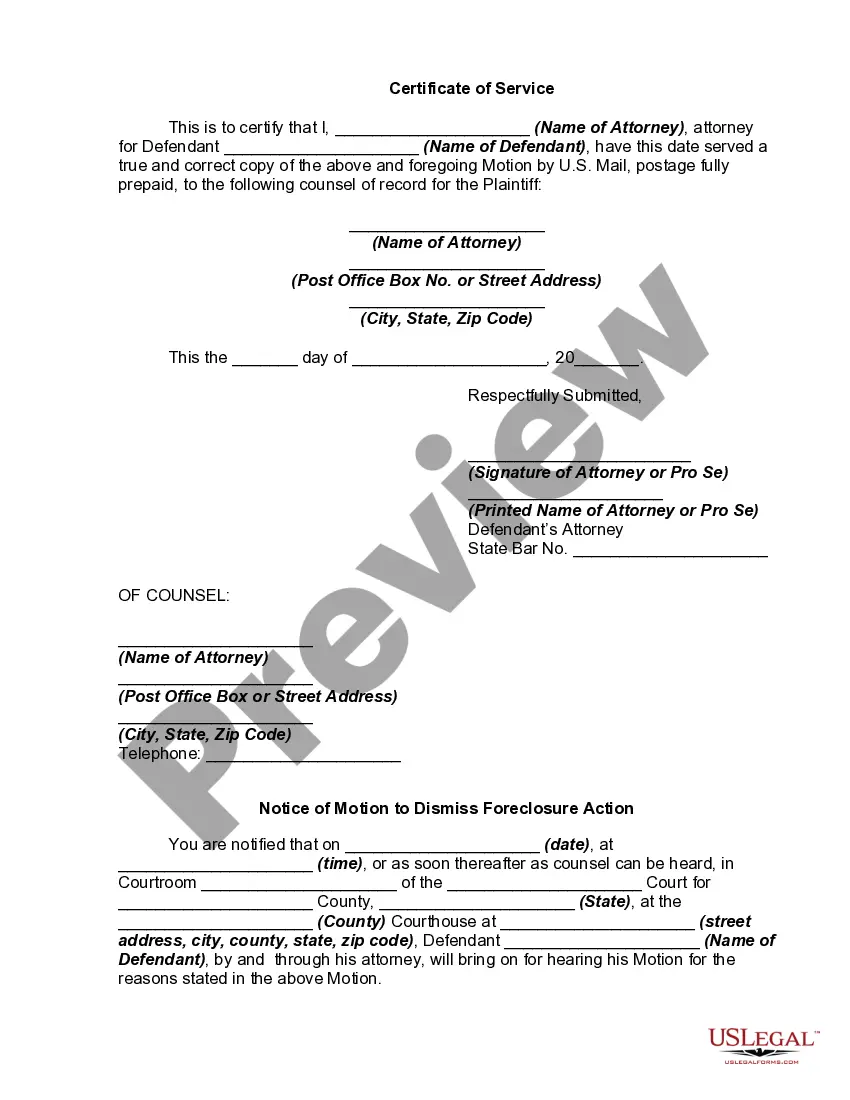
How to fill out Motion To Dismiss Foreclosure Action And Notice Of Motion?
Managing legal documents can be exasperating, even for the most experienced professionals.
If you are looking for a Foreclosure Excess Proceeds Formula and cannot spare the time to search for the appropriate and updated version, the process can be overwhelming.
Utilize a repository of articles, guides, and resources relevant to your circumstances and requirements.
Save time and effort searching for the documents you require, and use US Legal Forms’ sophisticated search and Preview tool to discover the Foreclosure Excess Proceeds Formula and obtain it.
Enjoy the US Legal Forms online catalog, backed by 25 years of expertise and trustworthiness. Streamline your daily document management into a simple and user-friendly experience today.
- If you have a monthly subscription, Log In to your US Legal Forms account, search for the document, and obtain it.
- Check your My documents tab to review the documents you have previously downloaded and to organize your folders as needed.
- If this is your initial experience with US Legal Forms, create an account and gain unlimited access to all the resources in the library.
- After acquiring the desired document, verify that it is the correct one by previewing it and reviewing its description.
- Ensure the template is accepted in your state or jurisdiction.
- Select Buy Now when you are ready.
- Choose a subscription package.
- Select your preferred format, and Download, complete, sign, print, and dispatch your documents.
- Access state- or locality-specific legal and business documents.
- US Legal Forms meets all your requirements, whether personal or commercial, in one location.
- Leverage advanced tools to complete and handle your Foreclosure Excess Proceeds Formula.
Form popularity
FAQ
To calculate whether you have a surplus or deficit, subtract the total expenses from the total income. For example, if you earned $10,000 from a property sale but incurred $8,000 in costs, you have a surplus of $2,000. Utilizing the foreclosure excess proceeds formula can simplify this calculation during a foreclosure, ensuring you accurately assess your financial position.
To claim surplus funds from a foreclosure in North Carolina, you need to file a claim with the court that handled the foreclosure. Typically, this process involves providing necessary documentation and a completed claim form. Employing the foreclosure excess proceeds formula can simplify the calculation of what you are owed. Platforms like USLegalForms can assist you in understanding the paperwork and procedures necessary to secure your surplus funds.
A deed in lieu of foreclosure may be taxable. If you relinquish your property in exchange for cancellation of your debt, the IRS might consider any remaining debt as income. Thus, it’s important to analyze how the foreclosure excess proceeds formula applies in your case. Consulting with tax professionals can help clarify your tax obligations and ensure accurate reporting.
To report a foreclosure on your tax return, include the excess proceeds as income on your form. Ensure you accurately calculate the amount using the foreclosure excess proceeds formula, as this step is essential for proper filing. You may also need to complete additional forms related to the sale of the property. Utilize platforms like US Legal Forms for guidance and resources to simplify the process.
Excess funds from a foreclosure may have tax implications, depending on individual circumstances. Generally, these funds are considered income and might be taxed. It is crucial to consult a tax professional to understand how the foreclosure excess proceeds formula applies to your situation. By doing so, you can avoid unexpected tax liabilities and plan accordingly.
Excess sale proceeds refer to the funds generated from the sale of a foreclosed property that exceed the total debt owed on it. This amount becomes available for the original property owner after all debts have been settled. Familiarity with the foreclosure excess proceeds formula is essential to ensure that you receive the rightful amount. Using this knowledge empowers you to manage your finances better.
To claim excess proceeds in Texas, you must first determine the surplus amount after the foreclosure sale. You can then file a claim with the court in the county where the foreclosure took place, along with all necessary documentation supporting your claim. Utilizing the foreclosure excess proceeds formula, ensure you gather records that demonstrate your ownership and involvement in the property. For assistance, consider using the US Legal Forms platform, which offers comprehensive resources to guide you through the process.