Legal Writing
Description
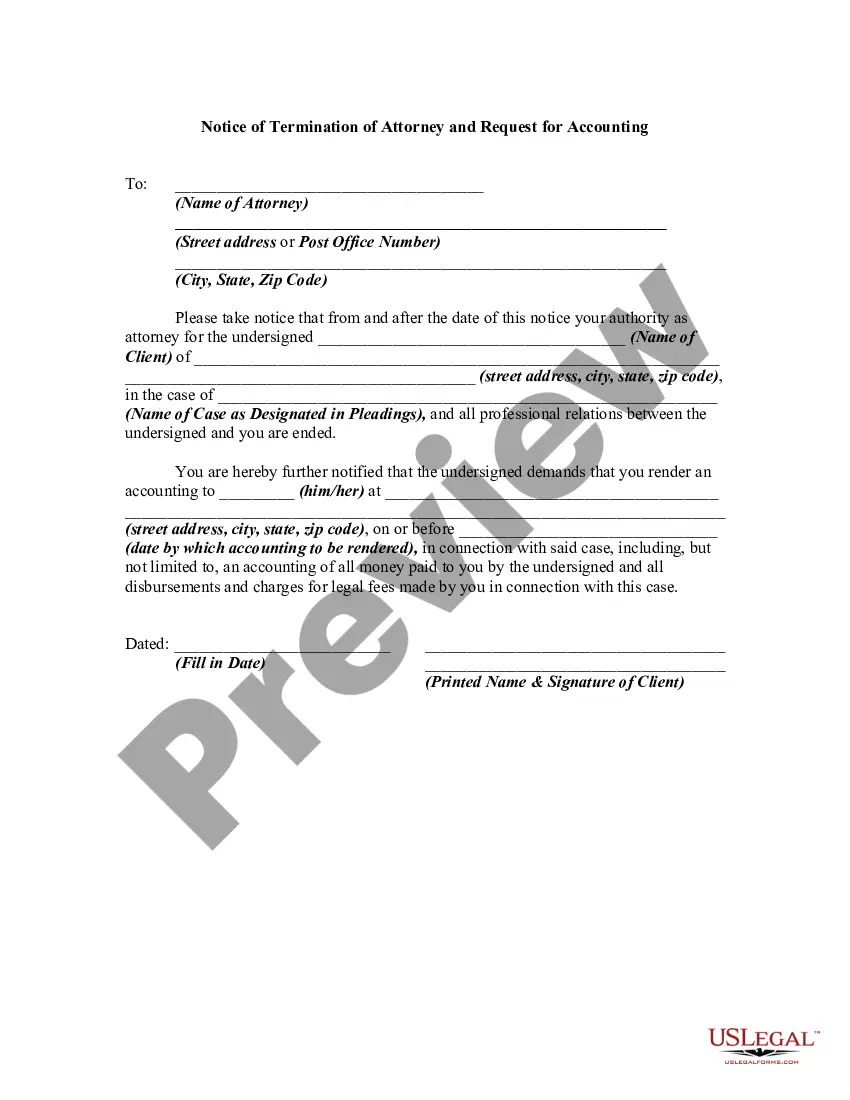
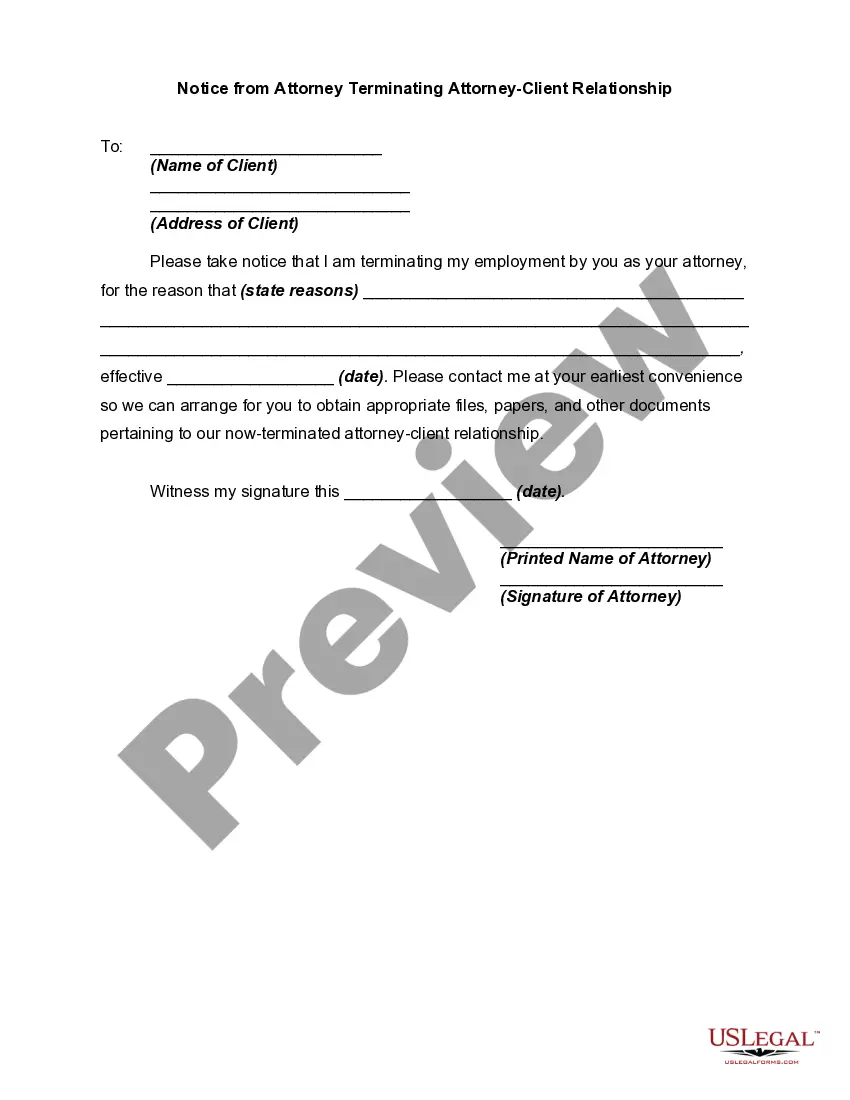
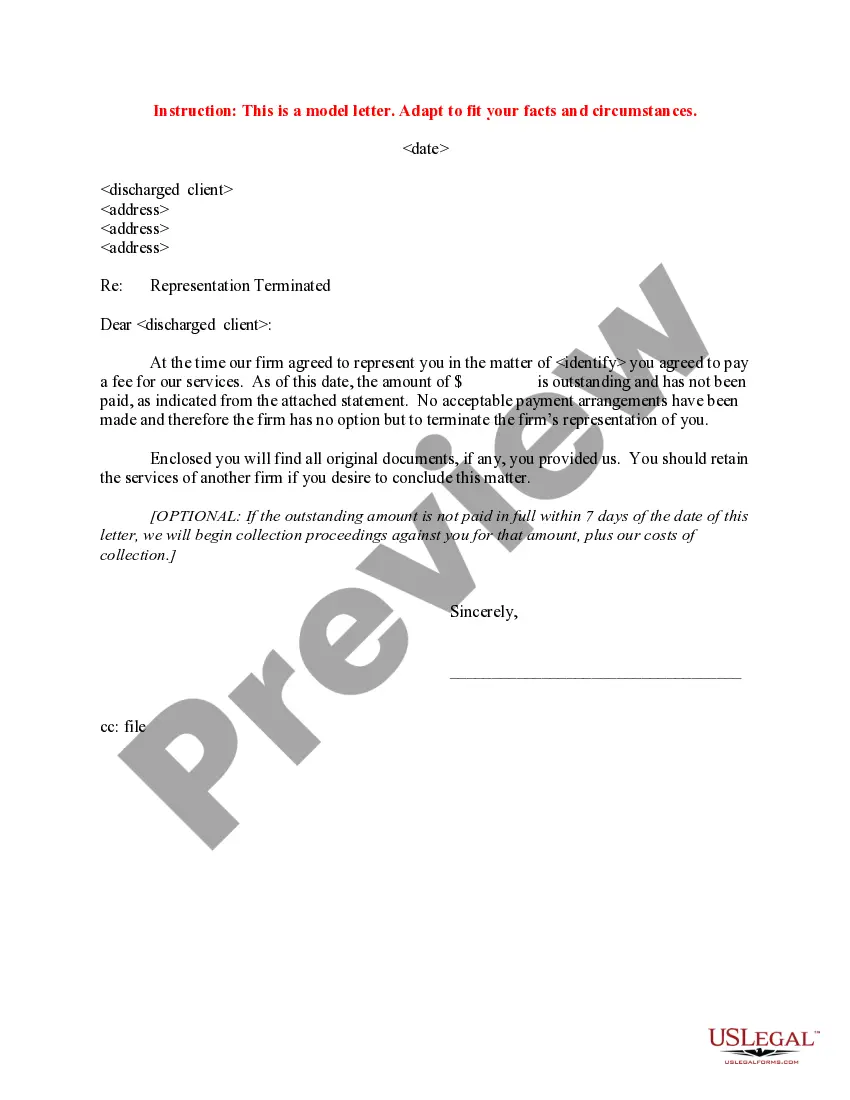
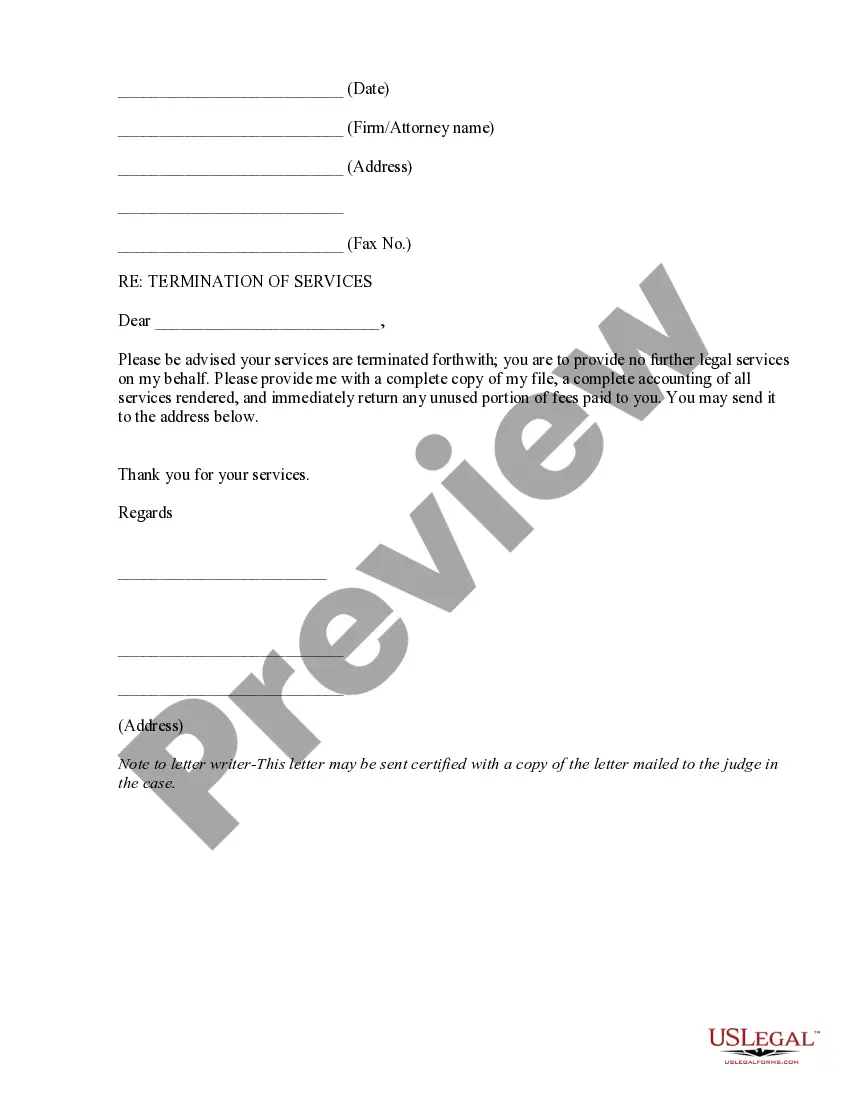





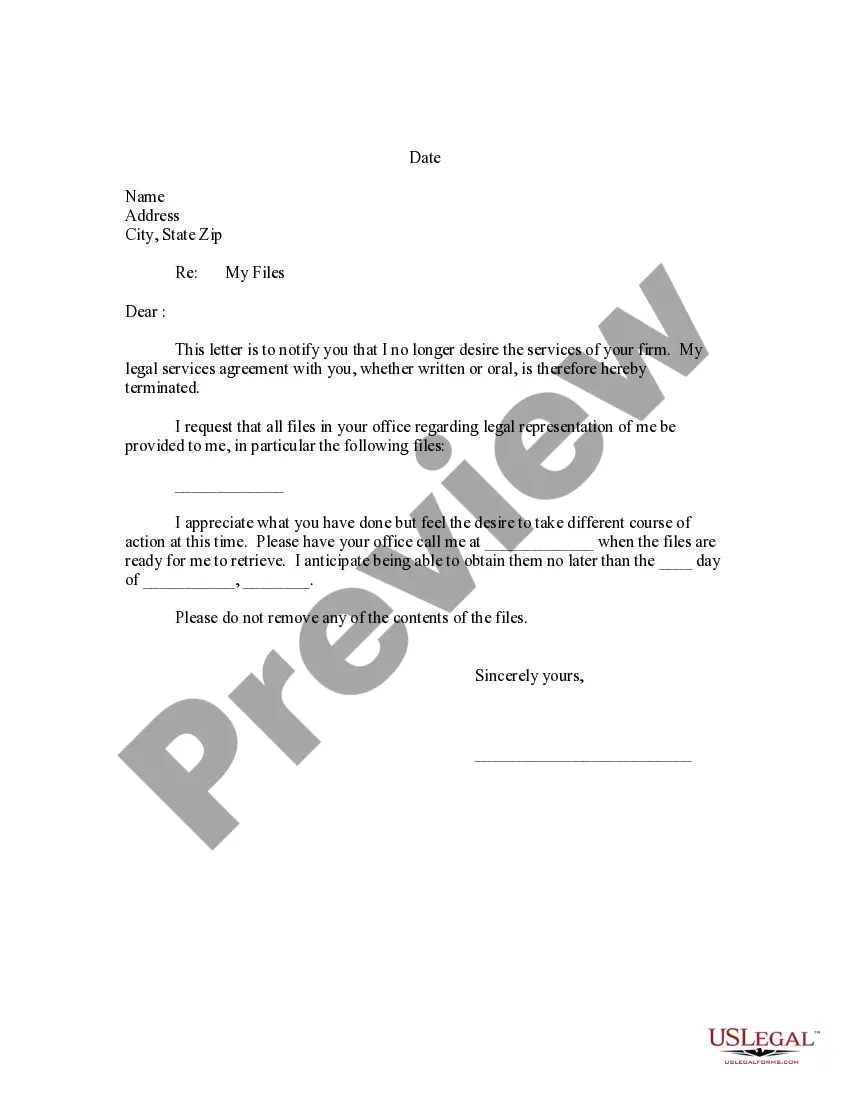
How to fill out Notice To Terminate Legal Services Agreement And Return File?
- Access your US Legal Forms account by logging in. If this is your first visit, create an account to get started.
- Browse through the Preview mode to understand the document type you need. Ensure it aligns with your requirements and local jurisdiction.
- Utilize the search feature to locate any additional templates if necessary for your specific legal needs.
- Select your document by clicking the 'Buy Now' button and choose a subscription plan that suits you best.
- Complete your purchase by entering your payment details, such as credit card information or PayPal.
- Finish the process by downloading your chosen form, which you'll find in the 'My Forms' section for future access.
In conclusion, using US Legal Forms can make the process of legal writing seamless and efficient. With a wealth of resources at your fingertips, you can trust that your documents meet legal standards.
Start your legal writing journey today by visiting US Legal Forms and exploring their extensive library!
Form popularity
FAQ
Legal writing examples consist of various documents created by legal professionals. Common examples include case briefs, discovery motions, and legal opinions. Each of these examples serves a specific function in legal practice and showcases effective communication. By studying these documents, you can gain valuable insights into the components that make up strong legal writing.
Legal writing examples encompass a wide range of documents used in the practice of law. These examples can include contracts, pleadings, and court motions, which demonstrate the application's practical aspect of legal writing. By reviewing these examples, you can learn essential techniques and formats. This understanding will enhance your legal writing skills and improve your effectiveness as a writer.
A legal writing sample can include any document that demonstrates your ability to convey legal concepts effectively. This may consist of briefs, memos, or client letters. Each sample should showcase your understanding of legal principles and your capacity for clear communication. Consider including samples that highlight different aspects of legal writing.
To begin a legal written statement, clearly identify the purpose of the document. Start with a strong introduction that outlines the key points. Be clear and concise, using straightforward language. Legal writing requires precision, so ensure that your statement follows the appropriate format and includes relevant facts.
The three types of legal writing are persuasive, informative, and advisory. Persuasive legal writing aims to convince a reader of a particular position or argument, often seen in briefs. Informative writing provides clear information on the law, while advisory writing offers legal opinions or advice. Understanding these types helps writers tailor their approach based on the audience's needs.
Legal writing includes documents such as contracts, pleadings, briefs, memos, and letters. Each of these types requires precision and clarity to communicate legal concepts effectively. The goal of legal writing is to clearly express complex ideas and arguments, ensuring that intended audiences can easily understand them. Mastering this skill is paramount in the legal profession.
The three steps of legal writing are researching, drafting, and editing. First, research the relevant laws and cases to inform your writing. After collecting the necessary information, draft your document with clear and concise language. Finally, edit your work to ensure accuracy and adherence to legal standards, enhancing the overall quality of your legal writing.
To get into legal writing, consider taking courses or workshops focusing on legal drafting and analysis. Gaining practical experience through internships or volunteer opportunities at law firms can also be valuable. Additionally, reading legal documents can familiarize you with different writing styles and formats. By honing your skills in legal writing, you can open doors to various opportunities in the field.
The three steps of the writing process are planning, writing, and revising. Planning helps you outline your ideas and establish the main points you want to convey in your legal writing. Writing involves articulating those ideas coherently, while revising ensures that your final product is polished and precise. Each step is crucial in producing effective legal documents.
Yes, many law firms hire writers to enhance their legal writing capabilities. These writers often assist attorneys in drafting briefs, memos, and other legal documents. By incorporating professional legal writing skills, law firms can present their arguments more effectively and persuasively. This practice underscores the importance of quality writing in the legal field.