Letter Of Representation Purpose
Description

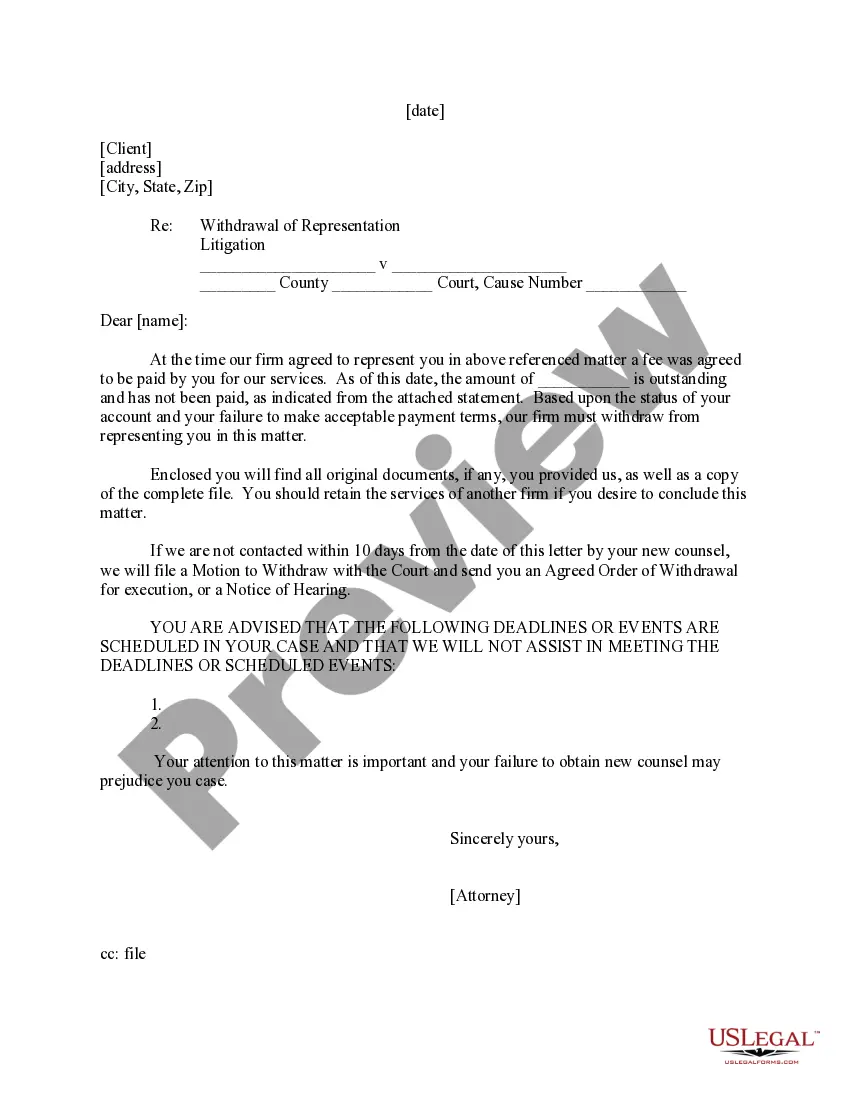
Get your form ready online
Our built-in tools help you complete, sign, share, and store your documents in one place.
Make edits, fill in missing information, and update formatting in US Legal Forms—just like you would in MS Word.
Download a copy, print it, send it by email, or mail it via USPS—whatever works best for your next step.
Sign and collect signatures with our SignNow integration. Send to multiple recipients, set reminders, and more. Go Premium to unlock E-Sign.
If this form requires notarization, complete it online through a secure video call—no need to meet a notary in person or wait for an appointment.
We protect your documents and personal data by following strict security and privacy standards.

Make edits, fill in missing information, and update formatting in US Legal Forms—just like you would in MS Word.

Download a copy, print it, send it by email, or mail it via USPS—whatever works best for your next step.

Sign and collect signatures with our SignNow integration. Send to multiple recipients, set reminders, and more. Go Premium to unlock E-Sign.

If this form requires notarization, complete it online through a secure video call—no need to meet a notary in person or wait for an appointment.

We protect your documents and personal data by following strict security and privacy standards.
Looking for another form?










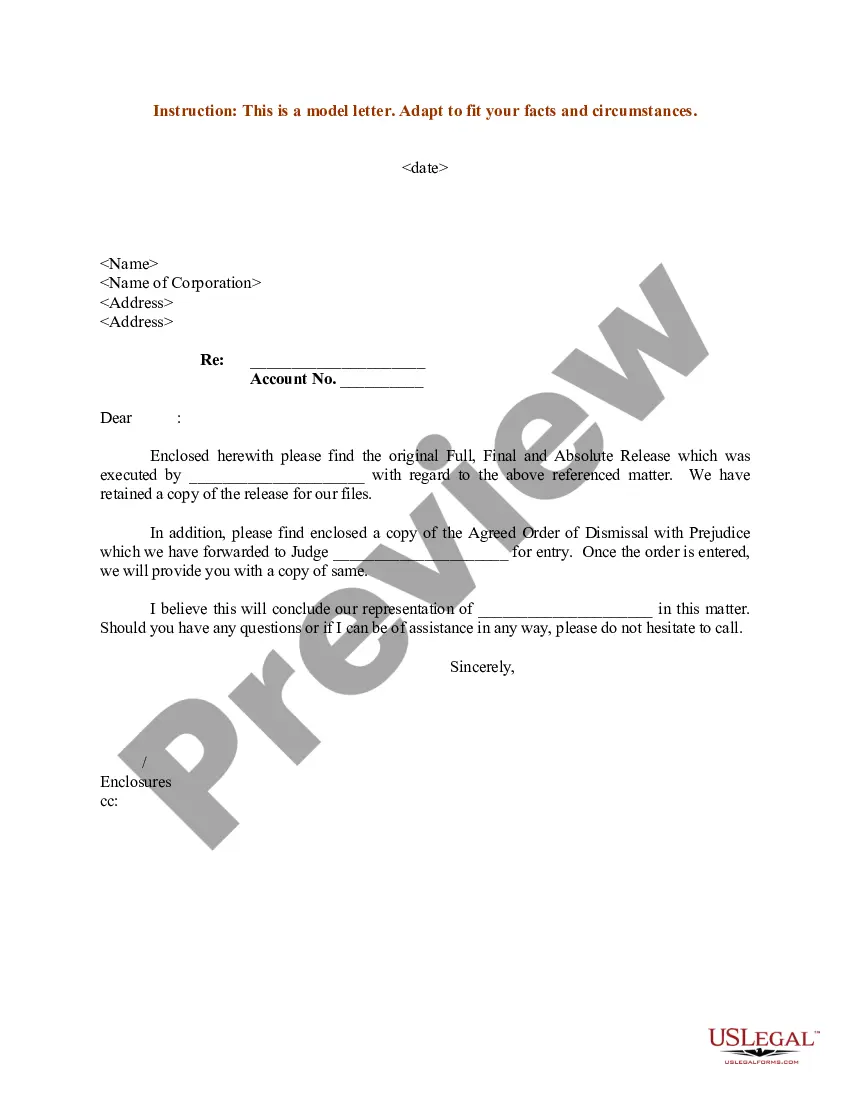
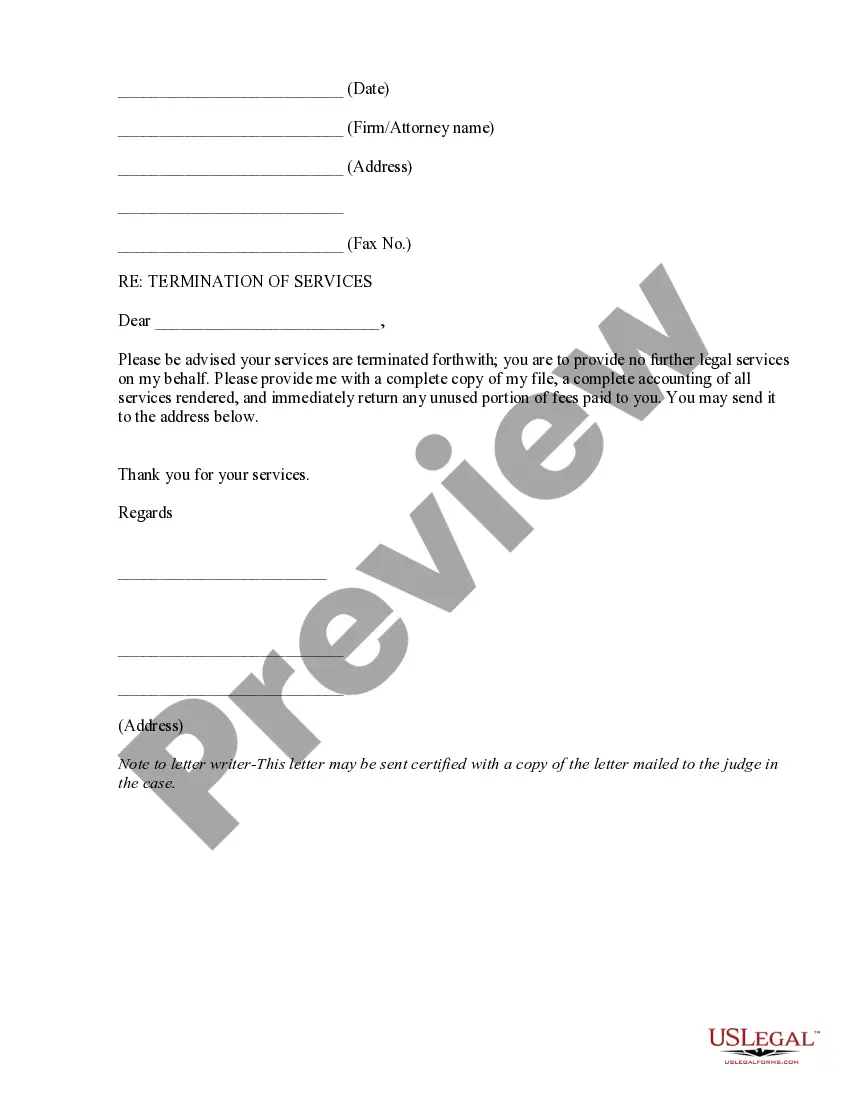
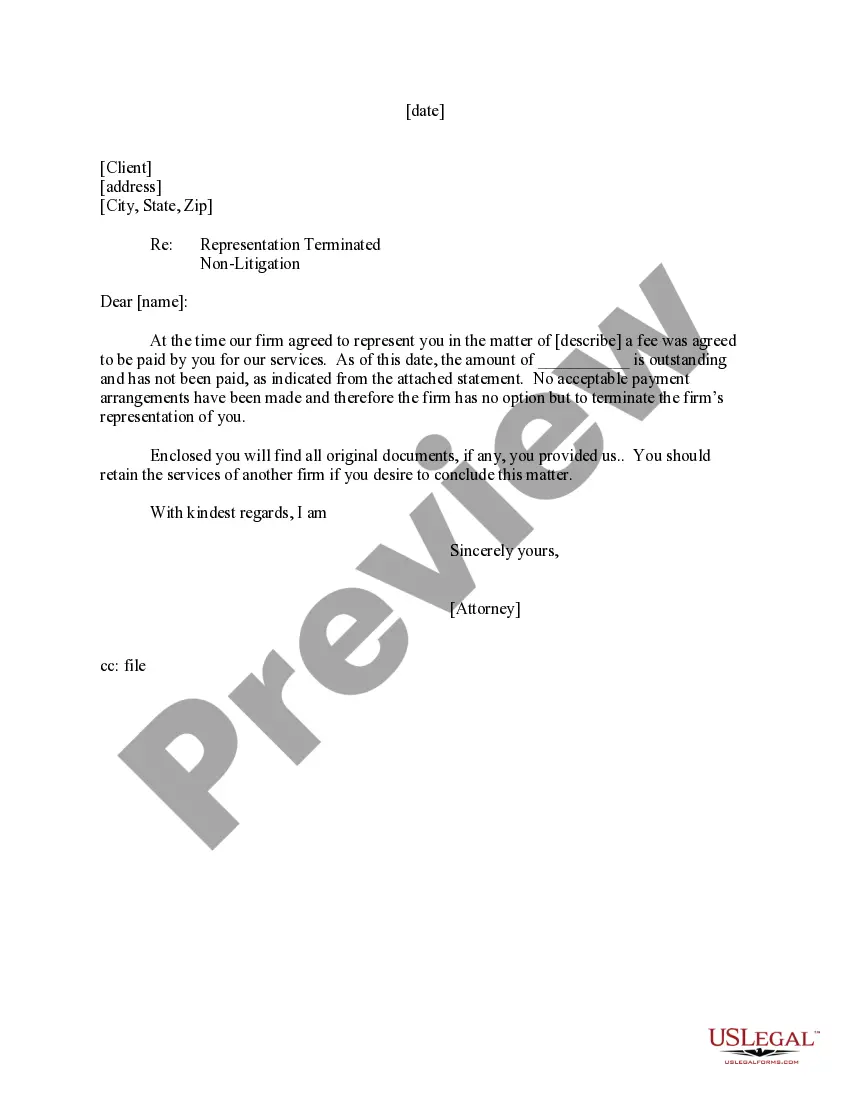
How to fill out Sample Letter To Client - Termination Of Representation?
It’s clear that you cannot become a legal expert instantly, nor can you determine how to swiftly prepare a Letter Of Representation Purpose without a specialized background.
Assembling legal documents is a lengthy process that demands specific training and abilities. So why not entrust the creation of the Letter Of Representation Purpose to the professionals.
With US Legal Forms, one of the largest legal document libraries, you can locate anything from court forms to templates for internal business communication.
You can access your documents again from the My documents tab at any time. If you’re an existing client, you can simply Log In, and find and download the template from the same tab.
Regardless of the intent of your documents—whether they’re financial, legal, or personal—our platform has you covered. Try US Legal Forms today!
- Identify the form you need using the search bar at the top of the page.
- Preview it (if this option is available) and read the supporting description to see if the Letter Of Representation Purpose is what you’re looking for.
- Start your search again if you require another form.
- Create a free account and choose a subscription plan to acquire the form.
- Click Buy now. Once the payment is completed, you can download the Letter Of Representation Purpose, fill it out, print it, and send or mail it to the appropriate individuals or organizations.
Form popularity
FAQ
Typically, the principal or their legal advisor prepares the letter of representation. This ensures that the document accurately reflects the authority being granted and the specific context. Knowing the letter of representation purpose can assist you in ensuring that the right person is responsible for drafting this important document.
A letter of representation is a formal document that grants authority to a representative to act on behalf of another party. It includes details about the scope of authority and any specific instructions. By understanding the letter of representation purpose, you can appreciate how this document facilitates smoother transactions and interactions.
The representation letter is required for various legal and business transactions, ensuring that the representative has the authority to act on behalf of the principal. It helps in establishing a clear framework for communication and decision-making. Understanding the letter of representation purpose can help you identify when this document is necessary.
A letter of representation should be issued whenever one party needs to delegate authority to another in a legal context. This could be during transactions, negotiations, or any situation requiring formal representation. Knowing the letter of representation purpose can guide you in determining the right time to prepare this document.
The primary purpose of the letter of representation is to authorize a designated individual or organization to act on behalf of another party. This document outlines the scope of the authority granted and helps establish trust between the involved parties. By clarifying the letter of representation purpose, you can prevent misunderstandings and legal disputes down the line.
Yes, a letter of representation is considered a legal document. It serves as a formal declaration from one party to another, confirming the authority of a representative to act on behalf of the principal. Understanding the letter of representation purpose can help ensure that all parties are clear about their roles and responsibilities in legal matters.
An attorney letter of representation is correspondence, usually a letter, sent by the victim's attorney to the defendant or an insurance company advising that an attorney represents the victim. The purpose of a representation letter is to make the opposing party aware that counsel represents your client.
A representation letter documents informa tion relating to your knowledge of the entity and your intentions. It complements other audit procedures the auditor applies to corroborate that information.
A lawyer representation letter should include: Date; Address to whom the letter is sent; The subject of the letter; Content or body of the letter. Briefly explaining why the lawyer is writing the letter and the general claim and damages. Signature.
The letter sets out responsibilities and representations made by the officers to the auditor to confirm that certain matters have been undertaken and confirm the responsibilities of the officers to ensure there is no misunderstanding.