Estate For Deceased Person
Description
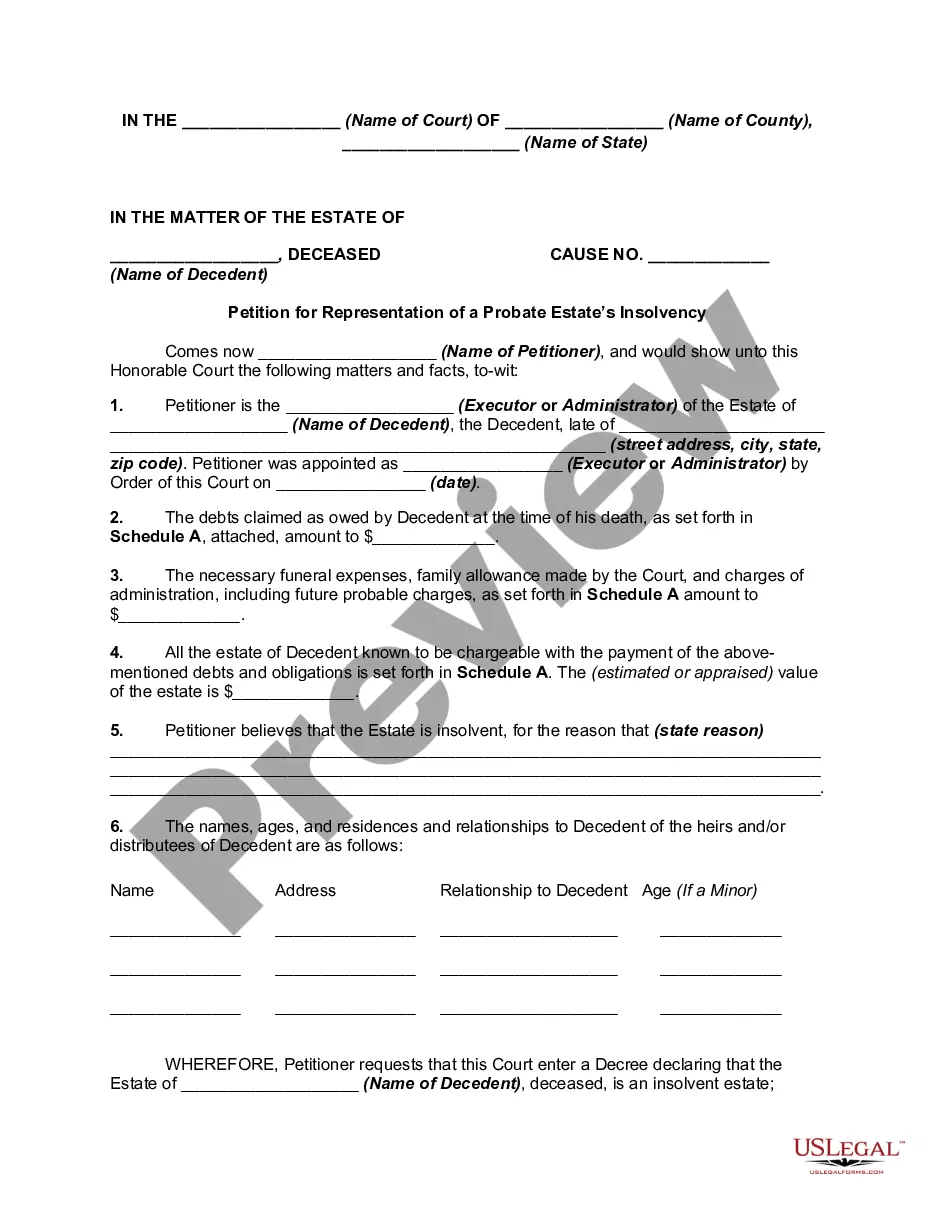
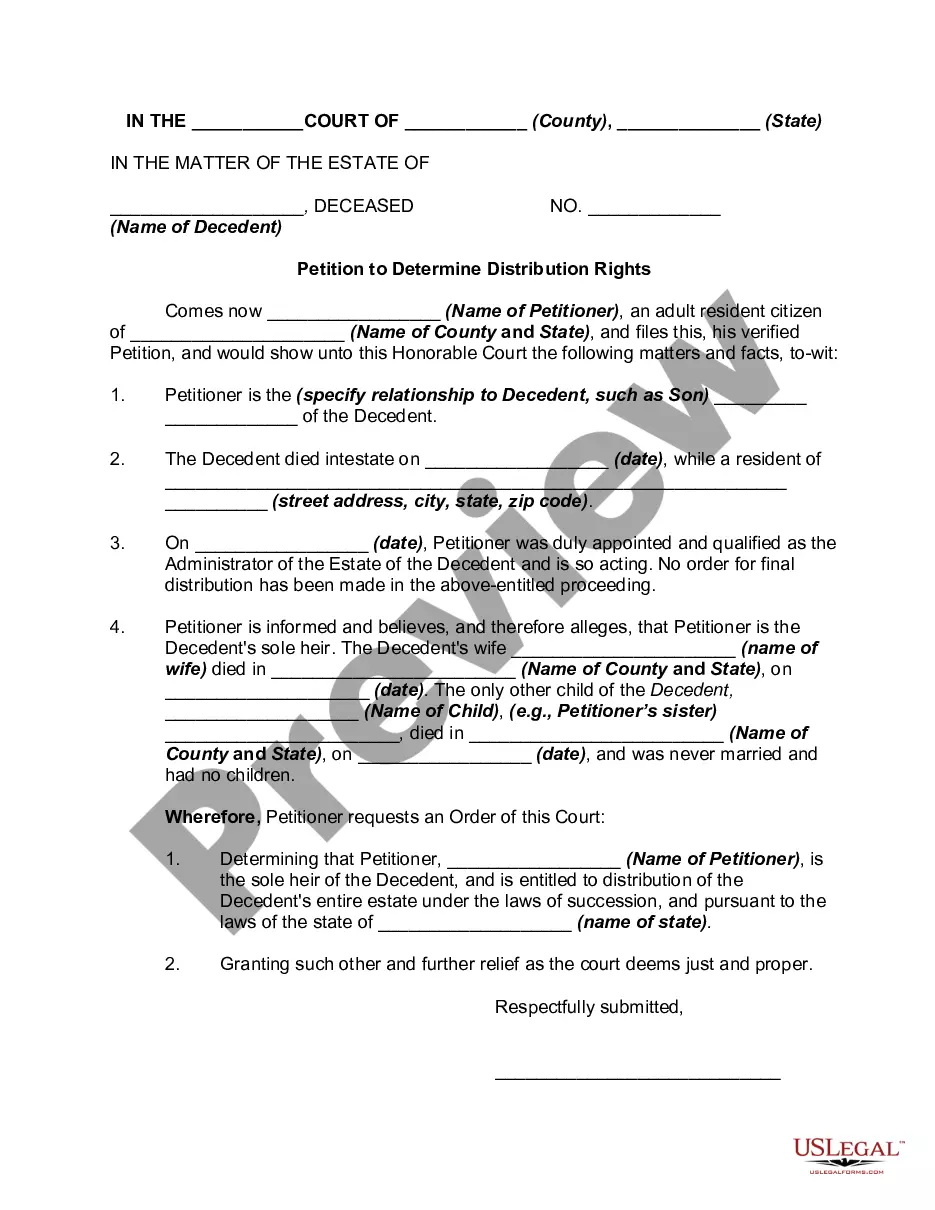
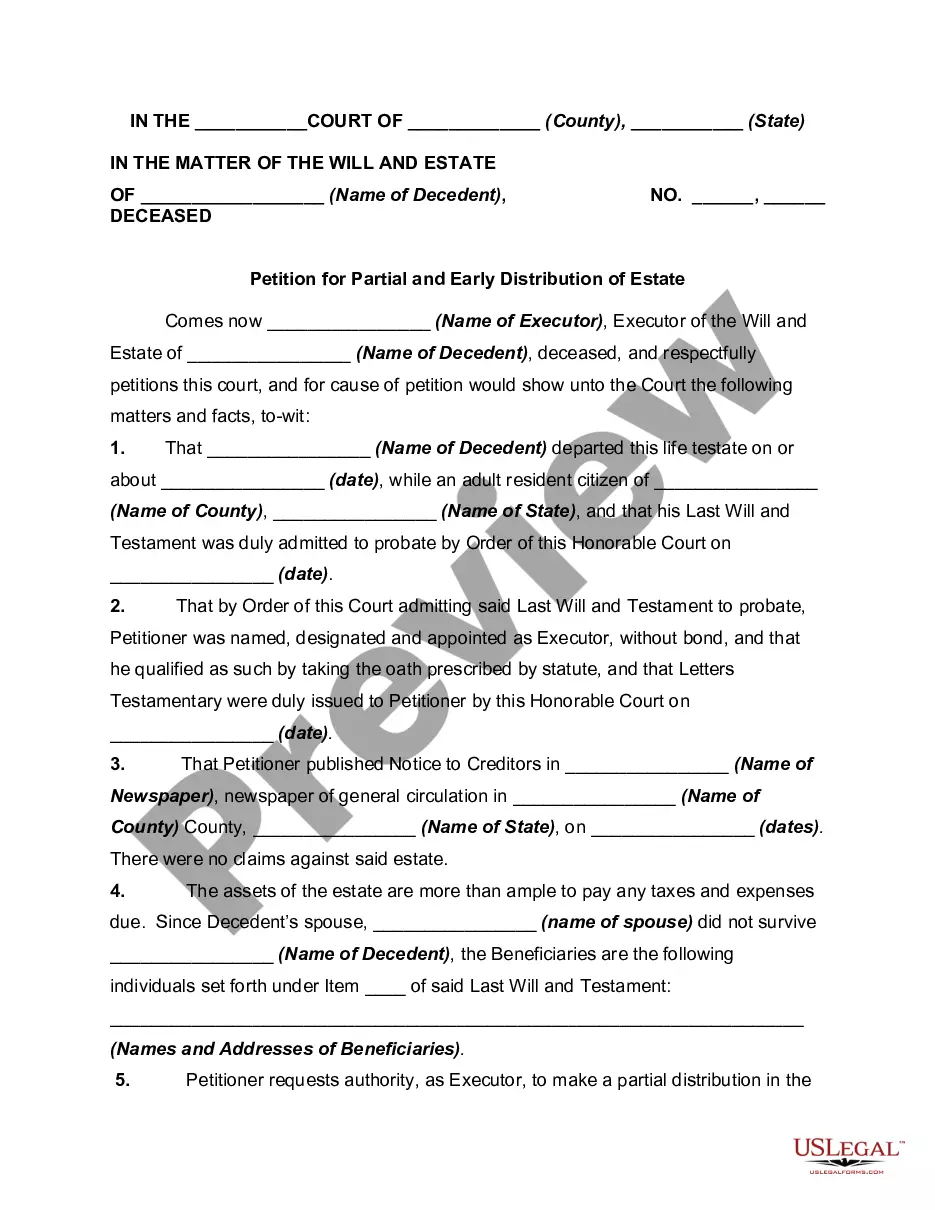
Get your form ready online
Our built-in tools help you complete, sign, share, and store your documents in one place.
Make edits, fill in missing information, and update formatting in US Legal Forms—just like you would in MS Word.
Download a copy, print it, send it by email, or mail it via USPS—whatever works best for your next step.
Sign and collect signatures with our SignNow integration. Send to multiple recipients, set reminders, and more. Go Premium to unlock E-Sign.
If this form requires notarization, complete it online through a secure video call—no need to meet a notary in person or wait for an appointment.
We protect your documents and personal data by following strict security and privacy standards.

Make edits, fill in missing information, and update formatting in US Legal Forms—just like you would in MS Word.

Download a copy, print it, send it by email, or mail it via USPS—whatever works best for your next step.

Sign and collect signatures with our SignNow integration. Send to multiple recipients, set reminders, and more. Go Premium to unlock E-Sign.

If this form requires notarization, complete it online through a secure video call—no need to meet a notary in person or wait for an appointment.

We protect your documents and personal data by following strict security and privacy standards.
Looking for another form?





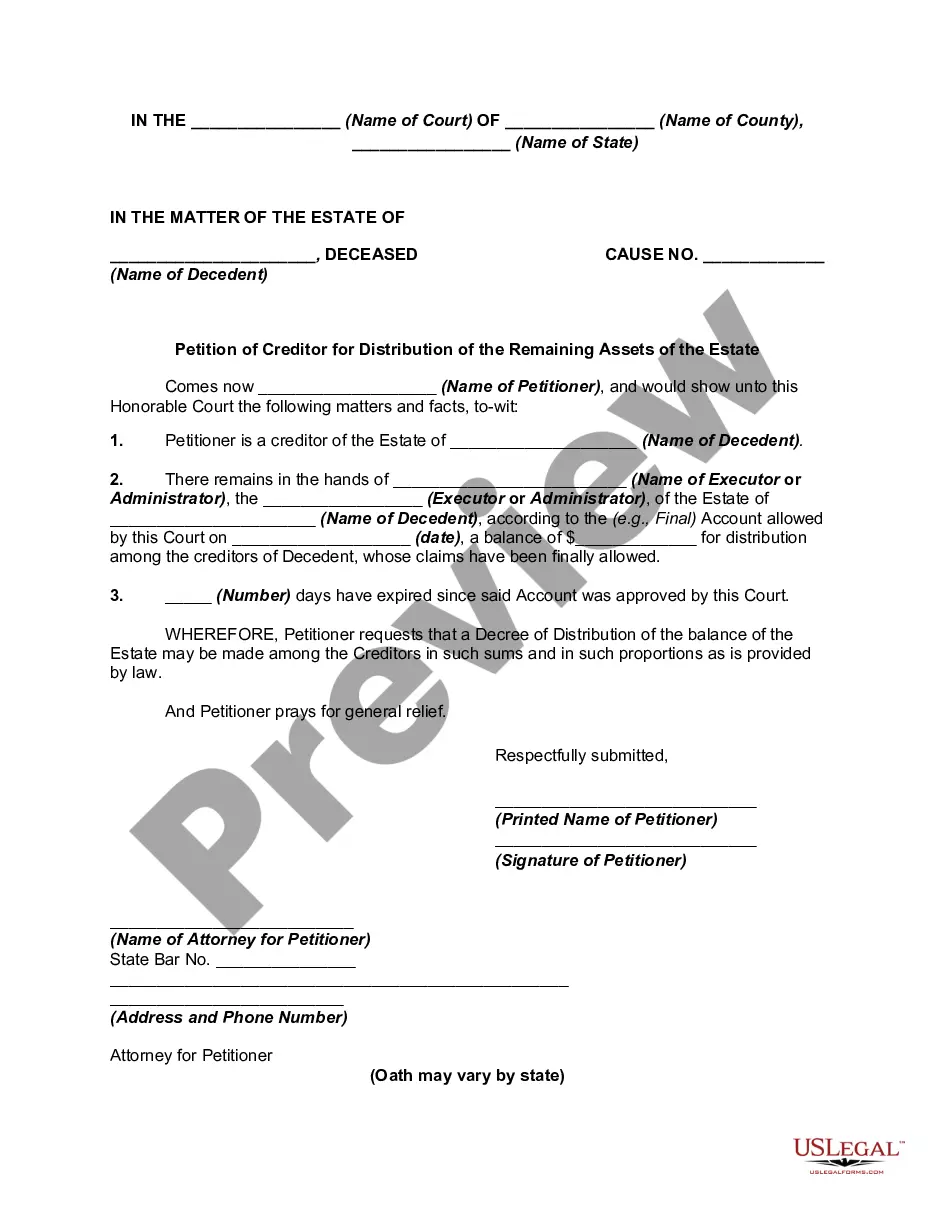
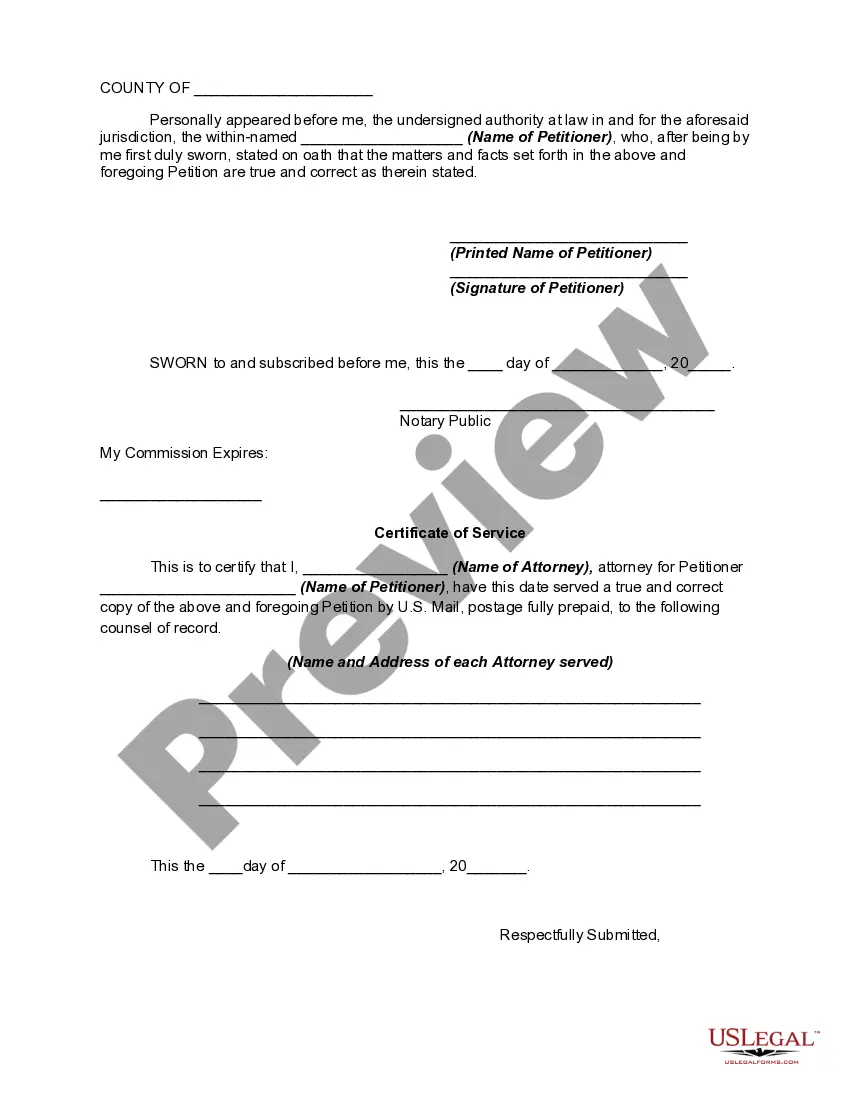
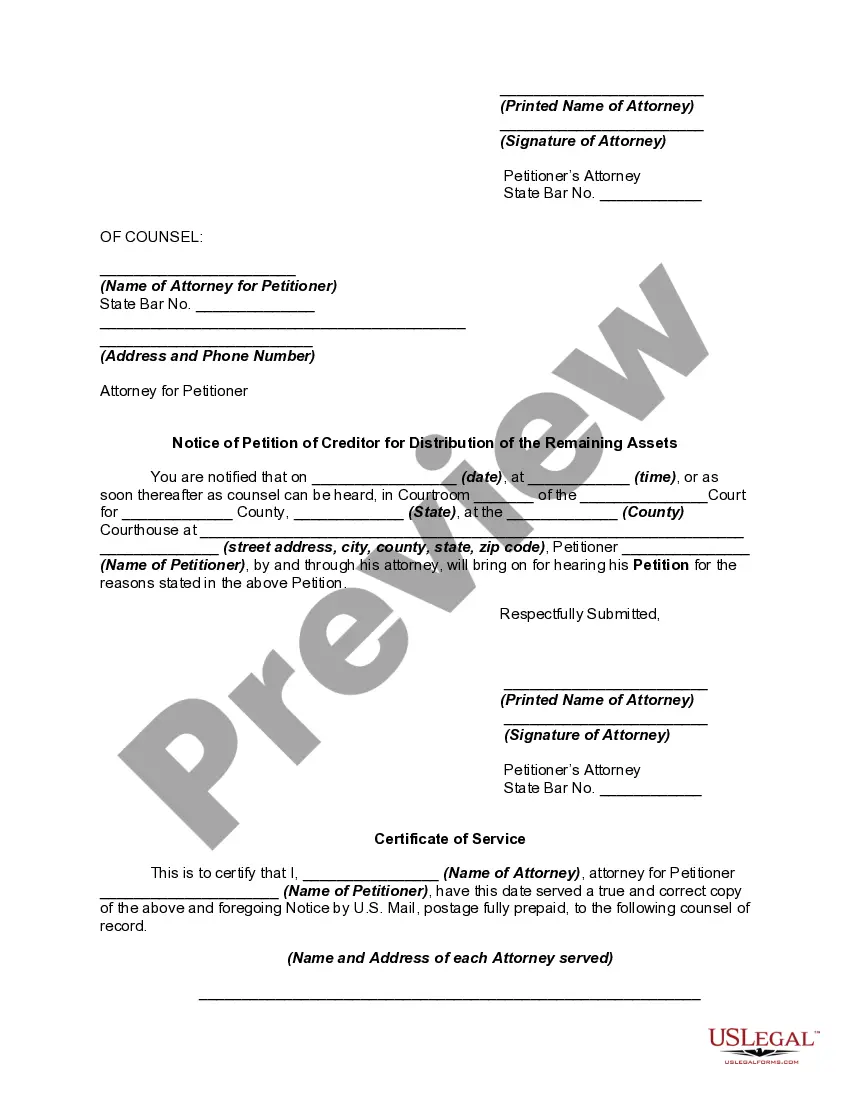
How to fill out Petition Of Creditor Of An Estate Of A Decedent For Distribution Of The Remaining Assets Of The Estate?
Engaging with legal documentation and procedures can be a labor-intensive addition to your daily routine.
Forms such as Estate For Deceased Person generally necessitate that you search for them and figure out the most effective way to fill them out correctly.
Therefore, if you are managing financial, legal, or personal issues, having a comprehensive and functional online directory of forms readily available will greatly assist you.
US Legal Forms is the leading online service for legal templates, providing over 85,000 state-specific forms along with a variety of resources to facilitate your paperwork completion effortlessly.
Simply Log In to your account, search for Estate For Deceased Person and obtain it immediately from the My documents section. You can also access forms you have previously downloaded.
- Explore the catalog of pertinent documents accessible with just one click.
- US Legal Forms offers state- and county-specific forms that can be downloaded anytime.
- Protect your document management processes with a top-notch service that enables you to prepare any form in minutes without incurring extra or hidden costs.
Form popularity
FAQ
After a death, the deceased's executor or administrator has the job of winding up the estate. Once this has been done, they are required to provide a final estate account. This details all of the assets, income, liabilities and expenses as well as the amount that is payable to the beneficiaries.
Every state sets the priority ing to which claims must be paid. The estate's beneficiaries only get paid once all the creditor claims have been satisfied. Usually, estate administration fees, funeral expenses, support payments, and taxes have priority over other claims.
As executor of an estate, the form you'll file for the deceased person is Form 1040 as a final return. If you are legally deemed the executor or fiduciary of an estate, you may also file a Form 1041 for the deceased individual's estate.
(i) An executor or administrator indorsing any such check must include, as part of the indorsement, an indication of the capacity in which the executor or administrator is indorsing. An example would be: ?John Jones by Mary Jones, executor of the estate of John Jones.?