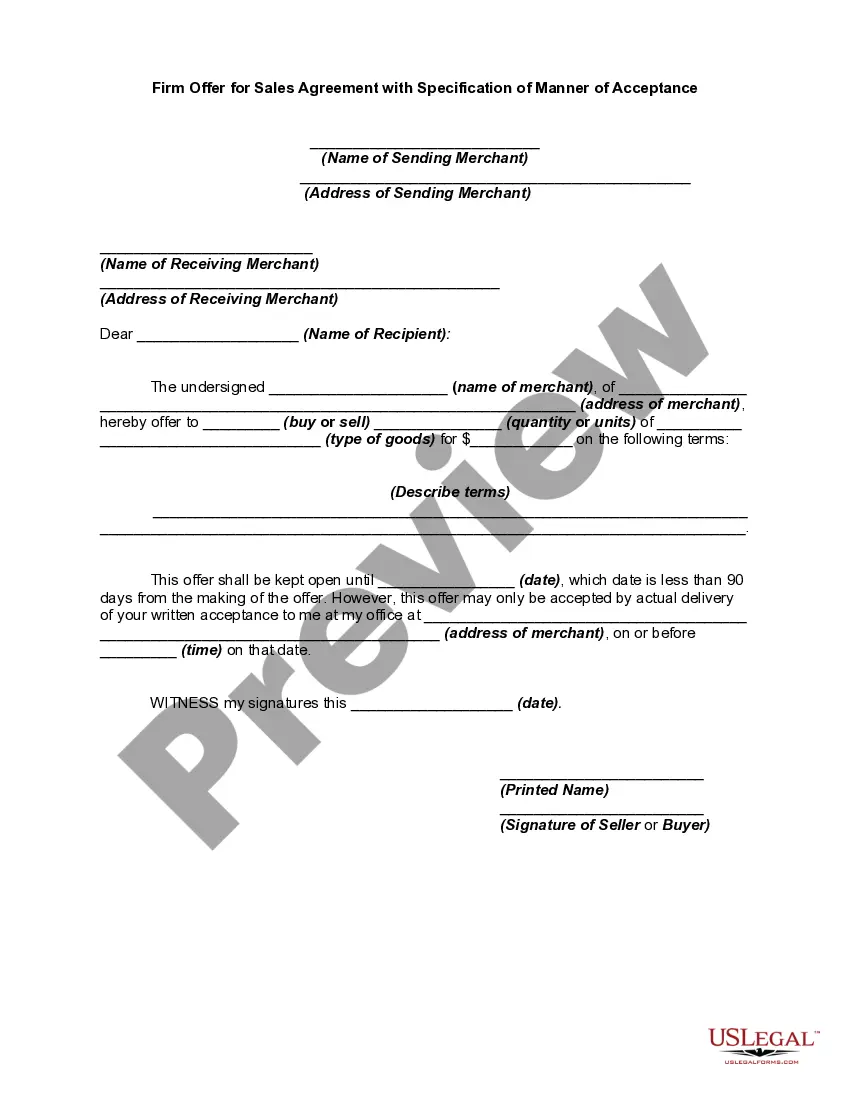
Offer And Acceptance With Example
Description
Get your form ready online
Our built-in tools help you complete, sign, share, and store your documents in one place.
Make edits, fill in missing information, and update formatting in US Legal Forms—just like you would in MS Word.
Download a copy, print it, send it by email, or mail it via USPS—whatever works best for your next step.
Sign and collect signatures with our SignNow integration. Send to multiple recipients, set reminders, and more. Go Premium to unlock E-Sign.
If this form requires notarization, complete it online through a secure video call—no need to meet a notary in person or wait for an appointment.
We protect your documents and personal data by following strict security and privacy standards.

Make edits, fill in missing information, and update formatting in US Legal Forms—just like you would in MS Word.

Download a copy, print it, send it by email, or mail it via USPS—whatever works best for your next step.

Sign and collect signatures with our SignNow integration. Send to multiple recipients, set reminders, and more. Go Premium to unlock E-Sign.

If this form requires notarization, complete it online through a secure video call—no need to meet a notary in person or wait for an appointment.

We protect your documents and personal data by following strict security and privacy standards.
Looking for another form?
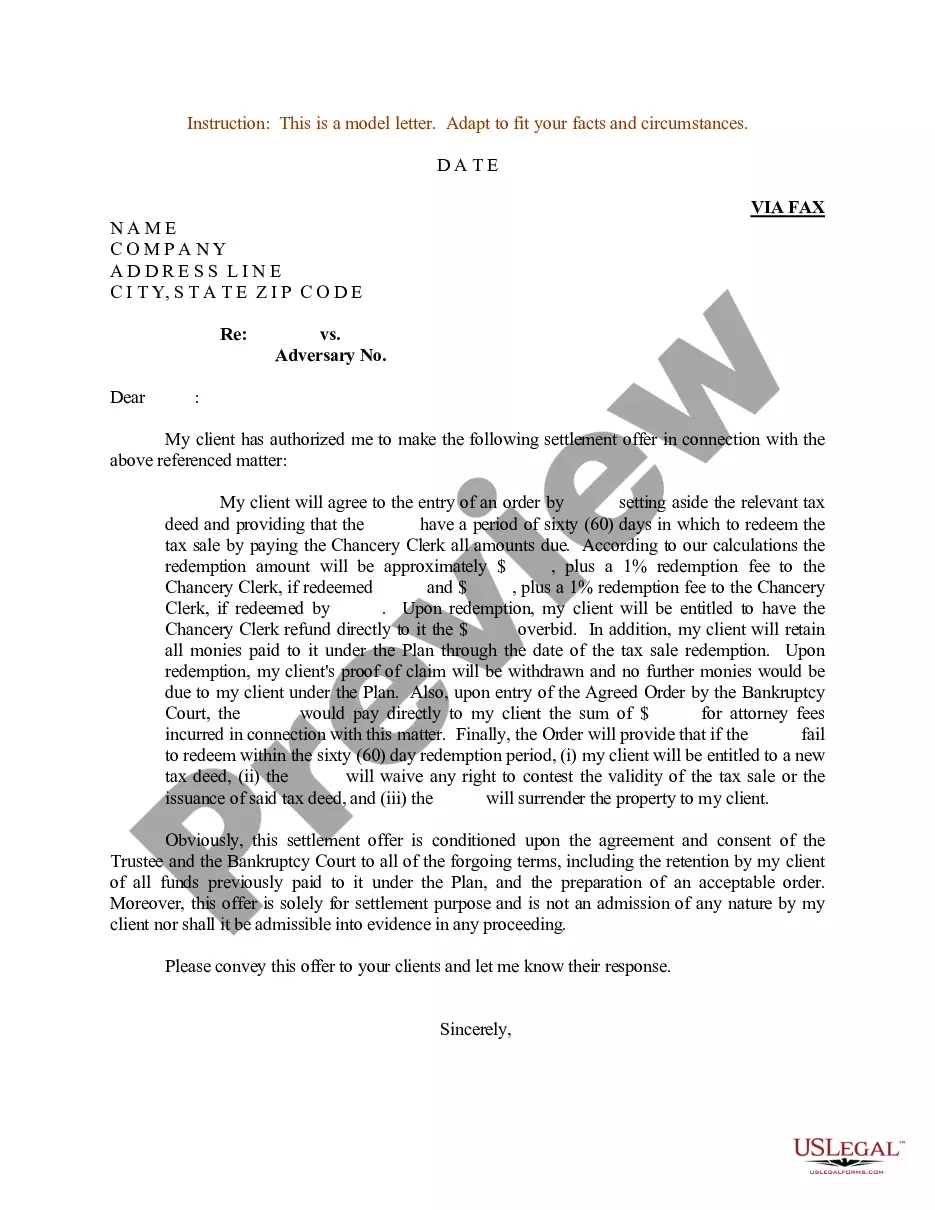
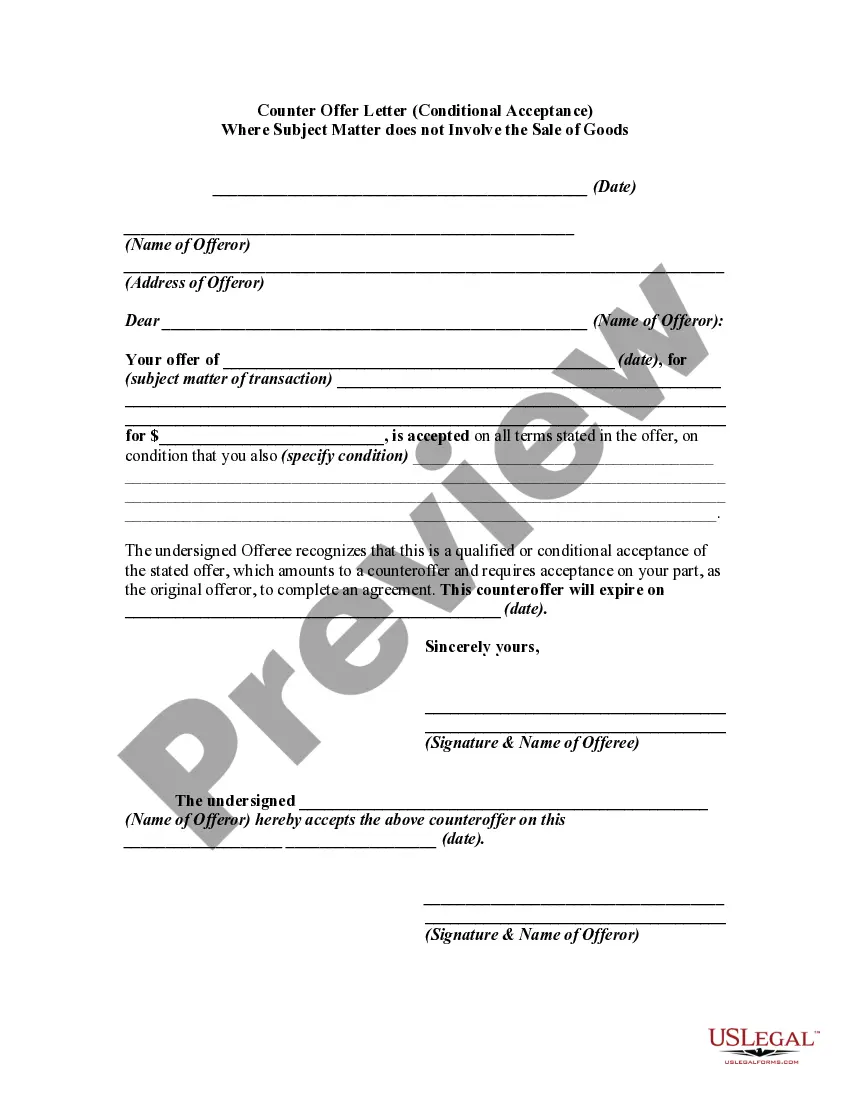
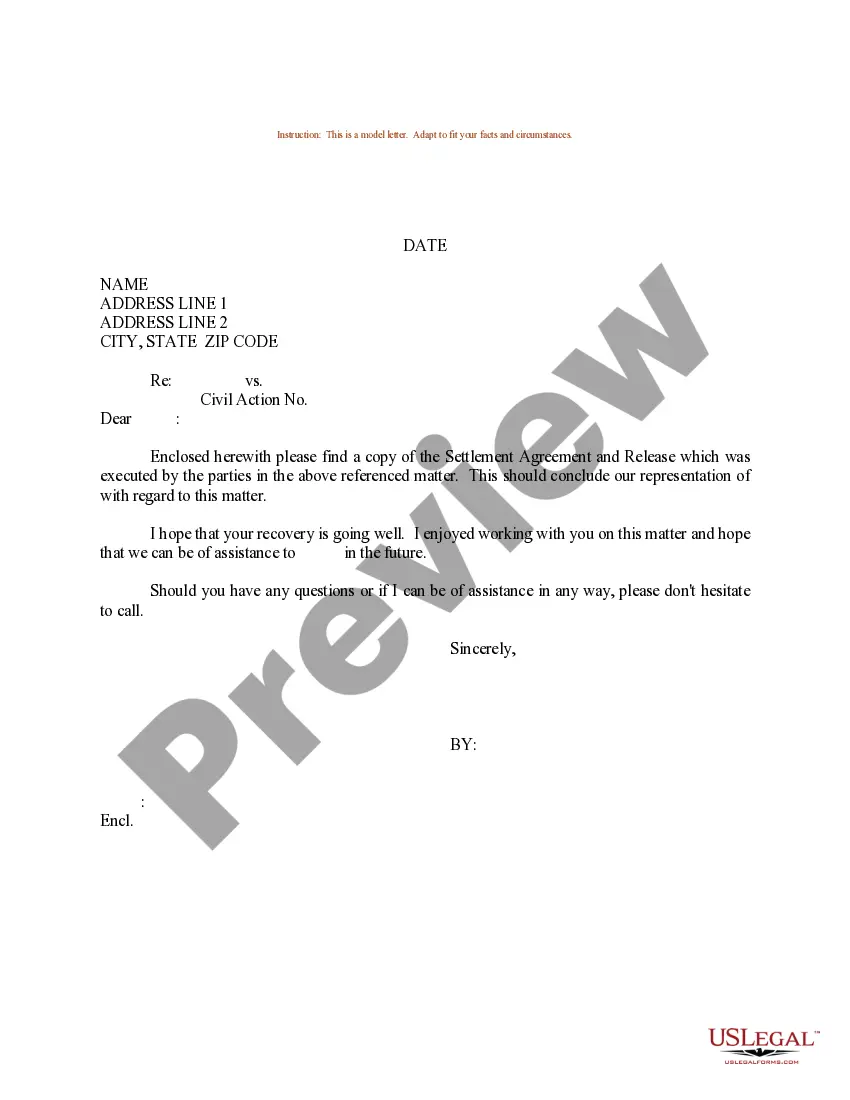
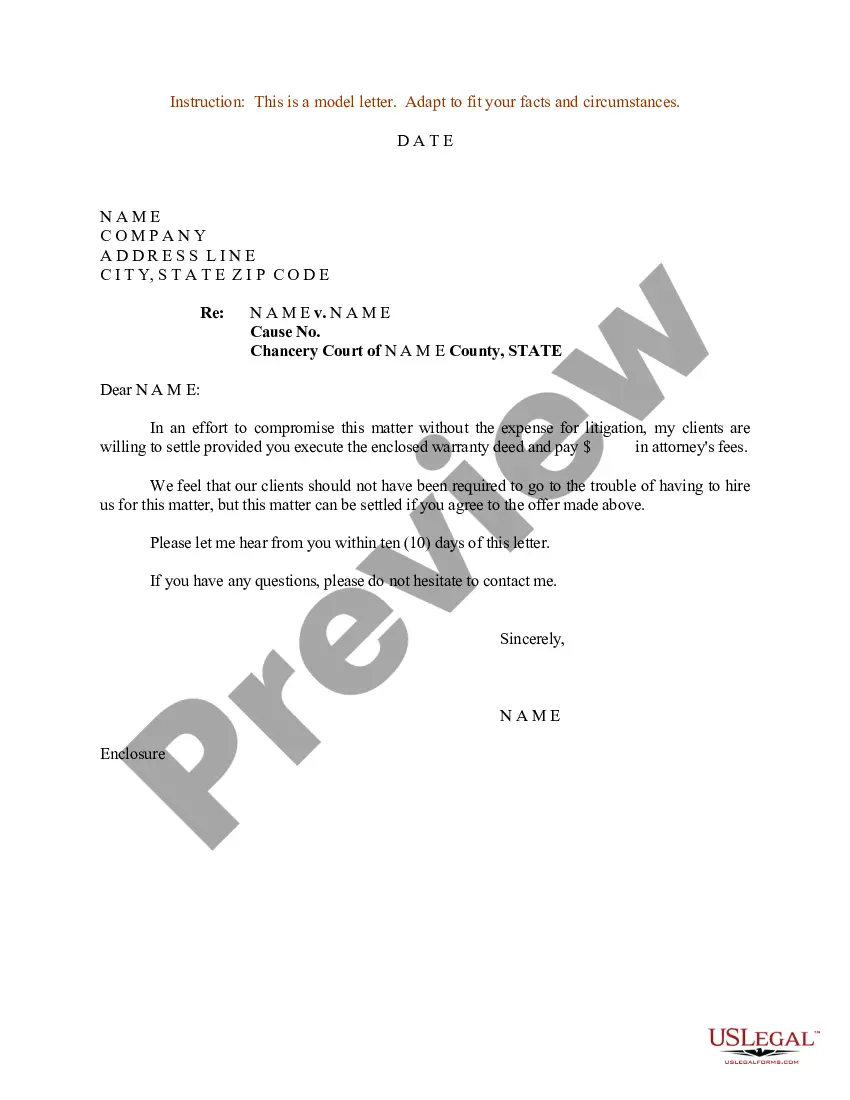

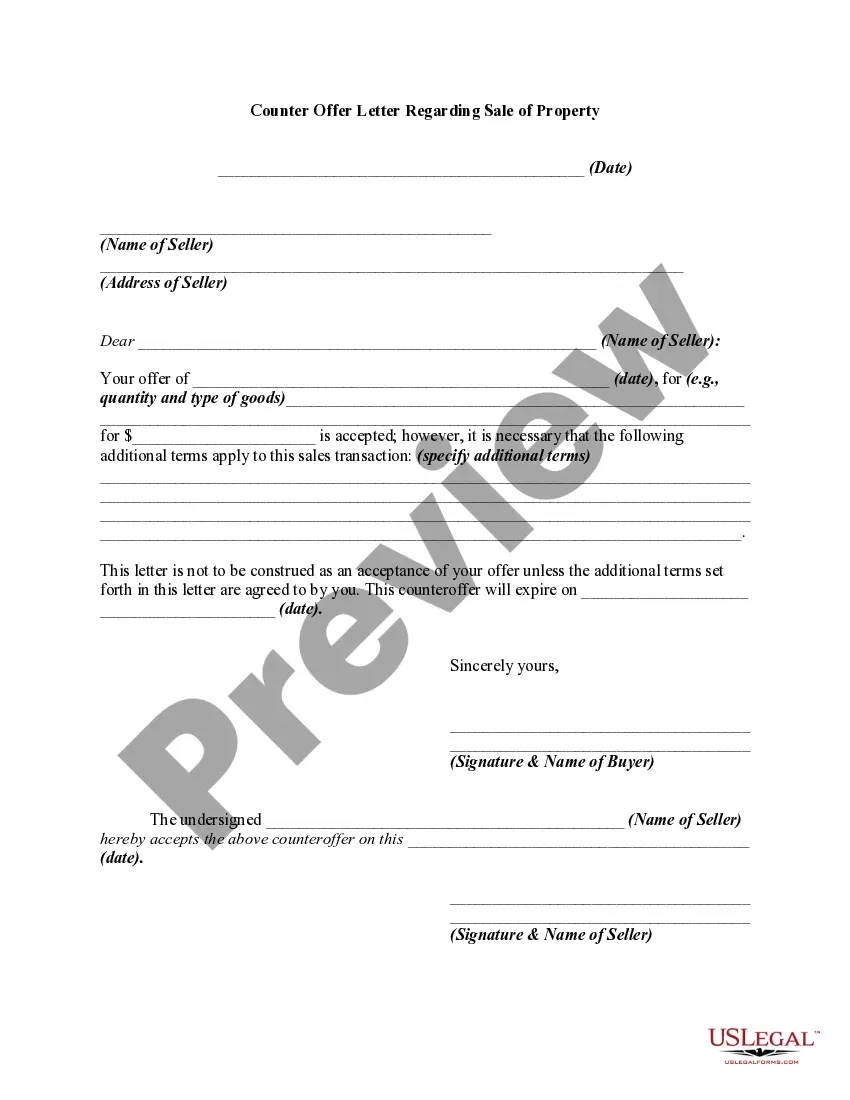
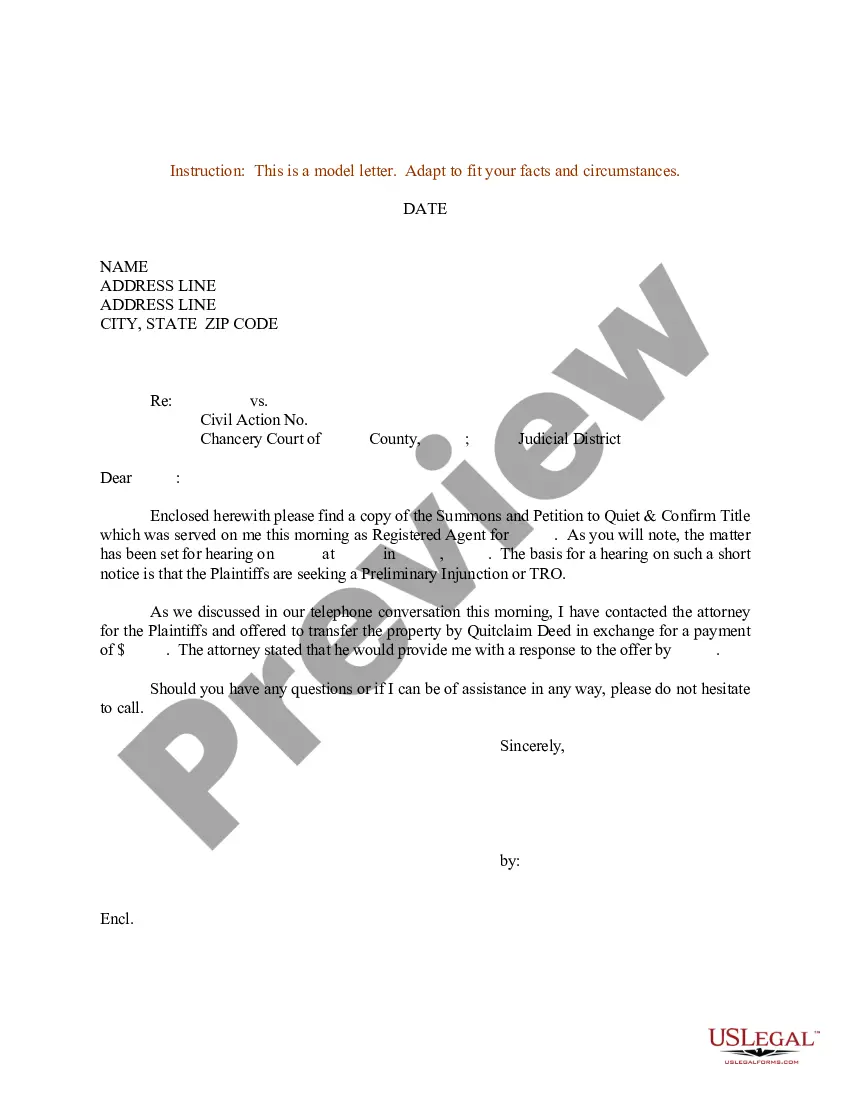
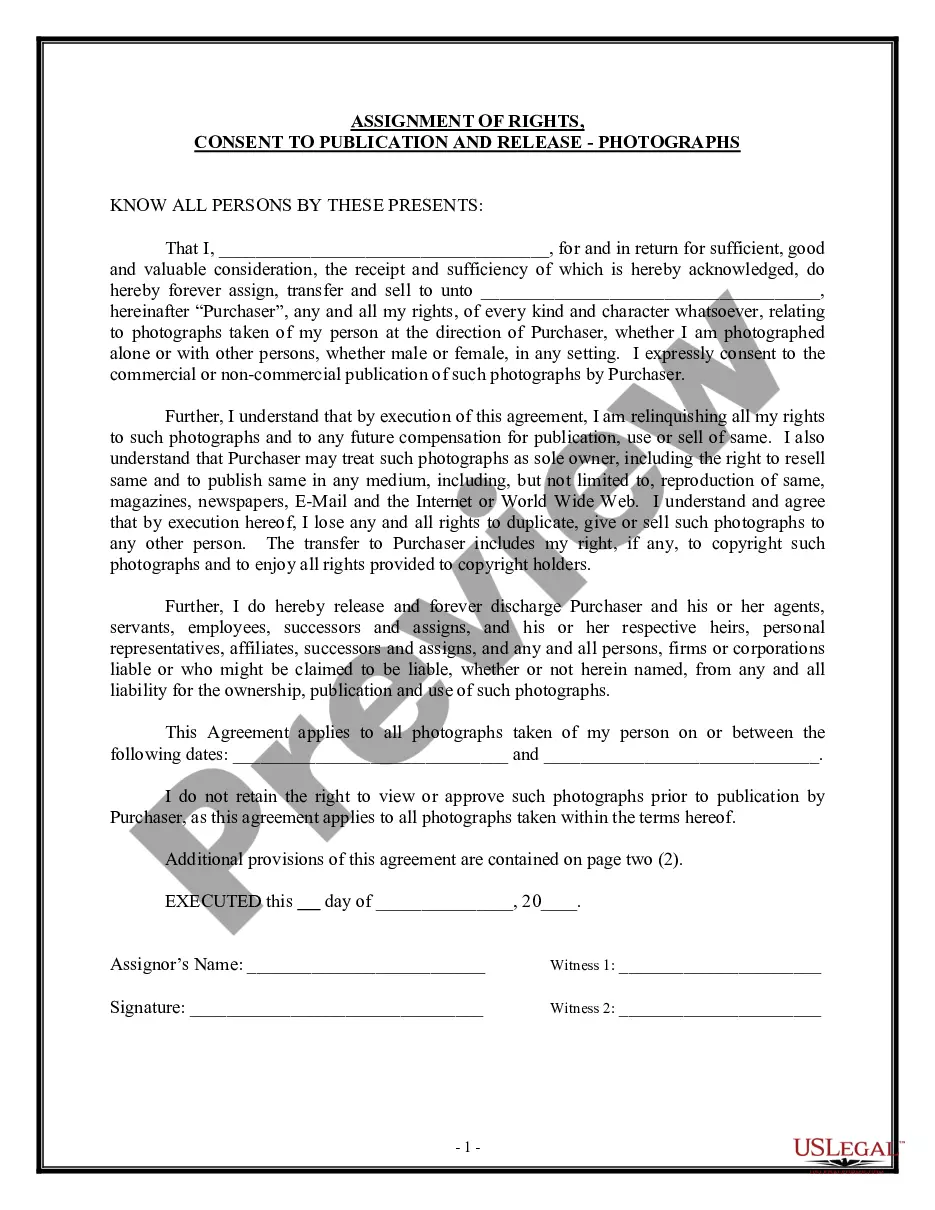
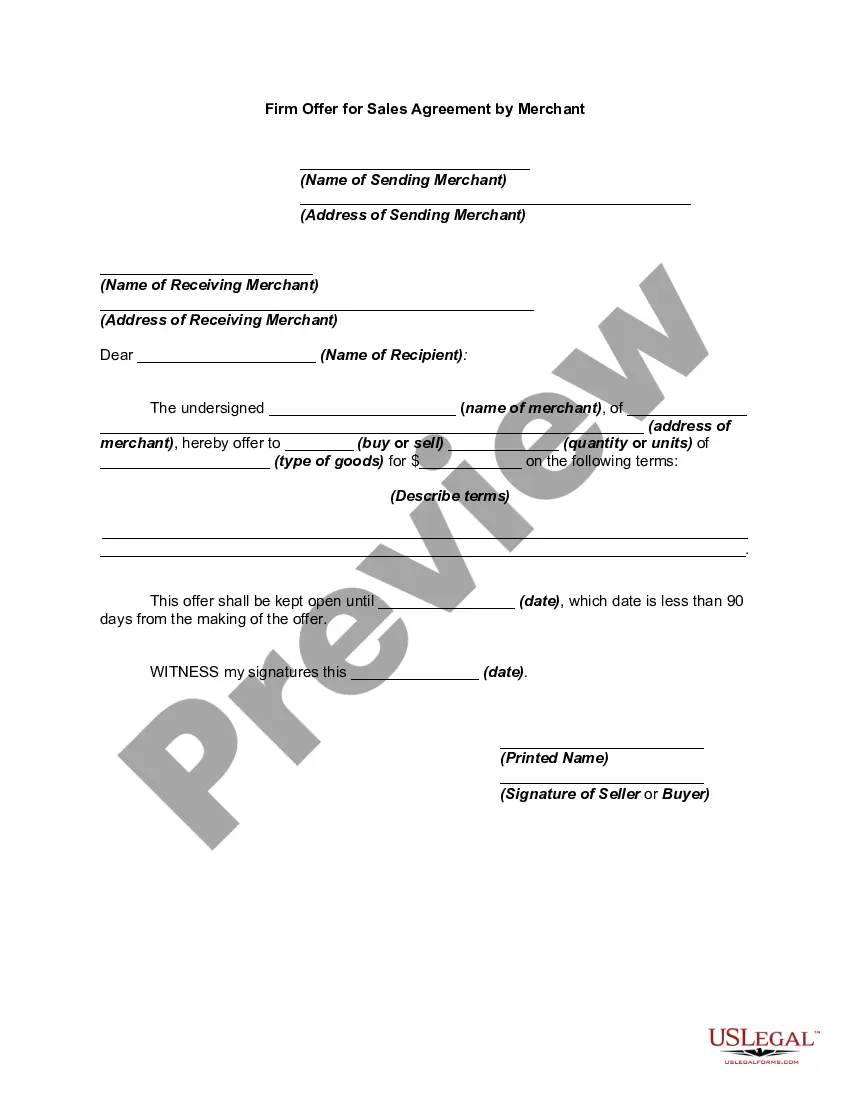
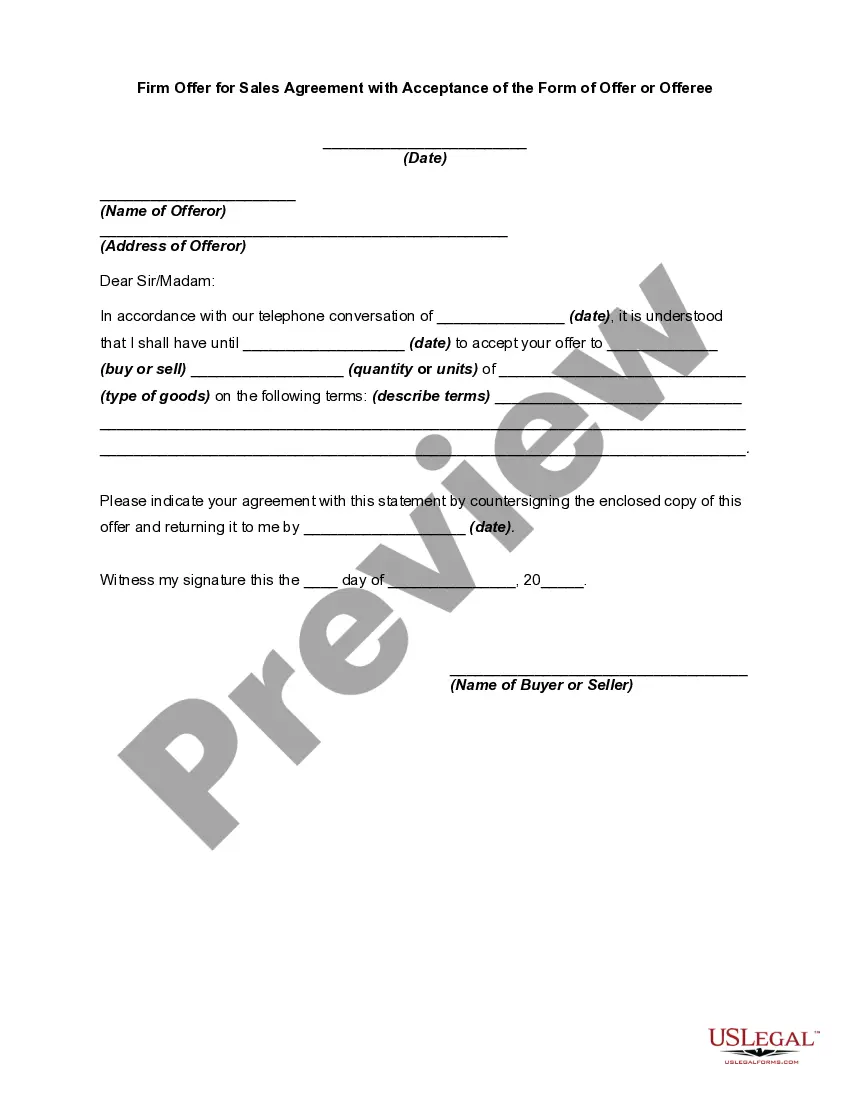
How to fill out Firm Offer For Sales Agreement With Specification Of Manner Of Acceptance?
Securing a reliable source for obtaining the most up-to-date and pertinent legal templates is a significant part of navigating bureaucracy.
Locating the appropriate legal documents requires accuracy and meticulousness, which is why it is essential to source samples of Offer And Acceptance With Example only from trusted providers, like US Legal Forms. An incorrect template can waste your time and impede your progress.
Eliminate the complications associated with your legal documents. Explore the vast US Legal Forms library where you can locate legal samples, verify their applicability to your situation, and download them immediately.
- Utilize the catalog search or input field to locate your template.
- Examine the form’s details to ensure it aligns with your state's and local requirements.
- Preview the form, if available, to confirm the template is the correct one you seek.
- Return to the search to find the correct document if the Offer And Acceptance With Example does not meet your needs.
- If you are confident about the form’s relevance, download it.
- If you are a registered user, click Log in to verify and access your chosen forms in My documents.
- If you do not have an account yet, click Buy now to acquire the template.
- Select the pricing option that best fits your requirements.
- Proceed to the registration to finalize your purchase.
- Complete your transaction by selecting a payment method (credit card or PayPal).
- Choose the file type for downloading Offer And Acceptance With Example.
- After obtaining the form on your device, you can edit it using the editor or print it out to fill it in by hand.
Form popularity
FAQ
An example of acceptance of an offer letter can be found in a response you send back to the employer. In your letter, you mention your acceptance of the job role, the salary, and your start date. This illustrates how effective communication solidifies the offer and acceptance with example. If you need assistance drafting your acceptance, consider using platforms like US Legal Forms for helpful templates.
To professionally accept an offer, start by expressing your gratitude for the opportunity. Confirm your acceptance clearly and include any relevant details, such as a start date. It’s best to communicate through a formal letter or email, ensuring you maintain professionalism. This demonstrates your understanding of the offer and acceptance with example, making a positive impression.
The law of offer and acceptance forms the backbone of contract law in many jurisdictions. It dictates how parties can articulate their willingness to enter into an agreement, ensuring that offers and subsequent acceptances meet legal standards. Contractual relationships hinge on this law, providing clarity on rights and obligations, which is crucial for resolving disputes. Utilizing tools from platforms like US Legal Forms can assist you in navigating these regulations effectively.
The common law rule for offer dictates that an offer must be communicated to the offeree and must outline clear terms to establish the intention to create a legal obligation. Additionally, the offer must remain open for acceptance until it is revoked or expires. Understanding this rule creates a solid foundation for contract law and guides parties in making legally enforceable agreements.
Legal rules regarding offer and acceptance emphasize clarity and communication. An offer must be definite in terms and made with the intention to be bound, while acceptance must be unequivocal and communicated to the offeror. Any modifications or counteroffers may disrupt the acceptance process, and understanding these rules is essential for ensuring contractual validity. Platforms like US Legal Forms can help clarify these rules and provide templates for effective agreements.
Yes, an offer and acceptance can create a legally binding contract if certain conditions are met. Both parties must have the intention to enter into a contract, along with an offer that is clear and an acceptance that corresponds to that offer. Additionally, consideration must be present, meaning both parties provide something of value, making the agreement enforceable under the law.
The legal rules for offer and acceptance require that an offer must be clear and specific, while acceptance must be communicated effectively to the offeror. Generally, acceptance must mirror the terms of the offer for a contract to be valid. Additionally, both parties must have the legal capacity to enter into a contract, and there must be consideration exchanged, enhancing the validity of the contract process.
An example of communication of offer and acceptance is found when a landlord informs a prospective tenant, 'I offer you a lease for $1,200 a month.' If the tenant replies, 'I accept your offer,' they have effectively communicated acceptance. This interaction highlights the essential elements of offer and acceptance with example in contractual agreements.
An example of offer and acceptance occurs when a seller lists a bike for sale at $300, and a buyer responds, 'I accept your offer for $300.' This exchange demonstrates how one party's offer can lead to acceptance, forming the basis of a legal contract. Understanding these dynamics is crucial in grasping offer and acceptance with example.
The rule of offer and acceptance is foundational in contract law, establishing how parties create binding agreements. Basically, one party makes a clear offer, and the other party must accept the offer exactly as presented. Understanding this rule is essential for anyone navigating offer and acceptance with example in legal contexts.