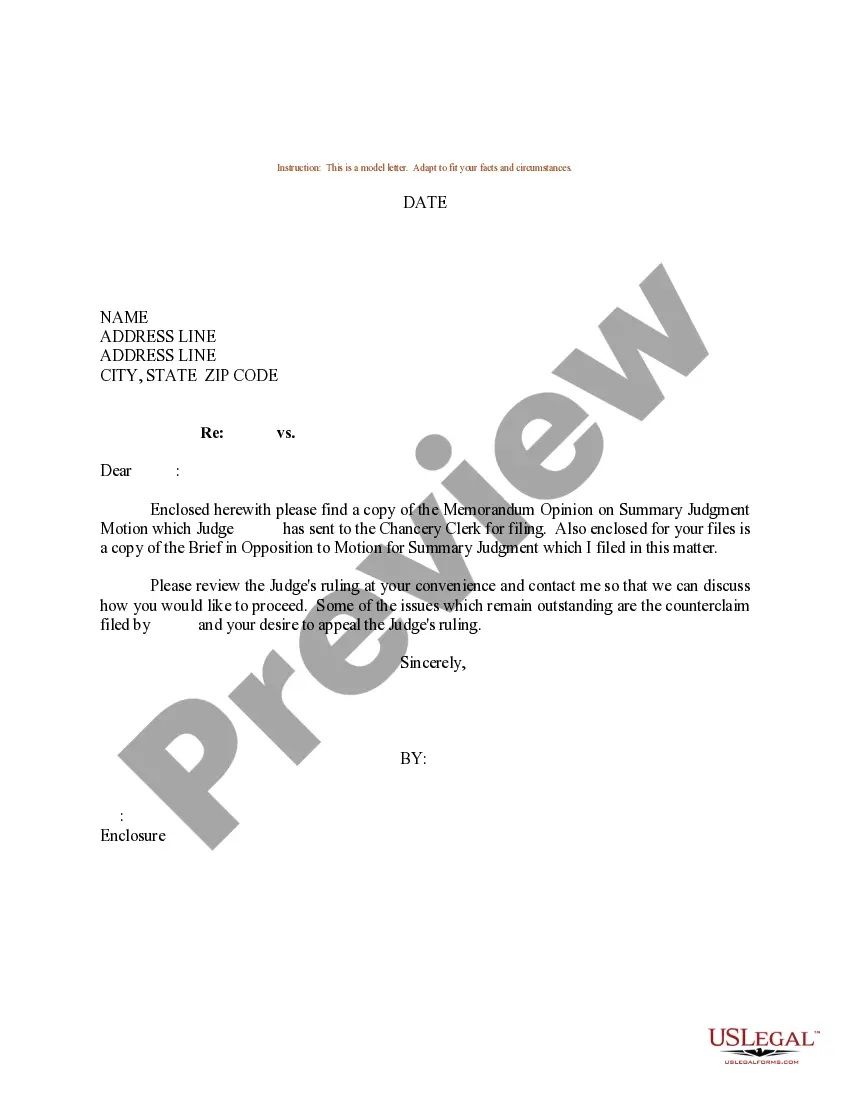
Plaintiff Motion For Summary Judgment Example
Description
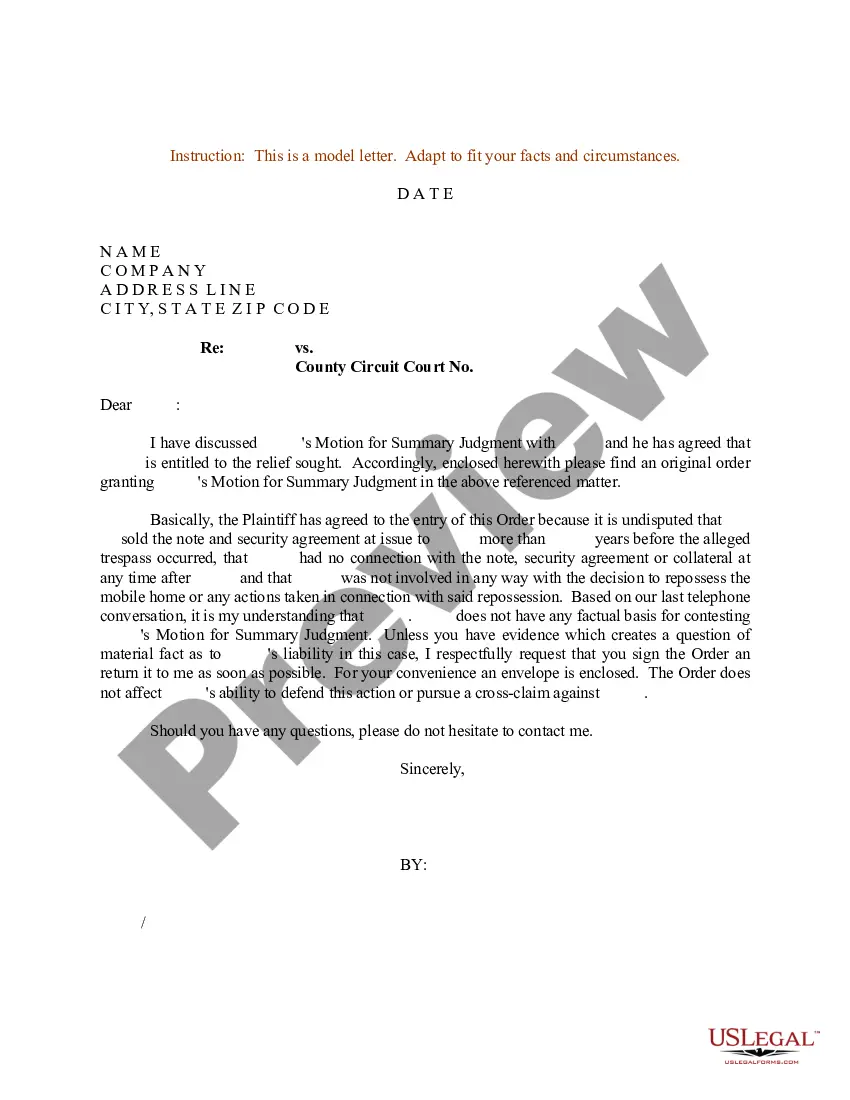
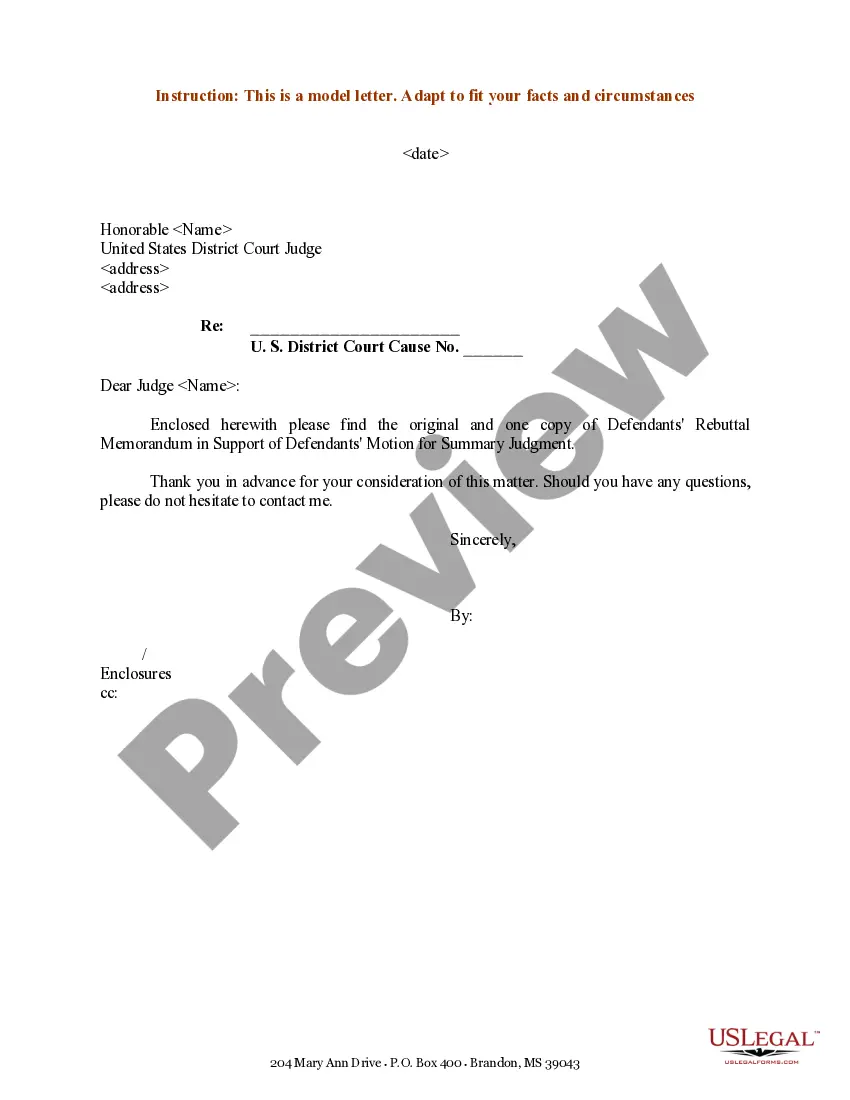
Get your form ready online
Our built-in tools help you complete, sign, share, and store your documents in one place.
Make edits, fill in missing information, and update formatting in US Legal Forms—just like you would in MS Word.
Download a copy, print it, send it by email, or mail it via USPS—whatever works best for your next step.
Sign and collect signatures with our SignNow integration. Send to multiple recipients, set reminders, and more. Go Premium to unlock E-Sign.
If this form requires notarization, complete it online through a secure video call—no need to meet a notary in person or wait for an appointment.
We protect your documents and personal data by following strict security and privacy standards.

Make edits, fill in missing information, and update formatting in US Legal Forms—just like you would in MS Word.

Download a copy, print it, send it by email, or mail it via USPS—whatever works best for your next step.

Sign and collect signatures with our SignNow integration. Send to multiple recipients, set reminders, and more. Go Premium to unlock E-Sign.

If this form requires notarization, complete it online through a secure video call—no need to meet a notary in person or wait for an appointment.

We protect your documents and personal data by following strict security and privacy standards.
Looking for another form?
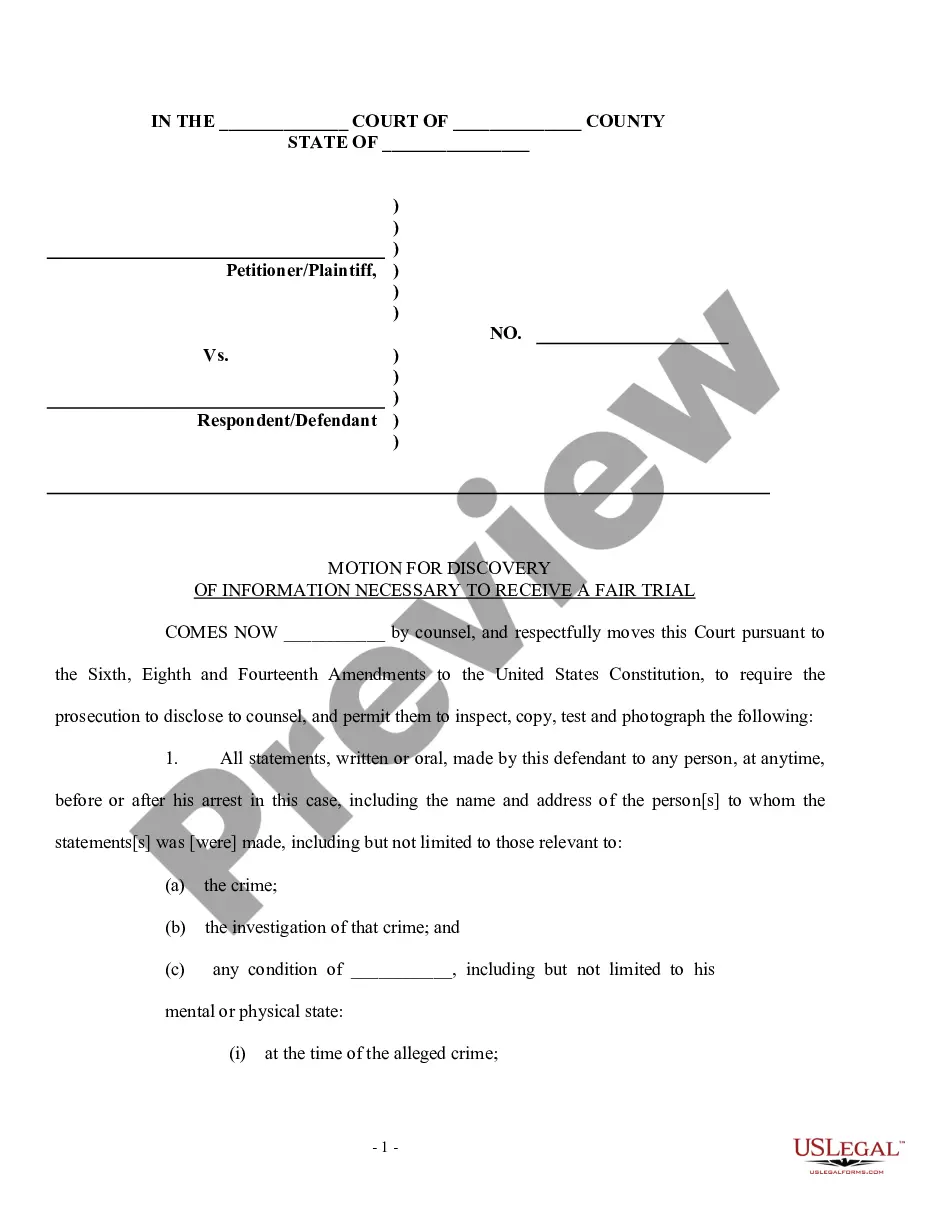



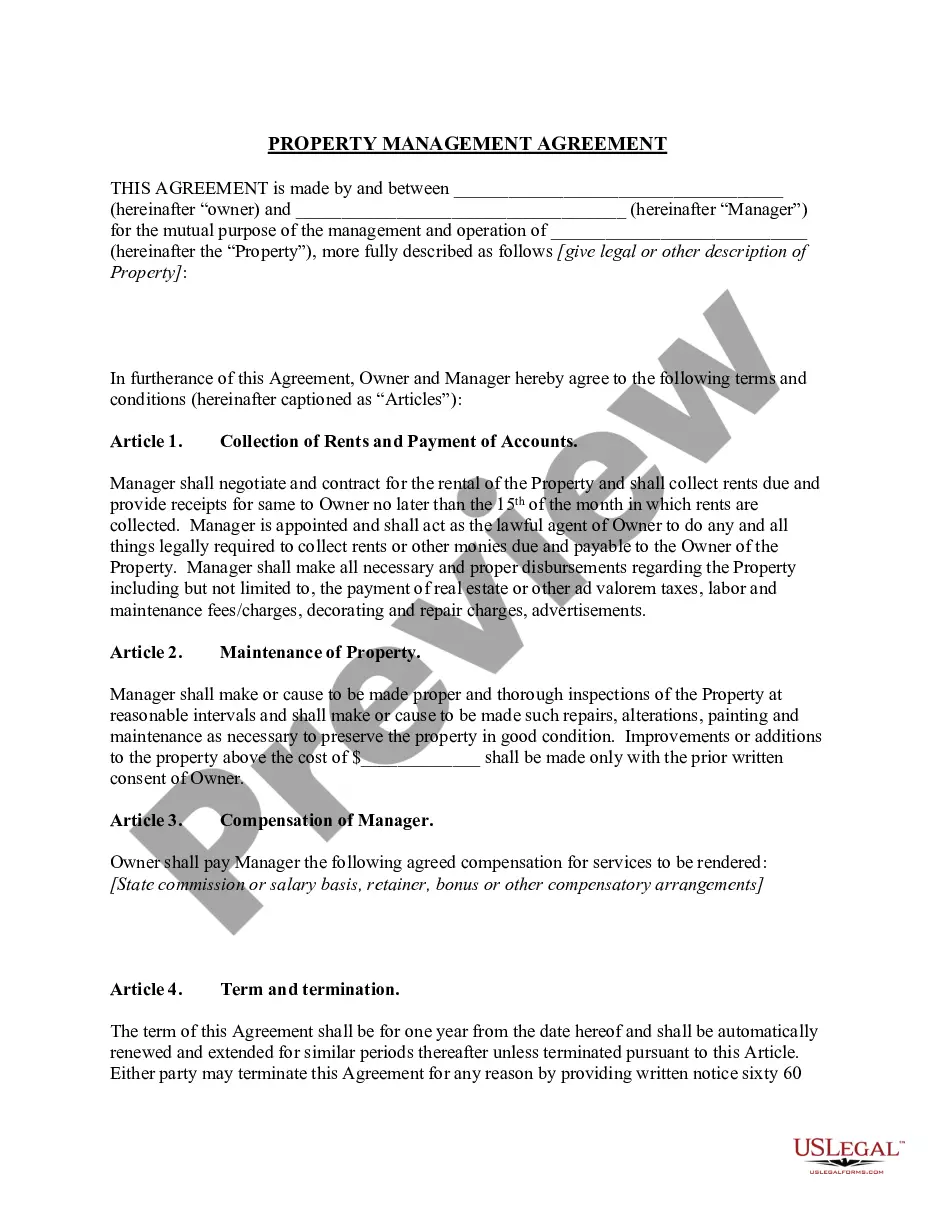
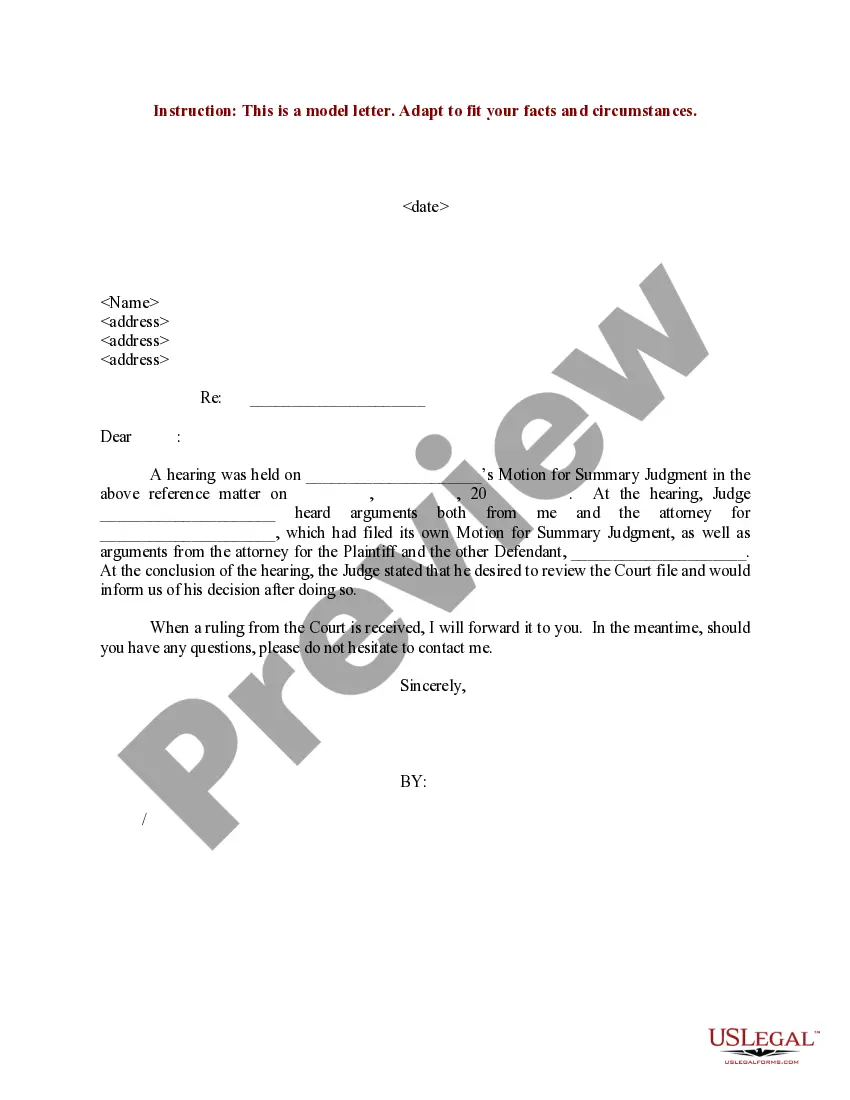
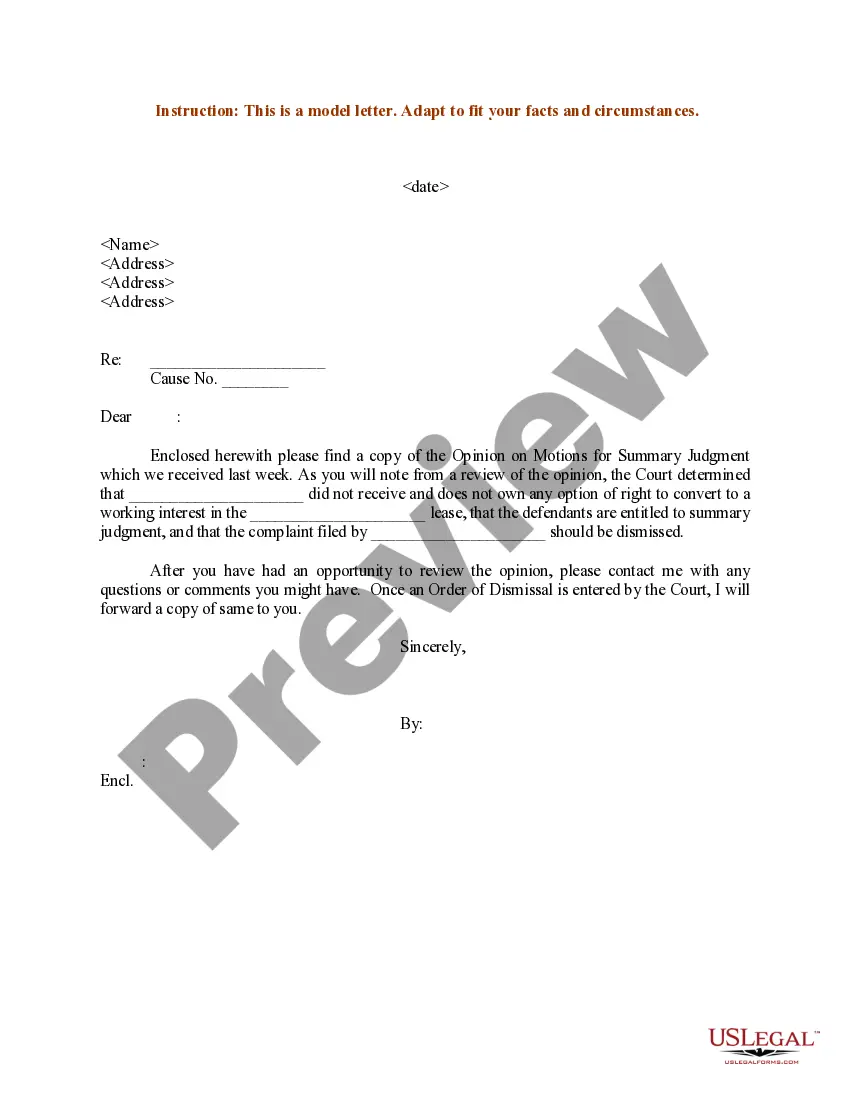
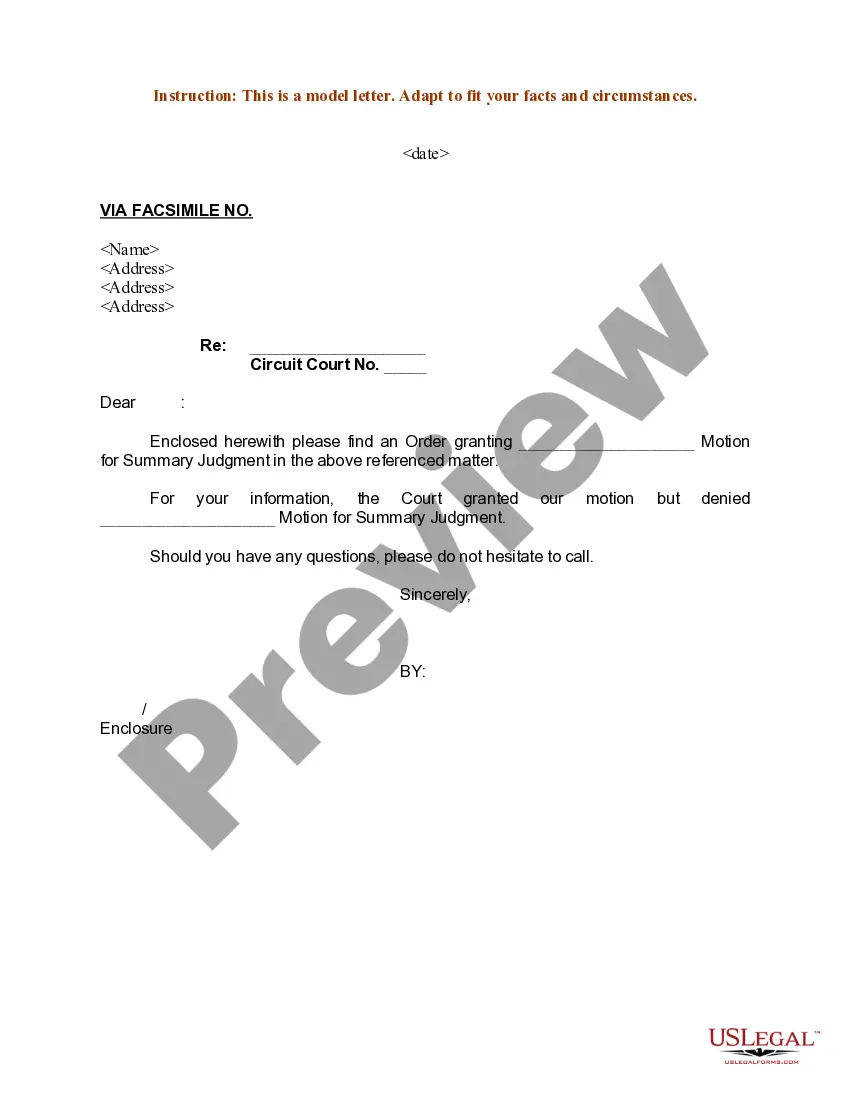
How to fill out Sample Letter Regarding Memorandum Opinion On Summary Judgment Motion?
Legal documentation management can be daunting, even for seasoned professionals.
When you are on the lookout for a Plaintiff Motion For Summary Judgment Example and lack the time to devote to finding the right and updated version, the process can be taxing.
US Legal Forms caters to any requirements you may have, from personal to corporate paperwork, all in one convenient location.
Leverage advanced tools to complete and oversee your Plaintiff Motion For Summary Judgment Example.
Here are the steps to follow after obtaining the form you need: Verify that it is the correct form by previewing it and reviewing its details. Ensure the template is valid in your state or county. Click Buy Now when you are prepared. Choose a subscription plan. Select the file format you prefer, and Download, complete, eSign, print, and send your document. Experience the US Legal Forms online directory, backed by 25 years of expertise and dependability. Transform your daily document management into a seamless and user-friendly process today.
- Access a valuable repository of articles, guides, and manuals related to your case and needs.
- Save time and effort searching for the documents you require, and utilize US Legal Forms’ sophisticated search and Preview feature to locate Plaintiff Motion For Summary Judgment Example and obtain it.
- If you have a subscription, Log In to your US Legal Forms account, search for the form, and download it.
- Check the My documents tab to view the documents you have previously saved and organize your folders as needed.
- If this is your first time with US Legal Forms, create an account and enjoy unlimited access to all the platform's benefits.
- A robust online form directory could be a transformative asset for anyone looking to manage these matters effectively.
- US Legal Forms stands as a frontrunner in digital legal documents, offering over 85,000 state-specific legal forms accessible to you at any time.
- With US Legal Forms, you can access state- or county-specific legal and business documents.
Form popularity
FAQ
To respond to a plaintiff motion for summary judgment example, first, carefully review the motion and the evidence presented. Identify the key points and arguments made by the plaintiff, and then gather your own evidence and legal arguments to counter these claims. Your response should clearly detail any factual disputes and cite relevant laws or precedents. Utilizing resources like US Legal Forms can provide templates and guidance to help you formulate a strong and effective answer.
Yes, a plaintiff can file a motion for summary judgment if they believe there are no genuine disputes of material fact in their case. This legal tool allows the plaintiff to seek a favorable ruling from the court based on the evidence presented. By using a plaintiff motion for summary judgment example, individuals can better understand how to frame their arguments and evidence effectively. Exploring resources like US Legal Forms can provide valuable insights and templates to assist in this process.
Writing a motion for summary judgment requires a structured approach to present your case clearly. Begin by outlining the facts of the case, followed by the legal standards that apply to your situation. Next, include the evidence that supports your claims, referencing the plaintiff motion for summary judgment example throughout. For assistance in drafting your motion, consider using templates from US Legal Forms, which can guide you in creating a compelling document.
To effectively support a plaintiff motion for summary judgment example, evidence must be presented in a clear and organized manner. This typically includes affidavits, depositions, and relevant documents that substantiate your claims. Each piece of evidence should be properly labeled and referenced to ensure it aligns with the arguments made in the motion. Utilizing tools such as US Legal Forms can simplify the process of compiling and organizing this evidence.
You must include a summary of the legal basis for your opposition, explain the reason you are opposing the motion, and state what you would like the judge to order.
-- A motion for summary judgment may be brought before either a master or a judge ?at the option of the moving party? (para 2). In the circumstances specified under r. 20.04(4), a motion brought before a master may be adjourned to be heard by a judge who can exercise those powers.
The introductory paragraph should begin, "Defendant John Smith respectfully moves for summary judgment. As reasons for this motion?." Then list your arguments, as in the motion itself. Some practitioners state that you should not repeat language word for word, but I disagree.
Legal Writing Tip: Start Your Brief with a Solid Introduction Begin with a paragraph or two explaining who the parties are; when, where, and how the dispute arose; what the question is (what the fight is over); and why your side is right. ... List three or four reasons why you should win.
Stated differently, to successfully defend against summary judgment the non-moving party (you) should seek to demonstrate that indeed there are material facts in dispute. Alternatively, the non-moving party (you) can argue that the undisputed facts support a judgment as a matter of law in your favor.