Writ For Habeas Corpus
Description




Get your form ready online
Our built-in tools help you complete, sign, share, and store your documents in one place.
Make edits, fill in missing information, and update formatting in US Legal Forms—just like you would in MS Word.
Download a copy, print it, send it by email, or mail it via USPS—whatever works best for your next step.
Sign and collect signatures with our SignNow integration. Send to multiple recipients, set reminders, and more. Go Premium to unlock E-Sign.
If this form requires notarization, complete it online through a secure video call—no need to meet a notary in person or wait for an appointment.
We protect your documents and personal data by following strict security and privacy standards.

Make edits, fill in missing information, and update formatting in US Legal Forms—just like you would in MS Word.

Download a copy, print it, send it by email, or mail it via USPS—whatever works best for your next step.

Sign and collect signatures with our SignNow integration. Send to multiple recipients, set reminders, and more. Go Premium to unlock E-Sign.

If this form requires notarization, complete it online through a secure video call—no need to meet a notary in person or wait for an appointment.

We protect your documents and personal data by following strict security and privacy standards.
Looking for another form?

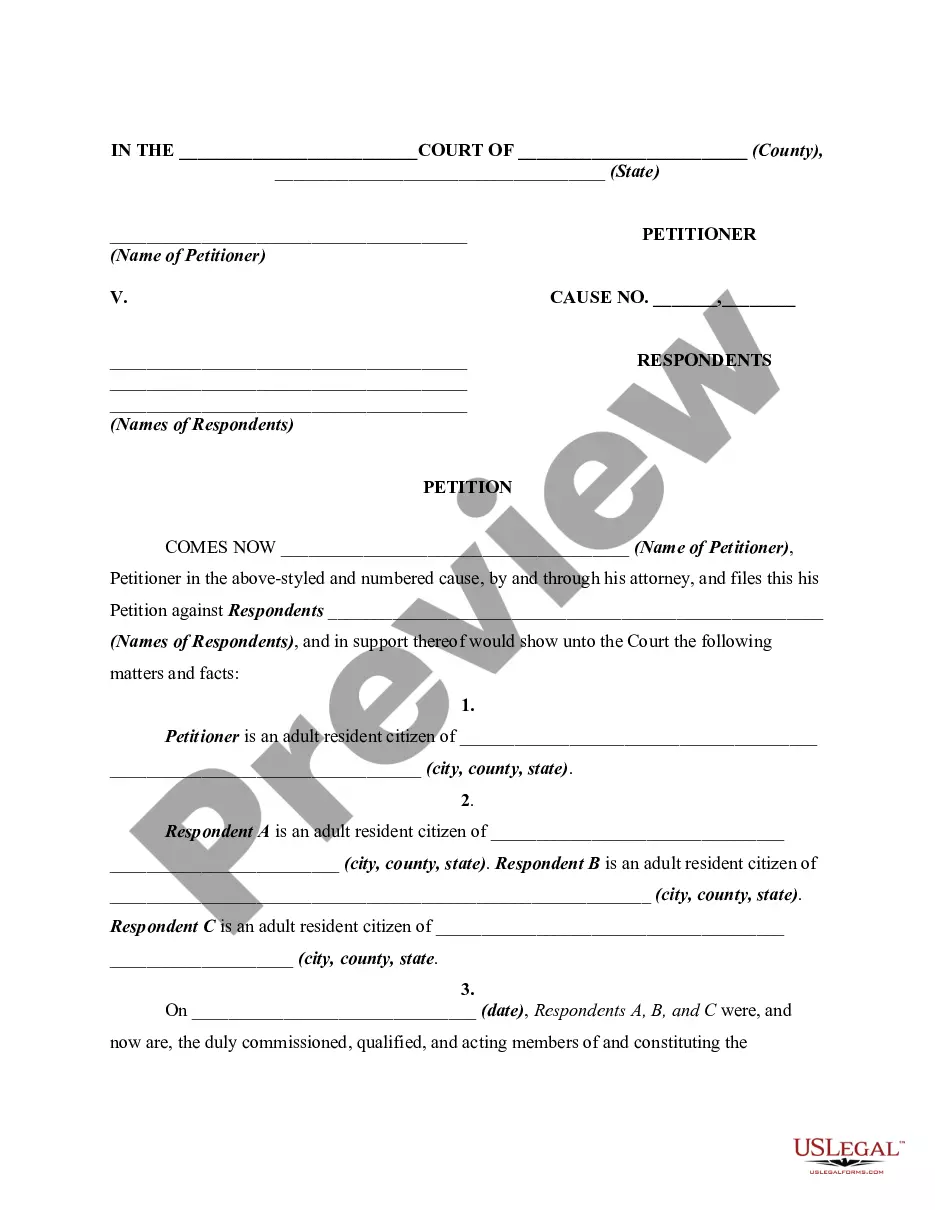

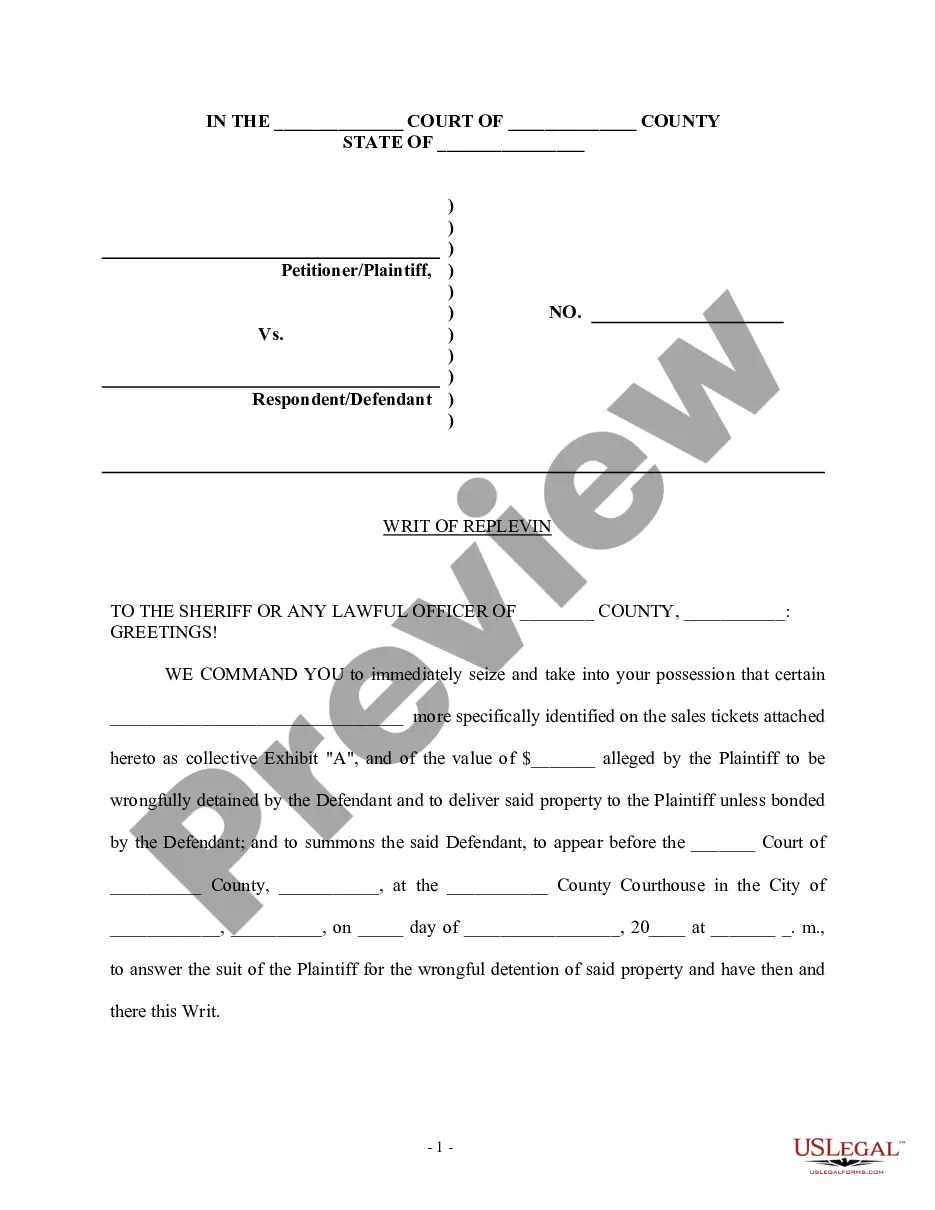
How to fill out Writ Of Replevin Or Repossession?
- Log in to your account on US Legal Forms. Ensure your subscription is active to access the required templates.
- Select the appropriate form by reviewing the Preview mode and description. Confirm that it meets your specific jurisdictional needs.
- If necessary, search for other templates using the Search tab to ensure you find the correct form.
- Purchase the selected document by clicking on 'Buy Now' and choose a suitable subscription plan. Create an account if you’re a new user.
- Complete your transaction by providing payment details through credit card or PayPal.
- Download the completed form and save it on your device, accessing it anytime via the 'My Forms' section in your profile.
Following these steps will ensure that you successfully obtain your writ for habeas corpus with ease, allowing you to focus on more pressing legal matters.
Start your legal journey today by exploring the vast array of resources available on US Legal Forms and ensure your documents are properly filed.
Form popularity
FAQ
An example of a writ of habeas corpus occurs when a person is detained without proper legal justification. In such cases, an individual can file for a writ for habeas corpus, seeking release from unlawful imprisonment. This legal tool compels a court to examine the legality of the person's detention. By using the writ for habeas corpus, individuals can challenge their detention and ensure their freedom under the law.
Habeas corpus offers crucial protection by allowing you to challenge unlawful detention. This legal remedy ensures that your right to personal freedom is upheld in the face of wrongful imprisonment. By filing a writ for habeas corpus, you assert your right to fair legal representation and due process. It's essential for everyone to understand its impact on maintaining justice and personal liberty.
The writ of habeas corpus is a court order that requires a person holding someone in custody to present that individual before the court. The primary aim is to ensure that no one is unjustly deprived of their freedom without legal grounds. This writ serves as a powerful tool for asserting your rights against unlawful detention. Its significance in the legal system cannot be overstated.
In legal terms, 'corpus' refers to a body or a collection of things. Specifically, it denotes the body of the individual who is being detained or imprisoned. The term is essential in the context of habeas corpus, indicating the significance of the physical person in custody. This highlights the importance of personal liberty and the legal recognition of the individual.
You might file a writ for habeas corpus if you believe you are being detained without legal justification. This writ helps you contest wrongful imprisonment and can lead to your release if the court finds your detention illegal. It serves as an essential tool for individuals seeking to affirm their freedom. Utilizing platforms like US Legal Forms can simplify the process of filing this important legal petition.
Habeas corpus is a legal procedure that protects individuals from unlawful detention or imprisonment. Essentially, it allows you to challenge the legality of your imprisonment before a court. When someone files a writ for habeas corpus, the court examines whether the detention is justified. This fundamental right acts as a safeguard against abuses of power.
The writ of habeas data is a legal remedy that allows individuals to access their personal information held by authorities. This concept ensures that you can know how and why your information is being used. It empowers you to seek correction or removal of inaccurate data. Thus, understanding this writ is essential in protecting your privacy rights.
Some common grounds for relief through a writ for habeas corpus include illegal arrest, ineffective legal representation, and violations of due process. Additionally, any substantial evidence that may have been overlooked during the initial proceedings can serve as a basis for filing. Understanding these grounds is crucial for anyone seeking justice in the courts. USLegalForms provides valuable resources that can assist in identifying and articulating these grounds in a formal request.
The grounds for a writ for habeas corpus typically include violations of constitutional rights, lack of jurisdiction by the court that issued the original detention order, or new evidence that could exonerate the detained individual. It is essential to present compelling evidence to support your claims. Familiarizing yourself with these grounds can help you build a stronger case. Consider using USLegalForms to navigate your rights and prepare your documentation effectively.
Individuals may file a writ for habeas corpus when they believe they are being unlawfully detained. Common reasons include wrongful conviction, lack of legal representation during trial, or continued incarceration despite the expiration of a sentence. This legal tool serves as a vital check on the justice system, ensuring that individuals have the right to challenge their detention. Utilizing resources from USLegalForms can help clarify the process and enhance understanding.