Unjust Enrichment Form With Decimals
Description
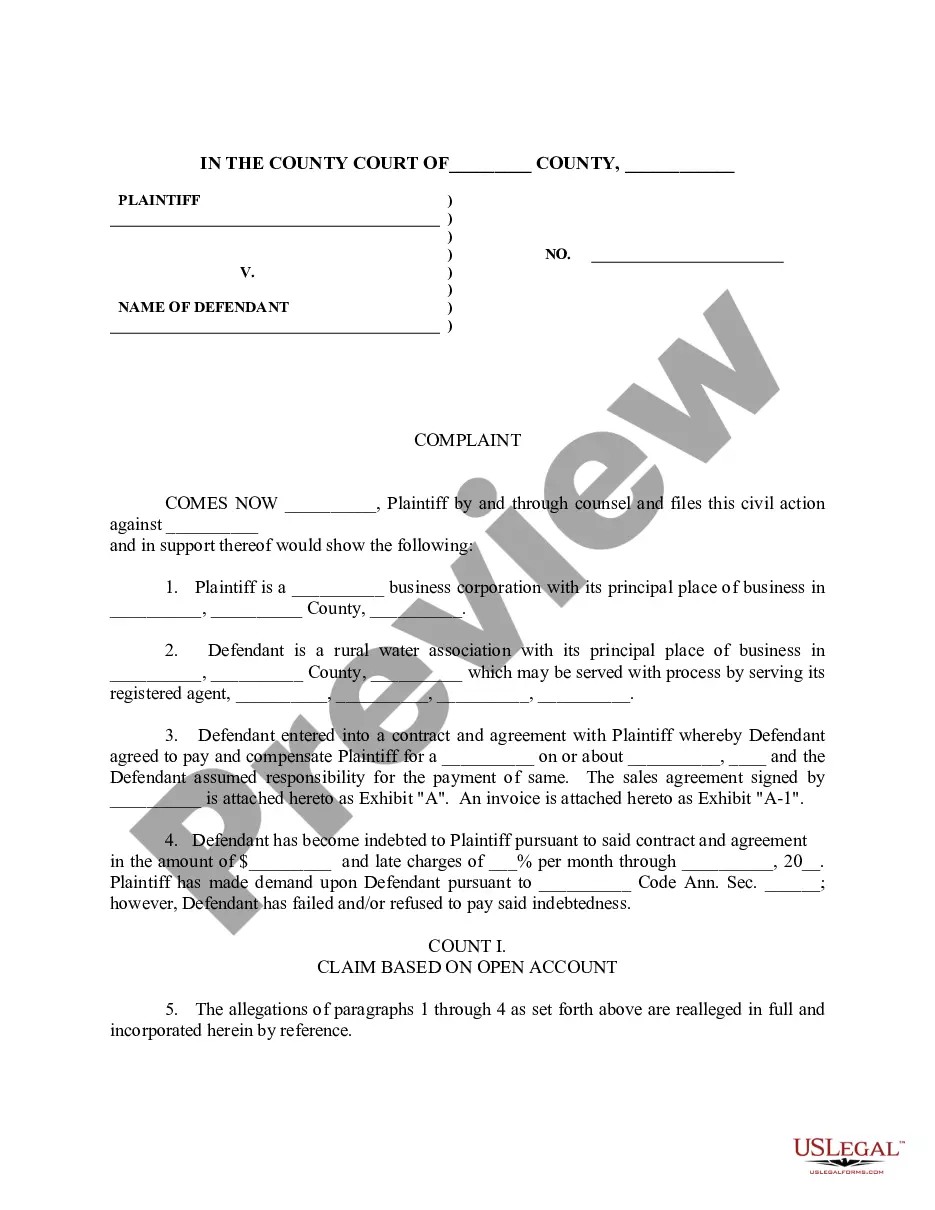
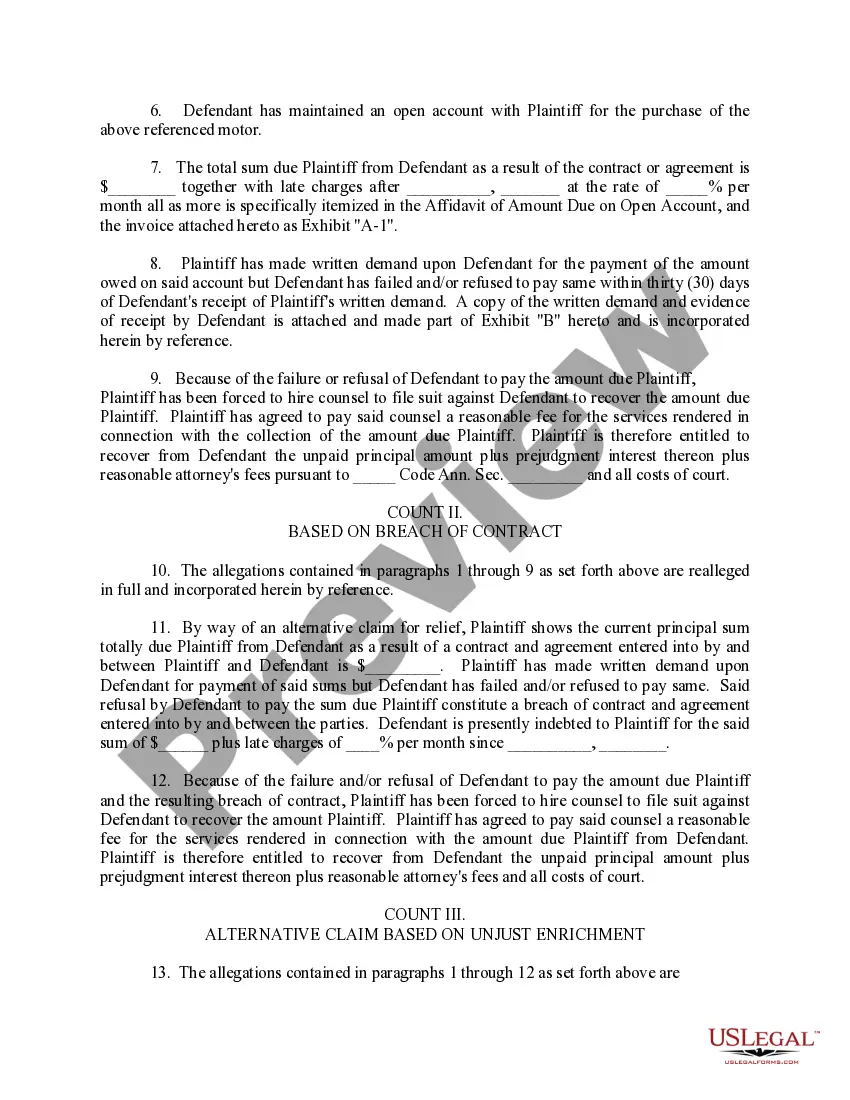
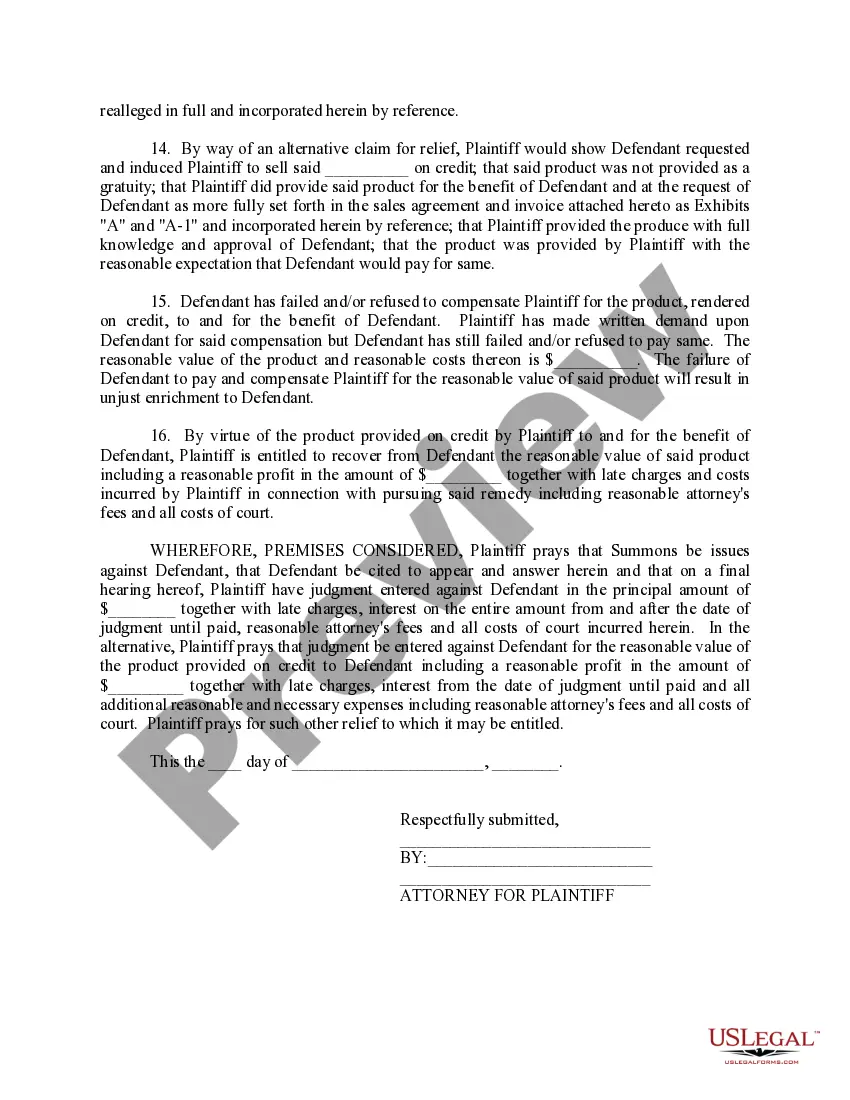
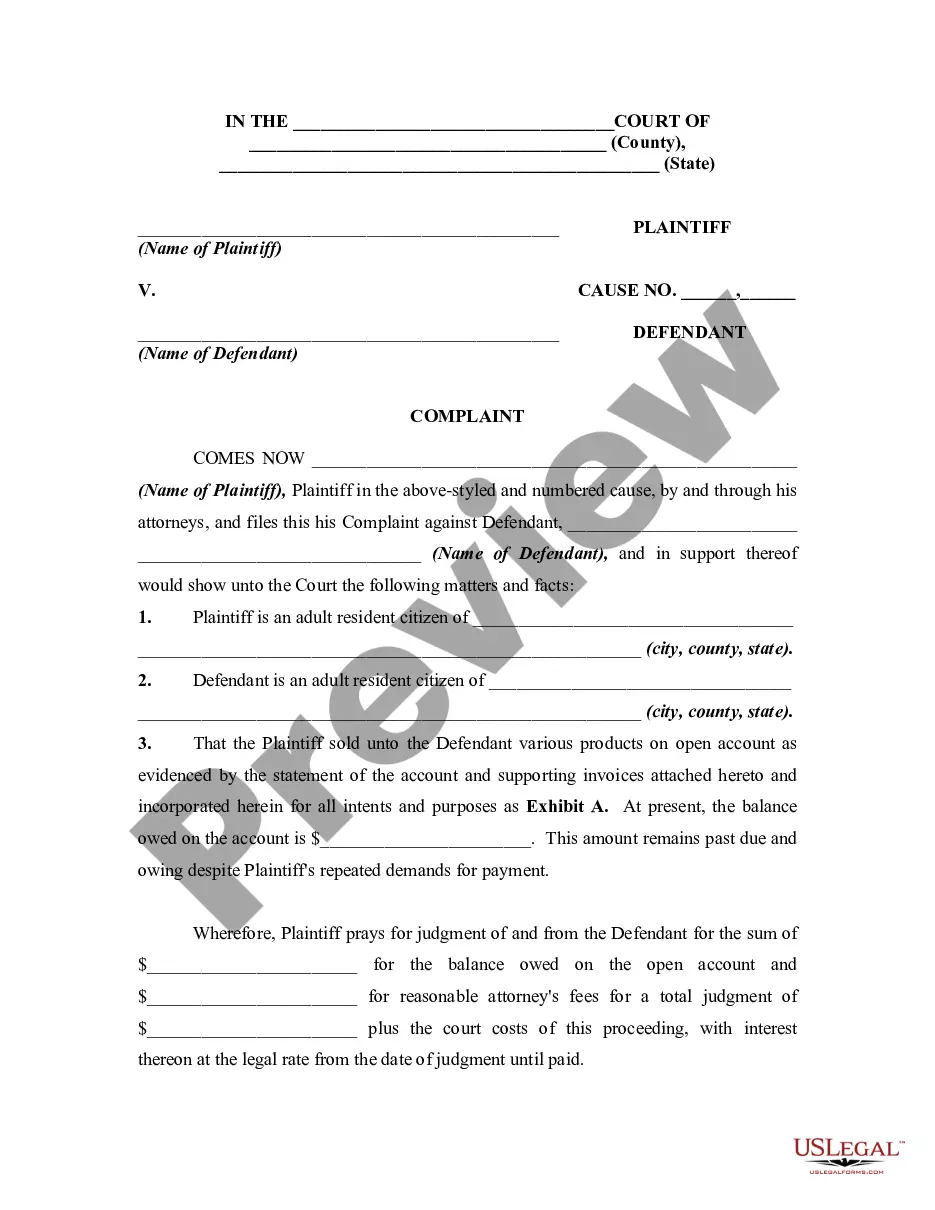
Get your form ready online
Our built-in tools help you complete, sign, share, and store your documents in one place.
Make edits, fill in missing information, and update formatting in US Legal Forms—just like you would in MS Word.
Download a copy, print it, send it by email, or mail it via USPS—whatever works best for your next step.
Sign and collect signatures with our SignNow integration. Send to multiple recipients, set reminders, and more. Go Premium to unlock E-Sign.
If this form requires notarization, complete it online through a secure video call—no need to meet a notary in person or wait for an appointment.
We protect your documents and personal data by following strict security and privacy standards.

Make edits, fill in missing information, and update formatting in US Legal Forms—just like you would in MS Word.

Download a copy, print it, send it by email, or mail it via USPS—whatever works best for your next step.

Sign and collect signatures with our SignNow integration. Send to multiple recipients, set reminders, and more. Go Premium to unlock E-Sign.

If this form requires notarization, complete it online through a secure video call—no need to meet a notary in person or wait for an appointment.

We protect your documents and personal data by following strict security and privacy standards.
Looking for another form?

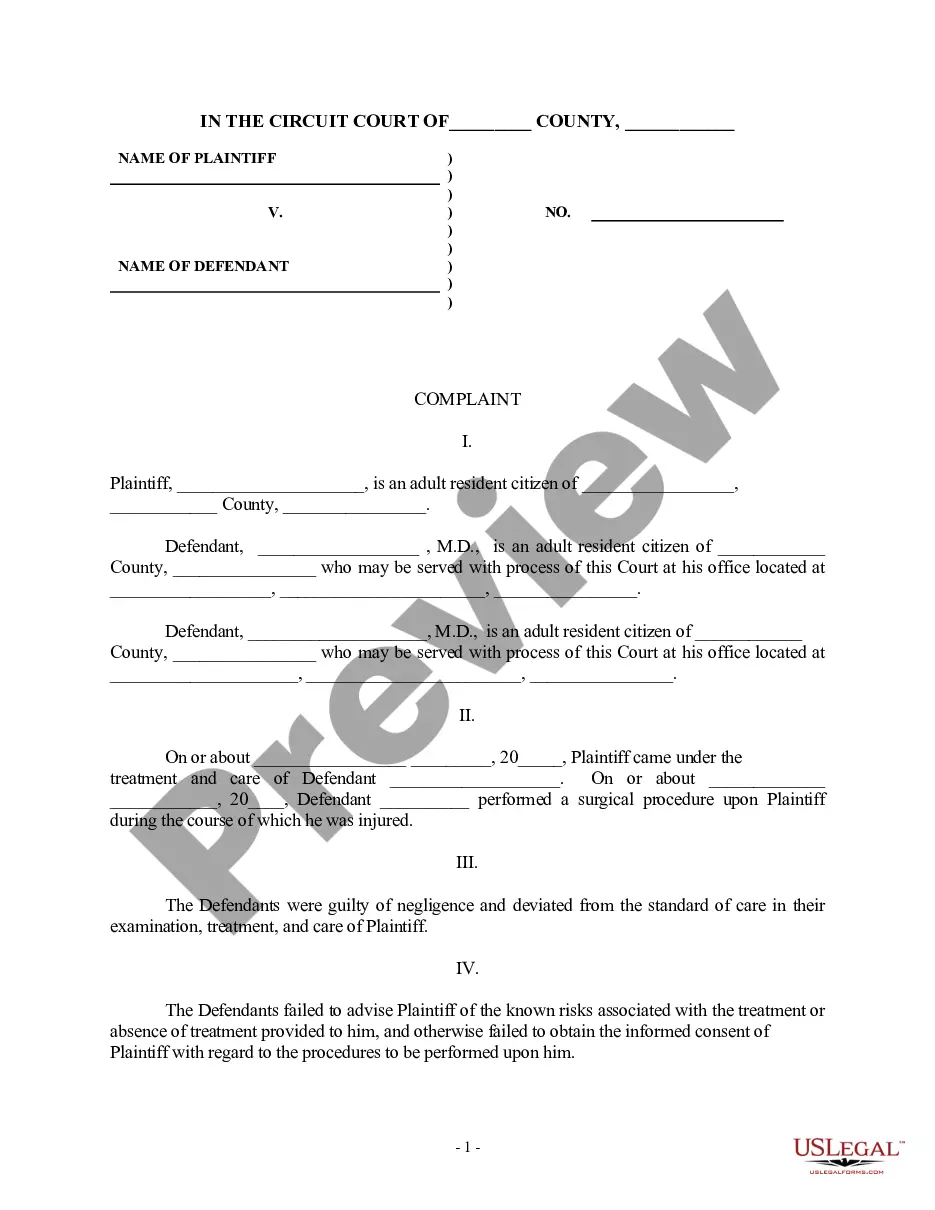
How to fill out Complaint Based On Open Account, Breach Of Contract, Unjust Enrichment?
Finding a reliable location to obtain the latest and most pertinent legal forms is a significant portion of managing administrative tasks.
Selecting the appropriate legal documents necessitates accuracy and meticulousness, which highlights the importance of sourcing samples of the Unjust Enrichment Form With Decimals solely from reputable providers, such as US Legal Forms.
Once the document is on your device, you can edit it using the editor or print it out and complete it manually. Remove the stress associated with your legal documents. Explore the vast US Legal Forms library to locate legal templates, evaluate their relevance to your situation, and download them promptly.
- Utilize the catalog navigation or search field to identify your document.
- Review the form's description to determine if it aligns with the regulations of your state and area.
- Preview the form, if available, to confirm it is the one you require.
- Return to the search and locate the suitable document if the Unjust Enrichment Form With Decimals does not cater to your necessities.
- Once you are confident about the document's applicability, download it.
- As a registered user, click Log in to verify and access your chosen forms in My documents.
- If you haven't created an account yet, click Buy now to obtain the form.
- Select the pricing option that meets your requirements.
- Continue to the registration process to complete your purchase.
- Conclude your transaction by selecting a payment method (credit card or PayPal).
- Choose the format for downloading the Unjust Enrichment Form With Decimals.
Form popularity
FAQ
The standard of proof for unjust enrichment generally requires the claimant to demonstrate that the defendant received a benefit at their expense. In legal terms, this means showing that the defendant unjustly retained something that belonged to the claimant. To succeed, you must provide clear evidence of the enrichment and how it occurred. Using the unjust enrichment form with decimals can help you organize your evidence and present your case effectively.
The principles of unjust enrichment focus on preventing one party from unjustly benefiting at the expense of another. The law aims to promote fairness and equity by ensuring that individuals or entities do not profit without a proper foundation. Employing an unjust enrichment form with decimals can streamline the process of enforcing these principles and ensure that all parties understand their rights and obligations.
The four elements of a cause of action generally include a duty owed by the defendant to the plaintiff, a breach of that duty, causation linking the breach to the harm suffered, and damages resulting from that harm. Each element must be proven for a successful claim. Utilizing an unjust enrichment form with decimals can help create a structured approach to proving each of these elements effectively.
The main elements of unjust enrichment include the receipt of a benefit by the defendant, the plaintiff's contribution to that benefit, and the absence of a legal justification for the defendant's retention of the benefit. Essentially, the law seeks to prevent one party from profiting unfairly at another's expense. An unjust enrichment form with decimals can help outline these elements clearly and support your claim.
To establish unjust enrichment, a plaintiff must prove that they conferred a benefit to the defendant, the defendant accepted that benefit, and it would be unjust for the defendant to retain it without compensation. Moreover, there should be no valid contract governing the situation. Using an unjust enrichment form with decimals can help clarify these points and facilitate a smoother resolution process.
Unjust enrichment occurs when one party benefits at the expense of another without a legal justification. For instance, if someone receives payment for services not rendered, that constitutes unjust enrichment. Another example includes receiving a gift or property by mistake, where the recipient is obligated to return it. These scenarios highlight the need for a clear unjust enrichment form with decimals to resolve such disputes efficiently.
Writing decimals in numeric form involves simply placing the digits in their respective positions relative to the decimal point. For instance, the decimal three and four hundredths is written as 3.04. This skill is essential when filling out documents such as an unjust enrichment form with decimals.
0.304 can be expressed in expanded form as 0 + 0.3 + 0.004. Each part of this expression shows the value of the digits according to their positions. Mastering expanded form is beneficial for accurately completing an unjust enrichment form with decimals.
The number 9.52 can be expressed in expanded form as 9 + 0.5 + 0.02. This breakdown highlights the contribution of each digit based on its place value. Using expanded form can simplify your calculations when working on an unjust enrichment form with decimals.
To convert these numbers into like decimals, you need to ensure all numbers have the same number of decimal places. For example, you can express 6.5 as 6.50, 16.03 remains the same, 0.274 becomes 0.274, and 119.4 can be written as 119.40. This uniformity is particularly useful when completing an unjust enrichment form with decimals.