Lease Storage Purchase For A House
Description
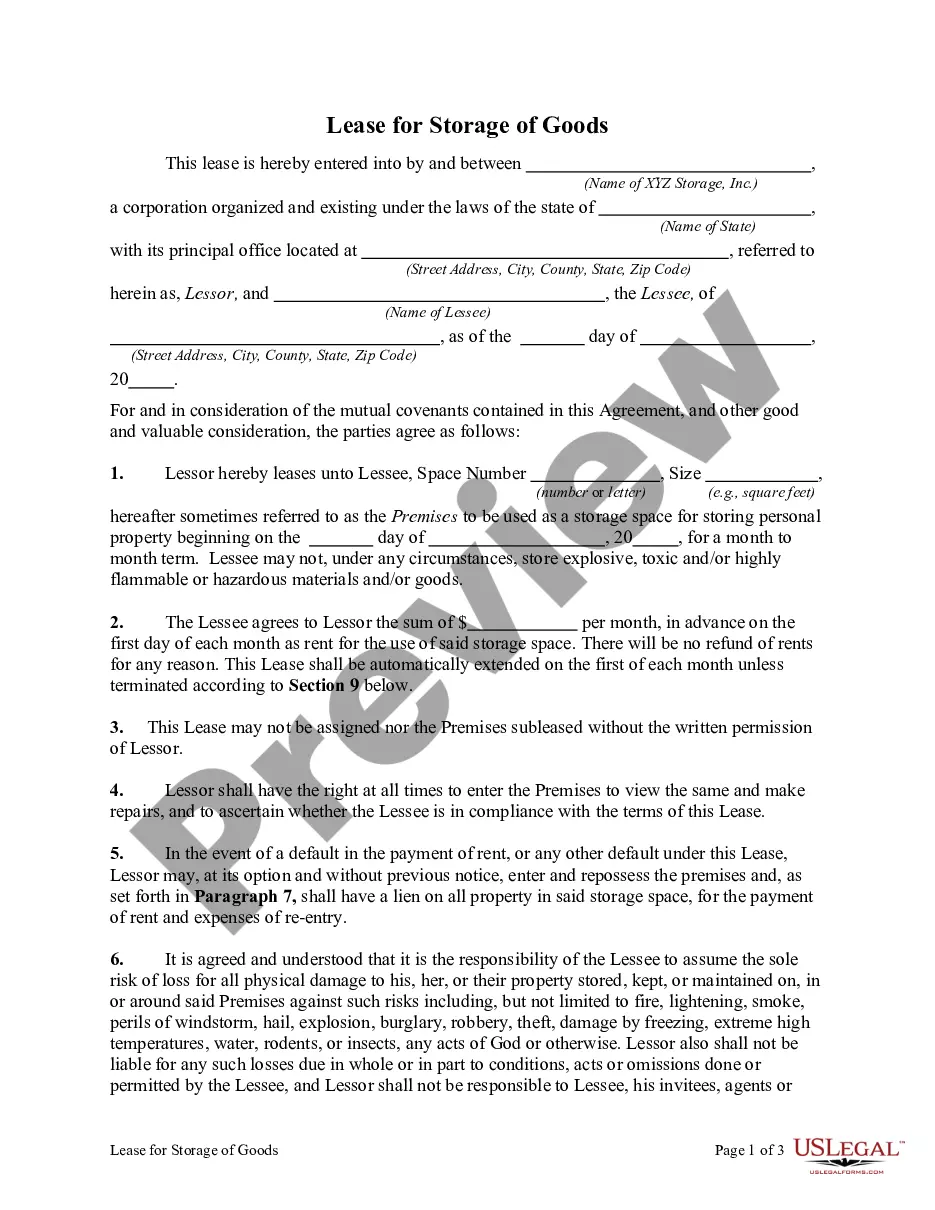
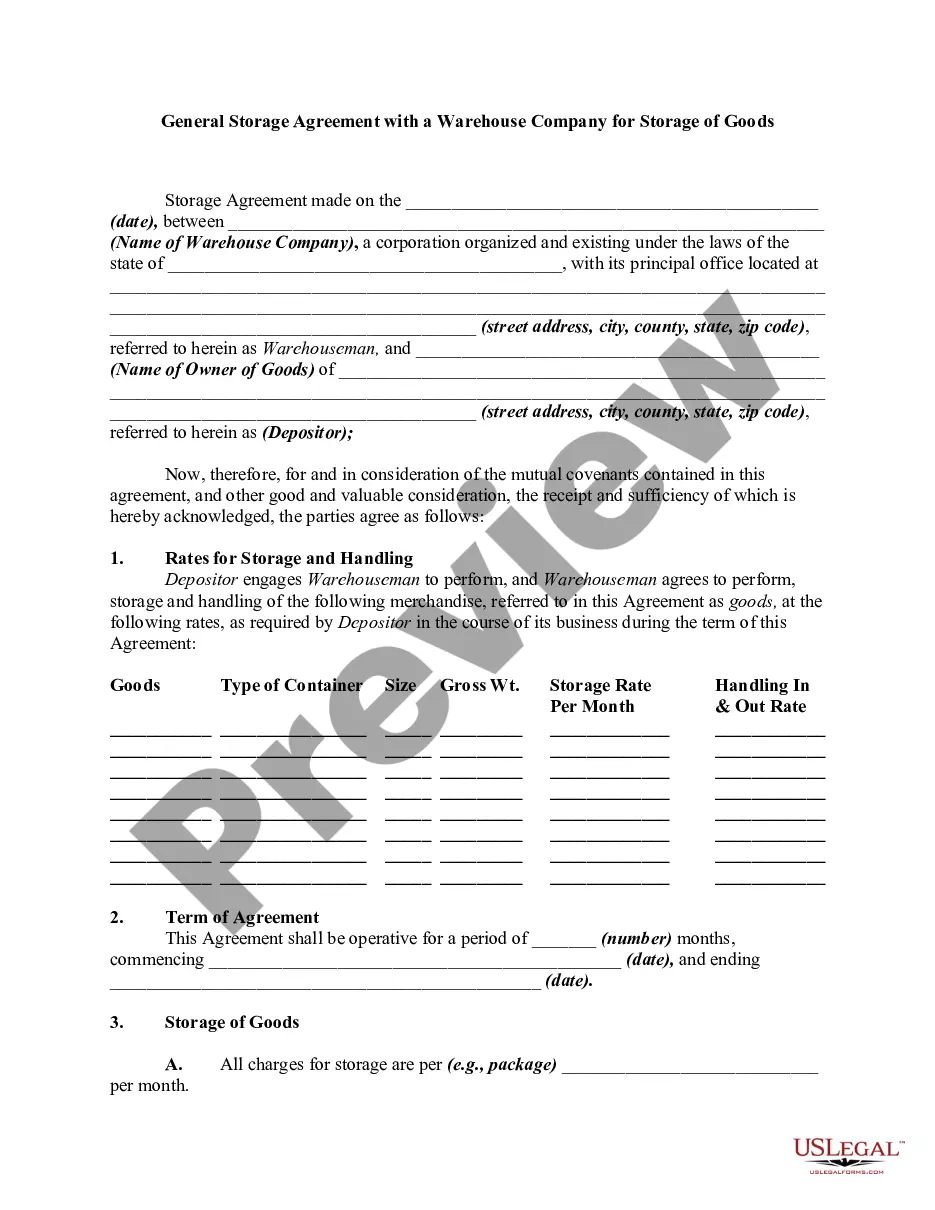
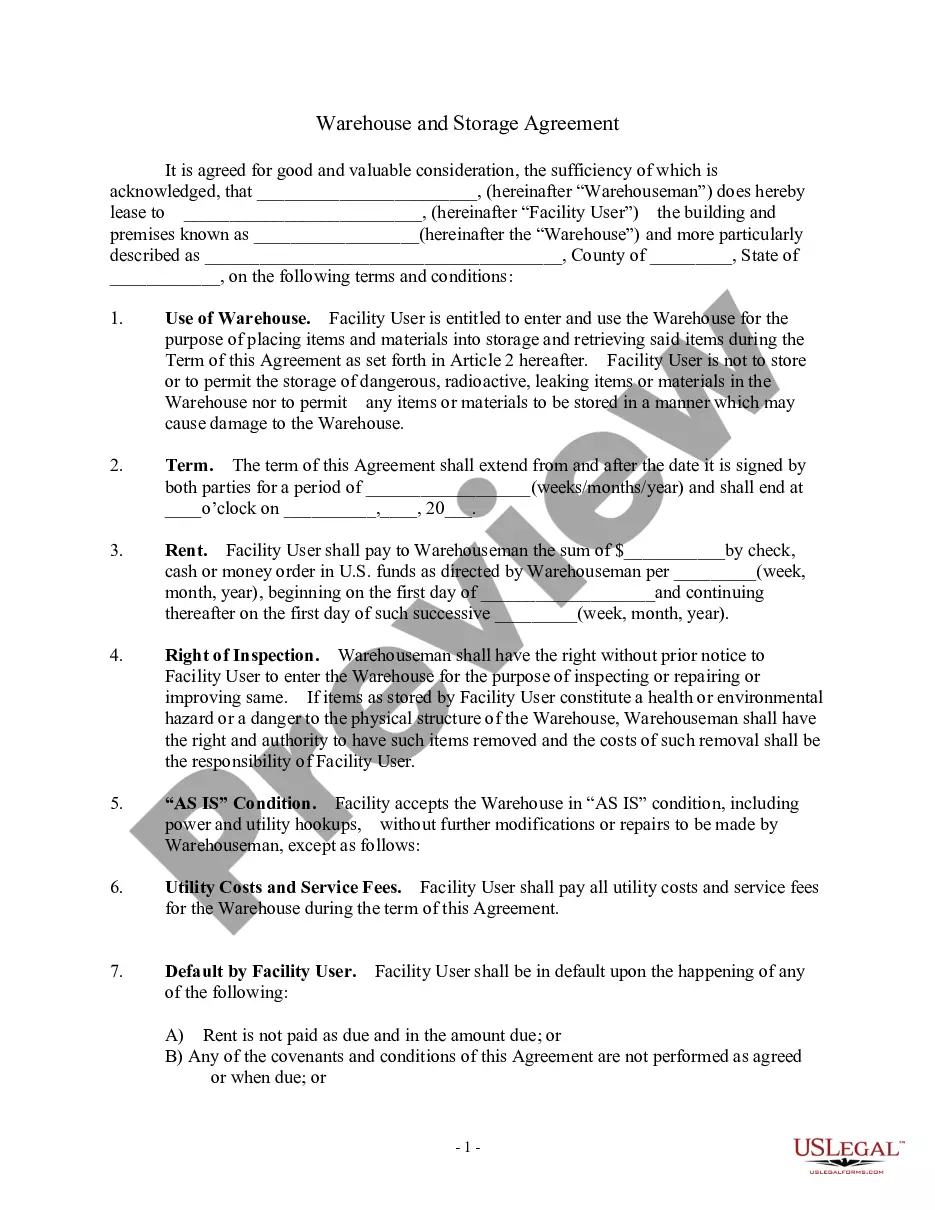
Get your form ready online
Our built-in tools help you complete, sign, share, and store your documents in one place.
Make edits, fill in missing information, and update formatting in US Legal Forms—just like you would in MS Word.
Download a copy, print it, send it by email, or mail it via USPS—whatever works best for your next step.
Sign and collect signatures with our SignNow integration. Send to multiple recipients, set reminders, and more. Go Premium to unlock E-Sign.
If this form requires notarization, complete it online through a secure video call—no need to meet a notary in person or wait for an appointment.
We protect your documents and personal data by following strict security and privacy standards.

Make edits, fill in missing information, and update formatting in US Legal Forms—just like you would in MS Word.

Download a copy, print it, send it by email, or mail it via USPS—whatever works best for your next step.

Sign and collect signatures with our SignNow integration. Send to multiple recipients, set reminders, and more. Go Premium to unlock E-Sign.

If this form requires notarization, complete it online through a secure video call—no need to meet a notary in person or wait for an appointment.

We protect your documents and personal data by following strict security and privacy standards.
Looking for another form?
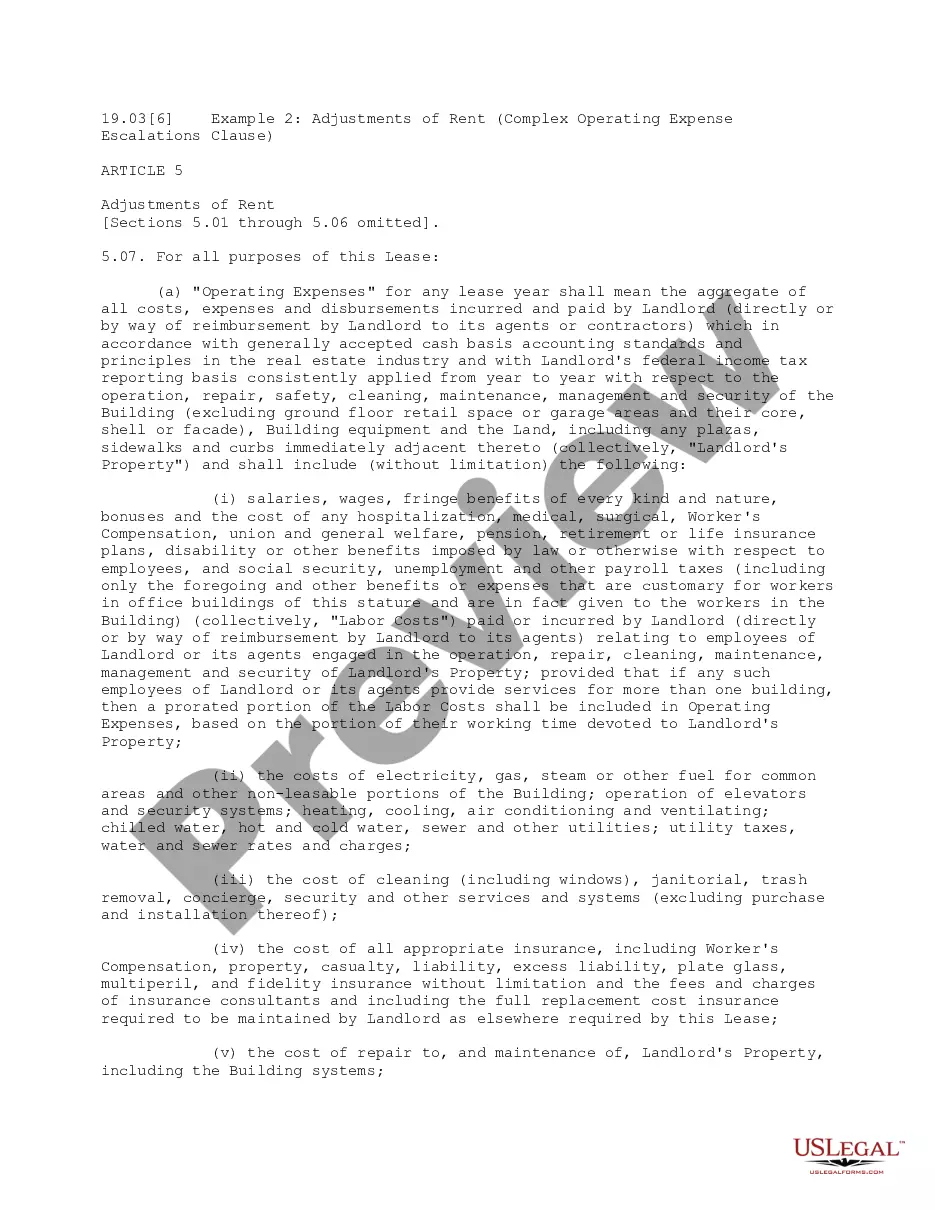

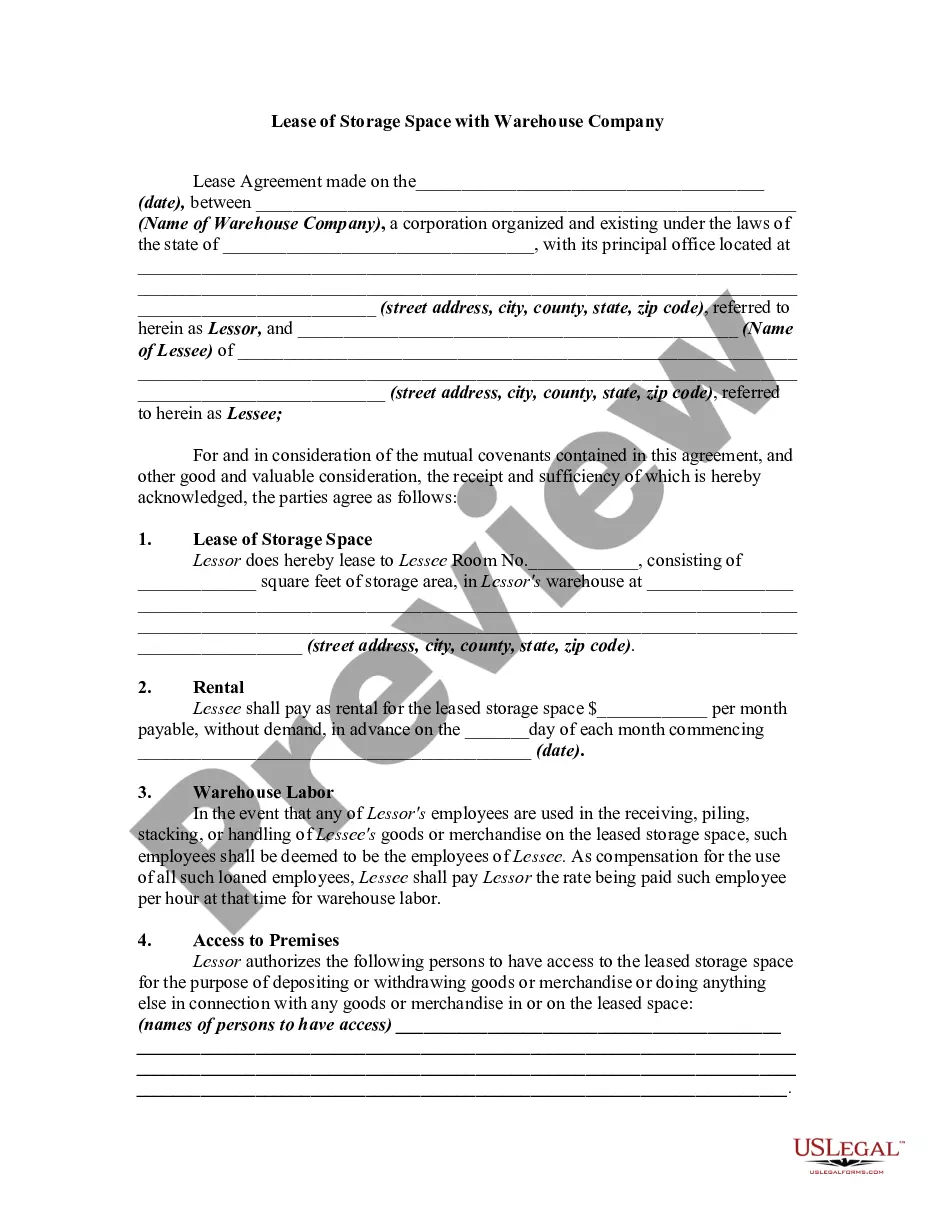
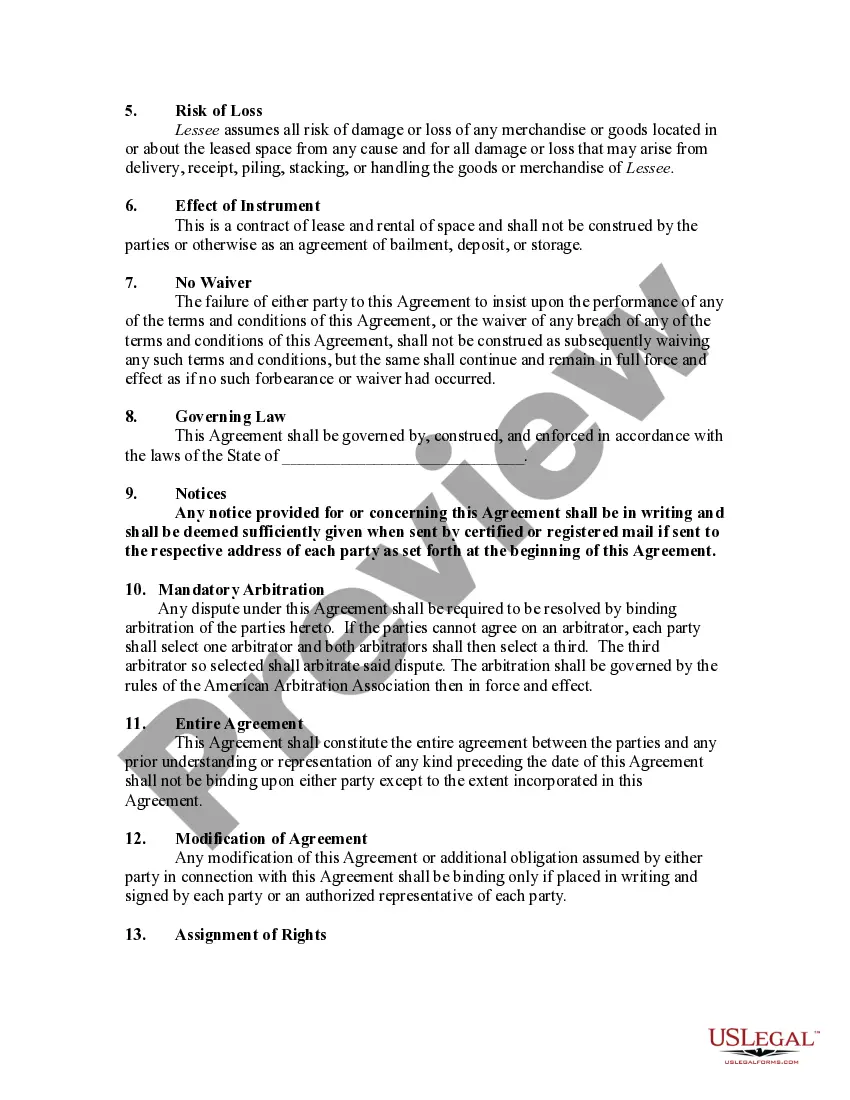
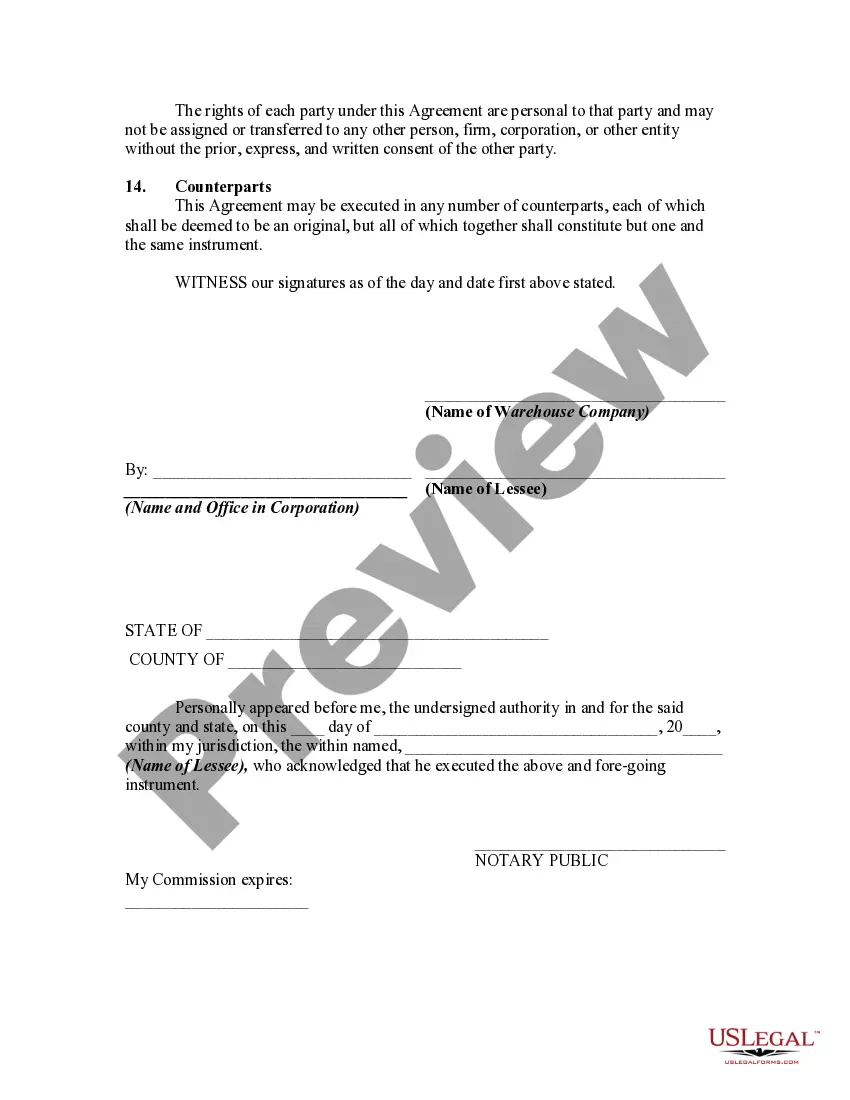
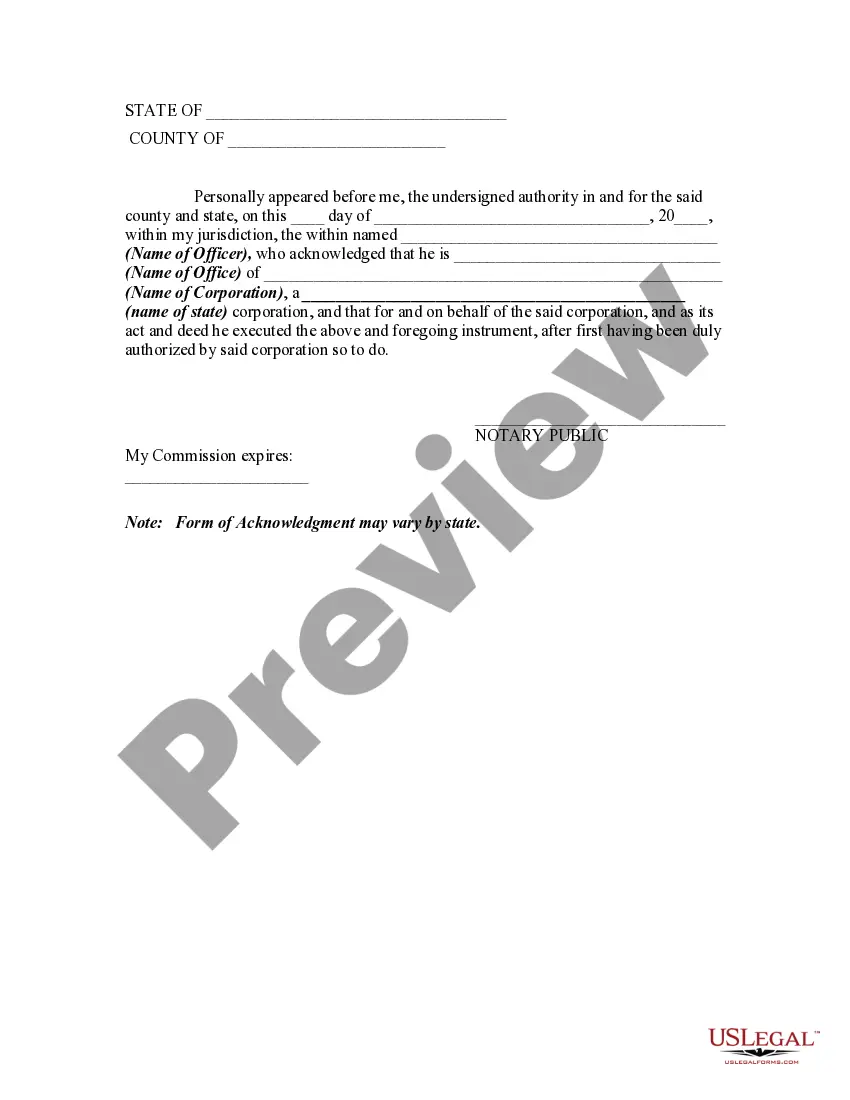
How to fill out Lease Of Storage Space With Warehouse Company?
Whether for corporate objectives or personal matters, everyone must handle legal issues at some stage in their life.
Completing legal documents necessitates meticulous focus, beginning with selecting the right form template.
With an extensive US Legal Forms catalog at your disposal, you don't need to waste time searching for the right template online. Utilize the library’s straightforward navigation to find the correct template for any circumstance.
- Locate the template you require by utilizing the search functionality or browsing the catalog.
- Review the form’s details to verify it aligns with your situation, jurisdiction, and locality.
- Select the form’s preview to examine it.
- If it is not the correct document, return to the search tool to find the Lease Storage Purchase For A House template you need.
- Download the file once it fulfills your requirements.
- If you possess a US Legal Forms account, simply click Log in to access previously stored documents in My documents.
- If you do not have an account yet, you can acquire the form by clicking Buy now.
- Select the suitable pricing option.
- Fill out the account registration form.
- Choose your payment method: use a credit card or PayPal account.
- Select the document format you require and download the Lease Storage Purchase For A House.
- After it is saved, you can complete the form using editing software or print it and finish it by hand.
Form popularity
FAQ
Generally, storage payments do not count as rent unless specifically connected to a rental property's functioning. While you can deduct storage fees related to rental operations, they are classified separately. It's essential to understand how to categorize these expenses correctly to maximize your tax deductions.
Common tax-deductible expenses for a rental property include mortgage interest, property taxes, repairs, maintenance, and insurance. Additionally, leasing storage for necessary items can also be deducted, contributing to overall operational costs. You should keep thorough records of all expenses to ensure compliance when filing tax returns.
Storage rental expenses typically fall under operating expenses if used for your rental property. When you lease storage for items related to property management, these costs can be categorized as business expenses. This classification allows you to deduct them appropriately from your rental income.
It is generally recommended to keep tax records for rental properties for at least three years after you file your tax return. This timeframe usually allows the IRS to audit your return if necessary. However, if you have claims for property depreciation, retain records for as long as you own the property plus three years after the sale.
Yes, you can often deduct storage expenses for a rental property if they directly support your rental business. When you lease storage specifically to keep items related to property management or maintenance, these costs become deductible. Keep detailed records to validate your expense claims on your tax returns.
Storage fees may be tax deductible if they relate directly to your rental activities. For example, if you lease storage for materials needed to maintain your rental property, you can typically deduct these costs. Always ensure you have proper documentation to support these deductions when filing your taxes.
You can sue the debt collector for violating the FDCPA. If you sue under the FDCPA and win, the debt collector must generally pay your attorney's fees and may also have to pay you damages. If you're having trouble with debt collection, you can submit a complaint with the CFPB.
Make sure you send your request in writing, send it by certified mail with a return receipt, and keep a copy of the letter and receipt. You also have the right to ask a debt collector to stop contacting you entirely.
A text message strategy can be part of an omnichannel approach, and it offers debt collectors a few distinct benefits: Get direct access to consumers who will likely see and read your messages. Allow consumers to respond and ask questions via a channel that may be easier or more comfortable for them than a phone call.
If you've validated the debt and confirmed the debt collector who texted you is legitimate, you can decide if and how to respond. Options include: Continuing the conversation via text message. Calling the debt collector directly.