Lease Space For Church
Description
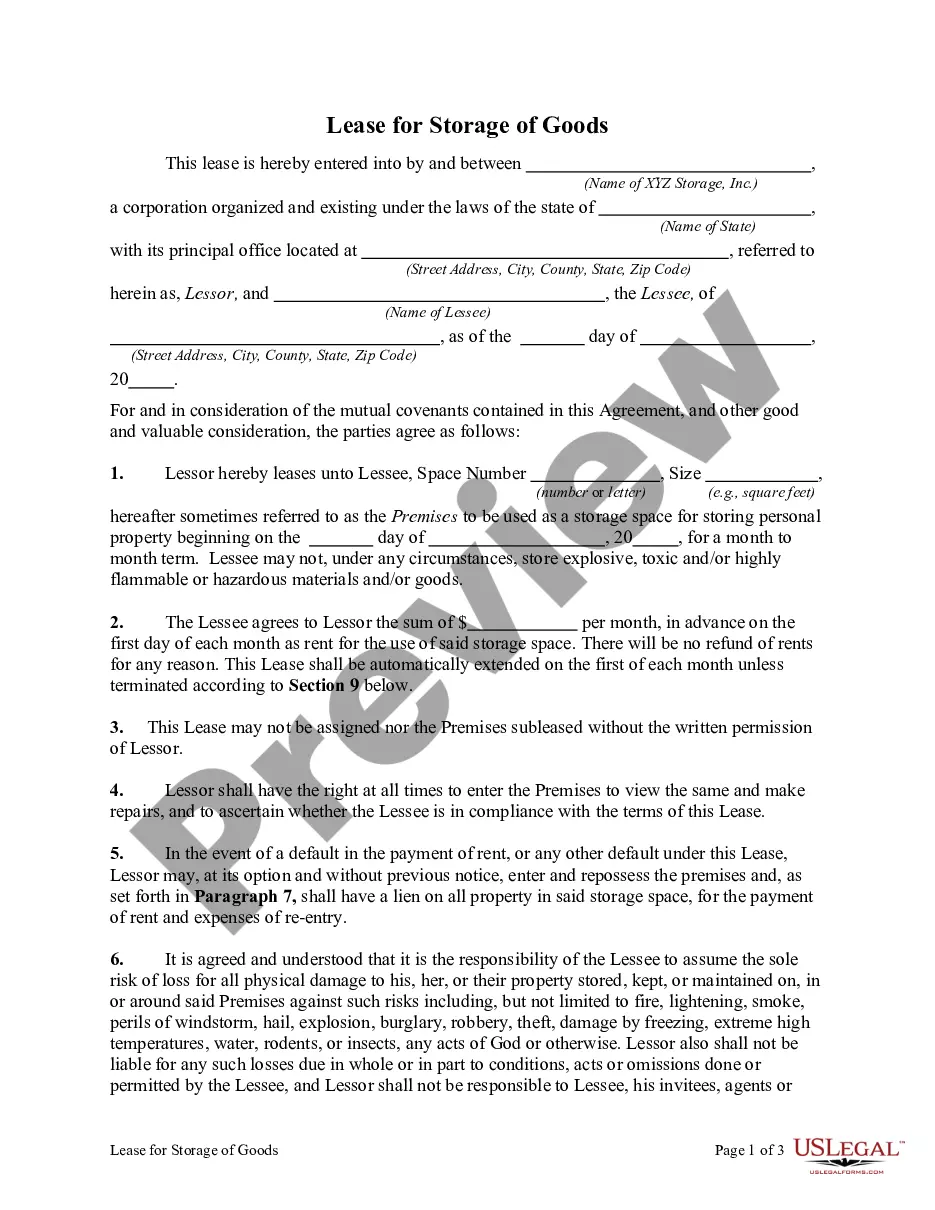
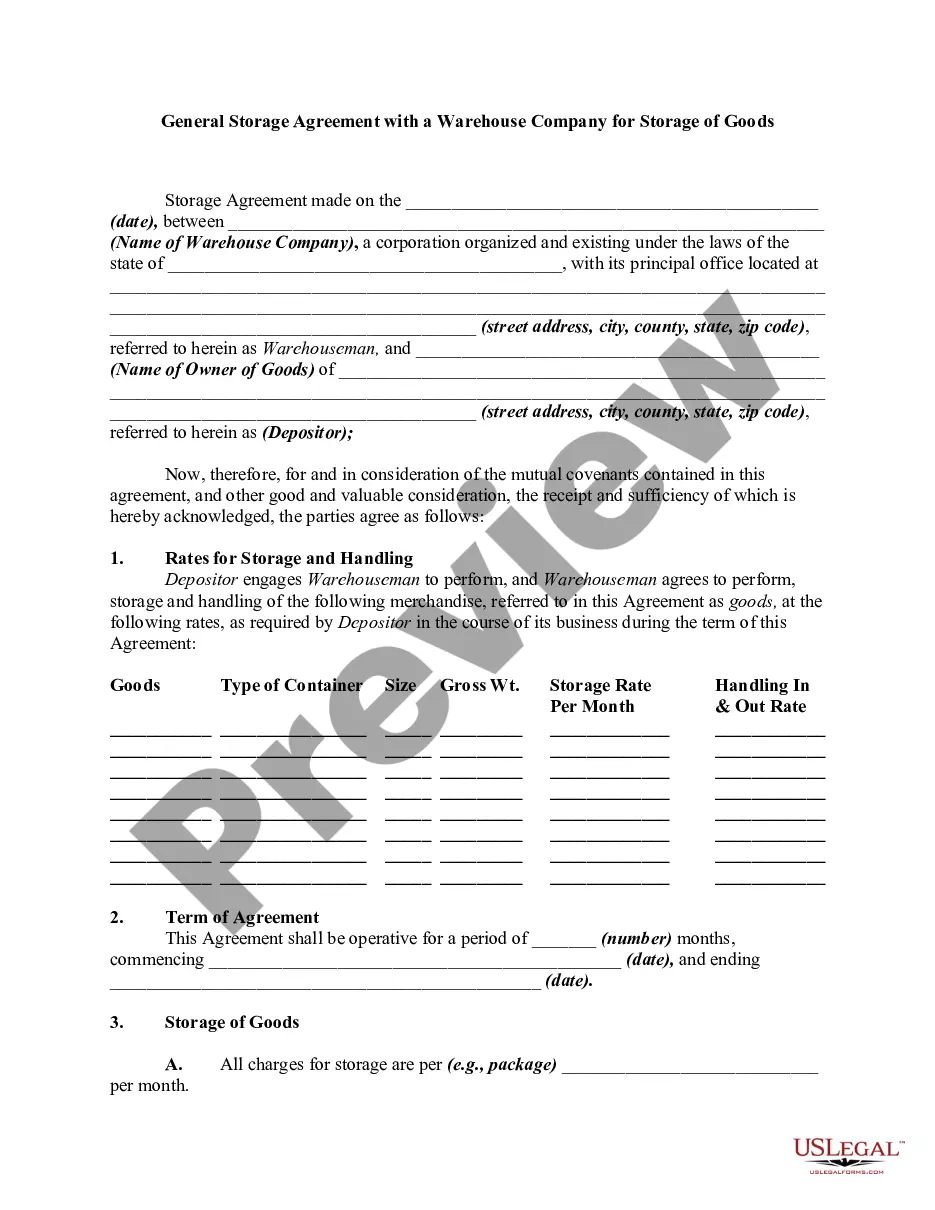
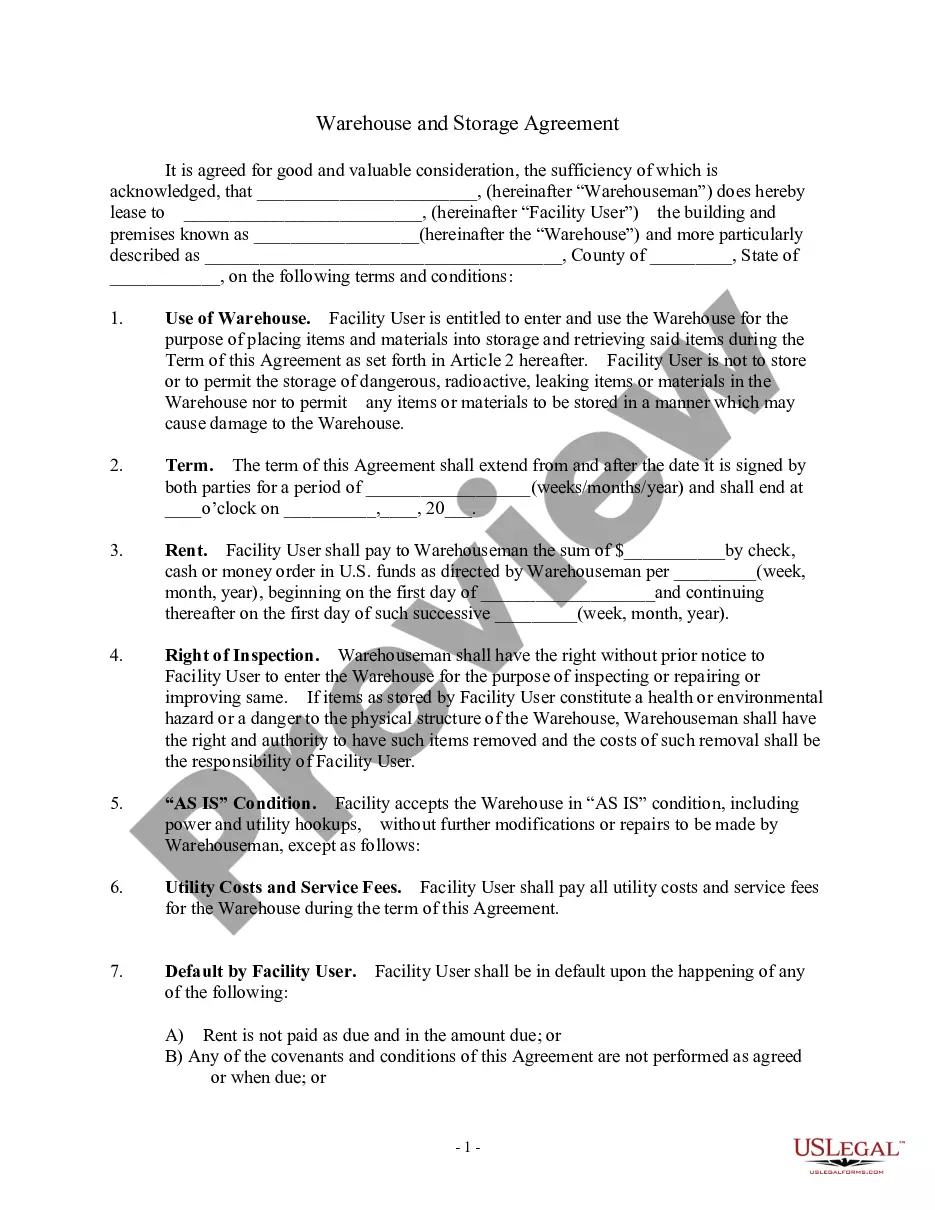
Get your form ready online
Our built-in tools help you complete, sign, share, and store your documents in one place.
Make edits, fill in missing information, and update formatting in US Legal Forms—just like you would in MS Word.
Download a copy, print it, send it by email, or mail it via USPS—whatever works best for your next step.
Sign and collect signatures with our SignNow integration. Send to multiple recipients, set reminders, and more. Go Premium to unlock E-Sign.
If this form requires notarization, complete it online through a secure video call—no need to meet a notary in person or wait for an appointment.
We protect your documents and personal data by following strict security and privacy standards.

Make edits, fill in missing information, and update formatting in US Legal Forms—just like you would in MS Word.

Download a copy, print it, send it by email, or mail it via USPS—whatever works best for your next step.

Sign and collect signatures with our SignNow integration. Send to multiple recipients, set reminders, and more. Go Premium to unlock E-Sign.

If this form requires notarization, complete it online through a secure video call—no need to meet a notary in person or wait for an appointment.

We protect your documents and personal data by following strict security and privacy standards.
Looking for another form?
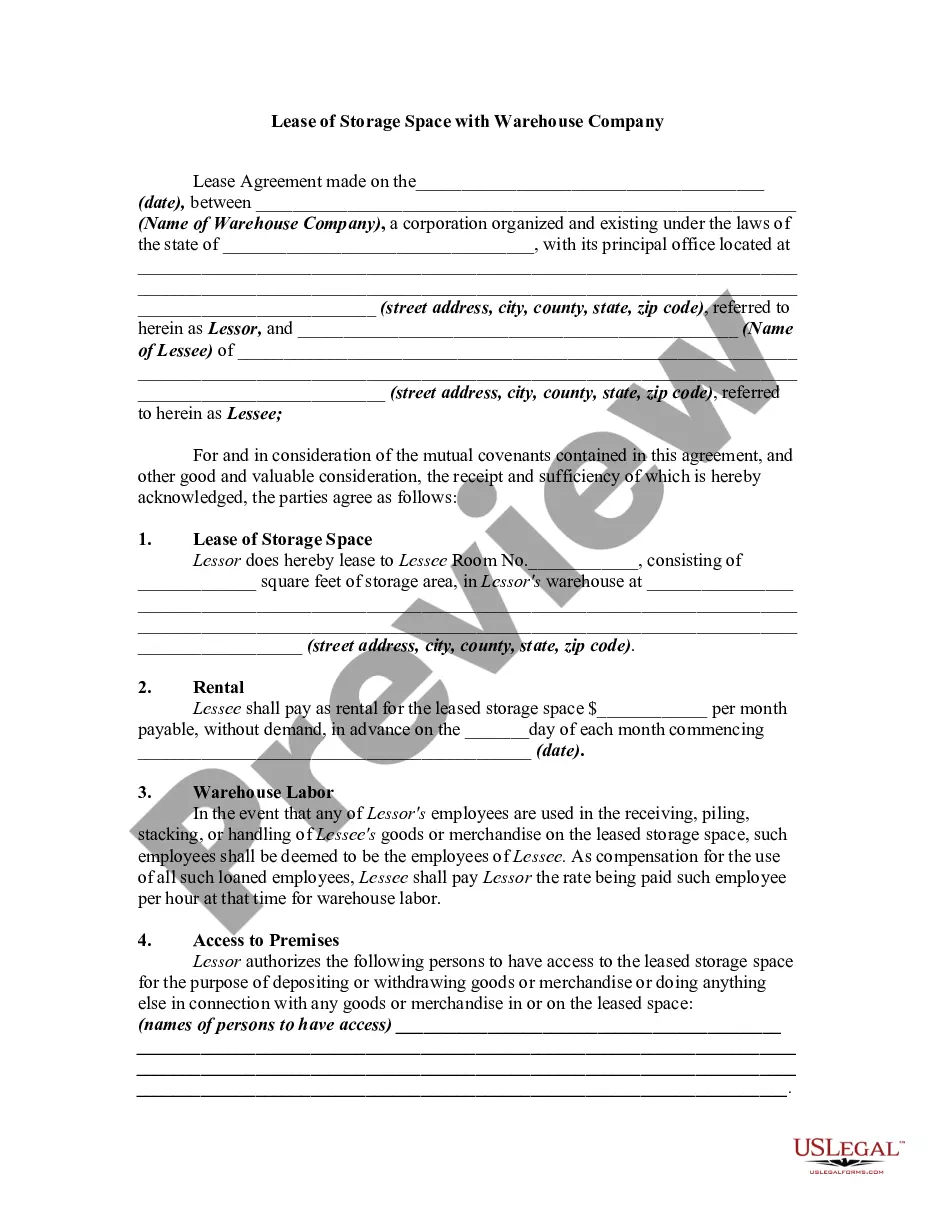
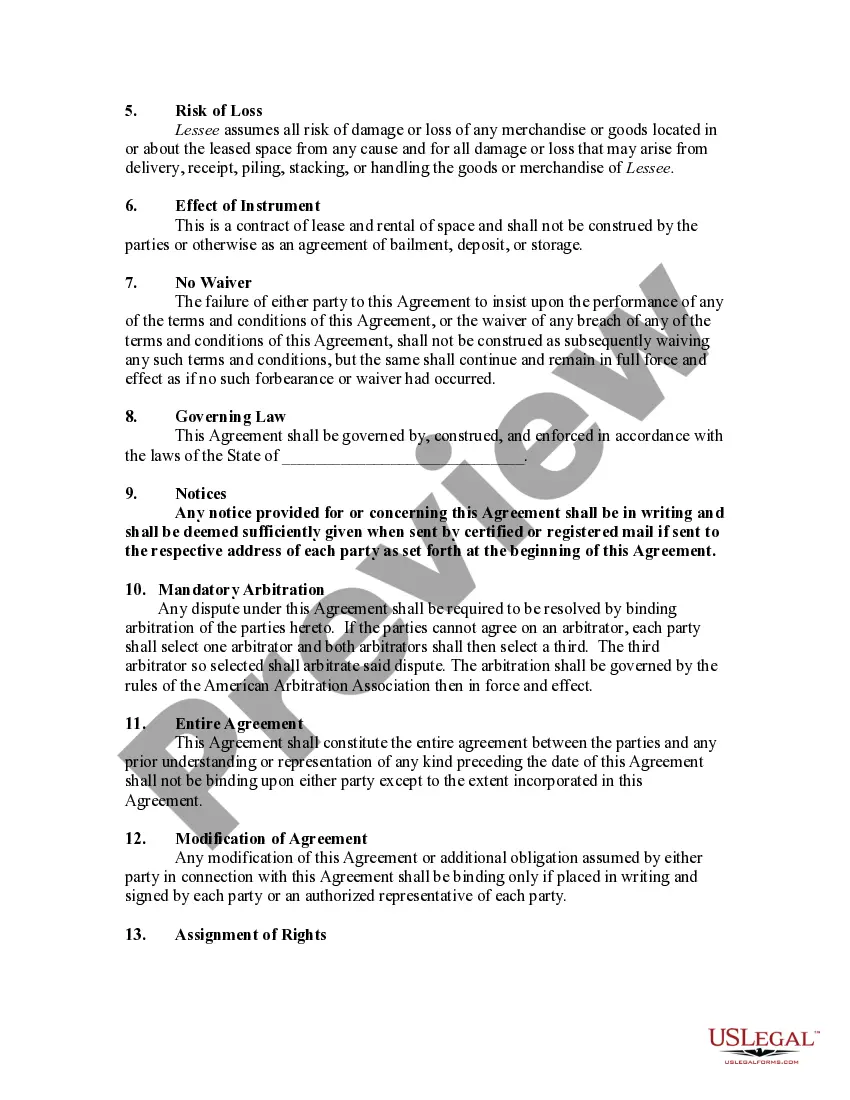
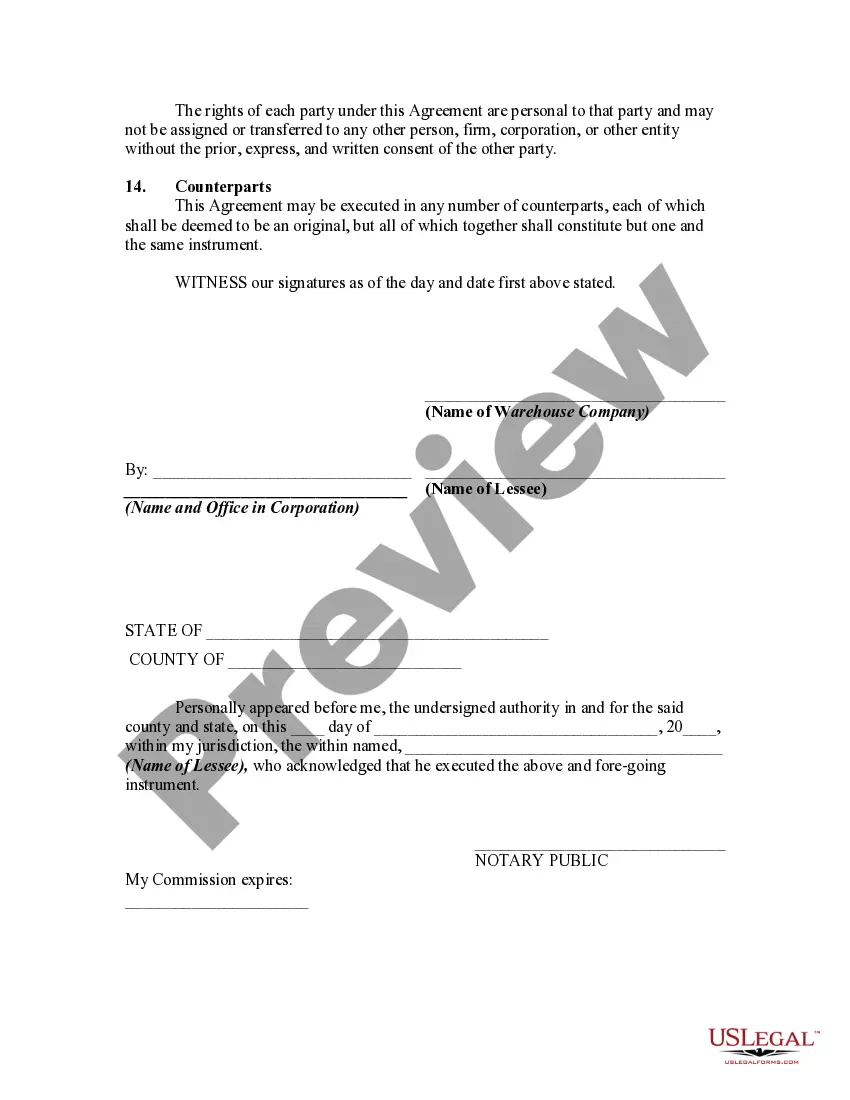
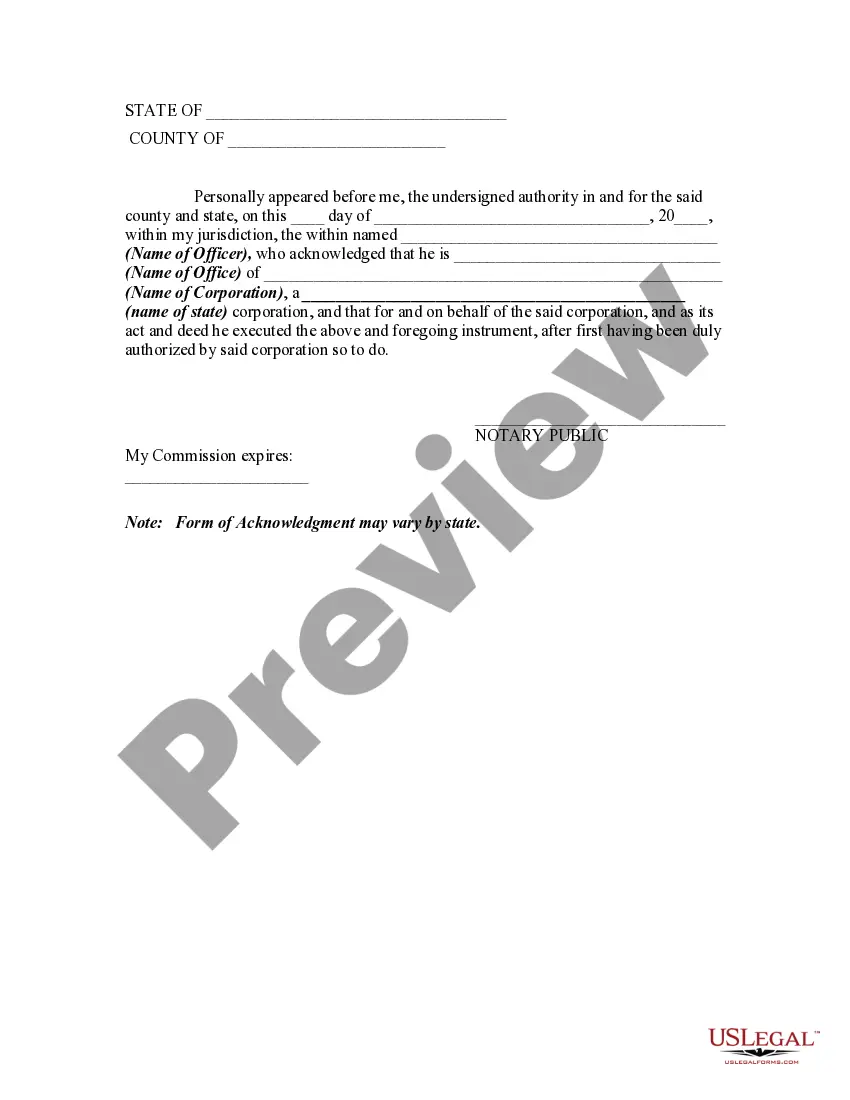
How to fill out Lease Of Storage Space With Warehouse Company?
- Visit the US Legal Forms website and create an account if you haven't already. This will give you access to their extensive library of forms.
- Search for the church lease document that meets your local jurisdiction requirements. Use the preview mode to ensure it fits your needs.
- If you need a different form, use the search bar at the top of the page to find it. Confirm that it aligns with your specific requirements before proceeding.
- Select the church lease form and click on the 'Buy Now' button. Choose a subscription plan that best suits your needs and register your account to unlock the forms.
- Complete your purchase by entering your payment details. You can use a credit card or PayPal to make the transaction secure.
- After purchasing, download the form to your device for easy access. You can always retrieve it later in the 'My Forms' section of your profile.
By following these steps, you can efficiently lease space for your church, ensuring that all legal requirements are met. US Legal Forms offers a user-friendly experience and access to numerous forms, making the task less overwhelming.
Don't wait any longer! Visit US Legal Forms today to get started on leasing your church space.
Form popularity
FAQ
Churches are generally considered private property, though they serve the public by providing spiritual services. However, some aspects of church property, such as parking lots and community spaces, may be accessible to the public. Understanding the distinction can help if you're looking to lease space for church and engage with the local community. Always check with your local laws to clarify any property use concerns.
A church can lose its tax-exempt status if it engages in substantial non-religious activities, such as political campaigning or profit-making ventures. Additionally, failing to comply with reporting requirements can jeopardize tax exemption. Churches must remain focused on their primary religious mission to maintain this status. If you're considering how to lease space for church activities, ensure all operations align with tax-exempt guidelines.
Yes, a church can rent out space. Many churches lease space for church activities, community events, or to help support their mission. Renting out space can provide additional income, which churches can use for outreach programs and maintenance. If you want to lease space for church, consider the local laws and regulations that may affect your rental agreement.
A church can indeed receive rental income, which can help fund its operations. For instance, leasing space for church events or community activities is common. When you lease space for church functions, this income can support various church initiatives. Be aware, however, of the implications on your tax status; consulting a professional can help navigate this area.
Yes, a church can be classified as private property. However, it often enjoys certain tax exemptions because of its nonprofit status. When seeking to lease space for church activities, understanding property classification is key. Engaging with legal services can clarify how your church property is treated under law.
The space needed for a church varies based on the congregation size and activities planned. Generally, a church should consider areas for worship, community events, and classrooms. When determining how much space to lease for church activities, think about future growth as well. Collaborating with a real estate professional can help you find the ideal lease space for church needs.
Indeed, a nonprofit organization can have rental income, provided it maintains its tax-exempt status. This income often arises from leasing space for church services or events. When you choose to lease space for church functions, make sure that the rental income aligns with your organization's mission. It's wise to check with a legal expert to ensure compliance.
Yes, a church can have unrelated business income, but it must adhere to certain regulations. This income usually comes from activities not directly related to its religious mission. When seeking to lease space for church activities, ensure that any unrelated business income does not impact your tax-exempt status. Consulting with a tax professional or legal advisor can guide you through the process.
Yes, a church can generate rental income from leasing out its facilities when not in use. This income can be an essential financial resource, supporting various church programs and activities. By effectively managing the lease space for church use, you can maximize the potential for earning while providing the community with valuable services. Ensure compliance with local regulations to maintain your tax-exempt status.
Securing funding for a church building can be approached through various avenues. You can explore options like grants, community fundraising, and partnerships with local businesses. Additionally, when you lease space for church gatherings, it provides an opportunity to save funds for future building projects. Having a solid plan and community support will significantly enhance your chances of obtaining the necessary funding.