Motion Garnishment Filed Within
Description
Get your form ready online
Our built-in tools help you complete, sign, share, and store your documents in one place.
Make edits, fill in missing information, and update formatting in US Legal Forms—just like you would in MS Word.
Download a copy, print it, send it by email, or mail it via USPS—whatever works best for your next step.
Sign and collect signatures with our SignNow integration. Send to multiple recipients, set reminders, and more. Go Premium to unlock E-Sign.
If this form requires notarization, complete it online through a secure video call—no need to meet a notary in person or wait for an appointment.
We protect your documents and personal data by following strict security and privacy standards.

Make edits, fill in missing information, and update formatting in US Legal Forms—just like you would in MS Word.

Download a copy, print it, send it by email, or mail it via USPS—whatever works best for your next step.

Sign and collect signatures with our SignNow integration. Send to multiple recipients, set reminders, and more. Go Premium to unlock E-Sign.

If this form requires notarization, complete it online through a secure video call—no need to meet a notary in person or wait for an appointment.

We protect your documents and personal data by following strict security and privacy standards.
Looking for another form?

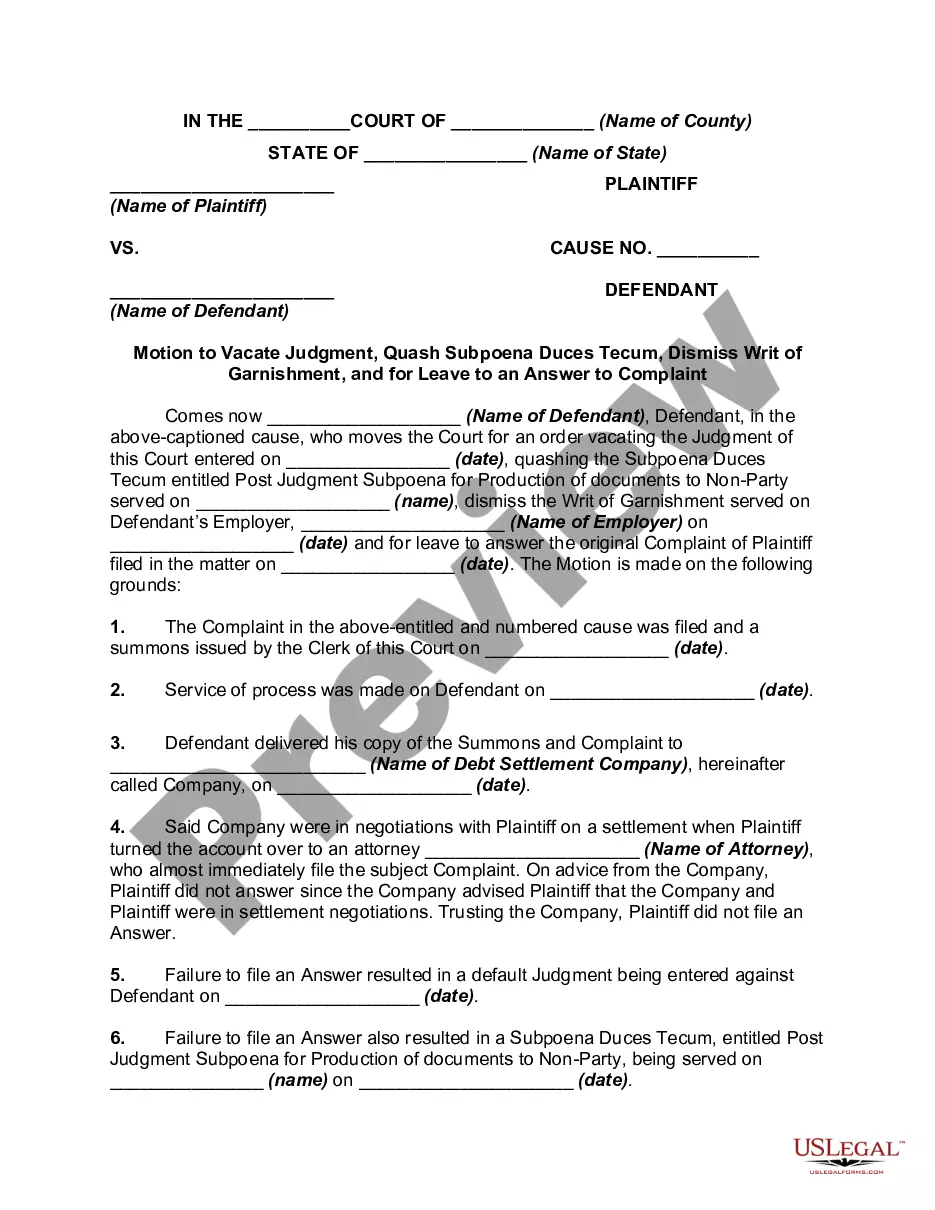





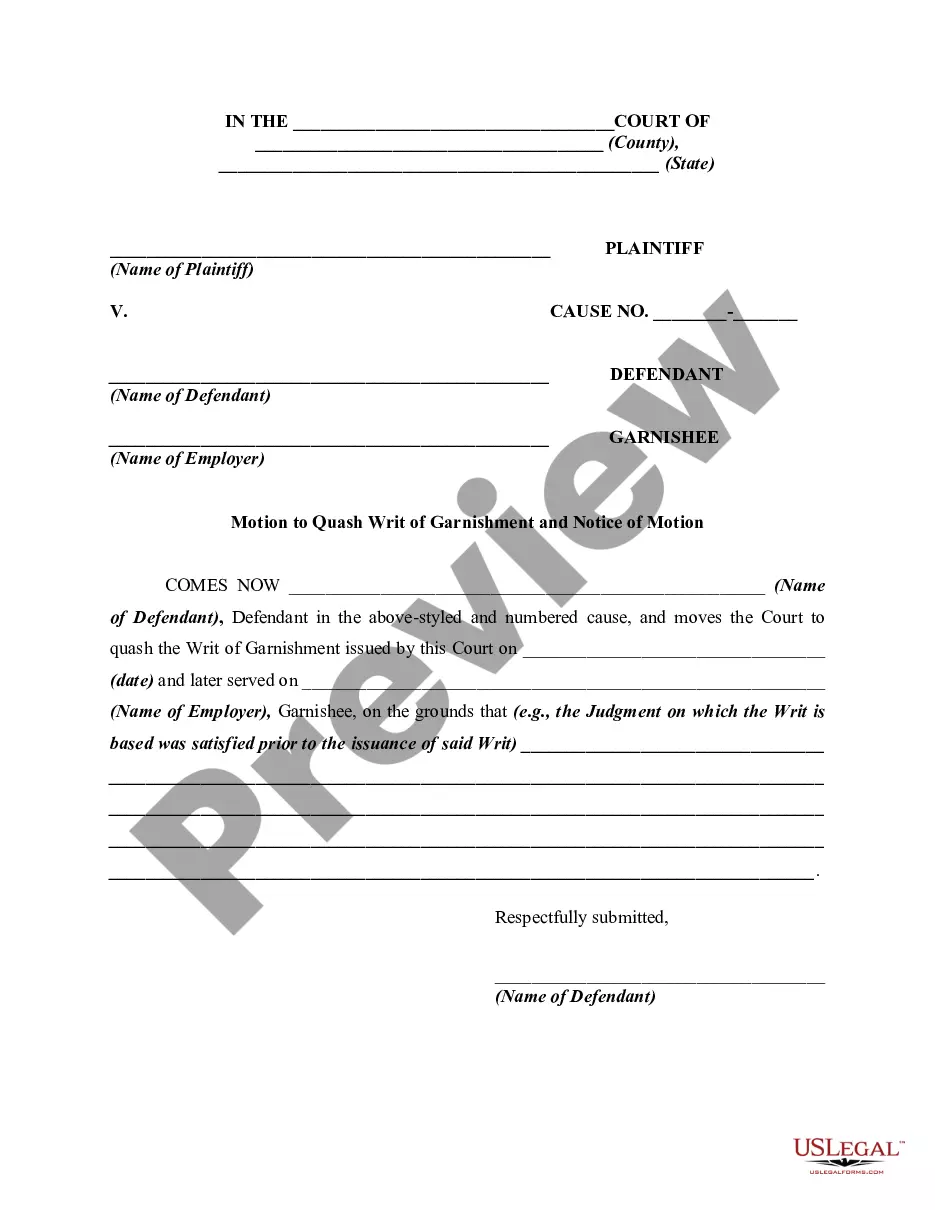
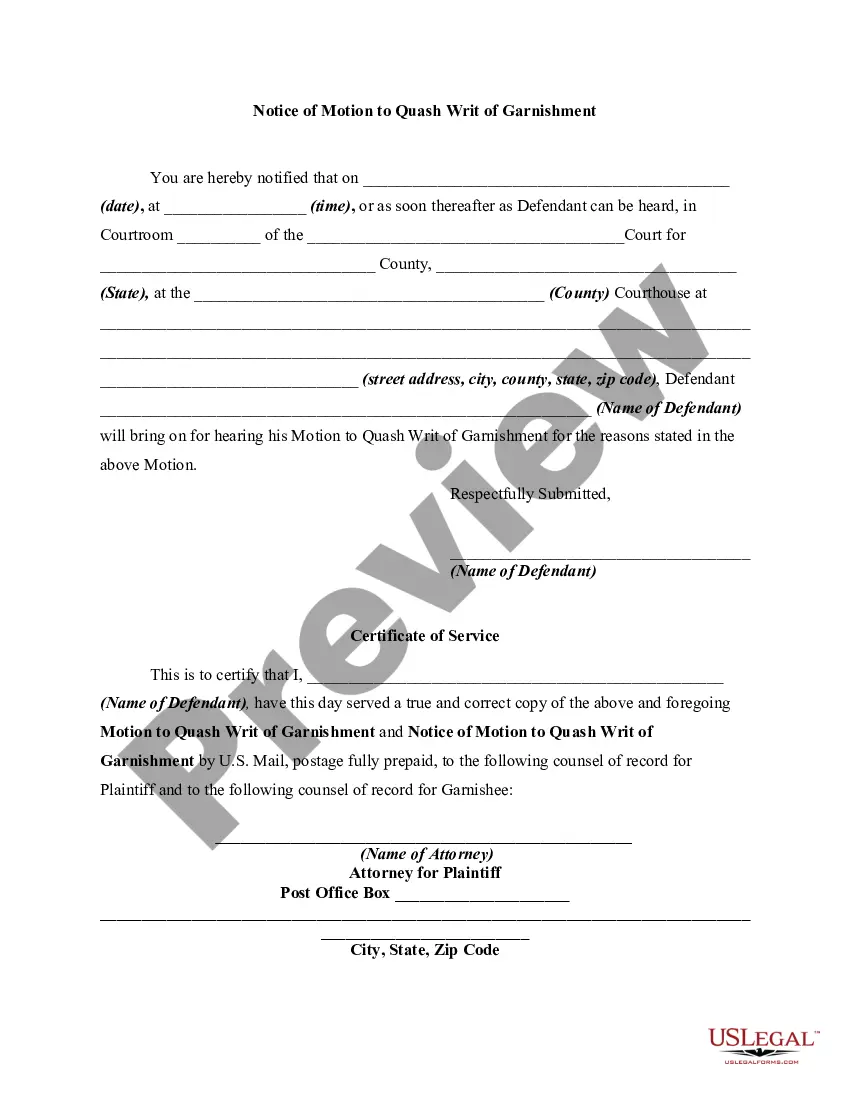
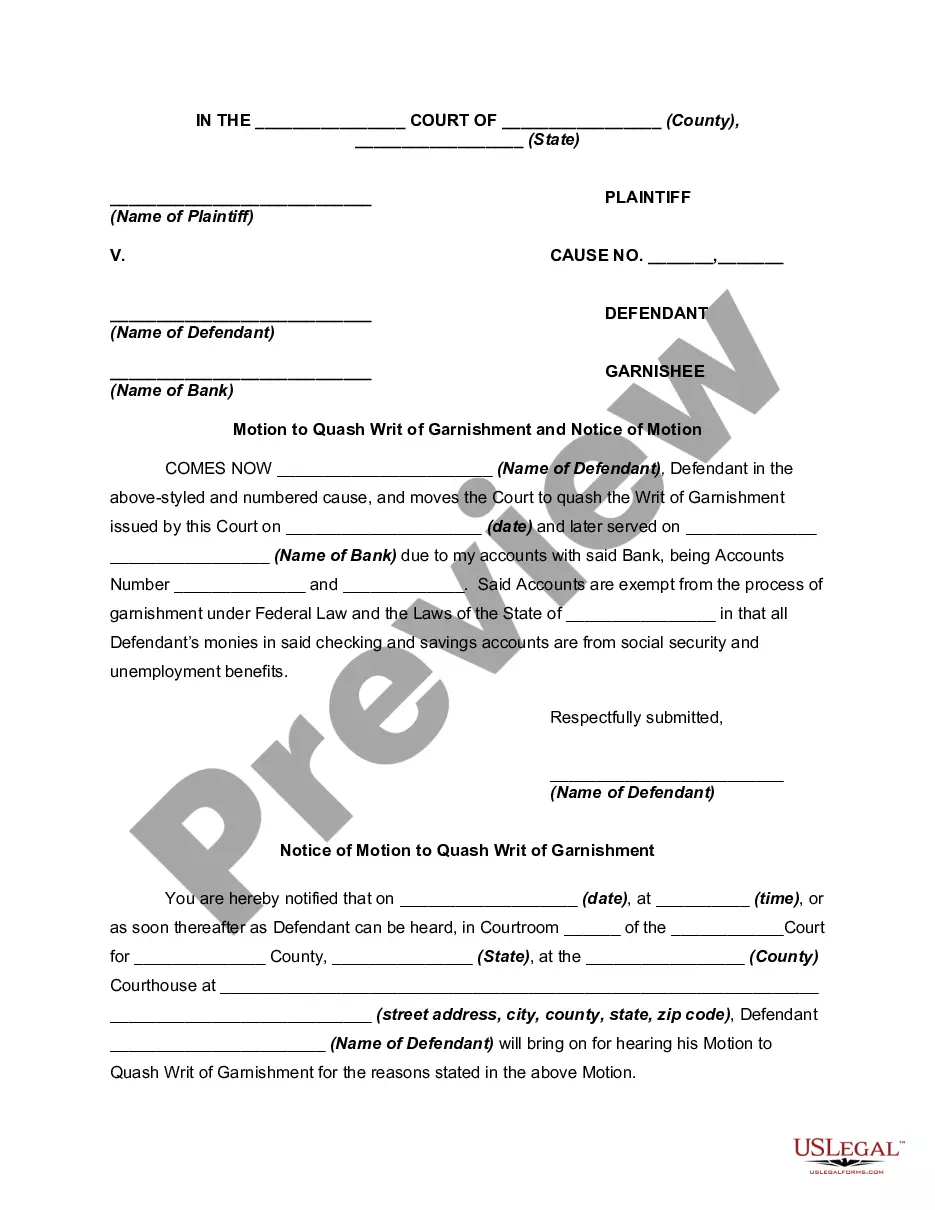
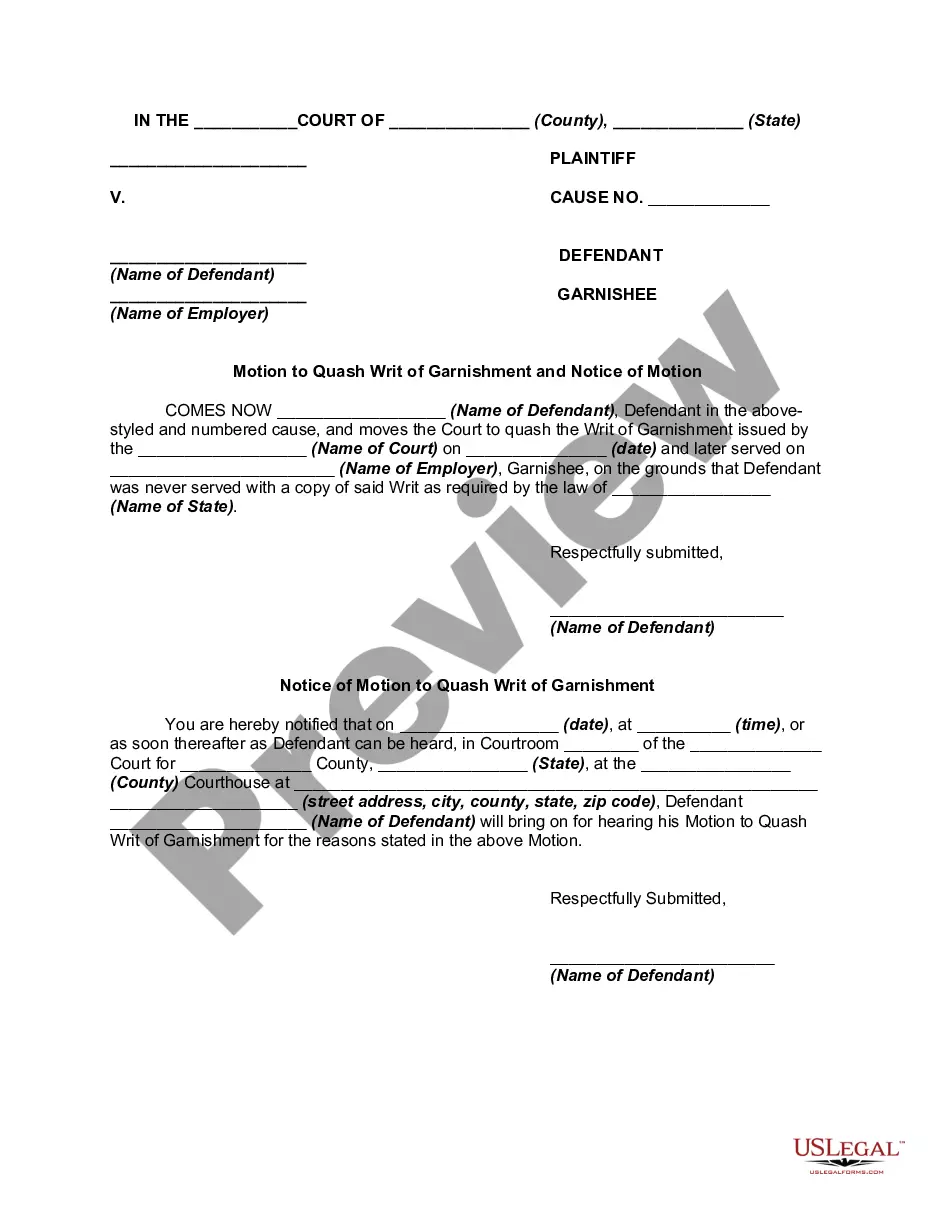
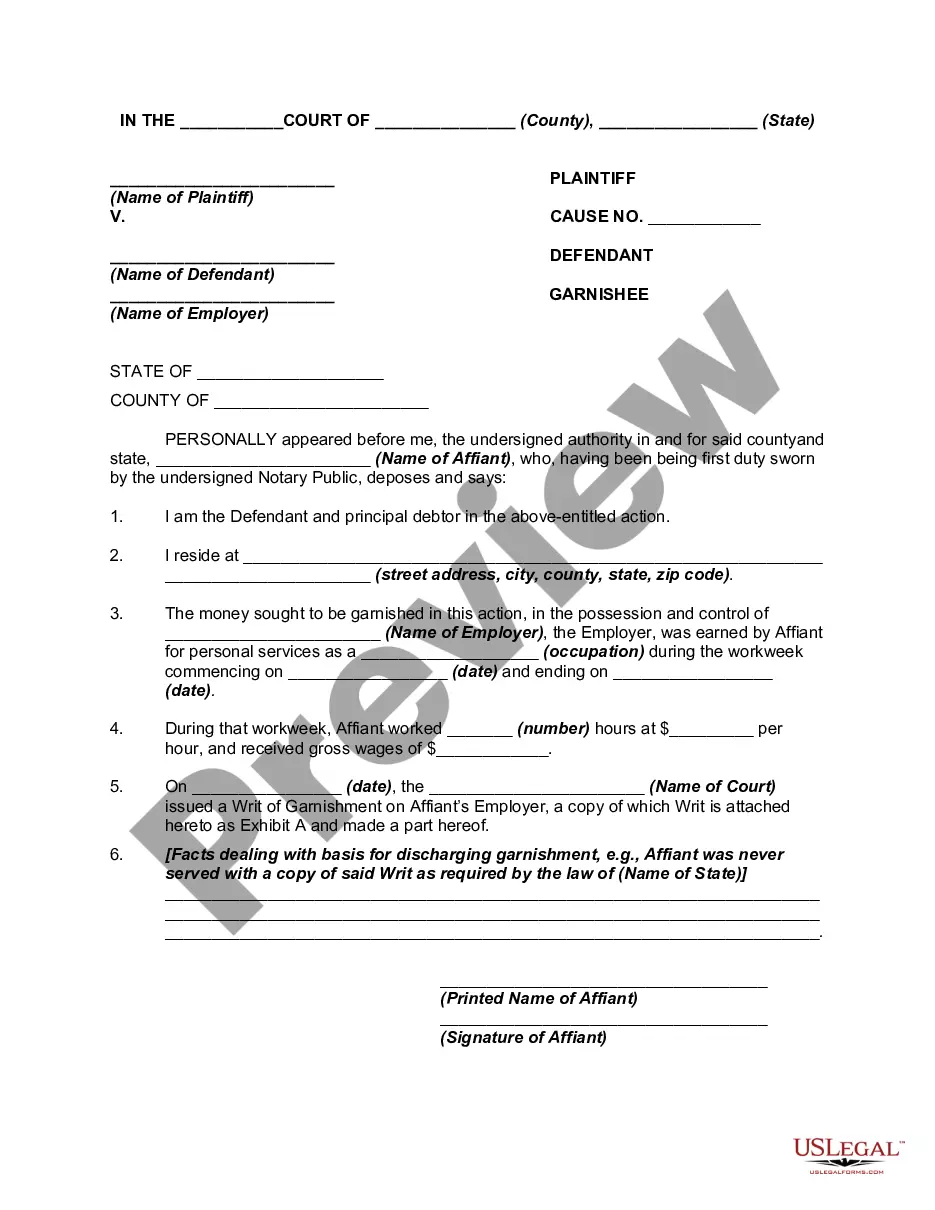
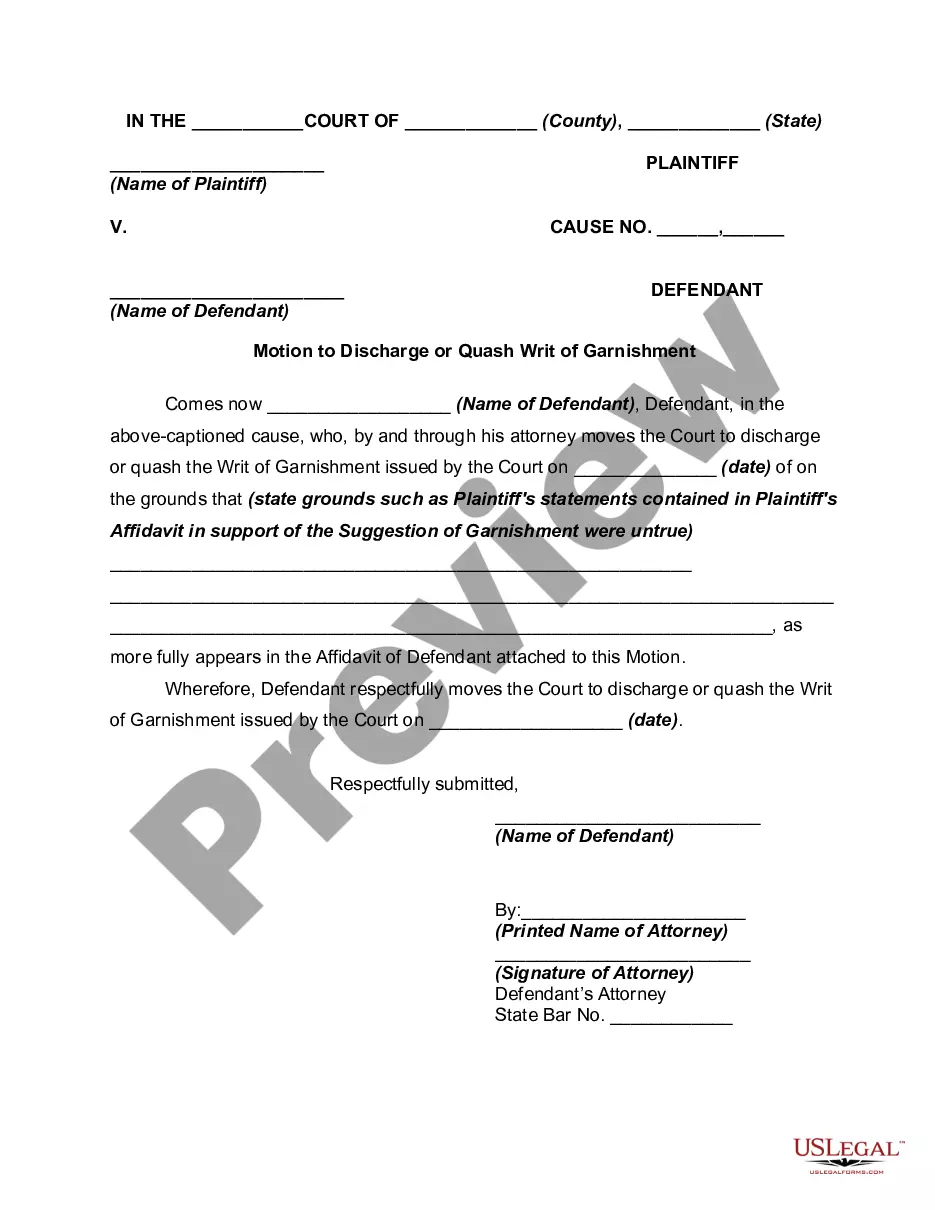
How to fill out Motion Of Defendant To Discharge Or Quash Writ Of Garnishment And Notice Of Motion?
It’s clear that you cannot transform into a legal specialist instantly, nor can you comprehend how to swiftly compose Motion Garnishment Filed Within without possessing a specific background.
Assembling legal documents is a lengthy process necessitating specialized education and expertise.
So why not entrust the creation of the Motion Garnishment Filed Within to the experts.
Preview it (if this option is available) and read the accompanying description to ascertain whether Motion Garnishment Filed Within is what you’re looking for.
If you require any other form, begin your search anew. Set up a free account and select a subscription plan to acquire the template. Click Buy now. Once the payment is completed, you can receive the Motion Garnishment Filed Within, fill it out, print it, and send or mail it to the designated individuals or entities.
- With US Legal Forms, one of the most comprehensive legal document repositories, you can access everything from court forms to templates for in-office correspondence.
- We recognize how important compliance and adherence to federal and local regulations are.
- That’s why, on our site, all templates are location-specific and current.
- Here’s how to start with our platform and obtain the form you need in just minutes.
- Find the form you seek by utilizing the search bar at the top of the page.
Form popularity
FAQ
To file a motion for wage garnishment, you first need to prepare the necessary documentation that outlines the amount owed and the reasons for garnishment. Next, you should file this motion with the appropriate court in your jurisdiction, ensuring you comply with all local rules and procedures. After filing, serve the motion to the debtor and any other required parties. Using a platform like US Legal Forms can streamline this process, providing templates and guidance to ensure your motion garnishment is filed within the legal framework.
You must file your objection with the court within 14 days of getting the notice of garnishment to stop the garnishment. For more information, read the instructions in I'm Being Garnished for a Debt That Is Not Child Support.
You may apply to the court for an order suspending further garnishments by the same creditor upon your paying a certain sum of money weekly, biweekly, or monthly, to pay the judgment. If you file this motion, the garnishment of your wages will stop for as long as you make the payments ordered by the court.
After a court decides you owe the money, it will enter a judgment against you. The creditor must wait 21 days after the judgment is entered. Then it can get a Writ of Garnishment. This is a court order that tells the garnishee to give your money to the creditor.
To stop wage garnishment in Florida, a judgment debtor must (1) review the writ for procedural mistakes, (2) file a claim of exemption, (3) gather all documents in support of the claimed exemption, and (4) attend the final hearing on the exemption. The most common exemption is the head of household exemption.
Requesting a Garnishment Start a garnishment by filing a Request and Writ for Garnishment with the court that entered the judgment. The writ is a court order. It tells the garnishee to give you the money it holds for the debtor (like money in a bank account) or would have paid to the debtor (like a paycheck).