Eviction Traducao
Description
Get your form ready online
Our built-in tools help you complete, sign, share, and store your documents in one place.
Make edits, fill in missing information, and update formatting in US Legal Forms—just like you would in MS Word.
Download a copy, print it, send it by email, or mail it via USPS—whatever works best for your next step.
Sign and collect signatures with our SignNow integration. Send to multiple recipients, set reminders, and more. Go Premium to unlock E-Sign.
If this form requires notarization, complete it online through a secure video call—no need to meet a notary in person or wait for an appointment.
We protect your documents and personal data by following strict security and privacy standards.

Make edits, fill in missing information, and update formatting in US Legal Forms—just like you would in MS Word.

Download a copy, print it, send it by email, or mail it via USPS—whatever works best for your next step.

Sign and collect signatures with our SignNow integration. Send to multiple recipients, set reminders, and more. Go Premium to unlock E-Sign.

If this form requires notarization, complete it online through a secure video call—no need to meet a notary in person or wait for an appointment.

We protect your documents and personal data by following strict security and privacy standards.
Looking for another form?

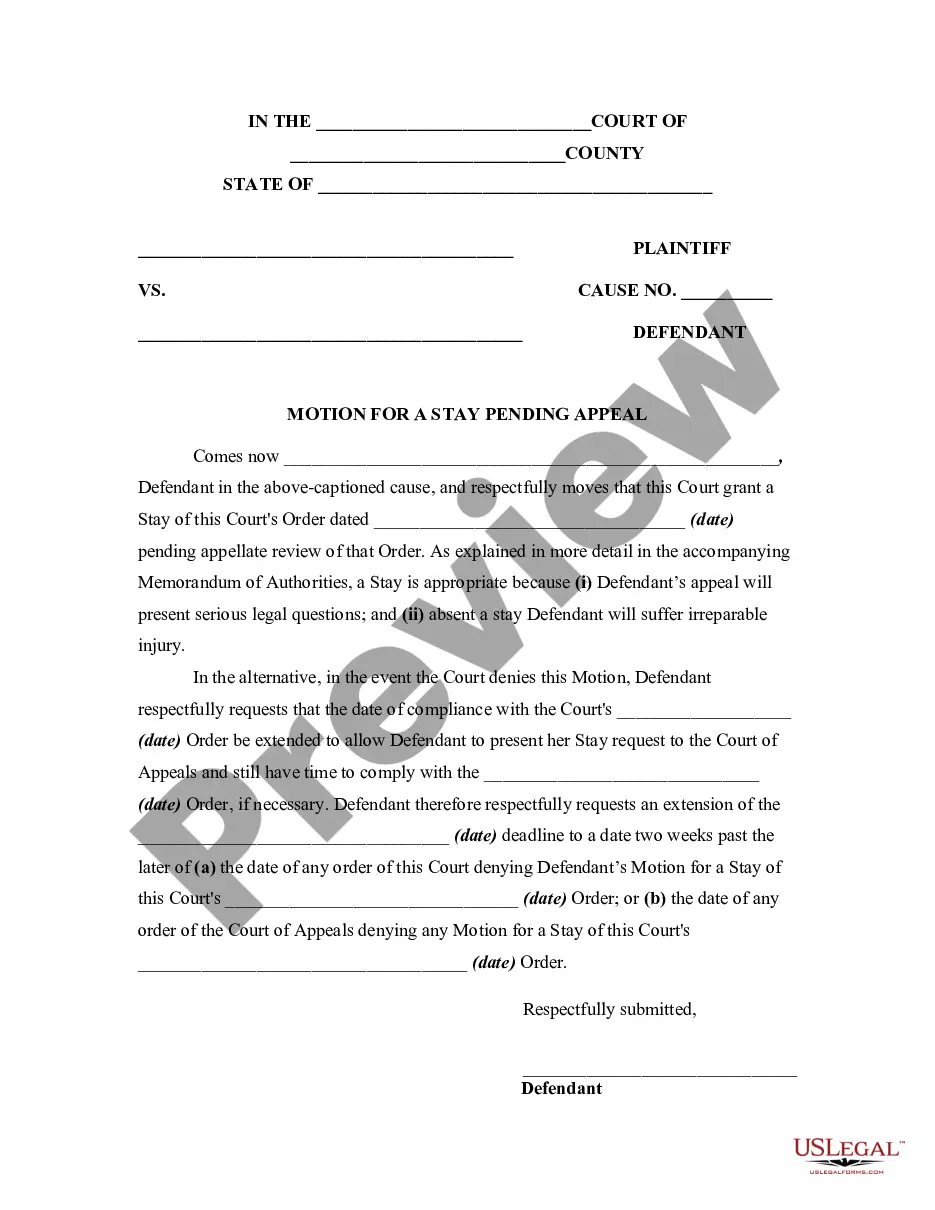
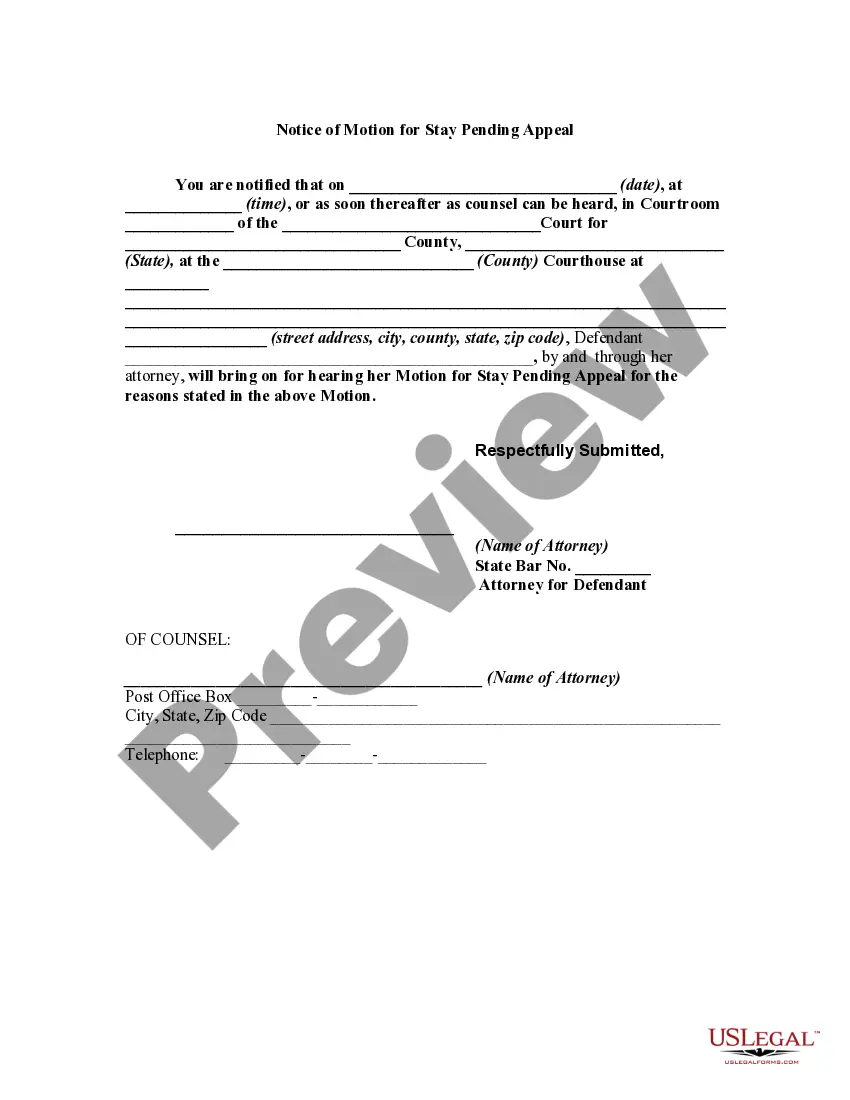
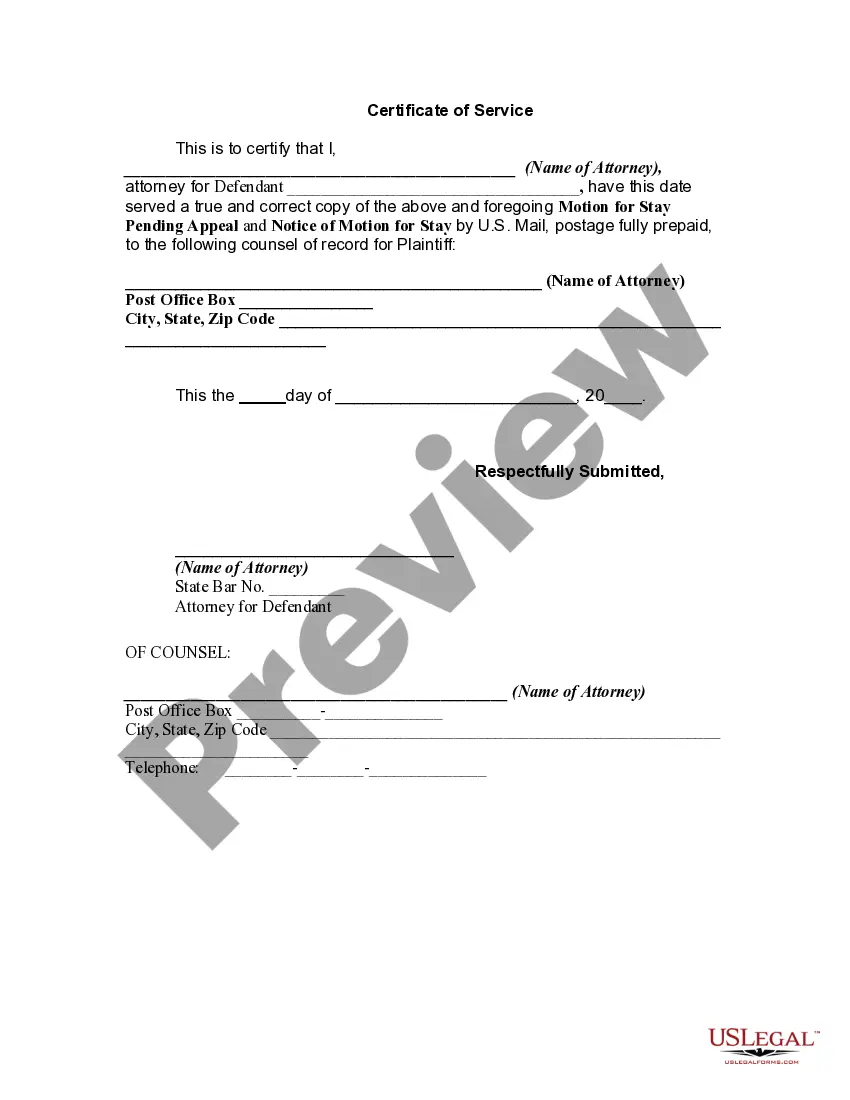
How to fill out Motion For Stay Pending Appeal And Notice Of Motion?
- If you have used US Legal Forms before, log in to your account and download your required document by clicking the Download button. Ensure your subscription is active; if not, renew it following your payment plan.
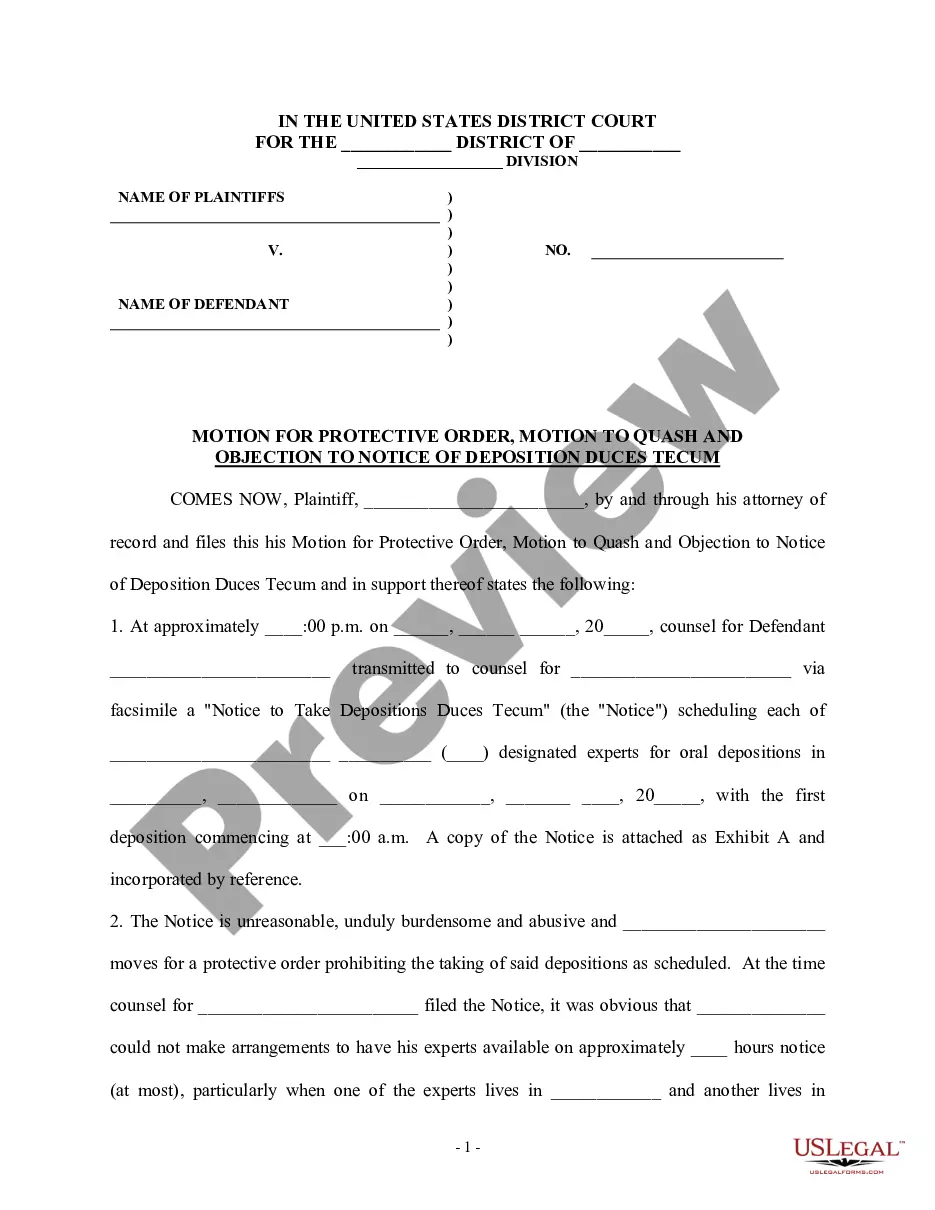
- For new users, start by reviewing the form description and Preview mode. Confirm that the form aligns with your specific legal needs and local jurisdiction regulations.
- If you need alternate templates, utilize the Search feature to find appropriate forms. Ensure it accurately fits your situation before proceeding.
- Purchase your chosen document by clicking the Buy Now button and select a subscription plan. You'll need to create an account to access all resources.
- Complete your purchase by entering your credit card details or PayPal information for the subscription payment.
- Download your form and save it on your device. Access it anytime through the My Forms section in your profile.
In conclusion, US Legal Forms puts essential legal resources at your fingertips, empowering you with the tools to handle your legal documentation effectively and confidently.
To get started, visit US Legal Forms today and streamline your legal form experience!
Form popularity
FAQ
Evicting a tenant in New York can be challenging, especially if the tenant resists. The legal process involves multiple steps, such as providing notice, filing in court, and possibly attending hearings. Some landlords find it useful to work with legal professionals or online resources, like uslegalforms, to navigate the complexities of eviction traducao effectively.
In Vermont, landlords must follow specific rules, such as providing proper notice to tenants before initiating eviction. The notice period often ranges from 14 to 90 days, depending on the reason for the eviction. If tenants contest the eviction, the landlord must proceed through the court system. Familiarizing yourself with the eviction traducao in Vermont through uslegalforms can help ensure compliance.
Typically, the landlord is responsible for the costs associated with an eviction, including court fees and sometimes attorney fees. However, landlords can sometimes recover these costs through the court if they win the case. Understanding the financial aspects of the eviction traducao can be complicated, so using uslegalforms for guidance is beneficial.
Evicting a tenant in California usually takes 30 to 60 days if the eviction is straightforward. The timing can vary based on the notice type and if the tenant contests the eviction in court. If delays occur, such as appeals or legal complications, the process can take longer. For clarity on the eviction traducao for California law, we recommend checking with uslegalforms.
An eviction in New York can take several weeks to months, depending on various factors. The process begins with a notice to vacate, and if the tenant does not leave, a court date is set. After the court ruling, the tenant may still have time to appeal, which can further extend the timeline. Utilizing resources like uslegalforms can help you understand the eviction traducao process and streamline your experience.