Blank Motions
Description
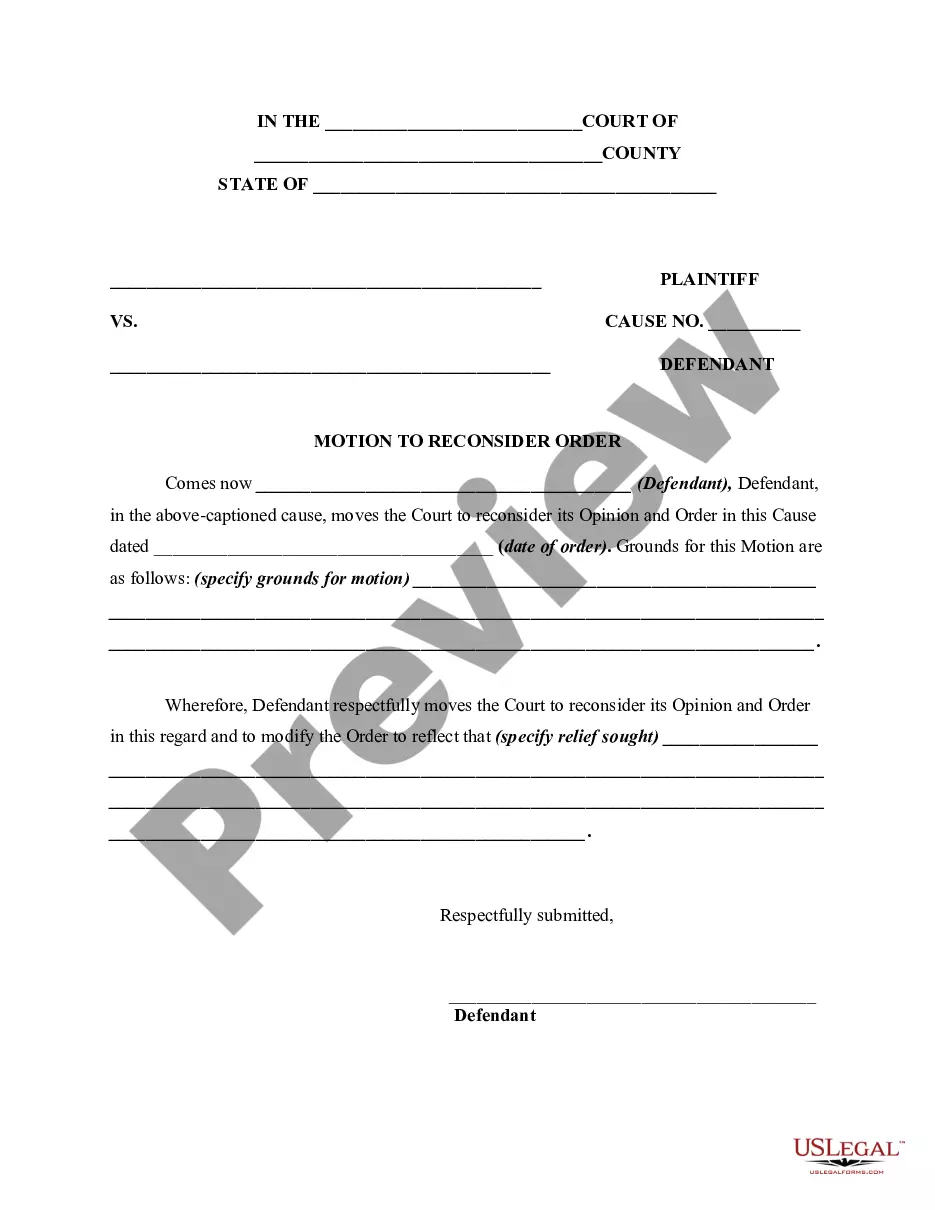
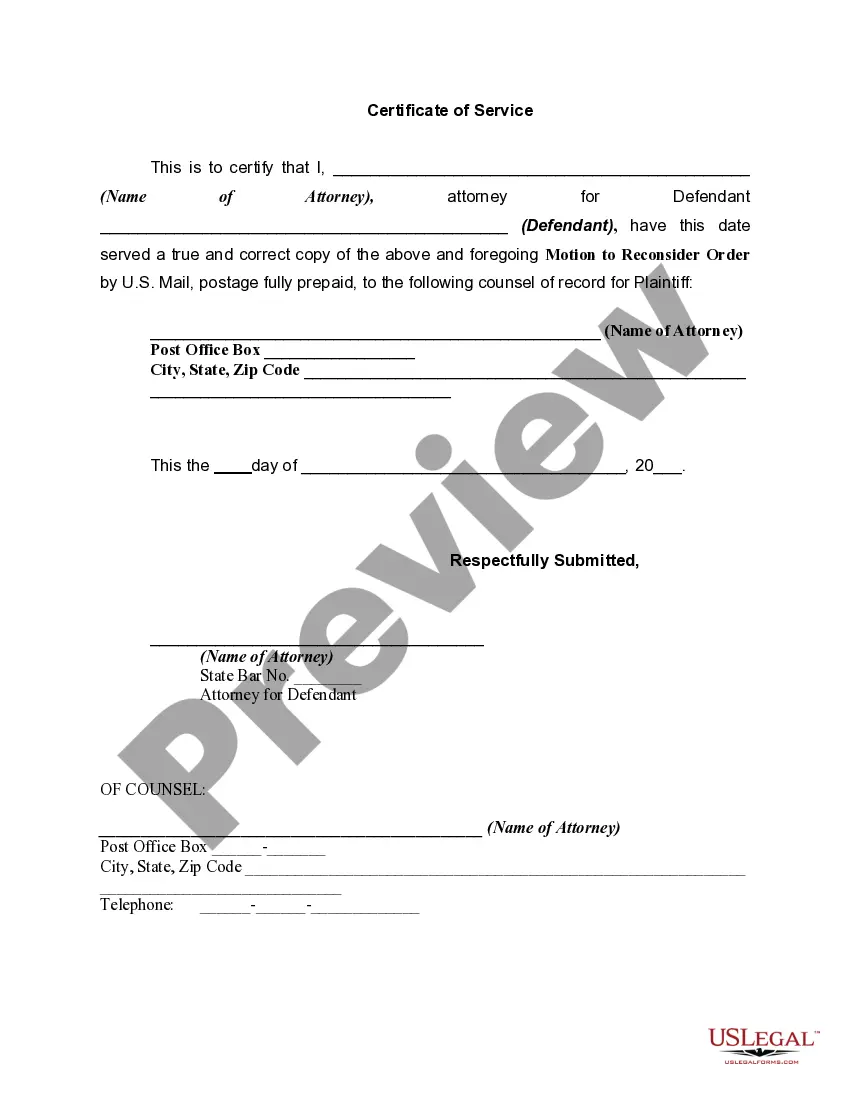
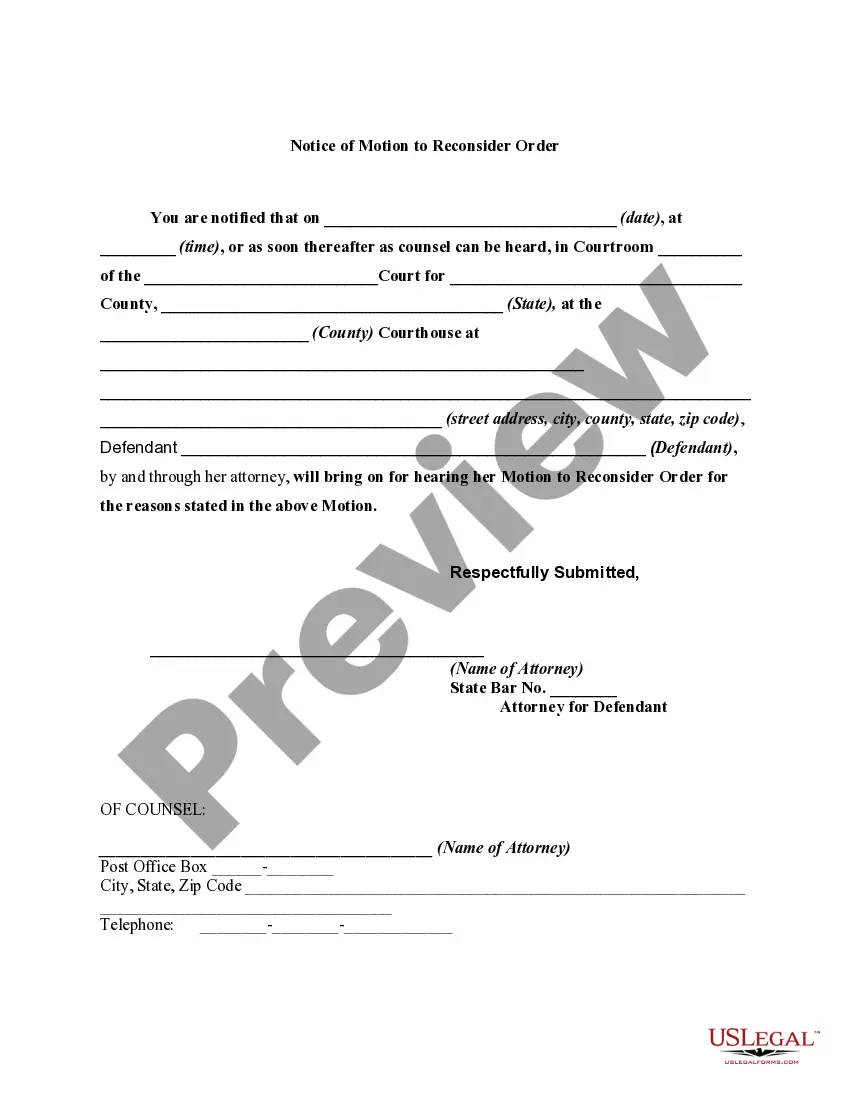
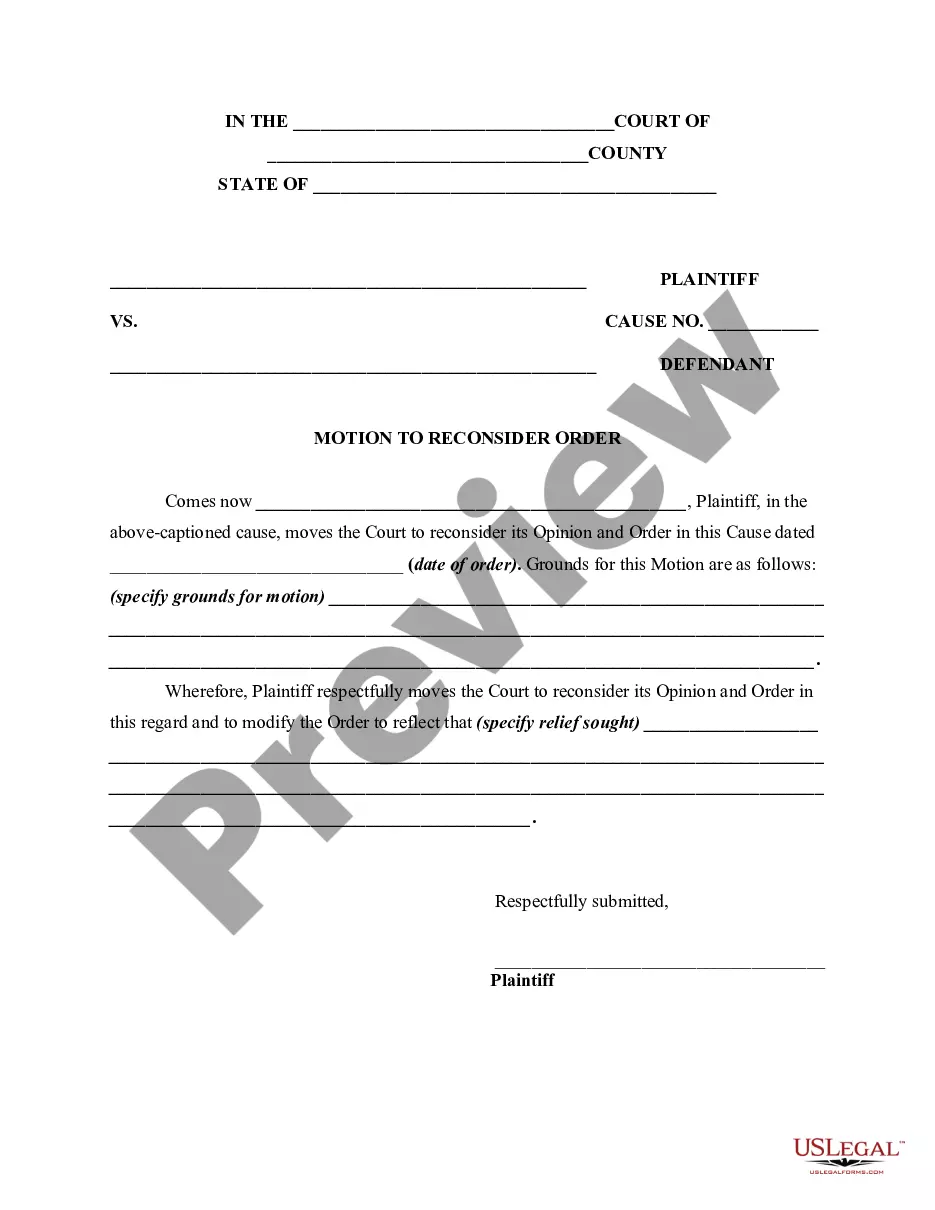
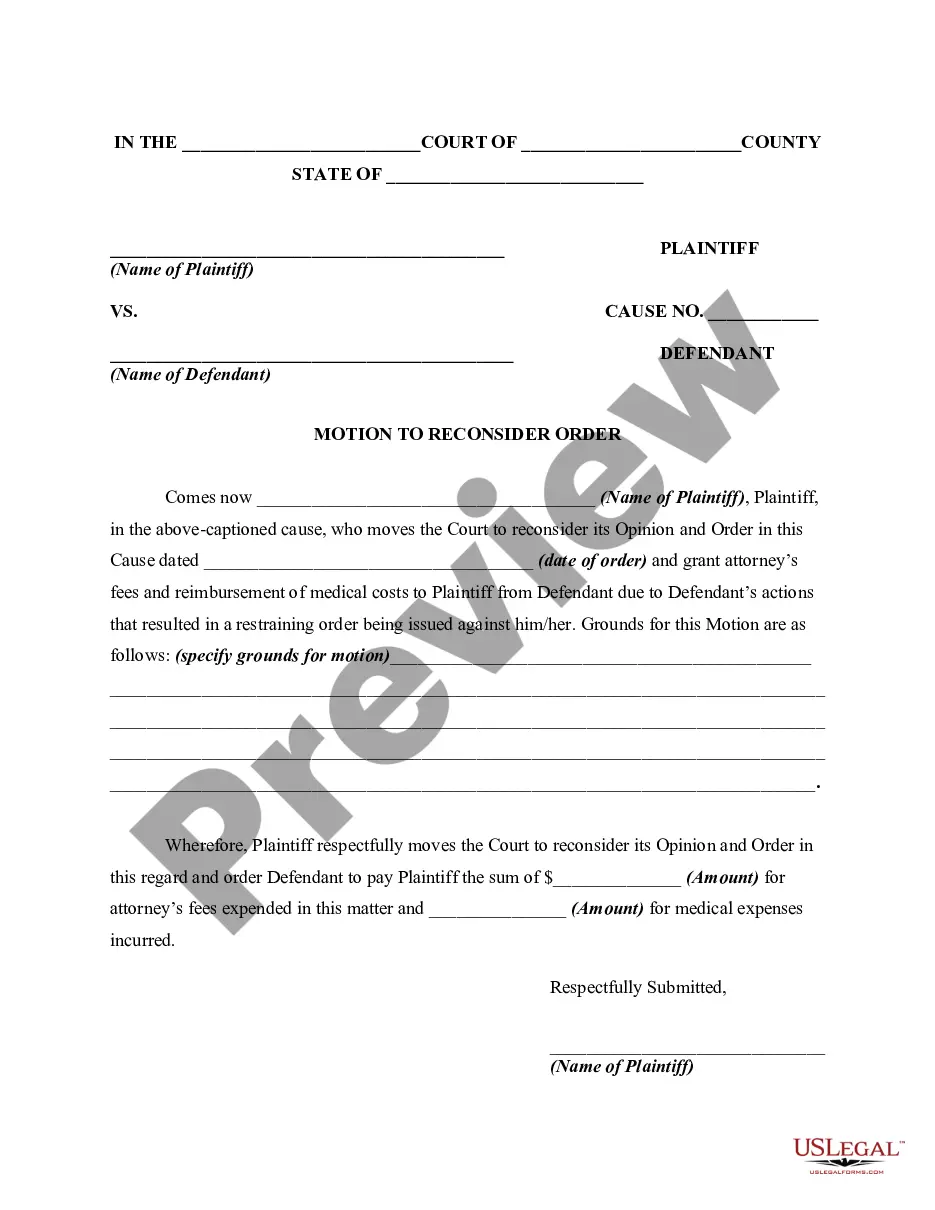
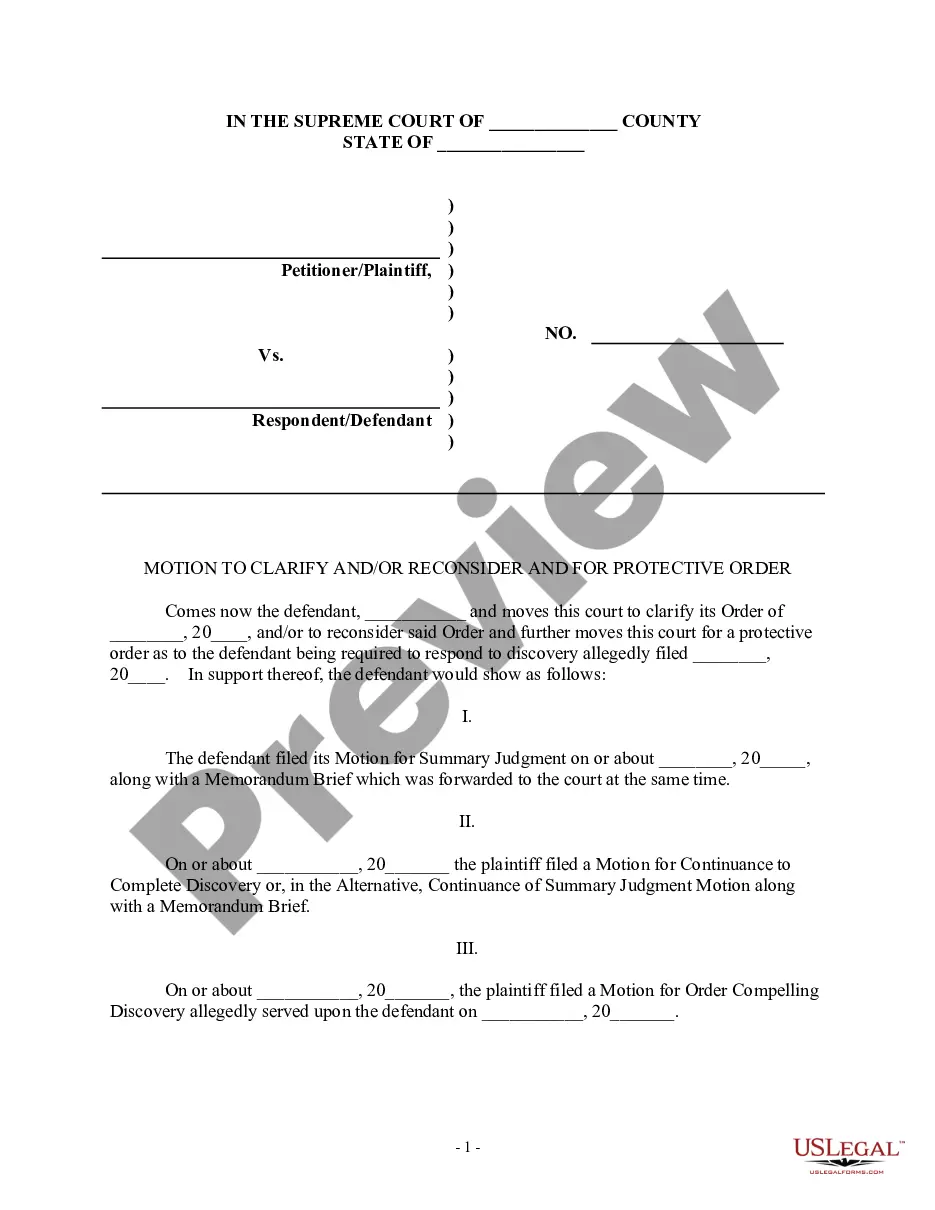






How to fill out Motion Of Defendant Requesting Court To Reconsider An Order And Notice Of Motion To Plaintiff?
- If you are a returning user, log in to your account and download the desired form template by clicking the Download button. Ensure your subscription is active; if not, renew it according to your payment plan.
- For first-time users, begin by examining the Preview mode and form description to select the appropriate template that aligns with your needs and complies with your jurisdiction.
- If necessary, utilize the Search tab for alternative templates. Upon finding a suitable form, proceed to the next step.
- Select the document by clicking the Buy Now button and choose a subscription plan that fits your needs. You will need to create an account to access the extensive library.
- Complete your purchase by entering your credit card information or using your PayPal account to finalize the transaction.
- Download your form and store it on your device. You can always access it later in the My Forms section of your profile.
US Legal Forms empowers users with a vast repository of legal forms, making it easy to find, customize, and execute documents effectively. From precise legal wording to usable templates, the platform caters to both novice users and seasoned professionals.
Start harnessing the power of US Legal Forms today for all your legal needs. Explore your options and enable yourself to create legally sound documents effortlessly!
Form popularity
FAQ
Motions are formal requests made to the court for a specific ruling or order on a legal matter. They are essential tools in litigation, allowing parties to seek relief or clarify issues. Understanding how to effectively utilize Blank motions is vital, as they provide the necessary structure for your legal requests.
Writing a successful motion to dismiss involves presenting a solid argument that demonstrates why the case should be terminated. You should include relevant facts, applicable legal standards, and any supporting documentation. Using Blank motions can help you ensure that your motion follows the proper format and covers all necessary components.
To write motions for court, begin with a formal title and identify the parties involved. Clearly state the relief sought and present your arguments in a logical manner, supporting them with evidence and applicable laws. Blank motions can assist you in crafting an effective motion, ensuring all critical elements are included.
In Illinois, a motion notice must include the title of the motion, the date and time of the hearing, and the name of the court. It is crucial to serve the notice to all parties involved. To streamline this process, consider using Blank motions, which often come with the necessary documents to simplify compliance with legal requirements.
An example of a legal motion is a motion to dismiss, where one party requests the court to terminate a case due to specific reasons, such as lack of jurisdiction or failure to state a claim. This type of motion is common in legal disputes. Utilizing Blank motions can simplify the process, providing you with a framework to present your case clearly.
When preparing a motion, it is essential to clearly state your request and the reasons behind it. Use straightforward language to articulate the facts of your case and any relevant laws. You can leverage our Blank motions templates to help structure your argument effectively, ensuring it's persuasive and concise.
The procedure for filing a blank motion generally involves preparing your motion document and submitting it to the appropriate court. You must follow local rules regarding filing fees and service of process. After filing, ensure that copies are served to all parties involved, and consider using platforms like US Legal Forms to streamline the process and ensure compliance.
An example of a motion is a motion to dismiss, where you request the court to terminate a case based on specific legal grounds. In such blank motions, you typically outline the reasons for dismissal, including any lack of jurisdiction or insufficiency of claims. These motions are critical tools in legal proceedings, helping you advocate for a favorable outcome.
To ask for a motion in court, you should first prepare your blank motion according to the required format. When your case is called, respectfully address the judge and clearly state your request, referencing the motion you filed. Be concise in your explanation and be prepared to answer any questions the judge may have regarding your request.
When writing blank motions, start with the title of the motion at the top of the document, followed by the court's name, case number, and parties involved. Clearly state your request in the introduction, followed by the relevant arguments or facts supporting your position. Always include a signature line, as it validates the motion, and ensure the format meets local court rules for submission.