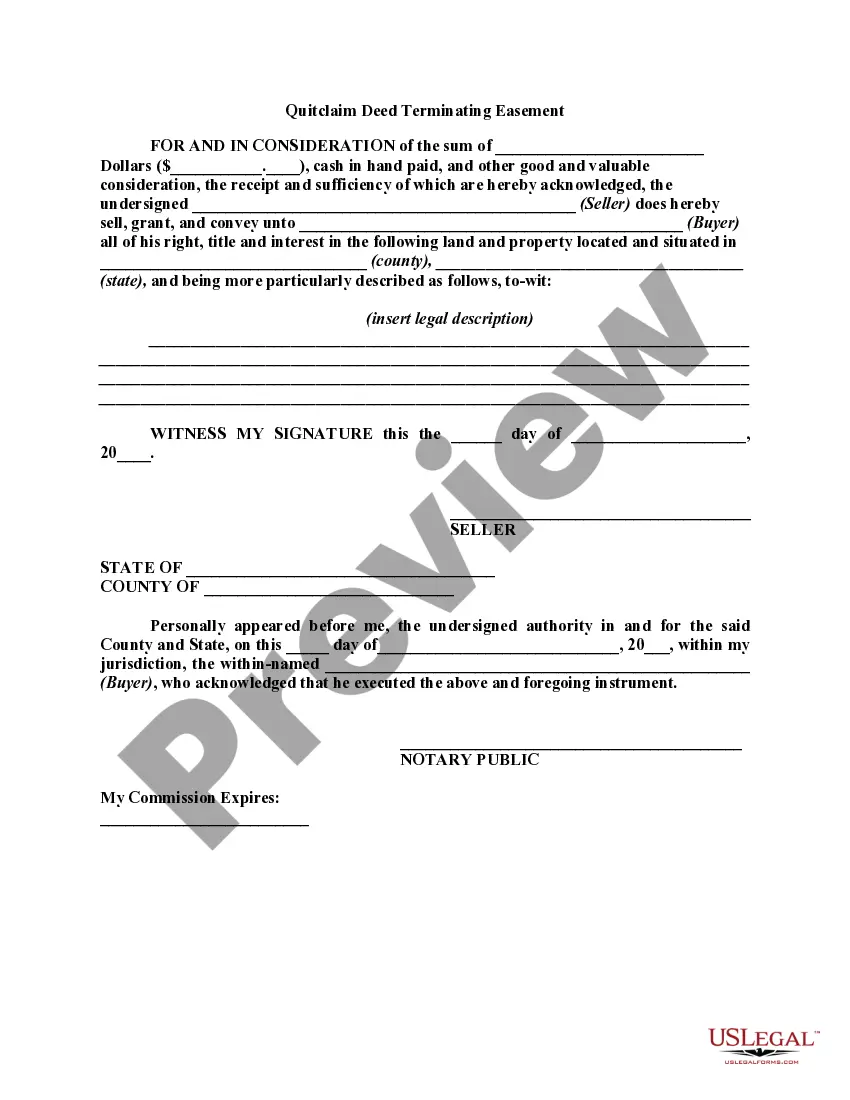
Warranty Deed Vs Quit Claim Foreclosure
Description
Get your form ready online
Our built-in tools help you complete, sign, share, and store your documents in one place.
Make edits, fill in missing information, and update formatting in US Legal Forms—just like you would in MS Word.
Download a copy, print it, send it by email, or mail it via USPS—whatever works best for your next step.
Sign and collect signatures with our SignNow integration. Send to multiple recipients, set reminders, and more. Go Premium to unlock E-Sign.
If this form requires notarization, complete it online through a secure video call—no need to meet a notary in person or wait for an appointment.
We protect your documents and personal data by following strict security and privacy standards.

Make edits, fill in missing information, and update formatting in US Legal Forms—just like you would in MS Word.

Download a copy, print it, send it by email, or mail it via USPS—whatever works best for your next step.

Sign and collect signatures with our SignNow integration. Send to multiple recipients, set reminders, and more. Go Premium to unlock E-Sign.

If this form requires notarization, complete it online through a secure video call—no need to meet a notary in person or wait for an appointment.

We protect your documents and personal data by following strict security and privacy standards.
Looking for another form?

How to fill out Quitclaim Deed Termination Or Terminating Easement?
Managing legal paperwork can be perplexing, even for the most proficient professionals.
If you are searching for a Warranty Deed vs. Quit Claim Foreclosure and lack the time to dedicate to finding the appropriate and updated version, the procedures can be stressful.
Access a resource library of articles, guides, and materials pertinent to your needs and circumstances.
Save time and effort in locating the documents you need, and utilize US Legal Forms' advanced search and Preview function to discover Warranty Deed vs. Quit Claim Foreclosure and acquire it.
Ensure that the template is valid in your state or county. Click Buy Now when you are ready. Choose a monthly subscription plan. Locate the format you need, and Download, fill out, sign, print, and submit your document. Benefit from the US Legal Forms web library, supported by 25 years of industry experience and reliability. Streamline your daily document management into a straightforward and user-friendly process today.
- If you hold a membership, Log In to your US Legal Forms account, search for the form, and retrieve it.
- Check the My documents tab to view the documents you have previously downloaded and manage your files as needed.
- If this is your first time with US Legal Forms, create a free account for unlimited access to all the features of the library.
- Follow these steps after finding the form you require.
- Verify it is the correct form by previewing it and reviewing its details.
- Access state- or county-specific legal and business documents.
- US Legal Forms caters to any requirements you might have, from personal to business documents, all in one location.
- Use cutting-edge tools to complete and manage your Warranty Deed vs. Quit Claim Foreclosure.
Form popularity
FAQ
A quitclaim deed cannot stop a foreclosure on its own, especially in the context of warranty deed vs quit claim foreclosure. This type of deed merely transfers ownership rights but does not address the underlying mortgage obligations. If you face foreclosure, consider consulting with a legal expert or using resources like USLegalForms, which can provide necessary documents and guidance to navigate your options more effectively.
In the context of warranty deed vs quit claim foreclosure, a quitclaim deed does not automatically override a warranty deed. Each deed serves different purposes and carries different levels of protection. A warranty deed provides a guarantee that the title is clear, while a quitclaim deed transfers whatever interest the grantor has without any guarantees. Therefore, if a warranty deed exists, it typically retains its authority unless explicitly revoked.
In a foreclosure, the deed you typically receive is a quit claim deed. This type of deed transfers the property without guaranteeing clear title, which can be crucial to understand in the context of warranty deed vs quit claim foreclosure. Often, this means you may take on certain risks regarding the property's title. For assistance navigating these complexities, consider using US Legal Forms, which provides resources to help you understand your options.
To obtain a warranty deed, start by contacting your local county clerk's office or a real estate attorney. You will need to prepare a deed form that includes the necessary details about the property and the parties involved. After completing the form, submit it for recording with the county, which will officially document the transfer of ownership. Understanding the differences between a warranty deed vs quit claim foreclosure can help you make informed decisions about your property transactions.
A quit claim deed is not a foreclosure. Instead, it is a legal document that transfers ownership of property from one party to another without guaranteeing the title. In the context of warranty deed vs quit claim foreclosure, it’s important to understand that a quit claim deed can sometimes be used in foreclosure situations, but it does not itself initiate a foreclosure process. If you want to navigate these terms effectively, consider using USLegalForms for clear guidance.
What Is the Strongest Type of Deed? For real estate buyers, a general warranty deed provides greater protection than any other type of deed. While it's the best deed for the grantee, it gives the grantor the most liability.
Removing someone from a property title in Ontario requires a transfer of title or transfer of ownership. This process involves transferring ownership rights to the new owners, effectively removing the unwanted individual(s) from the title.
NounLaw. a transfer of all one's interest, as in a parcel of real estate, especially without a warranty of title.
General warranty deeds give the grantee the most protection, special warranty deeds give the grantee more limited protection, and a quitclaim deed gives the grantee the least protection under the law.
A traditional deed simply transfers the ownership of a property from one party to another (in other words, the seller to the buyer.) Whoever legally holds the deed is the rightful owner of the property. A warranty deed, on the other hand, contains special assurances that the seller makes to the buyer.