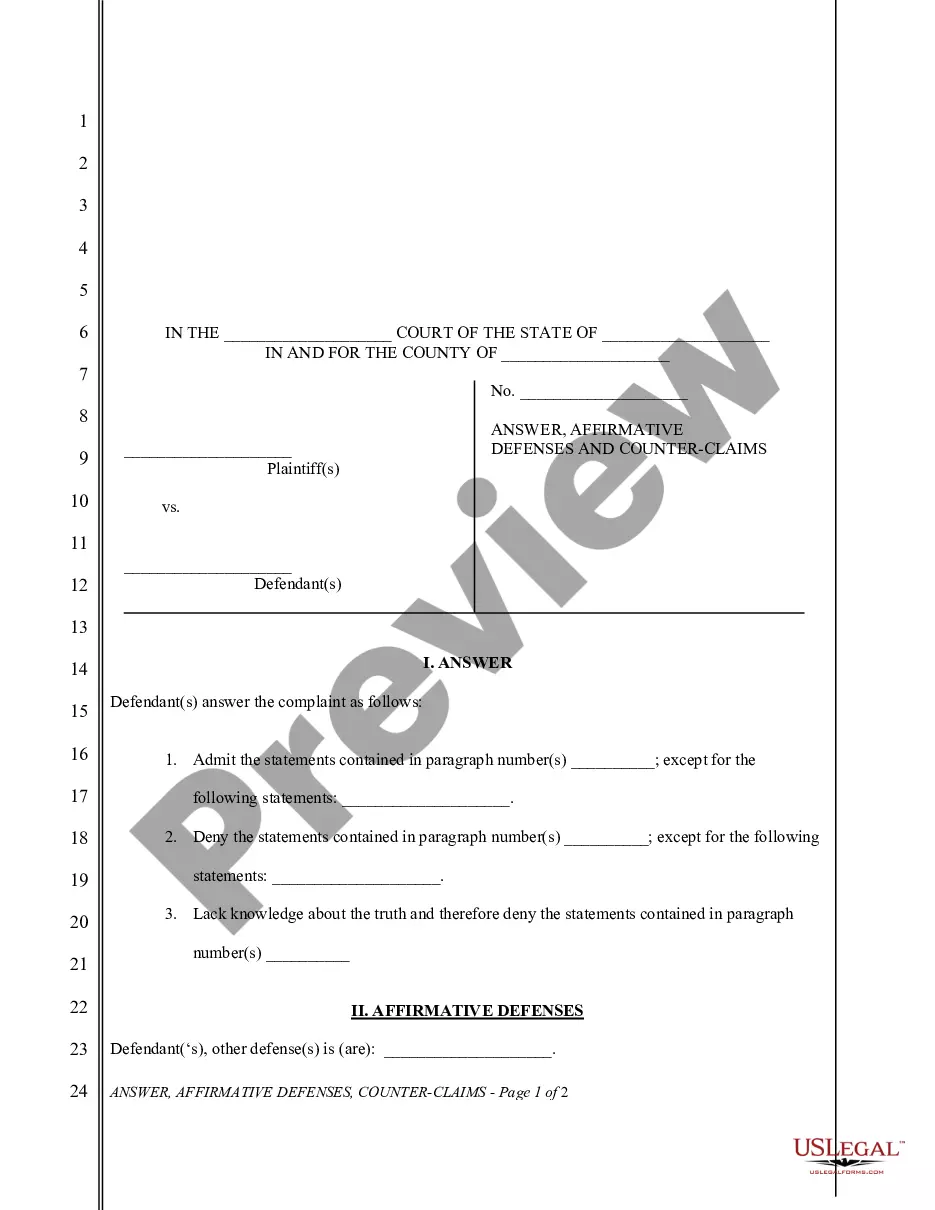
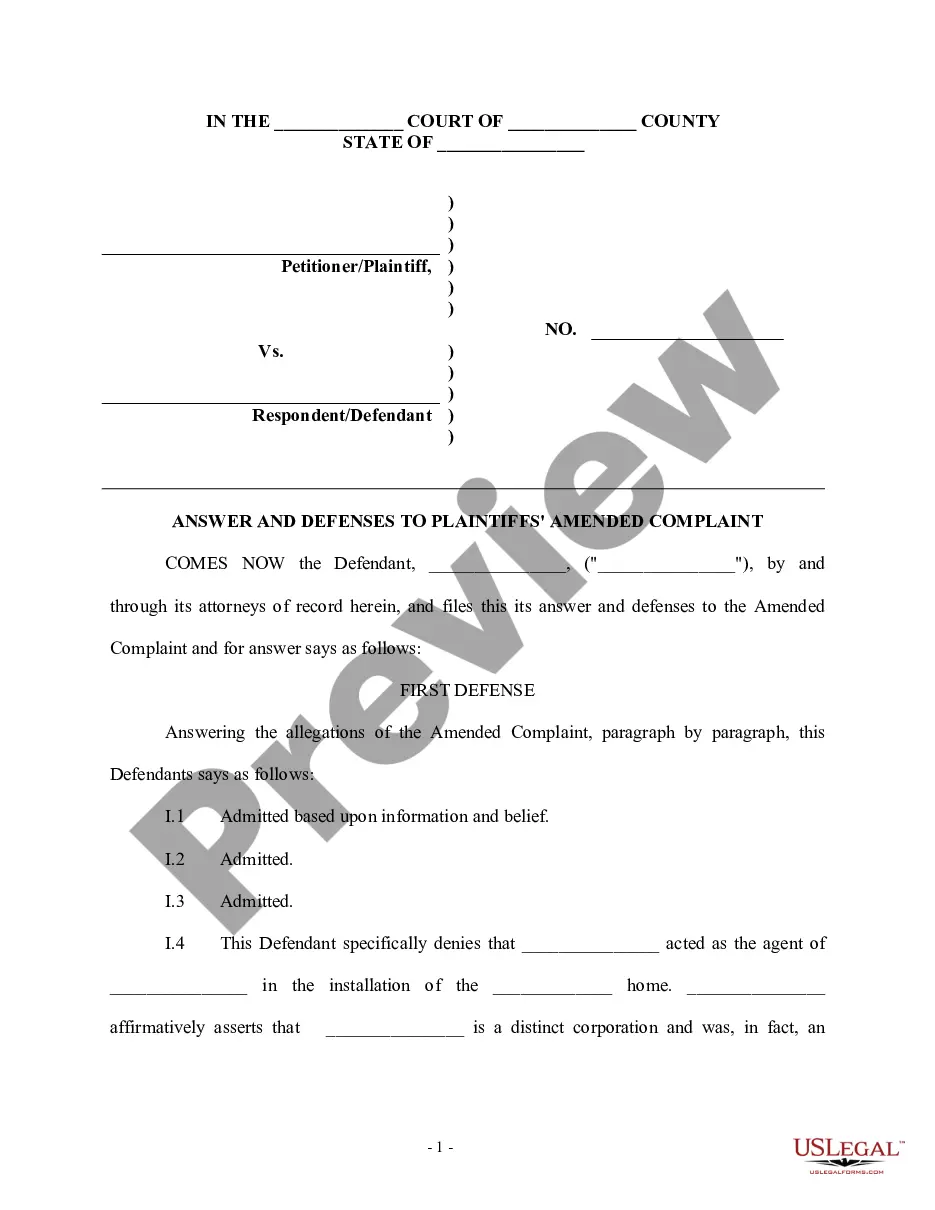
Form Answer Lawsuit Sample With Questions
Description
Get your form ready online
Our built-in tools help you complete, sign, share, and store your documents in one place.
Make edits, fill in missing information, and update formatting in US Legal Forms—just like you would in MS Word.
Download a copy, print it, send it by email, or mail it via USPS—whatever works best for your next step.
Sign and collect signatures with our SignNow integration. Send to multiple recipients, set reminders, and more. Go Premium to unlock E-Sign.
If this form requires notarization, complete it online through a secure video call—no need to meet a notary in person or wait for an appointment.
We protect your documents and personal data by following strict security and privacy standards.

Make edits, fill in missing information, and update formatting in US Legal Forms—just like you would in MS Word.

Download a copy, print it, send it by email, or mail it via USPS—whatever works best for your next step.

Sign and collect signatures with our SignNow integration. Send to multiple recipients, set reminders, and more. Go Premium to unlock E-Sign.

If this form requires notarization, complete it online through a secure video call—no need to meet a notary in person or wait for an appointment.

We protect your documents and personal data by following strict security and privacy standards.
Looking for another form?









How to fill out General Form Of An Answer By Defendant In A Civil Lawsuit?
The Form Response Litigation Example With Inquiries displayed on this page is a reusable official template created by experienced attorneys in accordance with federal and state laws and guidelines.
For over 25 years, US Legal Forms has offered individuals, organizations, and legal experts more than 85,000 authenticated, state-specific documents for any professional and personal need. It’s the fastest, easiest, and most trustworthy method to acquire the forms you require, as the service ensures bank-level data protection and anti-malware safeguards.
Subscribe to US Legal Forms to have authenticated legal templates for all of life’s situations readily available to you.
- Search for the document you need and review it.
- Browse the example you searched and preview it or assess the form description to verify it meets your needs. If it doesn’t, use the search bar to locate the right one. Click Buy Now once you have identified the template you need.
- Register and Log In.
- Select the pricing option that works best for you and create an account. Use PayPal or a credit card to process a swift payment. If you already possess an account, Log In and verify your subscription to proceed.
- Obtain the editable template.
- Pick the format you desire for your Form Response Litigation Example With Inquiries (PDF, DOCX, RTF) and download the example to your device.
- Fill out and sign the documents.
- Print the template to complete it by hand. Alternatively, use an online versatile PDF editor to efficiently and accurately fill in and sign your form with an electronic signature.
- Re-download your documents as needed.
- Access the same form again whenever required. Go to the My documents tab in your profile to re-download any forms you have previously acquired.
Form popularity
FAQ
To win a civil case, you typically must prove your claims by a preponderance of the evidence. This means demonstrating that your version of events is more likely true than not. Utilize the Form answer lawsuit sample with questions to articulate your argument and present supporting evidence effectively. Understanding the burden of proof is essential in navigating your case successfully.
Answering in court requires clarity and confidence. When you respond, stick to the facts of your case and refer to the Form answer lawsuit sample with questions for guidance. Speak directly to the judge, maintain a respectful tone, and avoid unnecessary jargon. Being straightforward helps convey your points more effectively.
To format an answer to a lawsuit, start by including the case caption at the top, followed by your response to each allegation. The Form answer lawsuit sample with questions can guide you in structuring your document correctly. Make sure to number your responses to correspond with the numbered allegations in the complaint. Clear formatting helps present your case more effectively to the court.
Winning a lawsuit often hinges on presenting a solid case backed by strong evidence. Utilize the Form answer lawsuit sample with questions to clearly outline your arguments and support your claims. Additionally, working with a knowledgeable attorney can help you navigate the legal process effectively. Preparation and understanding your case are key to achieving a favorable outcome.
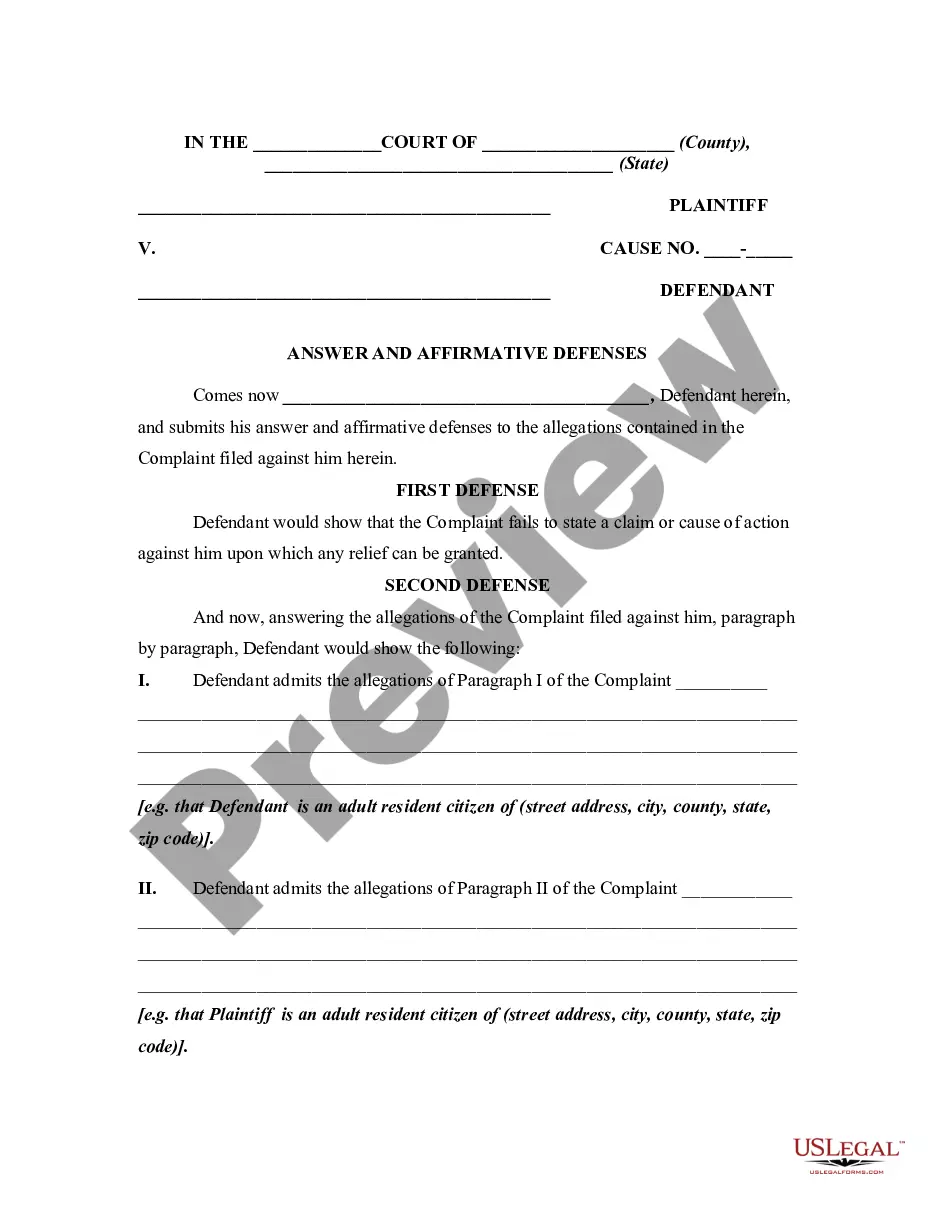
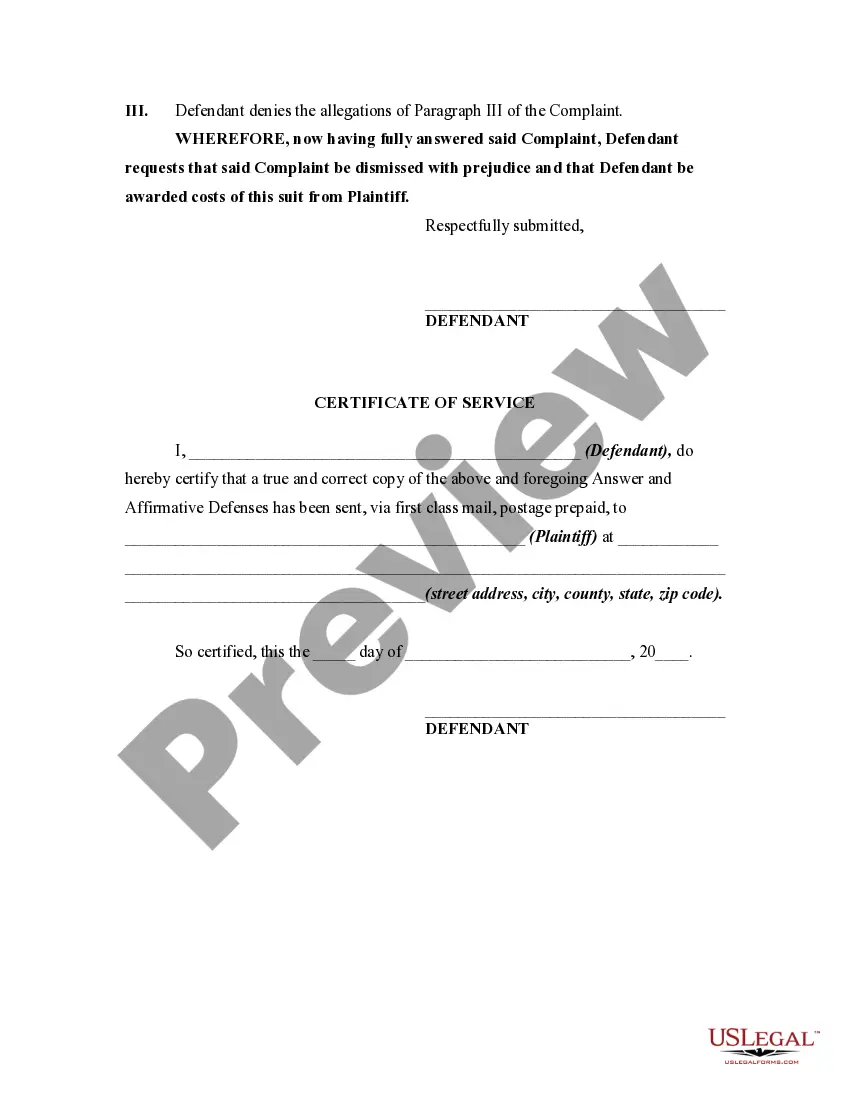
Answering a lawsuit requires careful attention to detail and adherence to legal formats. Begin by drafting your answer, responding to each allegation with a clear admission or denial. Utilizing a Form answer lawsuit sample with questions can simplify this process and help you cover all essential aspects of your response. Additionally, consider using platforms like uslegalforms to access templates and resources that can guide you through the legal requirements.
To write a legal response effectively, start by reviewing the complaint thoroughly. Understand the allegations made against you, and organize your thoughts clearly. You can use a Form answer lawsuit sample with questions as a guideline to structure your response. This ensures that you include all necessary elements, such as your admissions, denials, and any defenses you wish to raise.
A verified complaint is a verification of the facts that have been stated in a complaint as truth. It is verified by the plaintiff or their attorney and may come attached with exhibits. In California, if you are answering the verified complaint, every single paragraph must be answered with denial or an admission.
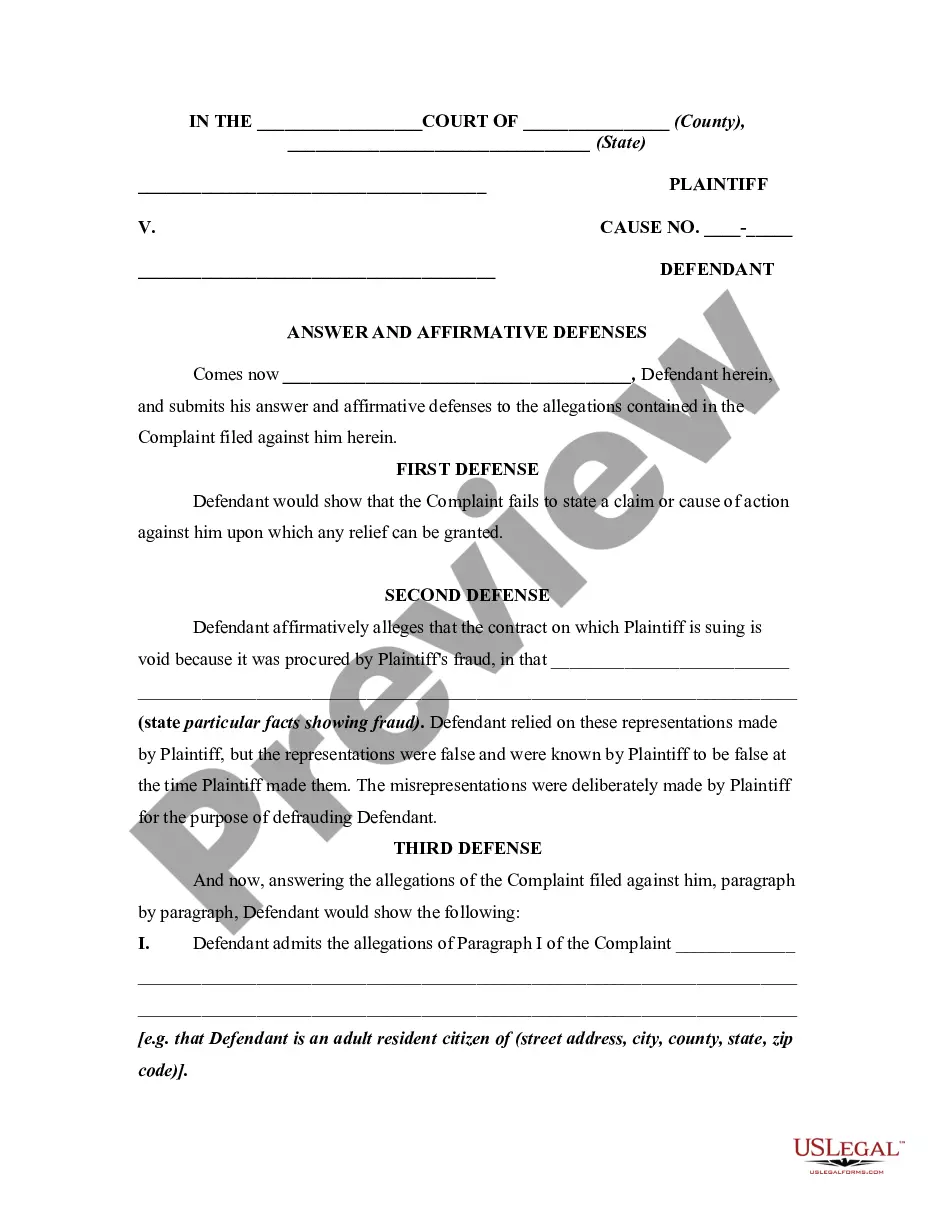
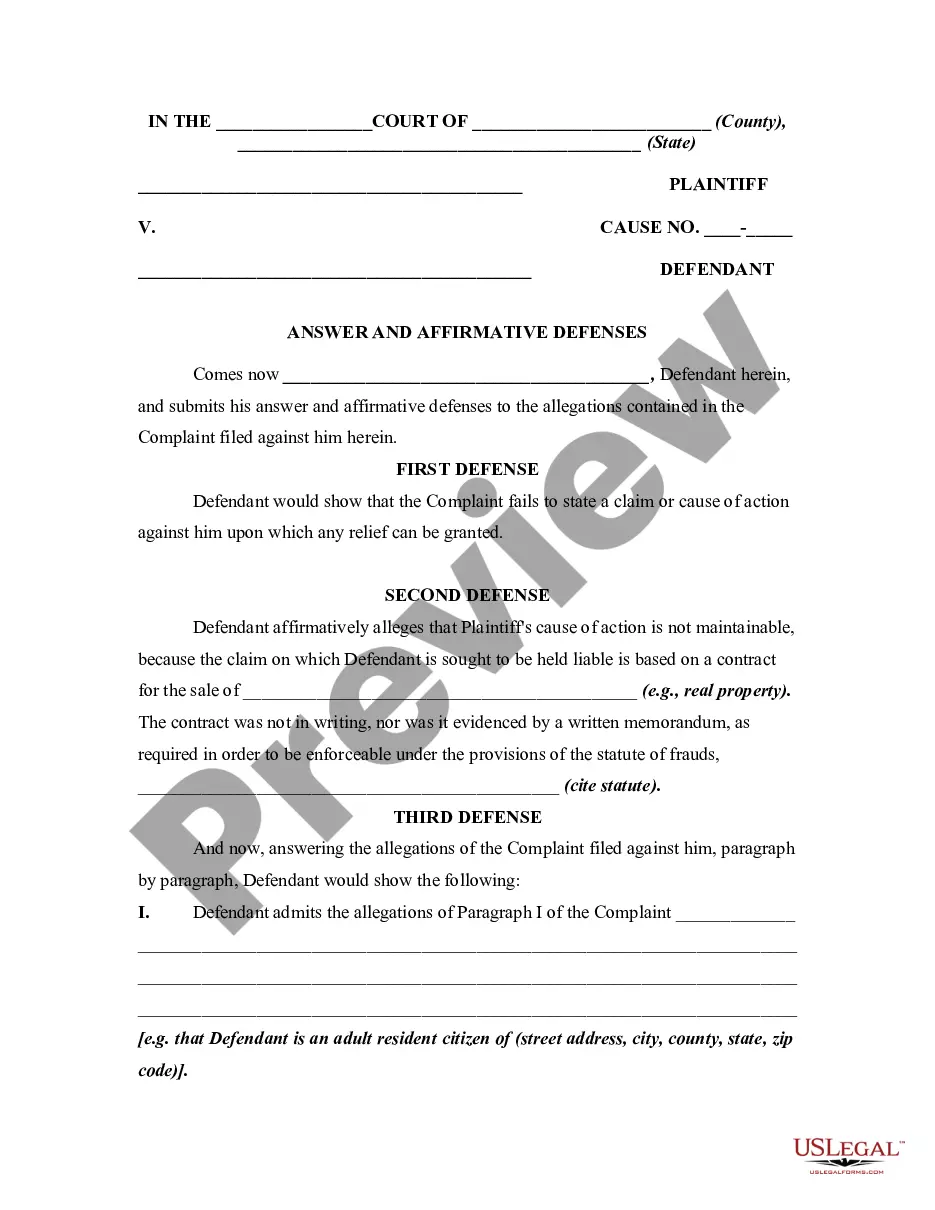
Affirmative defense?Examples On [Date], after making the contract and the alleged breach, and before this action was commenced, defendant paid to the plaintiff the sum of [specify amount], which was accepted by the plaintiff in full satisfaction and discharge of the damages claimed in the petition.
If you file an Answer to the lawsuit and defend yourself in court, you can state an affirmative defense. You can deny what the plaintiff says you did without saying anything else. But you can also have affirmative defenses. You must raise it in your Answer or you may give up your right to bring it up later.
An Answer is the most common way to respond to a lawsuit. The Answer is the defendant's opportunity to admit or deny the specific allegations brought against them in the complaint. Any statements in the complaint that are not denied will be taken as true for the purposes of this case.