Adverse Possession Cases In India
Description
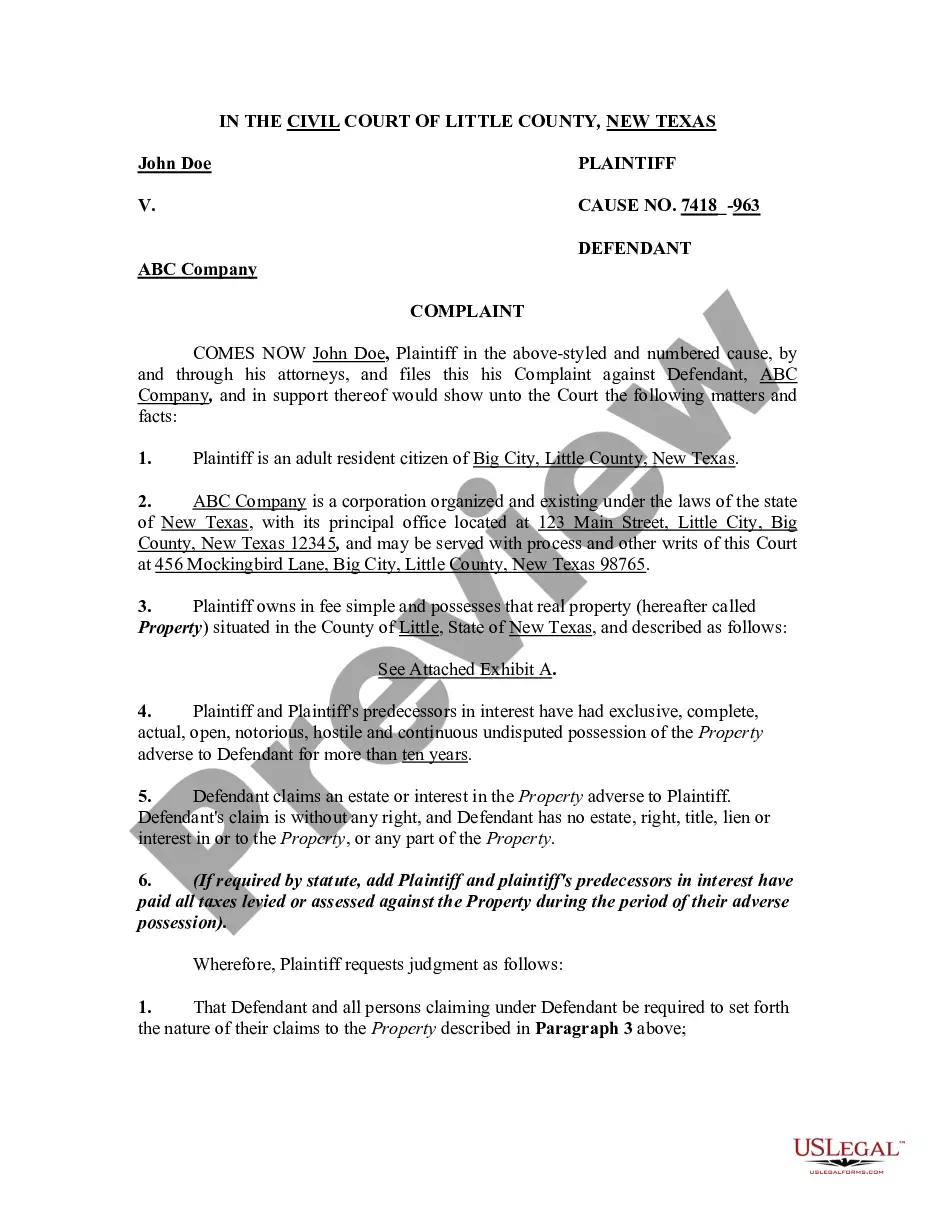
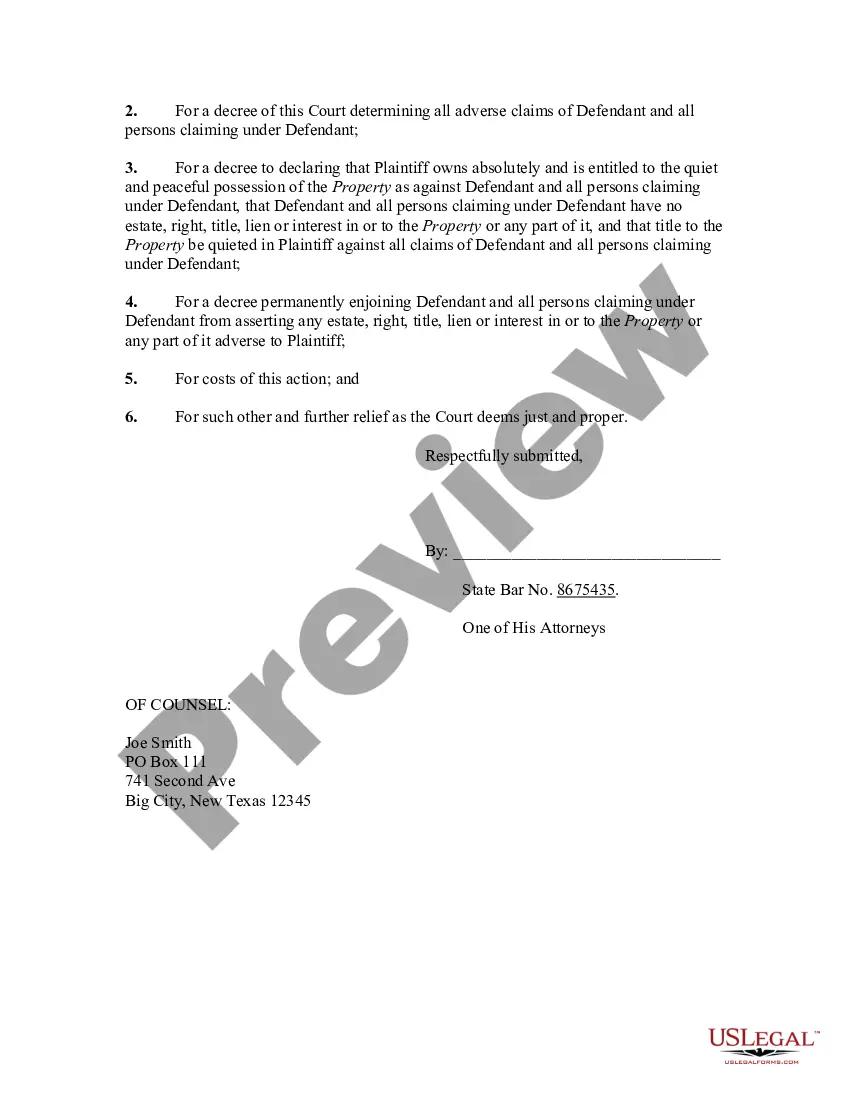
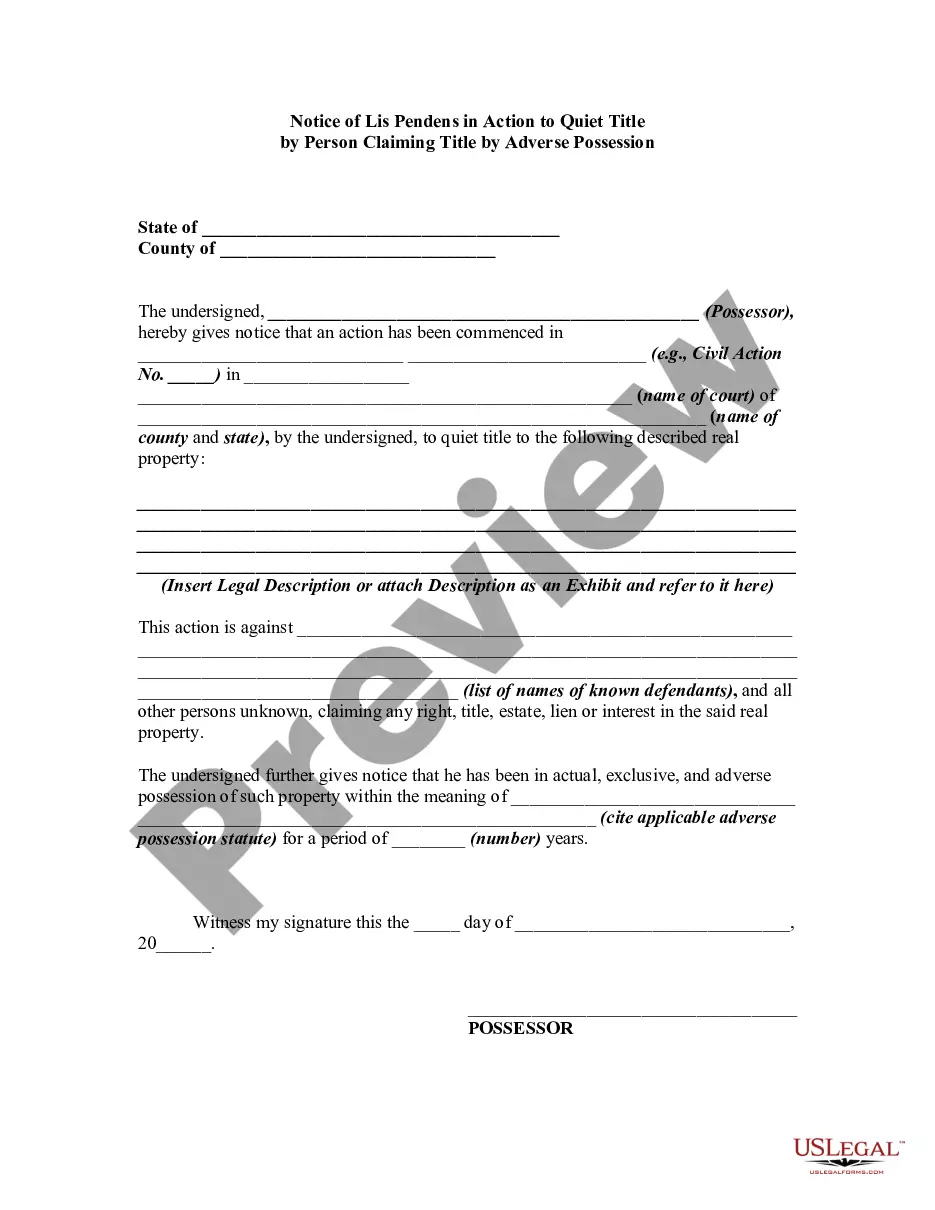
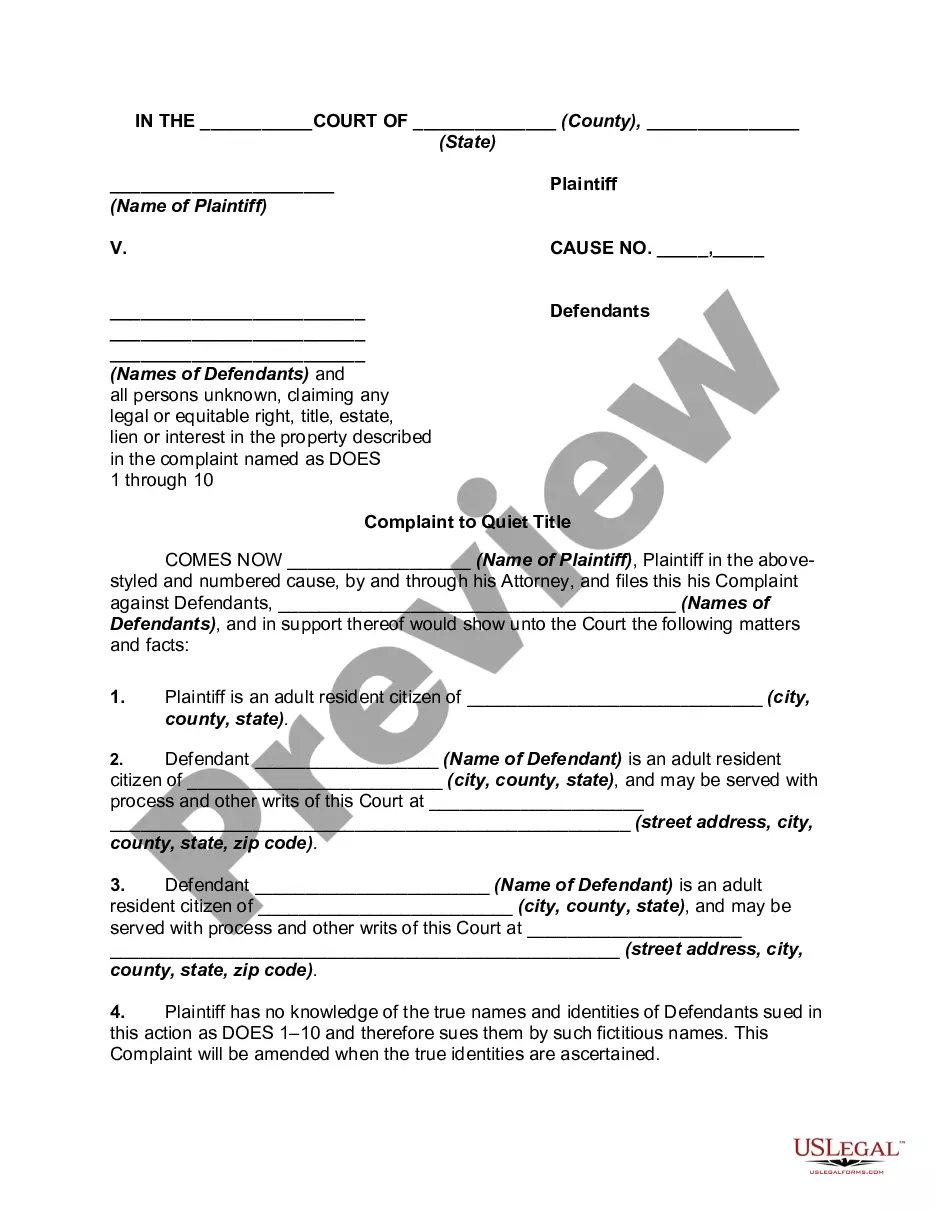

How to fill out Complaint To Quiet Title By Person Claiming Adverse Possession - Squatters Rights?
Securing a reliable resource for obtaining the latest and suitable legal templates is a significant part of navigating bureaucracy.
Selecting the correct legal documents requires accuracy and meticulousness, which is why sourcing samples of Adverse Possession Cases in India exclusively from trustworthy providers, such as US Legal Forms, is essential. An incorrect template can squander your time and delay your current situation.
After obtaining the form on your device, you can modify it using the editor or print it out to complete it manually. Avoid the hassle associated with your legal documents. Explore the extensive US Legal Forms library where you can discover legal templates, assess their applicability to your circumstances, and download them instantly.
- Utilize the library navigation or search bar to locate your sample.
- Review the form's description to determine if it meets your state's and region's specifications.
- Access the form preview, if available, to confirm that the template is indeed what you are looking for.
- Return to the search and find the correct document if the Adverse Possession Cases in India does not fulfill your requirements.
- Once you are confident in the form's applicability, download it.
- If you are a registered user, click Log in to verify your identity and access your chosen templates in My documents.
- If you do not have an account yet, click Buy now to acquire the template.
- Select the pricing option that matches your preferences.
- Proceed with the registration to complete your purchase.
- Finalize your transaction by choosing a payment method (credit card or PayPal).
- Choose the format for downloading Adverse Possession Cases in India.
Form popularity
FAQ
Claiming adverse possession in India requires you to show that you have occupied the property in a manner that is open, notorious, and hostile to the interests of the true owner. You must file a suit in the appropriate civil court, outlining your claim and providing necessary evidence to support it. It is crucial to understand the legal process involved, which can be complex. Utilizing US Legal Forms can help simplify your journey through adverse possession cases in India by offering easy-to-use forms and legal guidance.
To file for adverse possession in India, you must demonstrate continuous and uninterrupted possession of the property for a specific period, usually 12 years, depending on the type of property. Begin by gathering evidence of your possession, which may include utility bills, tax receipts, or witness statements. Next, you should approach the local revenue office to file your claim formally. For detailed guidance, consider using platforms like US Legal Forms, which provide resources and templates to streamline the process of managing adverse possession cases in India.
You need to provide clear evidence of your possession of the property, including documents like tax receipts, utility bills, and any correspondence regarding the land. Additionally, maintaining records that show your regular use and upkeep of the property can bolster your claim. Understanding what proof is necessary for adverse possession cases in India allows you to build a strong case.
To successfully claim adverse possession in India, you must meet five key requirements: continuous possession for at least 12 years, the possession must be open and notorious, it should be exclusive, it must be hostile to the original owner's interests, and it must be without the consent of the original owner. Meeting all these criteria is crucial in establishing a valid claim. Knowledge of these requirements is essential for anyone dealing with adverse possession cases in India.
Claiming adverse possession can be challenging, primarily due to the need for substantial proof of continuous and exclusive occupation. The process involves navigating legal complexities and demonstrating that you have met all criteria set by Indian law. However, with the right documentation and a clear understanding of the law, you can strengthen your claim. Therefore, seeking guidance on adverse possession cases in India can be beneficial.
The rule of adverse possession in India allows an individual to claim ownership of land after continuous possession for 12 years, provided the possession is open, hostile, and exclusive. This means that the occupant must use the land as an owner would, without permission from the original owner. Understanding this rule is fundamental to navigating adverse possession cases in India effectively.
In adverse possession cases in India, you typically need documents that show your continuous and exclusive possession of the property. This can include land revenue records, property tax receipts, and legal notices, among others. Additionally, any documents that reflect your use and maintenance of the property can support your case. Collecting the right documents is vital for a successful claim.
To establish a claim for adverse possession, you need to provide evidence of continuous and uninterrupted possession of the land in question. This could include utility bills, tax receipts, or photographs showing your long-term occupation. Moreover, demonstrating that you possess the land openly, without hiding your activities, strengthens your claim. Thus, clarity in adverse possession cases in India is essential.
Yes, adverse possession is legal in India under certain conditions. The law allows a person to claim ownership of land if they have occupied it for a specified period, typically 12 years, without the consent of the original owner. This process is governed by the Limitation Act of 1963, which outlines the requirements for such cases. Therefore, understanding adverse possession cases in India is crucial for anyone involved.
In India, the limitation period for adverse possession is typically 12 years. This means that if someone has occupied a property without the owner's consent for this duration, they may claim legal ownership. It's important to note that the possession must be continuous, open, and hostile to the interests of the original owner. For anyone navigating adverse possession cases in India, understanding these nuances can be crucial, and platforms like US Legal Forms can provide valuable resources and documents to assist in this process.