Terminated
Description
Get your form ready online
Our built-in tools help you complete, sign, share, and store your documents in one place.
Make edits, fill in missing information, and update formatting in US Legal Forms—just like you would in MS Word.
Download a copy, print it, send it by email, or mail it via USPS—whatever works best for your next step.
Sign and collect signatures with our SignNow integration. Send to multiple recipients, set reminders, and more. Go Premium to unlock E-Sign.
If this form requires notarization, complete it online through a secure video call—no need to meet a notary in person or wait for an appointment.
We protect your documents and personal data by following strict security and privacy standards.

Make edits, fill in missing information, and update formatting in US Legal Forms—just like you would in MS Word.

Download a copy, print it, send it by email, or mail it via USPS—whatever works best for your next step.

Sign and collect signatures with our SignNow integration. Send to multiple recipients, set reminders, and more. Go Premium to unlock E-Sign.

If this form requires notarization, complete it online through a secure video call—no need to meet a notary in person or wait for an appointment.

We protect your documents and personal data by following strict security and privacy standards.
Looking for another form?
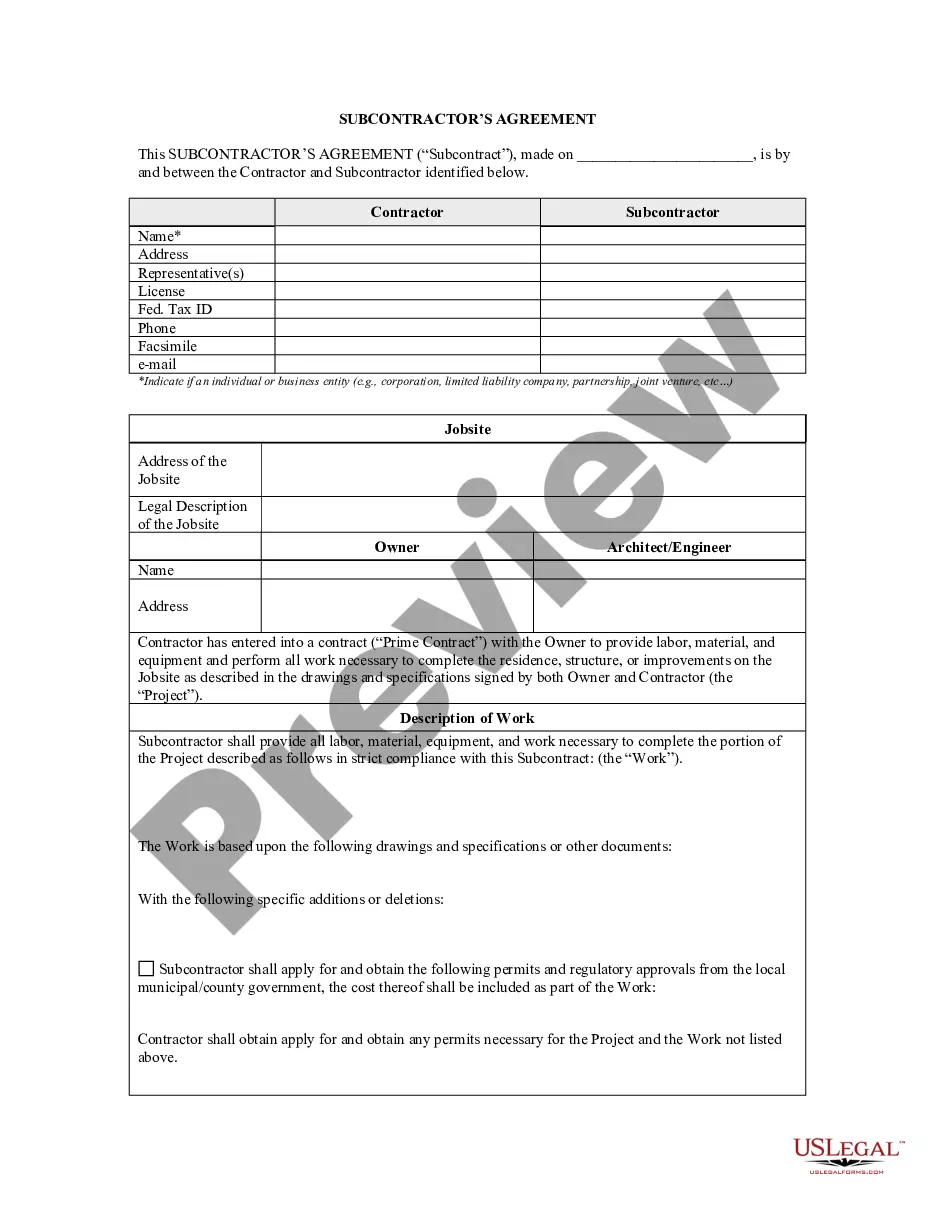
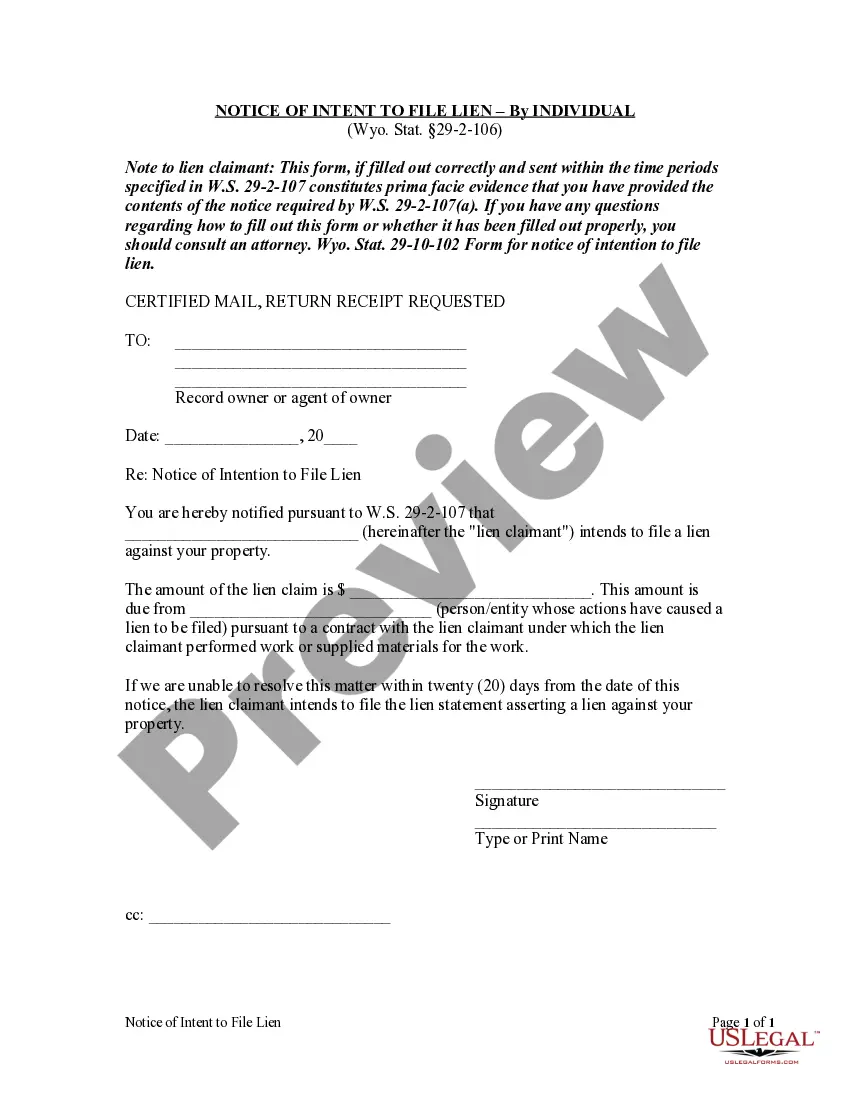
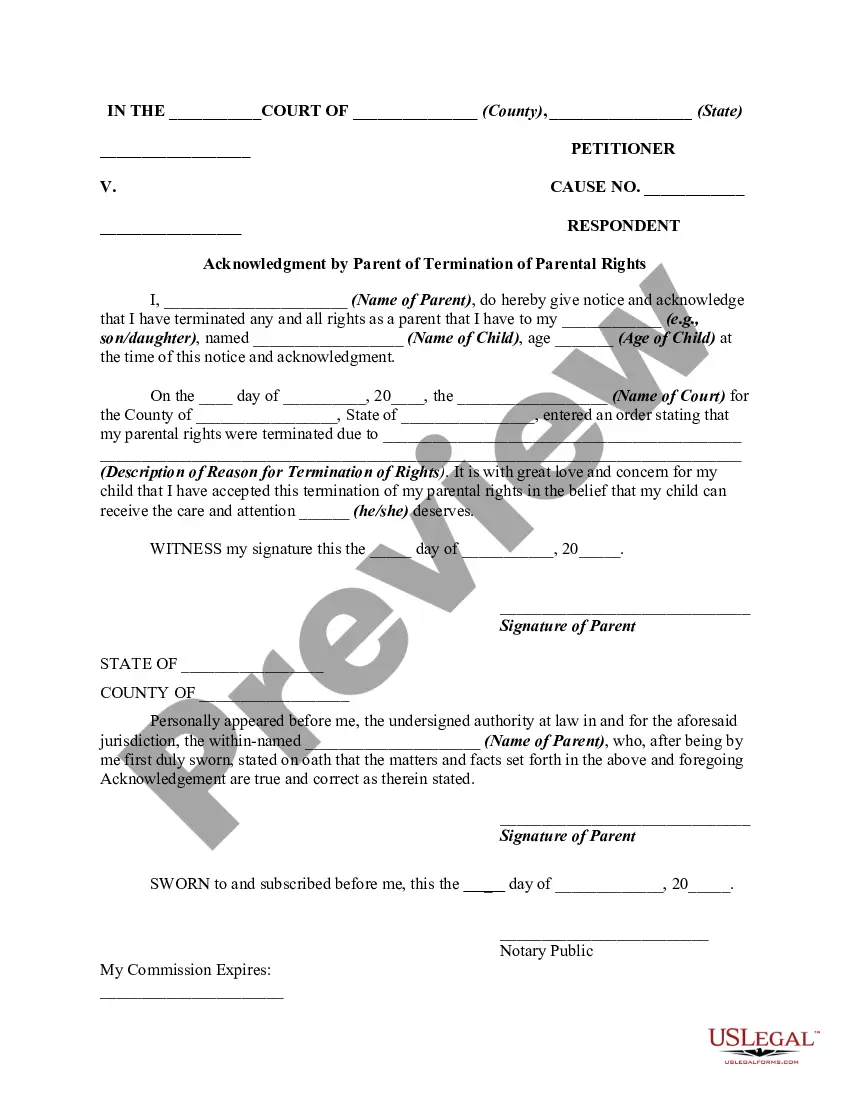
How to fill out Acknowledgment And Agreement By Parent Of Termination Or Relinquish Of Parental Rights - Release Of Parental Rights?
- If you're an existing user, log into your account and download the required form template by clicking the Download button. Remember to check that your subscription is active; renew as necessary according to your payment plan.
- For first-time users, start by checking the preview mode and form description. Ensure you select a template that fulfills your needs and meets local legal requirements.
- If the document doesn't suit your needs, utilize the Search tab to explore alternative templates that may be more appropriate.
- Purchase the document by clicking on the Buy Now button and selecting your preferred subscription plan. You’ll need to register for an account to access the library.
- Complete your transaction by entering your credit card information or using your PayPal account for secure payment.
- Finally, download your form to store it on your device, and you can access it later from the My Forms section of your profile.
US Legal Forms connects users with a robust collection of over 85,000 easily fillable and editable legal documents. This extensive library and access to premium experts ensure accurate and legally sound filings.
In summary, using US Legal Forms streamlines your legal documentation process. Start exploring the vast library today and simplify your legal needs!
Form popularity
FAQ
Yes, you can request to be terminated, but it’s essential to approach this in a professional manner. If you feel that a termination is the best option, discuss your situation with your employer and express your desire to part ways. This can help facilitate an amicable termination and clear the way for new opportunities, allowing you both to move forward positively.
If you’re seeking to get fired, it's generally more beneficial to have an open conversation with your employer about your job dissatisfaction. Instead of deliberately underperforming, which can affect your reputation, communicate your feelings and potential resignation plans. A candid discussion may encourage your employer to consider alternative arrangements without the need for termination.
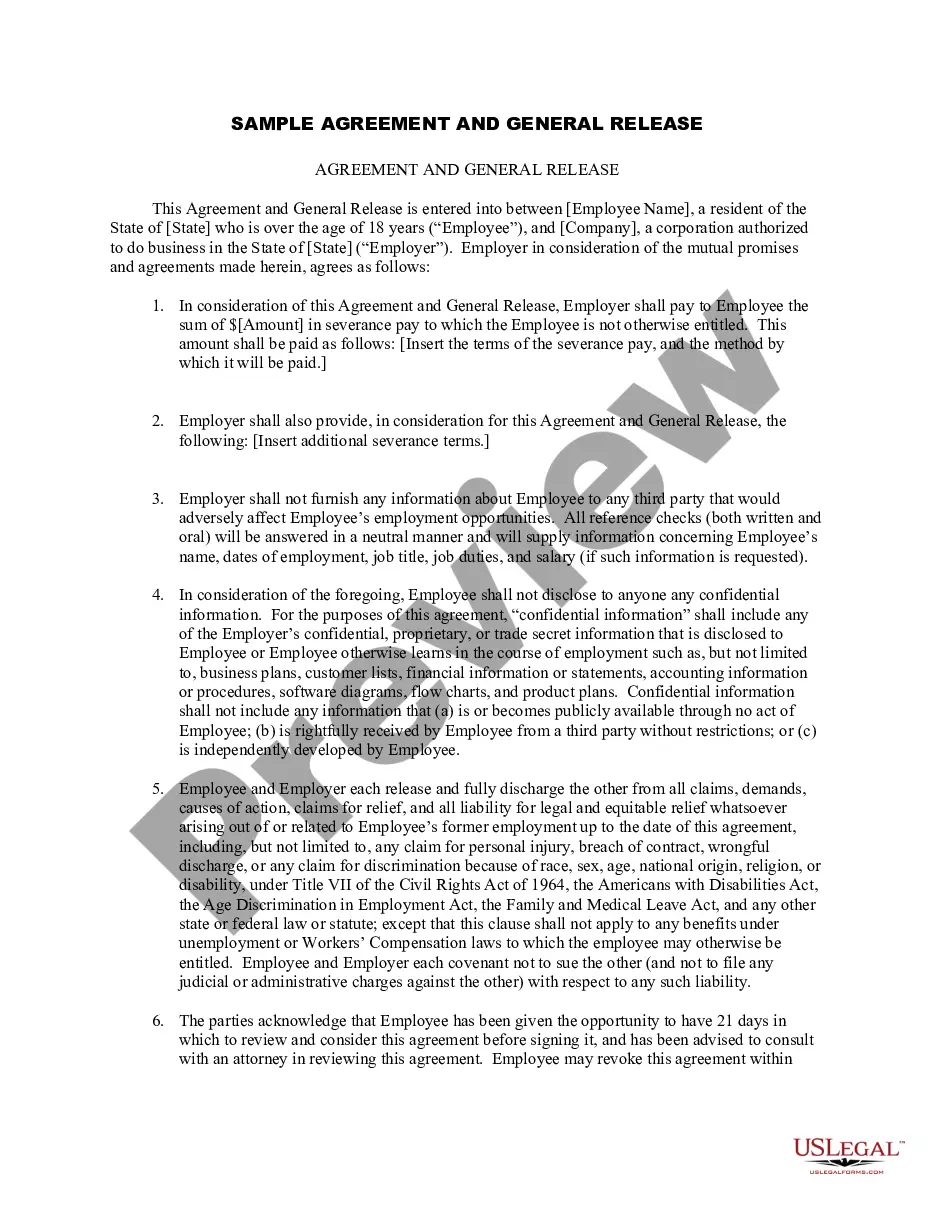
To officially terminate an employee, ensure that you follow your company’s written policies and procedures. Document the performance issues or misconduct, and hold a formal meeting to communicate the decision. Be sure to provide all required paperwork, including any severance agreements or information about benefits. Following these steps can help streamline the process and ensure legal compliance.
The number one reason employees get fired typically involves performance issues, such as inability to meet their job responsibilities. Other significant factors include lack of professionalism, poor work ethic, or behavioral problems. Understanding these common pitfalls can help both employers and employees navigate workplace expectations effectively. By addressing any issues proactively, employees can often avoid being terminated.
Respectfully terminating an employee requires sensitivity and professionalism. Begin by preparing for the conversation, ensuring you have all relevant information ready. Hold the meeting in a private location, express appreciation for the employee’s contributions, and provide a clear reason for the termination. Ending on a positive note may help the employee cope better with the change.
To terminate employment, start by conducting a thorough evaluation of the employee’s performance and behavior. Clearly outline the reasons for termination, and follow up with a private conversation where you convey your decision respectfully. It’s vital to provide documentation of the process and offer any assistance, such as resources for finding new employment. This approach helps retain professionalism and can alleviate potential backlash.
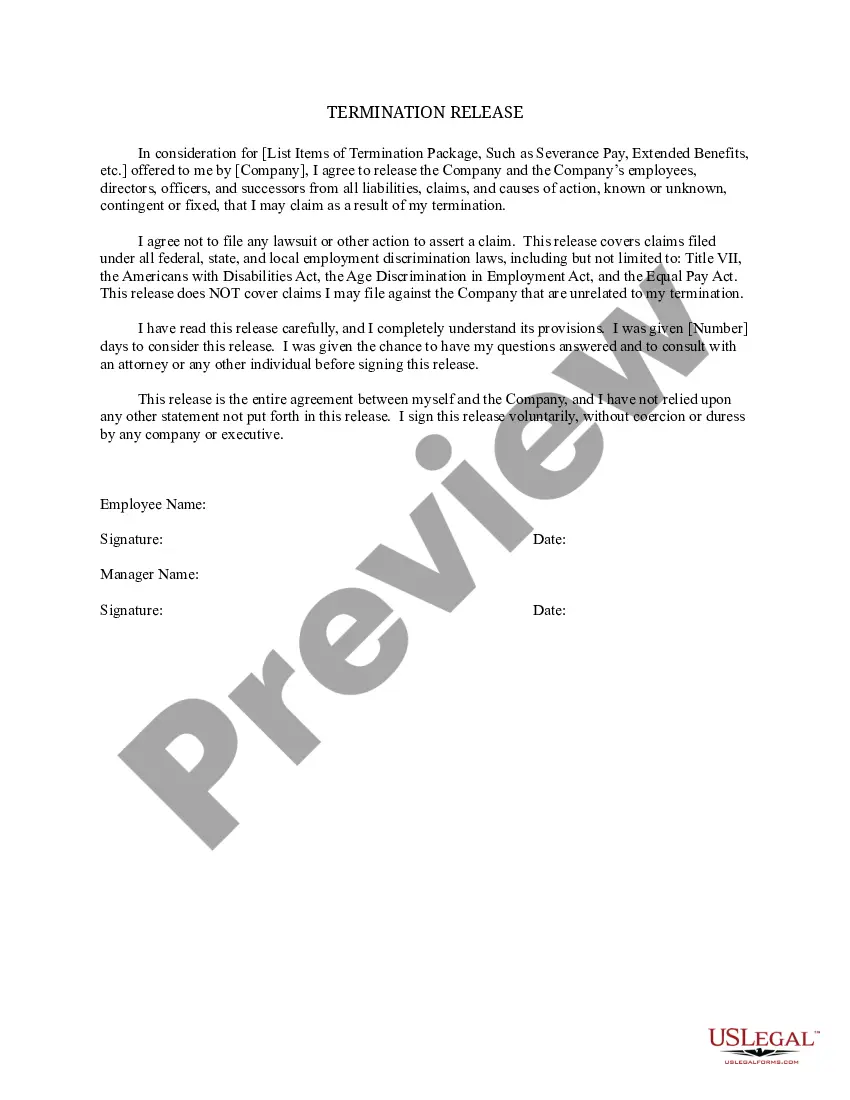
While termination and firing are often used interchangeably, they can mean different things in some contexts. Firing usually indicates that the employee's actions prompted the dismissal, whereas termination can also include layoffs and other non-disciplinary separations. Grasping these distinctions can help you better explain your employment history in interviews. Remember, if you have concerns about how to present this information, resources like US Legal Forms can offer necessary support.
Terminated typically refers to the end of your employment with a company. This can happen due to various reasons, including company layoffs, performance issues, or personal choices. Understanding what led to your termination is crucial for moving forward in your career. If you need assistance with employment documents, US Legal Forms can help streamline the process.
Being terminated can feel discouraging, but it does not define your career or worth. Many individuals face termination at some point, and it can often lead to new opportunities. What matters is how you frame the experience in future job applications and interviews. Consider seeking resources, such as US Legal Forms, to help you manage any legal implications and move forward confidently.
Not necessarily, as the term terminated encompasses various scenarios. To be terminated could imply that you were fired, but it can also involve being laid off or resigning. Each situation has different implications for your employment record and future opportunities. If you're uncertain about your status, discussing it with your HR department can provide clarity.