Assignment Lease Agreement
Description
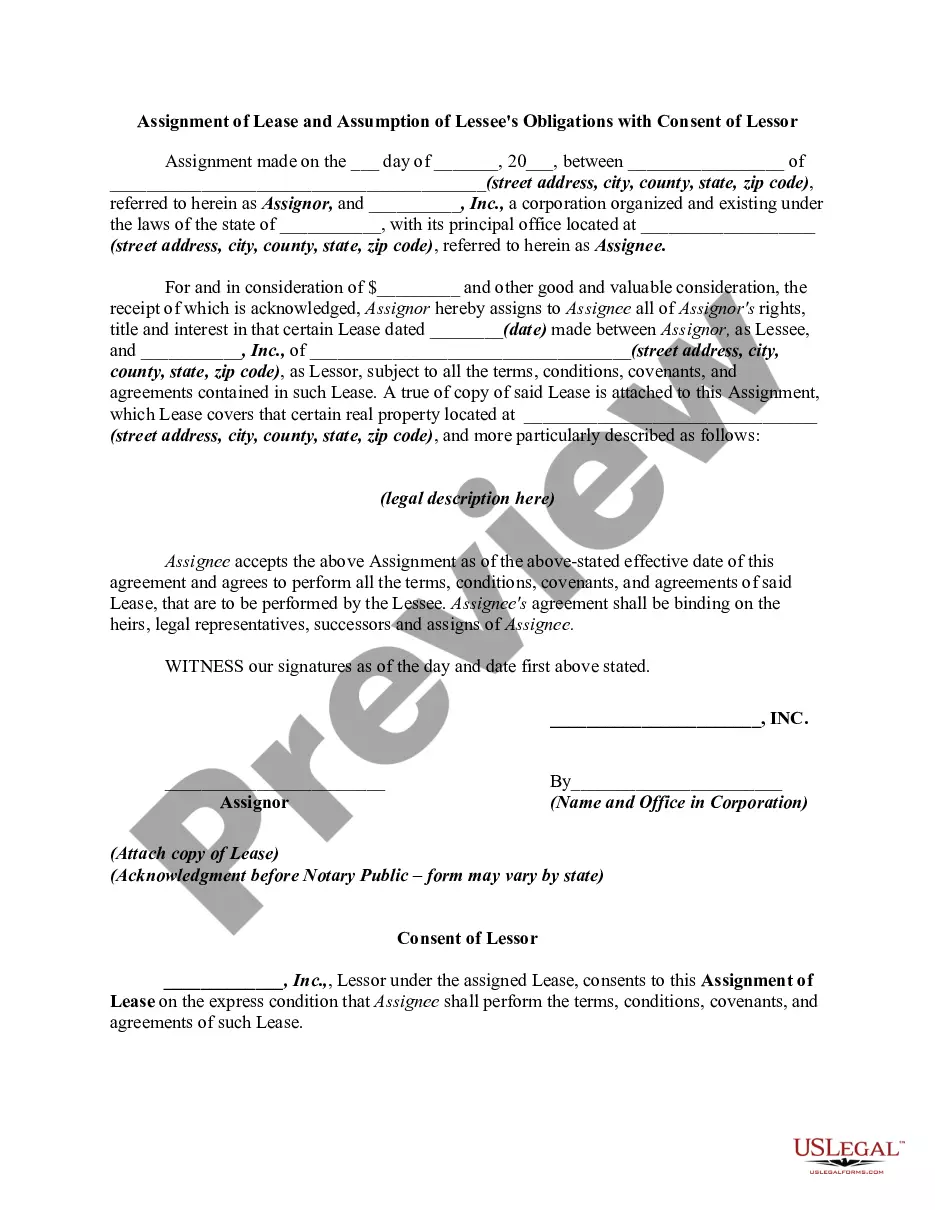

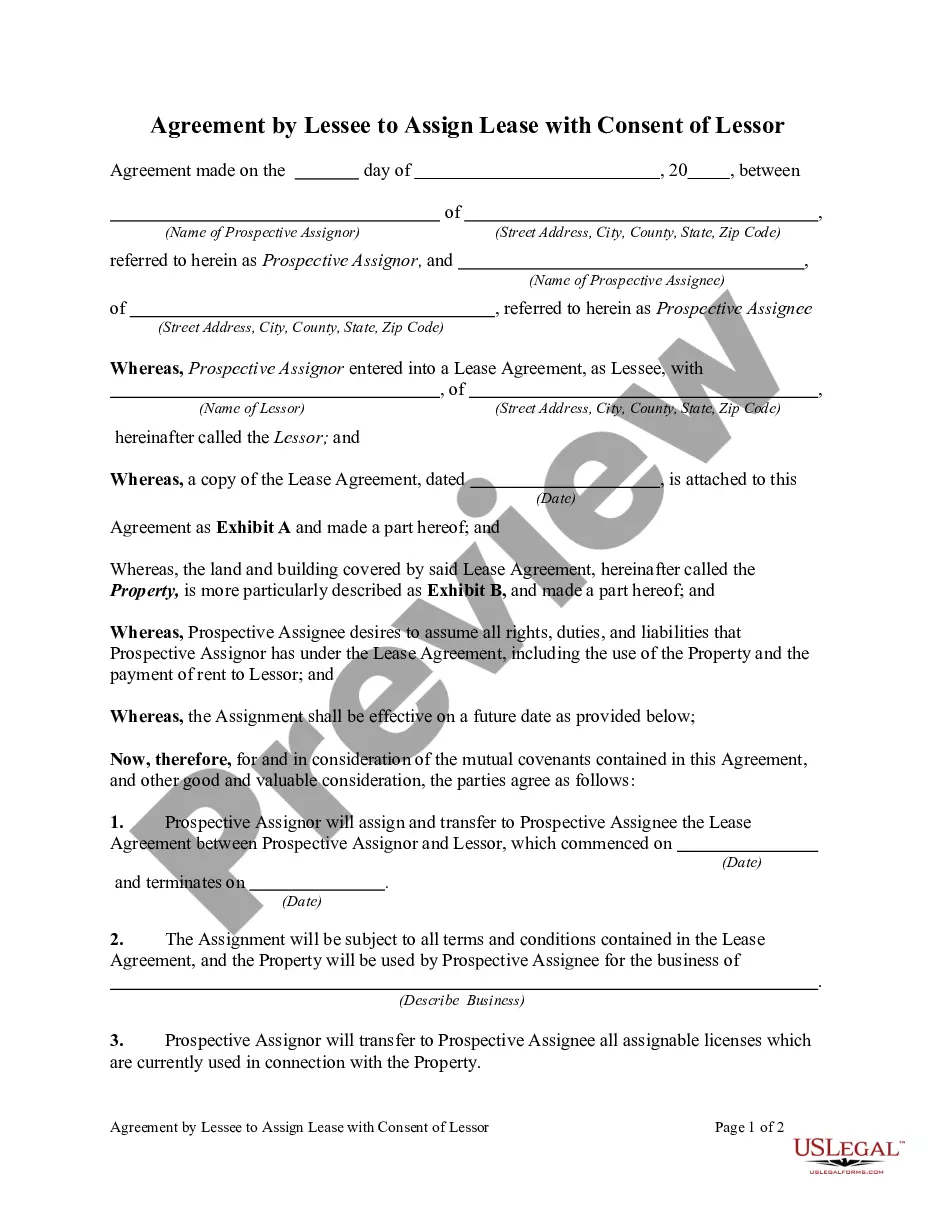
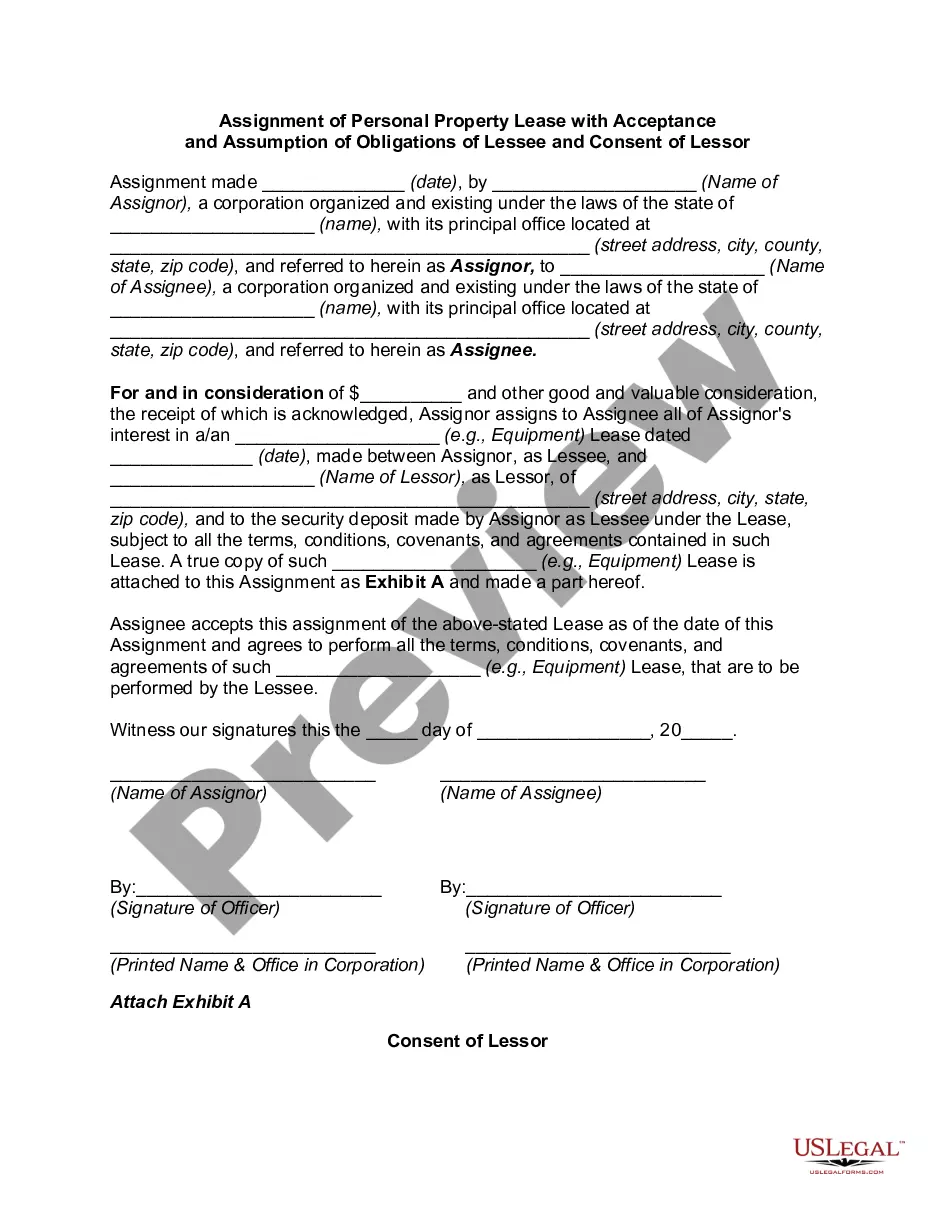
How to fill out Assignment Of Lease And Assumption Of Lessee's Obligations With Consent Of Lessor?
Securing a reliable source for obtaining the latest and pertinent legal templates constitutes a significant portion of navigating bureaucratic processes.
Locating the appropriate legal documents requires accuracy and meticulousness, which is why sourcing samples of the Assignment Lease Agreement exclusively from trustworthy providers, such as US Legal Forms, is crucial.
Eliminate the hassle associated with your legal documentation. Explore the comprehensive US Legal Forms collection to uncover legal templates, assess their suitability for your circumstances, and download them instantly.
- Utilize the catalog navigation or search bar to locate your template.
- Check the document’s specifications to ensure it aligns with the stipulations of your state and county.
- Examine the form preview, if available, to confirm that it meets your interests.
- If the Assignment Lease Agreement does not satisfy your needs, return to your search for the suitable document.
- Should you be confident in the document’s applicability, proceed to download it.
- As a registered user, click Log in to verify your identity and access your chosen forms in My documents.
- If you lack an account, click Buy now to acquire the form.
- Select the pricing package that meets your needs.
- Complete the registration to finalize your transaction.
- Conclude your purchase by choosing a payment option (credit card or PayPal).
- Select the file format for downloading the Assignment Lease Agreement.
- Once the document is on your device, you can modify it using the editor or print it out to complete it by hand.
Form popularity
FAQ
What is the Assignment Clause and When is it Triggered? Every commercial lease contains an assignment provision that lays out the landlord's and the tenant's rights and obligations in the event that the tenant seeks to ?assign? the lease.
A tenant can make a written request at any time to assign their tenancy to someone else. The request should include the contact details of the person being proposed to take over the tenancy. Alternatively, the landlord can find a replacement tenant, although they don't have to do this if they don't want to.
The difference between assignment and transfer is that assign means it's legal to transfer property or a legal right from one person to another, while transfer means it's legal to arrange for something to be controlled by or officially belong to another person.
A Deed of Assignment transfers to you ALL OF THE SELLER'S RIGHTS TO THE LAND OR HOUSE. The buyer acquires FULL OWNERSHIP, subject solely to the provisions of the Land Use Act. A Deed of Lease [Sub-Lease], on the other hand, is a type of LONG RENT OR LEASE because the title finally reverts to the Seller [the Lessor].
If the lessee transfers his or her entire remaining interest in the tenancy, then the transfer is known as an assignment. If the lessee transfers only part of his or her interest, then the transfer is known as a sublease.