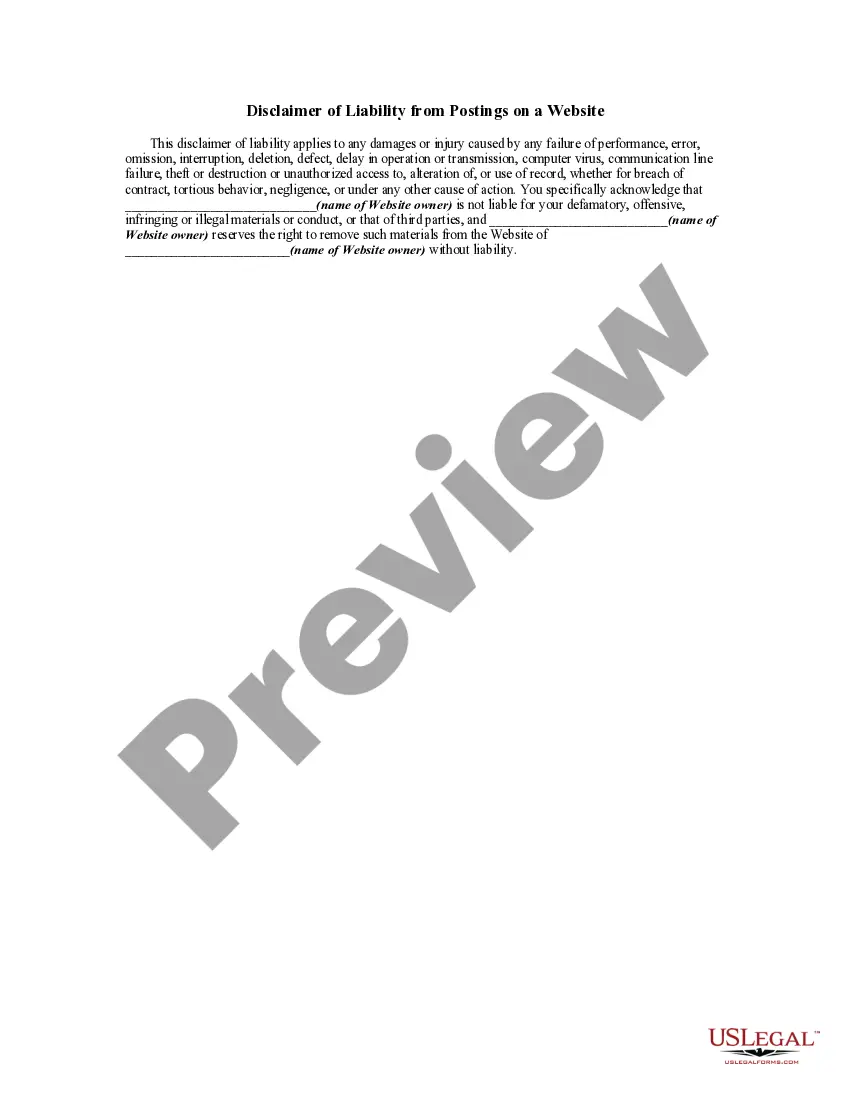
Disclaimer Liability On With Regard
Description
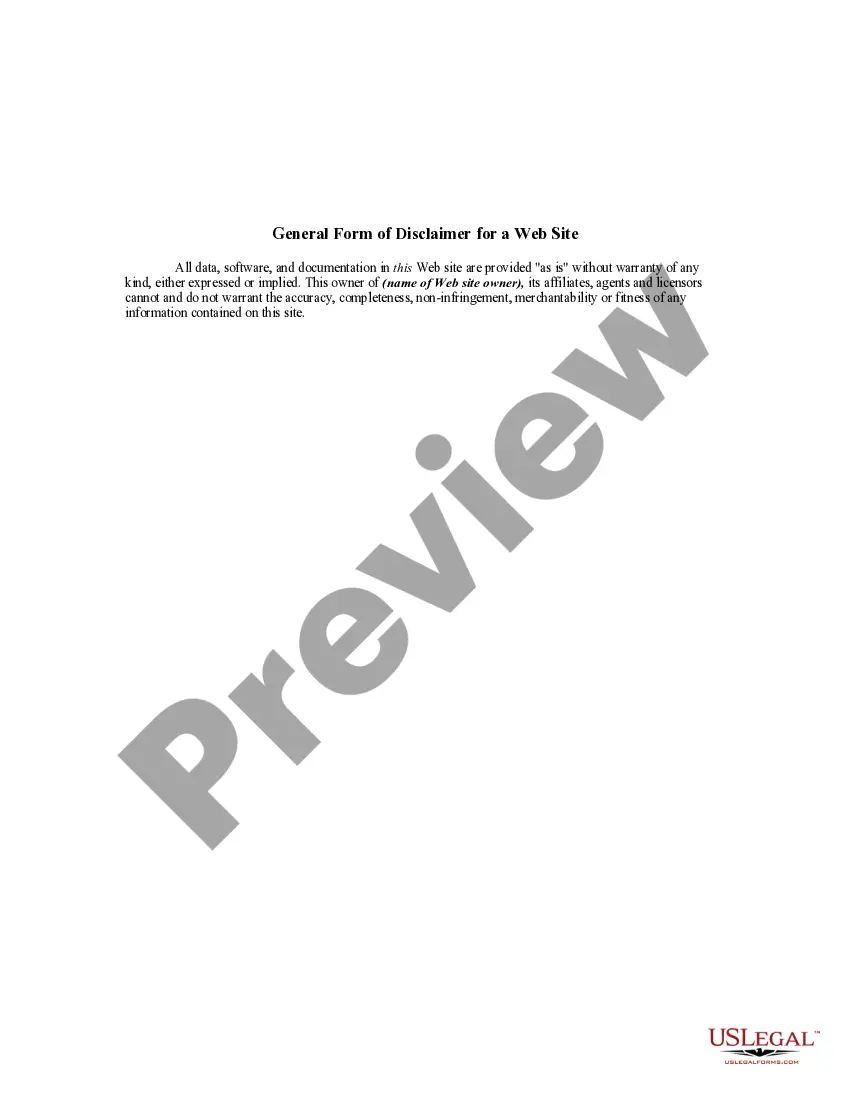
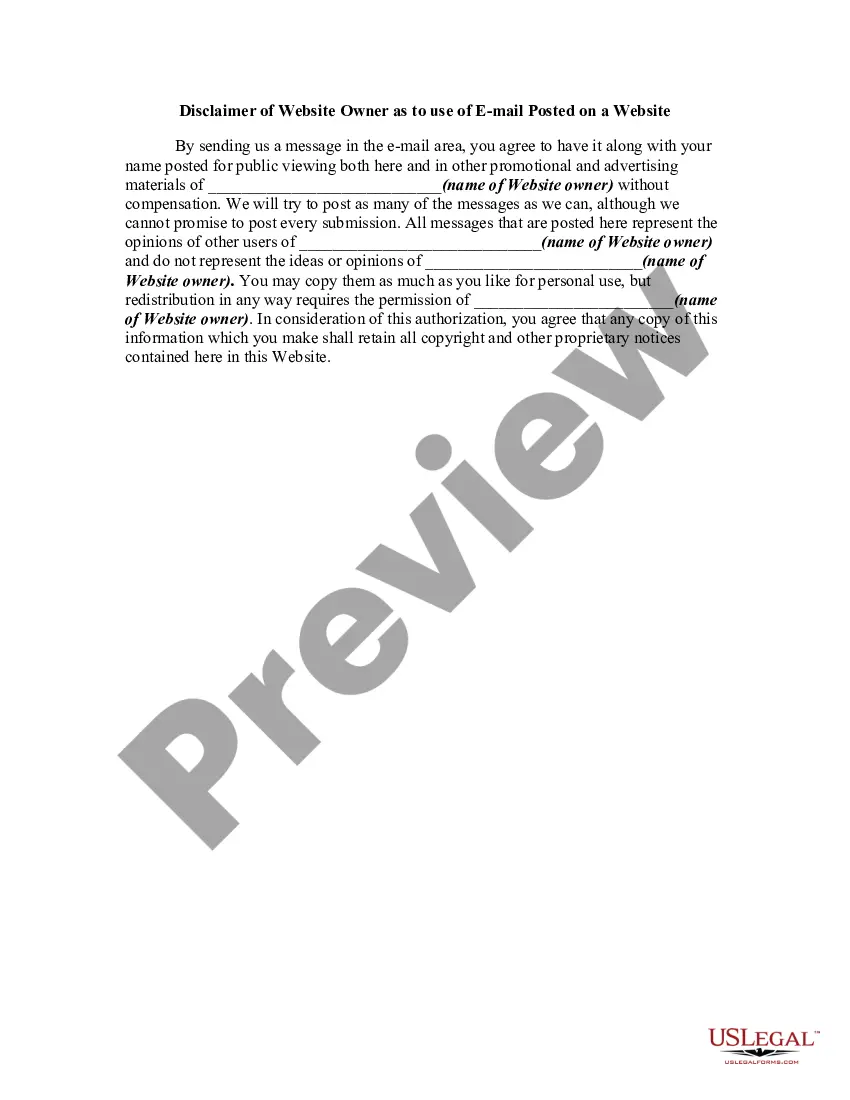
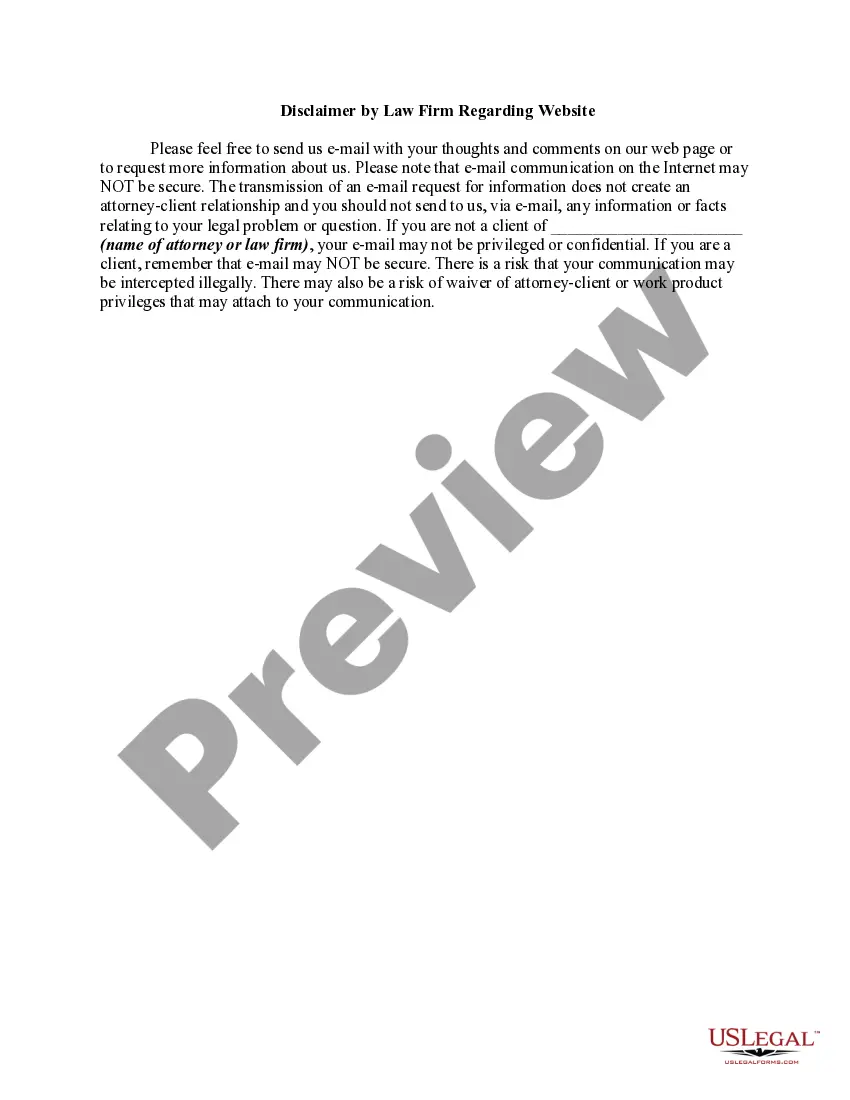




How to fill out Disclaimer Of Liability From Postings On A Website?
- If you have prior experience, log in to your account and download your form template. Ensure your subscription is active. If it's not, renew it based on your payment plan.
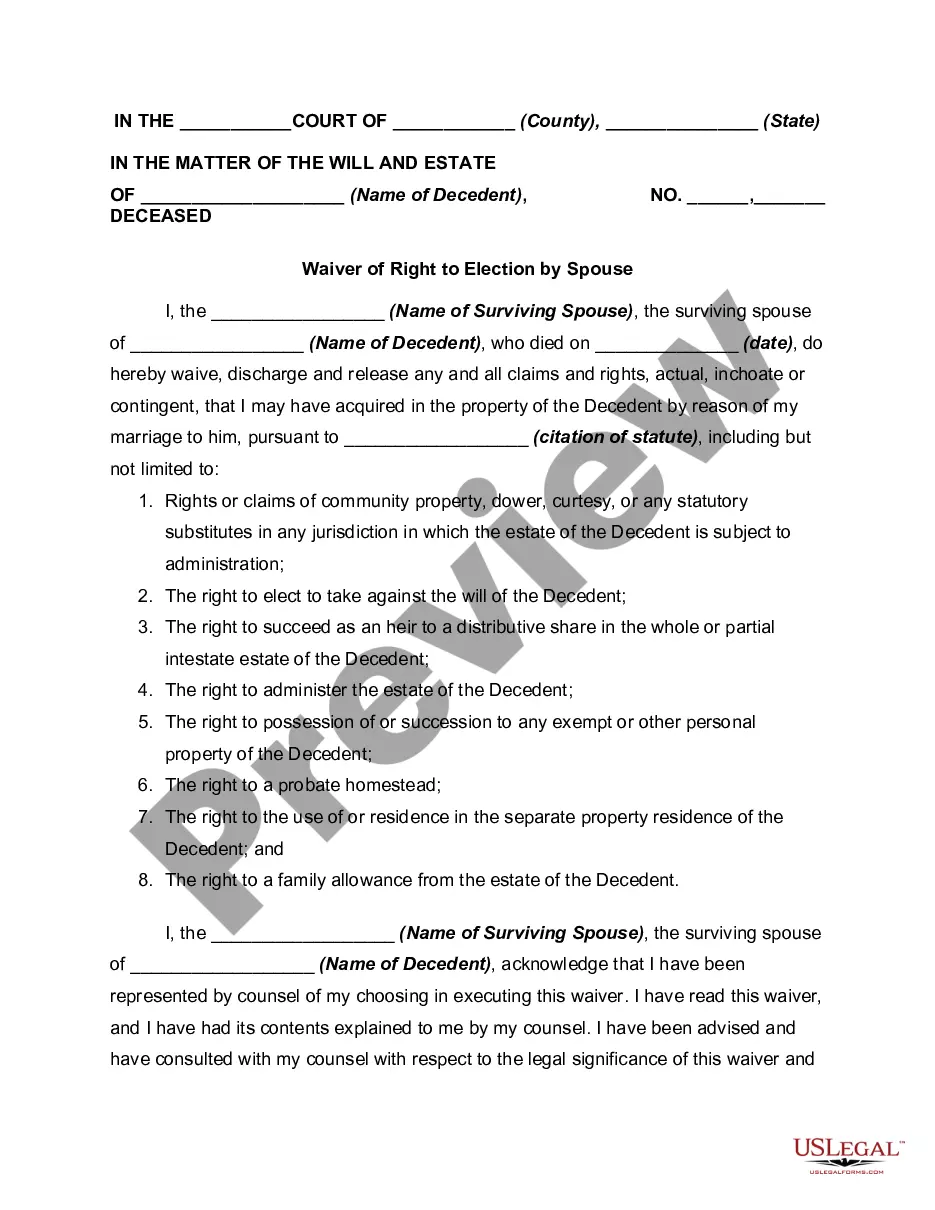
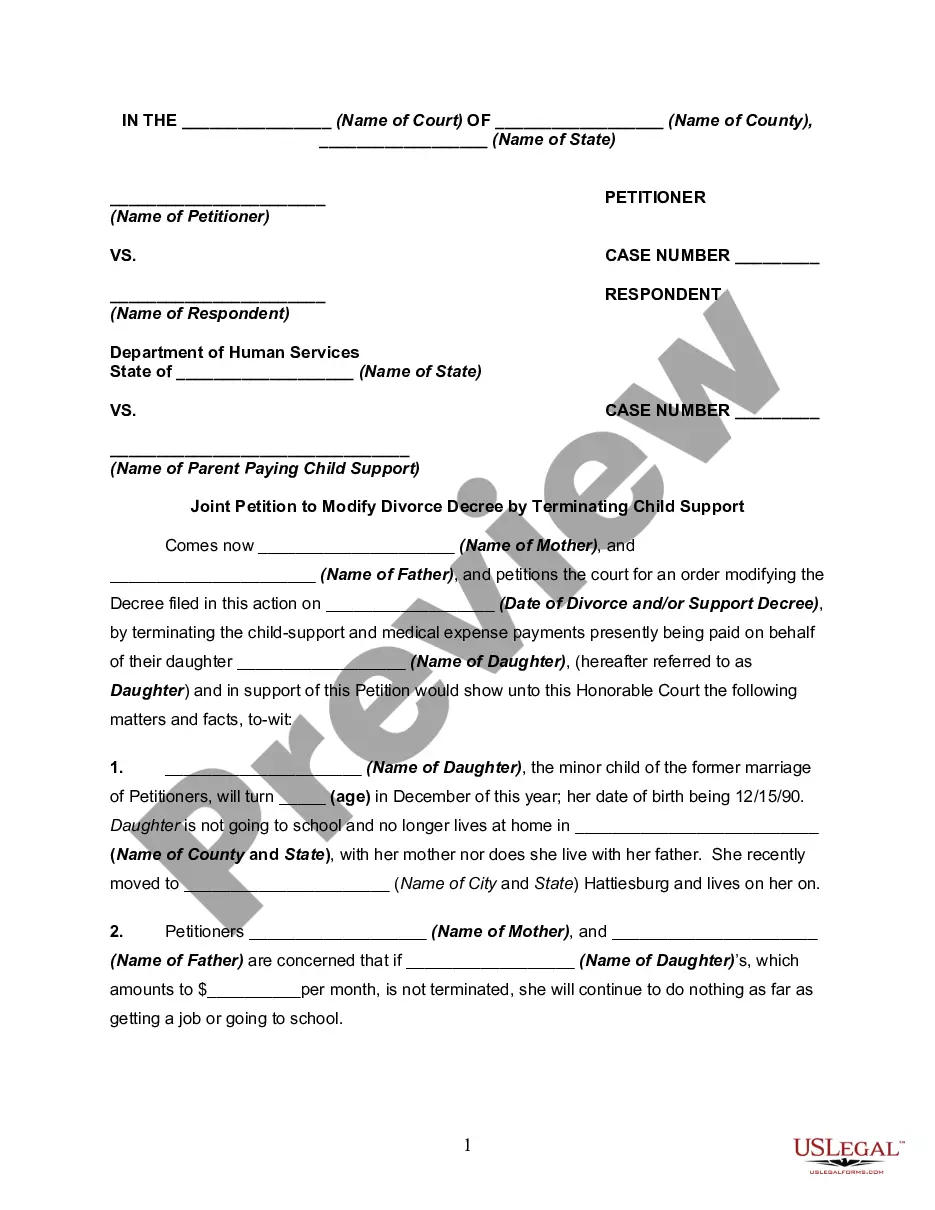
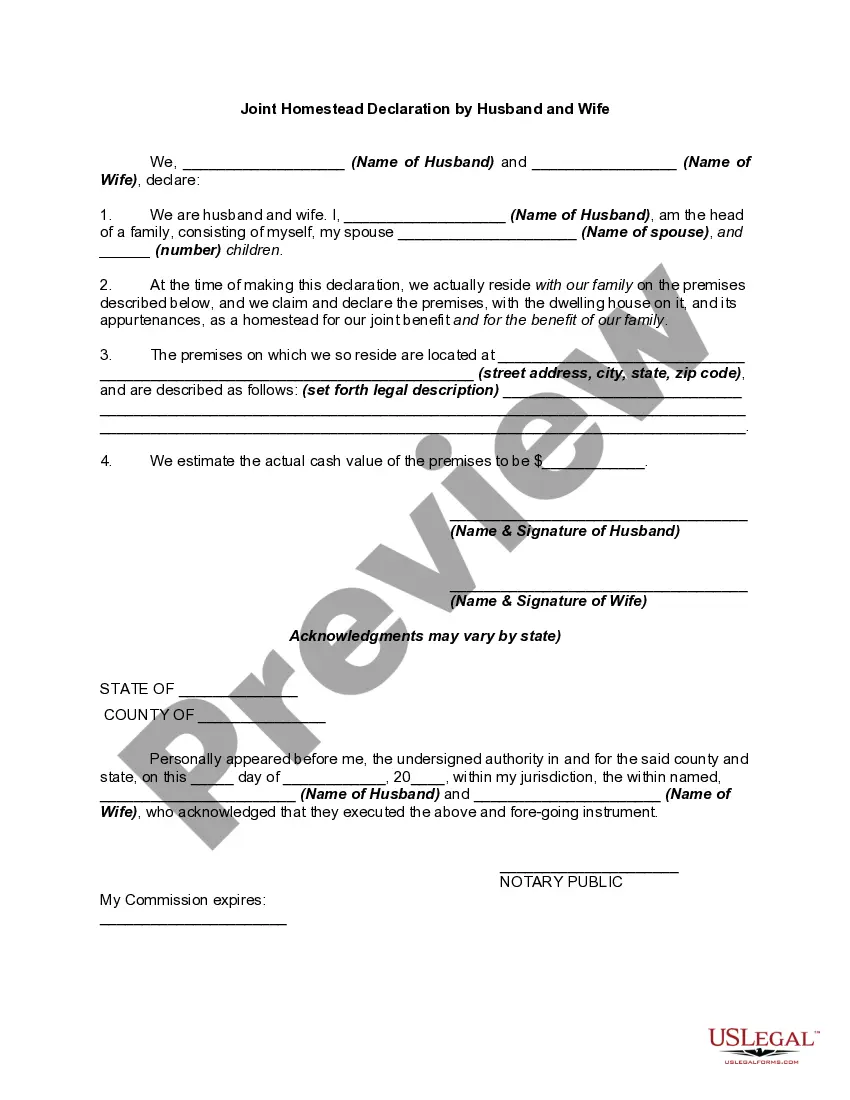
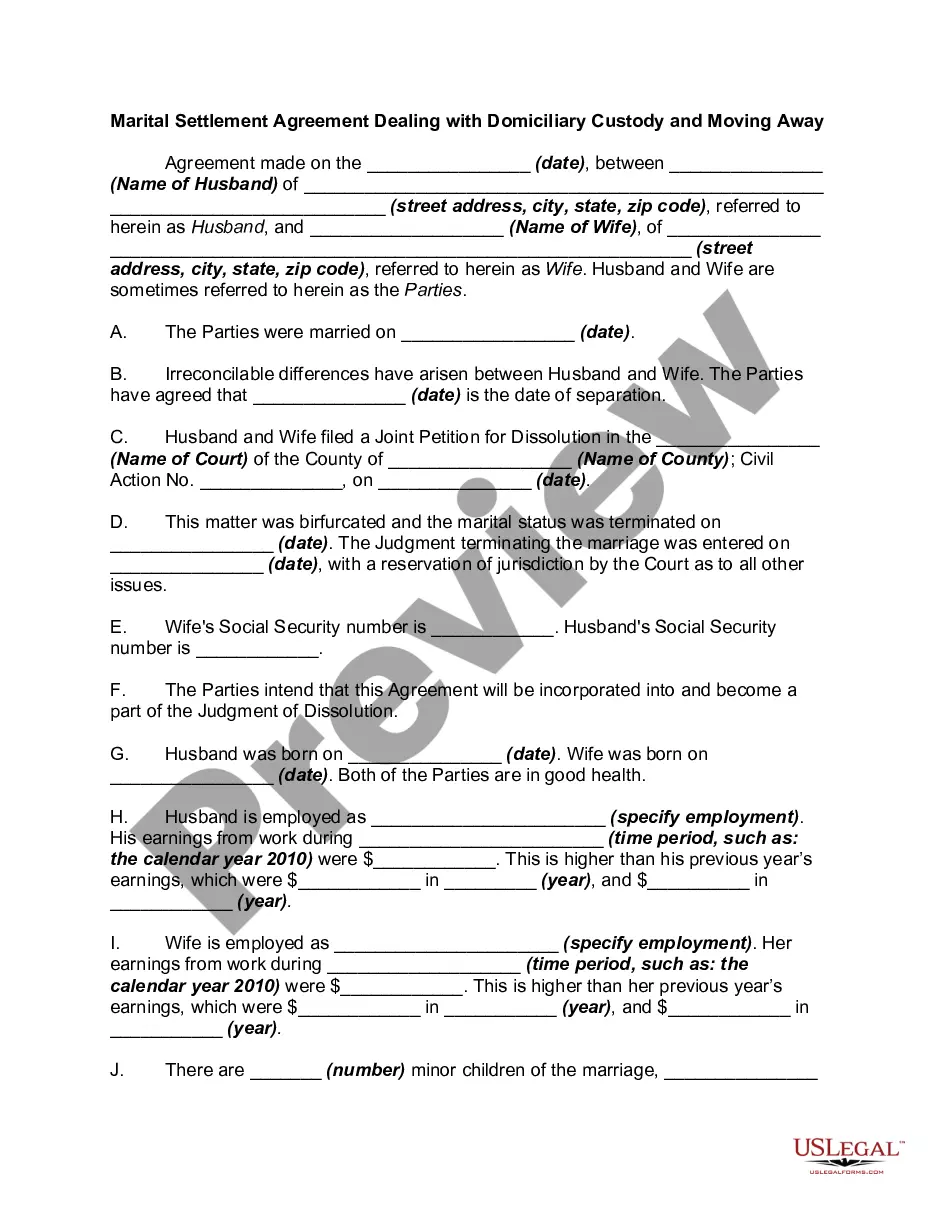
- If you're a new user, start by checking the Preview mode and form description to select the correct document that complies with your local laws.
- Should you find inconsistencies, utilize the Search tab to find alternative templates. Select the right one to proceed.
- Purchase the document by clicking the Buy Now button and selecting your preferred subscription plan. Create an account for full access.
- Complete your purchase by entering your payment information via credit card or PayPal.
- Finally, download the form to your device and access it later through the My Forms section of your account.
By following these steps, you can efficiently manage your legal documentation needs with confidence. US Legal Forms provides an invaluable resource for both individuals and legal professionals, ensuring precise and compliant forms.
Start your journey today and harness the power of US Legal Forms – your best ally in navigating legal paperwork.
Form popularity
FAQ
For a disclaimer to be legally binding, it must be crafted with care and attention to legal standards. Key factors include clarity, fairness, and proper communication to all parties. A disclaimer liability on with regard, if properly designed, reduces the risk of legal disputes by ensuring that users understand what they are agreeing to. Utilizing platforms like USLegalForms can assist in creating such disclaimers that meet legal criteria effectively.
Disclaimers can be legally binding if they meet certain legal requirements. For a disclaimer to hold up in court, it typically needs to be reasonable and disclosed in a clear manner to the involved parties. Furthermore, a well-crafted disclaimer liability on with regard conveys important information that helps protect businesses from unforeseen liability. It is essential for users to seek legal advice to ensure these disclaimers are enforceable.
A disclaimer is considered qualified when it clearly specifies the conditions under which it applies. To qualify, it must be understandable and adequately communicated to all parties involved. Transparency is key; therefore, a disclaimer liability on with regard should outline potential risks and limitations in straightforward language. This clarity helps ensure that users are aware of their rights and responsibilities.
A disclaimer of liability is a statement that aims to limit the legal responsibility of a party in certain situations. It typically explains that the party is not liable for specific types of harm or damages. By including such a disclaimer liability on with regard, businesses can protect themselves from legal claims under defined conditions. Understanding this can help users navigate potential risks when engaging in various activities.
A liability statement typically summarizes the responsibilities and limits of liability between parties in a given agreement. For example, a travel agency might include a liability statement that communicates a disclaimer liability on with regard to lost or stolen property while on a trip. Such statements help clarify the agency’s role and protect it from potential claims, establishing clear expectations for clients.
A liability clause is a section in a contract that outlines the extent to which one party is responsible for damages or losses caused to another party. An example of such a clause could include a disclaimer liability on with regard to any losses incurred during a service contract, stating that the service provider is not liable for indirect or consequential damages. This effectively limits the provider's legal exposure.
To file a disclaimer, you must first draft a formal statement indicating your intention to reject certain responsibilities or claims. It is important to ensure that the disclaimer liability on with regard to the issue at hand is clear and concise. After drafting your disclaimer, follow the specific filing procedures relevant to your jurisdiction, which may vary based on legal requirements and the context.
A liability disclaimer is a statement that aims to limit or eliminate a party's legal responsibility in certain situations. For instance, a gym may include a disclaimer liability on with regard to injuries sustained during workouts, informing members that participating in physical activities is at their own risk. This helps protect the gym from legal claims resulting from accidents that may occur.
To craft a compelling risk disclaimer, address specific risks associated with the use of your product or service. Clearly convey that users engage at their own risk, stressing the importance of informed choices. Additionally, consider providing guidance on avoiding risks when possible, enhancing user understanding. This proactive approach can alleviate worries surrounding disclaimer liability on with regard.
An example of a liable disclaimer could state, 'We are not responsible for any errors or omissions in the information provided on this site.' This wording clarifies the limits of accountability and serves to protect the organization from legal actions. By having such disclaimers, businesses can effectively manage expectations and mitigate concerns regarding disclaimer liability on with regard.