Remainder Inter Vivos Trust With Someone You Hurt
Description
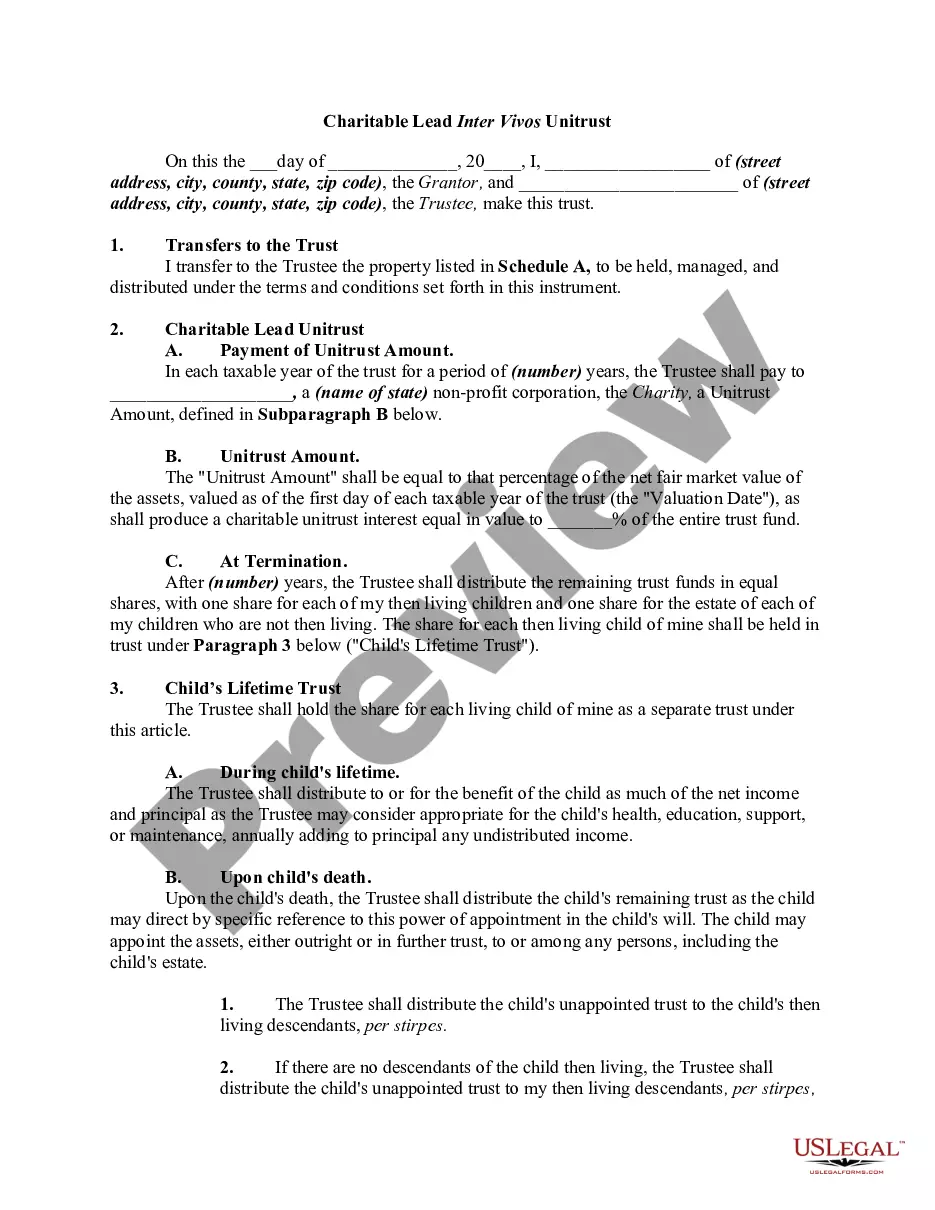
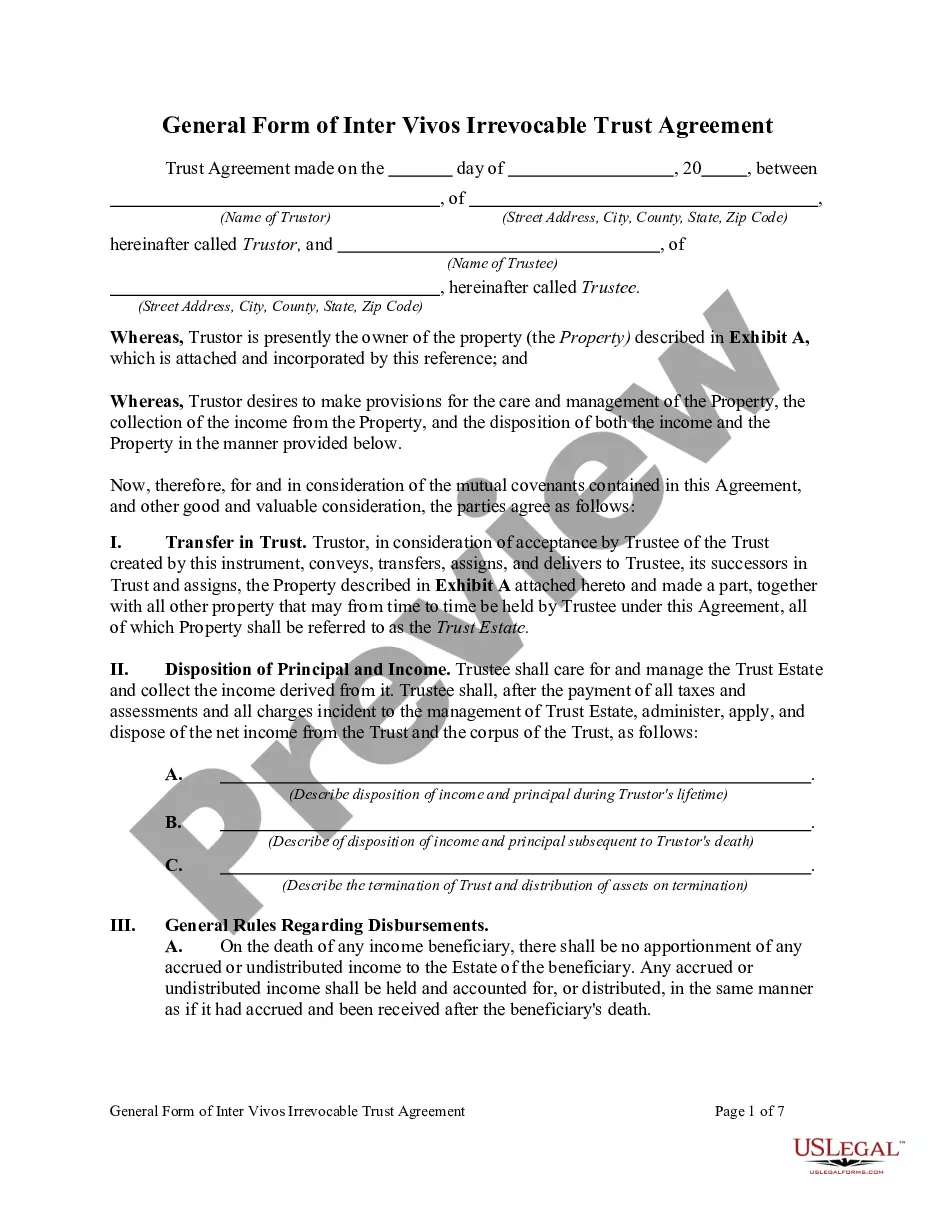
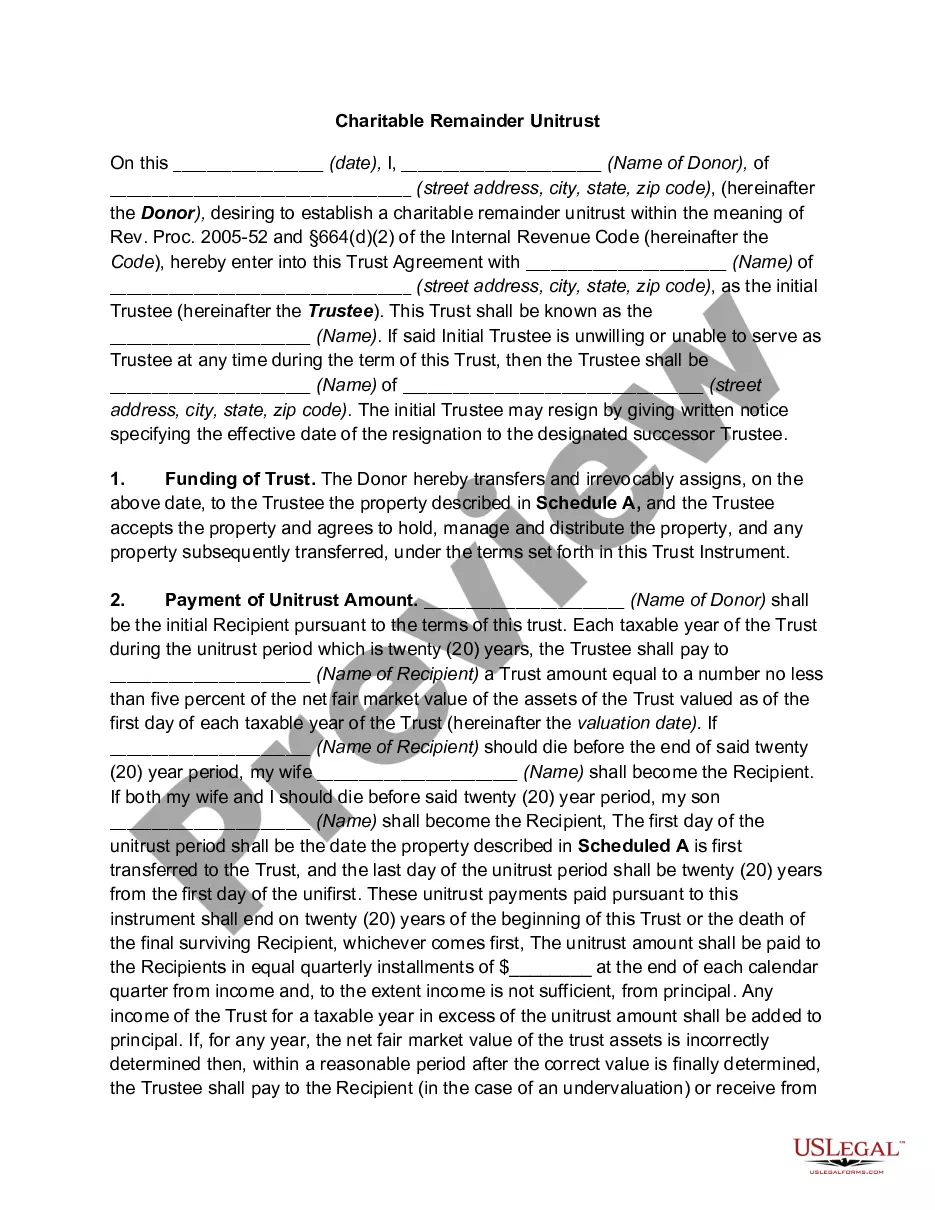
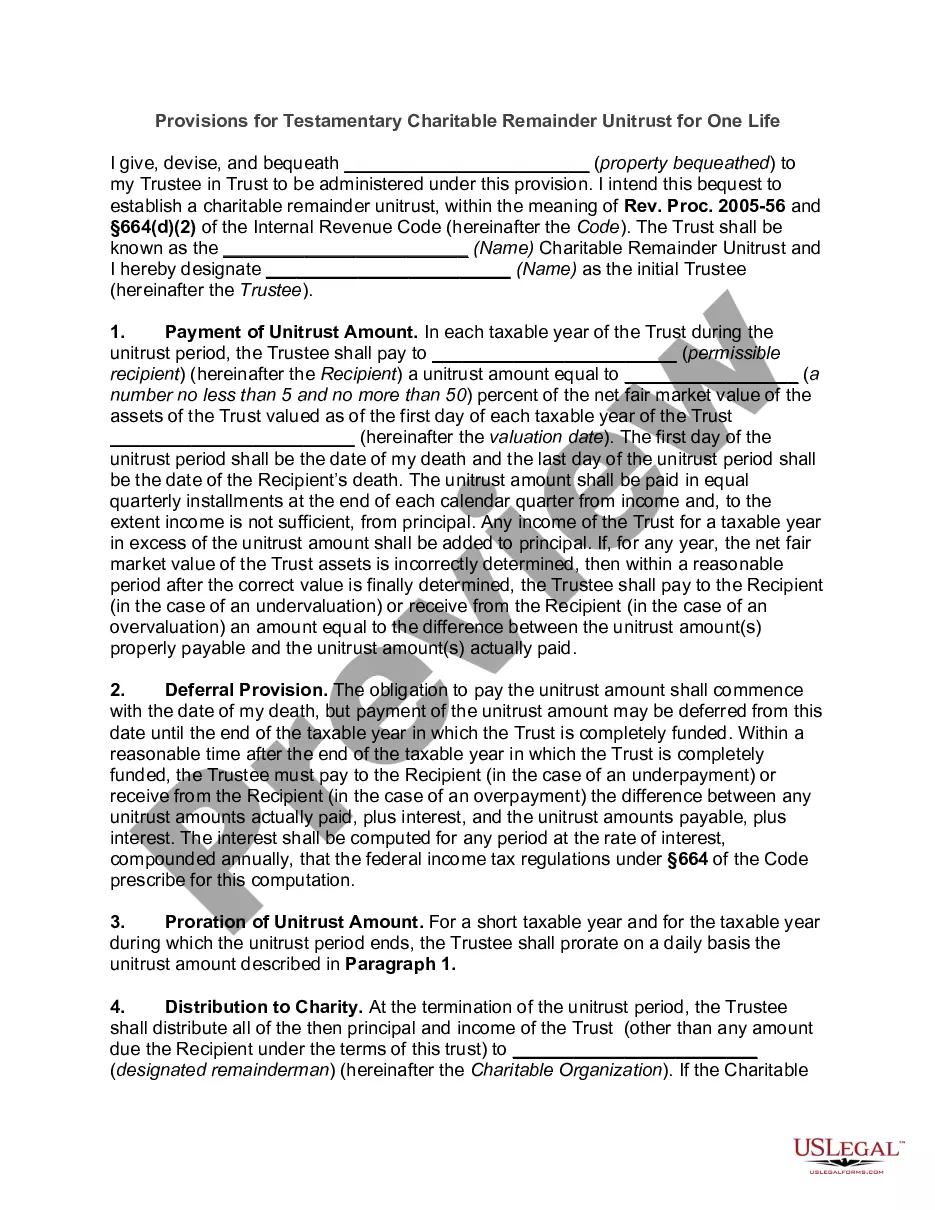
Get your form ready online
Our built-in tools help you complete, sign, share, and store your documents in one place.
Make edits, fill in missing information, and update formatting in US Legal Forms—just like you would in MS Word.
Download a copy, print it, send it by email, or mail it via USPS—whatever works best for your next step.
Sign and collect signatures with our SignNow integration. Send to multiple recipients, set reminders, and more. Go Premium to unlock E-Sign.
If this form requires notarization, complete it online through a secure video call—no need to meet a notary in person or wait for an appointment.
We protect your documents and personal data by following strict security and privacy standards.

Make edits, fill in missing information, and update formatting in US Legal Forms—just like you would in MS Word.

Download a copy, print it, send it by email, or mail it via USPS—whatever works best for your next step.

Sign and collect signatures with our SignNow integration. Send to multiple recipients, set reminders, and more. Go Premium to unlock E-Sign.

If this form requires notarization, complete it online through a secure video call—no need to meet a notary in person or wait for an appointment.

We protect your documents and personal data by following strict security and privacy standards.
Looking for another form?


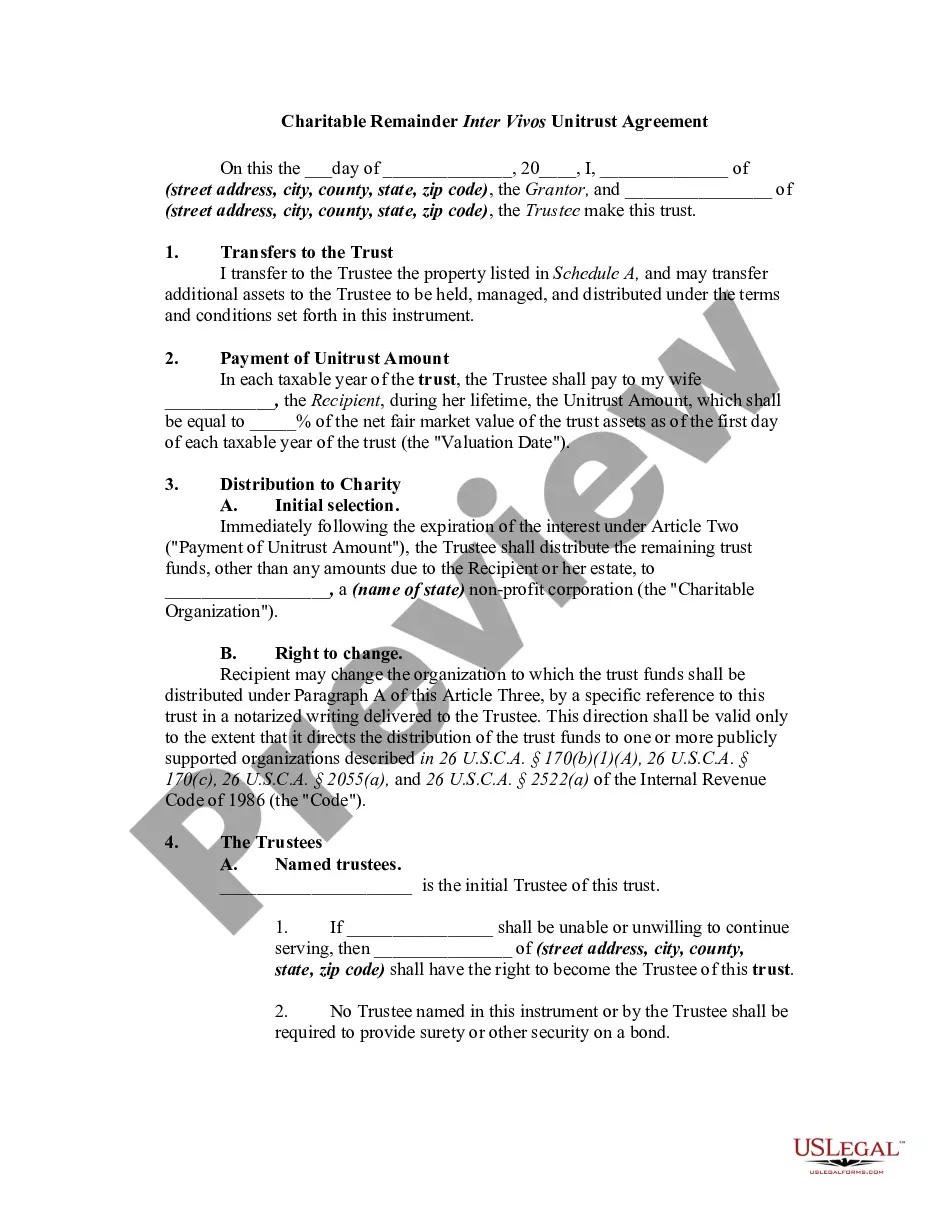
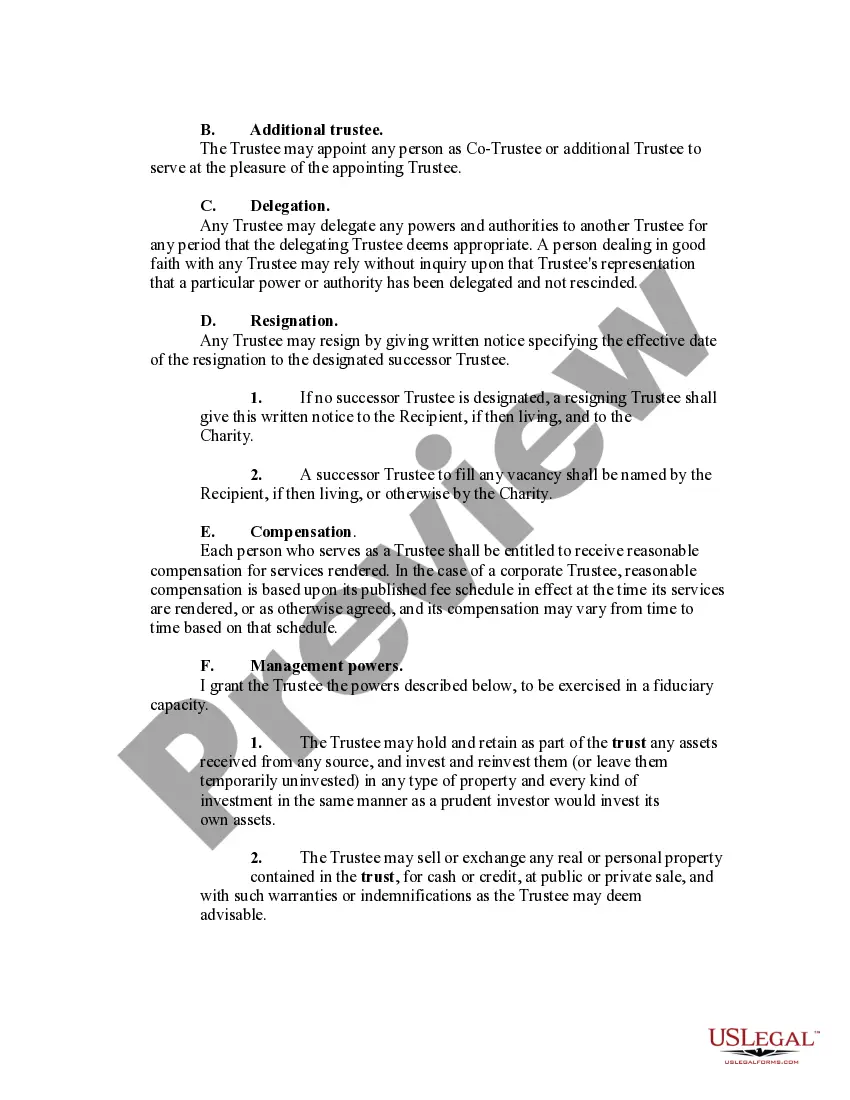
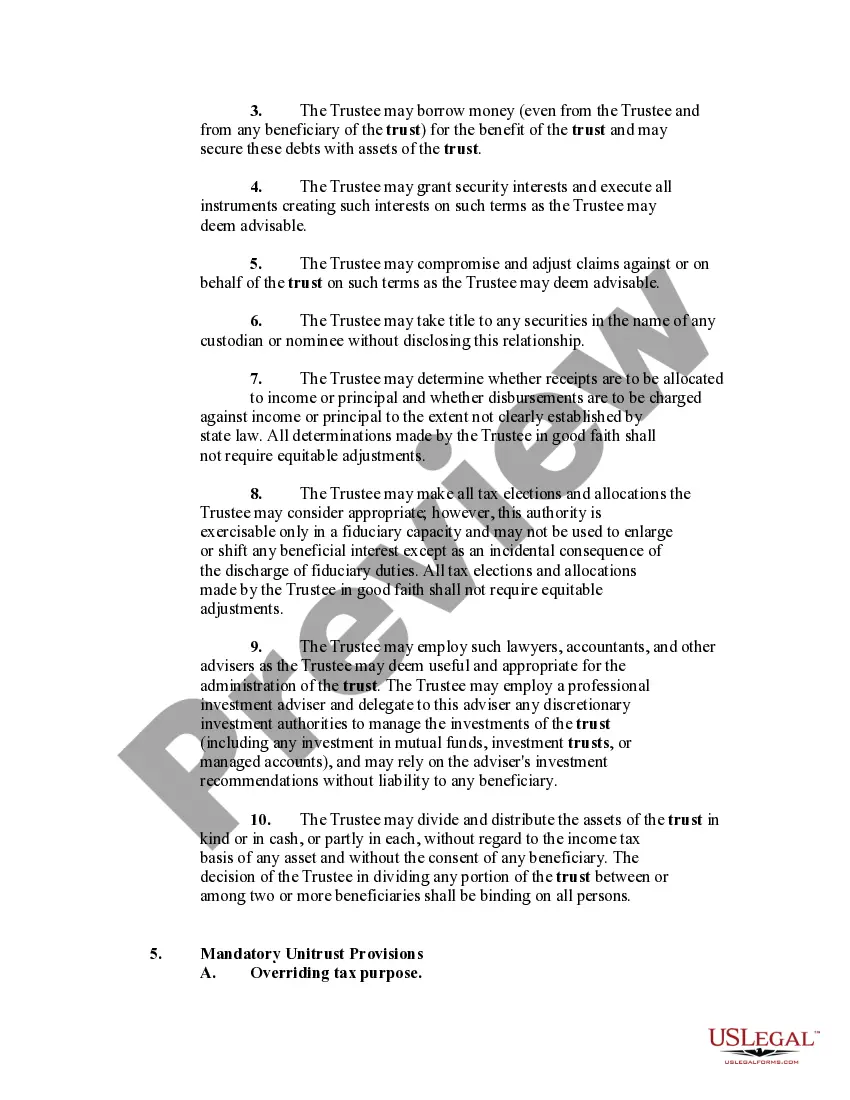
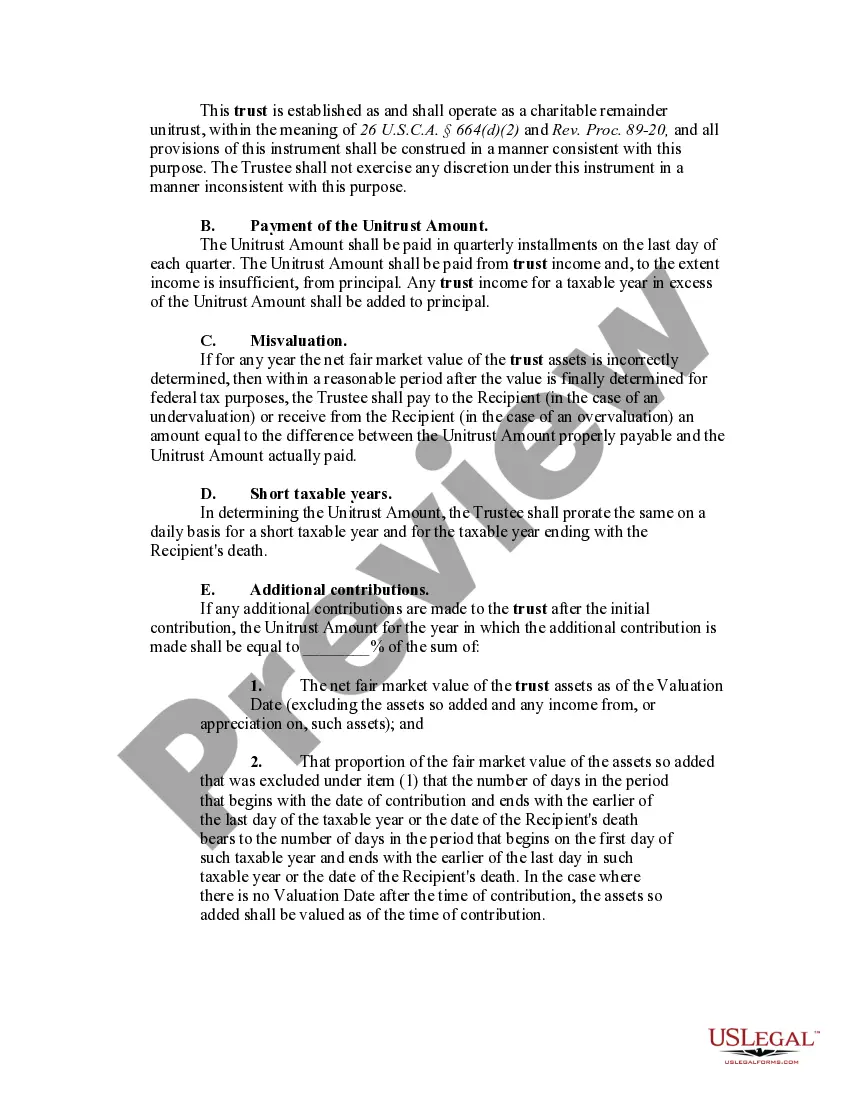
How to fill out Charitable Remainder Inter Vivos Unitrust Agreement?
It’s obvious that you can’t become a law professional overnight, nor can you grasp how to quickly draft Remainder Inter Vivos Trust With Someone You Hurt without the need of a specialized background. Putting together legal forms is a long venture requiring a certain education and skills. So why not leave the creation of the Remainder Inter Vivos Trust With Someone You Hurt to the specialists?
With US Legal Forms, one of the most comprehensive legal document libraries, you can find anything from court paperwork to templates for in-office communication. We know how crucial compliance and adherence to federal and local laws are. That’s why, on our platform, all templates are location specific and up to date.
Here’s how you can get started with our website and obtain the document you require in mere minutes:
- Discover the form you need with the search bar at the top of the page.
- Preview it (if this option available) and read the supporting description to figure out whether Remainder Inter Vivos Trust With Someone You Hurt is what you’re looking for.
- Begin your search again if you need any other template.
- Set up a free account and select a subscription option to buy the template.
- Pick Buy now. Once the payment is complete, you can get the Remainder Inter Vivos Trust With Someone You Hurt, complete it, print it, and send or mail it to the necessary individuals or entities.
You can re-gain access to your forms from the My Forms tab at any time. If you’re an existing client, you can simply log in, and find and download the template from the same tab.
Regardless of the purpose of your forms-whether it’s financial and legal, or personal-our website has you covered. Try US Legal Forms now!
Form popularity
FAQ
Upon your death or your spouse's or partner's death, whichever is later, there will be a deemed disposition of the trust assets. This will give rise to tax on any assets with accrued capital gains. You can specify the beneficiaries who will then receive any remaining trust capital.
A remainder beneficiary is a designated individual who will receive the remaining portion of an estate after all debts, taxes, and other paid-out expenses. The owner can name the remainder beneficiaries in the will or any other legal document designating how the estate will distribute upon the passing of its owner.
Income-Tax: Upto Rs. 2.5 lakh rupees- No tax is required to be paid. Rs. 2.5 lakh to Rs. 5 lakh- 5% of (taxable income less Rs. 2.5 lakh) Rs. 5 lakh to Rs. 10 lakh- Rs. 12500 plus 20% of (taxable income less Rs. 5 lakh) Above Rs. 10 lakh- Rs. 112500 plus 30% of (taxable income less Rs. 10 lakh)
Any income/losses and capital gains/ losses earned in the in-trust account will be taxed in the trust unless the income or capital gains are paid or made payable to the beneficiaries. Income taxed in the trust is taxable at the highest marginal tax rate.
A remainder beneficiary is a beneficiary of a trust whose benefit vests at a later time. As an example, I may receive income for life and only upon my death what is left of the corpus of the trust goes to my son. I am the income beneficiary and my son is the remainder beneficiary.