Charitable Remainder Form Trust Buy With 30
Description
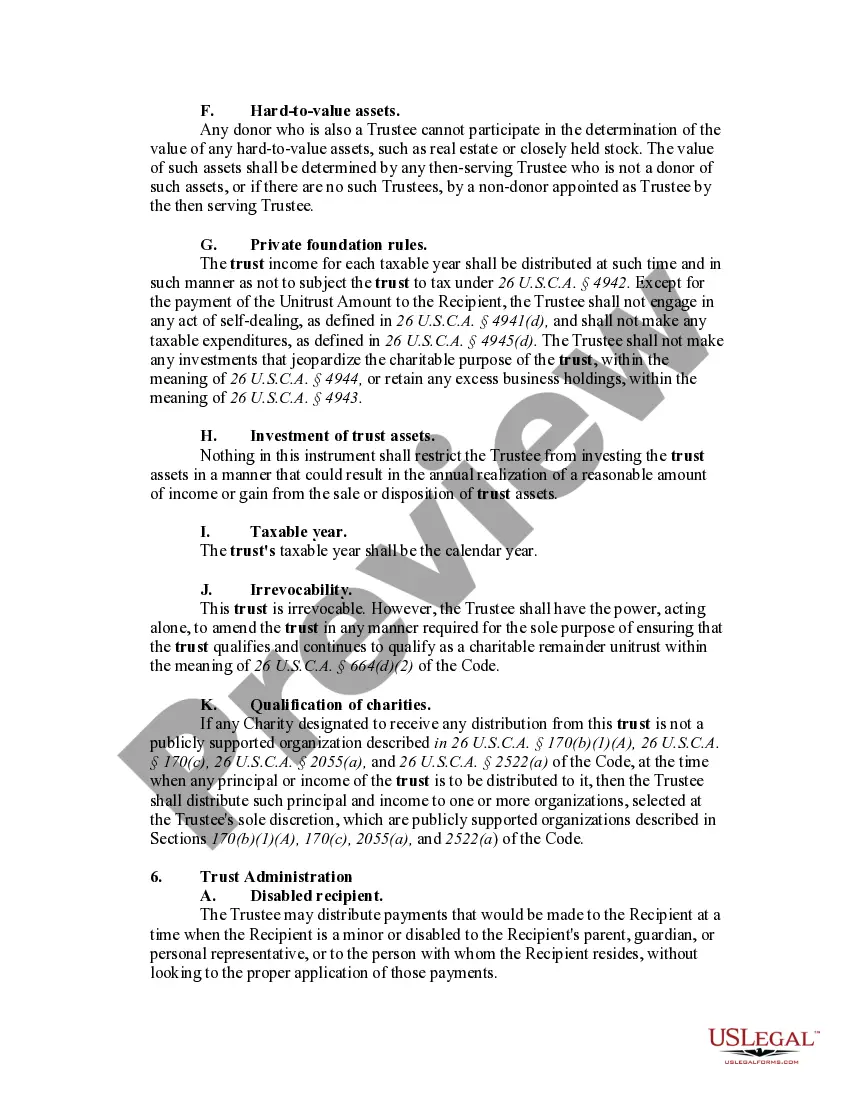
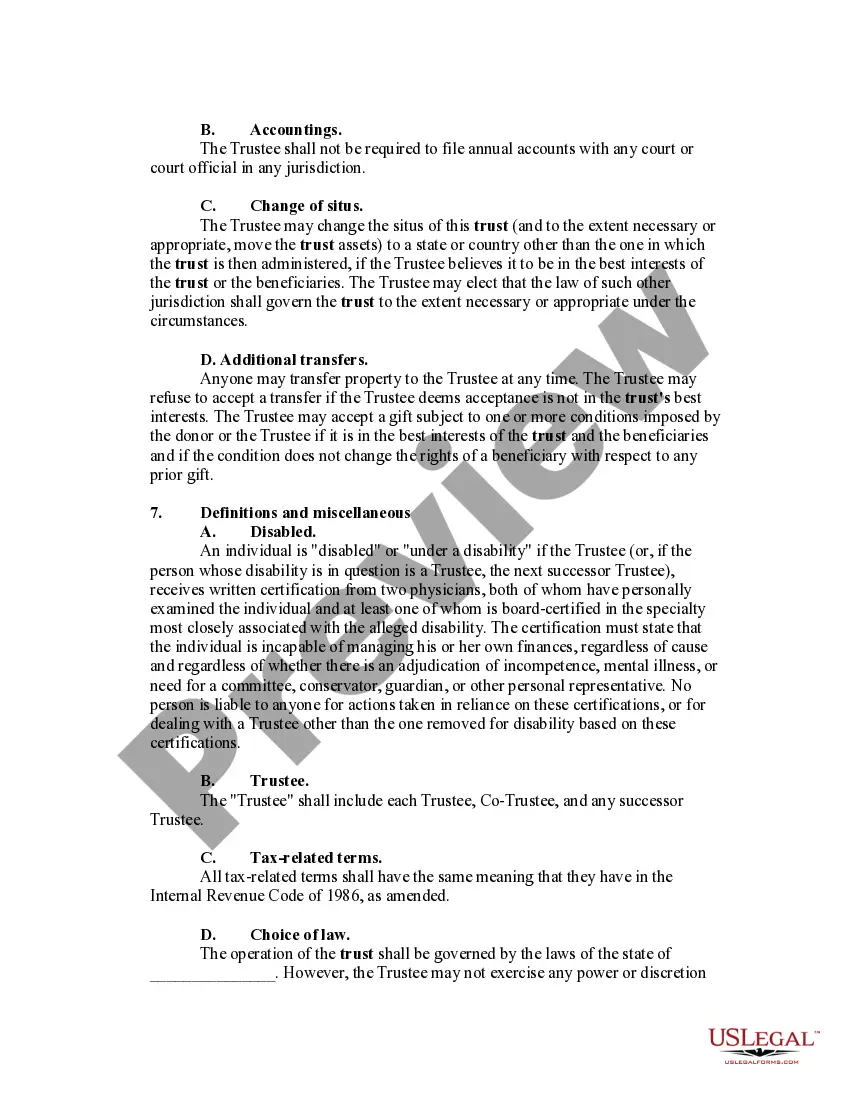
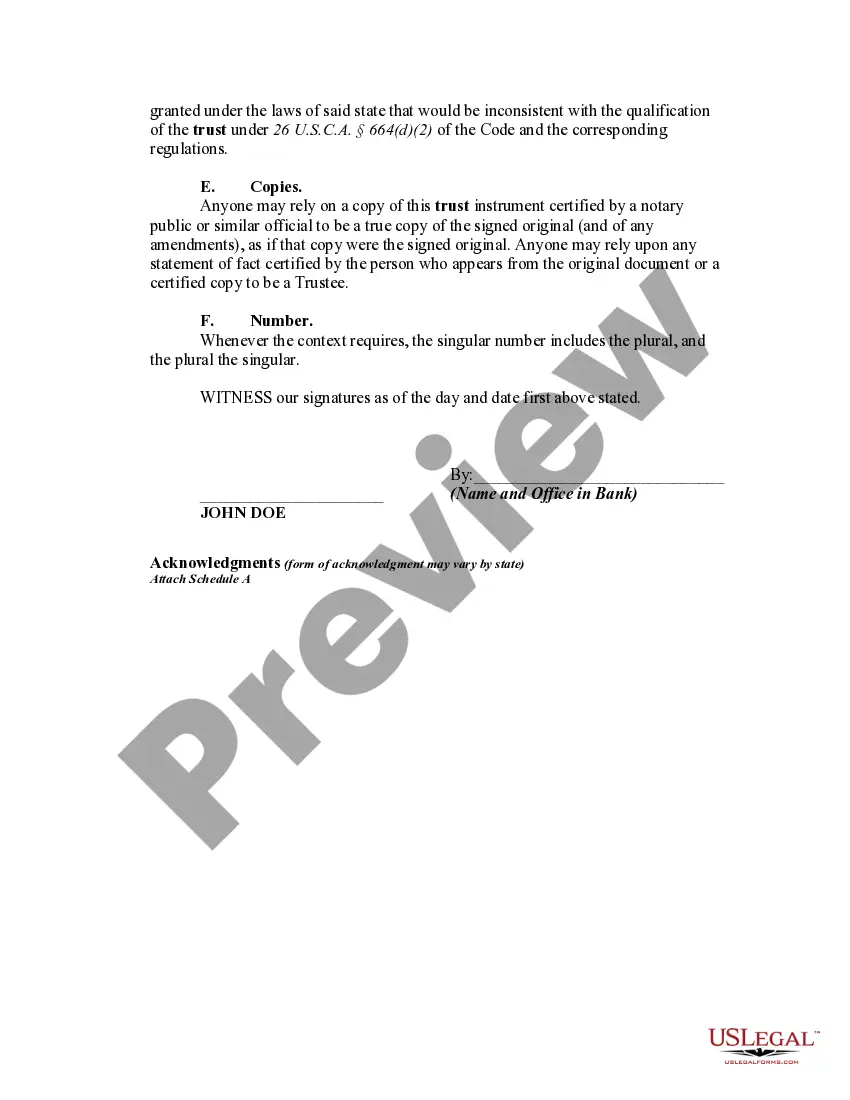
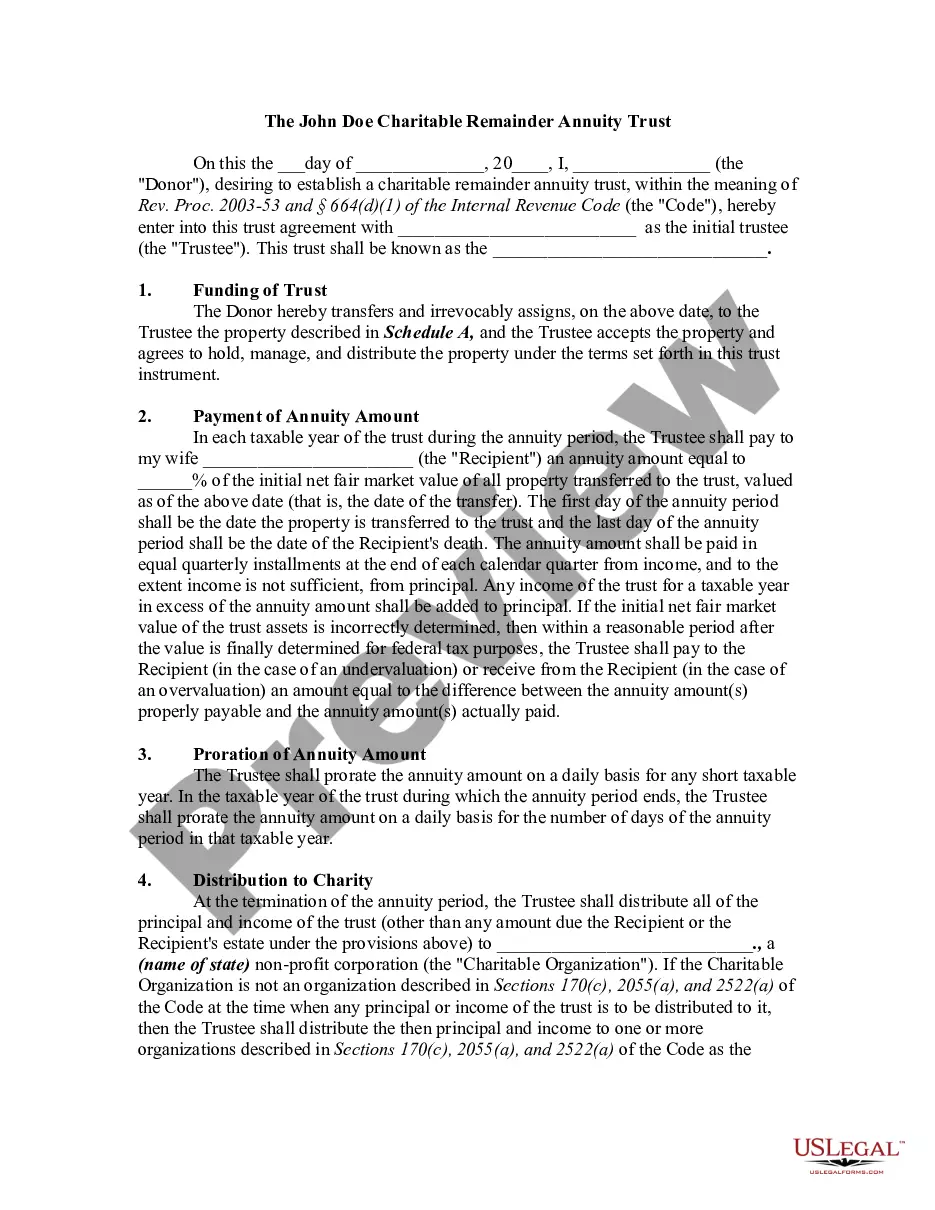
Get your form ready online
Our built-in tools help you complete, sign, share, and store your documents in one place.
Make edits, fill in missing information, and update formatting in US Legal Forms—just like you would in MS Word.
Download a copy, print it, send it by email, or mail it via USPS—whatever works best for your next step.
Sign and collect signatures with our SignNow integration. Send to multiple recipients, set reminders, and more. Go Premium to unlock E-Sign.
If this form requires notarization, complete it online through a secure video call—no need to meet a notary in person or wait for an appointment.
We protect your documents and personal data by following strict security and privacy standards.

Make edits, fill in missing information, and update formatting in US Legal Forms—just like you would in MS Word.

Download a copy, print it, send it by email, or mail it via USPS—whatever works best for your next step.

Sign and collect signatures with our SignNow integration. Send to multiple recipients, set reminders, and more. Go Premium to unlock E-Sign.

If this form requires notarization, complete it online through a secure video call—no need to meet a notary in person or wait for an appointment.

We protect your documents and personal data by following strict security and privacy standards.
Looking for another form?





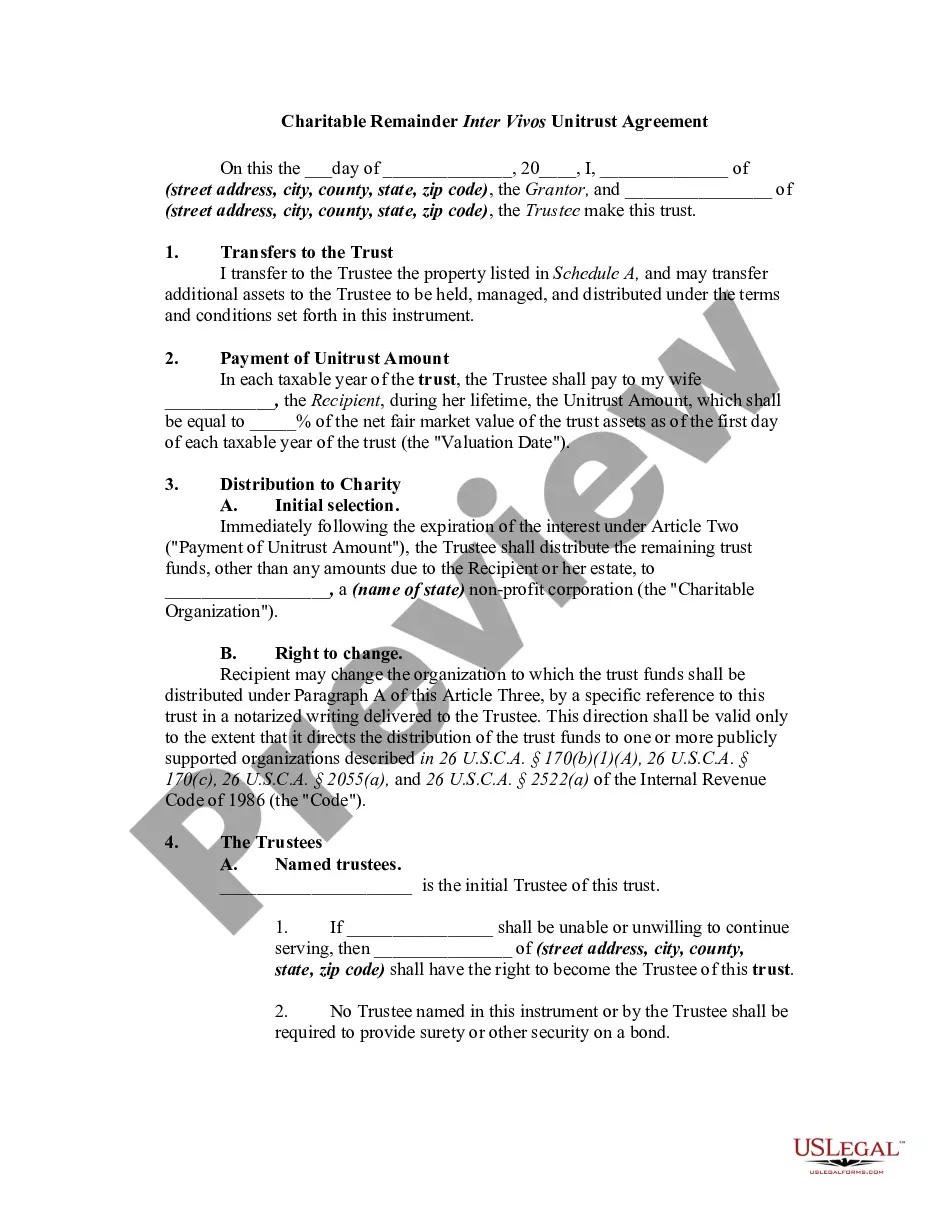
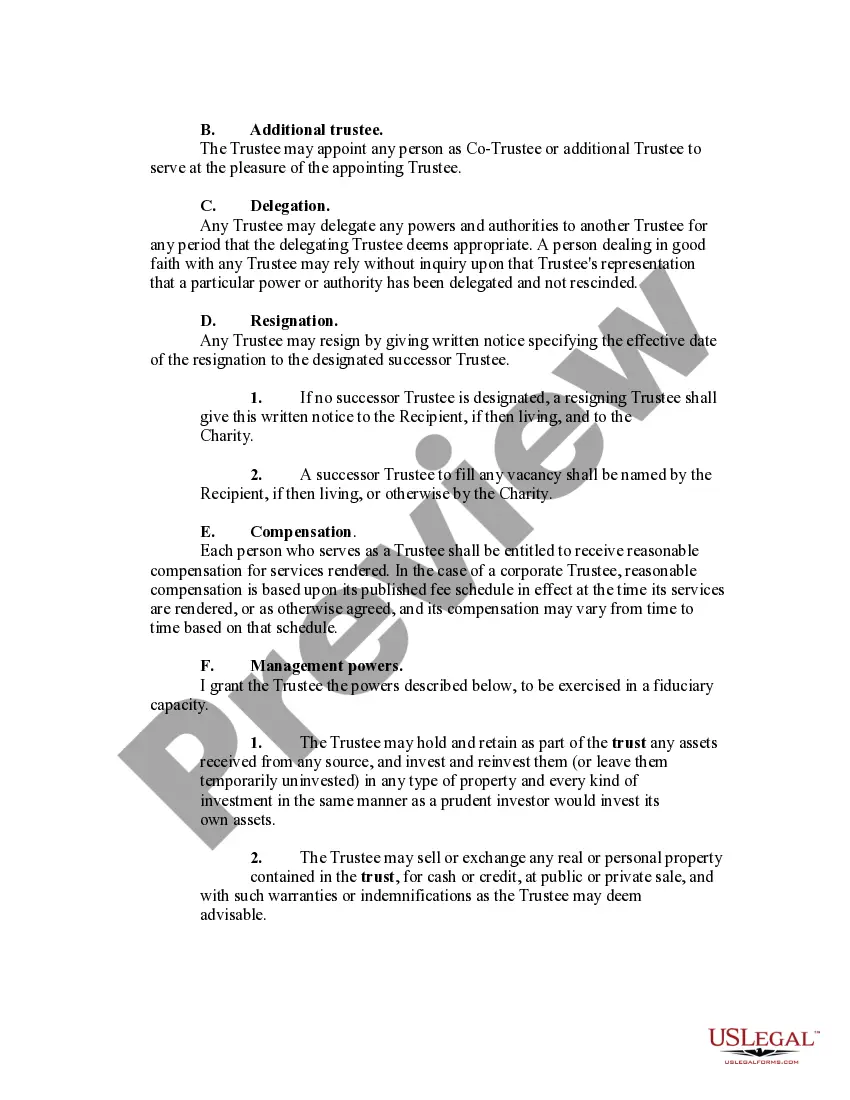
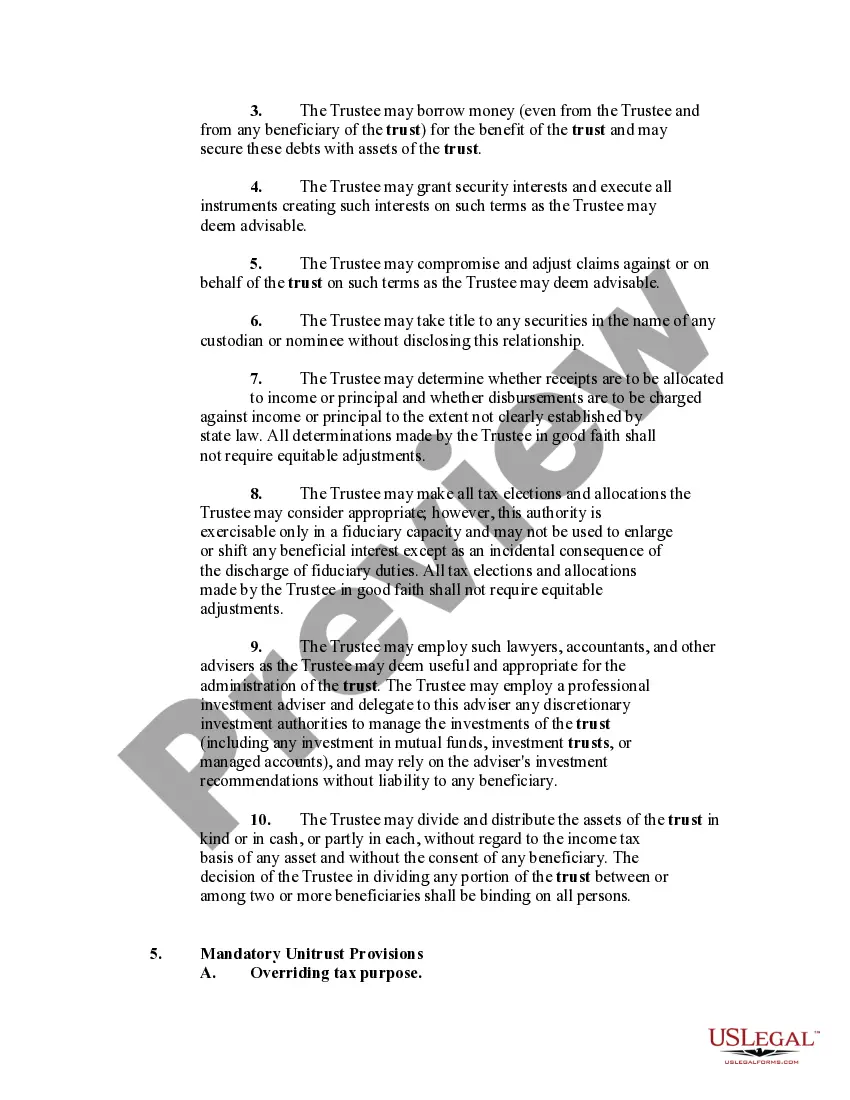
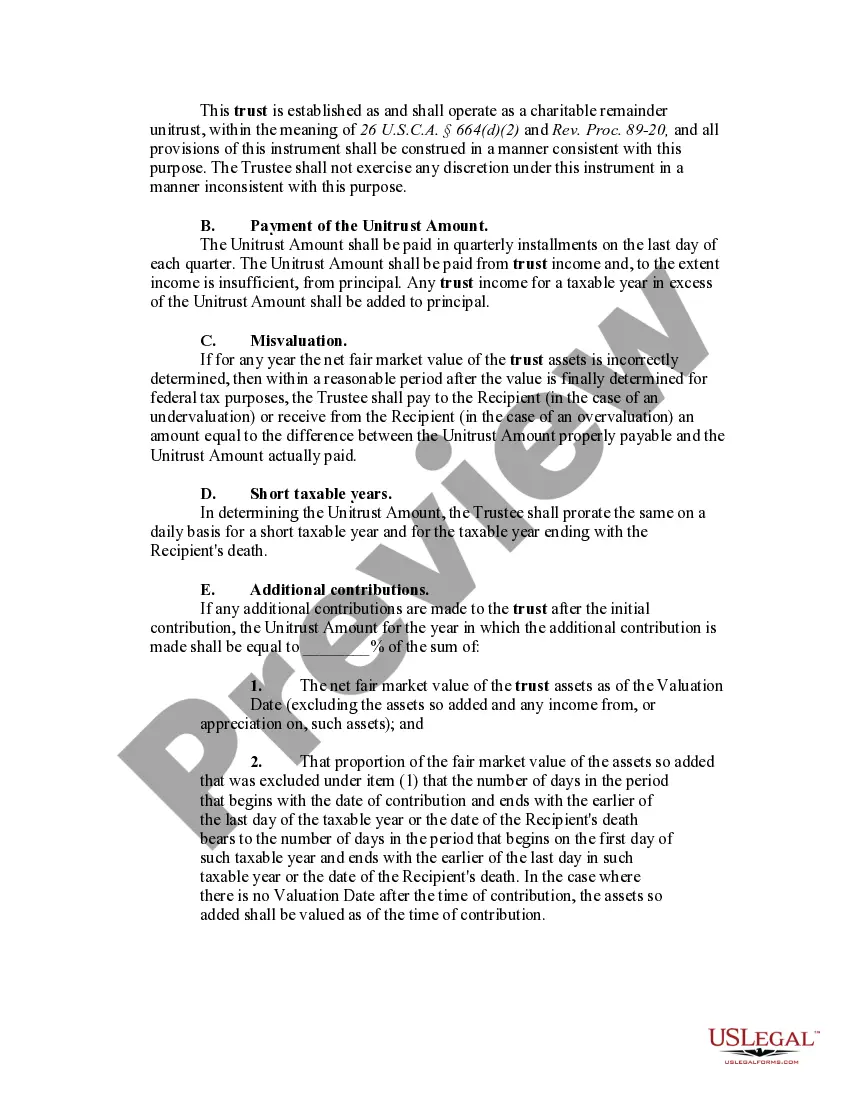
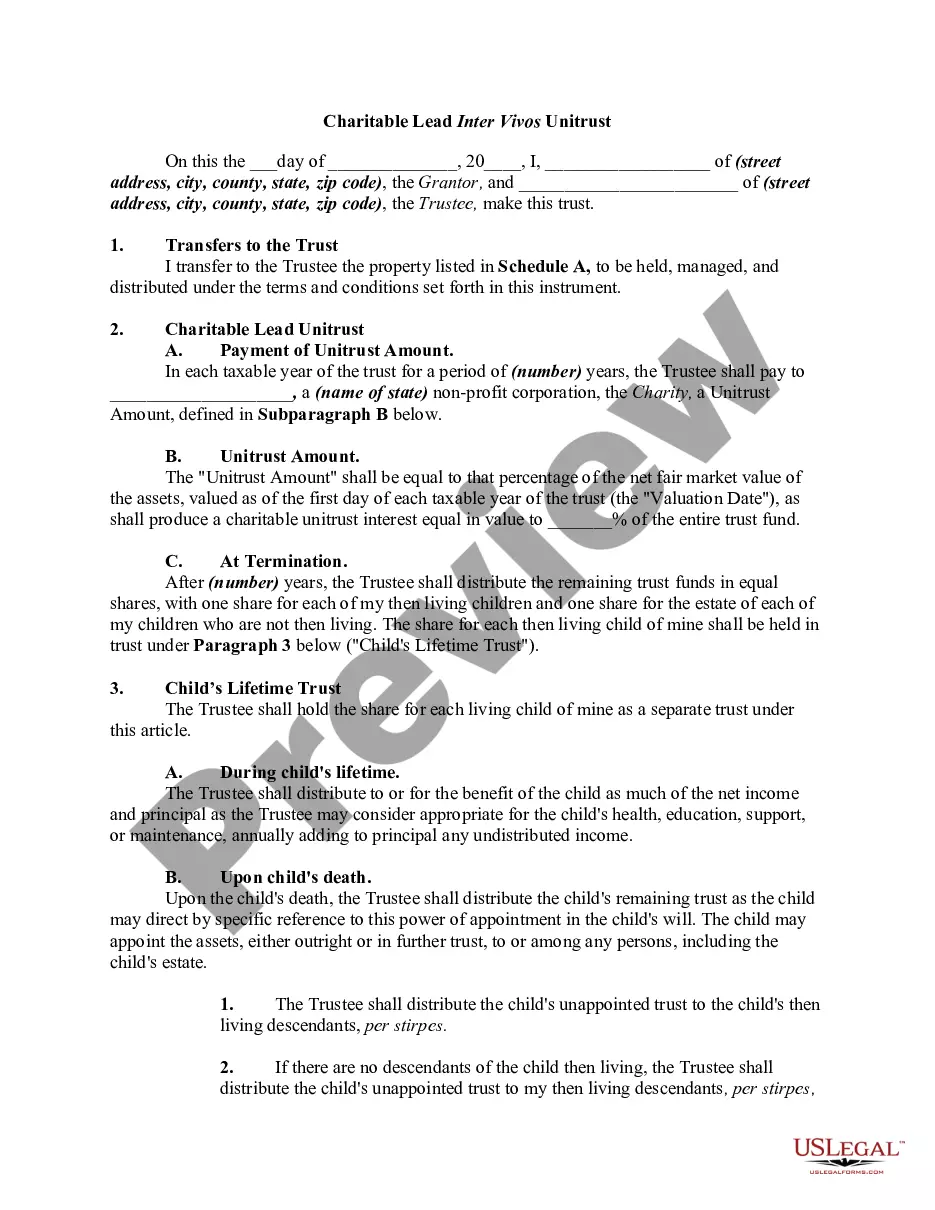
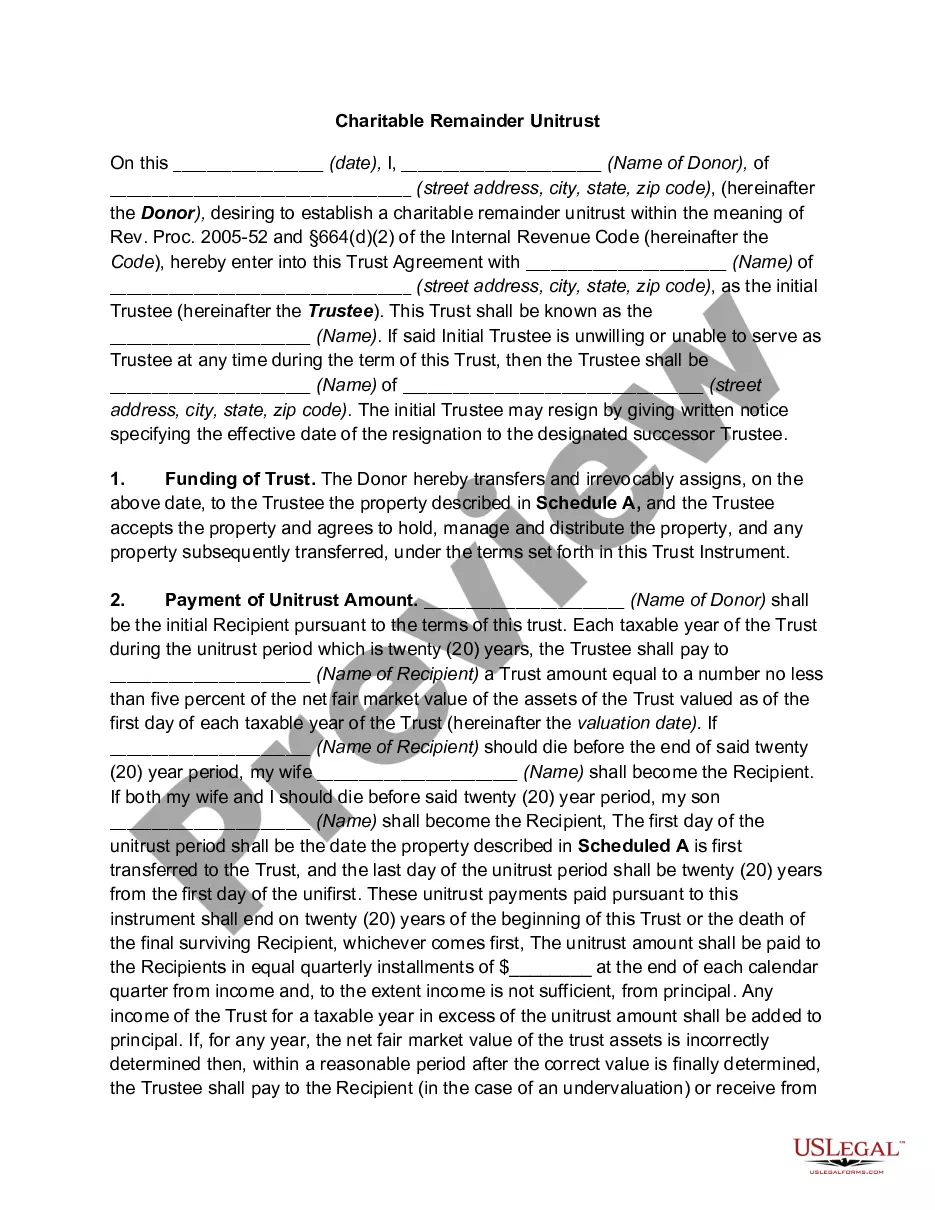
How to fill out Charitable Remainder Inter Vivos Unitrust Agreement?
- Log in to your existing US Legal Forms account if you have one. Ensure your subscription is up to date before moving forward.
- If you are a new user, start by reviewing the available templates. Use the Preview mode to check descriptions and see if they align with your requirements and local laws.
- In case you can't find a suitable form, utilize the Search feature for alternative templates that may better meet your needs.
- Once you've identified the correct document, click on the Buy Now button and select your preferred subscription plan. You'll need to create an account to access the full library.
- Proceed with payment by entering your credit card information or logging in to PayPal. Make sure to complete your transaction.
- Download the form directly to your device. You can always retrieve it later from the My Forms section in your account.
US Legal Forms is designed to empower users by providing an extensive collection of legal documents, ensuring that your form is both accurate and compliant with legal standards.
Start your journey to securing vital legal documents today. Visit US Legal Forms to explore more and make your process seamless!
Form popularity
FAQ
The minimum amount for a charitable remainder trust can vary based on the financial institution or organization managing the trust. Typically, amounts as low as $100,000 are acceptable, but some institutions may have higher thresholds. When considering a charitable remainder form trust buy with 30, you can review different options to find the best fit for your financial situation. Investing in a trust with a minimum amount opens doors for charitable giving while still providing you with potential benefits.
The 10 percent rule for charitable remainder trusts mandates that at least 10% of the trust's assets must go to charity upon its termination. This requirement ensures substantial support for charitable causes while allowing you to receive an income stream during your lifetime. Choosing a charitable remainder form trust buy with 30 enables you to fulfill this obligation seamlessly. This way, you can plan your finances effectively while making a meaningful charitable contribution.
The 10 percent test for Charitable Remainder Unitrusts (CRUTs) ensures that the charity receives at least 10% of the trust's initial value. This test is essential for maintaining the charitable nature of the trust while allowing you to receive income. By using a charitable remainder form trust buy with 30, you can easily satisfy this requirement while ensuring income for yourself. This structure is beneficial for both you and the designated charity.
The 10% rule for trusts refers to the requirement that at least 10% of the trust's assets must be designated for charitable purposes. This ensures that a significant portion of the trust benefits a charitable entity. Owning a charitable remainder form trust buy with 30 offers you a structured way to achieve this goal. Meeting this requirement not only supports charities but also provides financial benefits such as tax deductions.
The maximum goodwill write-off depends on how the IRS views your donated property. Generally, you can deduct the fair market value of the property at the time of donation, subject to certain limits. When dealing with a charitable remainder form trust buy with 30, it's essential to understand how goodwill donations fit into your overall charitable strategy. Always seek professional advice to ensure full compliance with IRS guidelines.
The 10% rule stipulates that the present value of the charitable remainder interest must be at least 10% of the trust's initial value. This guideline ensures that a significant portion of the trust benefits the designated charity. When considering a charitable remainder form trust buy with 30, adhering to this rule is essential for compliance with tax regulations. Ensure that you work with professionals familiar with trust laws to stay within the requirements.
The payout rate for a charitable remainder trust typically ranges from 5% to 8% based on the trust's structure and terms. This percentage determines the annual amount distributed to the income beneficiary. When evaluating a charitable remainder form trust buy with 30, understanding your expected payout rate is vital in planning for your financial future. Consult with a financial advisor to ensure the trust aligns with your needs.
The 30% limit on charitable contributions applies to specific organizations that do not qualify for the higher deduction rates. This limit affects how much of your AGI you can deduct in a given year. Understanding this limitation can help inform decisions regarding your charitable remainder form trust buy with 30. The aim is to optimize your tax savings while supporting worthy causes.
The main difference lies in the percentage of adjusted gross income (AGI) you can deduct for donations. When you contribute to 50% charities, you can deduct a larger portion of your AGI compared to the 30% limit set for certain charitable organizations. Understanding this distinction is crucial when considering a charitable remainder form trust buy with 30. The right choice depends on your financial goals and how much you wish to give.
A common example of a charitable remainder trust is when an individual donates appreciated stock to a charitable remainder form trust buy with 30. The trust sells the stock, avoiding immediate capital gains taxes and pays the donor income over a specified term. At the end of that term, the remaining assets go to a designated charity. This structure benefits both the donor and the charity alike.