Well Water Agreement With A Sentence
Description
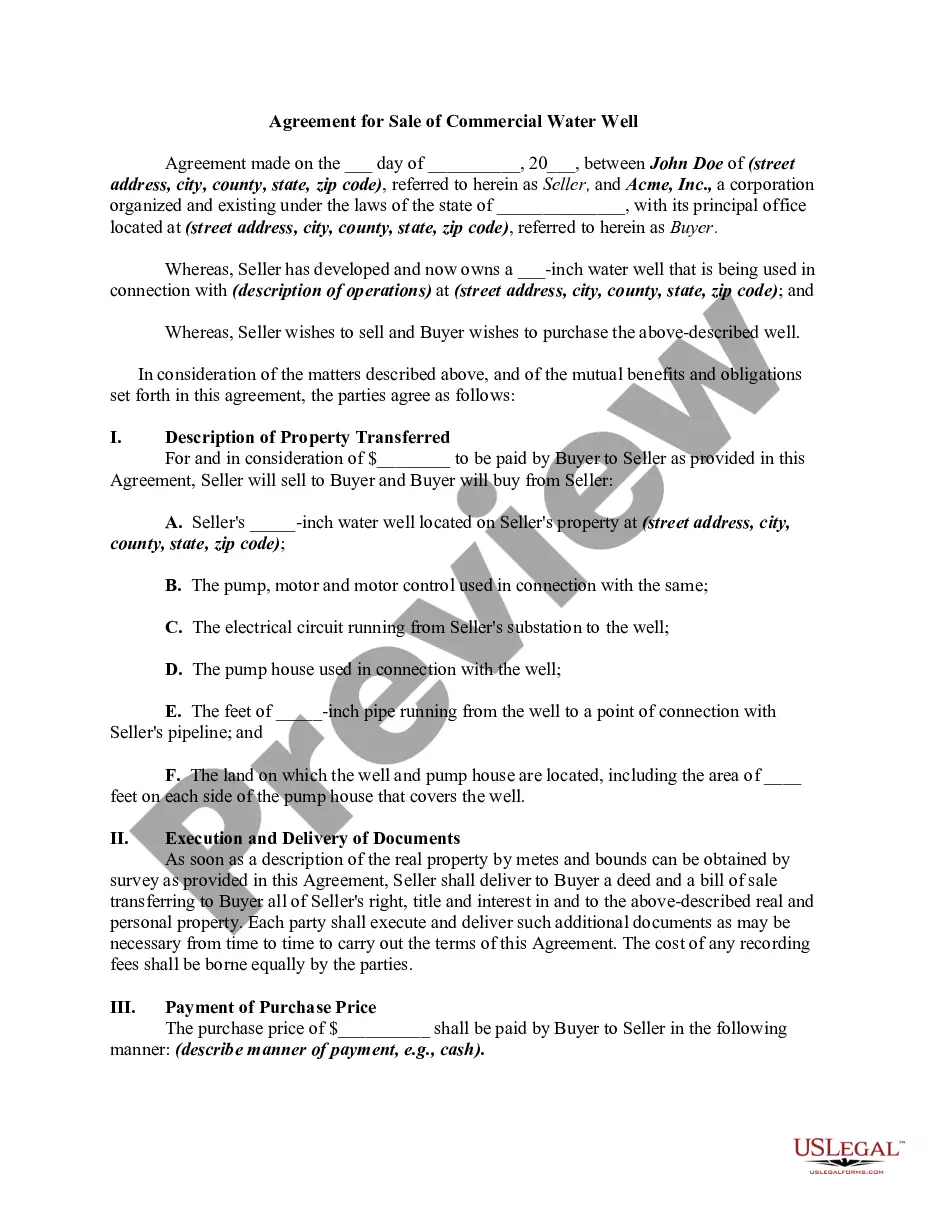
Get your form ready online
Our built-in tools help you complete, sign, share, and store your documents in one place.
Make edits, fill in missing information, and update formatting in US Legal Forms—just like you would in MS Word.
Download a copy, print it, send it by email, or mail it via USPS—whatever works best for your next step.
Sign and collect signatures with our SignNow integration. Send to multiple recipients, set reminders, and more. Go Premium to unlock E-Sign.
If this form requires notarization, complete it online through a secure video call—no need to meet a notary in person or wait for an appointment.
We protect your documents and personal data by following strict security and privacy standards.

Make edits, fill in missing information, and update formatting in US Legal Forms—just like you would in MS Word.

Download a copy, print it, send it by email, or mail it via USPS—whatever works best for your next step.

Sign and collect signatures with our SignNow integration. Send to multiple recipients, set reminders, and more. Go Premium to unlock E-Sign.

If this form requires notarization, complete it online through a secure video call—no need to meet a notary in person or wait for an appointment.

We protect your documents and personal data by following strict security and privacy standards.
Looking for another form?
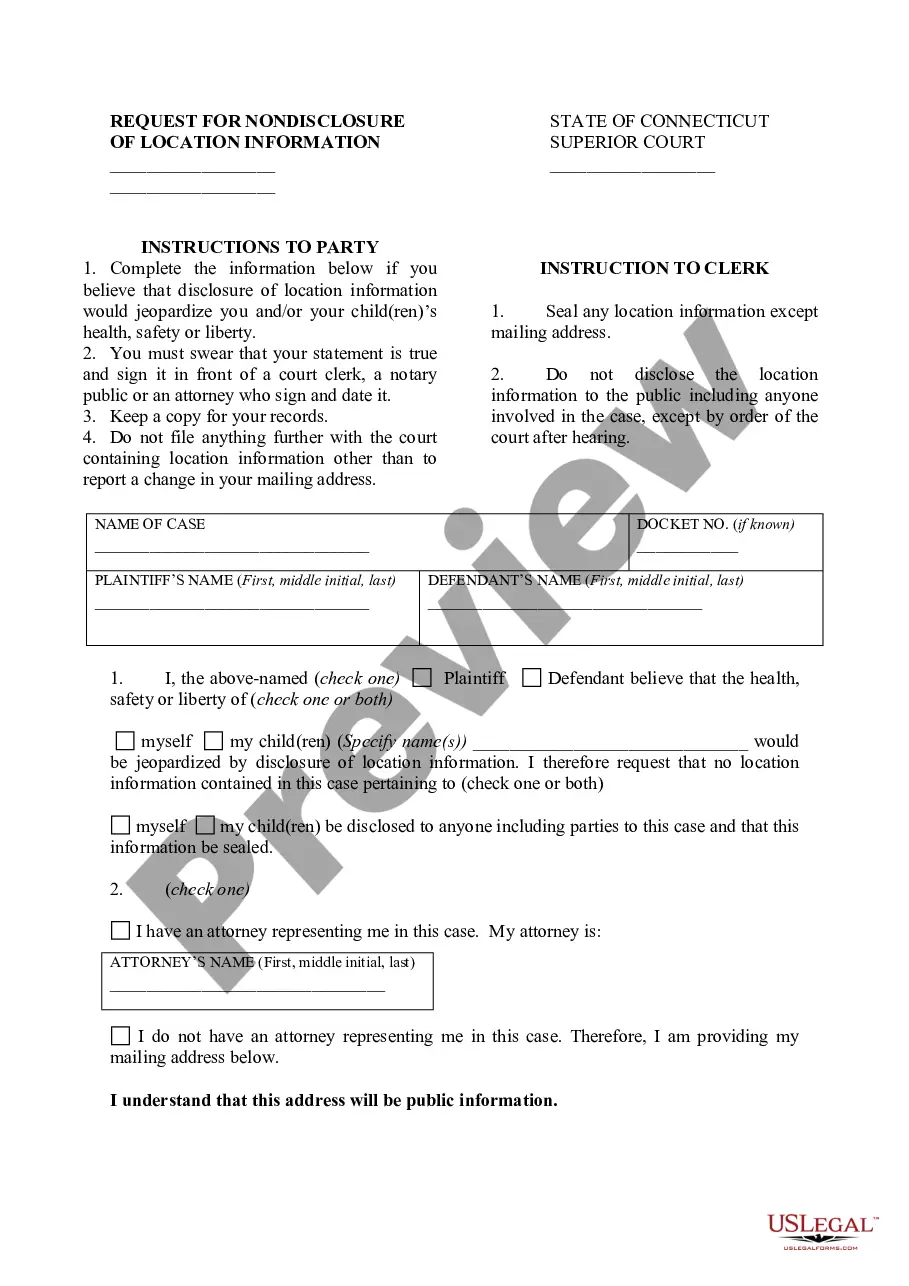



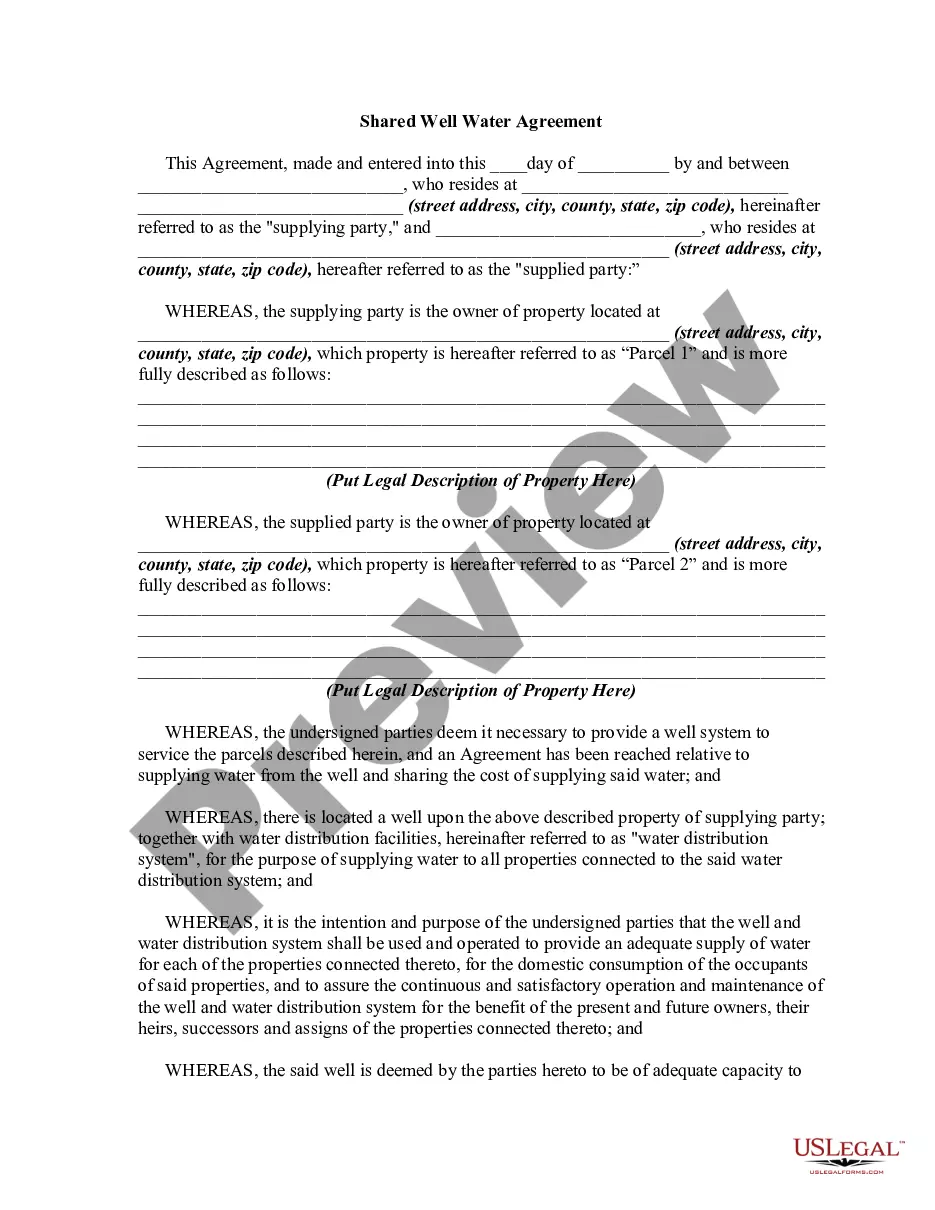
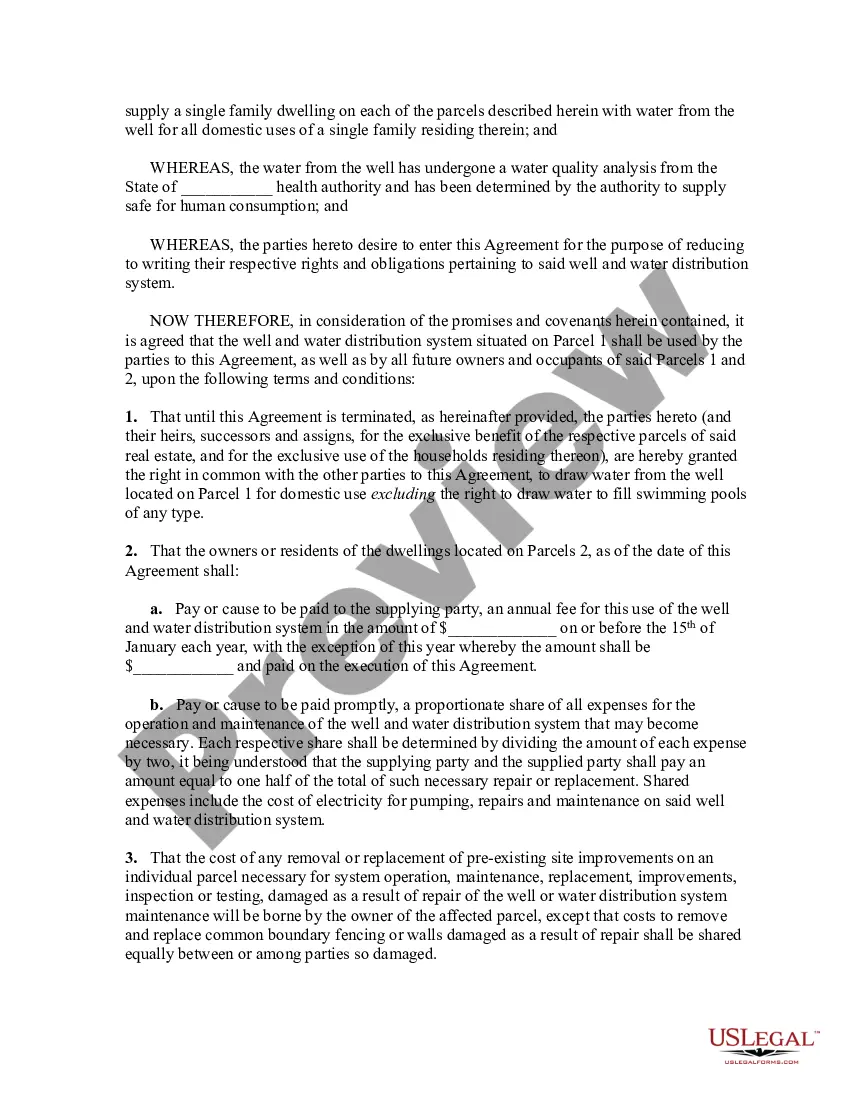
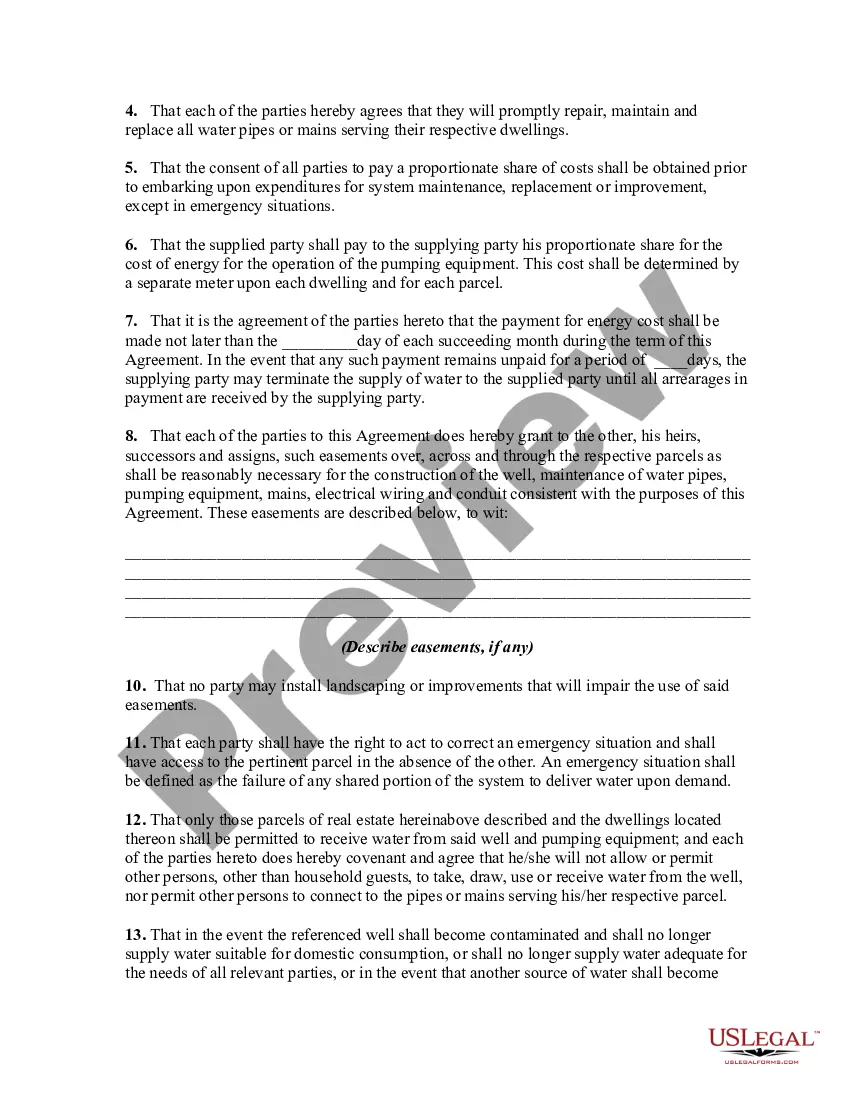
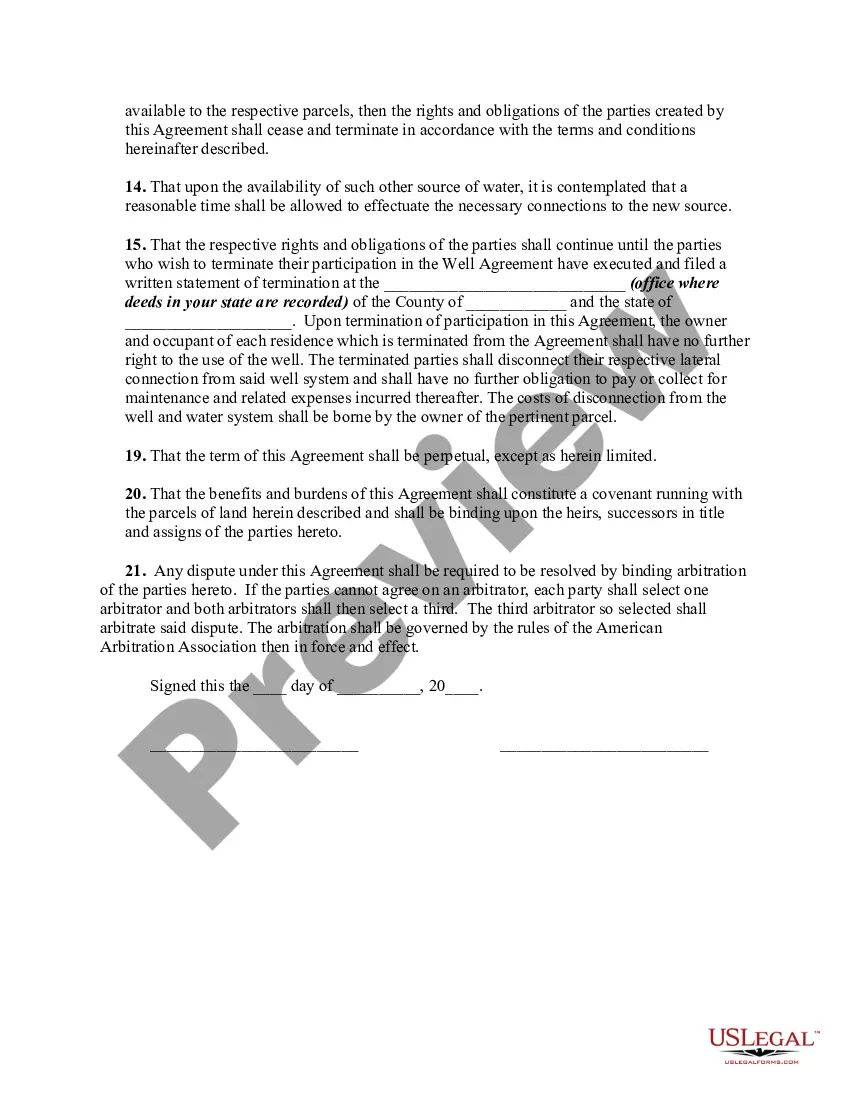
How to fill out Shared Well Water Agreement?
- Log in to your existing US Legal Forms account. Make sure your subscription is active to download the required template.
- Preview the well water agreement form and read its description. Verify that it meets your requirements and complies with local laws.
- If necessary, utilize the Search tab to find other relevant forms that match your needs.
- Select the appropriate document by clicking the Buy Now button, and choose your desired subscription plan to access the resources.
- Complete the payment process by entering your credit card information or using PayPal.
- Download the well water agreement form onto your device. You can access it later via the My Forms section of your account.
US Legal Forms stands out from competitors by offering a diverse collection of legal documents at competitive prices, making it easier for you to find the correct form.
With over 85,000 editable forms and access to expert assistance, you can ensure your well water agreement is accurately completed. Start using US Legal Forms today to simplify your legal processes!
Form popularity
FAQ
Writing a shared well agreement involves outlining the rights and responsibilities of each party involved. Include details about maintenance, costs, and water usage to make sure everyone is aware of their commitments. Tools like the UsLegalForms platform can provide templates that simplify this process and ensure thoroughness.
To write a simple contract, start by defining all parties involved and stating the purpose of the agreement. Include essential terms, such as payment details and duration, along with signatures from each party. For a well water agreement, be sure to emphasize the shared responsibilities to ensure clear communication.
The standard flow rate for a shared well can range from 5 to 15 gallons per minute, depending on the well's design and location. This capacity should meet the demands of all households participating in the well water agreement. It's wise to assess your specific needs and include this information in your agreement to avoid future disputes.
In a well water agreement, the costs of a shared well are typically split between all parties involved. This includes initial construction costs, maintenance fees, and operational expenses. It's essential to outline these responsibilities clearly in your well water agreement, ensuring that all parties understand their financial obligations.
To make an agreement enforceable, ensure that it includes clear terms that both parties understand and agree upon. The well water agreement should outline the obligations, rights, and consequences for non-compliance, which adds to its enforceability. Additionally, having the agreement in writing and signed by all parties helps establish its validity. Utilizing a platform like US Legal Forms can streamline the process of creating a comprehensive and legally sound agreement.
The most common method to enforce a contract is through direct negotiation between the parties involved. This method promotes open communication and can often resolve issues without escalating to legal action. If negotiation fails, the next step may involve mediation or arbitration, which is often quicker and less expensive than going to court. A well-drafted well water agreement that includes these procedures can be beneficial.
Enforcing an agreement requires clear communication and adherence to the terms outlined in the well water agreement. If one party fails to comply, the other party may need to send a formal notice or seek mediation. In some cases, legal action may be necessary to uphold the terms, especially if the agreement is binding. Ensuring that all parties understand their responsibilities can prevent disputes and make enforcement smoother.
Yes, you can terminate a shared well agreement, but the process depends on the terms outlined in the contract. Typically, both parties must agree to the termination, or you may need to provide formal notice as specified in your well water agreement. It is essential to review the agreement for any conditions regarding termination to ensure compliance. Consulting with a legal professional can help facilitate this process.
Enforcing a well agreement involves ensuring all parties understand their rights and responsibilities as outlined in the document. Regular communication among users can help address issues before they escalate. If conflicts arise, refer to the terms of the well water agreement for resolution strategies. Legal platforms like UsLegalForms can provide templates and guidance for drafting enforceable agreements.
You can use well water in various contexts; for instance: 'The household relies on well water for daily needs, including cooking and irrigation.' This shows the significant role well water plays in sustaining a home and community. Remember that having a well water agreement in place can help clarify and secure water rights among users.