Construction Contract Cost Plus Withholding In New York
Description


Get your form ready online
Our built-in tools help you complete, sign, share, and store your documents in one place.
Make edits, fill in missing information, and update formatting in US Legal Forms—just like you would in MS Word.
Download a copy, print it, send it by email, or mail it via USPS—whatever works best for your next step.
Sign and collect signatures with our SignNow integration. Send to multiple recipients, set reminders, and more. Go Premium to unlock E-Sign.
If this form requires notarization, complete it online through a secure video call—no need to meet a notary in person or wait for an appointment.
We protect your documents and personal data by following strict security and privacy standards.
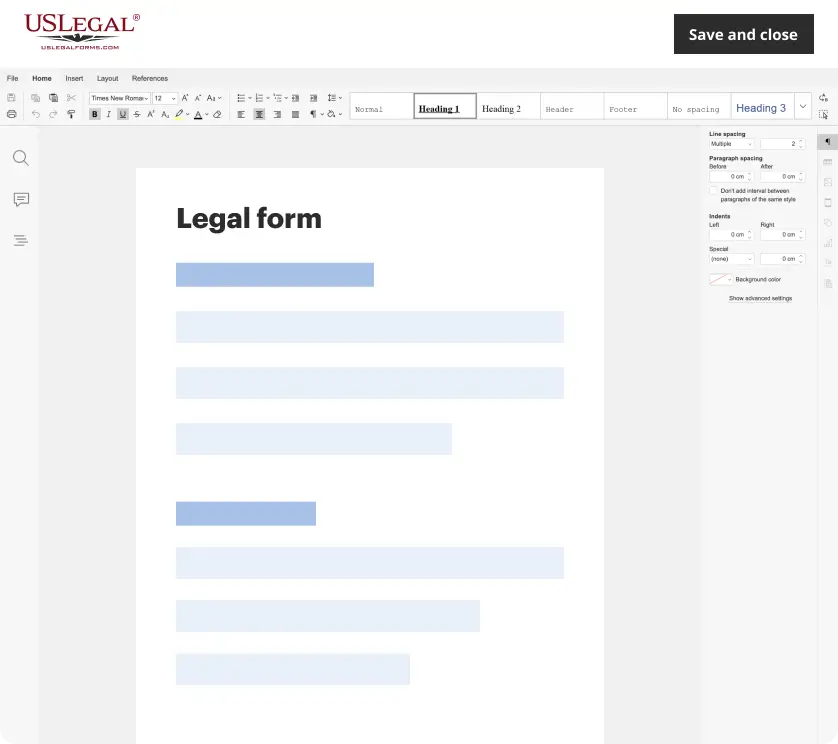
Make edits, fill in missing information, and update formatting in US Legal Forms—just like you would in MS Word.
Download a copy, print it, send it by email, or mail it via USPS—whatever works best for your next step.
Sign and collect signatures with our SignNow integration. Send to multiple recipients, set reminders, and more. Go Premium to unlock E-Sign.
If this form requires notarization, complete it online through a secure video call—no need to meet a notary in person or wait for an appointment.
We protect your documents and personal data by following strict security and privacy standards.
Looking for another form?
Form popularity
FAQ
For example, ing to retainage rules in California, state law caps retainage at 5% prior to completion and acceptance of the project. On private construction projects in Taxes, the property owner must retain 10%. You need to consult to see what the rules are in your state.
All charges for materials and labor that you bill to your customer for any repair, maintenance, or installation project, including any expenses or other markups, are taxable.
On November 17, 2023, the State of New York enacted the “5% Retainage Law.” This legislation effectively limits the amount of retainage that can be held from general contractors and subcontractors to no more than 5%. It applies to many but not all construction contracts.
On public projects in California, for example, state law caps retainage at 5% prior to completion and acceptance of the project. These laws also set a deadline for the payment of retainage, though the timeline is typically based on the payment to the contractor's hiring party.
In New York state, professional services are generally not subject to sales tax.
All charges for materials and labor that you bill to your customer for any repair, maintenance, or installation project, including any expenses or other markups, are taxable.
In NYS, sales tax applies to two main categories for contractors: repairs and maintenance, and installation services. Repairs and maintenance are subject to tax when they involve fixing or maintaining existing systems or structures, such as repairing damaged roof shingles or fixing a broken railing.
Sales tax on contracting work done on real property is not always collected. If the work done is a capital improvement, it is exempt from sales tax. However, installation, repair, and maintenance work incurs a sales tax.
