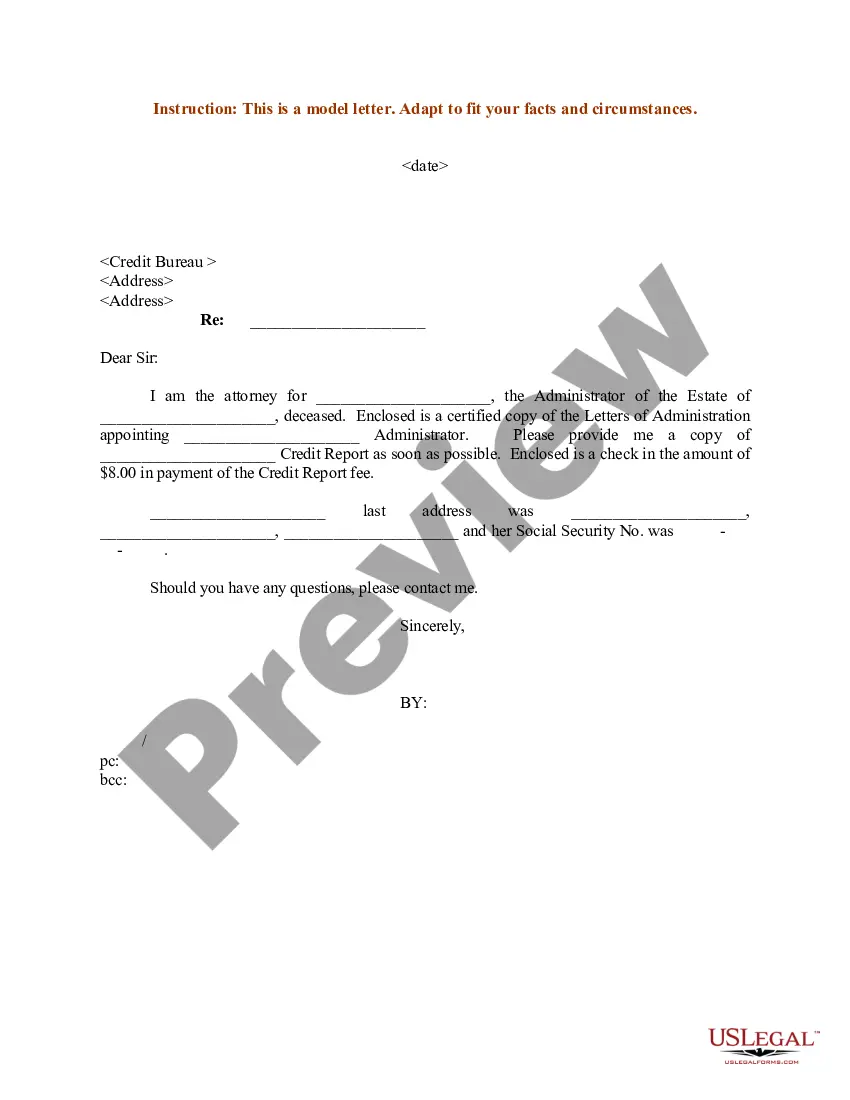
Roommate Agreement With Landlord In Bronx
Description

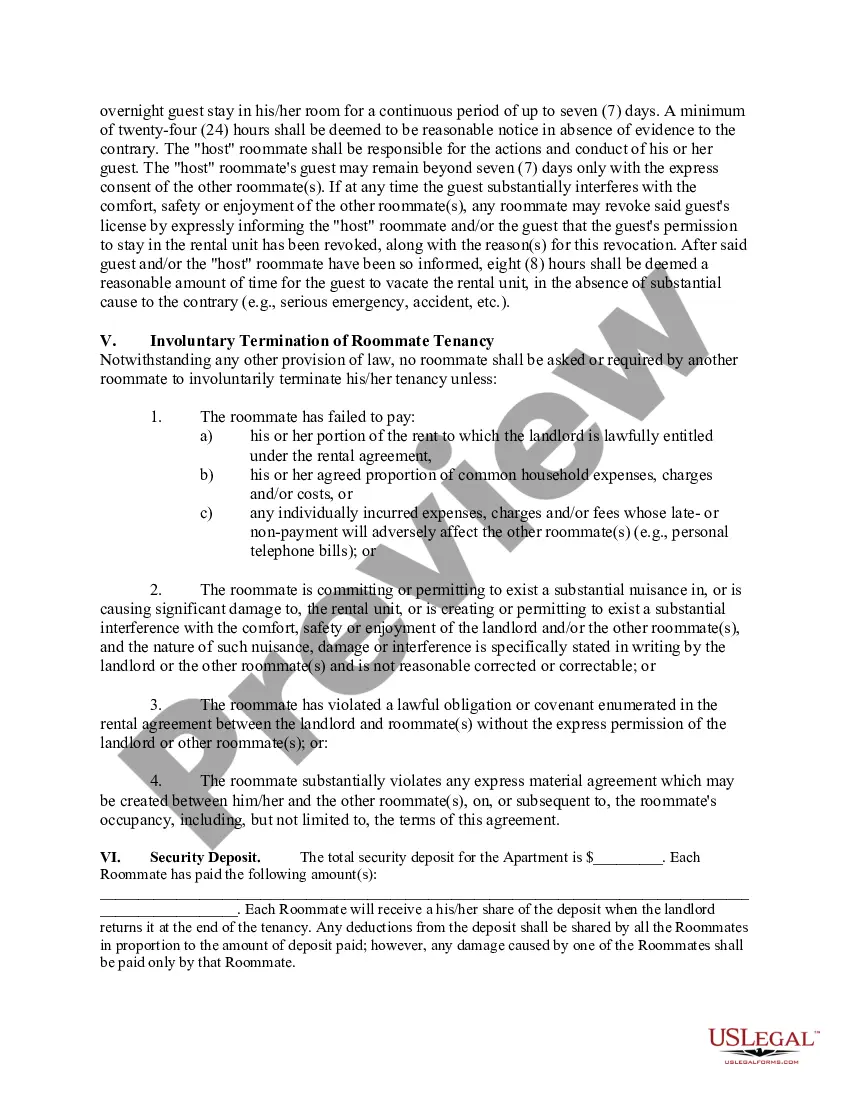
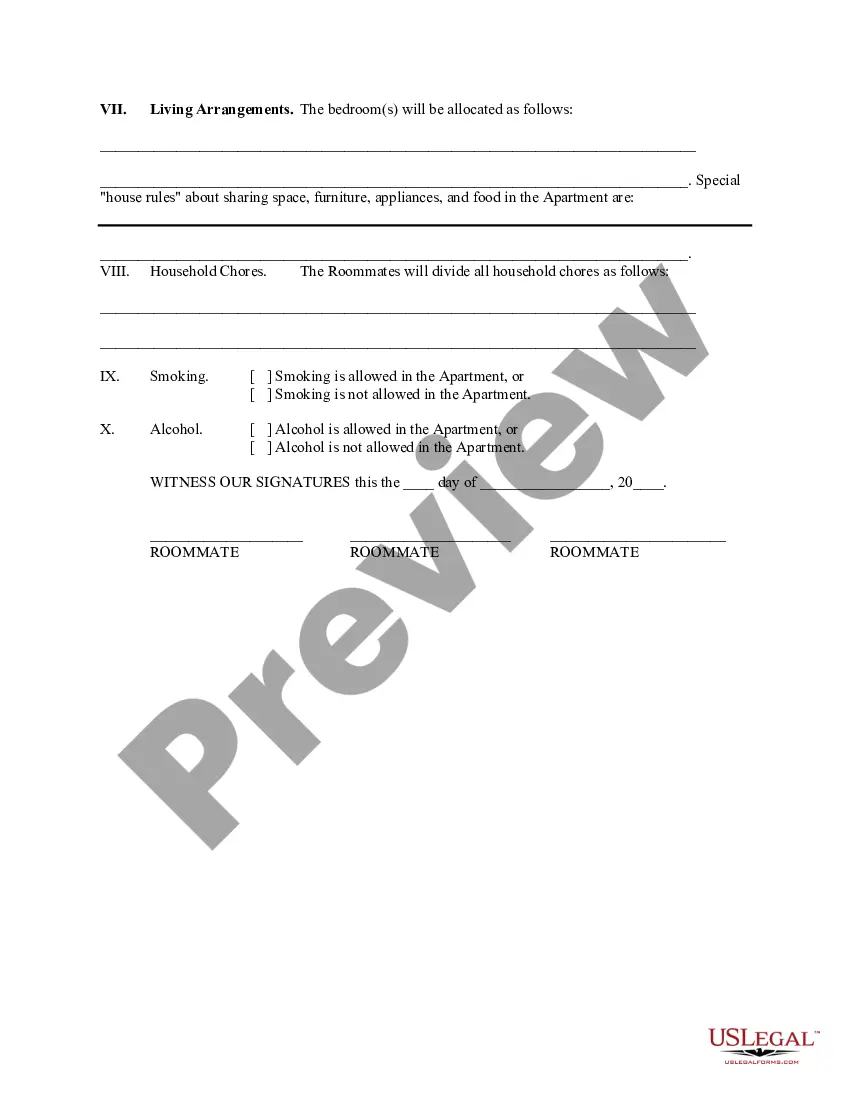
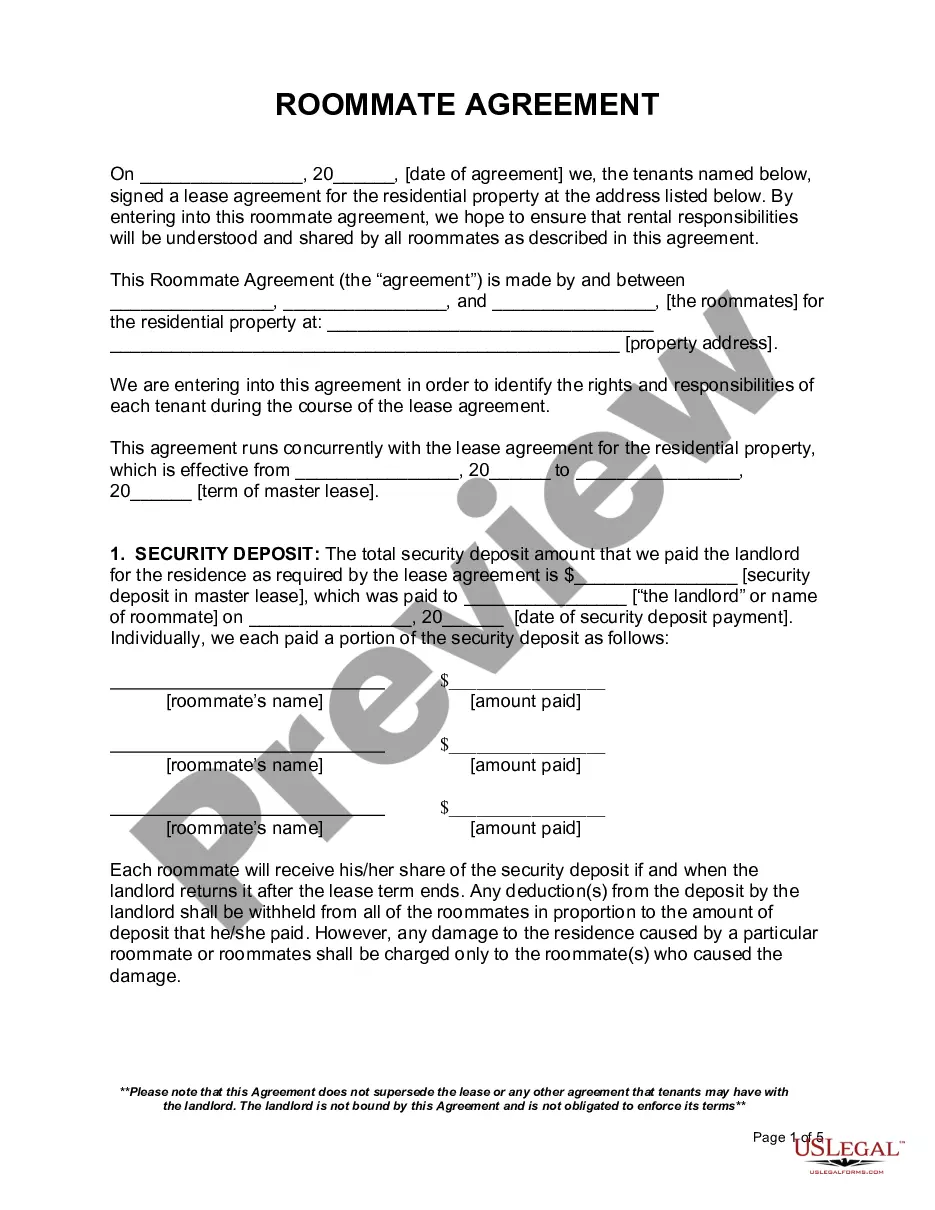
Get your form ready online
Our built-in tools help you complete, sign, share, and store your documents in one place.
Make edits, fill in missing information, and update formatting in US Legal Forms—just like you would in MS Word.
Download a copy, print it, send it by email, or mail it via USPS—whatever works best for your next step.
Sign and collect signatures with our SignNow integration. Send to multiple recipients, set reminders, and more. Go Premium to unlock E-Sign.
If this form requires notarization, complete it online through a secure video call—no need to meet a notary in person or wait for an appointment.
We protect your documents and personal data by following strict security and privacy standards.

Make edits, fill in missing information, and update formatting in US Legal Forms—just like you would in MS Word.

Download a copy, print it, send it by email, or mail it via USPS—whatever works best for your next step.

Sign and collect signatures with our SignNow integration. Send to multiple recipients, set reminders, and more. Go Premium to unlock E-Sign.

If this form requires notarization, complete it online through a secure video call—no need to meet a notary in person or wait for an appointment.

We protect your documents and personal data by following strict security and privacy standards.
Looking for another form?




Form popularity
FAQ
All parties agree to discuss frankly and unemotionally all concerns with their roommates before problems occur. All parties agree to negotiate in good faith, should the need arise. All parties will respect one another's privacy, sleep schedules, and other requests that are not unreasonably burdensome.
When only one tenant is named on a lease, the tenant has the right to take in a roommate and the roommate's dependent children. When two or more tenants are named on the lease, the number of tenants and roommates cannot exceed the number of tenants named in the lease.
Technically, one cotenant's leaving is a breach of the lease, and could provide the landlord with grounds to terminate the entire tenancy. Moving out without the landlord's permission is a violation of a lease clause, and one cotenant's lease-breaking is a transgression for which all tenants are liable.
If you have been living in the room for at least 30 days or have a signed rental agreement, you have tenancy rights. The prime tenant will have to take you to court to evict you in a holdover case. It is illegal for the prime tenant to change the locks on you.
To write a solid roommate agreement, start by gathering all roommates' contact information and listing the rental property details. Outline how rent, utilities, and other expenses will be divided. Clearly define rules around guests, quiet hours, cleaning schedules, shared items, and pets.
Basically anyone who is living there needs to be on the lease with your approval so that they are clearly held to the same responsibilities to you as any other tenant. You want as many people liable for your property as there are adults living there. Always.
The roommate law has several restrictions. New York law does not permit the number of occupants to exceed the number of tenants, and each person residing in the apartment must have a livable area of at least 80 square feet. The square footage count does not include bathrooms, closets or hallways.
Adding Names to the Lease The owner is not required to add any non-spouse to a lease. However, a non-spouse could have some protections if they establish succession rights. For more information on succession, visit our Succession page.
Required notice period (often 30-60 days) Lease-breaking fees (typically 1-2 months' rent)
Understanding the Legal Implications And in this case, it means you're both on the hook for the entire rent payment, not just your share. So, even if your ex-roommate skips town, you're still legally responsible for the full rent unless you take some action.