Domicile For Meaning In Minnesota
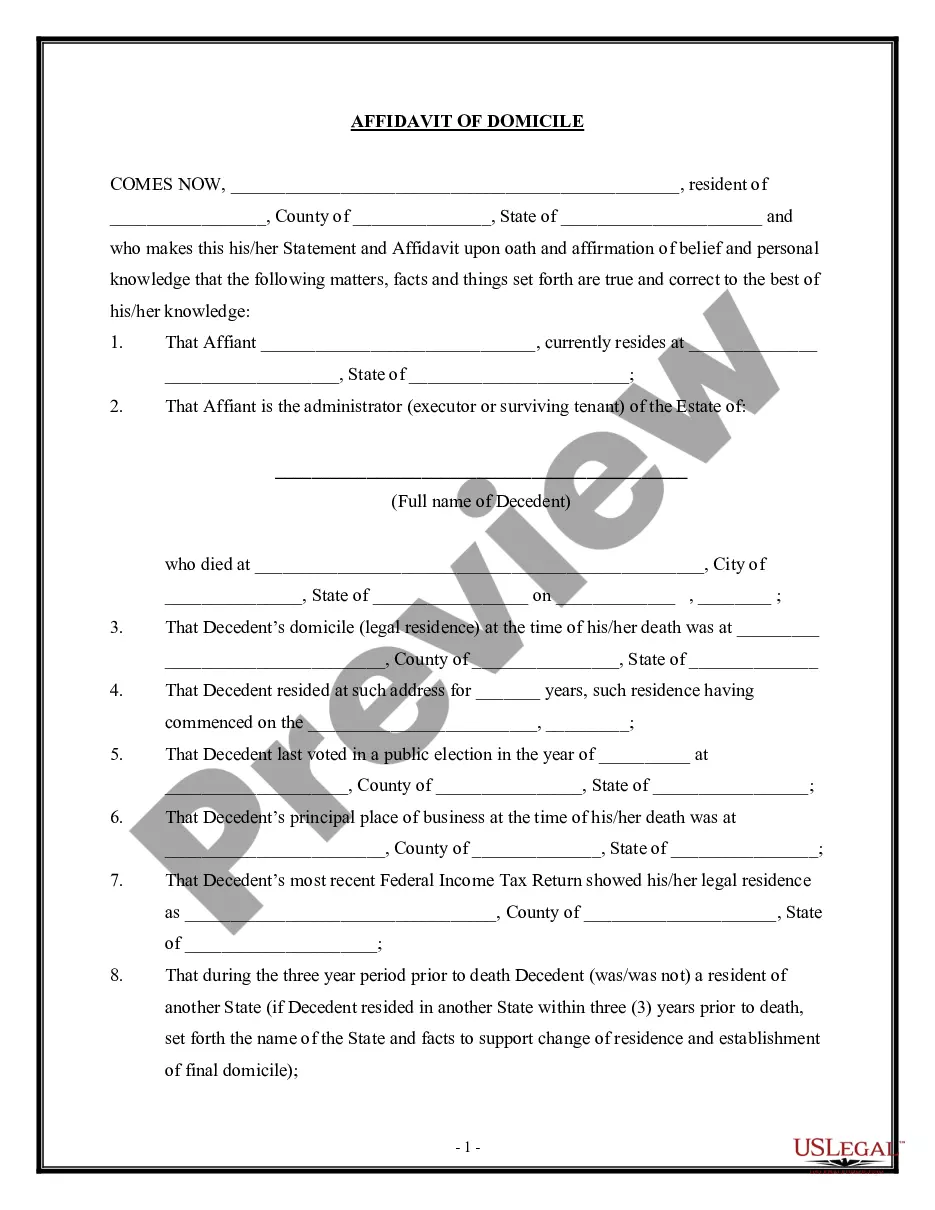
Description
Get your form ready online
Our built-in tools help you complete, sign, share, and store your documents in one place.
Make edits, fill in missing information, and update formatting in US Legal Forms—just like you would in MS Word.
Download a copy, print it, send it by email, or mail it via USPS—whatever works best for your next step.
Sign and collect signatures with our SignNow integration. Send to multiple recipients, set reminders, and more. Go Premium to unlock E-Sign.
If this form requires notarization, complete it online through a secure video call—no need to meet a notary in person or wait for an appointment.
We protect your documents and personal data by following strict security and privacy standards.

Make edits, fill in missing information, and update formatting in US Legal Forms—just like you would in MS Word.

Download a copy, print it, send it by email, or mail it via USPS—whatever works best for your next step.

Sign and collect signatures with our SignNow integration. Send to multiple recipients, set reminders, and more. Go Premium to unlock E-Sign.

If this form requires notarization, complete it online through a secure video call—no need to meet a notary in person or wait for an appointment.

We protect your documents and personal data by following strict security and privacy standards.
Looking for another form?


Form popularity
FAQ
The best state for full-time RVers to establish residency is often considered South Dakota, Texas, or Florida. These states are popular among RVers because of their favorable tax laws (no state income tax), ease of residency, and RV-friendly policies.
There are five factors the state considers to determine domicile: Your physical presence in that state; Your family and community connections; Where you go to church, if you do; ... Another category is professional and business relationships. Housing—where you physically stay when you're here.
The three most popular domicile states for nomads are South Dakota, Texas, and Florida. The biggest benefit to “residing” in these states is that they don't have a state income tax. These three states aren't the only ones that don't collect state income tax, but they offer a few other attractive benefits as well.
Most commonly, the in-state residency minimum is three to six months, but the requirements vary depending on the state and the circumstances. Alaska, South Dakota, and Washington have no minimum residency requirement and you can file for divorce in those states immediately upon moving there.
You are considered a Minnesota resident for tax purposes if both apply: You spend at least 183 days in Minnesota during the year. Any part of a day counts as a full day. You or your spouse rent, own, maintain, or occupy an abode.
Group 1: Easy residency, zero-state income tax Based on our experience and research, Florida and South Dakota are the best states for nomads, because of their straightforward residency requirements and zero-state income tax policies.
Address printed on card or document). property tax notice for the current year that shows the applicant's principal residential address both on the mailing portion and portion stating what the property is being taxed. Minnesota vehicle certificate of title issued. Filed property deed or title for current resident.
Group 1: Simple residency, zero-state income tax From our research, Florida and South Dakota stand out as the top states for expats due to their easy residency requirements and no state income tax.
You spend at least 183 days in Minnesota during the year (any part of a day counts as a full day) You or your spouse rent, own, maintain, or occupy a residence in Minnesota suitable for year-round use and equipped with its own cooking and bathing facilities.
Domicile is a legal term used to refer to the permanent or legal address (place or country) of an individual. In business, domicile is the place or country in which a business is registered or has been incorporated. It can also be used in banking in an instance where a bill of exchange has been drawn up.

