Maryland Dissolution Agreement with Minor Children
Overview of this form
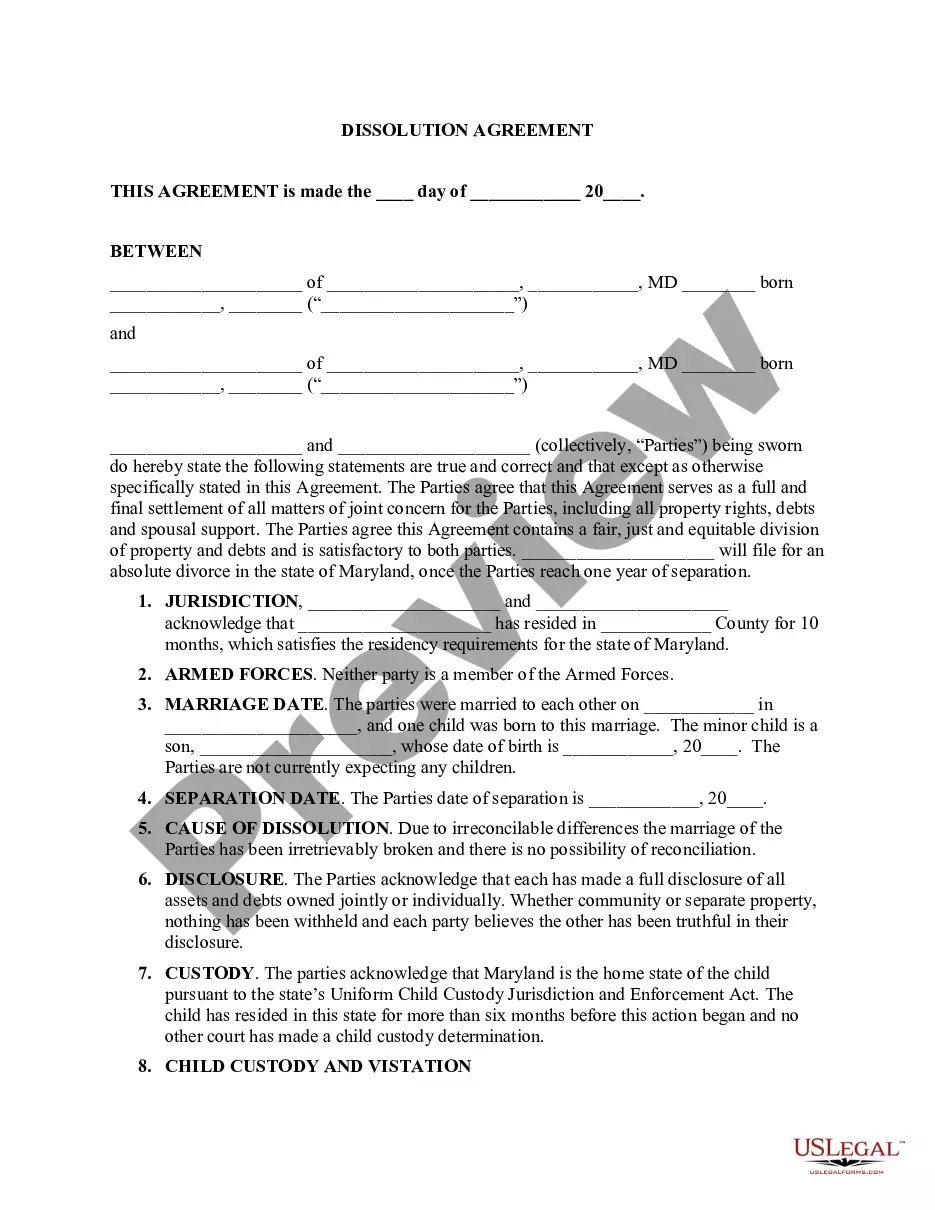
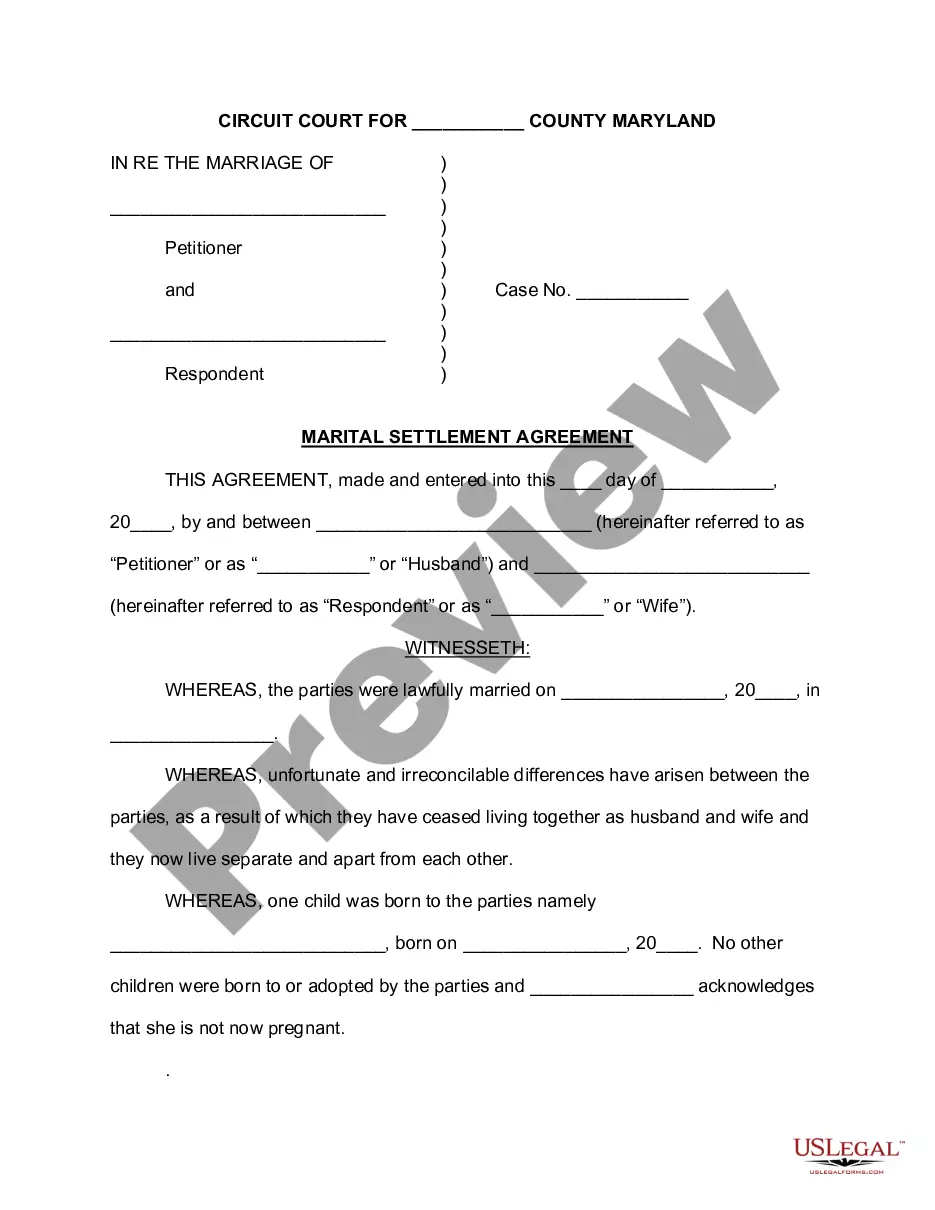
The Maryland Dissolution Agreement with Minor Children is a legal document that outlines the terms of a divorce when there are minor children involved. This agreement is specifically designed for couples who are separating due to irreconcilable differences and need to address property division, child custody, visitation rights, and child support. Unlike general divorce agreements, this form specifically incorporates provisions that protect the interests of minor children involved in the divorce process.
Key components of this form
- Identification of the parties involved, including their residency and dates of marriage.
- A declaration of irreconcilable differences as the cause for divorce.
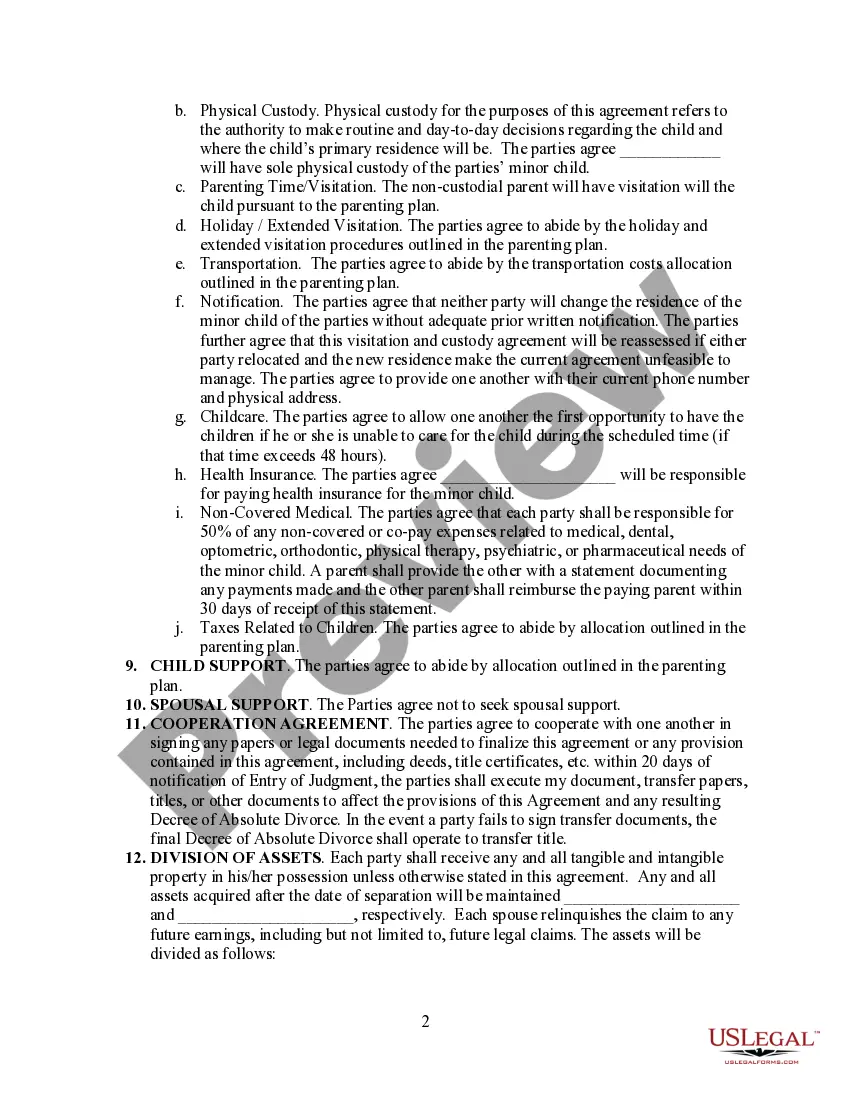
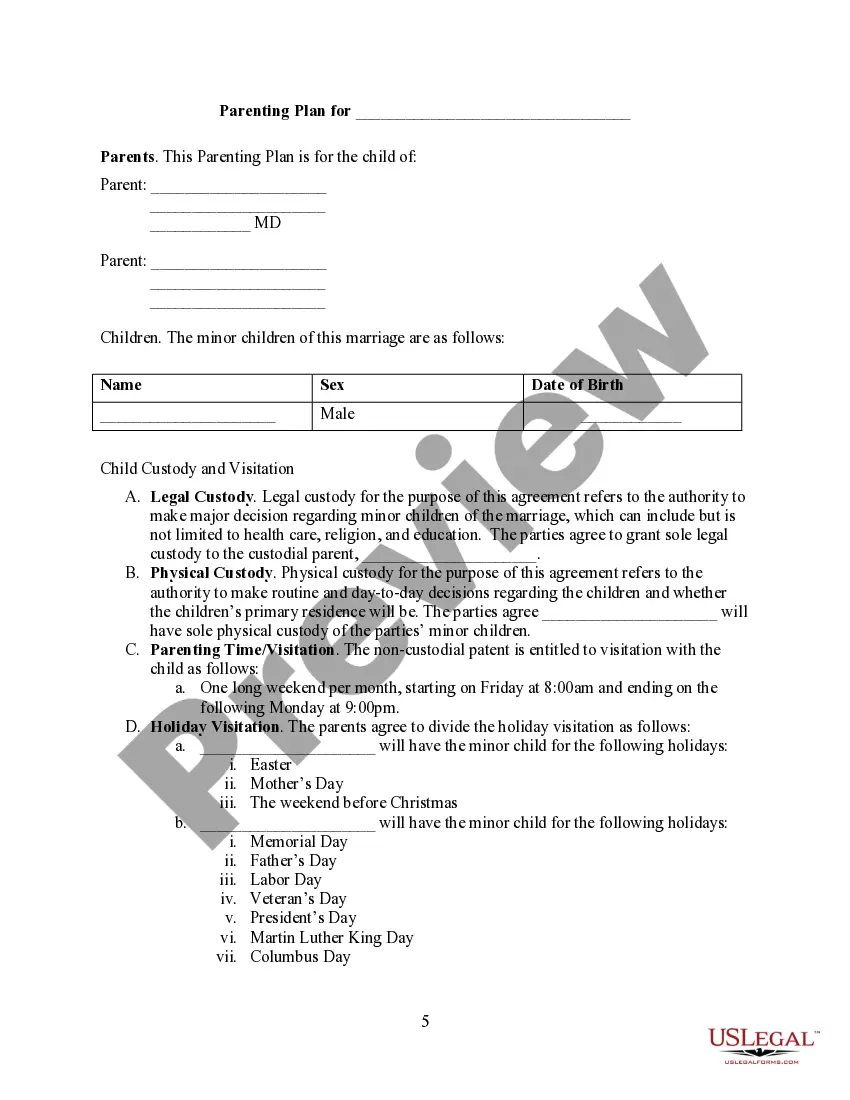
- Provisions for legal and physical custody of minor children.
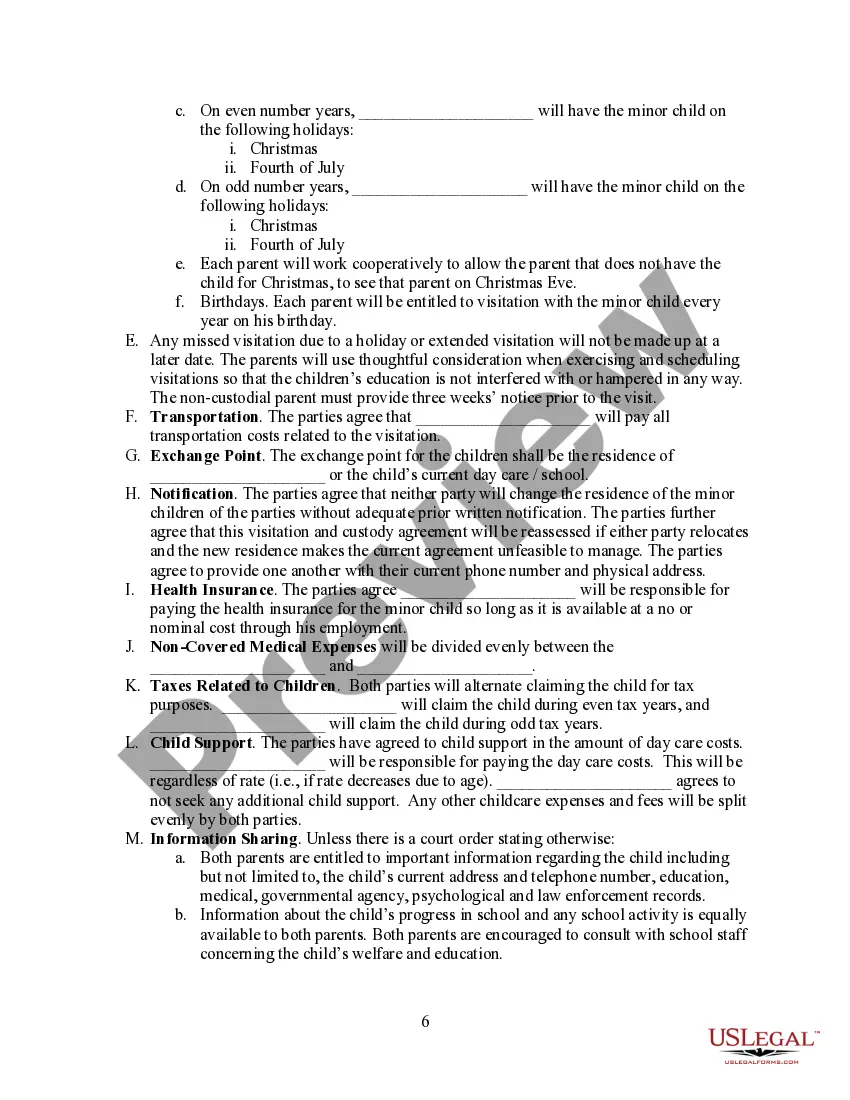
- Details regarding visitation schedules and holiday arrangements for the non-custodial parent.
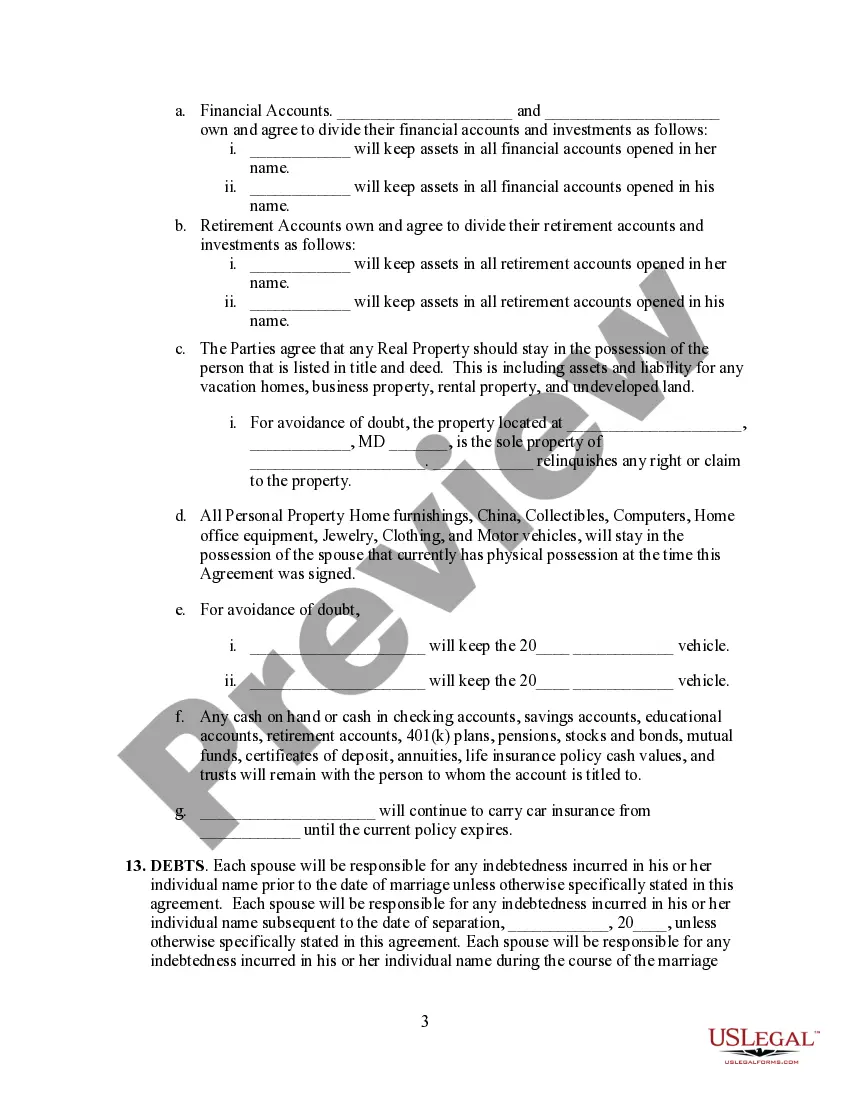
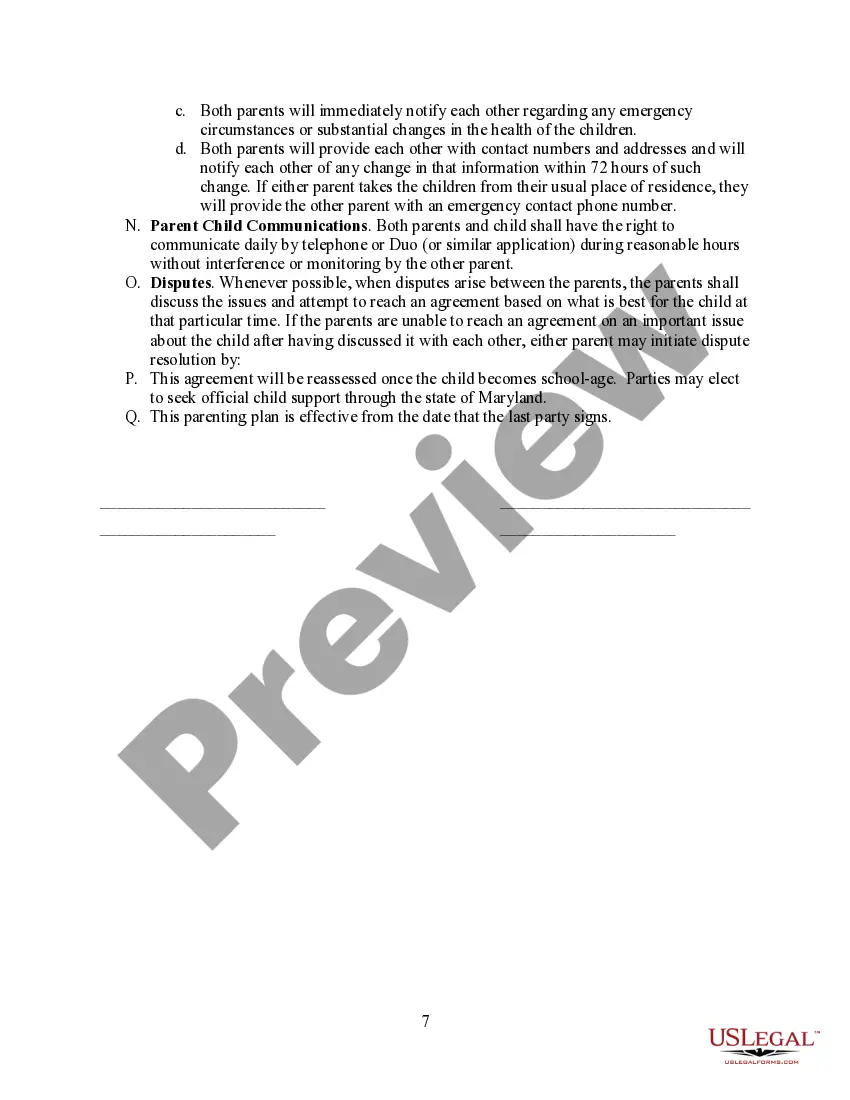
- Agreements on child support, healthcare responsibilities, and educational expenses for the minor child.
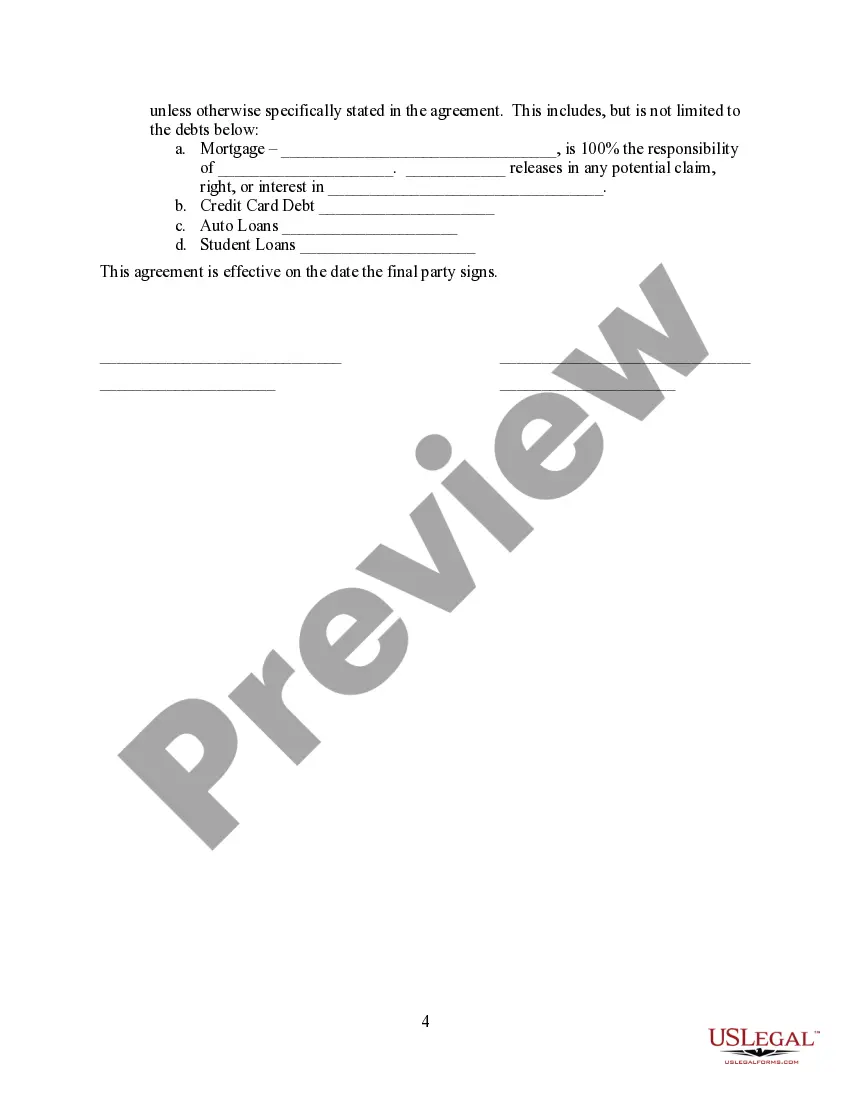
- A section detailing the division of property and debts between the parties.
Situations where this form applies
Use the Maryland Dissolution Agreement with Minor Children when you and your spouse have decided to divorce and have minor children together. This form is essential if you wish to outline your agreements on custody, visitation, and child support, as well as to fairly divide your shared property and debts. It's particularly important to have this document in place to protect the best interests of your children and to ensure a smooth transition for your family during this challenging time.
Who needs this form
- Married couples in Maryland with minor children seeking a divorce.
- Individuals looking for a structured way to address custody and support arrangements during a divorce.
- Parents who want to ensure their children's needs are prioritized in the divorce settlement.
Instructions for completing this form
- Identify and fill in the names and addresses of both parties, including their birthdates.
- State the date of marriage and the date of separation.
- Outline the agreed custody arrangements for minor children, including legal and physical custody, and visitation schedules.
- Detail the division of property and debts, clearly specifying which party is receiving which assets and responsibilities.
- Both parties should sign and date the agreement to ensure it is legally binding.
Does this document require notarization?
This form does not typically require notarization unless specified by local law. However, having the agreement notarized can add an extra layer of legitimacy and may be beneficial when submitting the agreement to the court.
Get your form ready online
Our built-in tools help you complete, sign, share, and store your documents in one place.
Make edits, fill in missing information, and update formatting in US Legal Forms—just like you would in MS Word.
Download a copy, print it, send it by email, or mail it via USPS—whatever works best for your next step.
Sign and collect signatures with our SignNow integration. Send to multiple recipients, set reminders, and more. Go Premium to unlock E-Sign.
If this form requires notarization, complete it online through a secure video call—no need to meet a notary in person or wait for an appointment.
We protect your documents and personal data by following strict security and privacy standards.

Make edits, fill in missing information, and update formatting in US Legal Forms—just like you would in MS Word.

Download a copy, print it, send it by email, or mail it via USPS—whatever works best for your next step.

Sign and collect signatures with our SignNow integration. Send to multiple recipients, set reminders, and more. Go Premium to unlock E-Sign.

If this form requires notarization, complete it online through a secure video call—no need to meet a notary in person or wait for an appointment.

We protect your documents and personal data by following strict security and privacy standards.
Common mistakes
- Failing to fully disclose all assets and debts can lead to disputes later.
- Not addressing all aspects of child custody and support can cause issues post-divorce.
- Leaving out signatures or dates, which can render the agreement invalid.
Benefits of completing this form online
- Convenient access to a legally vetted document that can be customized to fit your situation.
- Editability allows you to make changes easily based on your negotiations.
- Reduces the need for costly legal consultations, as the form is designed for clarity.
Looking for another form?

Form popularity
FAQ
Stipulations of the Maryland Divorce Process In the state of Maryland, there is no such thing as a legal separation. A marital separation agreement would be legally-binding as long as it was executed properly.
Maryland has a residency requirement that has to be met before filing for divorce, but there's no waiting period before a divorce can be finalized. The standard grounds for divorce include adultery, desertion, cruelty, incurable insanity, and other reasons listed below. Maryland also recognizes no-fault divorce.
Use and Possession ? If you have minor children living in the marital home, the custodial parent may be granted use and possession of the family home for up to three years after the divorce is final. At the end of the use and possession period, the ownership will revert to whoever's name is on the title or be sold.
Courts in Maryland can give one spouse the exclusive right to live in the family home for up to three years after the divorce. Under certain circumstances, the court might also award one side the exclusive use of personal property like household furniture and the family car.
Maryland allows both "no-fault" and "fault-based" divorces.
Separation agreements in Maryland may be oral or written, but in order to be enforceable, they should be written, signed, and notarized. If you and your spouse are able to resolve all your issues in the separation agreement, it can make the process of divorce less contentious, and may decrease the overall costs.
Maryland is a fault-based state, and adultery is one of the legal grounds for divorce. However, judges do not typically give a lot of weight to adultery because it can be difficult to prove and often involves hearsay. Only adultery that is proven may impact divorce litigation.
12 Month Separation This ground requires that the couple have lived apart, in separate homes without sexual intimacy, continuously for a year. Neither party needs to prove or claim ?fault?. You and your spouse do not need to agree to separate or to divorce.