Service Of Interrogatories Florida In Massachusetts
Description


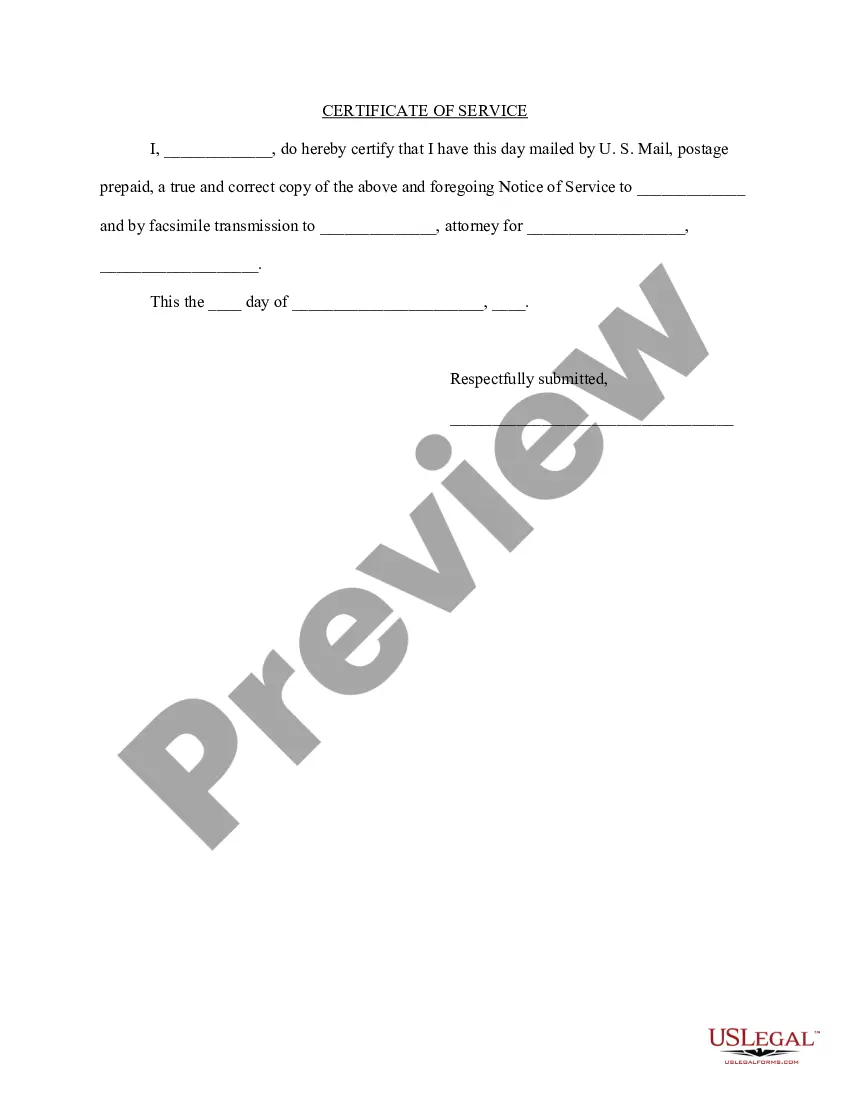
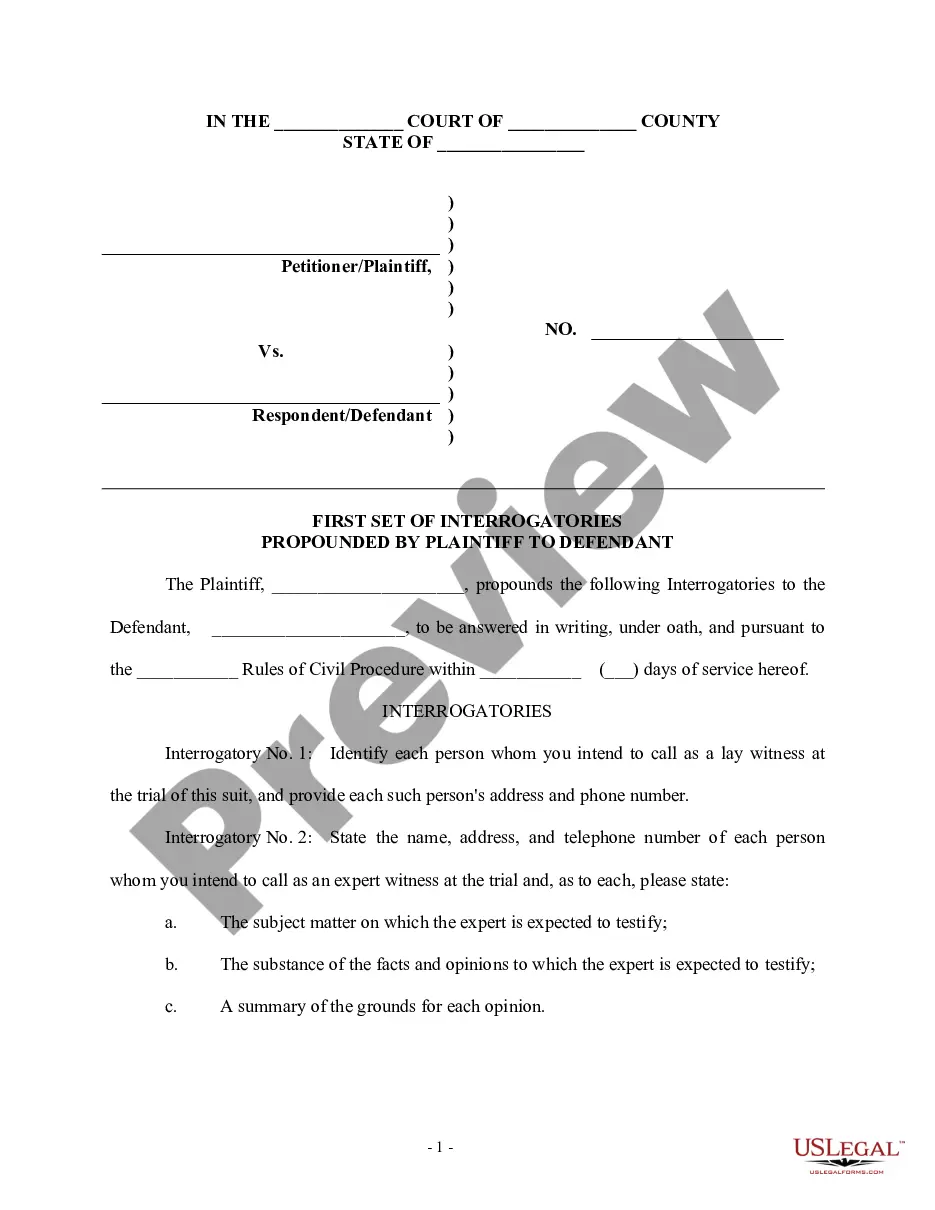
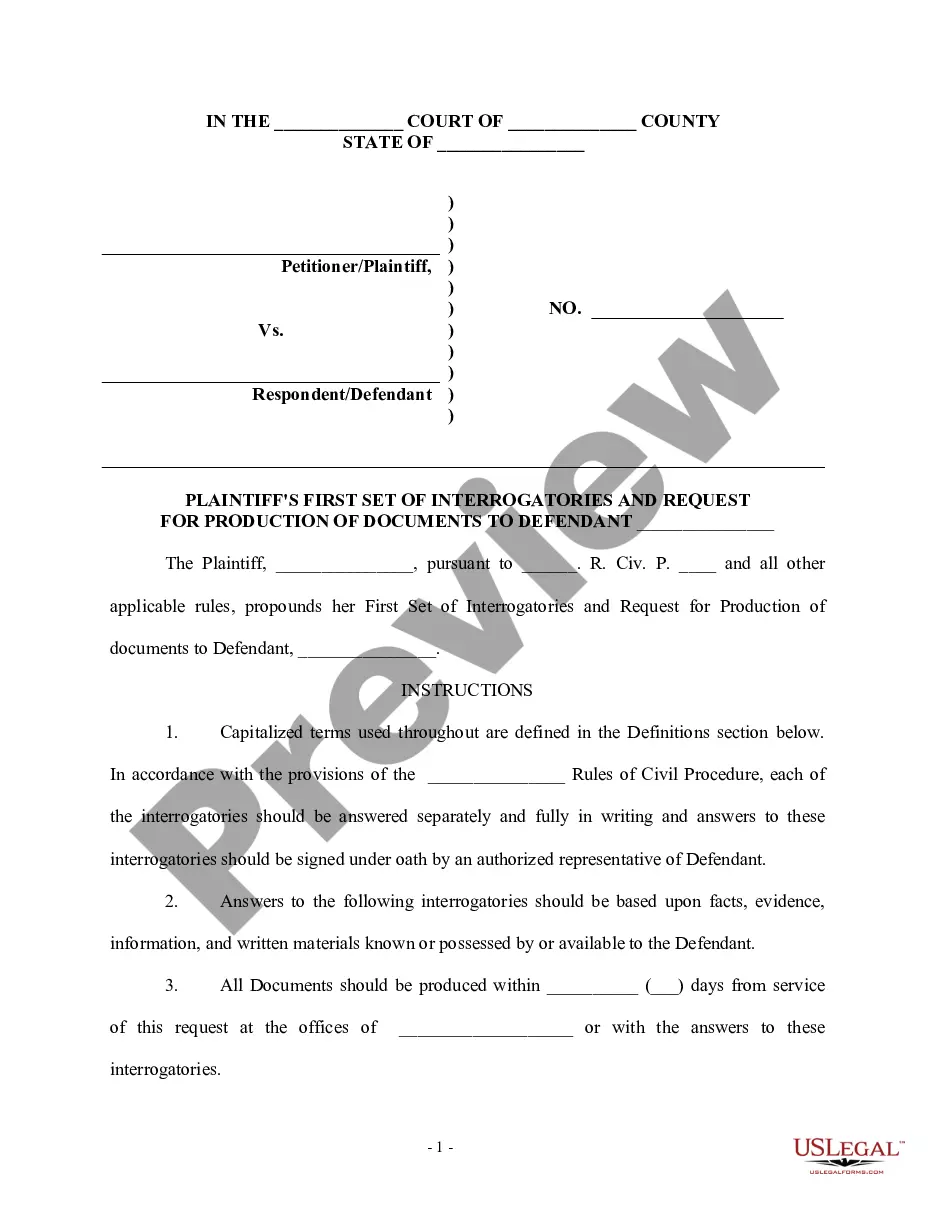
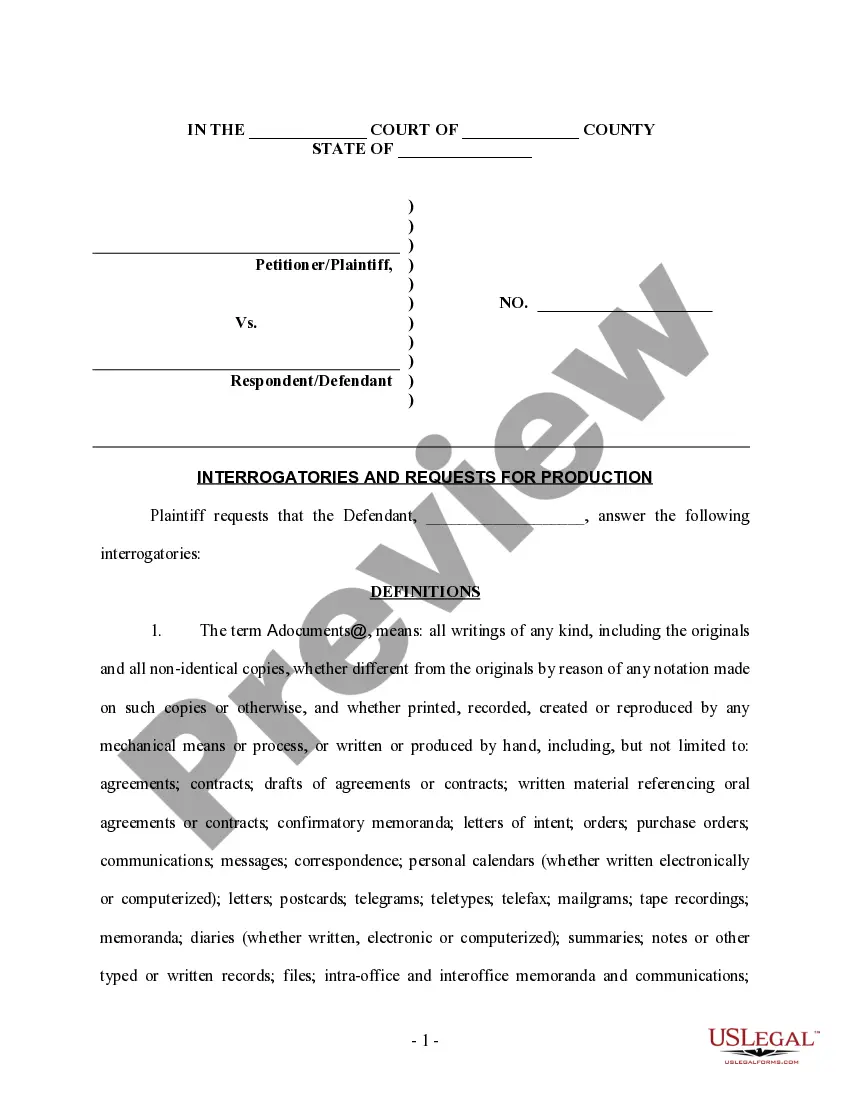
Get your form ready online
Our built-in tools help you complete, sign, share, and store your documents in one place.
Make edits, fill in missing information, and update formatting in US Legal Forms—just like you would in MS Word.
Download a copy, print it, send it by email, or mail it via USPS—whatever works best for your next step.
Sign and collect signatures with our SignNow integration. Send to multiple recipients, set reminders, and more. Go Premium to unlock E-Sign.
If this form requires notarization, complete it online through a secure video call—no need to meet a notary in person or wait for an appointment.
We protect your documents and personal data by following strict security and privacy standards.

Make edits, fill in missing information, and update formatting in US Legal Forms—just like you would in MS Word.

Download a copy, print it, send it by email, or mail it via USPS—whatever works best for your next step.

Sign and collect signatures with our SignNow integration. Send to multiple recipients, set reminders, and more. Go Premium to unlock E-Sign.

If this form requires notarization, complete it online through a secure video call—no need to meet a notary in person or wait for an appointment.

We protect your documents and personal data by following strict security and privacy standards.
Looking for another form?


Form popularity
FAQ
Discovery Rule in Massachusetts The discovery rule allows the statute of limitations to start when the injury was discovered or reasonably should have been discovered rather than from the actual incident date.
Rule 56 - Summary Judgment (a)Motions for Summary Judgment. A party may move for summary judgment subsequent to the commencement of any proceeding under these rules except in actions for divorce or in actions for custody or visitation or for criminal contempt.
The court shall grant summary judgment if the movant shows that there is no genuine dispute as to any material fact and the movant is entitled to judgment as a matter of law. The court should state on the record the reasons for granting or denying the motion.
An interrogatory is a request for information, in the form of standard questions, that must be answered in writing and then notarized. In Florida, there are two types of interrogatories used in family law proceedings.
Unless otherwise stipulated or ordered by the court, a party may serve on any other party no more than 25 written interrogatories, including all discrete subparts.
Rule 14: Pretrial discovery from the prosecution (effective March 1, 2025) Rule 14.1: Pretrial reciprocal discovery from the defense (effective March 1, 2025)
Rule 17 - Summonses for Witnesses. (Applicable to District Court and Superior Court) (a) Summons. (1) For Attendance of Witness; Form; Issuance. A summons shall be issued by the clerk or any person so authorized by the General Laws.
SJC Rule permits eligible students in their next to last year of law school to appear in civil proceedings and permits eligible students in their final year of law school to appear in civil & criminal proceedings on behalf of the Commonwealth or indigent parties under the general supervision of a member of the bar ...
Rule 33 assures that the objections will lead directly to court, through its requirement that they be served with a notice of hearing. Although this procedure does preclude an out-of-court resolution of the dispute, the procedure tends to discourage informal negotiations.