Requesting Discovery Form For Divorce In San Diego
Description
Get your form ready online
Our built-in tools help you complete, sign, share, and store your documents in one place.
Make edits, fill in missing information, and update formatting in US Legal Forms—just like you would in MS Word.
Download a copy, print it, send it by email, or mail it via USPS—whatever works best for your next step.
Sign and collect signatures with our SignNow integration. Send to multiple recipients, set reminders, and more. Go Premium to unlock E-Sign.
If this form requires notarization, complete it online through a secure video call—no need to meet a notary in person or wait for an appointment.
We protect your documents and personal data by following strict security and privacy standards.

Make edits, fill in missing information, and update formatting in US Legal Forms—just like you would in MS Word.

Download a copy, print it, send it by email, or mail it via USPS—whatever works best for your next step.

Sign and collect signatures with our SignNow integration. Send to multiple recipients, set reminders, and more. Go Premium to unlock E-Sign.

If this form requires notarization, complete it online through a secure video call—no need to meet a notary in person or wait for an appointment.

We protect your documents and personal data by following strict security and privacy standards.
Looking for another form?

Form popularity
FAQ
The very first step in any discovery process is typically a kickoff meeting. If you're working one-on-one with a client, this meeting is just between you and your client.
You or your lawyer may file a motion for discovery to request that the state produce evidence it plans to introduce at trial. Your lawyer needs to know the type of evidence the state will use against you at trial so that they can properly prepare for your case.
Steps Of The Discovery Process. There are four key actions in the discovery process which include interrogatories, request for documents, request for admissions, and depositions.
The motion for discovery is almost always filed by the defensive legal team. They want to know what they need to defend themselves against in court. In a criminal case, it's usually filed by the legal team representing the person accused of a crime.
In the United States, discovery is mostly performed by the litigating parties themselves, with relatively minimal judicial oversight. The Federal Rules of Civil Procedure guide discovery in the U.S. federal court system.
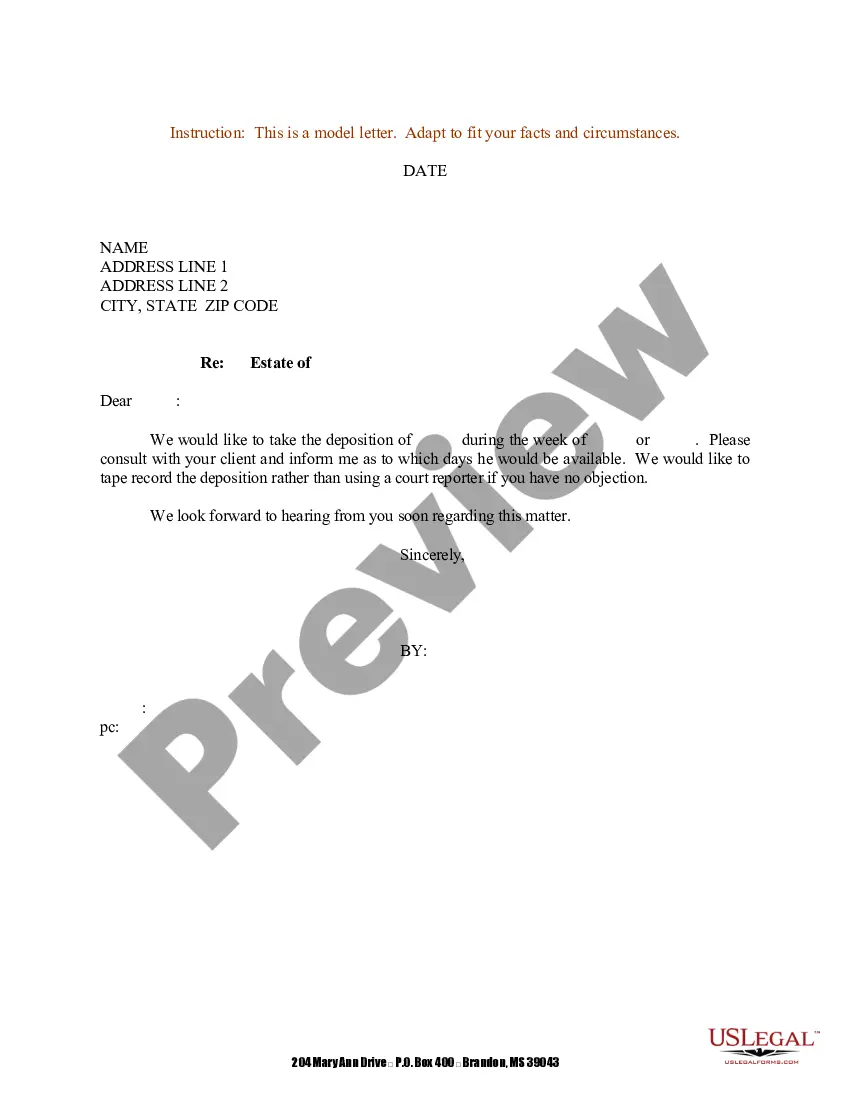
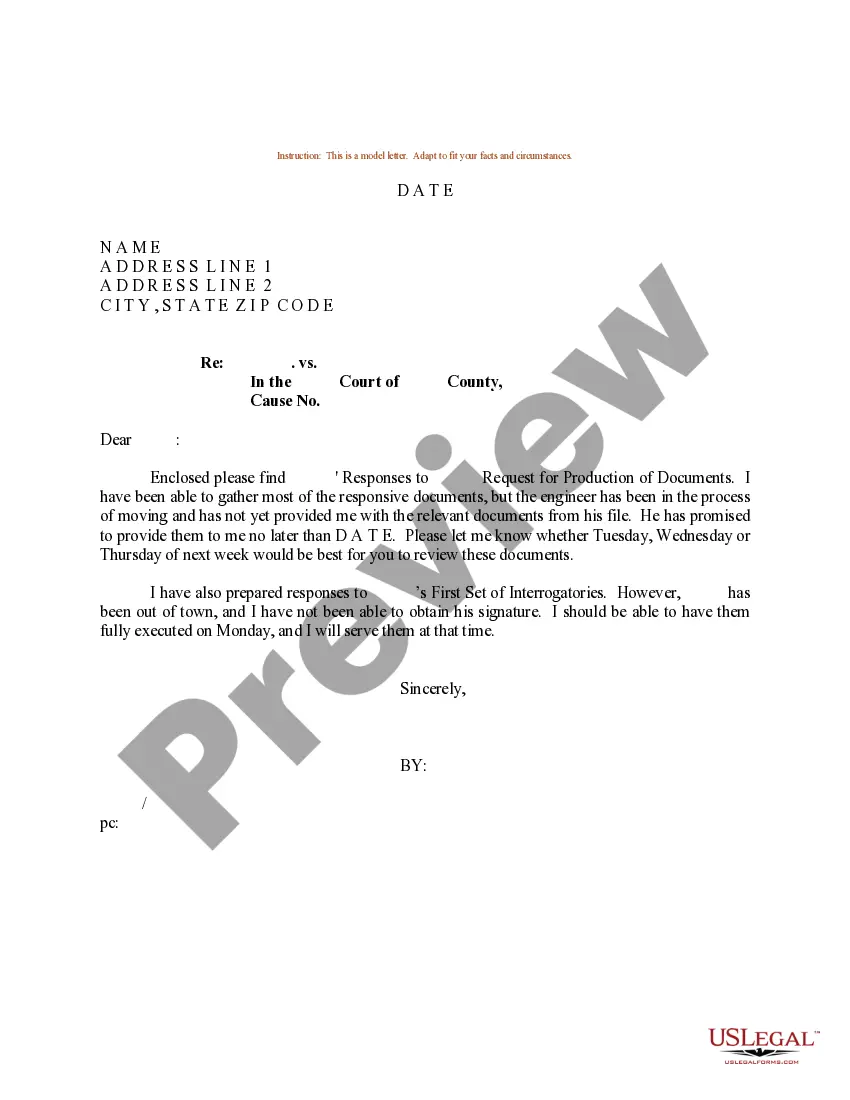
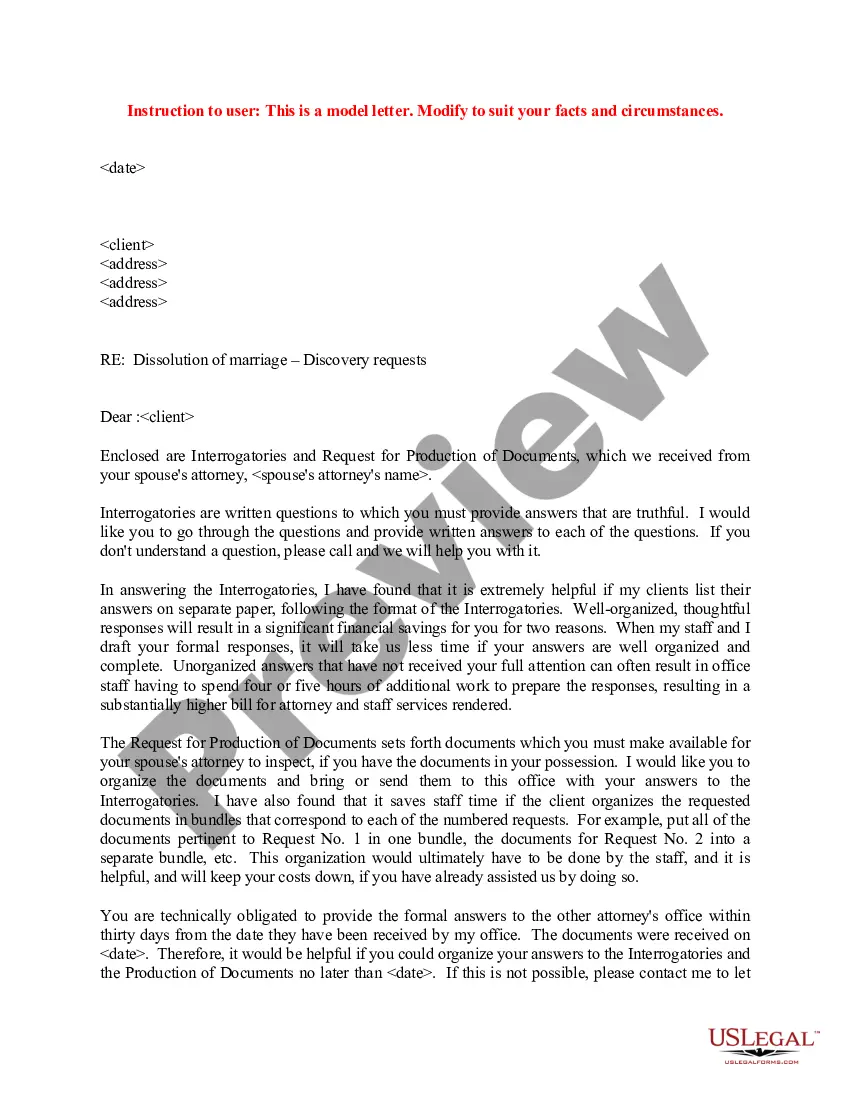
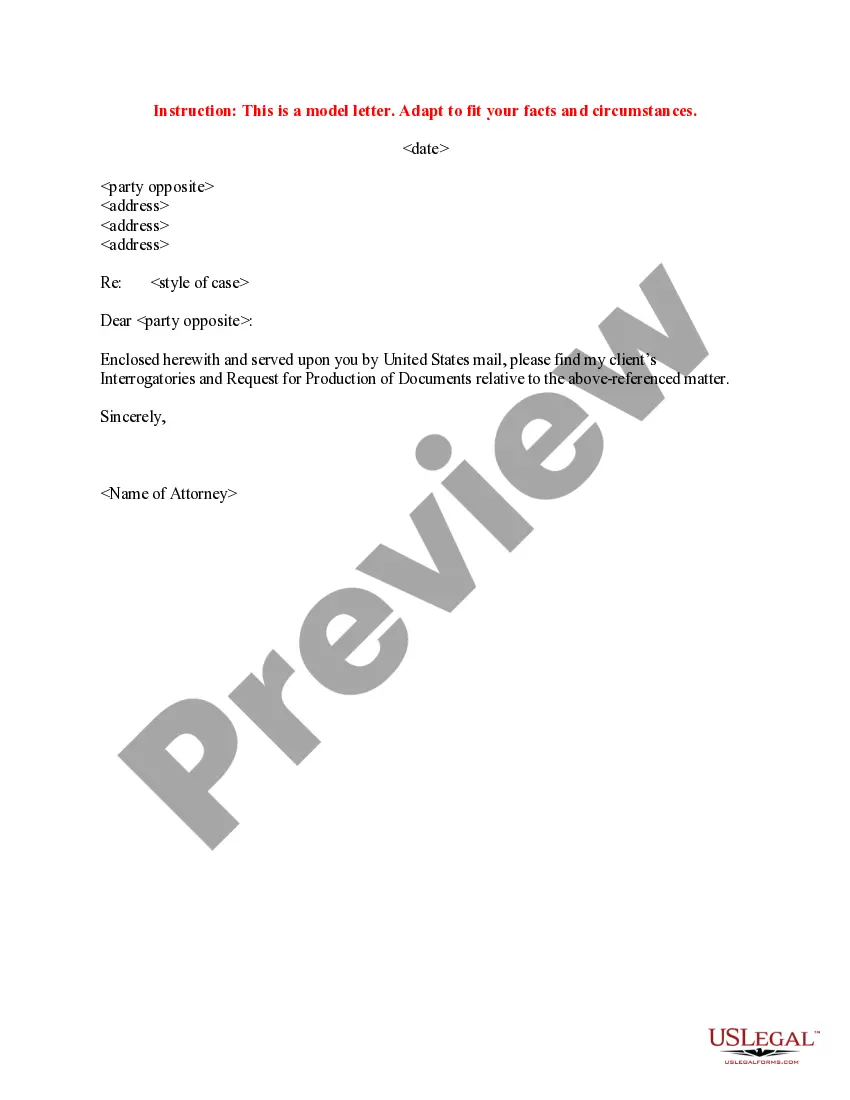
In certain cases, you might be able to write a letter to the other side and request the documents that you need. However, in more formal cases, you will likely have to draft more formal discovery demands. There are usually forms available for this in local law libraries, from the court clerk's office, or online.
Discovery is designed to ensure fairness and transparency in the divorce process, and non-compliance by one spouse hinders this process. Consequently, if you don't comply with discovery requests, it can have serious legal repercussions and lead to adverse rulings against you in the divorce proceedings.
You can use Proof of Service by First Class Mail (form POS-030). It helps if you fill in the top part of the form with the case and court information. Your server can then fill in the information about how, when, and where they served the papers. Your server must then sign the form.
The purpose of discovery is to allow each side to learn the details of the case, assess strengths and weaknesses of the opposing party's claims and defenses, and identify the issues they will have to prove at trial.

