Amended Trial Information
Description


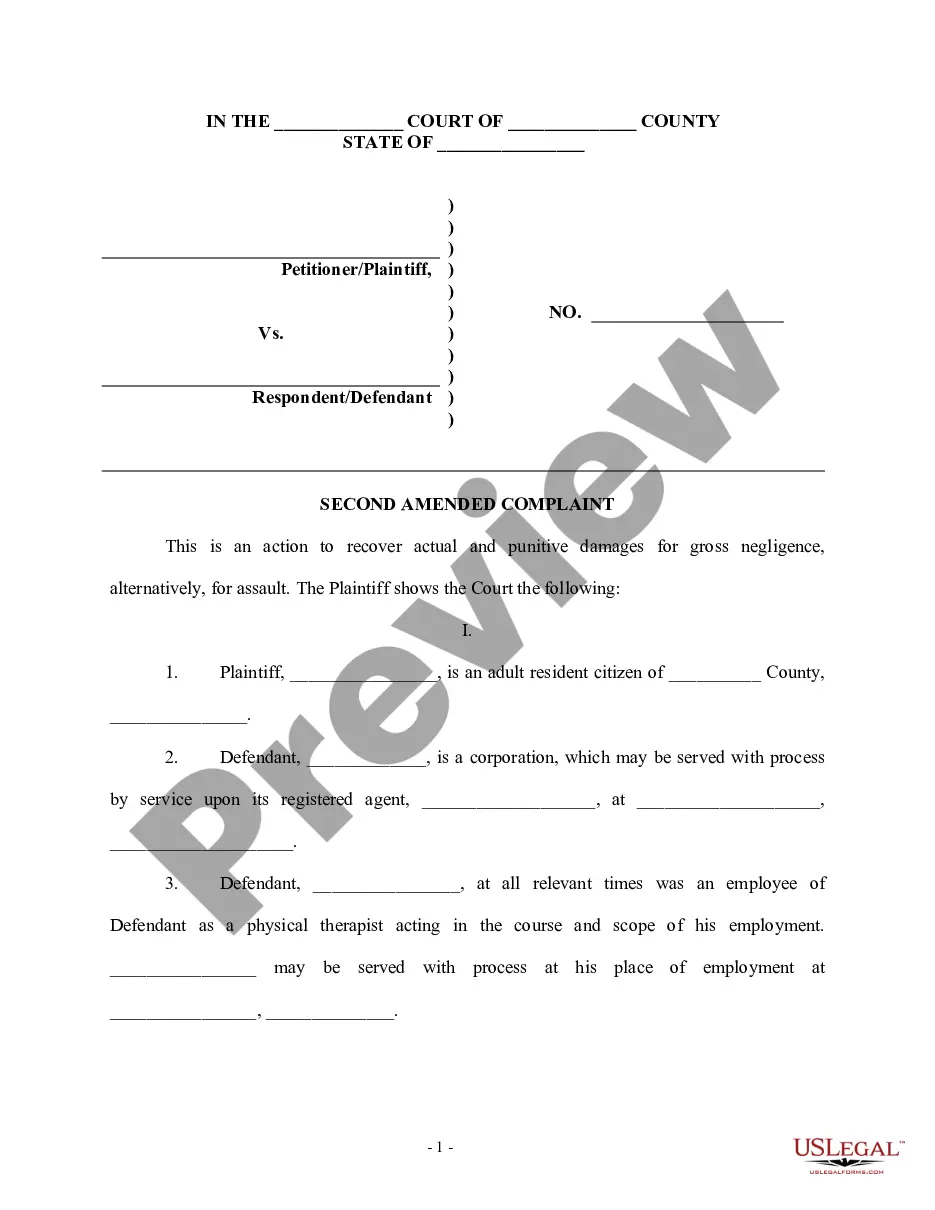
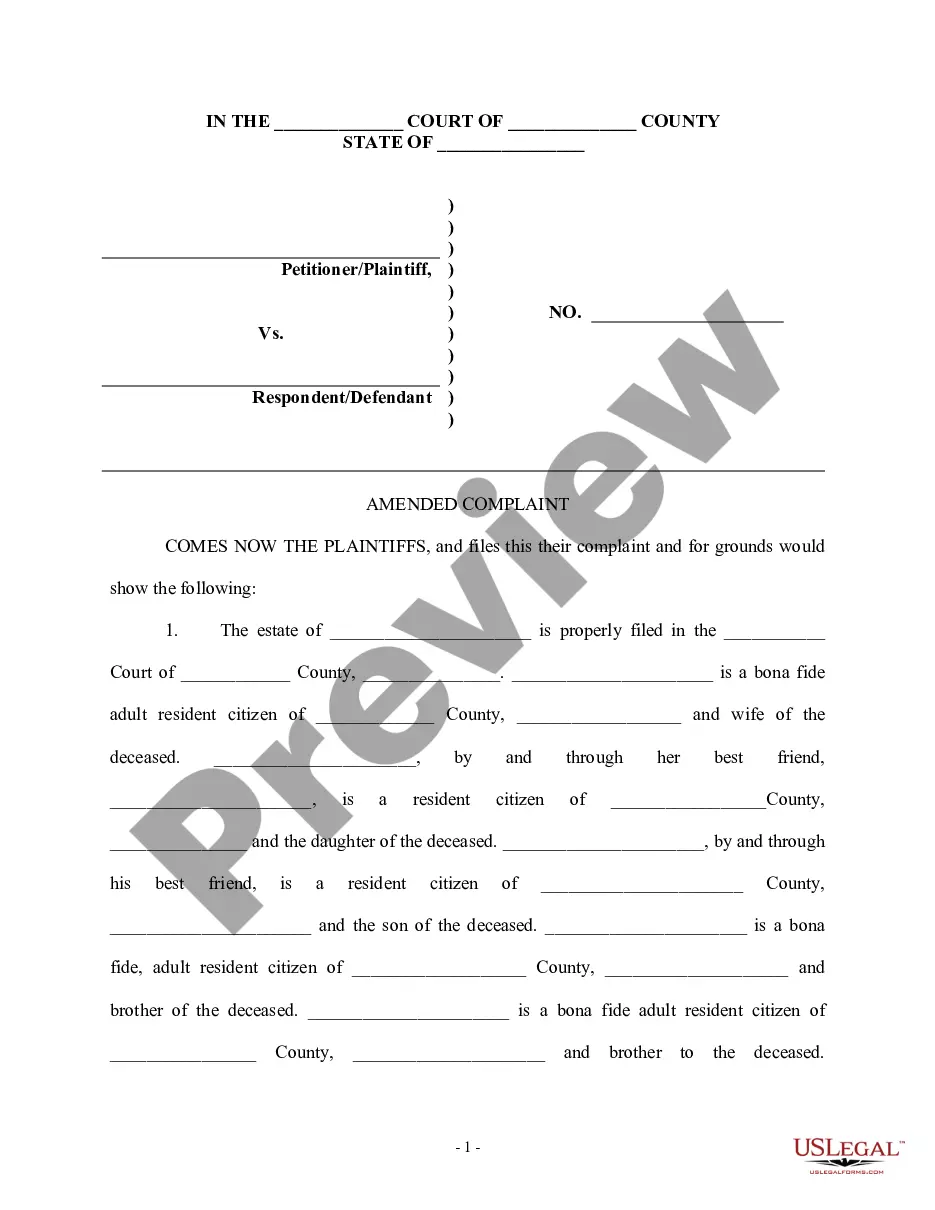
Get your form ready online
Our built-in tools help you complete, sign, share, and store your documents in one place.
Make edits, fill in missing information, and update formatting in US Legal Forms—just like you would in MS Word.
Download a copy, print it, send it by email, or mail it via USPS—whatever works best for your next step.
Sign and collect signatures with our SignNow integration. Send to multiple recipients, set reminders, and more. Go Premium to unlock E-Sign.
If this form requires notarization, complete it online through a secure video call—no need to meet a notary in person or wait for an appointment.
We protect your documents and personal data by following strict security and privacy standards.

Make edits, fill in missing information, and update formatting in US Legal Forms—just like you would in MS Word.

Download a copy, print it, send it by email, or mail it via USPS—whatever works best for your next step.

Sign and collect signatures with our SignNow integration. Send to multiple recipients, set reminders, and more. Go Premium to unlock E-Sign.

If this form requires notarization, complete it online through a secure video call—no need to meet a notary in person or wait for an appointment.

We protect your documents and personal data by following strict security and privacy standards.
Looking for another form?
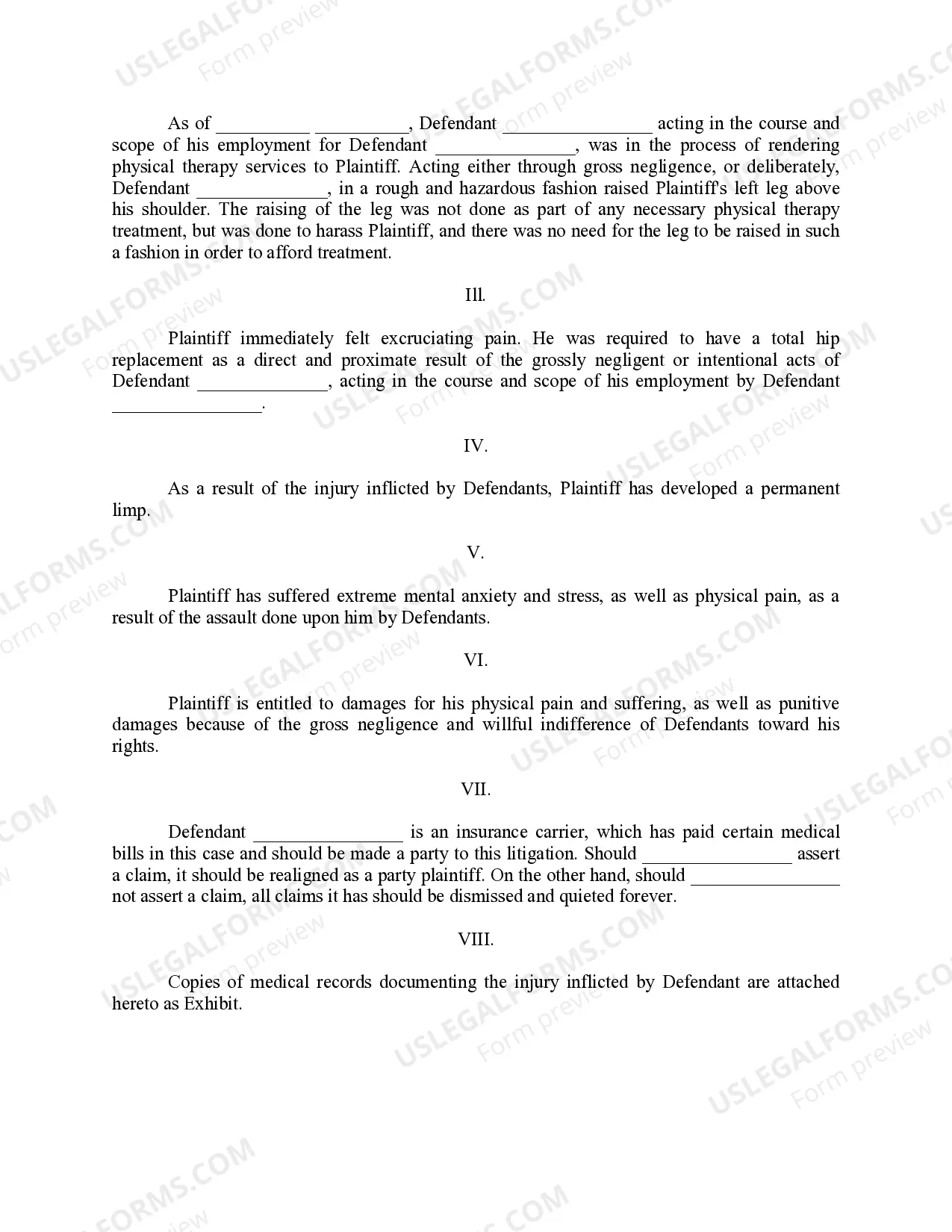
How to fill out Second Amended Complaint For Negligence - Assault By Physical Therapist - Jury Trial Demand?
It’s clear that you cannot instantly become an expert in law, nor can you easily learn how to swiftly create Amended Trial Information without having a specialized background.
Drafting legal documents is a lengthy process necessitating specific training and expertise. So why not entrust the preparation of the Amended Trial Information to the professionals.
With US Legal Forms, which boasts one of the most comprehensive libraries of legal documents, you can find everything from court forms to internal corporate communication templates.
You can regain access to your documents from the My documents section anytime. If you’re a current client, you can just Log In and find and download the template from the same section.
No matter the intent of your documents-whether financial, legal, or personal-our platform has you covered. Give US Legal Forms a try today!
- Locate the document you require using the search feature at the top of the page.
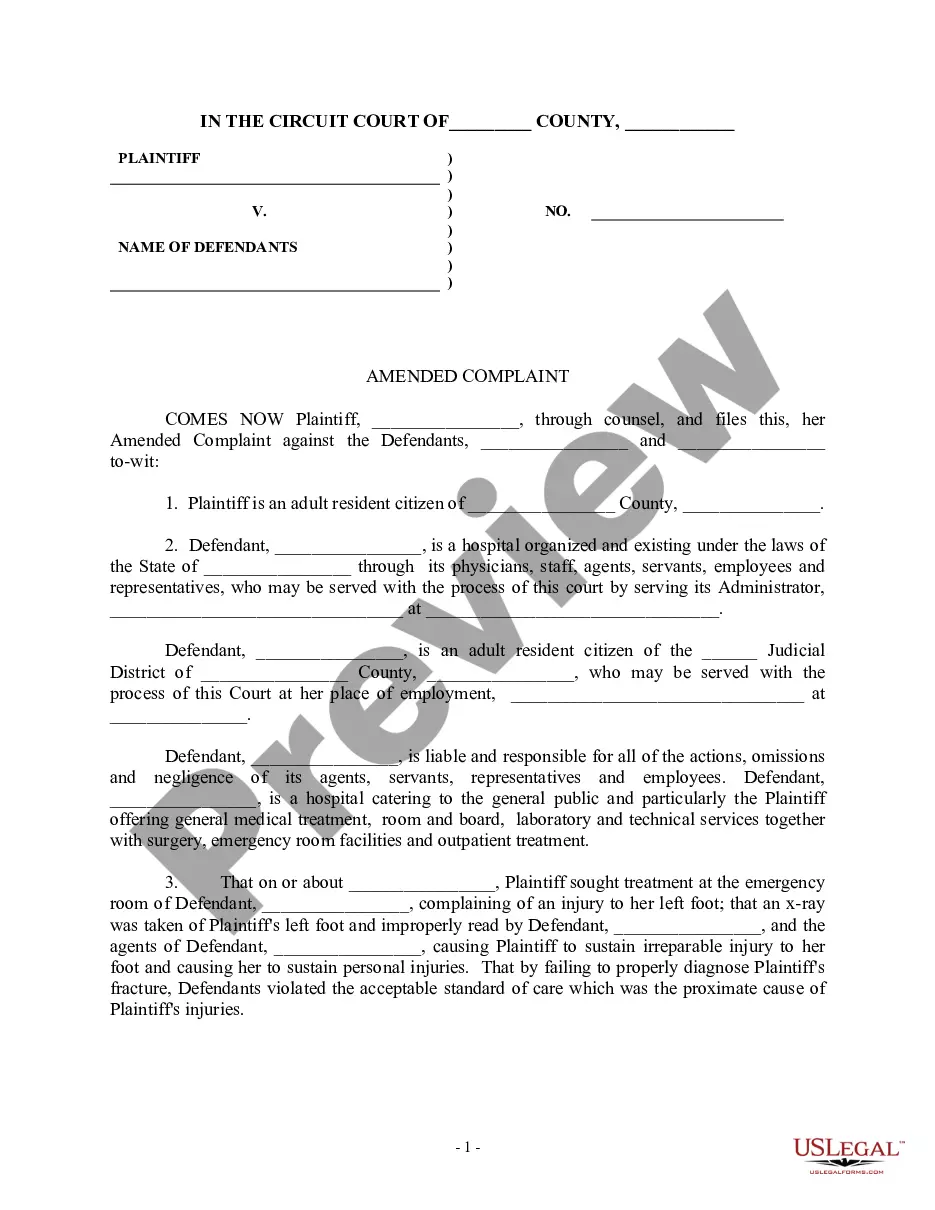
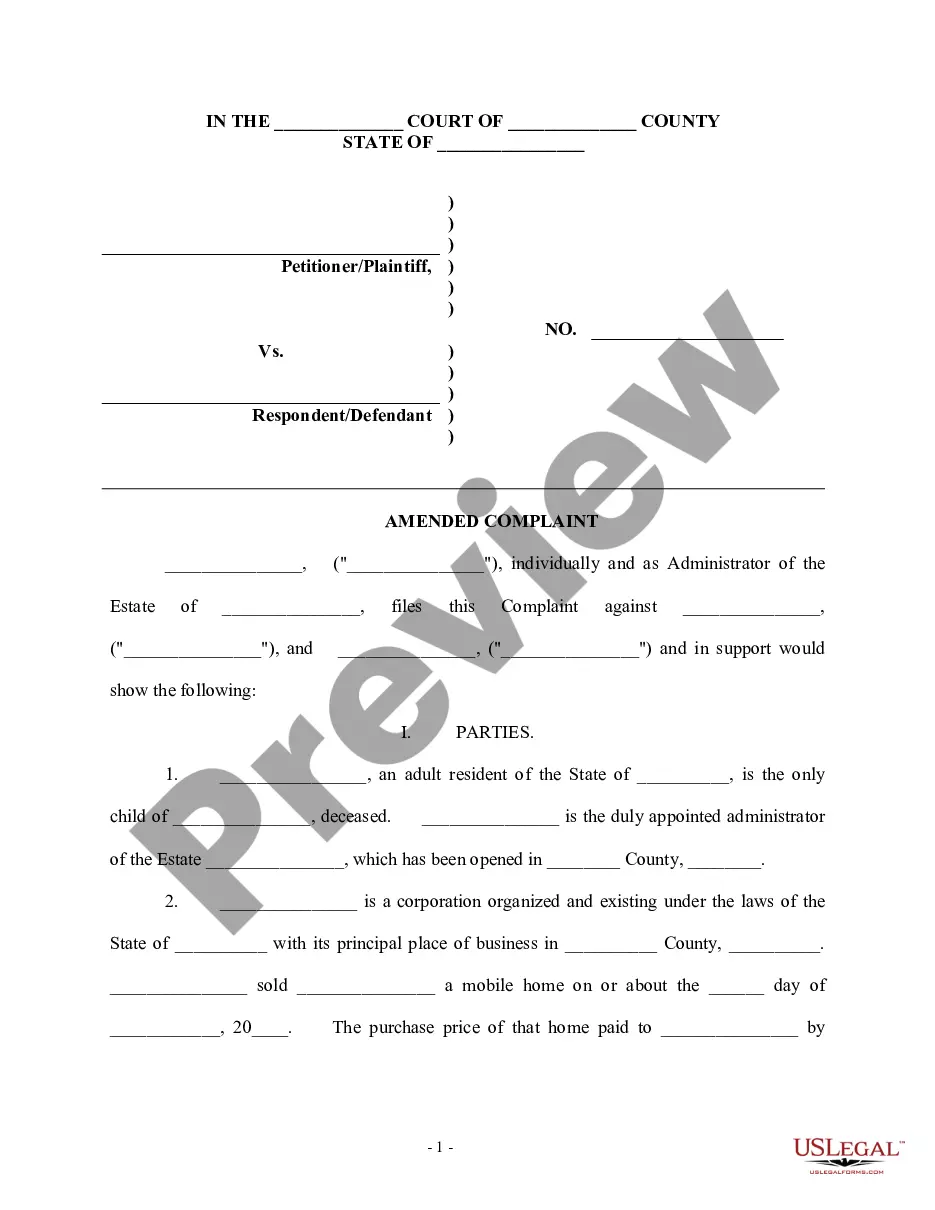
- View it (if this option is available) and review the supporting description to determine if Amended Trial Information is what you need.
- Restart your search if you require a different form.
- Create a free account and select a subscription option to purchase the document.
- Select Buy now. After the payment is processed, you can obtain the Amended Trial Information, complete it, print it, and send or mail it to the appropriate individuals or organizations.
Form popularity
FAQ
When someone says 'amended', they indicate that a document has been revised to reflect new information or corrections. This is a formal process that ensures that legal documents are up-to-date. In the realm of amended trial information, knowing what has changed is crucial for all parties involved. Resources like uslegalforms can help navigate these updates efficiently.
No, 'amended' does not mean removed. Instead, when a document is amended, it signifies that changes or corrections have been made to it. These changes can enhance clarity or accuracy. This is crucial when dealing with amended trial information, as accuracy is vital for legal proceedings.
'Amend trial information' refers to the process of revising the details and facts presented in court documents related to a trial. This may include changes to claims, defenses, or the evidence supporting your case. Making these amendments can strengthen your argument and better represent your position in court. Using the right tools can simplify your journey in handling amended trial information.
To amend is to make a change by adding, subtracting, or substituting. For example, one can amend a statute, a contract, the United States Constitution, or a pleading filed in a lawsuit.
(1) A party may amend their his statement of case at any time before it has been served on any other party. (b) with the permission of the court. (3) If a statement of case has been served, an application to amend it by removing, adding or substituting a party must be made in ance with rule 19.4.
A party can amend its statement of case at any time without permission of the court before it has been served on any other party (CPR 17.1(1)Opens in a new window). However, under CPR 17.2(1)Opens in a new window the court may disallow amendments which were made without the court's permission being required.
(3) "Amendment to a pleading" means a pleading that modifies another pleading and alleges facts or requests relief materially different from the facts alleged or the relief requested in the modified pleading.
N. a changed written pleading in a lawsuit, including complaint or answer to a complaint.