Advocate For Client In Broward
Description



Get your form ready online
Our built-in tools help you complete, sign, share, and store your documents in one place.
Make edits, fill in missing information, and update formatting in US Legal Forms—just like you would in MS Word.
Download a copy, print it, send it by email, or mail it via USPS—whatever works best for your next step.
Sign and collect signatures with our SignNow integration. Send to multiple recipients, set reminders, and more. Go Premium to unlock E-Sign.
If this form requires notarization, complete it online through a secure video call—no need to meet a notary in person or wait for an appointment.
We protect your documents and personal data by following strict security and privacy standards.
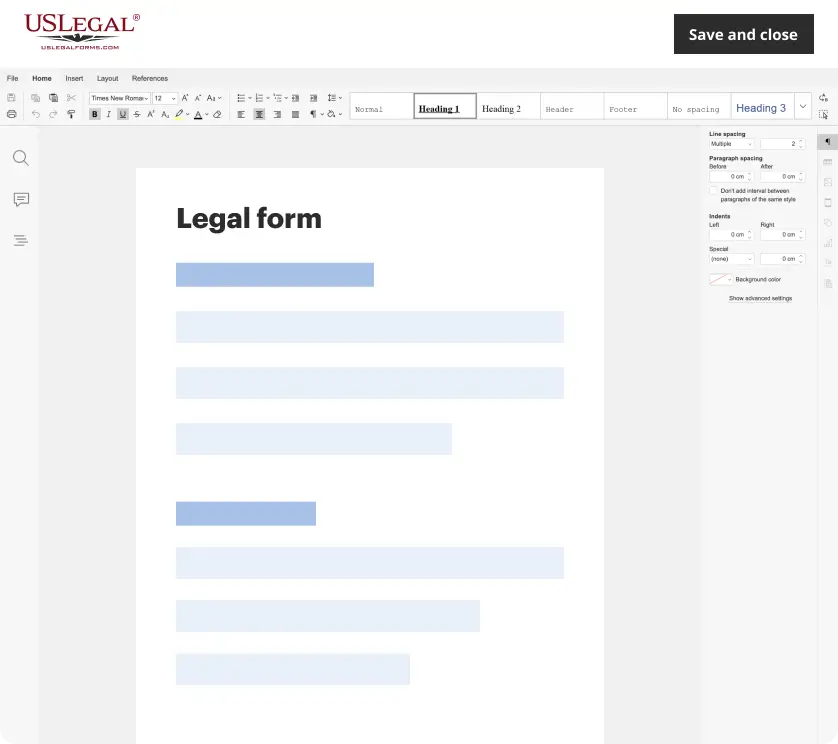
Make edits, fill in missing information, and update formatting in US Legal Forms—just like you would in MS Word.
Download a copy, print it, send it by email, or mail it via USPS—whatever works best for your next step.
Sign and collect signatures with our SignNow integration. Send to multiple recipients, set reminders, and more. Go Premium to unlock E-Sign.
If this form requires notarization, complete it online through a secure video call—no need to meet a notary in person or wait for an appointment.
We protect your documents and personal data by following strict security and privacy standards.
Looking for another form?




Form popularity
FAQ
For example, you might help a client fill out an application for housing assistance, accompany a client to a court hearing, or negotiate with a landlord on behalf of a client. Micro-level advocacy requires skills such as communication, negotiation, problem-solving, and empathy.
These groups typically keep a list of available advocates. Council of Parent Attorneys and Advocates. Your state's Parent Training and Information Center. Your school district's Special Education PTA or PAC.
If you find it difficult to be fully involved in decisions that affect your life and do not have a family member or friend who can speak up for you, you may find an advocate useful. An advocate is a person who can support you to express your needs and wishes when having assessments and planning support.
The NAHAC Directory includes our Independent Patient and Health Care Advocates Members. Our search feature will help you find a practicing advocate in your geographic location and with expertise in your area of concern.
Continuously improve: Actively listen to your customers and use their feedback to elevate your products, services, and overall customer experience. Show that you value their input by implementing changes based on their suggestions. This demonstrates that you are committed to meeting their needs and fosters advocacy.
Step #1: Define the goal of your customer advocacy program The first step is always clear goal-setting to outline what you want to achieve. Whether it's increasing customer engagement or generating greater referrals, specific goals better guide your strategy.
Your friend or family member can act as your attorney if you lose mental capacity. To do this, you need to appoint them under a lasting power of attorney. They don't have to be a lawyer to do this. But they do have to be over 18 and be someone you trust to make decisions for you.
For example, you might help a client fill out an application for housing assistance, accompany a client to a court hearing, or negotiate with a landlord on behalf of a client. Micro-level advocacy requires skills such as communication, negotiation, problem-solving, and empathy.
When advocating for others, always strive to: be a good listener; be supportive; have all the necessary information; and be a good representative. You can begin practicing your advocacy skills right at home with your own family.