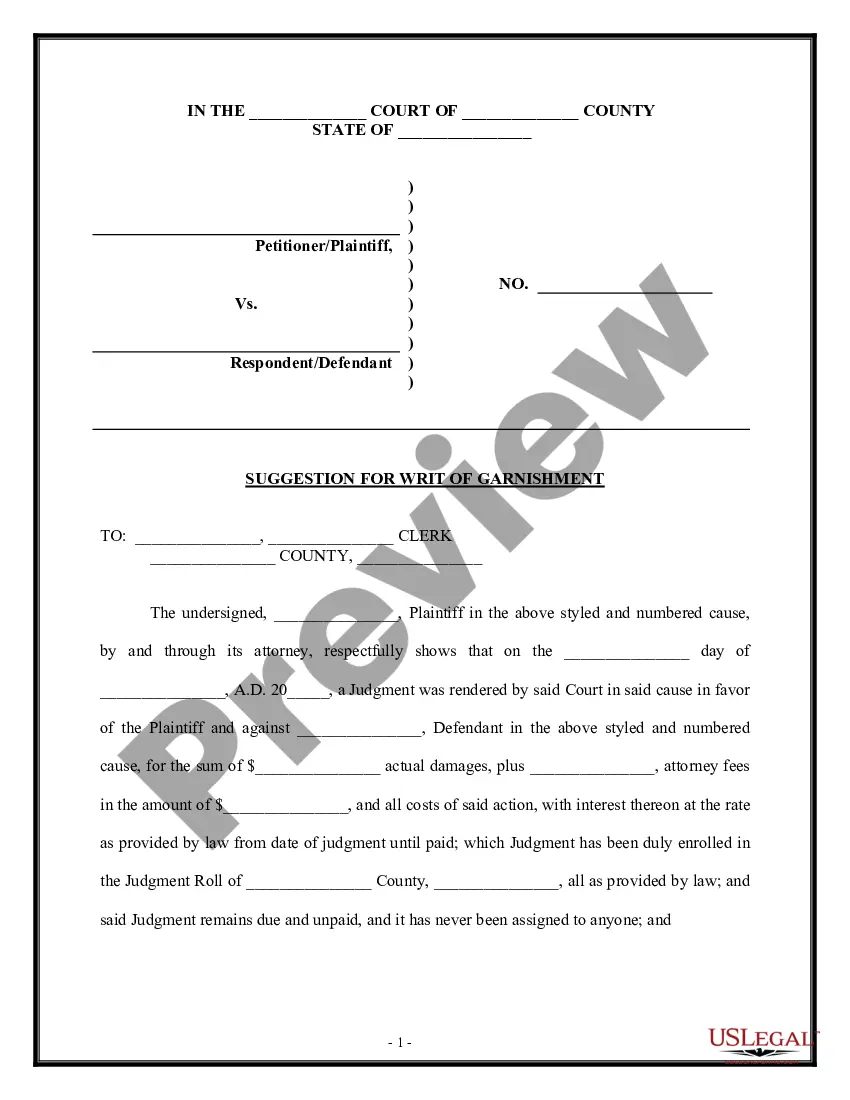
Request And Writ For Garnishment Income Tax Refund Credit Michigan
Description

Get your form ready online
Our built-in tools help you complete, sign, share, and store your documents in one place.
Make edits, fill in missing information, and update formatting in US Legal Forms—just like you would in MS Word.
Download a copy, print it, send it by email, or mail it via USPS—whatever works best for your next step.
Sign and collect signatures with our SignNow integration. Send to multiple recipients, set reminders, and more. Go Premium to unlock E-Sign.
If this form requires notarization, complete it online through a secure video call—no need to meet a notary in person or wait for an appointment.
We protect your documents and personal data by following strict security and privacy standards.

Make edits, fill in missing information, and update formatting in US Legal Forms—just like you would in MS Word.

Download a copy, print it, send it by email, or mail it via USPS—whatever works best for your next step.

Sign and collect signatures with our SignNow integration. Send to multiple recipients, set reminders, and more. Go Premium to unlock E-Sign.

If this form requires notarization, complete it online through a secure video call—no need to meet a notary in person or wait for an appointment.

We protect your documents and personal data by following strict security and privacy standards.
Looking for another form?
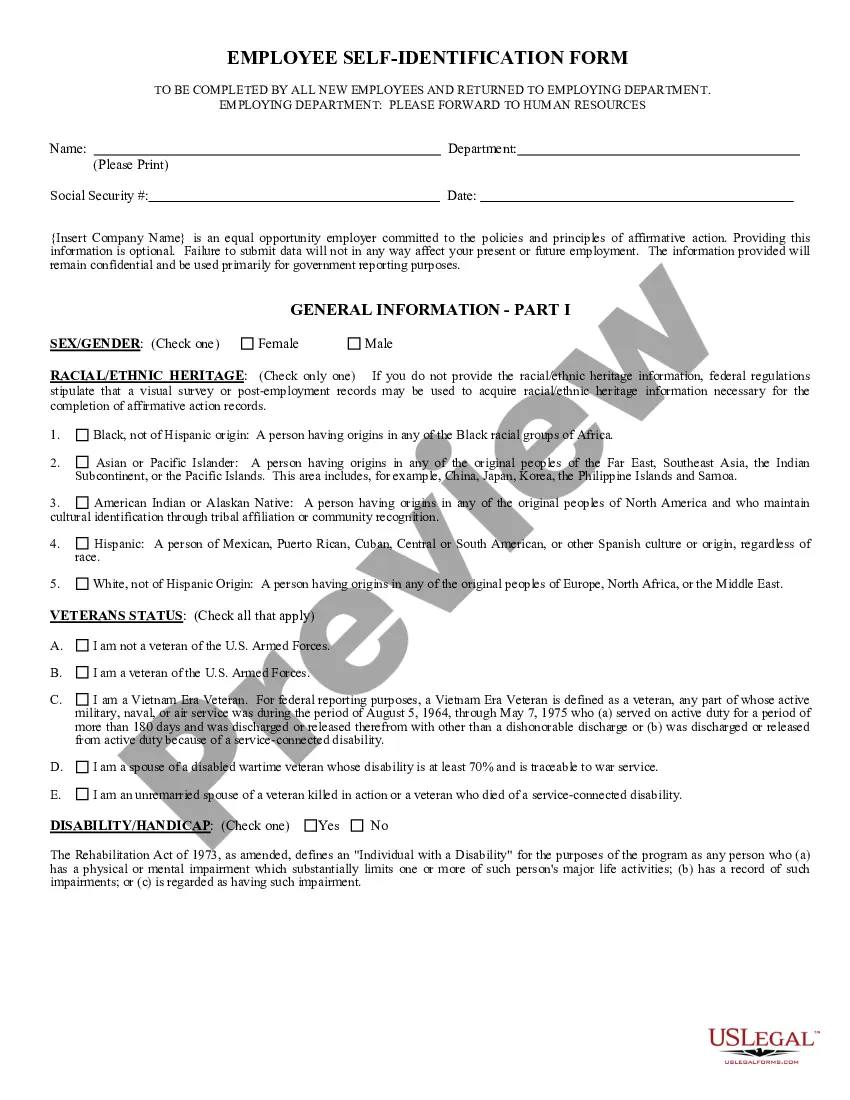
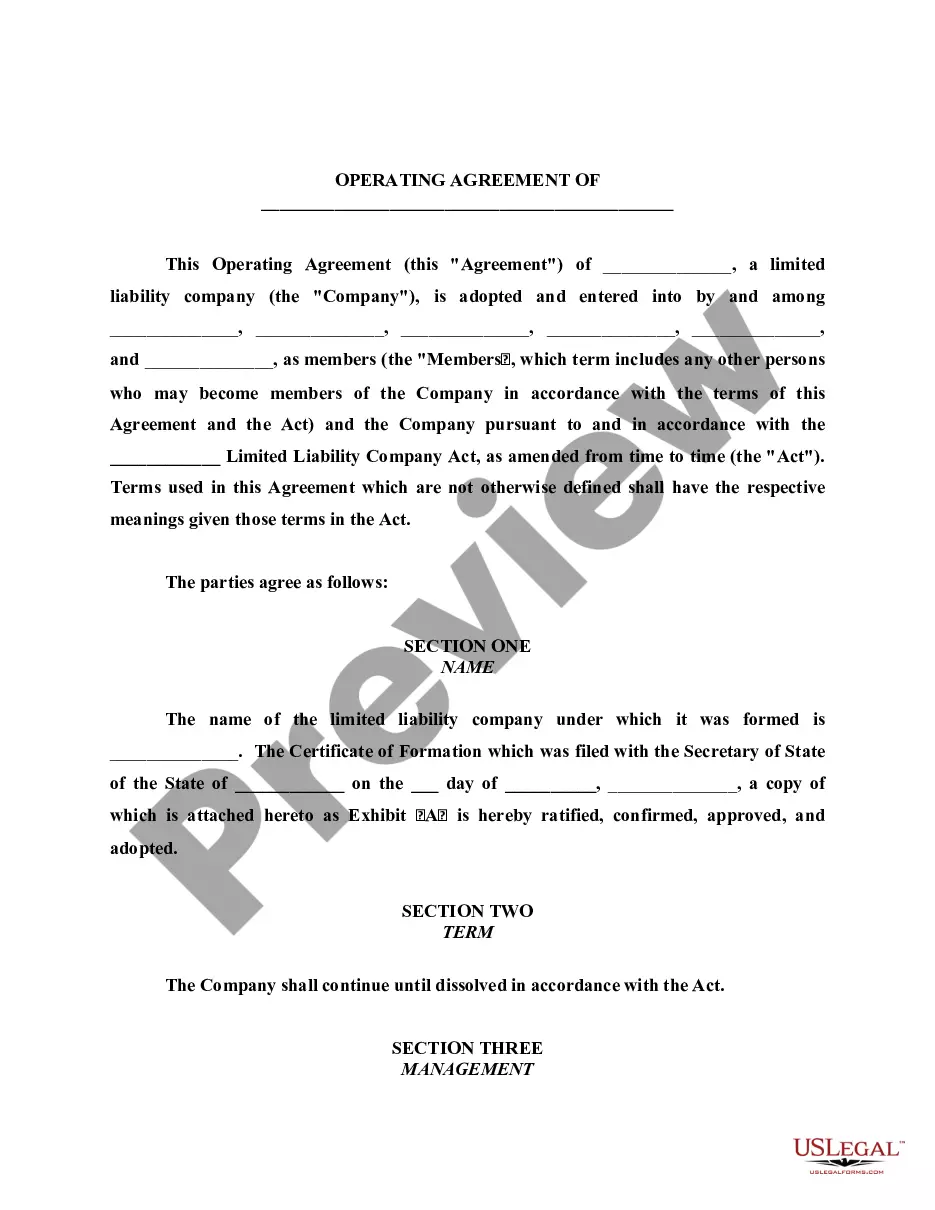
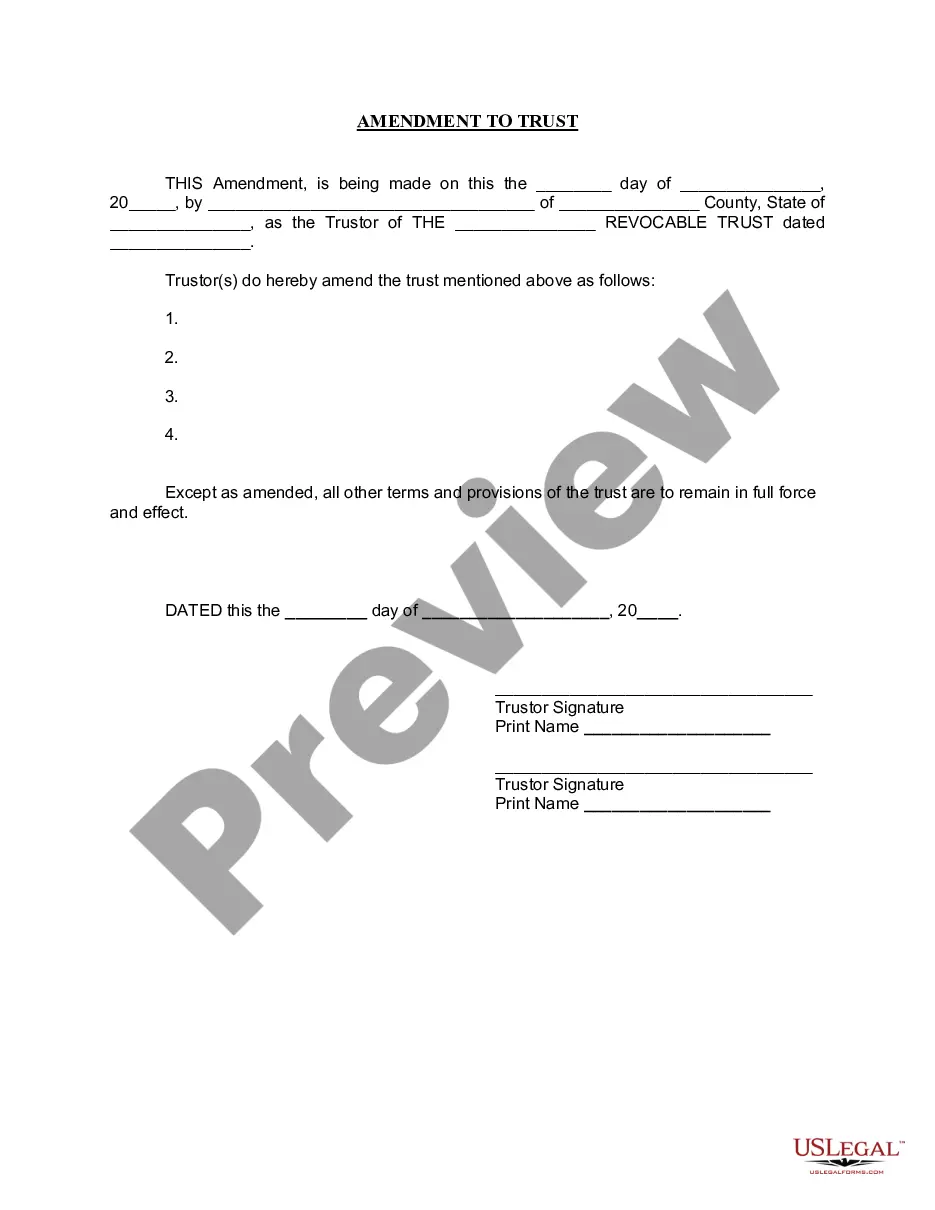

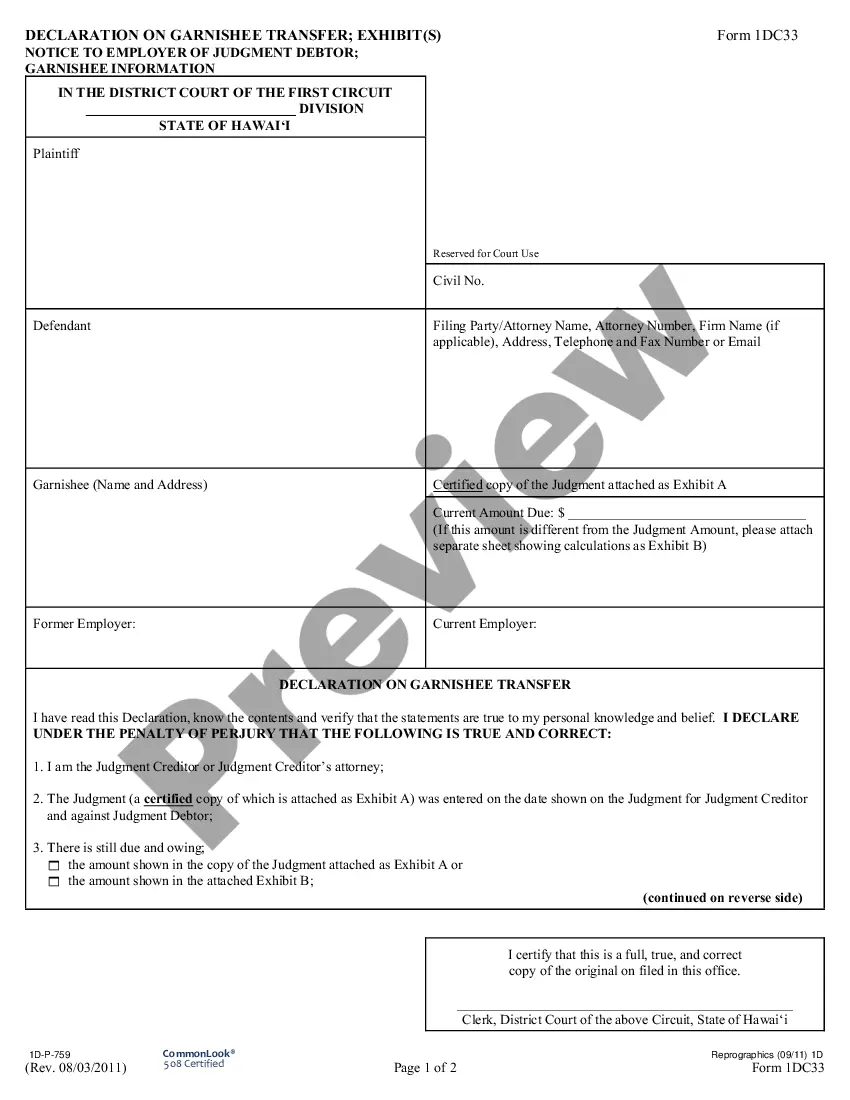
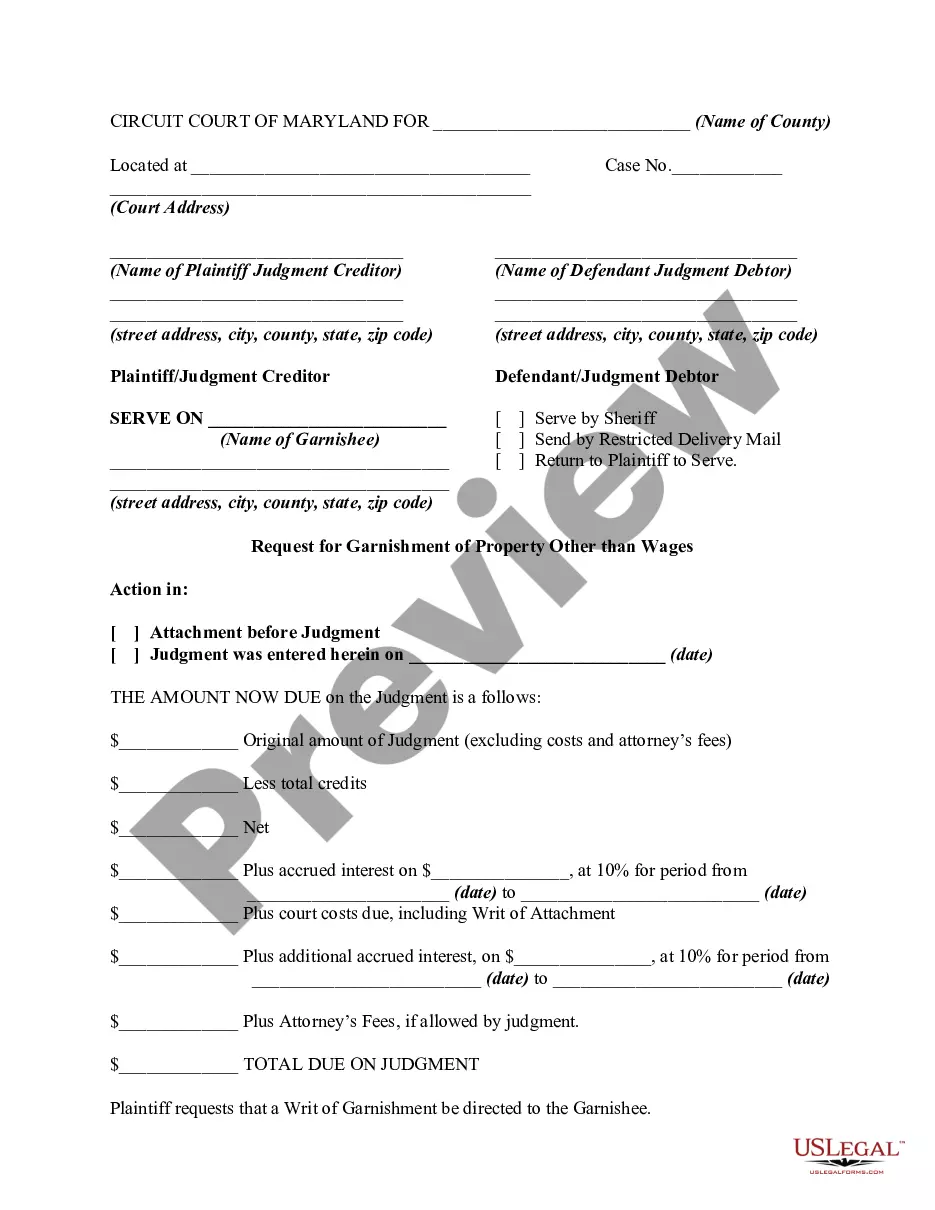
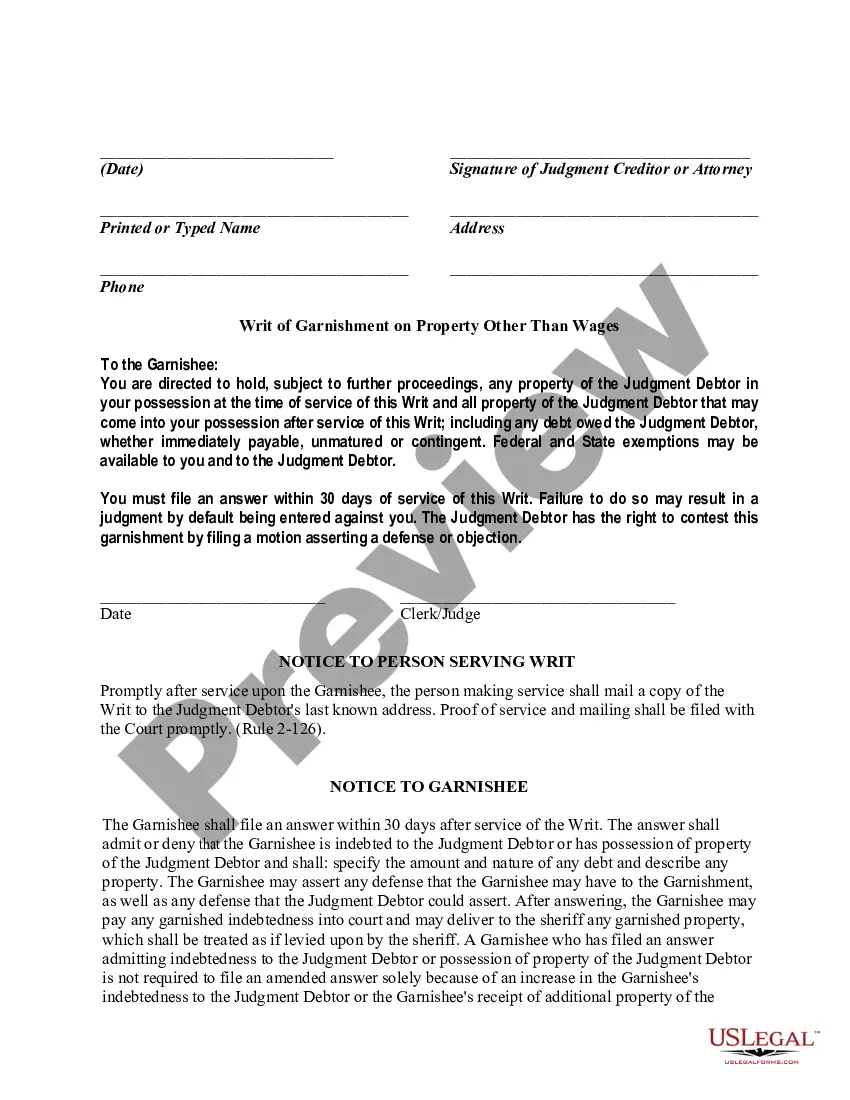
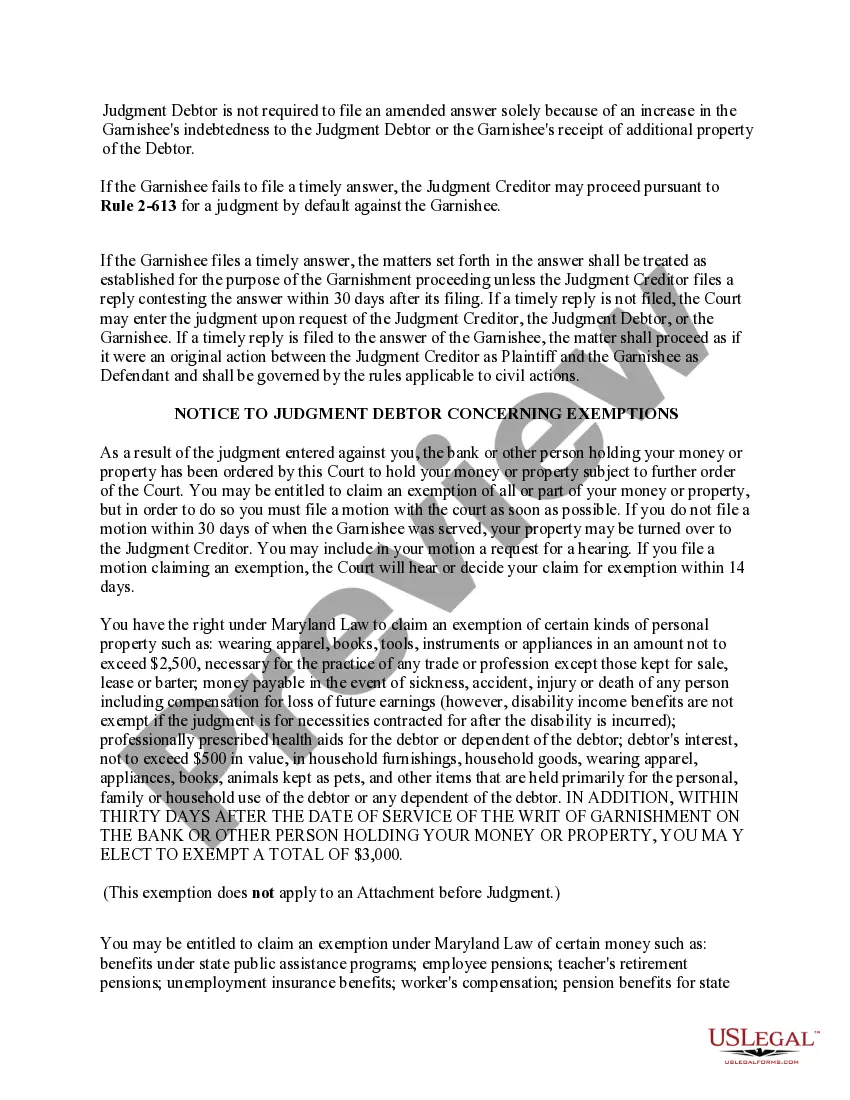
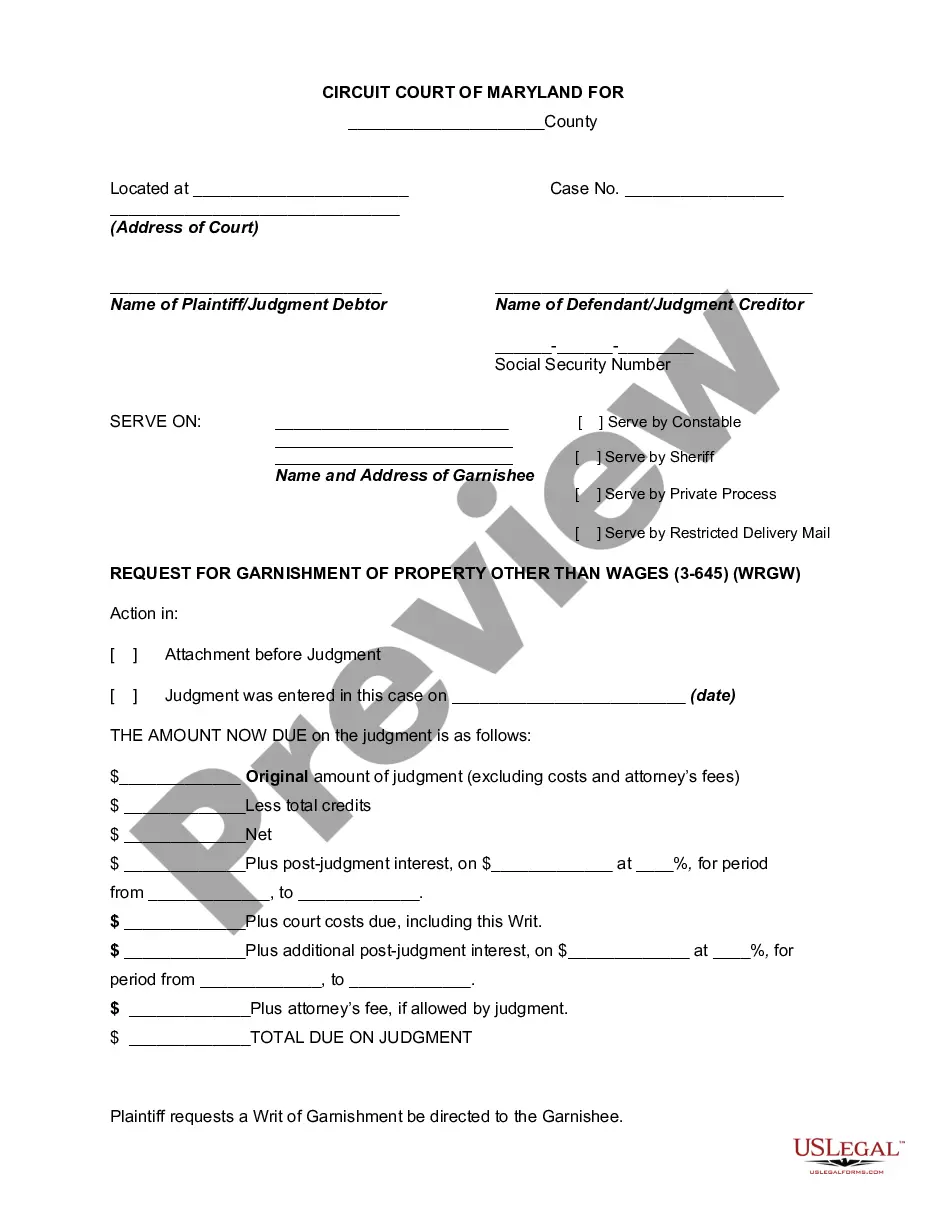
How to fill out Maryland Request For Garnishment Of Property Other Than Wages?
- If you are a returning user, log in to your account and select the required form template. Ensure your subscription is active; if not, update your plan.
- If you’re new to US Legal Forms, start by checking the preview and description of the form. Make sure it aligns with your local jurisdiction requirements.
- If the form does not fit your needs, use the search feature above to find a more suitable template.
- Once you find the right document, proceed to purchase by clicking the Buy Now button and selecting your subscription plan. A user account is necessary to unlock the full library.
- Complete the transaction by entering your credit card information or selecting PayPal for payment.
- Download the form and store it on your device. You can access it at any time through the My Forms section of your profile.
In conclusion, US Legal Forms offers a robust collection of legal documents and supports users at every step of the process. By utilizing this service, you can ensure that your legal forms are accurate and compliant with local laws.
Start your journey today and simplify your legal document needs with US Legal Forms!
Form popularity
FAQ
Yes, it is possible to reclaim a garnished tax refund under certain circumstances. If you believe your tax refund was wrongfully garnished, you can file a request and writ for garnishment income tax refund credit Michigan to challenge the garnishment. This process may vary based on your situation, but it provides a legal pathway to potentially revert the garnishment. Seeking assistance from a reputable service like uslegalforms can help you understand and navigate this complex process.
An order for writ of garnishment is a legal document that allows a creditor to collect a debt by seizing a portion of your income or assets. In Michigan, this process may be initiated through a request and writ for garnishment income tax refund credit Michigan. This order can apply to various income sources, including tax refunds. Understanding this process can help you navigate your financial obligations more effectively.
The amount that can be garnished from your paycheck is typically limited by federal and state laws. For most individuals, the maximum garnishment amount is 25% of your disposable earnings, or the amount by which your earnings exceed 30 times the federal minimum wage, whichever is less. However, specific rules may apply if the garnishment relates to child support, taxes, or student loans. Therefore, understanding these limits is essential, particularly if you're dealing with a request and writ for garnishment income tax refund credit michigan.
After you receive a writ of garnishment, evaluate your financial circumstances and consider your next steps. You may want to file for a hearing if you dispute the garnishment or seek legal help to navigate your options. Additionally, it’s wise to review your budget and make necessary adjustments to accommodate the garnished amounts. If the garnishment is related to income tax refund credit, consulting legal resources or platforms like uslegalforms can provide valuable assistance in managing your request and writ for garnishment income tax refund credit michigan.
To write a letter to stop garnishment, start by clearly stating your intention to contest the garnishment. Include details about your financial situation and any relevant documentation that supports your claim. It’s important to send this letter to the creditor and court that issued the garnishment, explaining why you believe the garnishment should be stopped. For a more precise approach, consider using uslegalforms to access templates that can assist you in drafting effective correspondence regarding your request and writ for garnishment income tax refund credit michigan.
In the context of garnishment, a writ refers to a legal document issued by a court that orders a third party, such as your employer or a bank, to withhold income or funds. This writ compels the recipient to redirect a specified amount of your income or property to the creditor. Essentially, it serves as an authorization for creditors to collect their debts through your income or assets. Therefore, understanding the implications of the writ is vital, especially when dealing with a request and writ for garnishment income tax refund credit michigan.
When you receive a writ of garnishment, it's crucial to read the document carefully. This notice informs you that creditors are seeking to secure a portion of your income or assets. If you believe the garnishment is incorrect or if it affects your ability to meet living expenses, you can request a hearing. Additionally, consider consulting legal guidance to understand your options regarding the request and writ for garnishment income tax refund credit michigan.
The IRS can garnish up to 25% of your disposable income or the amount by which your income exceeds a certain threshold, whichever is lower. This means you can still take home a portion of your paycheck, but it's essential to know what to expect. For assistance in managing garnishments, consider seeking guidance on how to request and writ for garnishment income tax refund credit Michigan through resources like US Legal Forms.
Tax refund garnishing refers to the process where the government withholds a part of your tax refund to settle unpaid debts. Agencies may use this strategy to clear overdue payments, impacting your financial planning. Understanding this can help you prepare better and possibly avoid complications, especially when dealing with a request and writ for garnishment income tax refund credit Michigan.
After a writ of garnishment is served, the third party is required to freeze the specified funds or wages. They will then send the withheld amount to the creditor, often within a specified time frame. It is vital to stay informed about your rights and options if you face such a situation, especially if you’re navigating the request and writ for garnishment income tax refund credit Michigan.