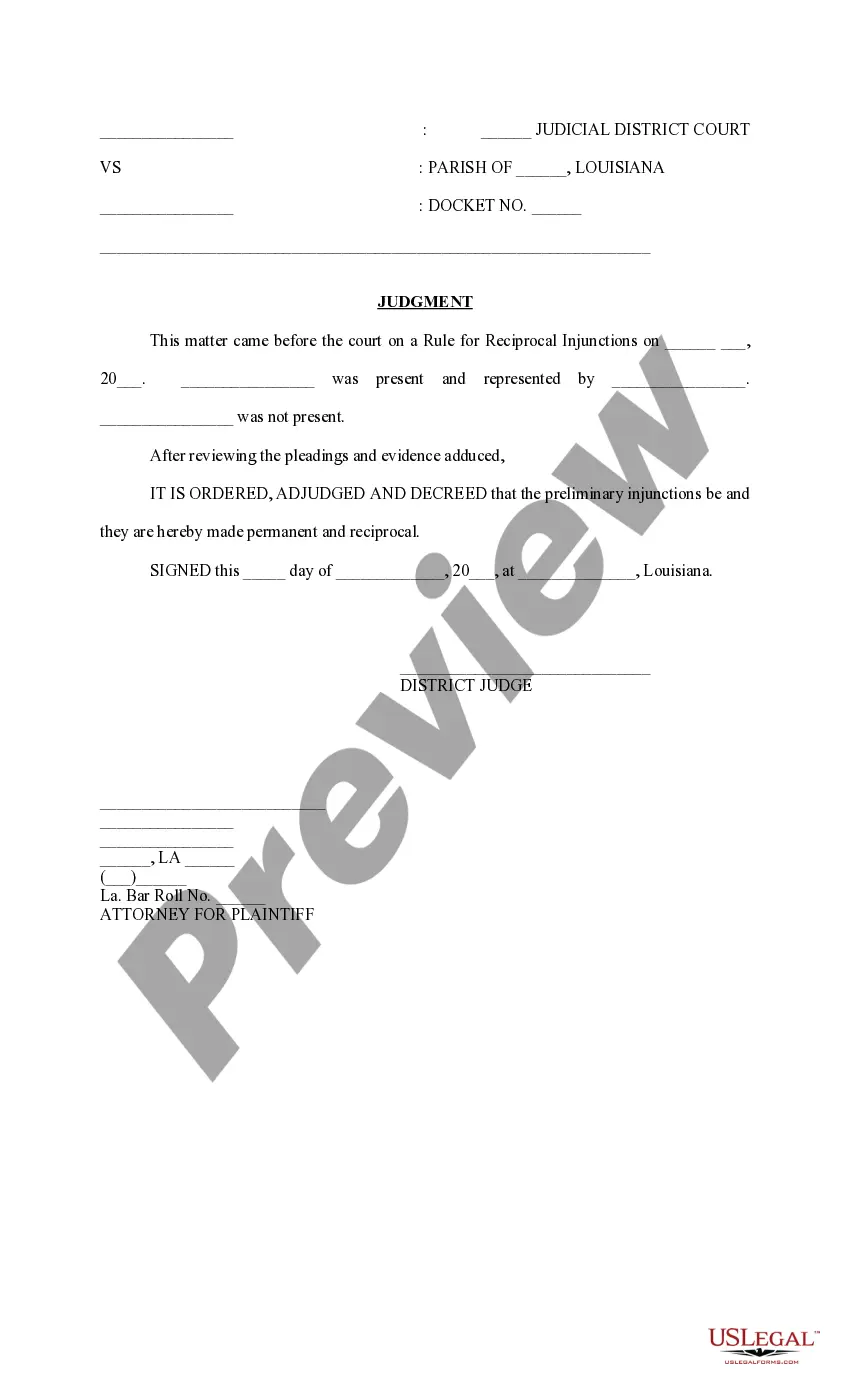
Injunction With Firearm Restriction
Description
Get your form ready online
Our built-in tools help you complete, sign, share, and store your documents in one place.
Make edits, fill in missing information, and update formatting in US Legal Forms—just like you would in MS Word.
Download a copy, print it, send it by email, or mail it via USPS—whatever works best for your next step.
Sign and collect signatures with our SignNow integration. Send to multiple recipients, set reminders, and more. Go Premium to unlock E-Sign.
If this form requires notarization, complete it online through a secure video call—no need to meet a notary in person or wait for an appointment.
We protect your documents and personal data by following strict security and privacy standards.

Make edits, fill in missing information, and update formatting in US Legal Forms—just like you would in MS Word.

Download a copy, print it, send it by email, or mail it via USPS—whatever works best for your next step.

Sign and collect signatures with our SignNow integration. Send to multiple recipients, set reminders, and more. Go Premium to unlock E-Sign.

If this form requires notarization, complete it online through a secure video call—no need to meet a notary in person or wait for an appointment.

We protect your documents and personal data by following strict security and privacy standards.
Looking for another form?


How to fill out Louisiana Judgment On Rule For Reciprocal Injunctions?
Whether for corporate reasons or personal issues, everyone must handle legal matters at some point in their lives.
Completing legal documents requires meticulous attention, starting with selecting the appropriate form template.
Complete the account registration form, choose your payment method: either a credit card or PayPal account, select the file format you desire, and download the Injunction With Firearm Restriction. Once saved, you can fill out the form using editing software or print it and complete it by hand. With an extensive US Legal Forms catalog available, you won’t need to waste time searching for the right template online. Utilize the library’s straightforward navigation to find the appropriate template for any situation.
- For instance, if you select an incorrect version of the Injunction With Firearm Restriction, it will be denied upon submission.
- Thus, it is vital to obtain a reliable source of legal documents like US Legal Forms.
- If you need to acquire an Injunction With Firearm Restriction template, follow these straightforward steps.
- Retrieve the necessary template by using the search feature or browsing the catalog.
- Review the form’s description to confirm it aligns with your case, jurisdiction, and county.
- Click on the form’s preview to examine it.
- If it is not the correct form, return to the search option to locate the Injunction With Firearm Restriction sample you require.
- Download the template if it fulfills your criteria.
- If you possess a US Legal Forms account, click Log in to access previously saved documents in My documents.
- If you don’t have an account yet, you can acquire the form by clicking Buy now.
- Select the appropriate pricing option.
Form popularity
FAQ
The three most common types of injunctions include temporary injunctions, permanent injunctions, and preliminary injunctions. Each type serves a different purpose; for instance, a temporary injunction provides immediate relief, while a permanent injunction establishes long-term conditions. When dealing with sensitive issues like an injunction with firearm restriction, understanding these types can help you choose the right legal approach.
Rule 3 of the injunction generally outlines the procedures for filing and responding to injunction requests. It emphasizes the necessity for clear evidence to support the claims made by the petitioner. This is particularly relevant when discussing matters like an injunction with firearm restriction, as the court needs to assess the potential risks involved.
There are several types of injunctions, including temporary, permanent, and preliminary injunctions. A temporary injunction offers short-term relief until a final decision is made, whereas a permanent injunction is a long-term solution often established through court rulings. An injunction with firearm restriction falls under these categories and addresses specific situations involving weapons.
A restraining order typically provides immediate protection and is often temporary, while an injunction is a more formal legal order that can impose specific restrictions, such as an injunction with firearm restriction. Restraining orders may address immediate threats, whereas injunctions can set long-term conditions and enforce compliance. Understanding these differences is crucial when seeking legal protection.
During an injunction hearing in Wisconsin, both parties present their cases before a judge. The petitioner argues why the injunction with firearm restriction is necessary, often citing safety concerns. The respondent has the opportunity to defend against the claims. After considering the evidence, the judge decides whether to grant or deny the injunction.
The relief of firearm disability refers to the legal process that allows an individual to regain their right to possess firearms after a court has imposed restrictions. This is particularly relevant in cases where an injunction with firearm restriction exists due to past incidents. If you believe you qualify for relief, you can file a petition, and the court will review the circumstances surrounding your case. Utilizing platforms like USLegalForms can simplify the process, providing the necessary forms and guidance to navigate this legal journey.
In Florida, the three primary types of injunctions include temporary injunctions, permanent injunctions, and emergency injunctions. A temporary injunction provides immediate protection until a full hearing can occur, while a permanent injunction remains in effect for an extended period after a thorough court review. Emergency injunctions are issued in urgent situations where immediate action is necessary. Each type serves to protect individuals, especially in cases involving an injunction with firearm restriction.
In Florida, an injunction with firearm restriction can be sought under various circumstances, including instances of domestic violence, harassment, or stalking. To obtain this injunction, you must demonstrate a credible threat of harm. The court will evaluate the evidence presented and determine if the injunction is necessary to protect the victim. If granted, the injunction can limit the individual's access to firearms, providing an additional layer of safety.