Limited Liability Form For Dummies
Description
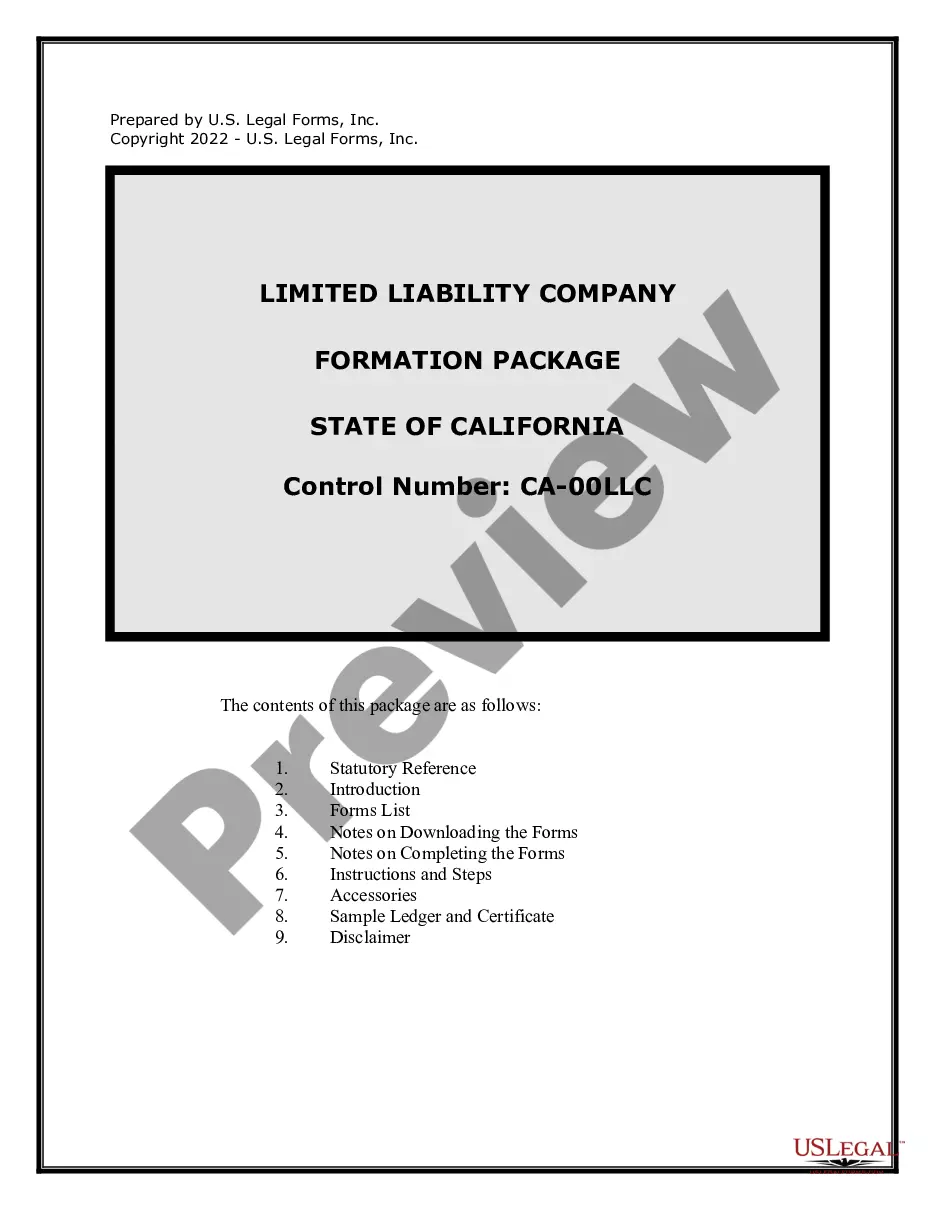
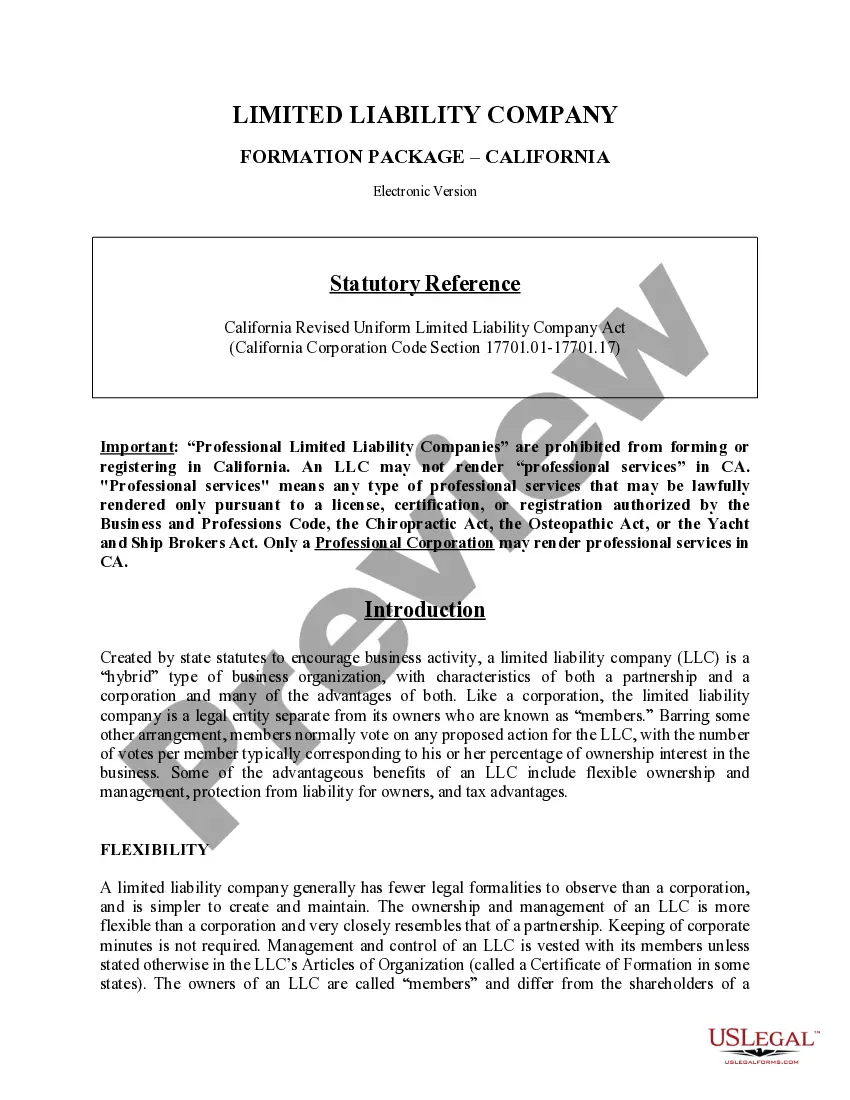
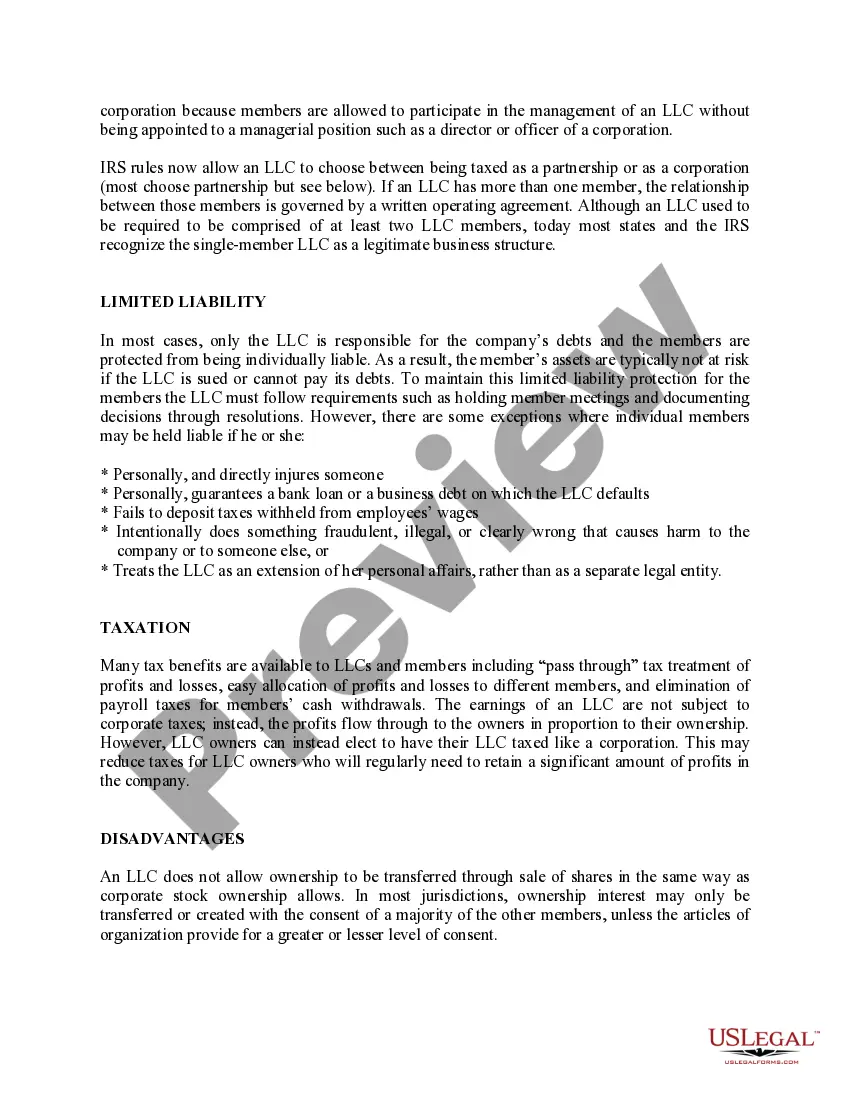
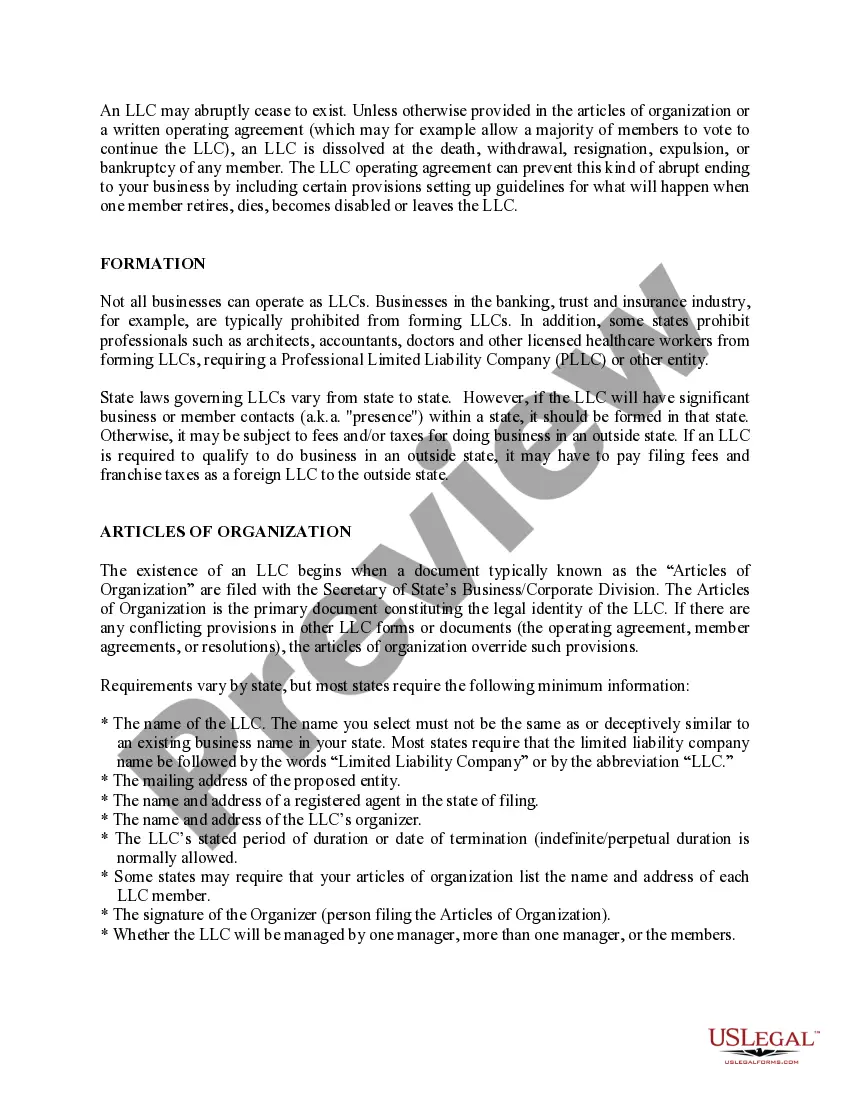
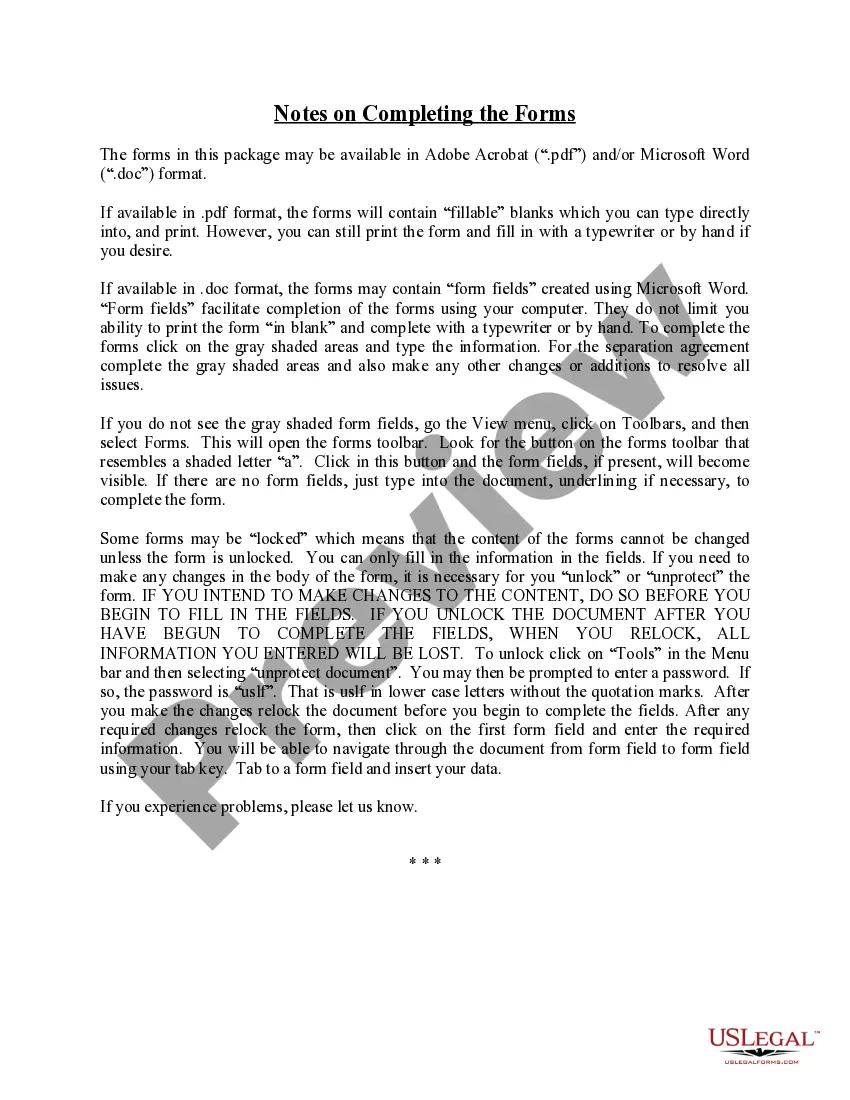
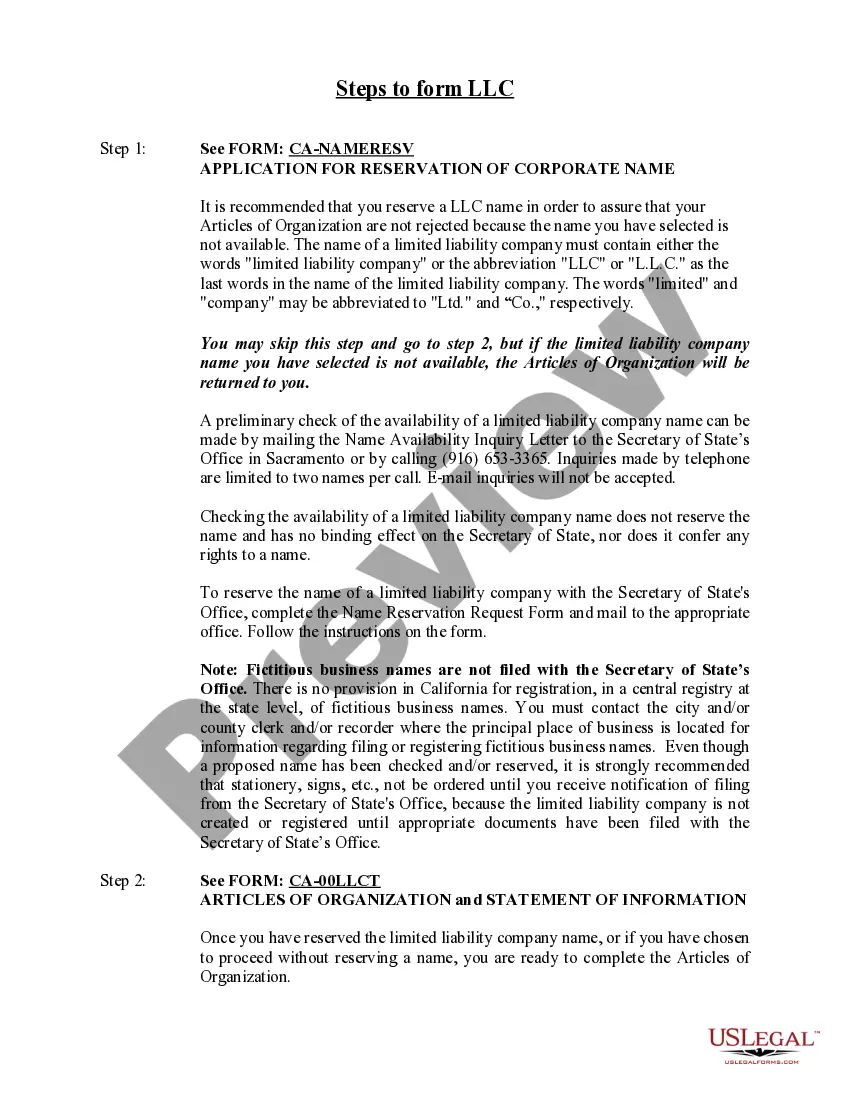

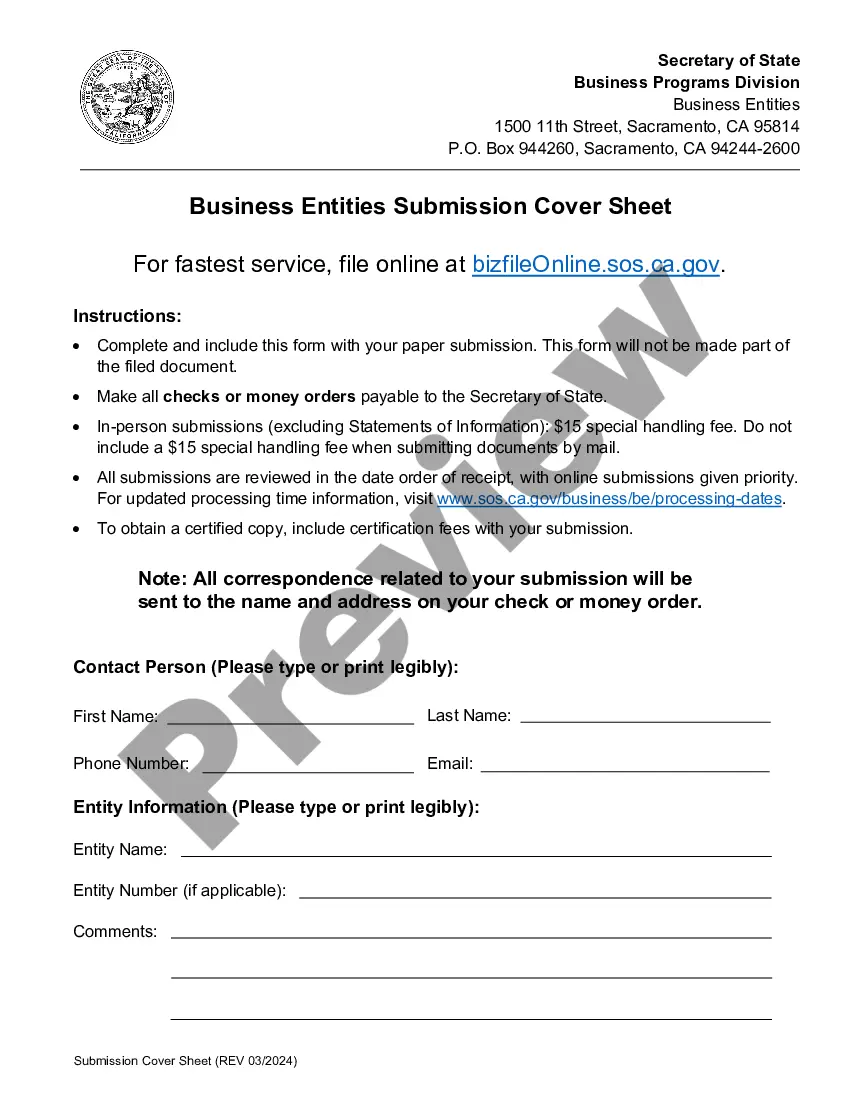
Get your form ready online
Our built-in tools help you complete, sign, share, and store your documents in one place.
Make edits, fill in missing information, and update formatting in US Legal Forms—just like you would in MS Word.
Download a copy, print it, send it by email, or mail it via USPS—whatever works best for your next step.
Sign and collect signatures with our SignNow integration. Send to multiple recipients, set reminders, and more. Go Premium to unlock E-Sign.
If this form requires notarization, complete it online through a secure video call—no need to meet a notary in person or wait for an appointment.
We protect your documents and personal data by following strict security and privacy standards.

Make edits, fill in missing information, and update formatting in US Legal Forms—just like you would in MS Word.

Download a copy, print it, send it by email, or mail it via USPS—whatever works best for your next step.

Sign and collect signatures with our SignNow integration. Send to multiple recipients, set reminders, and more. Go Premium to unlock E-Sign.

If this form requires notarization, complete it online through a secure video call—no need to meet a notary in person or wait for an appointment.

We protect your documents and personal data by following strict security and privacy standards.
Looking for another form?


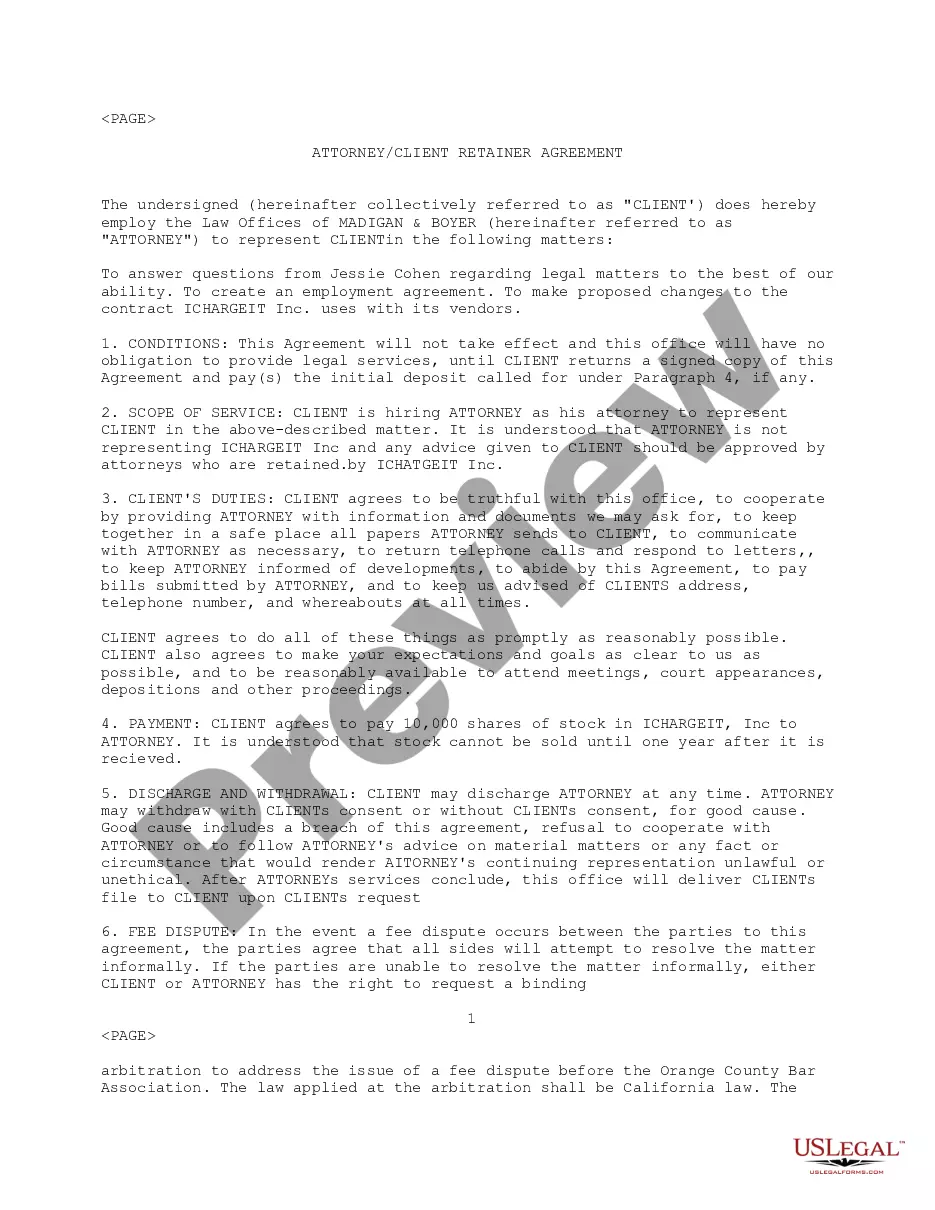




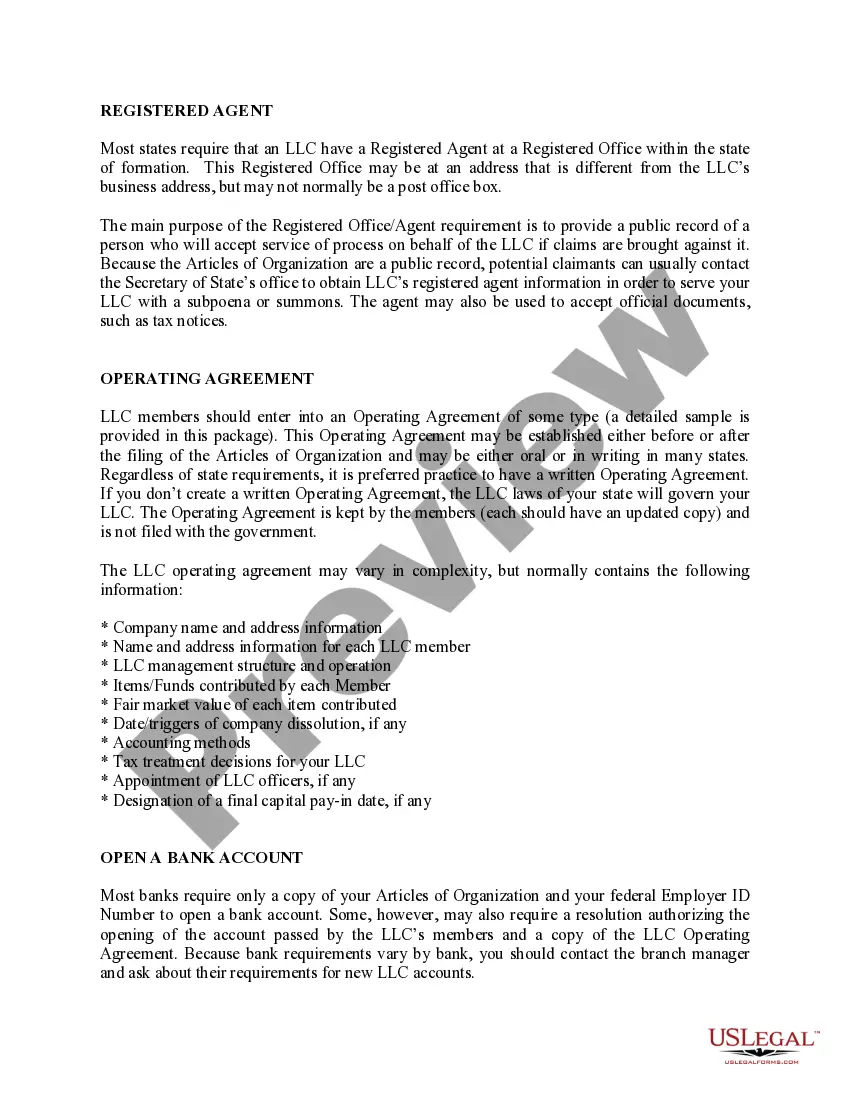
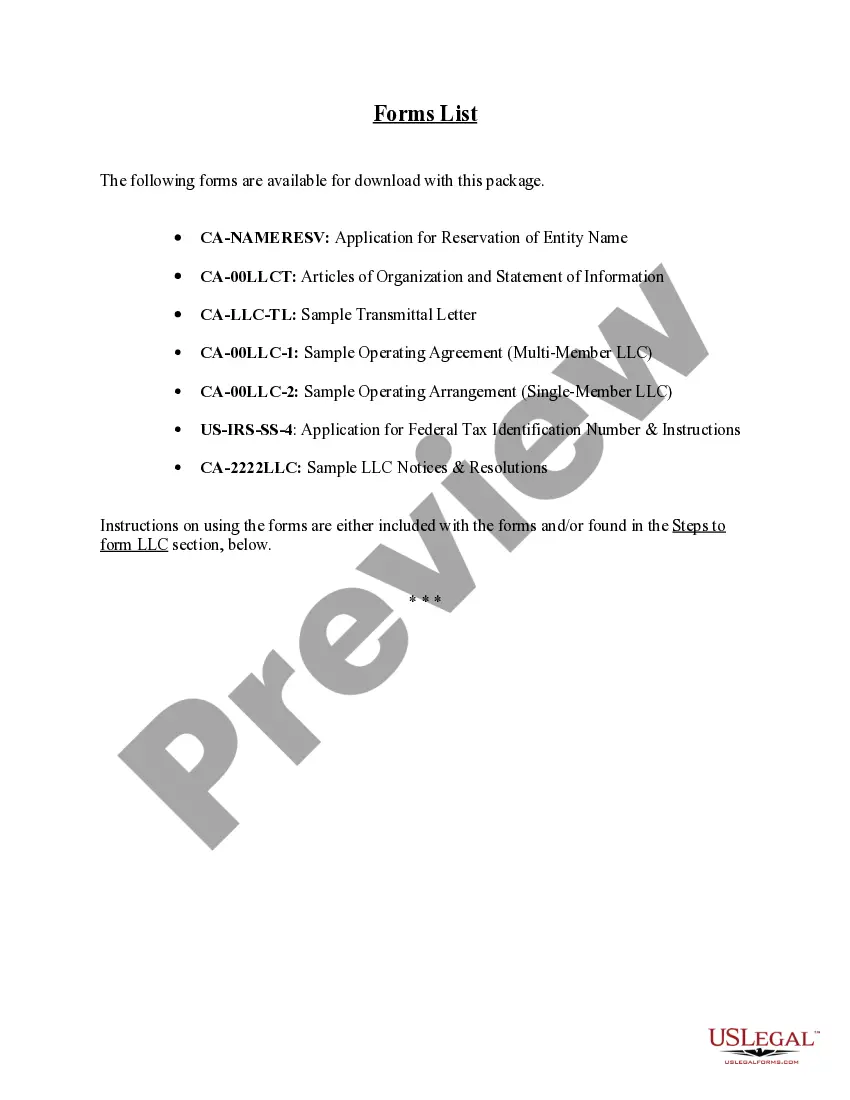
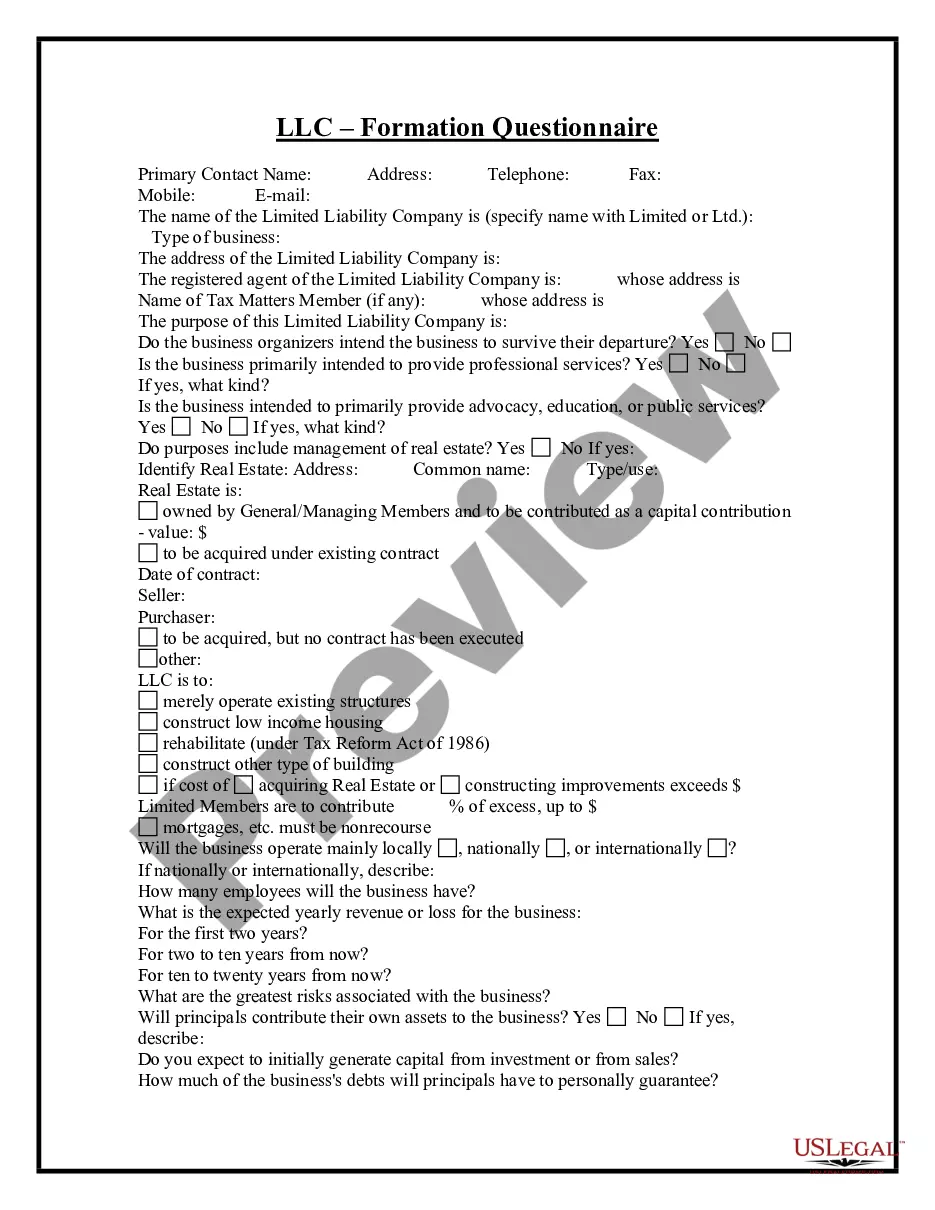
How to fill out California Limited Liability Company LLC Formation Package?
Whether for business purposes or for individual affairs, everybody has to handle legal situations sooner or later in their life. Completing legal papers needs careful attention, starting with choosing the right form sample. For instance, if you choose a wrong version of the Limited Liability Form For Dummies, it will be declined once you submit it. It is therefore crucial to have a dependable source of legal papers like US Legal Forms.
If you have to get a Limited Liability Form For Dummies sample, stick to these easy steps:
- Find the template you need by using the search field or catalog navigation.
- Check out the form’s information to make sure it matches your case, state, and county.
- Click on the form’s preview to view it.
- If it is the incorrect document, get back to the search function to locate the Limited Liability Form For Dummies sample you need.
- Download the file when it matches your needs.
- If you already have a US Legal Forms profile, just click Log in to access previously saved documents in My Forms.
- If you don’t have an account yet, you can obtain the form by clicking Buy now.
- Choose the correct pricing option.
- Finish the profile registration form.
- Pick your transaction method: use a bank card or PayPal account.
- Choose the file format you want and download the Limited Liability Form For Dummies.
- Once it is saved, you can fill out the form with the help of editing software or print it and finish it manually.
With a large US Legal Forms catalog at hand, you never have to spend time seeking for the appropriate template across the internet. Utilize the library’s simple navigation to get the proper form for any occasion.
Form popularity
FAQ
Limited liability companies are one of the most flexible business entities. They allow you to choose how to distribute the profits, decide who manages the day-to-day business affairs, and decide how the profits will be taxed. They also offer a lot in terms of liability protection.
Overview. A limited liability company (LLC) blends partnership and corporate structures. You can form an LLC to run a business or to hold assets. The owners of an LLC are members. LLCs protects its members against personal liabilities.
What Is Limited Liability? Limited liability is a type of legal structure for an organization where a corporate loss will not exceed the amount invested in a partnership or limited liability company (LLC). In other words, investors' and owners' private assets are not at risk if the company fails.
In business, limited liability is about reducing your personal exposure to financial risk. If your business fails (or is sued) then the amount of money for which you are liable is limited by the business structure. There are a number of different forms that this 'safety net' can take.
Steps to Start an LLC Choose a Name for Your LLC. Appoint a Registered Agent. File Your Articles of Organization. Decide Whether Your LLC Should Be Member-Managed or Manager-Managed. Create an LLC Operating Agreement. Comply With Tax and Regulatory Requirements. File Your Annual Reports. Register to Do Business in Other States.