Delaware Last Will for a Widow or Widower with no Children
What this document covers
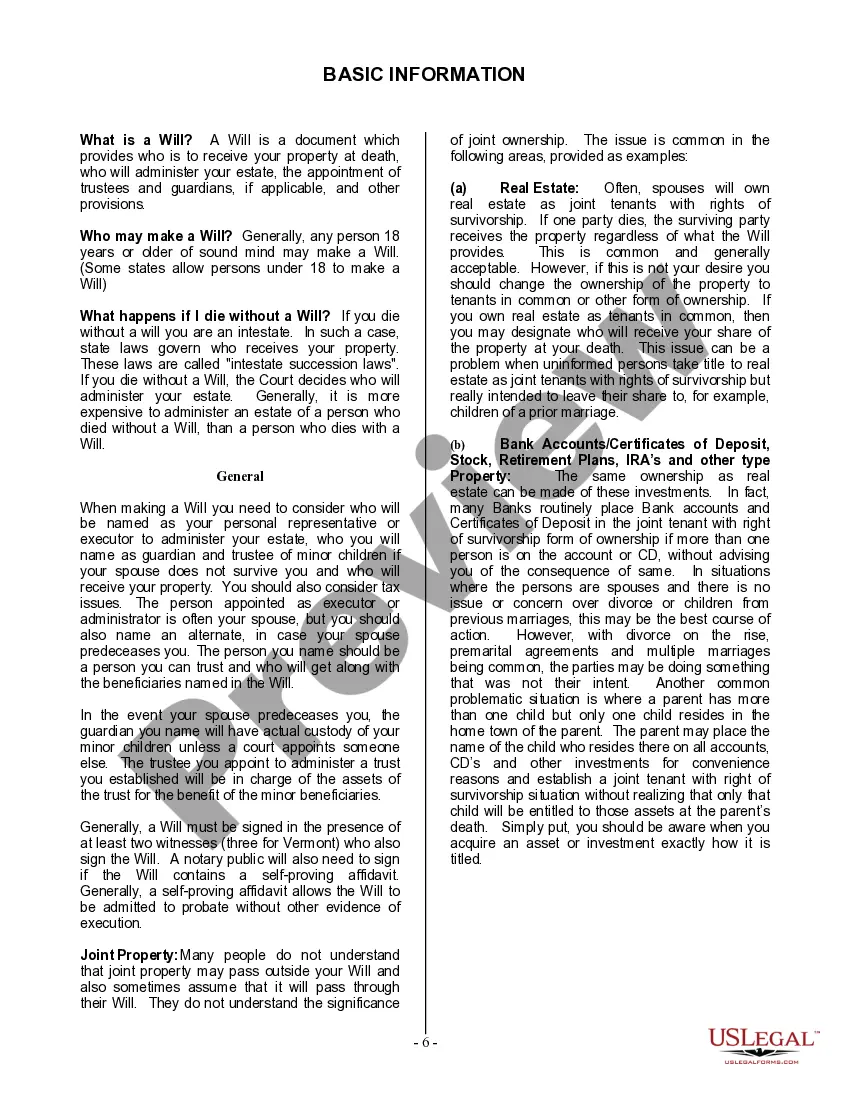
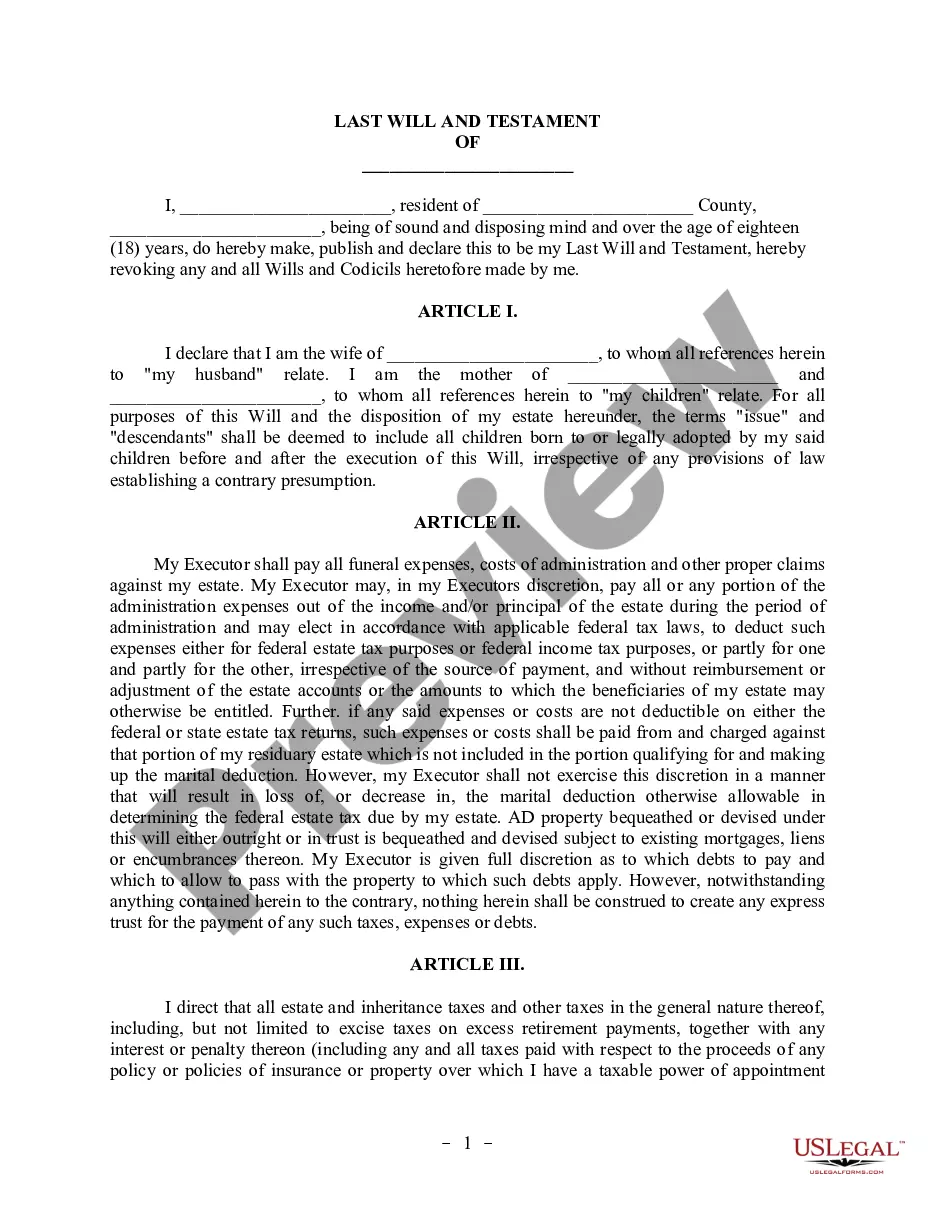
This Last Will for a Widow or Widower with no Children is a legal document that outlines how your assets and property will be distributed upon your death. It specifically caters to individuals who have been widowed and do not have any children. Unlike other wills, this form is tailored to meet the unique needs of those who wish to simplify their estate planning in light of their circumstances.
Form components explained
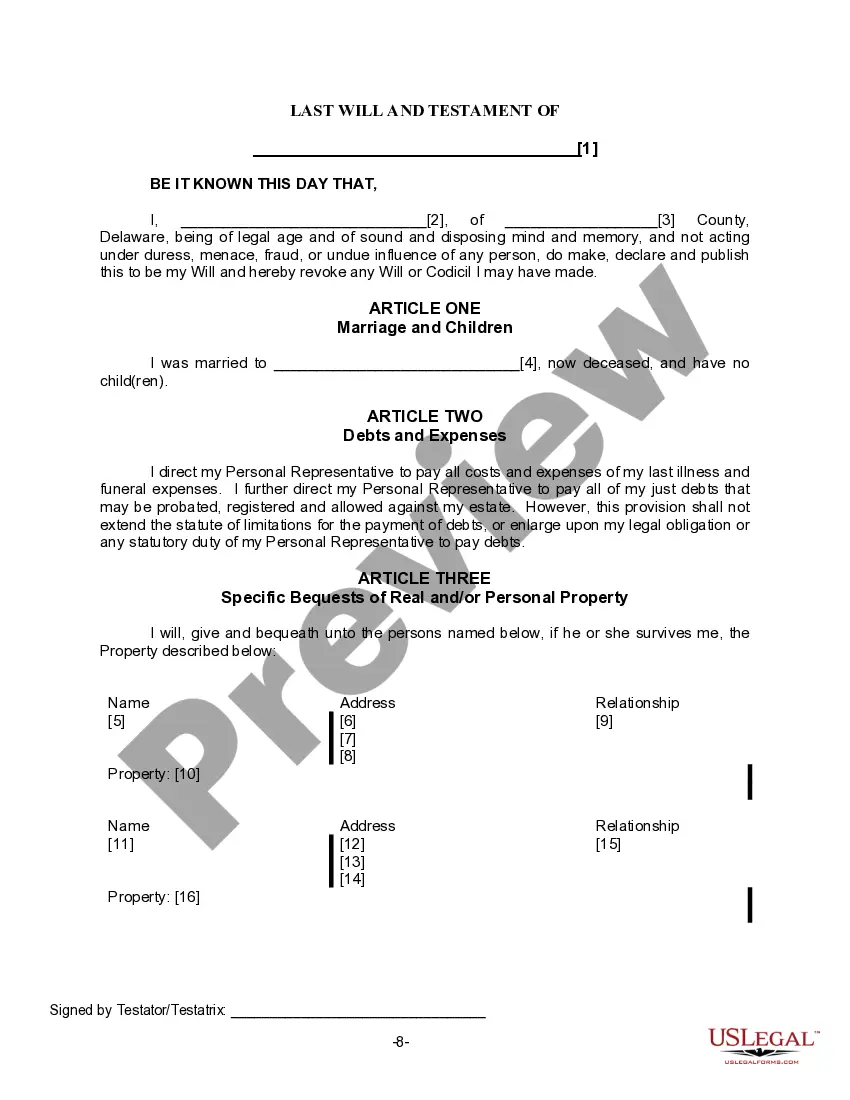
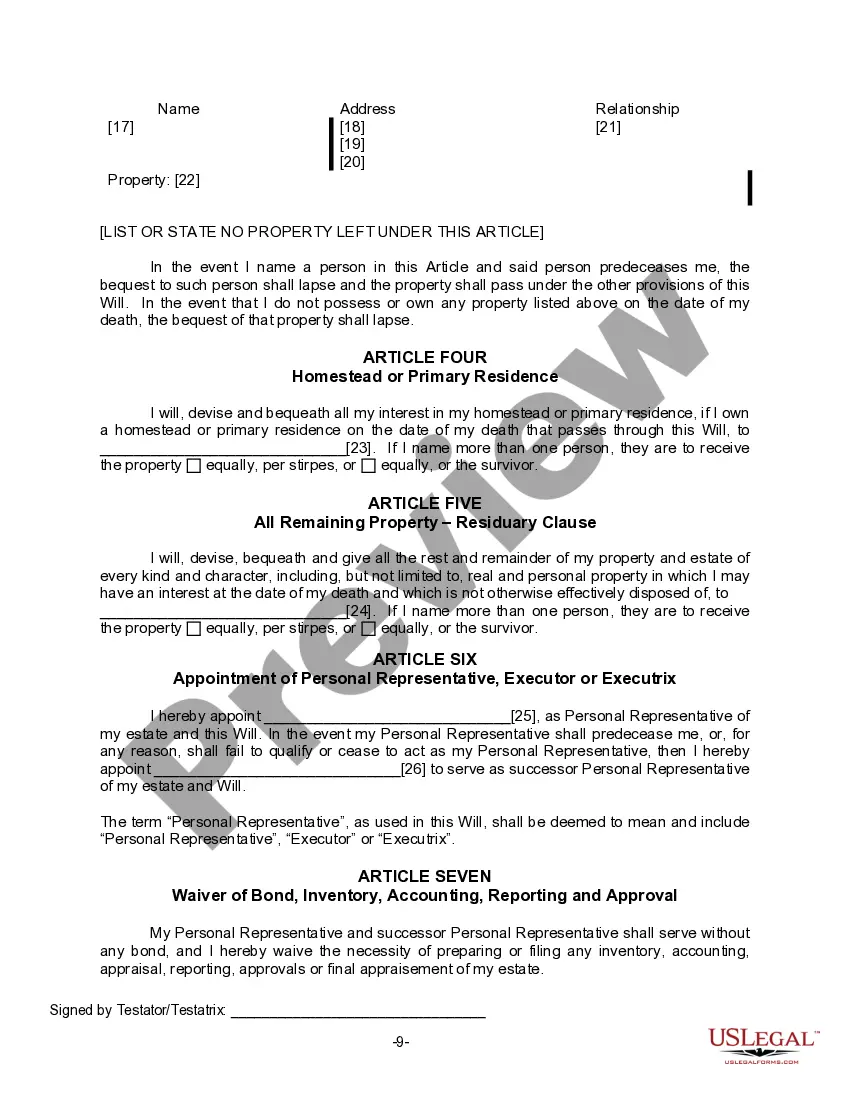
- Personal representative appointment to administer your estate.
- Specification of property distribution among named beneficiaries.
- Provisions for debts and funeral expenses to be paid from your estate.
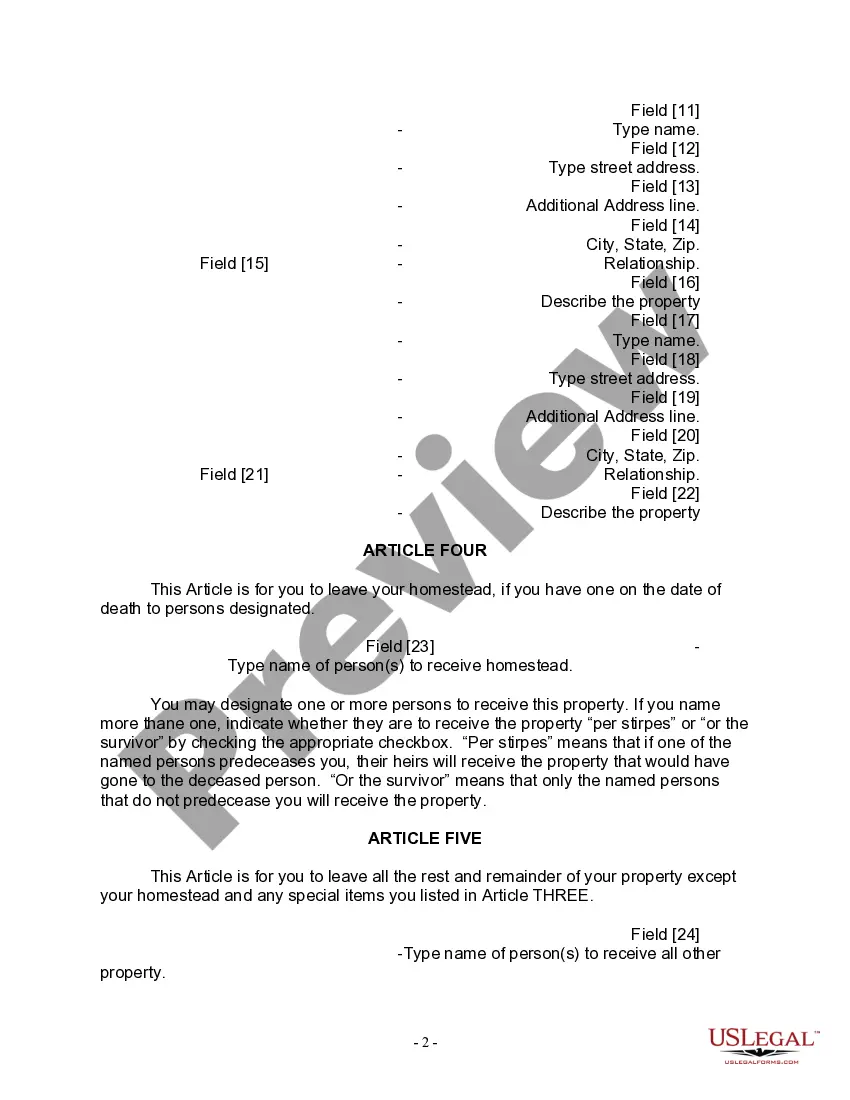
- Options for leaving your homestead to designated individuals.
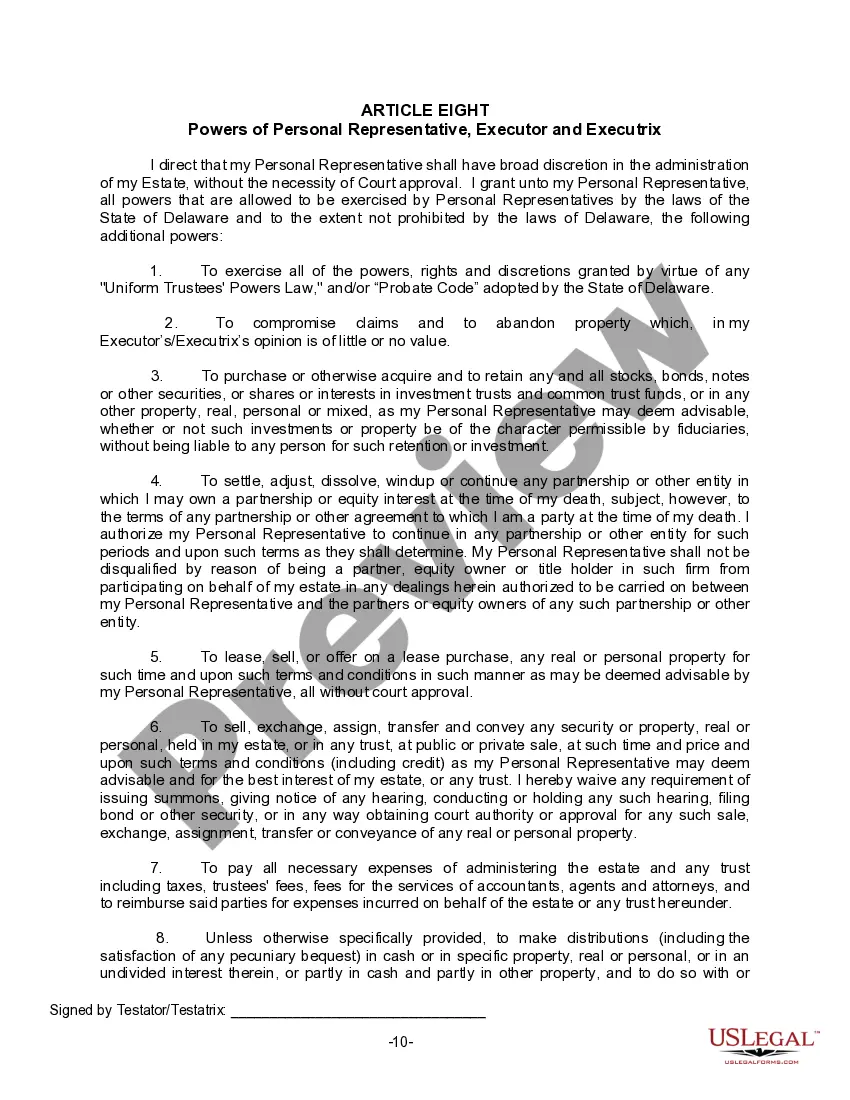
- Customized powers granted to your personal representative.
- Self-proving affidavit for smoother probate process (if applicable).


Situations where this form applies
This form should be used when a widow or widower wishes to define how their estate will be handled after their death. It is particularly useful if you have specific wishes about how your property should be distributed and if you want to appoint someone to manage your estate. This will is essential to avoid intestacy laws applying to your estate, which can lead to complications and disputes among potential heirs.
Who needs this form
- Individuals who are widowed and do not have children.
- People looking to ensure their property is distributed according to their wishes.
- Those who want to appoint a trusted personal representative to manage their estate.
- Anyone who wants to prevent complications related to intestate succession.
How to prepare this document
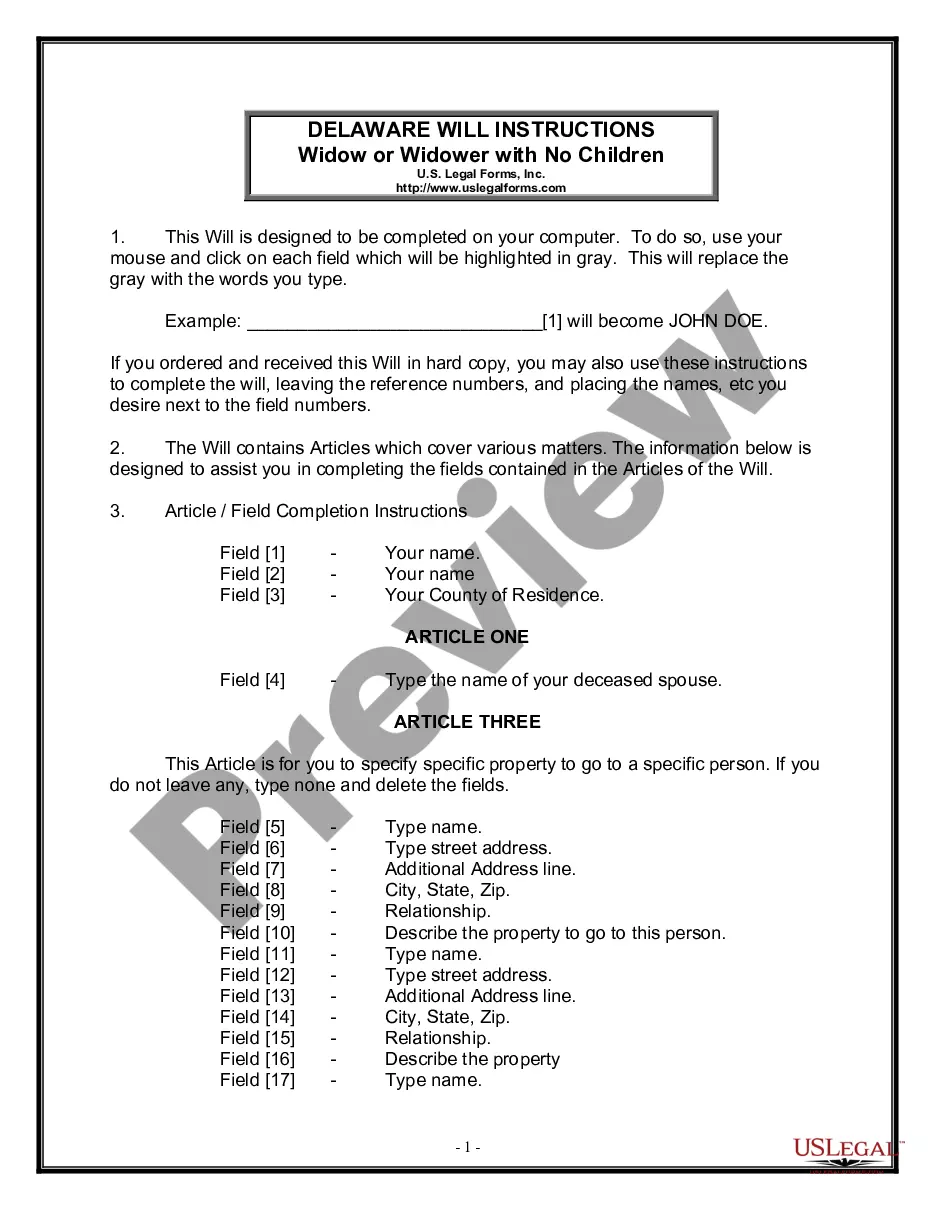
- Begin by entering your personal information, including your name and county of residence.
- Specify the name of your deceased spouse in the designated field.
- Detail any specific property you wish to bequeath to named individuals.
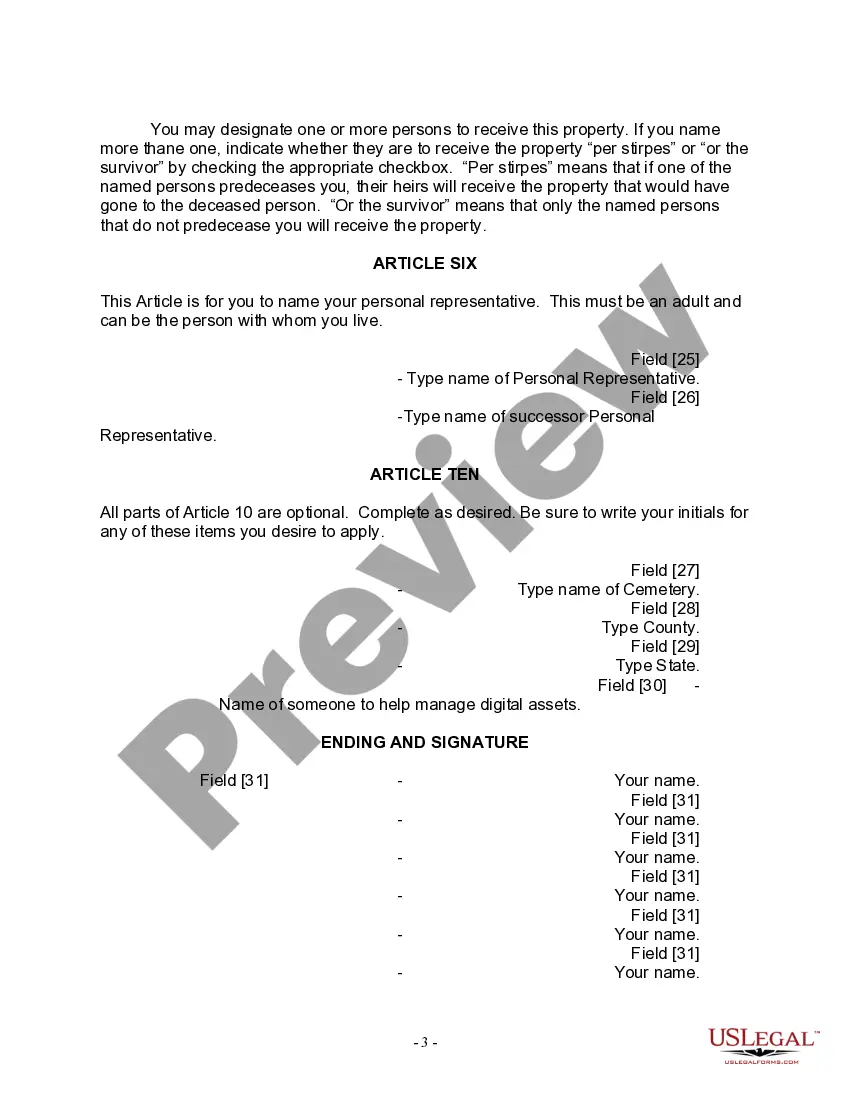
- Appoint a personal representative to handle your estate after your passing.
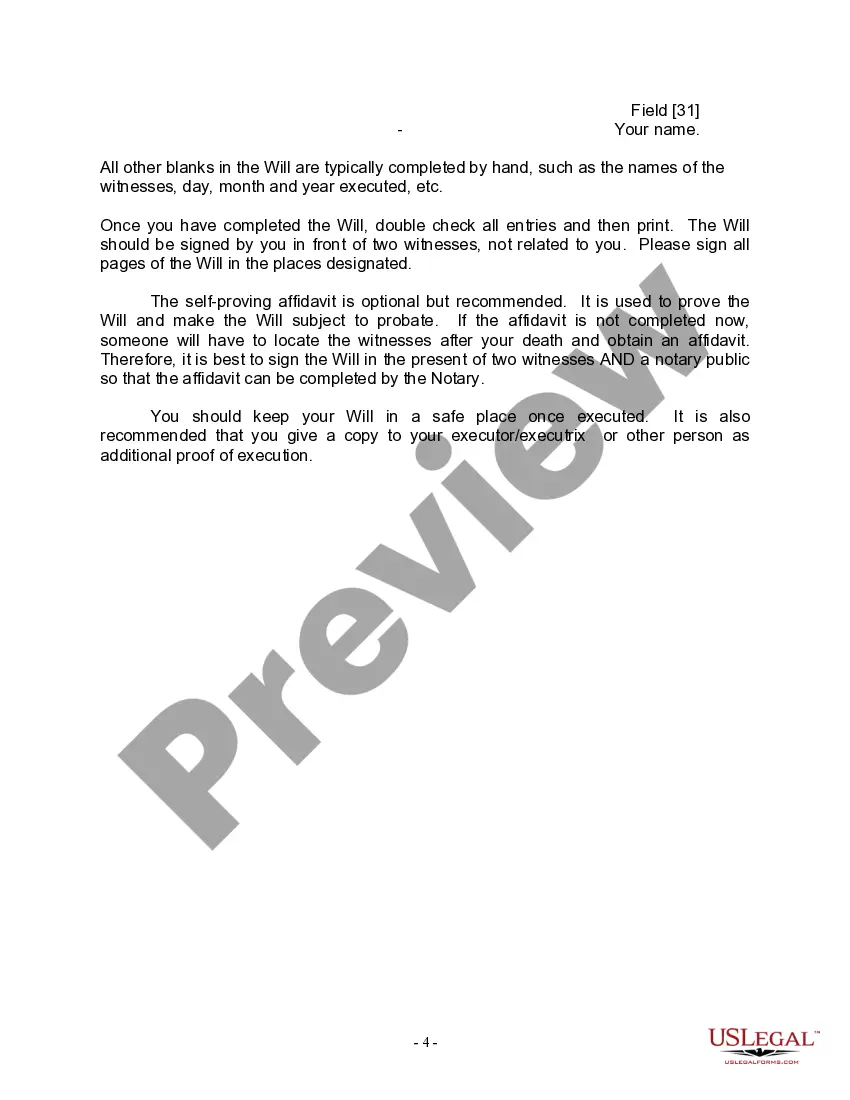
- Sign the document in front of two witnesses and, if applicable, a notary public.
Does this form need to be notarized?
Notarization is required for this form to take effect. Our online notarization service, powered by Notarize, lets you verify and sign documents remotely through an encrypted video session, available 24/7.
Get your form ready online
Our built-in tools help you complete, sign, share, and store your documents in one place.
Make edits, fill in missing information, and update formatting in US Legal Forms—just like you would in MS Word.
Download a copy, print it, send it by email, or mail it via USPS—whatever works best for your next step.
Sign and collect signatures with our SignNow integration. Send to multiple recipients, set reminders, and more. Go Premium to unlock E-Sign.
If this form requires notarization, complete it online through a secure video call—no need to meet a notary in person or wait for an appointment.
We protect your documents and personal data by following strict security and privacy standards.

Make edits, fill in missing information, and update formatting in US Legal Forms—just like you would in MS Word.

Download a copy, print it, send it by email, or mail it via USPS—whatever works best for your next step.

Sign and collect signatures with our SignNow integration. Send to multiple recipients, set reminders, and more. Go Premium to unlock E-Sign.

If this form requires notarization, complete it online through a secure video call—no need to meet a notary in person or wait for an appointment.

We protect your documents and personal data by following strict security and privacy standards.
Typical mistakes to avoid
- Failing to have the will signed in front of the required witnesses.
- Not including a self-proving affidavit, which can complicate probate.
- Leaving important fields blank, which may create ambiguity.
- Not keeping the will in a safe place or informing your personal representative of its location.
Benefits of using this form online
- Convenience of completing the form from home or any location.
- Editability allows you to customize the document to suit your needs.
- Access to legal information prepared by licensed attorneys.
- Immediate download for faster execution of your estate planning needs.
Legal use & context
- Ensures your final wishes are honored regarding asset distribution.
- Helps streamline the probate process, potentially reducing costs and delays.
- Provides legal clarity, minimizing disputes among heirs and beneficiaries.
Key takeaways
- This Last Will is specifically tailored for widows and widowers without children.
- Clarity in your will can prevent disputes and simplify the management of your estate.
- Proper execution, including notarization, is essential for legal validity.
Glossary of terms used in this form
- Personal representative: The individual appointed to administer your estate and carry out the directions you outlined in your will.
- Homestead: Your primary residence where you live, which you will designate in your will.
- Self-proving affidavit: A notarized statement verifying the authenticity of the will, which simplifies the probate process.
Looking for another form?

Form popularity
FAQ
When a person passes away without a will in Delaware, the state laws will govern the distribution of their assets. This may lead to an outcome that does not align with the deceased's wishes, especially important for a Delaware Last Will for a Widow or Widower with no Children. Typically, the estate will be distributed to next of kin based on established priorities. Creating a will can streamline the process and provide peace of mind for your loved ones.
In Delaware, any estate valued over $30,000 generally requires probate. This process validates the Delaware Last Will for a Widow or Widower with no Children and allows for the legal distribution of the deceased's assets. However, estates below this threshold might still benefit from a will, ensuring that your final wishes are honored without complications. Understanding the probate process can be simplified with guidance from resources like USLegalForms.
In Delaware, if a child dies, the inheritance often reverts to their surviving parents, especially if there are no other siblings or children involved. As someone planning a Delaware Last Will for a Widow or Widower with no Children, it’s essential to understand these inheritance dynamics. Carefully designating your wishes can prevent disputes and ensure the right individuals receive your assets. Consulting with USLegalForms can provide clarity on structuring your will.
To create a valid will in Delaware, the document must be in writing and signed by the testator, who is at least 18 years old. Witnesses are also required; at least two people must observe you signing your Delaware Last Will for a Widow or Widower with no Children. Additionally, the will must be clear and precise about how you want your assets distributed. Ensuring these components are met can make the process smoother for your heirs.
In Delaware, the next of kin refers to the closest relatives of the deceased. When creating a Delaware Last Will for a Widow or Widower with no Children, it's crucial to understand that next of kin typically includes parents and siblings. The state prioritizes these relationships in the distribution of assets when someone passes away. By clearly stating your wishes in a will, you can ensure that your loved ones are designated appropriately.
You can find forms to write your own will through various online resources, including uslegalforms. This platform provides well-structured templates that comply with Delaware laws. By utilizing a Delaware Last Will for a Widow or Widower with no Children, you can create a document that fits your unique situation and satisfies legal requirements.
Yes, you can write your own will in Delaware, and many people choose to do so. It's crucial to follow the state’s legal requirements to ensure your will is valid. Crafting a personalized Delaware Last Will for a Widow or Widower with no Children can empower you to express your desires clearly and effectively.
While you are not required to hire a lawyer to make a will in Delaware, consulting one can be very helpful. A legal professional can guide you through the complexities of the law and ensure your Delaware Last Will for a Widow or Widower with no Children accurately reflects your wishes. Using resources like uslegalforms can also provide templates designed to meet legal standards.
Yes, a handwritten will, also known as a holographic will, is valid in Delaware as long as it meets certain criteria. The entire document must be in the handwriting of the testator, and it must be signed. However, it is beneficial to create a formal Delaware Last Will for a Widow or Widower with no Children to avoid any potential disputes.
You do not need to register a will in Delaware until the testator passes away. However, it’s essential to file the will with the Register of Wills within 10 days of the death to initiate the probate process. This ensures that your wishes, outlined in your Delaware Last Will for a Widow or Widower with no Children, are honored.