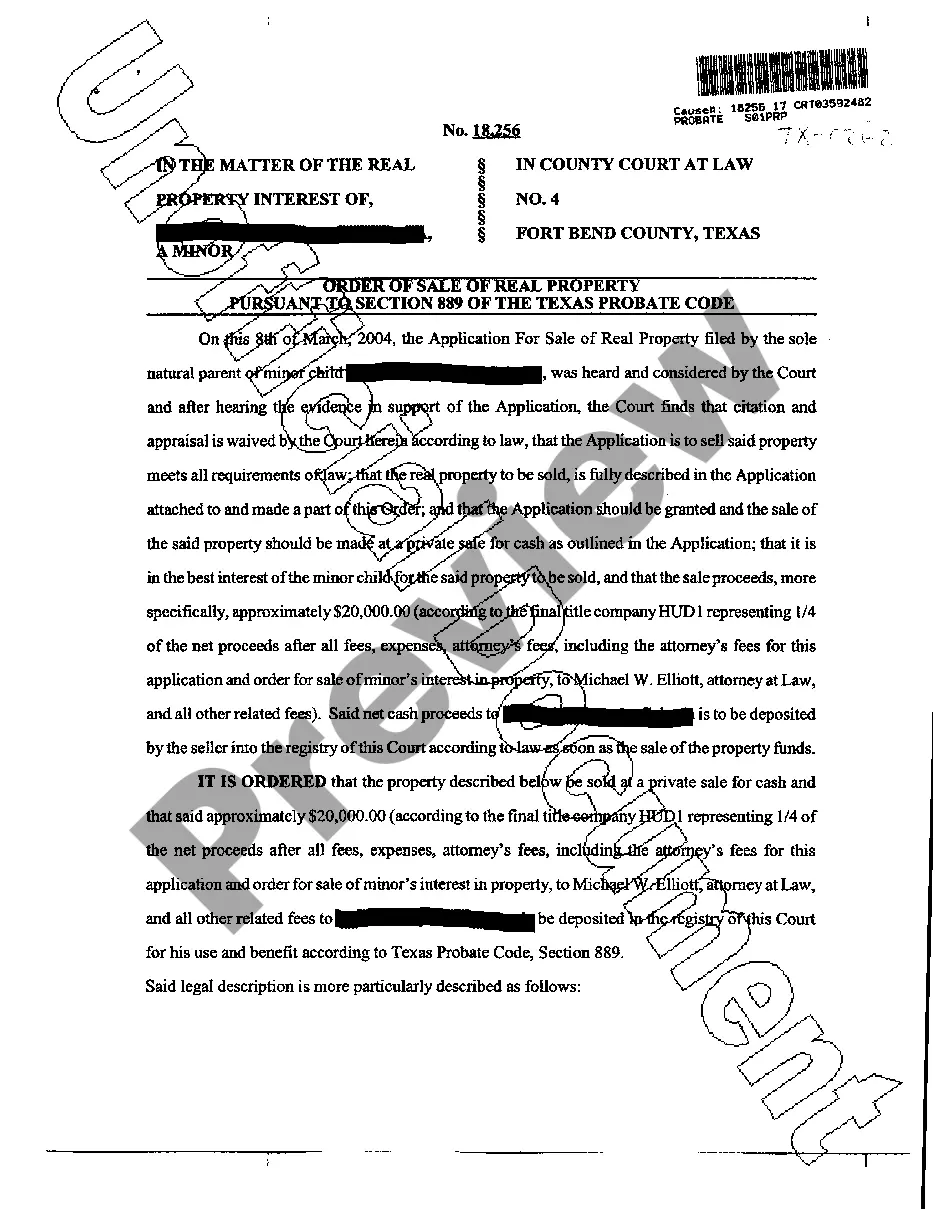
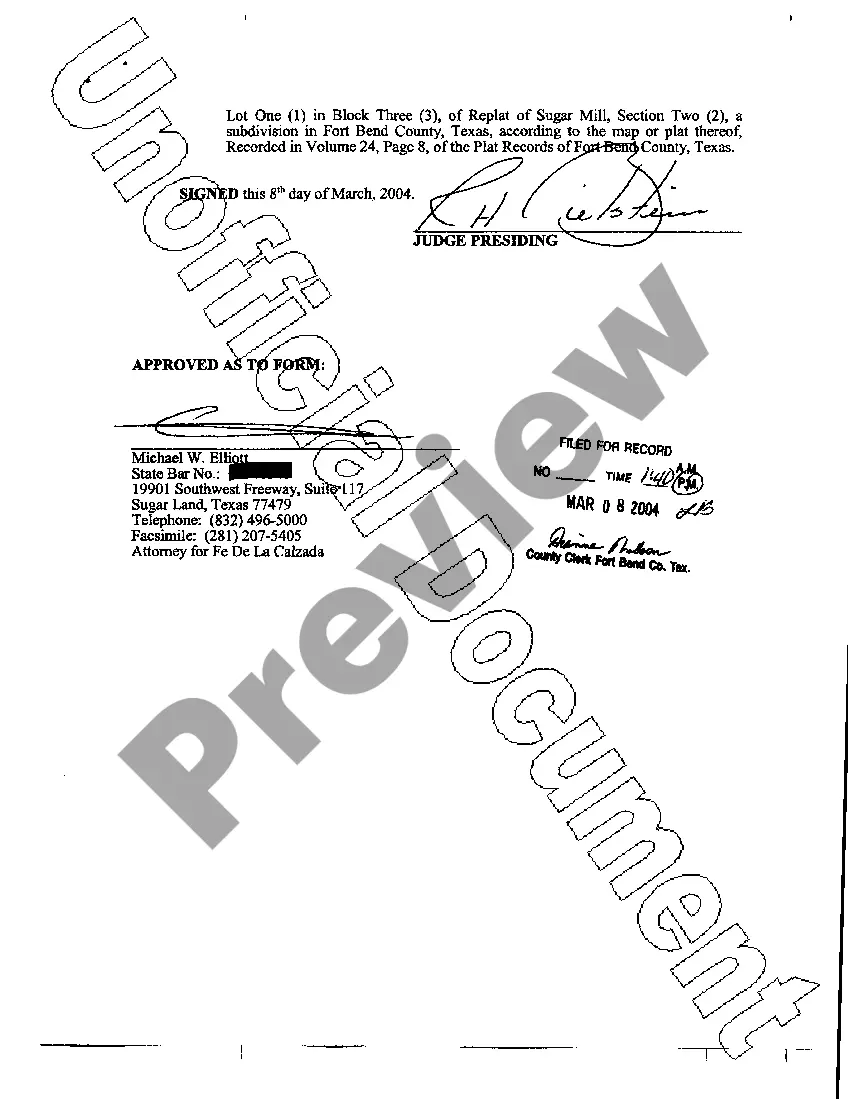
Texas Order of Sale of Real Property
Description


How to fill out Texas Order Of Sale Of Real Property?
Access to quality Texas Order of Sale of Real Property samples online with US Legal Forms. Prevent hours of lost time browsing the internet and lost money on documents that aren’t updated. US Legal Forms gives you a solution to exactly that. Get around 85,000 state-specific legal and tax forms that you could download and complete in clicks within the Forms library.
To get the example, log in to your account and click Download. The file will be saved in two places: on the device and in the My Forms folder.
For people who don’t have a subscription yet, take a look at our how-guide below to make getting started simpler:
- Check if the Texas Order of Sale of Real Property you’re considering is appropriate for your state.
- Look at the sample utilizing the Preview function and browse its description.
- Visit the subscription page by simply clicking Buy Now.
- Select the subscription plan to continue on to register.
- Pay out by card or PayPal to finish making an account.
- Choose a favored format to download the document (.pdf or .docx).
Now you can open the Texas Order of Sale of Real Property sample and fill it out online or print it and do it yourself. Take into account mailing the file to your legal counsel to be certain things are filled out properly. If you make a error, print out and fill application once again (once you’ve created an account all documents you save is reusable). Make your US Legal Forms account now and get a lot more templates.
Form popularity
FAQ
A homeowner can force a sale that is co-owned, either by negotiating a buyout, selling your share to a new owner, or getting a court-forced to sale. A mortgage is an additional legal issue that needs to be addressed in a forced home sale.
To apply for order of sale you will need to go to County Court and obtain a County Court Judgement (CCJ). This will provide you with a decision where either the order is granted or if no instalment order has been granted. Once you've been granted the CCJ you can start the process of applying for an Order for Sale.
A court order will force you to sell your home, but it can take other factors into consideration for instance whether you have children at the home. Are you married to the person who owns the house? If so what happens to the house will be determined by the divorce settlement.
The executor can sell property without getting all of the beneficiaries to approve.If the executor can sell the property for more than 90 percent of its appraised value then they do not need to get the permission of the beneficiaries or of the court.
An executor can sell a property without the approval of all beneficiaries. The will doesn't have specific provisions that require beneficiaries to approve how the assets will be administered. However, they should consult with beneficiaries about how to share the estate.
Find the most recent deed to the property. It is best to begin with a copy of the most recent deed to the property (the deed that transferred the property to the current grantor). Create a new deed. Sign and notarize the deed. File the documents in the county land records.
An Order for sale is a way to enforce a Charging Order. It is an order granting the chargeholder the right to take possession of the property and then to sell it in order to recover the monies secured by their charge.
The terms of the Independent Administration of Estates Act do not avoid probate, but they do allow an executor to sell an estate's real estate without probate court approval under some circumstances.
When your creditor has been granted a final charging order, they can apply for an order for sale. This is a court order that forces you to sell your property and use the money you make from the sale to pay your charging order debt. There will be another court hearing and it's very important for you to go.