Delaware Mutual Wills package with Last Wills and Testaments for Married Couple with No Children
Overview of this form
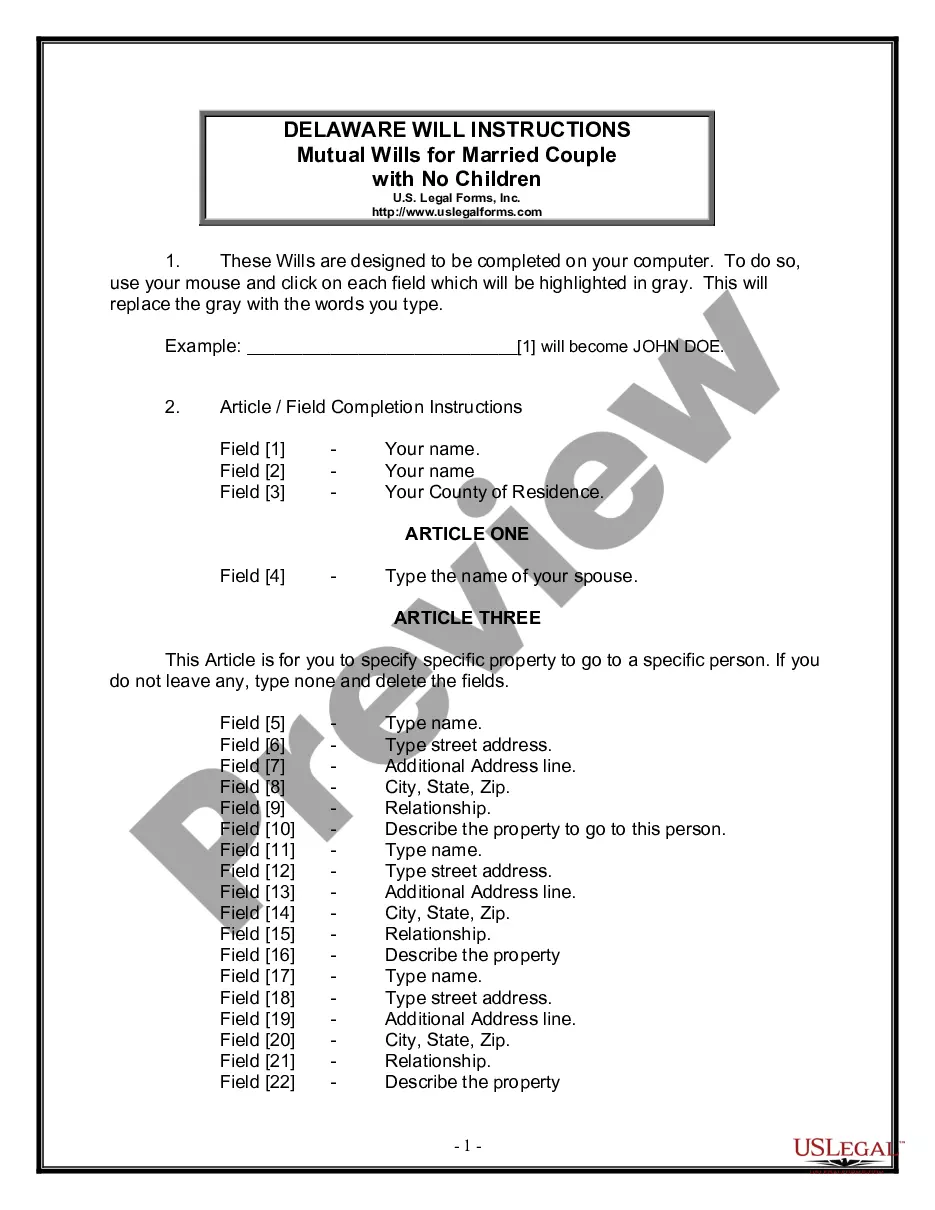
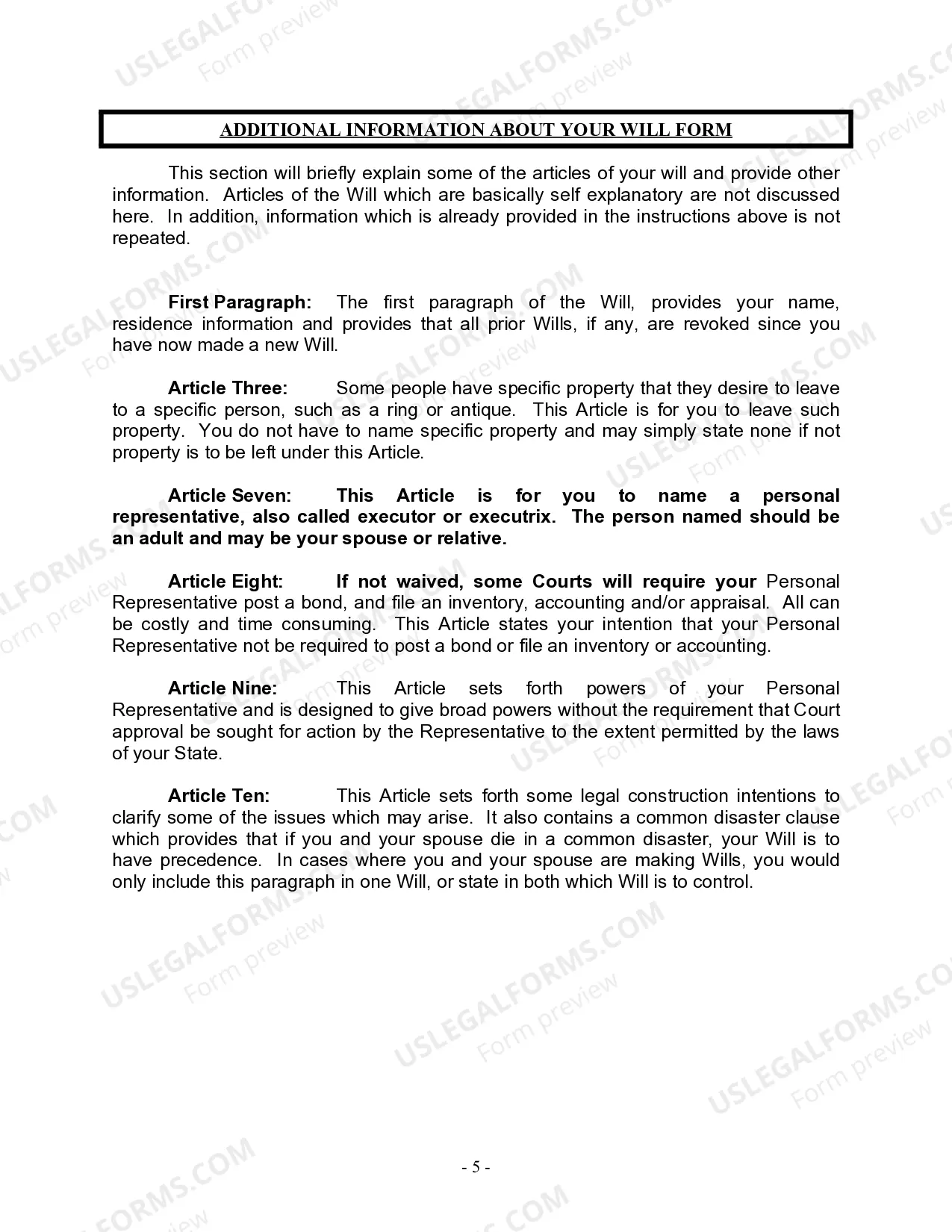
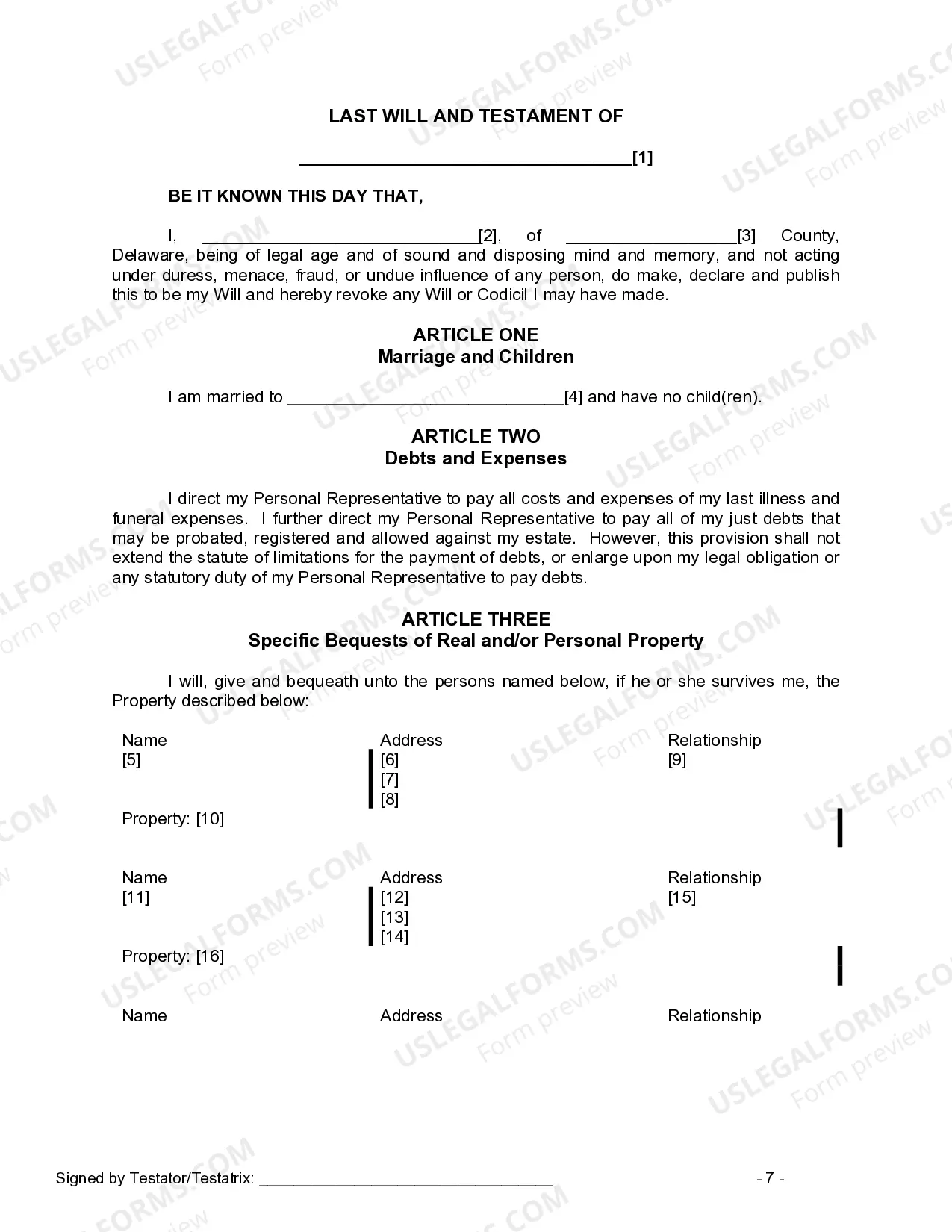
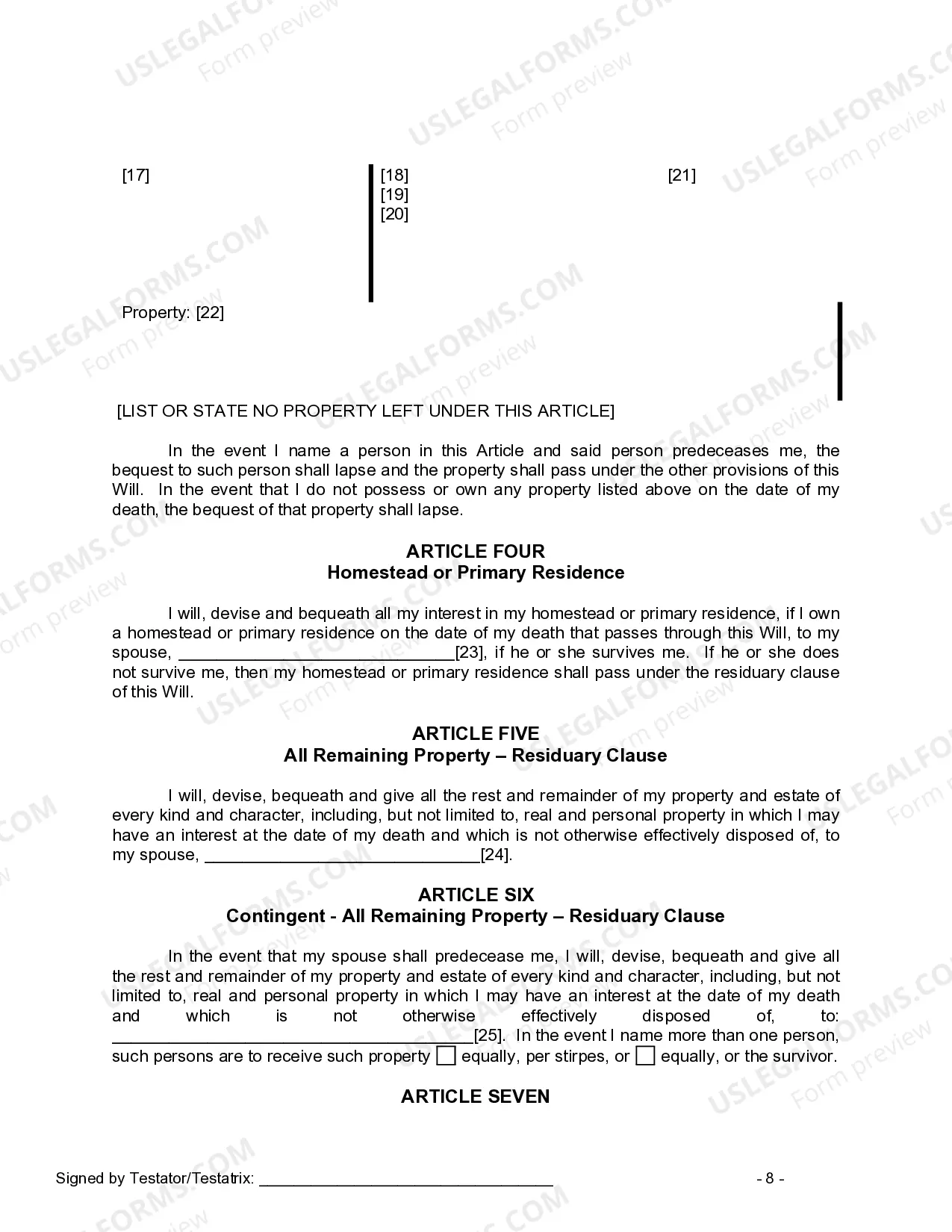
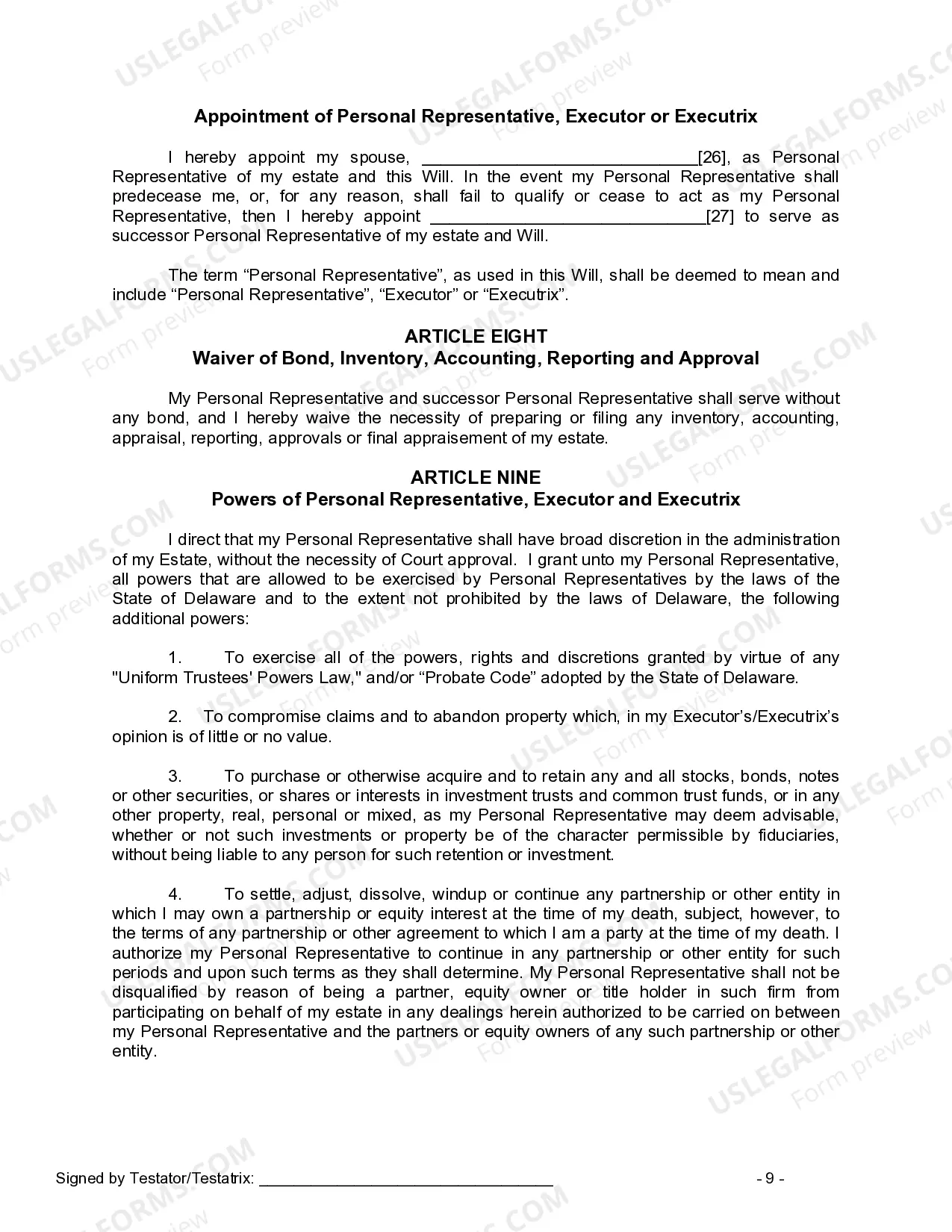
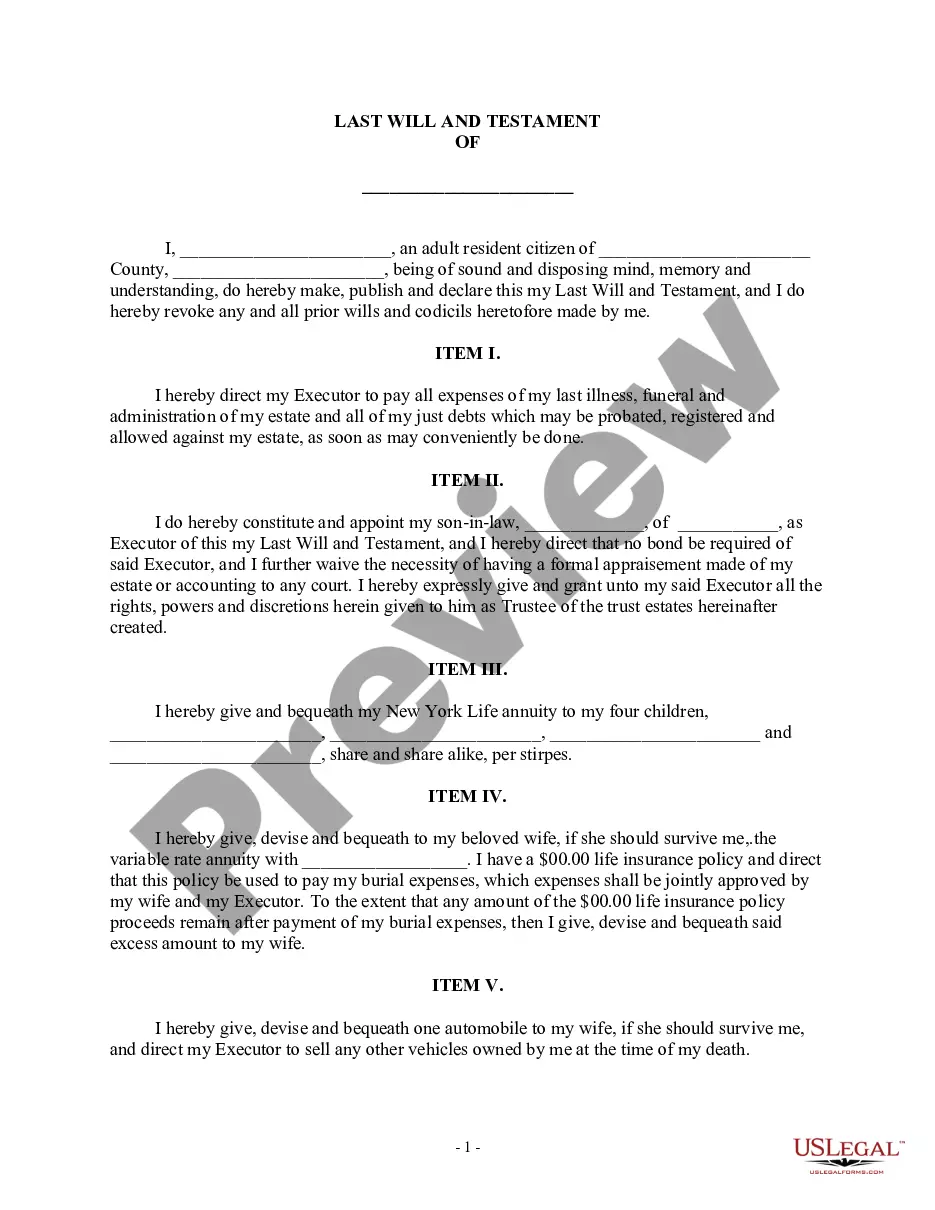
The Mutual Wills package with Last Wills and Testaments for Married Couple with No Children is a legal document designed to express the wishes of spouses regarding the distribution of their assets upon death. Unlike individual wills, this package contains two wills tailored for each spouse, ensuring that both voices are heard in the estate planning process. This is particularly useful for married couples who want to make mutual provisions for each other, allowing for a unified approach to inheritance without causing disputes later on.
Main sections of this form
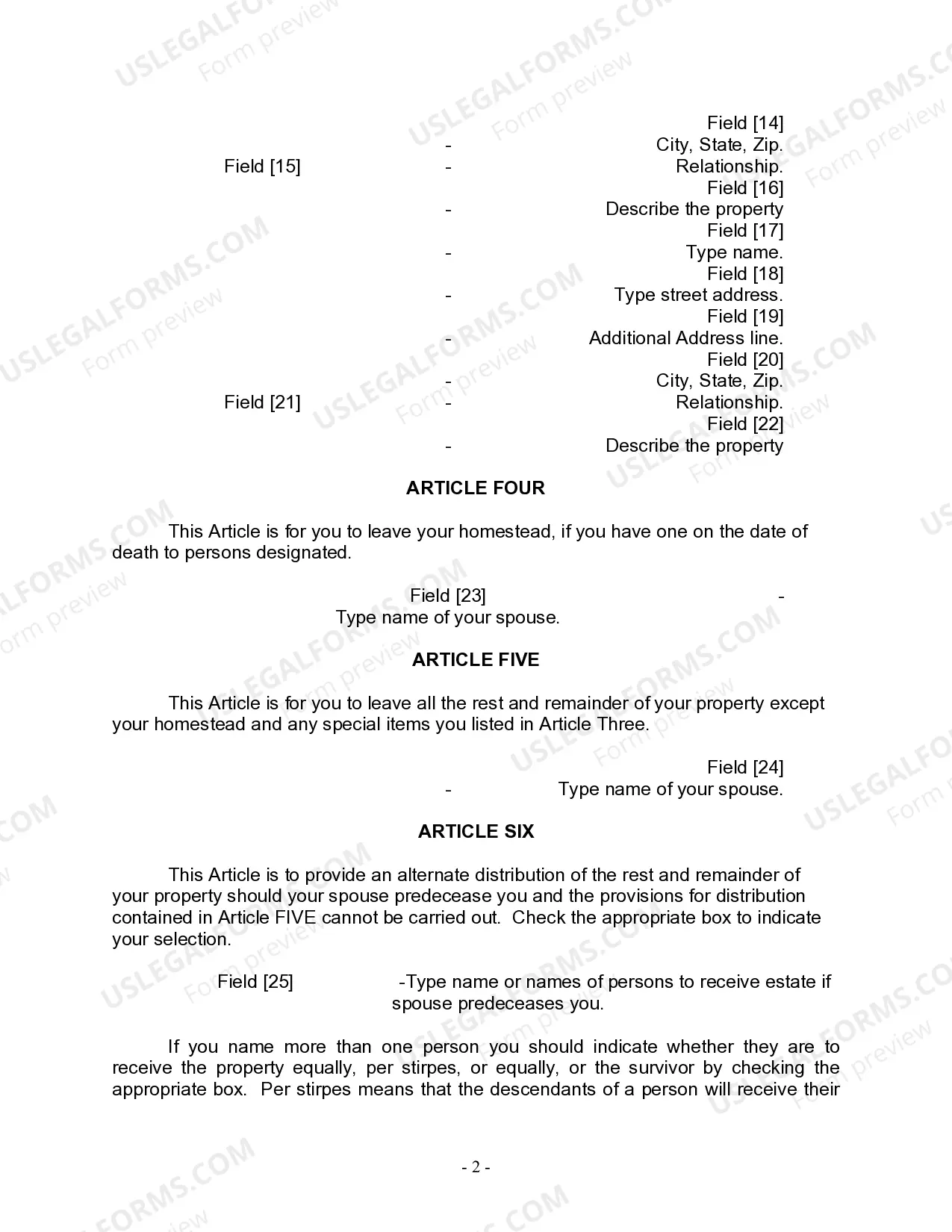
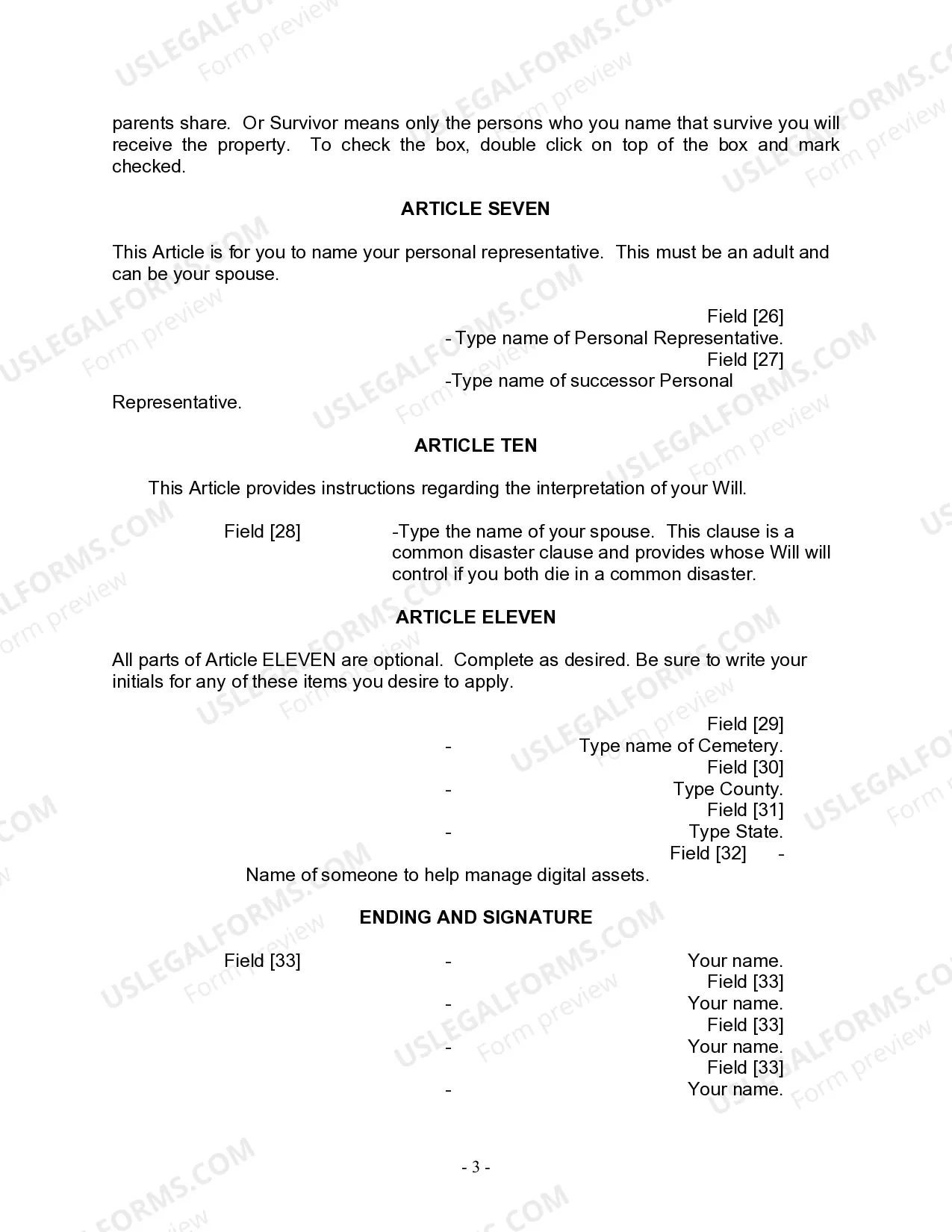
- Appointment of personal representative for estate management.
- Specific bequests of real and personal property designated to beneficiaries.
- Residuary clause that determines distribution of remaining assets after specific bequests.
- Provisions for debts and expenses to be settled after death.
- Witnessing and notarization requirements for legal validity.




Common use cases
This form is typically needed when a married couple wishes to outline their final wishes regarding the distribution of their assets. It is essential when the couple seeks to ensure that their spouse is cared for after one spouse passes away, particularly in cases where there are no children involved. This package is ideal for planning for an orderly transfer of property and minimizing potential disputes among surviving family members.
Intended users of this form
This form is suitable for:
- Married couples without children looking to create mutual wills.
- Couples who want to ensure their assets are passed to each other seamlessly.
- Individuals seeking to simplify the estate planning process while ensuring both partners' wishes are noted.
How to prepare this document
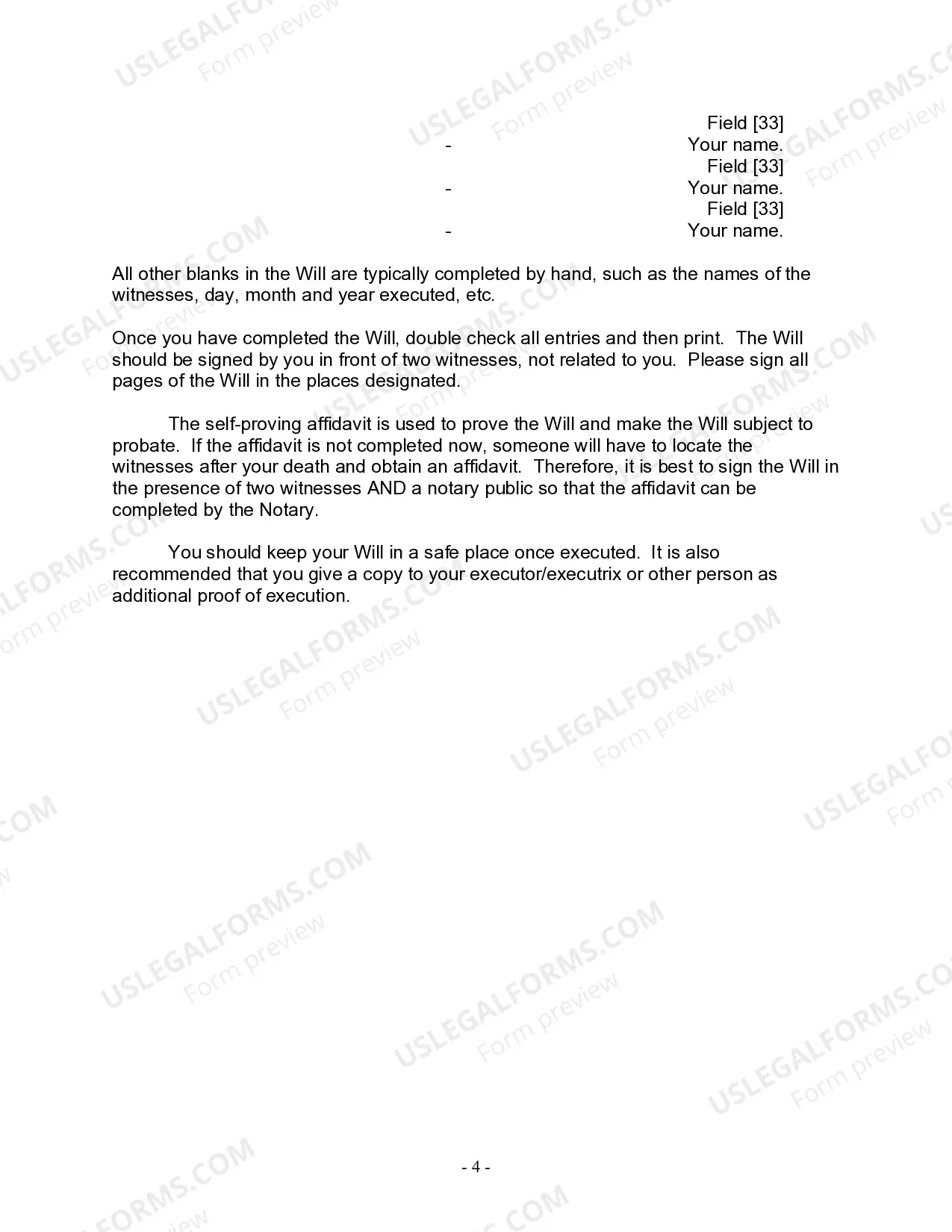
- Enter each spouse's full name and address at the top of the form.
- Designate the personal representative who will manage the estate.
- List specific bequests to beneficiaries, clearly naming them and describing the property.
- Sign the wills in the presence of two appropriate witnesses.
- Have the wills notarized if required by state law.
Is notarization required?
Yes, this form must be notarized to be legally valid. A notary public will need to verify the identities of the signatories and witnesses, which secures the document further against disputes.
Get your form ready online
Our built-in tools help you complete, sign, share, and store your documents in one place.
Make edits, fill in missing information, and update formatting in US Legal Forms—just like you would in MS Word.
Download a copy, print it, send it by email, or mail it via USPS—whatever works best for your next step.
Sign and collect signatures with our SignNow integration. Send to multiple recipients, set reminders, and more. Go Premium to unlock E-Sign.
If this form requires notarization, complete it online through a secure video call—no need to meet a notary in person or wait for an appointment.
We protect your documents and personal data by following strict security and privacy standards.

Make edits, fill in missing information, and update formatting in US Legal Forms—just like you would in MS Word.

Download a copy, print it, send it by email, or mail it via USPS—whatever works best for your next step.

Sign and collect signatures with our SignNow integration. Send to multiple recipients, set reminders, and more. Go Premium to unlock E-Sign.

If this form requires notarization, complete it online through a secure video call—no need to meet a notary in person or wait for an appointment.

We protect your documents and personal data by following strict security and privacy standards.
Typical mistakes to avoid
- Failing to properly witness the wills as per state requirements.
- Not clearly defining the property or their beneficiaries in the bequests.
- Missing out on naming a successor personal representative.
Benefits of completing this form online
- Convenient access to downloadable legal forms anytime, saving time and effort.
- Editability allows users to customize the forms according to their specific needs.
- Reliability of professionally drafted documents ensures legality and compliance with state laws.
Looking for another form?
Form popularity
FAQ
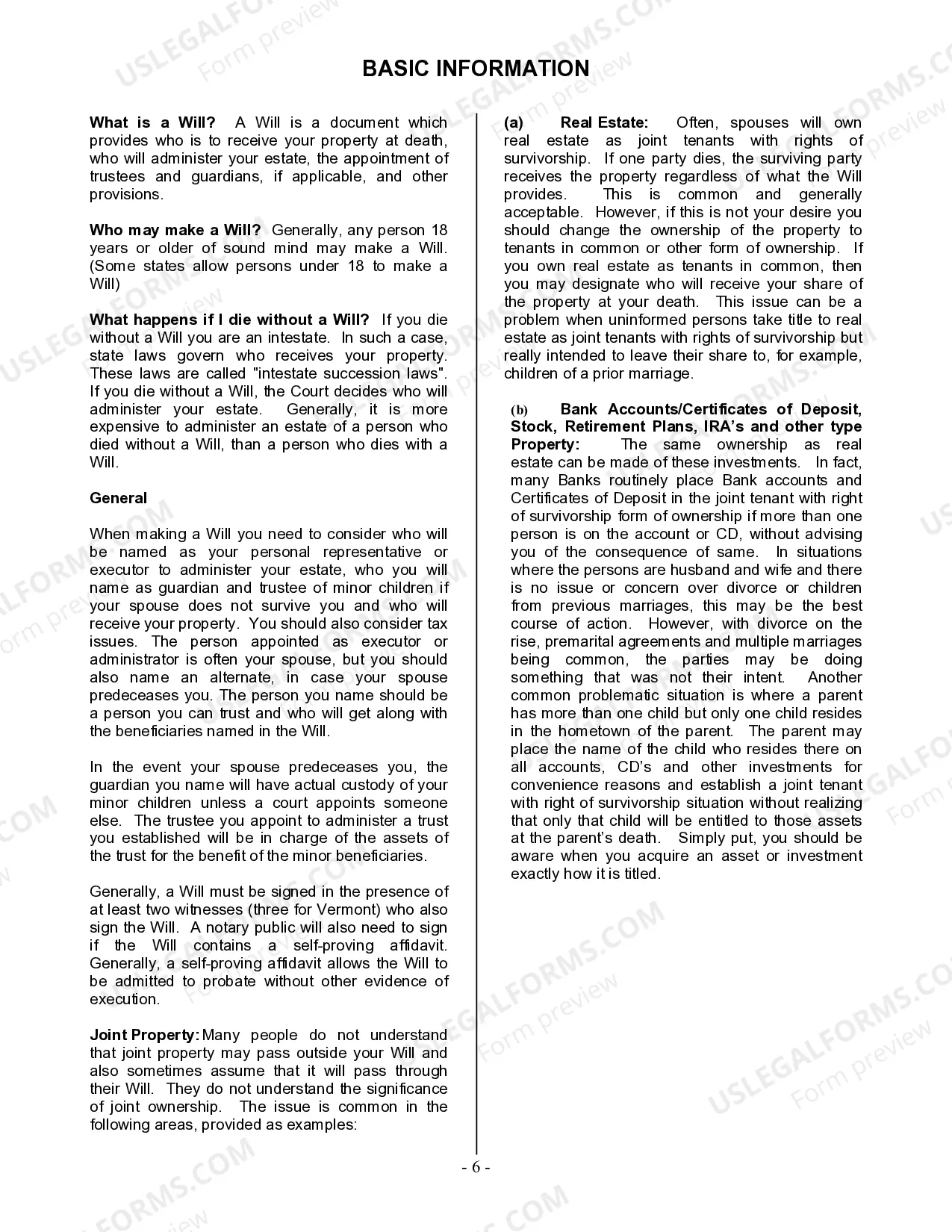
A will that leaves everything to your spouse is often referred to as a simple will. This type of will specifies that all assets, property, and possessions pass directly to your partner upon your death. By utilizing a Delaware Mutual Wills package with Last Wills and Testaments for Married Couple with No Children, you can explicitly state your wishes, ensuring that your spouse receives everything without unnecessary complications.
Wills for married couples outline how each spouse wishes to distribute their assets after death. Typically, when one spouse dies, the surviving spouse inherits everything if the estate plan is structured accordingly. Using a Delaware Mutual Wills package with Last Wills and Testaments for Married Couple with No Children helps ensure that both partners have clear intentions, promoting peace of mind and preventing potential disputes among family members.
For a married couple, a joint tenancy deed often serves as the best choice. This type of deed allows both spouses to own property together, ensuring that if one spouse passes, the other automatically inherits the entire asset. Additionally, if you pair this with a Delaware Mutual Wills package with Last Wills and Testaments for Married Couple with No Children, it provides a comprehensive estate plan that simplifies inheritance matters.
When one spouse dies, the surviving spouse’s rights under the will depend on its specific terms and Delaware state law. Typically, the provisions of the Delaware Mutual Wills package with Last Wills and Testaments for Married Couples with No Children allow the surviving spouse to inherit as stipulated. Proper preparation of these wills can ensure that the intentions for asset distribution are clear and enforceable.
In Delaware, when a husband passes away, the wife is entitled to a significant share of the estate, often determined by whether a valid will exists. The Delaware Mutual Wills package allows couples to specify their plans for distribution, ensuring that the surviving spouse receives what they are entitled to, aligned with their desires. This legal structure can prevent disputes and provide financial security to the surviving spouse.
In many cases, your spouse may naturally be considered a beneficiary in your will, especially if you choose a mutual will structure. The Delaware Mutual Wills package clarifies this process by explicitly naming your spouse as a beneficiary, promoting transparency about inheritance. It is advisable to be specific in your will to ensure that your spouse's status as a beneficiary is clearly recognized.
Married couples should generally consider separate wills, as they provide the flexibility to make individual changes and express personal wishes for asset distribution. By utilizing the Delaware Mutual Wills package with Last Wills and Testaments for Married Couples with No Children, couples can create wills that reflect both partners’ preferences without the limitations of joint wills. This approach fosters clearer communication and understanding between spouses.
The best type of will for a married couple is a mutual will, as it allows both partners to express their wishes regarding the distribution of their estate while providing legal protection. The Delaware Mutual Wills package with Last Wills and Testaments for Married Couples with No Children serves this purpose well. It offers a comprehensive approach to estate planning, ensuring that both spouses’ needs are adequately addressed.
Joint wills can be problematic as they often restrict the ability of one spouse to change their will after the first spouse passes away. This can lead to unintended consequences, conflicts, and difficulties in managing estate complexities. By opting for the Delaware Mutual Wills package with Last Wills and Testaments for Married Couples with No Children, couples can create separate wills that offer flexibility while still considering the wishes of both partners.
In Delaware, a surviving spouse is entitled to a significant portion of the estate, but they do not automatically inherit everything. The Delaware Mutual Wills package helps delineate how assets will be distributed according to the couple’s wishes. It is crucial to specify your intentions in your will to ensure that your spouse’s inheritance aligns with your desires, which is where a tailored will truly benefits married couples.