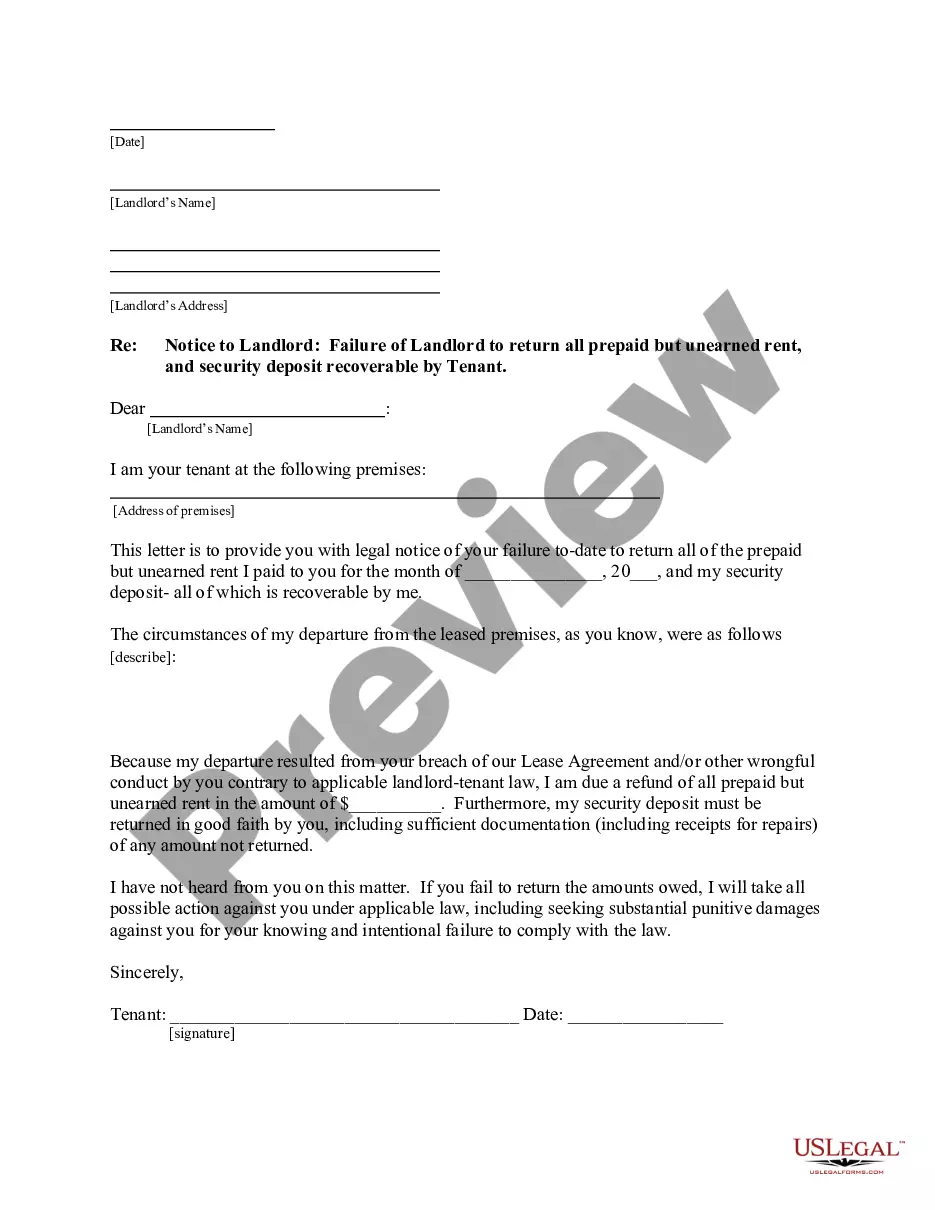
Delaware Letter from Tenant to Landlord with Demand that landlord remove garbage and vermin from premises
Understanding this form
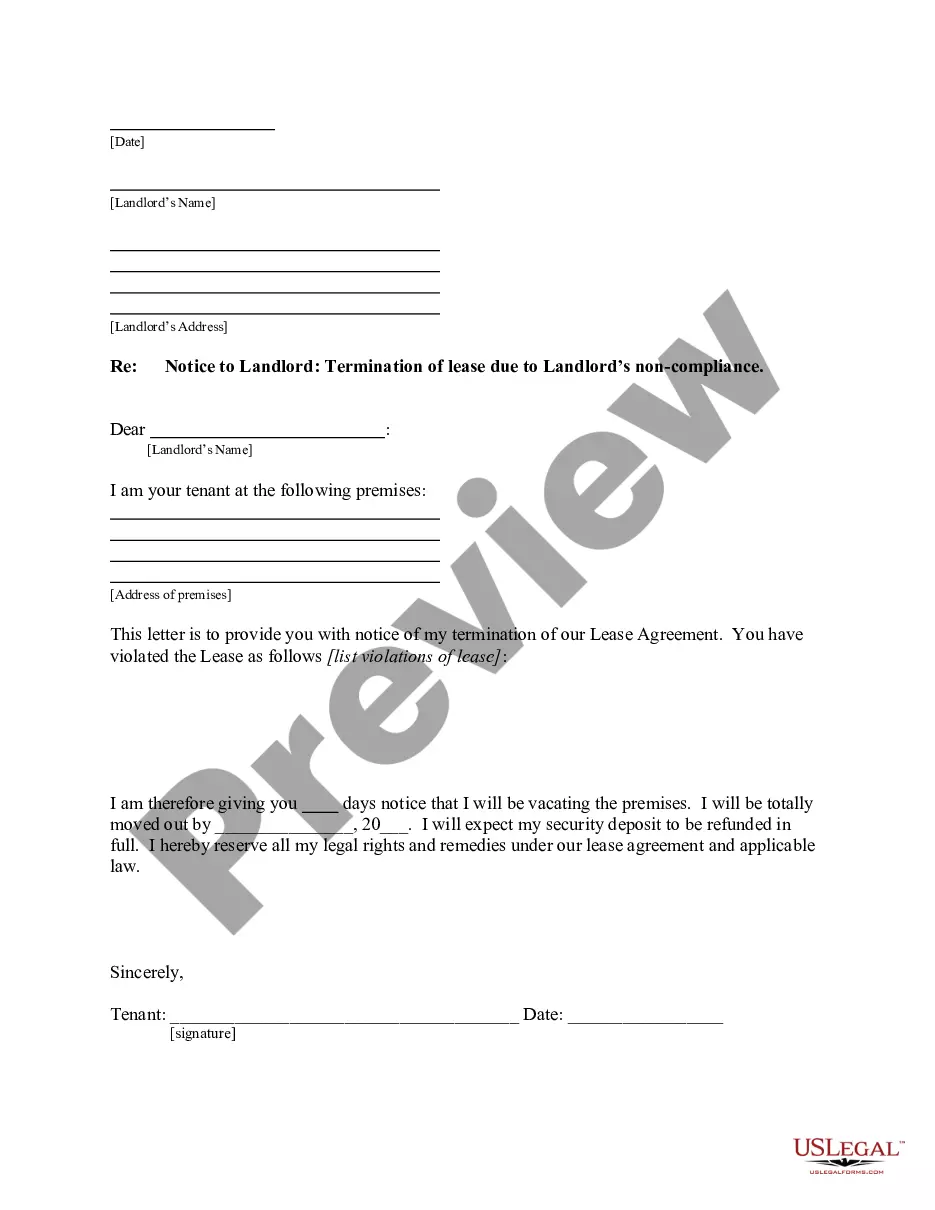
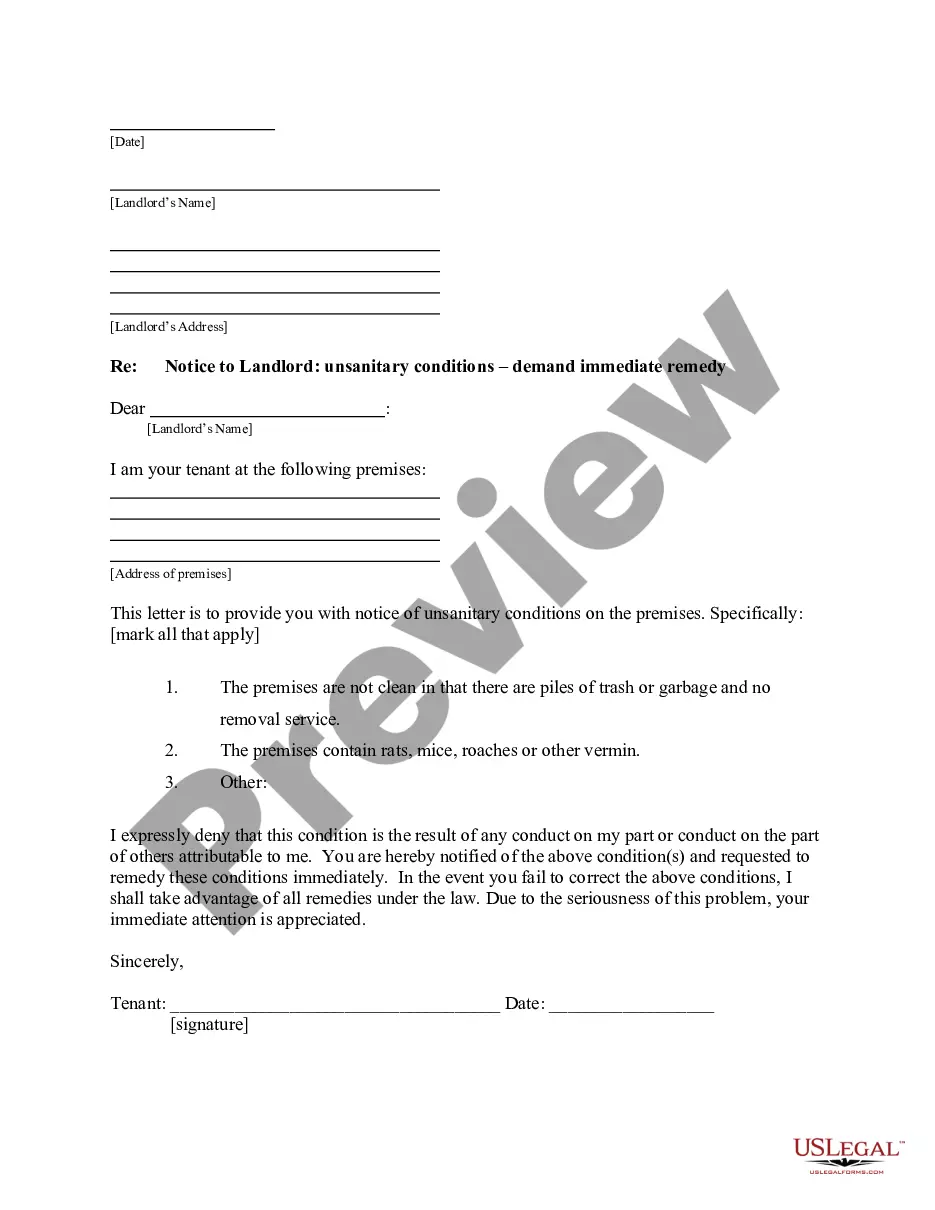
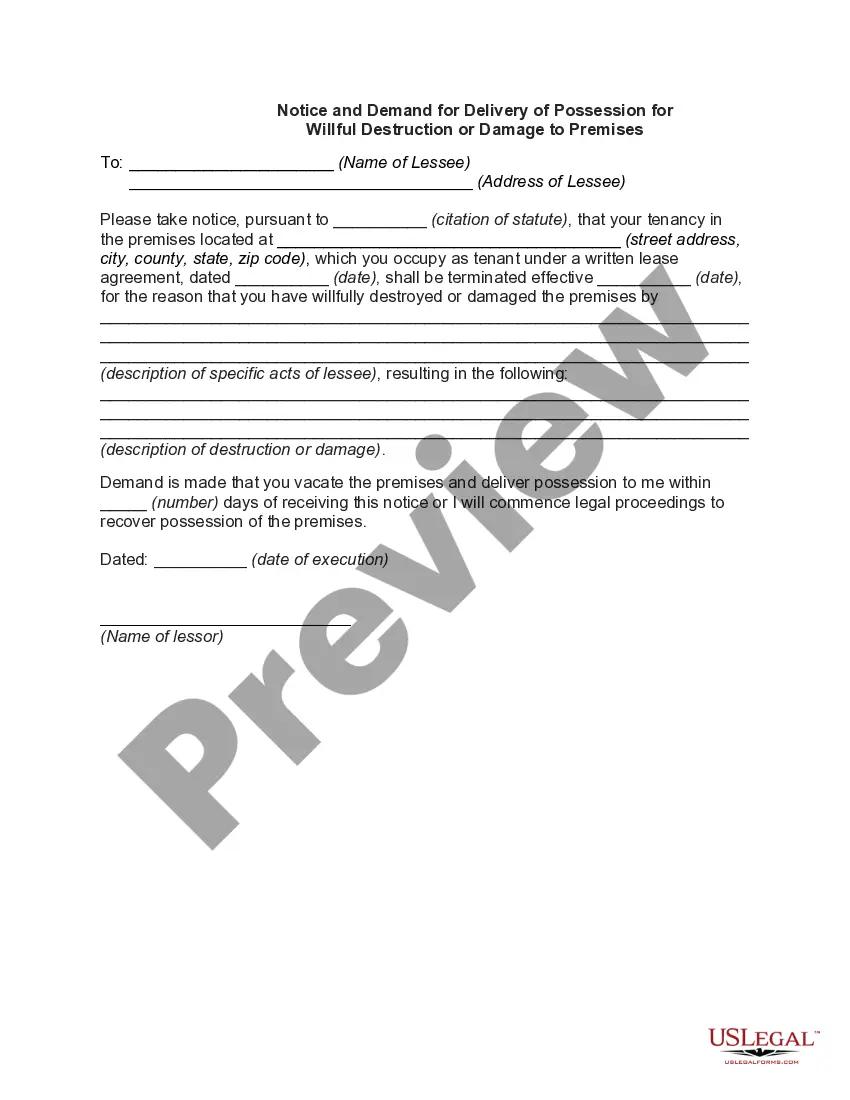
This form is a Letter from Tenant to Landlord with Demand that landlord remove garbage and vermin from premises. It serves as a formal notification from a tenant to a landlord regarding unsanitary conditions within the rental property. This form is crucial for documenting the tenant's request for immediate repairs and notifying the landlord of their breach of the lease agreement.
Form components explained
- Tenant's denial of responsibility for the unsanitary conditions.
- Formal notification of the condition(s) that need remedy.
- Demand for immediate corrective action from the landlord.
- Potential consequences if conditions are not remedied.
- Signature and date field for the tenant.

When this form is needed
This form should be used when a tenant observes unsanitary conditions related to garbage and vermin that the landlord has failed to address. It is appropriate when informal communication has not led to resolution, and the tenant needs to document their demand formally. This form may also be necessary prior to pursuing any legal action if the landlord does not respond adequately.
Who needs this form
This form is intended for:
- Tenants who are experiencing issues with garbage and vermin in their rental premises.
- Individuals who have previously notified their landlord but received no response.
- Renters looking to document their complaints in a formal manner before considering legal action.
Instructions for completing this form
Follow these steps to complete the form:
- Identify the unsanitary condition(s) present in the property.
- Fill in your details as the tenant, including name and address.
- Clearly state that you deny responsibility for the condition(s).
- Include a demand for the landlord to remedy the situation and mention potential legal action if unaddressed.
- Sign and date the letter before delivering it to the landlord.
Does this document require notarization?
This form does not typically require notarization unless specified by local law. It is sufficient for making a formal request to the landlord regarding unsanitary conditions.
Get your form ready online
Our built-in tools help you complete, sign, share, and store your documents in one place.
Make edits, fill in missing information, and update formatting in US Legal Forms—just like you would in MS Word.
Download a copy, print it, send it by email, or mail it via USPS—whatever works best for your next step.
Sign and collect signatures with our SignNow integration. Send to multiple recipients, set reminders, and more. Go Premium to unlock E-Sign.
If this form requires notarization, complete it online through a secure video call—no need to meet a notary in person or wait for an appointment.
We protect your documents and personal data by following strict security and privacy standards.

Make edits, fill in missing information, and update formatting in US Legal Forms—just like you would in MS Word.

Download a copy, print it, send it by email, or mail it via USPS—whatever works best for your next step.

Sign and collect signatures with our SignNow integration. Send to multiple recipients, set reminders, and more. Go Premium to unlock E-Sign.

If this form requires notarization, complete it online through a secure video call—no need to meet a notary in person or wait for an appointment.

We protect your documents and personal data by following strict security and privacy standards.
Common mistakes
- Failing to document prior communications with the landlord.
- Not being specific about the unsanitary conditions.
- Leaving out the date or signature, which could render the notice ineffective.
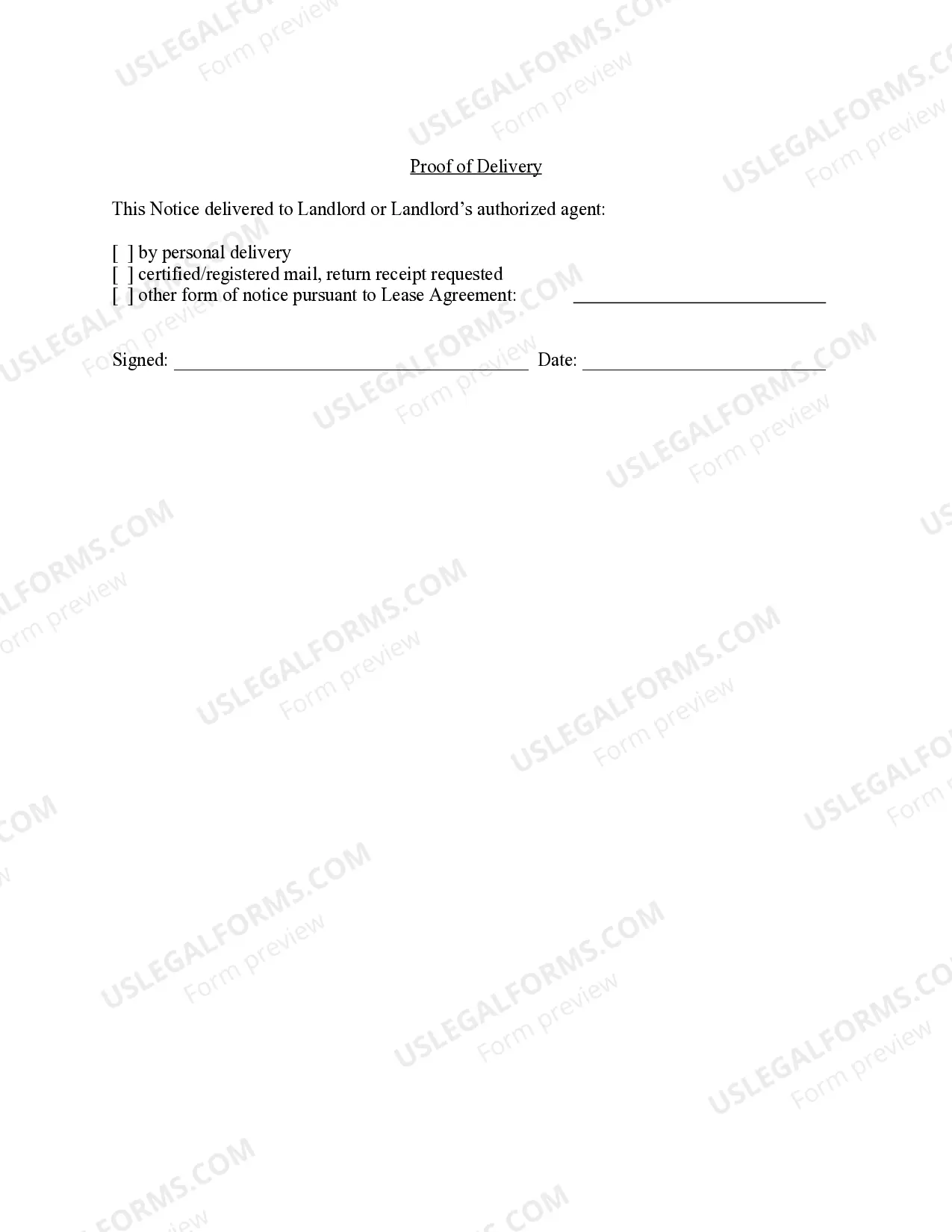
- Not sending the letter via a method that provides proof of delivery.
Advantages of online completion
- Immediate access to a legally recognized form drafted by licensed attorneys.
- Conveniently download and fill out the form at your own pace.
- Edit the form as needed to suit your specific conditions.
- Gain peace of mind knowing that your rights as a tenant are being communicated effectively.
- This letter serves as a record of the tenant's complaint and demand for repairs.
- It may be used as evidence in legal proceedings if the landlord fails to address the issues.
- Timely delivery and proper documentation strengthen the tenant's position in any disputes.
Main things to remember
- A Letter from Tenant to Landlord concerning garbage and vermin ensures formal communication of unsanitary conditions.
- Tenants must be clear, specific, and assertive when filling out the form.
- Proof of delivery strengthens the tenant's legal standing.
Looking for another form?

Form popularity
FAQ
In Delaware, a landlord must return the security deposit within 20 days after a tenant vacates the premises. This process includes providing an itemized list of any deductions, if applicable. If you feel that your security deposit was handled improperly, consider sending a Delaware Letter from Tenant to Landlord with Demand that landlord remove garbage and vermin from premises. This can help clarify any disputes and encourage the landlord to act promptly.
While Delaware law does not specify a set timeline for carpet replacement, landlords are responsible for maintaining their rental properties in good condition. Regular upkeep is crucial to preserve a safe and inviting space for tenants. If the carpet shows signs of destruction or infestation, a Delaware Letter from Tenant to Landlord with Demand that landlord remove garbage and vermin from premises can request timely repairs or replacements from your landlord.
In Delaware, there is currently no law prescribing a specific maximum rent increase amount, allowing landlords some discretion. However, rent increases must comply with any lease agreements and must not be retaliatory in nature. Therefore, if you face unwarranted increases alongside unresolved vermin or garbage issues, a Delaware Letter from Tenant to Landlord with Demand that landlord remove garbage and vermin from premises can strengthen your position in negotiations.
Section 5314 of the Delaware Residential Landlord-Tenant Code outlines tenants' rights regarding habitability. It mandates that landlords maintain rental properties in a safe and clean condition. If your landlord fails to address issues like garbage disposal or pest infestations, you may use a Delaware Letter from Tenant to Landlord with Demand that landlord remove garbage and vermin from premises to demand action, ensuring your living environment meets legal standards.
To send a demand letter to your landlord, first, create a formal written document outlining your concerns, like garbage and vermin issues. Be sure to include your contact information, the property address, and a clear request for action. After drafting, send the letter via certified mail to ensure it reaches your landlord, and keep copies for your records. This process will facilitate your Delaware Letter from Tenant to Landlord with Demand that landlord remove garbage and vermin from premises, establishing a formal record.
In Delaware, the amount of notice a landlord must give a tenant to move out varies based on the tenancy term. Typically, for month-to-month leases, landlords must provide at least 60 days' notice. If issues such as garbage and vermin affect your living conditions, you may want to document those concerns. A Delaware Letter from Tenant to Landlord with Demand that landlord remove garbage and vermin from premises can support your position while vacating.
In Delaware, there are no specific limits on how much a landlord can raise rent; however, landlords must provide notice regarding the rent increase. If you feel that a rent hike is unreasonable especially after raising issues with garbage and vermin, consider sending a Delaware Letter from Tenant to Landlord with Demand that landlord remove garbage and vermin from premises before discussing costs. It's essential to know your rights and the prevailing rental market conditions.
Section 5314 in the Delaware Residential Landlord Tenant Code focuses specifically on maintaining a safe and sanitary living environment for tenants. This section empowers tenants to communicate issues related to garbage and vermin clearly using a Delaware Letter from Tenant to Landlord with Demand that landlord remove garbage and vermin from premises. It establishes the legal framework for tenants to request necessary repairs or improvements.
Section 5314 of the Delaware tenant code addresses tenants' rights and responsibilities regarding maintenance and safety issues in rental properties. This section allows tenants to send a Delaware Letter from Tenant to Landlord with Demand that landlord remove garbage and vermin from premises. It emphasizes the importance of a habitable living environment and outlines permissible actions if landlords fail to comply.
To write a professional letter to a landlord, ensure your letter maintains a formal tone throughout. Address the landlord politely, state the issue clearly, and support your points with specifics. For example, if dealing with garbage and vermin, a Delaware Letter from Tenant to Landlord with Demand that landlord remove garbage and vermin from premises demonstrates a proper approach in seeking resolution.