Delaware Letter from Landlord to Tenant as Notice to remove unauthorized pets from premises
About this form
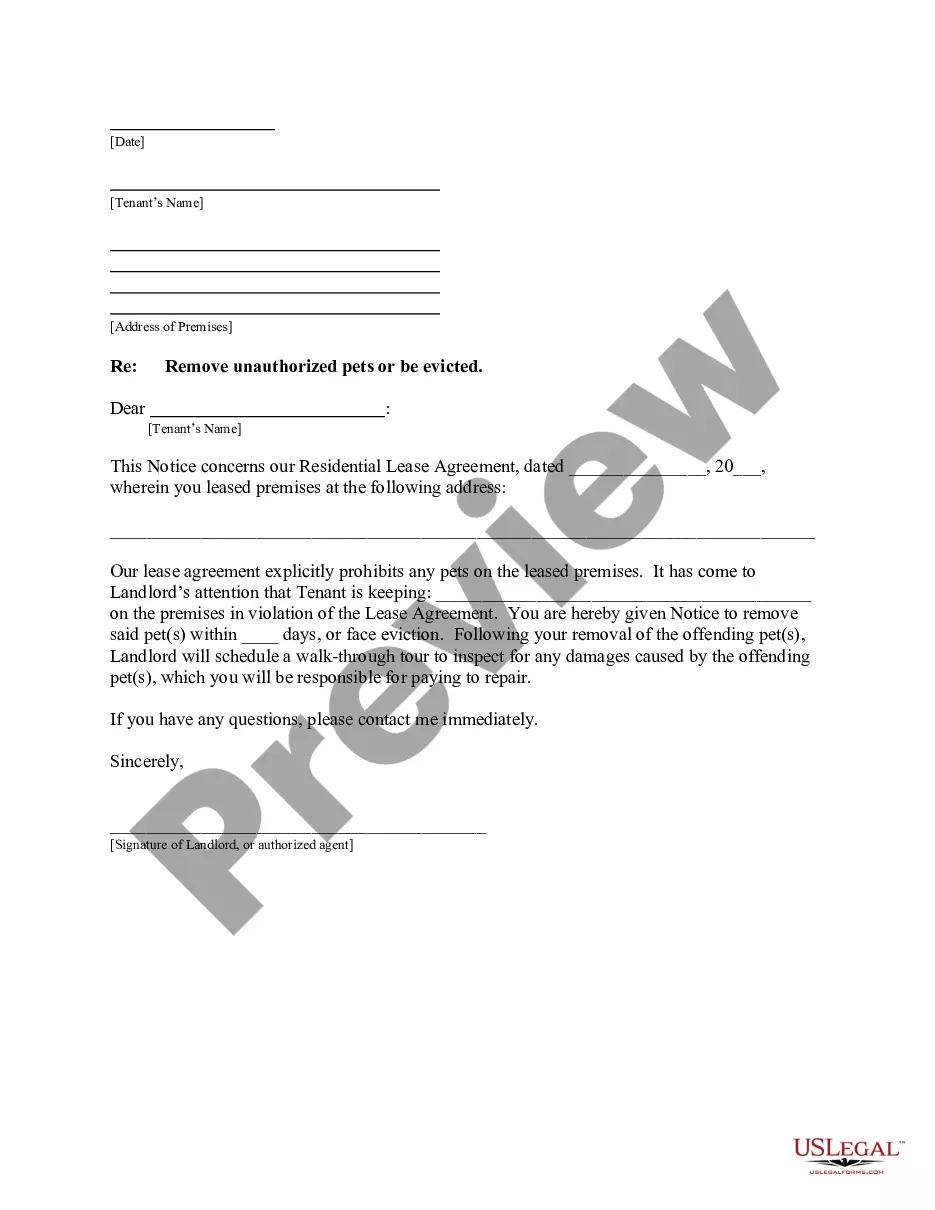
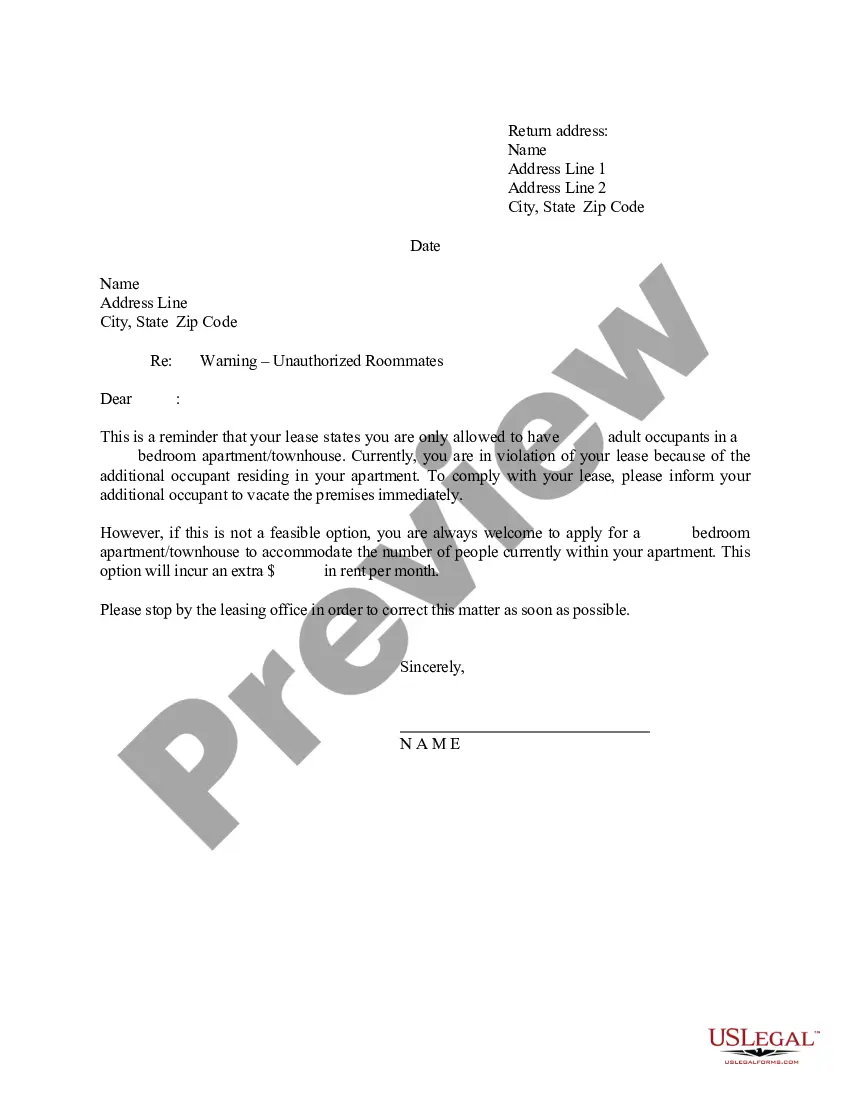
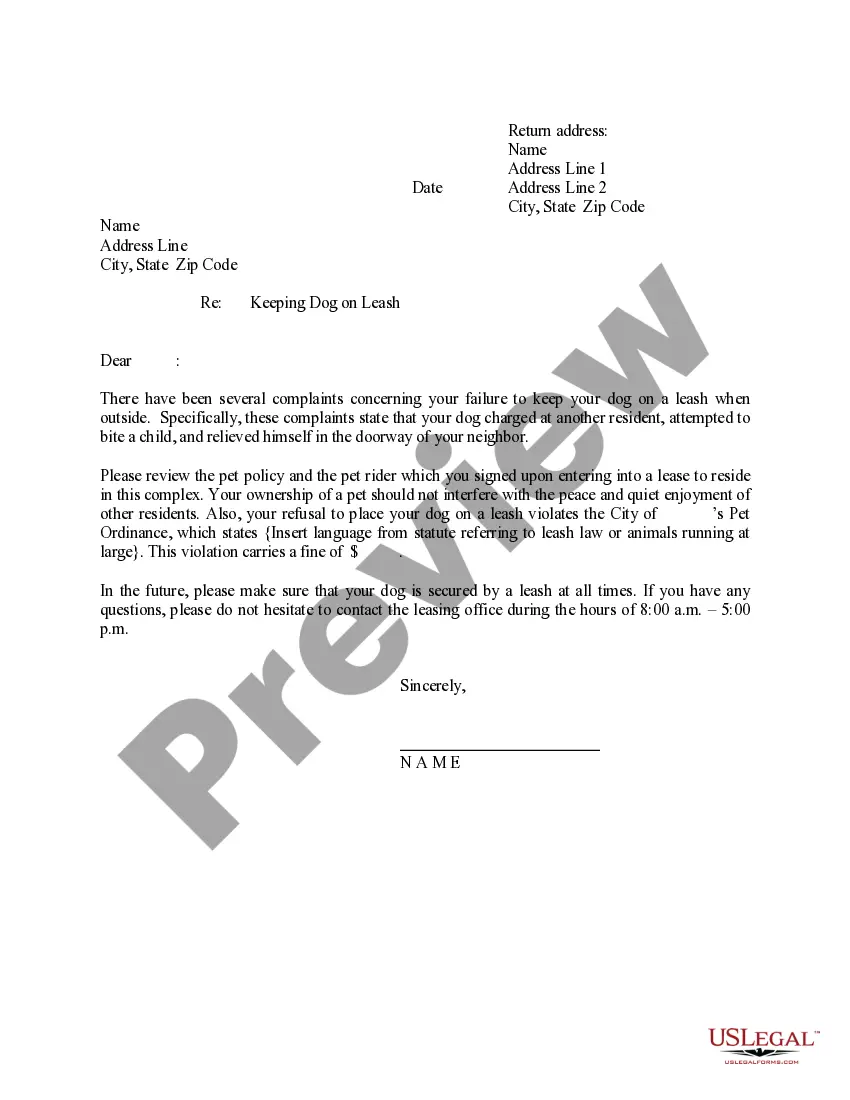
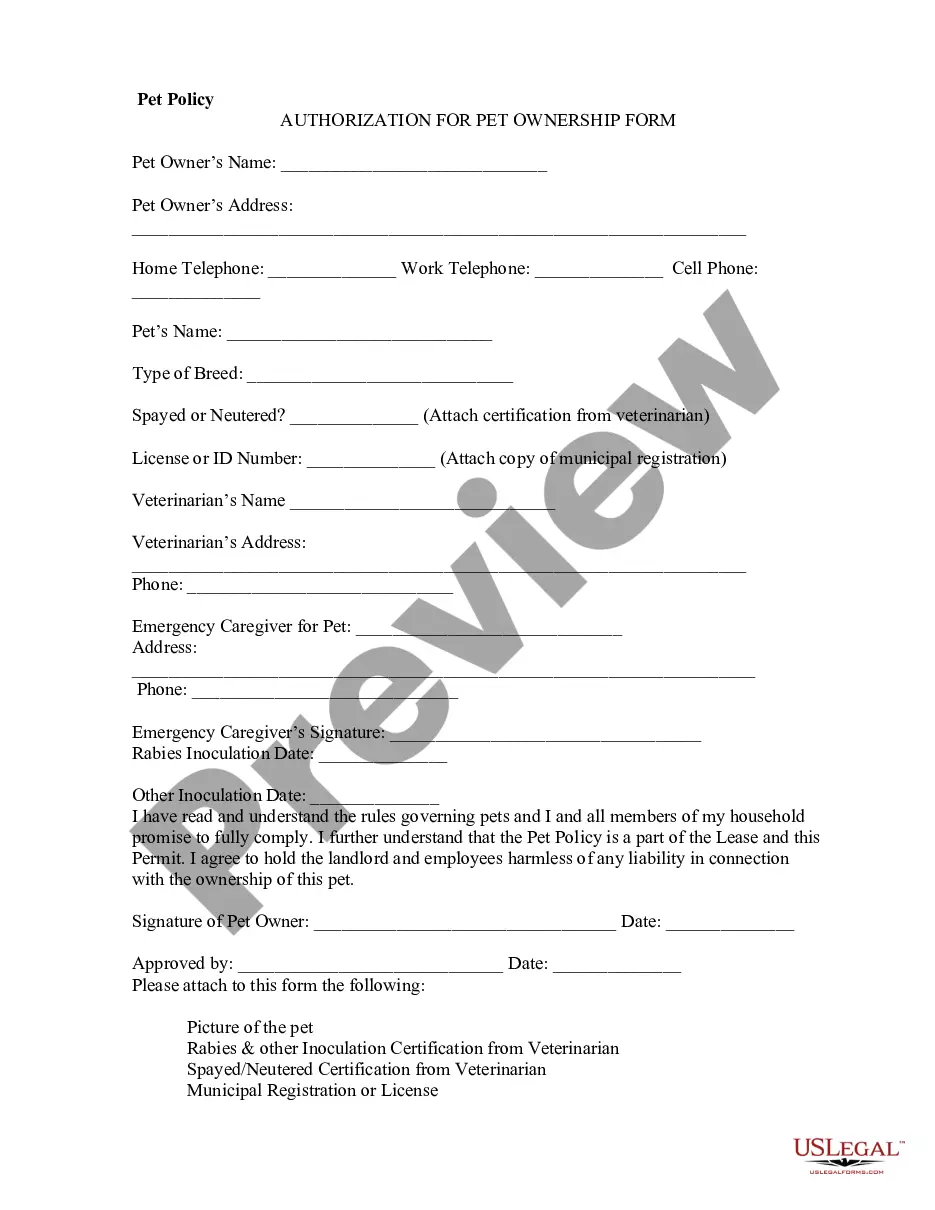
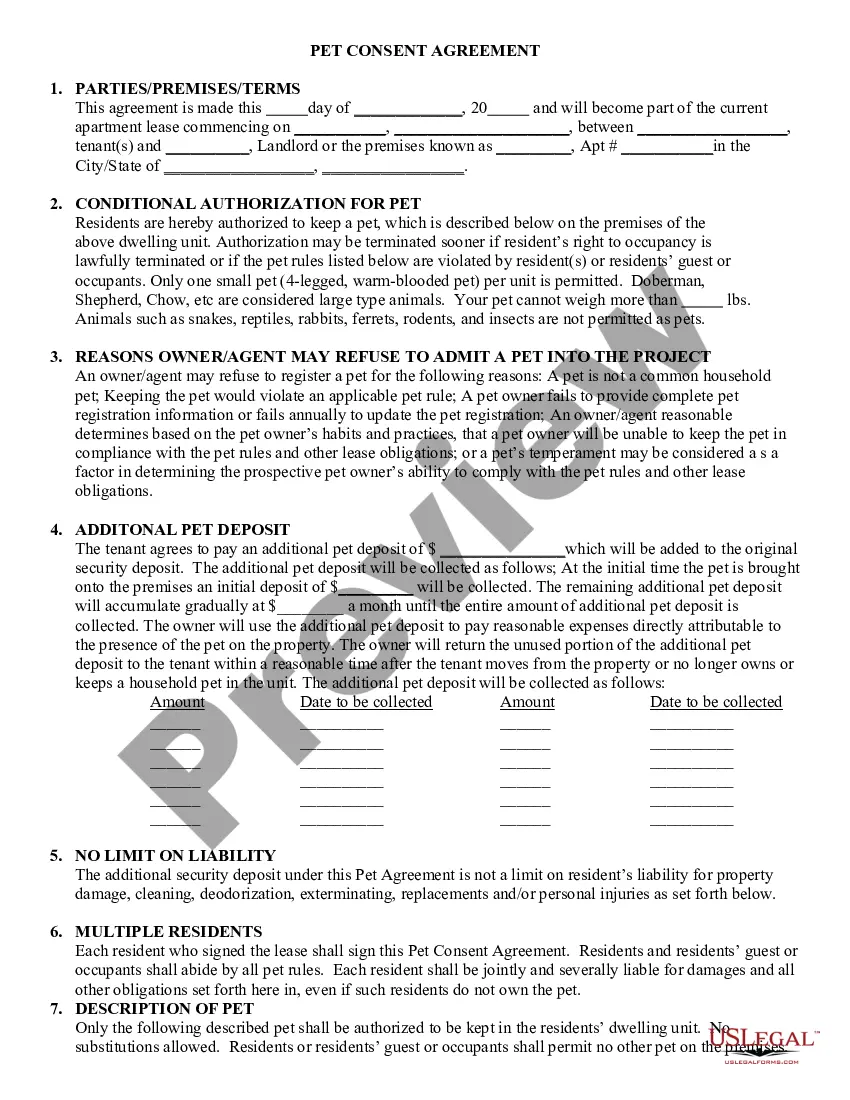
This form is a notice from the landlord to the tenant, specifically regarding the removal of unauthorized pets from the leased premises. It serves to formally inform the tenant that keeping such pets is a breach of the residential lease agreement. This letter outlines the necessary actions the tenant must take and the potential consequences of non-compliance, such as eviction or legal actions from the landlord. Unlike other forms of communication, this written notice provides a clear legal foundation for future proceedings if necessary.
What’s included in this form
- Identification of the lease agreement date and property address
- Statement of the lease clause prohibiting pets
- Specific identification of unauthorized pets currently on the premises
- Notification period for the tenant to remove the pets
- Outline of potential follow-up actions, such as property inspection
- Contact information for the landlord or authorized agent
When to use this form
This form should be used when a landlord becomes aware that a tenant is keeping unauthorized pets in violation of their lease agreement. It serves as an official request for the tenant to remove the pets within a specified timeframe. This notice is crucial for protecting the landlord's rights and ensuring compliance with the lease terms to prevent potential eviction proceedings.
Who this form is for
- Landlords who have a residential lease agreement with tenants
- Tenants who are notified of unauthorized pets on the rented property
- Property managers acting on behalf of landlords
- Landlords in need of documented proof of communication regarding lease violations
Completing this form step by step
- Identify the date of the residential lease agreement.
- Specify the complete address of the leased property.
- Clearly state what unauthorized pets are being kept on the premises.
- Indicate the number of days the tenant has to remove the pets.
- Prepare for a property inspection to assess any potential damages caused by the pets.
- Sign the letter as the landlord or authorized agent.
Notarization requirements for this form
This form does not typically require notarization to be legally valid. However, some jurisdictions or document types may still require it. US Legal Forms provides secure online notarization powered by Notarize, available 24/7 for added convenience.
Get your form ready online
Our built-in tools help you complete, sign, share, and store your documents in one place.
Make edits, fill in missing information, and update formatting in US Legal Forms—just like you would in MS Word.
Download a copy, print it, send it by email, or mail it via USPS—whatever works best for your next step.
Sign and collect signatures with our SignNow integration. Send to multiple recipients, set reminders, and more. Go Premium to unlock E-Sign.
If this form requires notarization, complete it online through a secure video call—no need to meet a notary in person or wait for an appointment.
We protect your documents and personal data by following strict security and privacy standards.

Make edits, fill in missing information, and update formatting in US Legal Forms—just like you would in MS Word.

Download a copy, print it, send it by email, or mail it via USPS—whatever works best for your next step.

Sign and collect signatures with our SignNow integration. Send to multiple recipients, set reminders, and more. Go Premium to unlock E-Sign.

If this form requires notarization, complete it online through a secure video call—no need to meet a notary in person or wait for an appointment.

We protect your documents and personal data by following strict security and privacy standards.
Common mistakes
- Failing to include the lease agreement date and property address.
- Not clearly identifying the unauthorized pets involved.
- Overlooking the time frame given for pet removal.
- Not retaining a copy for record-keeping after sending the notice.
- Using unclear language which may lead to confusion about obligations.
Advantages of online completion
- Quick and easy access to a legally vetted form template.
- Editable fields allow for customization specific to individual situations.
- Instant downloads ensure timely communication with tenants.
- Reduces the risk of legal issues through proper documentation.
Looking for another form?








Form popularity
FAQ
To write an effective letter to your landlord about unauthorized pets, start by addressing the letter to your landlord clearly. Use the format of a Delaware Letter from Landlord to Tenant as Notice to remove unauthorized pets from premises, ensuring to include your name, address, and the date. Clearly state the issue with the unauthorized pets, mentioning relevant lease terms; be concise yet direct about your request for action. Utilize US Legal Forms to find templates that guide you through writing your letter professionally and effectively.
If a landlord finds out you have a pet contrary to your lease, they will likely address the issue promptly. They may issue a Delaware Letter from Landlord to Tenant as Notice to remove unauthorized pets from premises. It’s essential to respond quickly and work toward a resolution to maintain a positive relationship with your landlord.
To remove a pet from a lease, first refer to your lease agreement for specific terms regarding pets. You may need to write a request to your landlord outlining your intention to remove the pet and comply with the agreement. Using a Delaware Letter from Landlord to Tenant as Notice to remove unauthorized pets from premises can help formalize this process.
Landlords may verify pets by conducting property inspections or asking for pet records from tenants. They might also use third-party services to check rental history for pet ownership. Clear communication is essential; if you're unsure, consider discussing your pet situation with your landlord to avoid complications.
When a landlord discovers that a tenant has a pet in violation of the lease agreement, they will likely initiate the process to address the issue. This often includes sending a Delaware Letter from Landlord to Tenant as Notice to remove unauthorized pets from premises. Failing to comply may result in further action, including potential eviction.
If you falsify information about pets on a rental application, your landlord may take legal action against you. Typically, landlords can issue a Delaware Letter from Landlord to Tenant as Notice to remove unauthorized pets from premises, leading to the possibility of eviction. It's vital to be honest, as this information can impact your rental history.
To write a letter to remove a tenant, start with a clear subject line and include the tenant's name and address. Clearly state the reason for the letter, referencing any lease violations such as having unauthorized pets, and include a request for compliance. Make sure to keep the tone professional while delivering your message effectively.
If you violate a pet policy outlined in your lease agreement, your landlord may take several actions. Common consequences include receiving a Delaware Letter from Landlord to Tenant as Notice to remove unauthorized pets from premises. This letter serves as a formal warning and may lead to eviction if the situation is not resolved.
While it’s important to respect a no-pets clause, some tenants seek alternatives. They can explore options such as negotiating with the landlord for a pet deposit or finding pet-friendly housing. However, be aware that ignoring the policy could lead to a Delaware Letter from Landlord to Tenant as Notice to remove unauthorized pets from premises. Always communicate openly with your landlord to explore possibilities.
When a lease states 'no pets,' it means that tenants cannot have any dogs, cats, or other animals on the property. This policy is designed to protect the property from damage and to maintain a certain living environment for all residents. Violating this term may result in a Delaware Letter from Landlord to Tenant as Notice to remove unauthorized pets from premises, so it's crucial to adhere to the rule.