Delaware Quitclaim Deed by Two Individuals to Husband and Wife
About this form
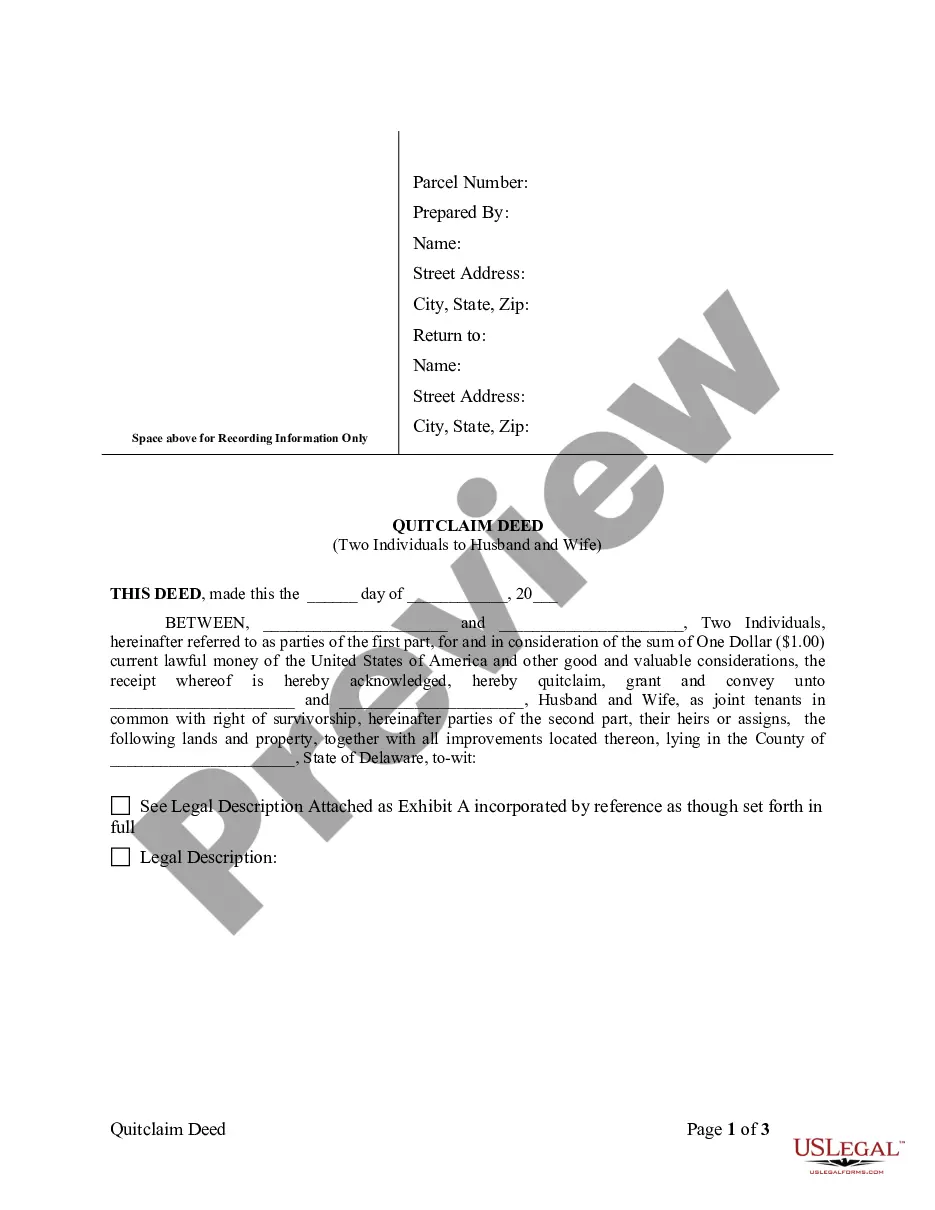
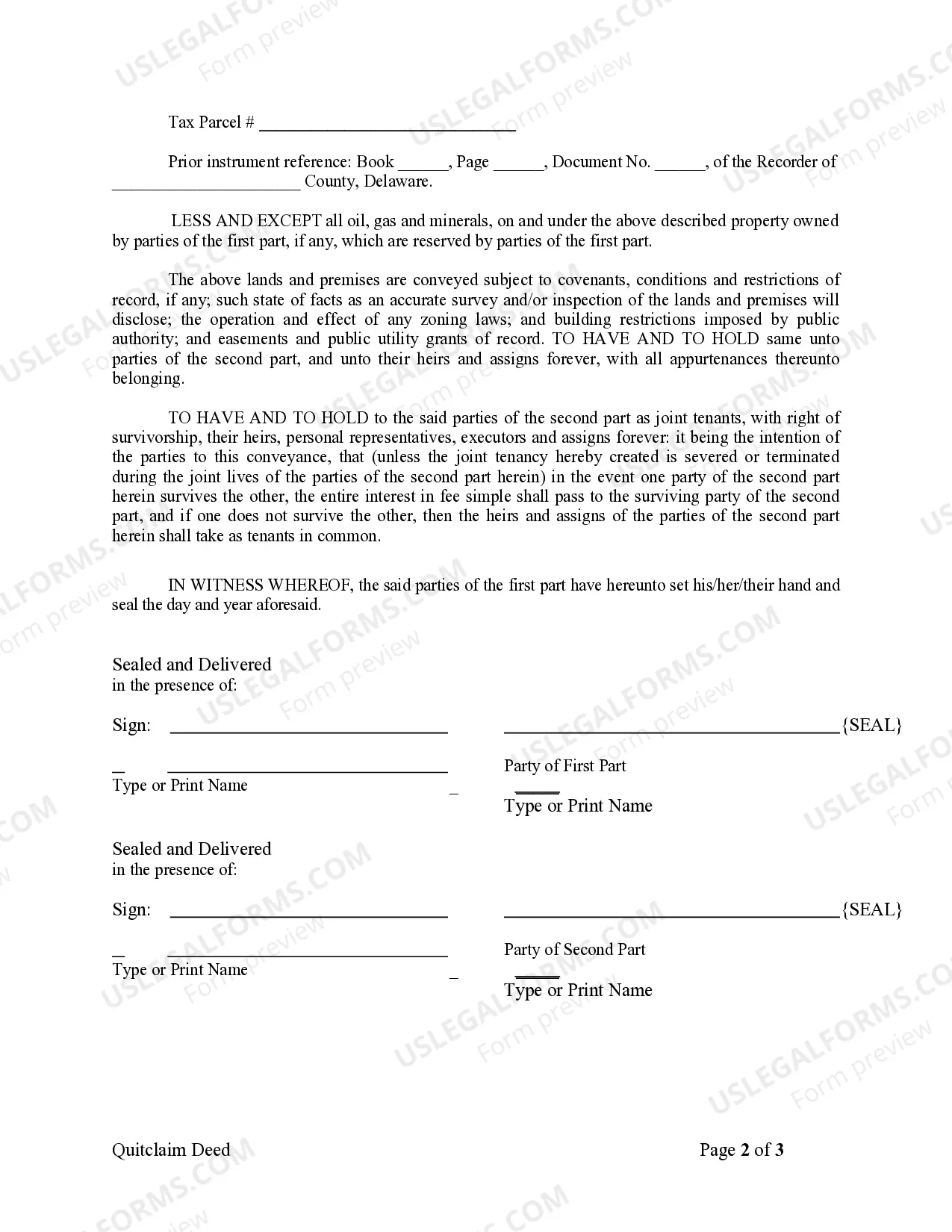
The Quitclaim Deed by Two Individuals to Husband and Wife is a legal document that allows two individuals (the Grantors) to transfer their ownership interest in a property to a married couple (the Grantees). This type of deed conveys the property without any guarantees regarding its title, making it different from other deeds like warranty deeds. The Quitclaim Deed is commonly used in situations such as transferring property between spouses or adding a spouse to a property title, as it simplifies the transfer process and can be completed without a lengthy legal procedure.
Key components of this form
- Identification of Grantors: Names and details of the two individuals transferring the property.
- Identification of Grantees: Names of the husband and wife receiving the property.
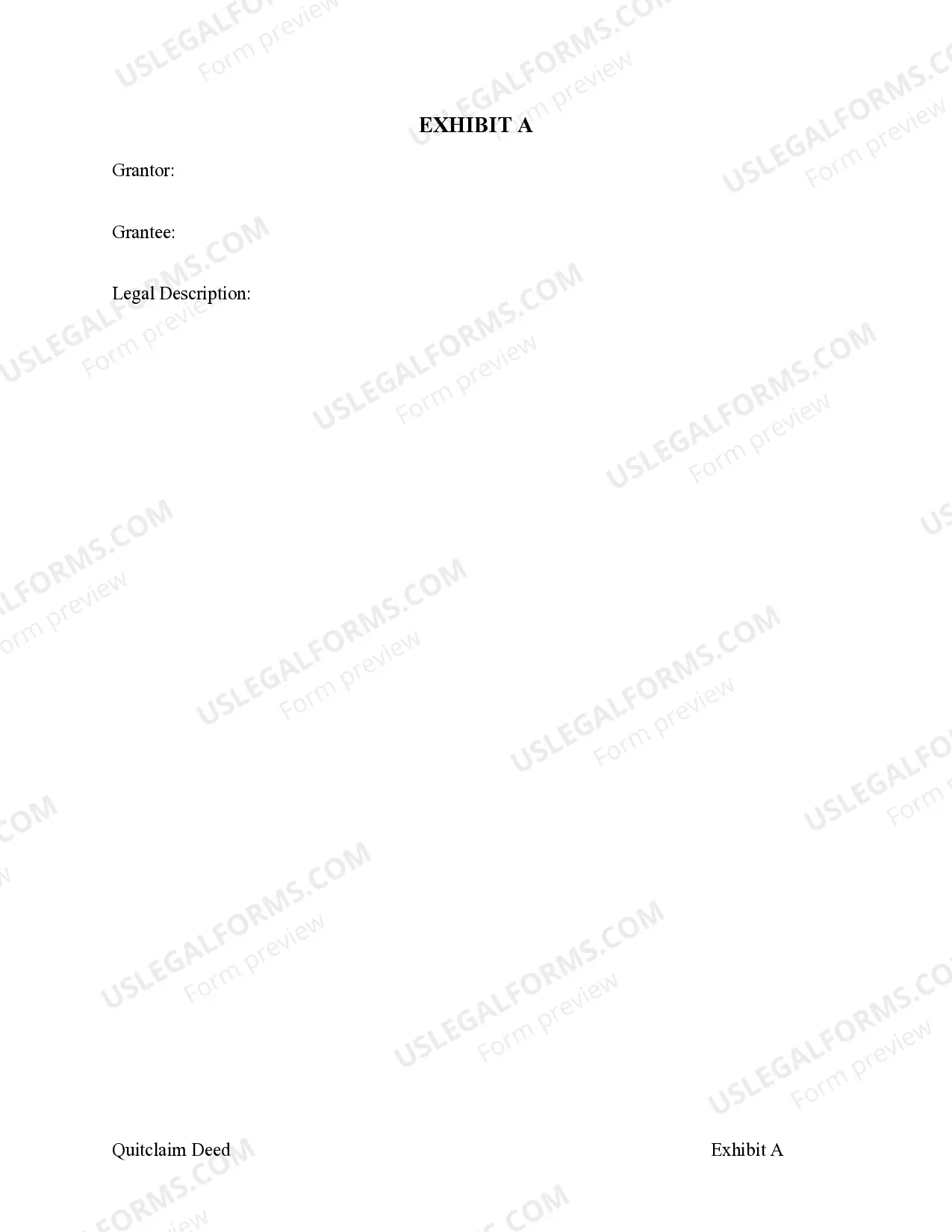
- Legal Description of Property: Detailed description of the property being transferred, usually attached as an exhibit.
- Reservations: Explicit reservations of any oil, gas, and mineral rights retained by the Grantors.
- Survivorship Clause: Provisions specifying the joint tenancy with rights of survivorship, determining inheritance upon death.
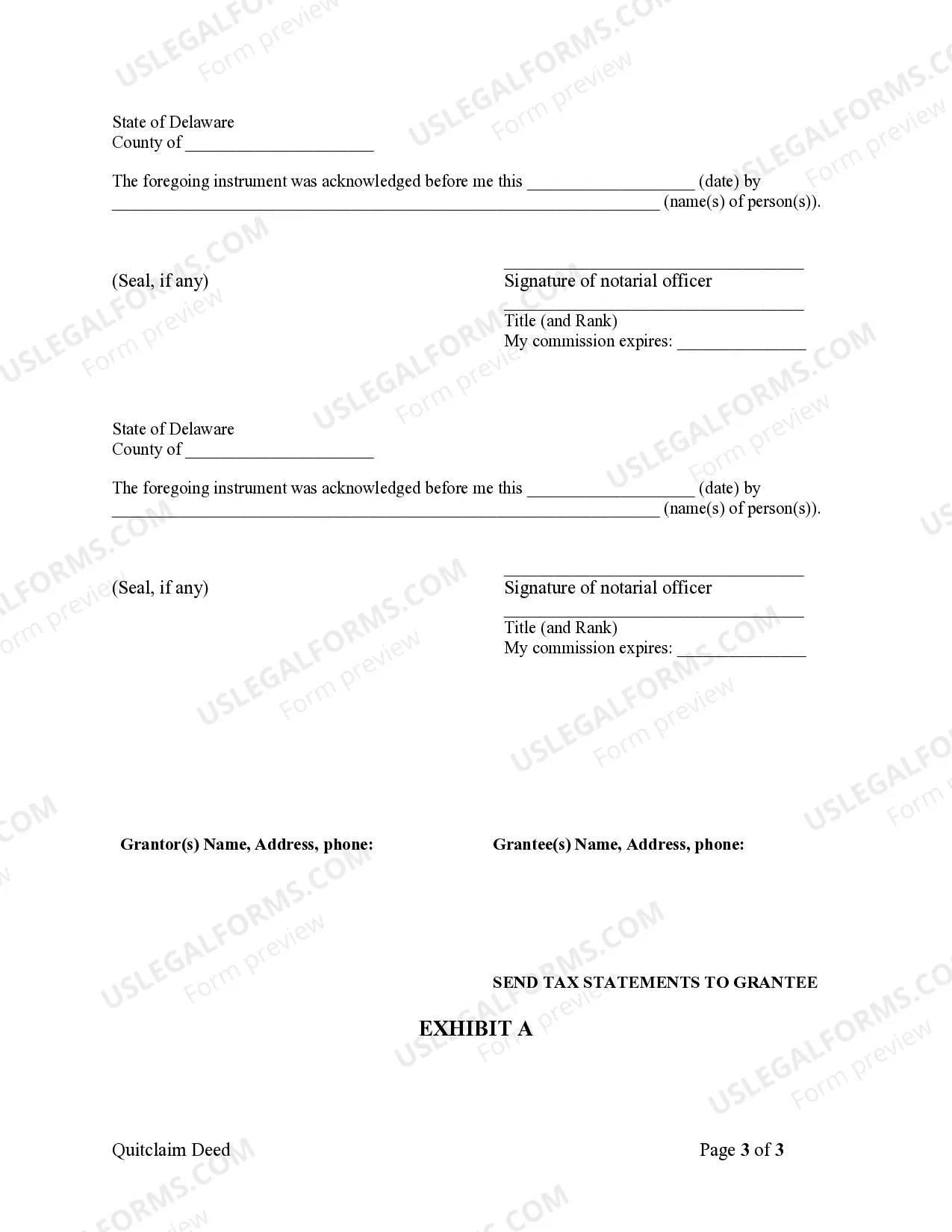
- Notarization: Requirement for an official signature and seal, validating the deed upon execution.





When to use this form
This form is typically used when two individuals want to convey property ownership to a married couple. Common scenarios include when one spouse is being added to the title, during divorce proceedings to transfer property rights, or when family members wish to gift property to a couple. It is also useful in estate planning to ensure property passes seamlessly to the surviving spouse without delay.
Who should use this form
- Couples, including spouses and partners, looking to transfer property ownership between themselves.
- Individuals who wish to formally add their spouse to a property title.
- Anyone who wants to convey property to a married couple as a gift or through inheritance.
- Legal representatives handling property transfers for their clients.
Instructions for completing this form
- Identify the parties: Clearly enter the names and addresses of both Grantors and Grantees.
- Specify the property: Attach the complete legal description of the property as Exhibit A.
- List reservations: Include any oil, gas, and mineral rights that the Grantors retain.
- Sign and date: Both Grantors must sign and date the document in front of a notary public.
- Notarization: Ensure the form is notarized to validate the transaction.
Notarization requirements for this form
Notarization is required for this form to take effect. Our online notarization service, powered by Notarize, lets you verify and sign documents remotely through an encrypted video session, available 24/7.
Get your form ready online
Our built-in tools help you complete, sign, share, and store your documents in one place.
Make edits, fill in missing information, and update formatting in US Legal Forms—just like you would in MS Word.
Download a copy, print it, send it by email, or mail it via USPS—whatever works best for your next step.
Sign and collect signatures with our SignNow integration. Send to multiple recipients, set reminders, and more. Go Premium to unlock E-Sign.
If this form requires notarization, complete it online through a secure video call—no need to meet a notary in person or wait for an appointment.
We protect your documents and personal data by following strict security and privacy standards.

Make edits, fill in missing information, and update formatting in US Legal Forms—just like you would in MS Word.

Download a copy, print it, send it by email, or mail it via USPS—whatever works best for your next step.

Sign and collect signatures with our SignNow integration. Send to multiple recipients, set reminders, and more. Go Premium to unlock E-Sign.

If this form requires notarization, complete it online through a secure video call—no need to meet a notary in person or wait for an appointment.

We protect your documents and personal data by following strict security and privacy standards.
Common mistakes to avoid
- Not including a complete and correct legal description of the property.
- Failing to have the document notarized, which can lead to invalidity.
- Omitting the reservation of rights which may lead to disputes later.
- Not clearly specifying the names of all parties involved.
Advantages of online completion
- Convenient access to professionally drafted legal forms without the need for in-person consultations.
- Edit and customize the form easily to fit your specific transaction and requirements.
- Reliable templates that comply with current legal standards and local laws.
- Quick completion and downloading options available.
Looking for another form?





Form popularity
FAQ
You can add someone to a deed in Delaware by drafting a quitclaim deed. The Delaware Quitclaim Deed by Two Individuals to Husband and Wife facilitates this addition smoothly and efficiently. Ensure both parties understand their rights and responsibilities before signing. For assistance, consider using US Legal Forms, which provides templates and legal advice.
To execute a quitclaim deed in Delaware, first, download a template that meets state requirements. The Delaware Quitclaim Deed by Two Individuals to Husband and Wife should include pertinent details about both parties and the property. After filling out the form, both parties need to sign it in the presence of a notary. Finally, file the deed at the county recorder’s office to finalize the process.
To add someone to your deed in Delaware, you need to complete a quitclaim deed. The Delaware Quitclaim Deed by Two Individuals to Husband and Wife requires you to fill out specific information regarding the property and the parties involved. After you sign and date the document, you should file it with your local county recorder’s office. It’s advisable to use US Legal Forms for accurate templates and guidance.
The most effective method to add someone to a deed is by using a quitclaim deed. The Delaware Quitclaim Deed by Two Individuals to Husband and Wife allows for the straightforward transfer of property rights without the need for a new title. This method ensures clarity in ownership and preserves the original title. Consulting a professional or using resources like US Legal Forms can simplify this process.
In Delaware, adding a name to a deed typically takes a few days, depending on how quickly you complete the paperwork. Once you file the Delaware Quitclaim Deed by Two Individuals to Husband and Wife with the county recorder, it should be processed within one to two business days. However, in some cases, it may take longer if additional information or corrections are needed. Utilizing efficient online services like US Legal Forms can expedite this process.
Adding a spouse to a deed is generally a straightforward process, often accomplished using a quitclaim deed. The existing owner must fill out the necessary paperwork and have it notarized before filing it with the county clerk’s office. This relatively simple procedure ensures both parties have clear ownership rights in the property. Utilizing the Delaware Quitclaim Deed by Two Individuals to Husband and Wife makes this transition much smoother.
The strongest form of deed is typically a warranty deed, which provides a guarantee of a clear title to the property. It assures the buyer that the seller holds legitimate ownership and protects against future claims. In contrast, a Delaware Quitclaim Deed by Two Individuals to Husband and Wife does not offer this level of protection, making warranty deeds a safer option for transactions requiring absolute certainty of ownership.
A quitclaim deed and an Interspousal transfer differ primarily in their legal implications. A quitclaim deed simply transfers any interest one spouse has in the property without guarantees, while an Interspousal transfer is a more formal process often associated with marriage or divorce. An Interspousal transfer usually involves more documentation and legal safeguards. When thinking about the Delaware Quitclaim Deed by Two Individuals to Husband and Wife, it's critical to choose the method best suited for your situation.
A spouse might opt for a quitclaim deed to clarify ownership of the property and eliminate any claim they may have. This action is common during divorce or separation to streamline property division. It can also be used to transfer ownership between spouses to establish clear ownership rights. This approach ensures the Delaware Quitclaim Deed by Two Individuals to Husband and Wife serves as a clear record of the intent behind the transfer.
While quitclaim deeds are simple, they do have disadvantages. They do not provide warranties or guarantees about the property's title, which means the recipient may inherit any liens or issues tied to the property. Furthermore, using a Delaware Quitclaim Deed by Two Individuals to Husband and Wife may limit the recipient's ability to recover property value in case of disputes. Thus, it's crucial to assess these risks carefully.