Delaware Warranty Deed from Corporation to Individual
About this form
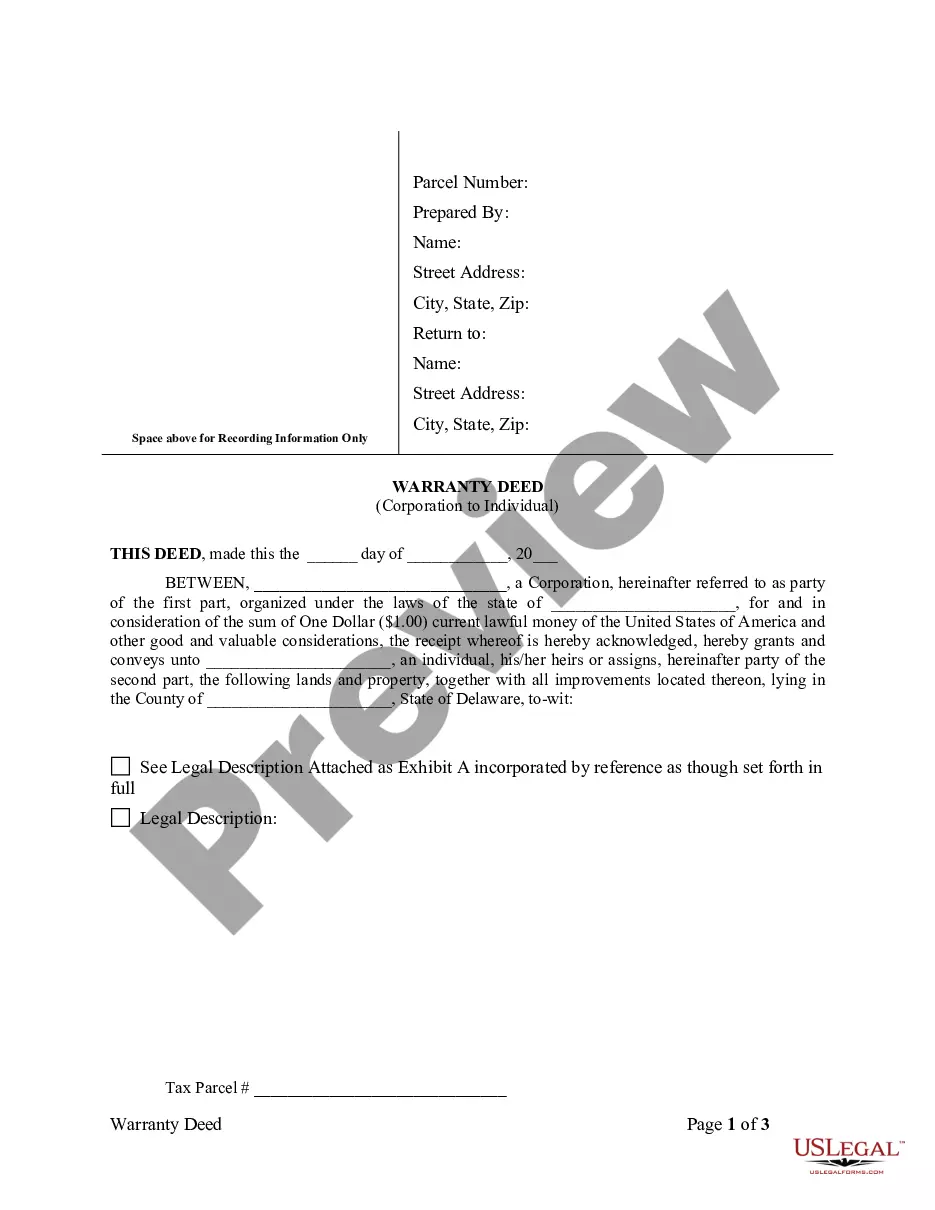
The Warranty Deed from Corporation to Individual is a legal document used to transfer property ownership from a corporation (the Grantor) to an individual (the Grantee). This form not only conveys property rights but also includes specific reservations, such as the exclusion of mineral rights, oil, and gas from the transaction. Unlike other deed forms, this Warranty Deed specifically addresses transfers involving corporate entities and individual stakeholders, ensuring compliance with state laws.
Form components explained
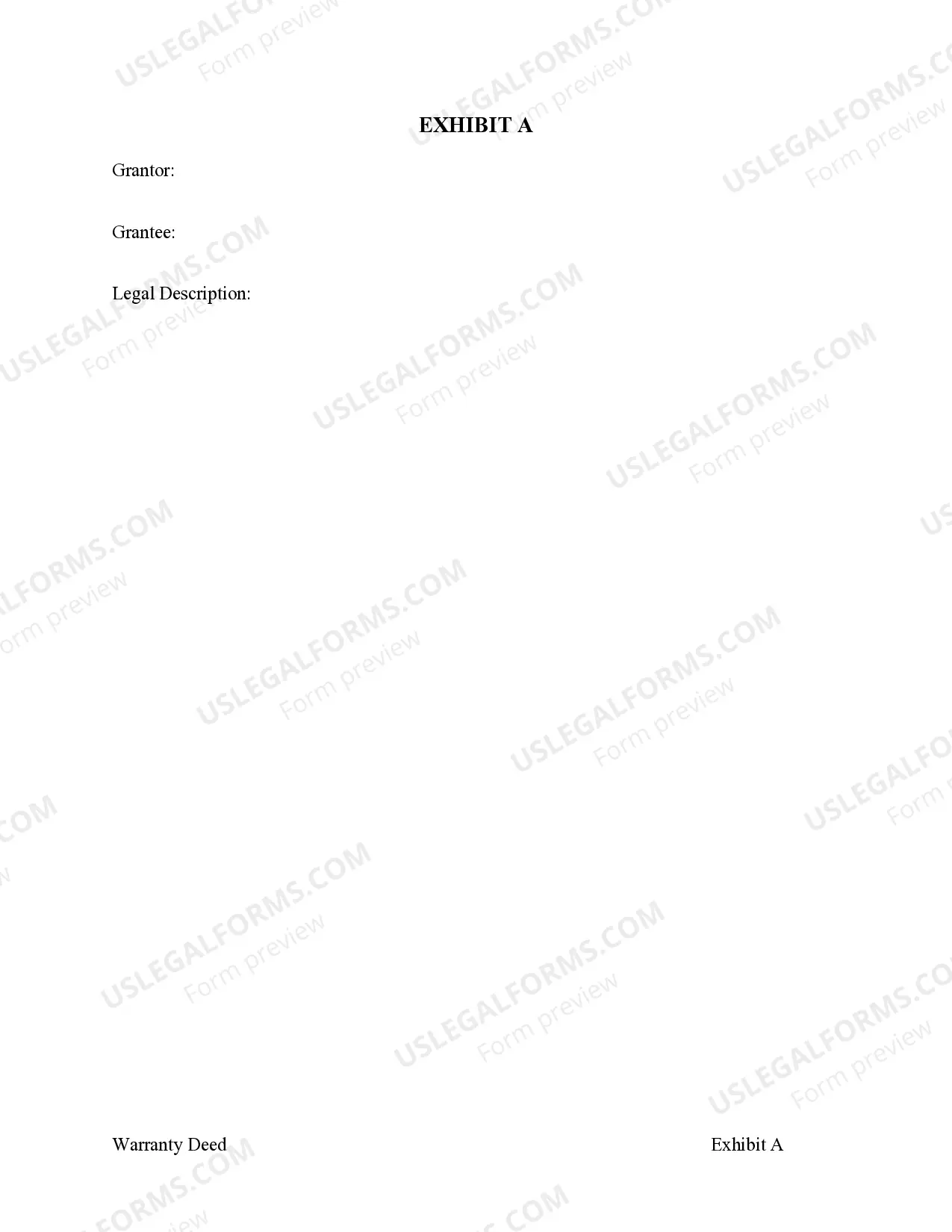
- Legal description of the property being transferred.
- Identification of the Grantor (corporation) and the Grantee (individual).
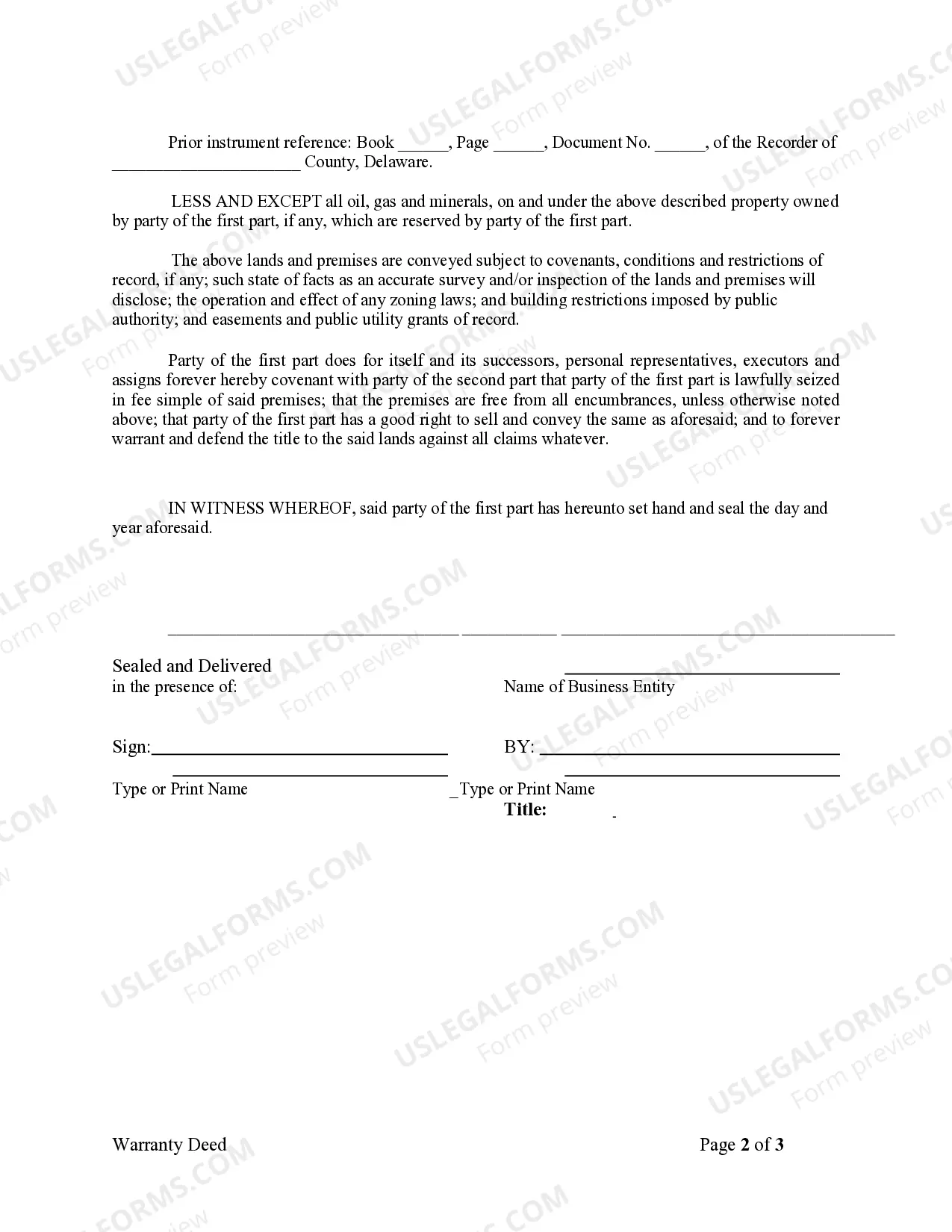
- Reservation clause for minerals, oil, and gas rights.
- Subject to existing zoning laws, easements, and restrictions.
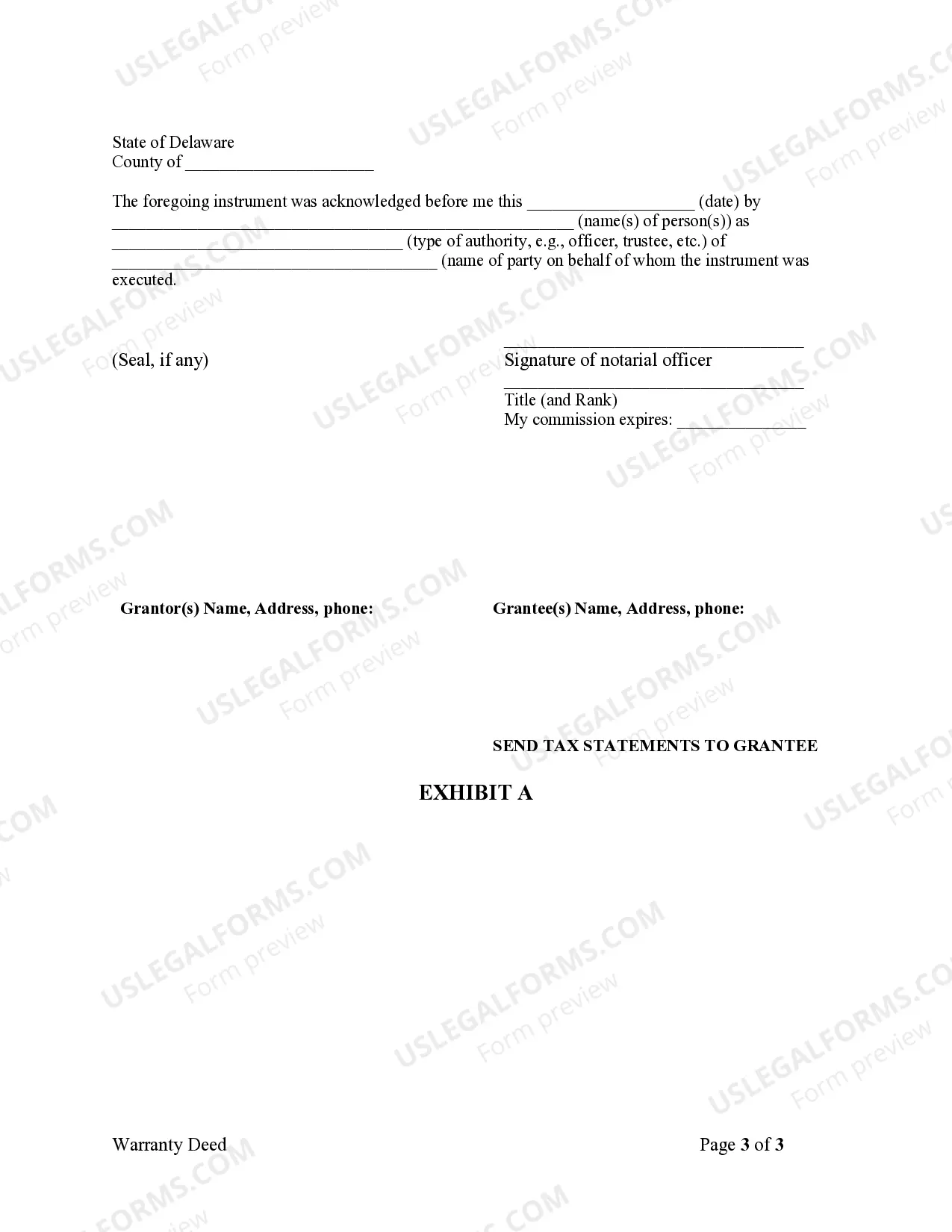
- Signature fields for the Grantor and a Notary Public.



Common use cases
This form should be used when a corporation sells or transfers property to an individual. It is particularly useful in transactions where the corporation retains certain rights (such as mineral rights) and when it's important to document compliance with legal requirements. Examples include corporate real estate sales, property distribution in liquidation, or transfers due to mergers and acquisitions.
Intended users of this form
- Corporations intending to transfer real property to an individual.
- Individuals receiving property ownership from a corporate entity.
- Legal professionals assisting clients in property transactions.
- Real estate agents facilitating corporate-to-individual property transfers.
How to prepare this document
- Identify the Grantor (corporation) and the Grantee (individual).
- Provide a detailed legal description of the property in the designated section.
- Include any reservations, such as oil, gas, and mineral rights, in the appropriate clause.
- Specify any existing zoning laws or restrictions that apply to the property.
- Have the Grantor sign the deed in the presence of a Notary Public.
Notarization guidance
To make this form legally binding, it must be notarized. Our online notarization service, powered by Notarize, lets you verify and sign documents remotely through an encrypted video session.
Get your form ready online
Our built-in tools help you complete, sign, share, and store your documents in one place.
Make edits, fill in missing information, and update formatting in US Legal Forms—just like you would in MS Word.
Download a copy, print it, send it by email, or mail it via USPS—whatever works best for your next step.
Sign and collect signatures with our SignNow integration. Send to multiple recipients, set reminders, and more. Go Premium to unlock E-Sign.
If this form requires notarization, complete it online through a secure video call—no need to meet a notary in person or wait for an appointment.
We protect your documents and personal data by following strict security and privacy standards.

Make edits, fill in missing information, and update formatting in US Legal Forms—just like you would in MS Word.

Download a copy, print it, send it by email, or mail it via USPS—whatever works best for your next step.

Sign and collect signatures with our SignNow integration. Send to multiple recipients, set reminders, and more. Go Premium to unlock E-Sign.

If this form requires notarization, complete it online through a secure video call—no need to meet a notary in person or wait for an appointment.

We protect your documents and personal data by following strict security and privacy standards.
Mistakes to watch out for
- Failing to provide a complete legal description of the property.
- Omitting to include important reservations, such as mineral rights.
- Not having the document notarized, where required by state law.
- Neglecting to check for existing liens or easements on the property.
- Using outdated forms that do not comply with current state requirements.
Why use this form online
- Convenient access to legally compliant forms tailored for your needs.
- Easy editing to customize the form quickly for your specific transaction.
- Reliable templates created by licensed attorneys to ensure legal validity.
- Instant downloads allow for immediate use without waiting.
Looking for another form?

Form popularity
FAQ
While anyone involved in a property transfer can file a warranty deed, it is typically advisable to have a professional handle the documentation. Filing the deed incorrectly can lead to disputes or ownership issues. For a Delaware Warranty Deed from Corporation to Individual, using reputable platforms like USLegalForms can guide you through proper filing processes and requirements.
Transferring a warranty deed involves signing the deed by the grantor and having it acknowledged by a notary public. After signing, the deed must be recorded at your local county recorder's office to complete the transfer. If you're transferring a Delaware Warranty Deed from Corporation to Individual, it is important to follow state laws for a valid and legal transaction.
To fill a warranty deed, start by identifying the parties involved and accurately describing the property. Next, include any additional legal clauses required by your state. If you need to create a Delaware Warranty Deed from Corporation to Individual, consider using templates available through services like USLegalForms to ensure you include all necessary elements correctly.
The two main parties to a warranty deed are the grantor, who transfers the property, and the grantee, who receives it. In the context of a Delaware Warranty Deed from Corporation to Individual, the corporation acts as the grantor, while the individual is the grantee. Recognizing the roles of each party is crucial for drafting a valid and enforceable deed.
Any individual or entity involved in the property transfer can fill out a warranty deed, but it is advisable to have legal assistance. Having a lawyer or notary can ensure that all technical details comply with state laws. For a Delaware Warranty Deed from Corporation to Individual, professional help can make the process smoother and more reliable.
Filling out a warranty deed form involves providing essential information, such as the names of the grantor and grantee, a legal description of the property, and the date of transfer. You should be clear and precise while entering information to ensure it is legally binding. For a Delaware Warranty Deed from Corporation to Individual, utilizing an online service like USLegalForms can simplify this process and ensure accuracy.
Typically, a general warranty deed is prepared by an attorney or a title company, especially during a real estate transaction. They ensure that all necessary legal requirements are met and that the document accurately reflects the transfer of property. If you need a Delaware Warranty Deed from Corporation to Individual, using a professional can help you avoid errors and complications.
Yes, you can transfer a deed without an attorney, including a Delaware Warranty Deed from Corporation to Individual. However, this requires careful attention to legal processes and local laws to ensure everything is done correctly. If you prefer to handle this independently, using a platform like US Legal Forms can provide templates and guidance to simplify the transaction.
Section 276 of the Delaware Corporation law deals with the ability of a corporation to dissolve and distribute its assets. Understanding this section is important when facilitating a Delaware Warranty Deed from Corporation to Individual, especially if the corporation is winding down its operations. Knowing how to manage these transitions can help you avoid legal pitfalls and safeguard your interests. Consult US Legal Forms for detailed resources on this topic.
Section 145 of the Delaware corporate law pertains to the indemnification of corporate directors and officers. This section allows companies to protect their leaders from personal liability due to actions taken while serving the corporation. When executing a Delaware Warranty Deed from Corporation to Individual, understanding this section is crucial to ensuring proper corporate governance and liability protections. You can find more guidance on this law through US Legal Forms.