Delaware Notice of Default for Past Due Payments in connection with Contract for Deed
Overview of this form
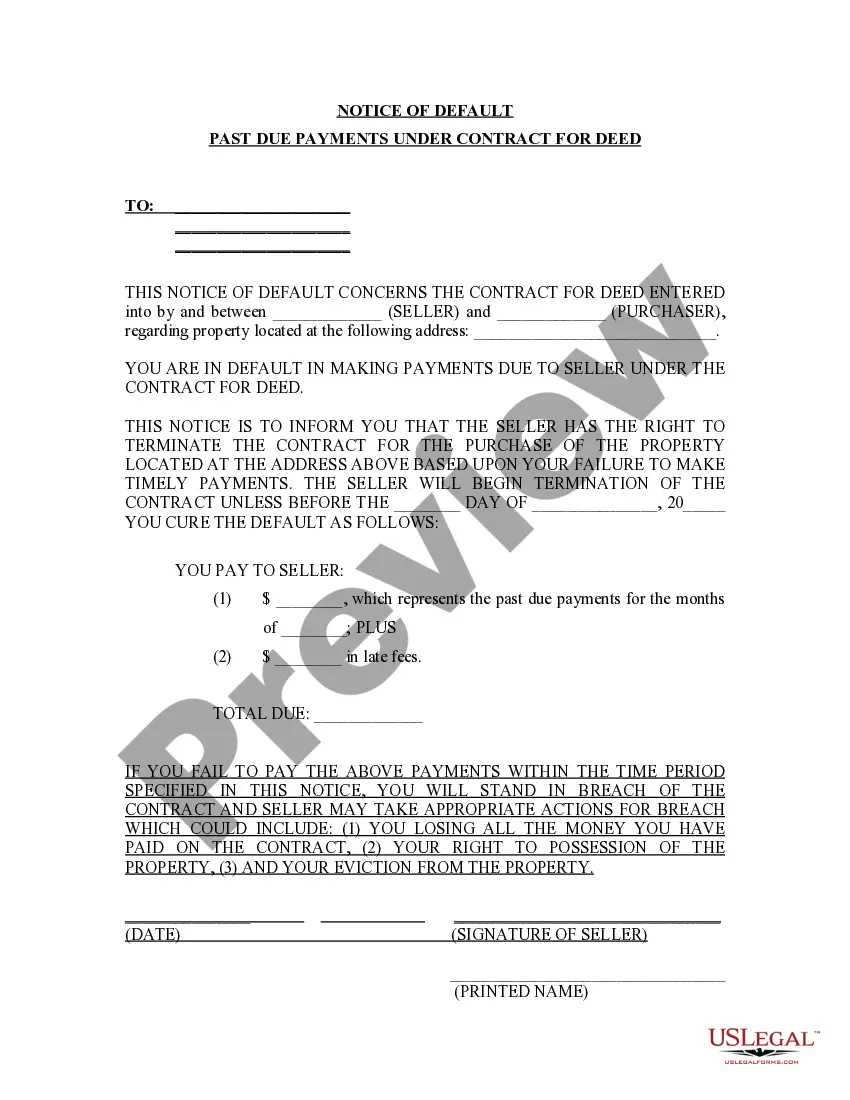
The Notice of Default for Past Due Payments in connection with Contract for Deed is a formal notification issued by the Seller to the Purchaser indicating that the Purchaser has failed to make timely payments under the terms of a Contract for Deed. This notice serves as an initial warning to the Purchaser, informing them that their payment obligations have not been met and that failure to address these overdue payments may lead to defaulting on the contract.
What’s included in this form
- Identification of the Seller and Purchaser.
- Description of the property subject to the Contract for Deed.
- Details of the overdue payment, including the amount and due date.
- Instructions for the Purchaser regarding the payment and time frame for compliance.
- Consequence of non-compliance, including potential default of the contract.

Situations where this form applies
This form should be used when a Purchaser has not made the required payments on a Contract for Deed. It is typically utilized after a payment is missed or late, providing the Purchaser with formal notice of the default and allowing them an opportunity to rectify the situation before further legal action is taken.
Who this form is for
- Sellers engaged in a Contract for Deed who have not received payments on time.
- Real estate professionals managing selling agreements on behalf of clients.
- Attorneys representing clients in real estate transactions involving Contracts for Deed.
Completing this form step by step
- Identify and clearly state the names of both the Seller and the Purchaser.
- Provide a description of the property covered under the Contract for Deed.
- Enter the details of the overdue payment, including the due date and the amount owed.
- Specify any actions the Purchaser must take to remedy the situation, including deadlines.
- Sign and date the notice to formalize it.
Notarization guidance
Notarization is required for this form to take effect. Our online notarization service, powered by Notarize, lets you verify and sign documents remotely through an encrypted video session, available 24/7.
Get your form ready online
Our built-in tools help you complete, sign, share, and store your documents in one place.
Make edits, fill in missing information, and update formatting in US Legal Forms—just like you would in MS Word.
Download a copy, print it, send it by email, or mail it via USPS—whatever works best for your next step.
Sign and collect signatures with our SignNow integration. Send to multiple recipients, set reminders, and more. Go Premium to unlock E-Sign.
If this form requires notarization, complete it online through a secure video call—no need to meet a notary in person or wait for an appointment.
We protect your documents and personal data by following strict security and privacy standards.

Make edits, fill in missing information, and update formatting in US Legal Forms—just like you would in MS Word.

Download a copy, print it, send it by email, or mail it via USPS—whatever works best for your next step.

Sign and collect signatures with our SignNow integration. Send to multiple recipients, set reminders, and more. Go Premium to unlock E-Sign.

If this form requires notarization, complete it online through a secure video call—no need to meet a notary in person or wait for an appointment.

We protect your documents and personal data by following strict security and privacy standards.
Mistakes to watch out for
- Failing to provide complete information about the Purchaser or the property.
- Omitting crucial dates or payment amounts.
- Not including the necessary consequences for non-compliance in the notice.
Benefits of completing this form online
- Convenience of downloading and completing from the comfort of home.
- Editability allows for customization to fit specific circumstances.
- Access reliable templates crafted by licensed attorneys for legal accuracy.
Looking for another form?

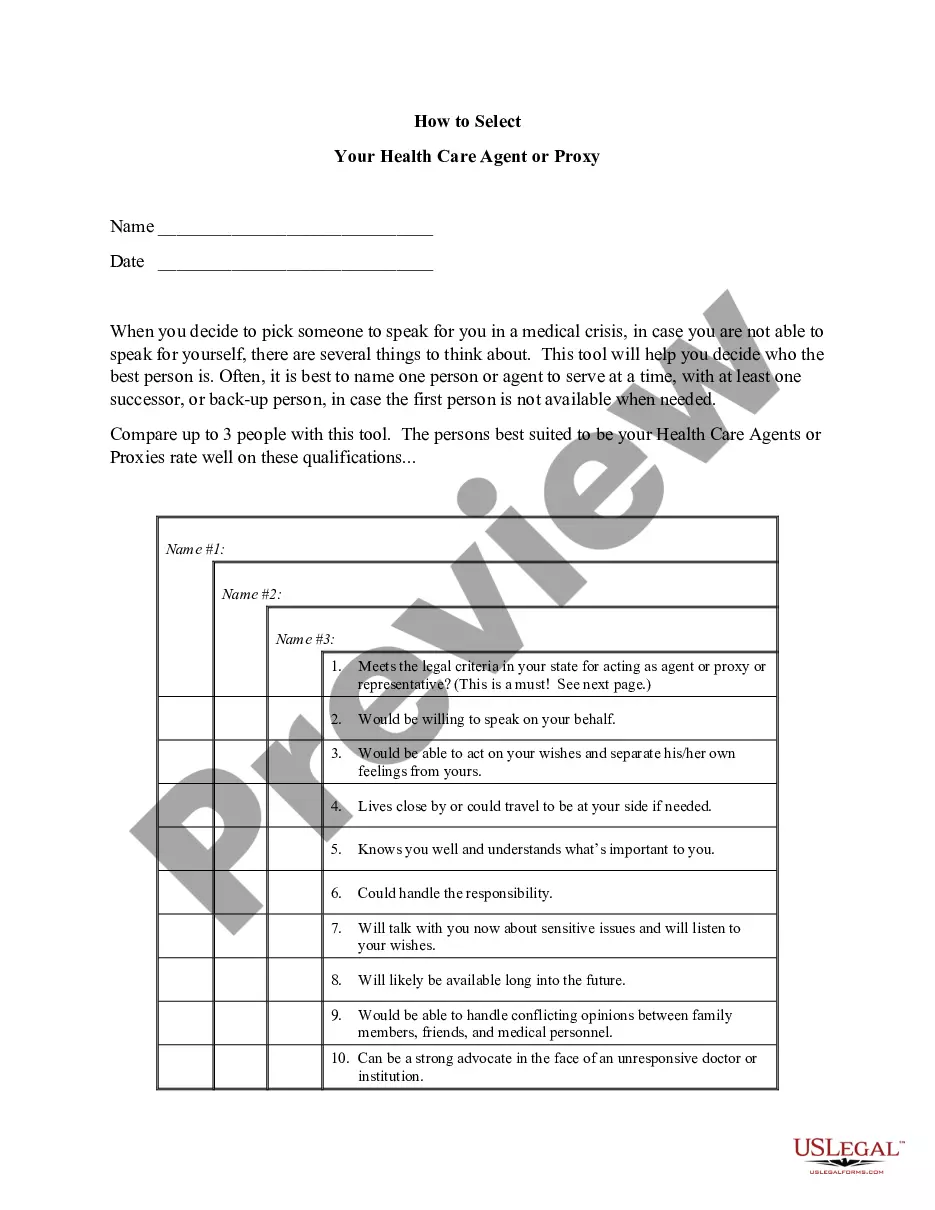
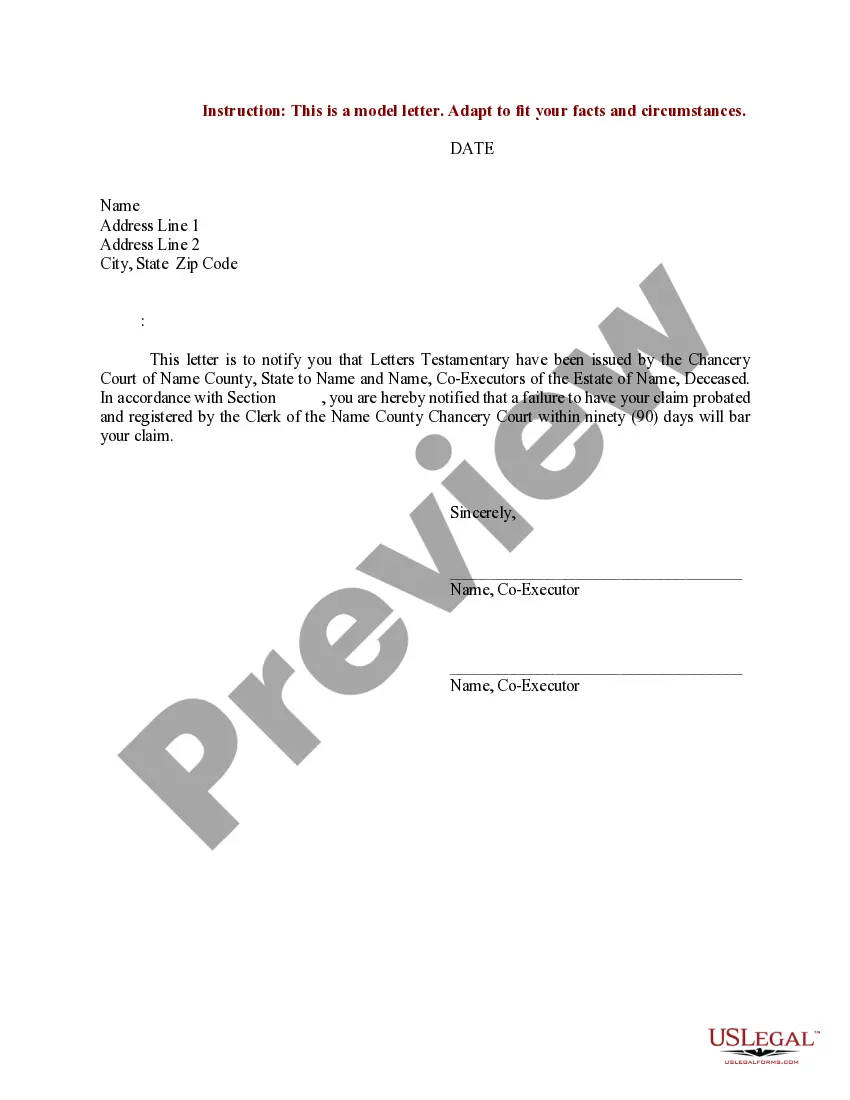
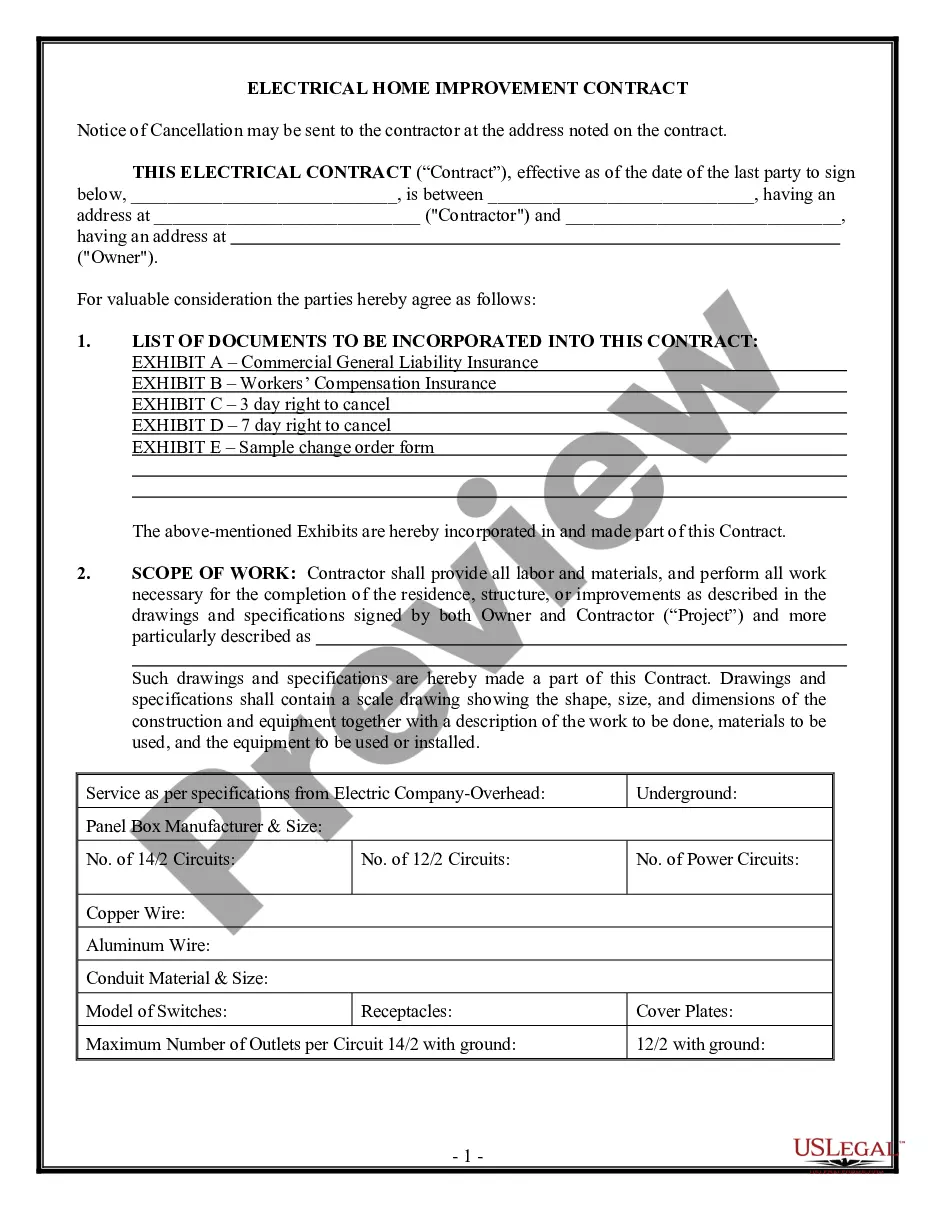
Form popularity
FAQ
To dismiss a foreclosure, you typically need to show the court that you have remedied the default or reached an agreement with your lender. Filing appropriate motions in court is necessary, and legal representation can greatly assist in this process. If you have received a Delaware Notice of Default for Past Due Payments in connection with your Contract for Deed, consider consulting with an attorney to explore your dismissal options.
Yes, Delaware is classified as a judicial foreclosure state. This means lenders must go through the court systems to pursue foreclosure proceedings against a borrower. If you receive a Delaware Notice of Default for Past Due Payments in connection with your Contract for Deed, knowing you are in a judicial state emphasizes the importance of seeking legal advice.
In Delaware, the foreclosure process can take several months to over a year, depending on various factors such as court schedules and the complexity of the case. Understanding the timelines is essential, especially when dealing with a Delaware Notice of Default for Past Due Payments in connection with Contract for Deed. Awareness allows you to prepare adequately for any potential outcomes.
No, Delaware is not a non-judicial foreclosure state. It requires lenders to file in court to initiate the foreclosure process, offering homeowners certain protections. Therefore, if you receive a Delaware Notice of Default for Past Due Payments in connection with your Contract for Deed, you will go through the judicial route to resolve the situation.
Yes, non-judicial foreclosures can significantly impact your credit score. The foreclosure process remains on your credit report for several years and can hinder your ability to obtain future loans. Receiving a Delaware Notice of Default for Past Due Payments related to your Contract for Deed means you should take action quickly to mitigate long-term credit damage.
When you receive a notice of default, it indicates that your lender has officially recognized your missed payments. This document outlines the steps you need to take to rectify the situation. Addressing a Delaware Notice of Default for Past Due Payments in connection with Contract for Deed is crucial, as prompt action can prevent foreclosure.
A default notice is a significant warning that indicates you are behind on payments. It signals that lenders may take further action, such as foreclosure, if the issue isn't resolved. Receiving a Delaware Notice of Default for Past Due Payments in connection with a Contract for Deed should prompt immediate attention to avoid escalated consequences.
The primary distinction lies in the process used to reclaim property. Judicial foreclosure involves court proceedings, allowing for a more thorough review, whereas strict foreclosure does not require a court hearing. If you receive a Delaware Notice of Default for Past Due Payments regarding your Contract for Deed, knowing the differences can help you strategize your response.
The 120 day rule mandates that lenders must wait at least 120 days after a borrower defaults before they can initiate foreclosure proceedings. This rule provides homeowners time to address any financial issues and potentially avoid a Delaware Notice of Default for Past Due Payments in connection with Contract for Deed. Understanding this timeline helps you take proactive steps against foreclosure.
Judicial foreclosure states are those where the lender must go through the court system to finalize the foreclosure process. In contrast to non-judicial states, these states provide homeowners an opportunity to defend against foreclosure. It's crucial to understand your state's requirements, especially when receiving a Delaware Notice of Default for Past Due Payments in connection with Contract for Deed.