District of Columbia Landlord Tenant Lease Co-Signer Agreement
What is this form?
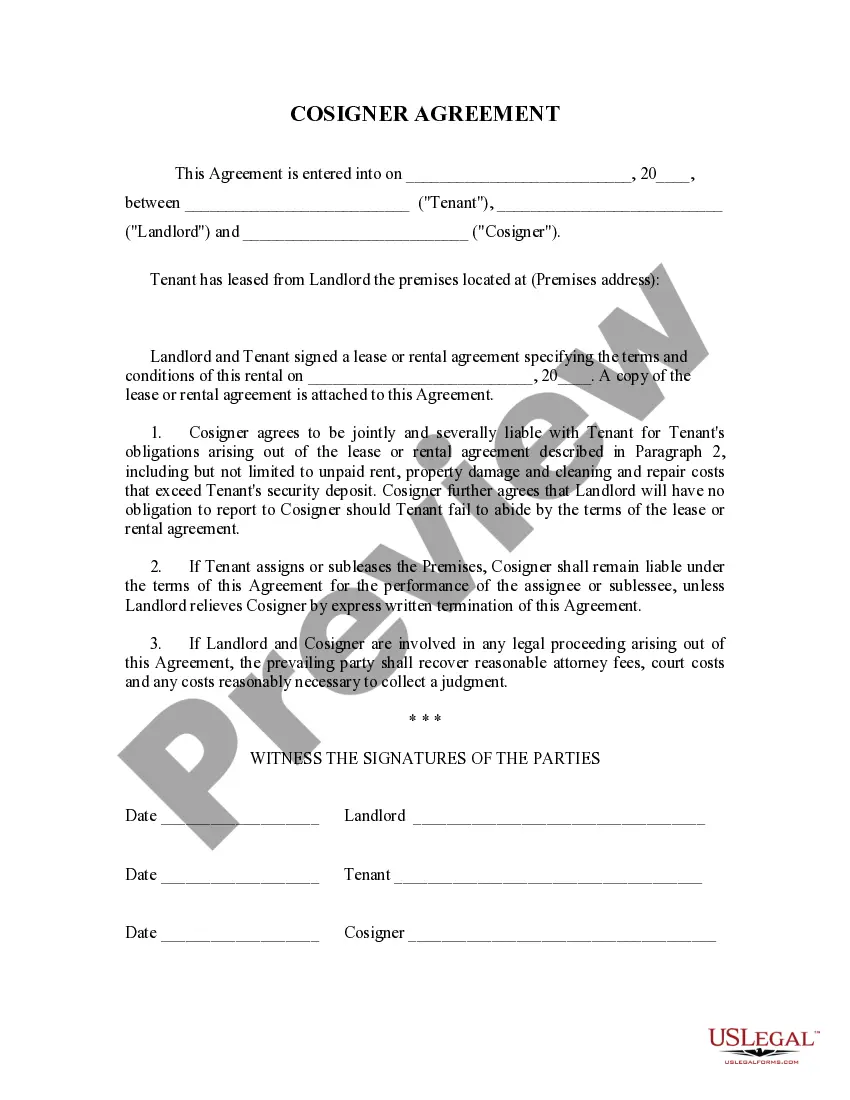
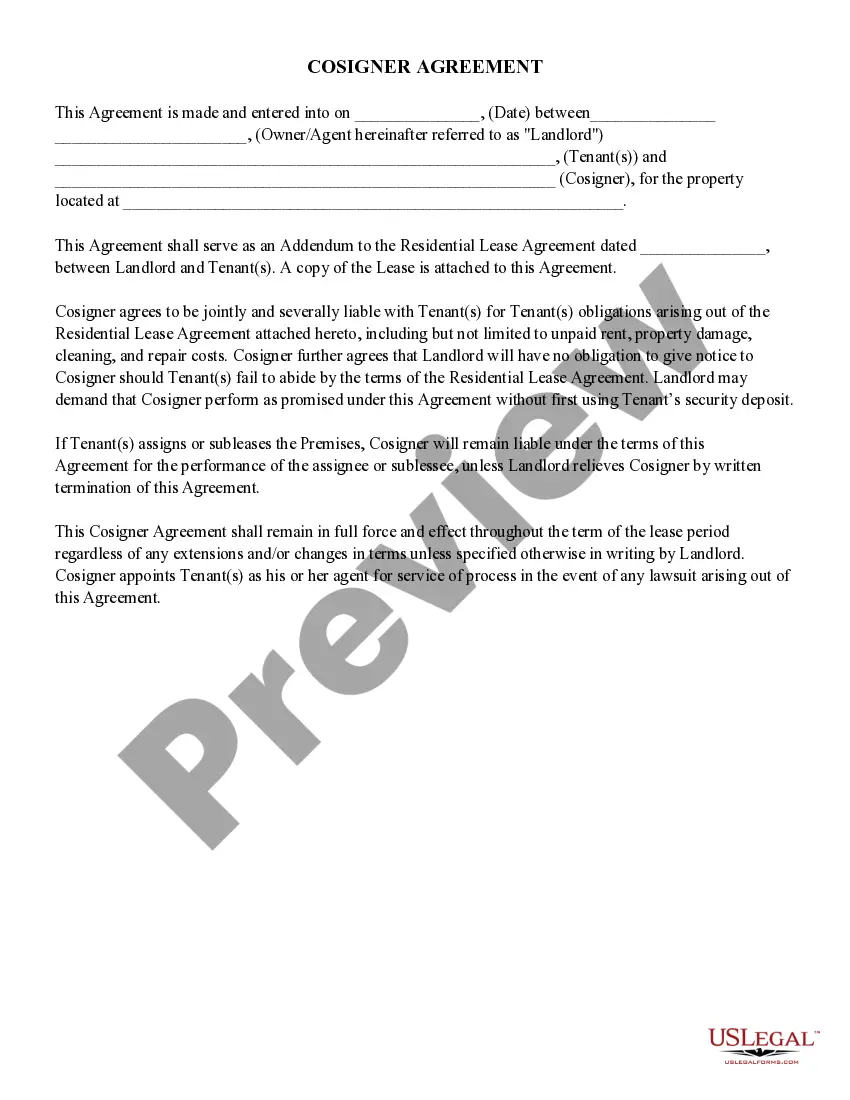
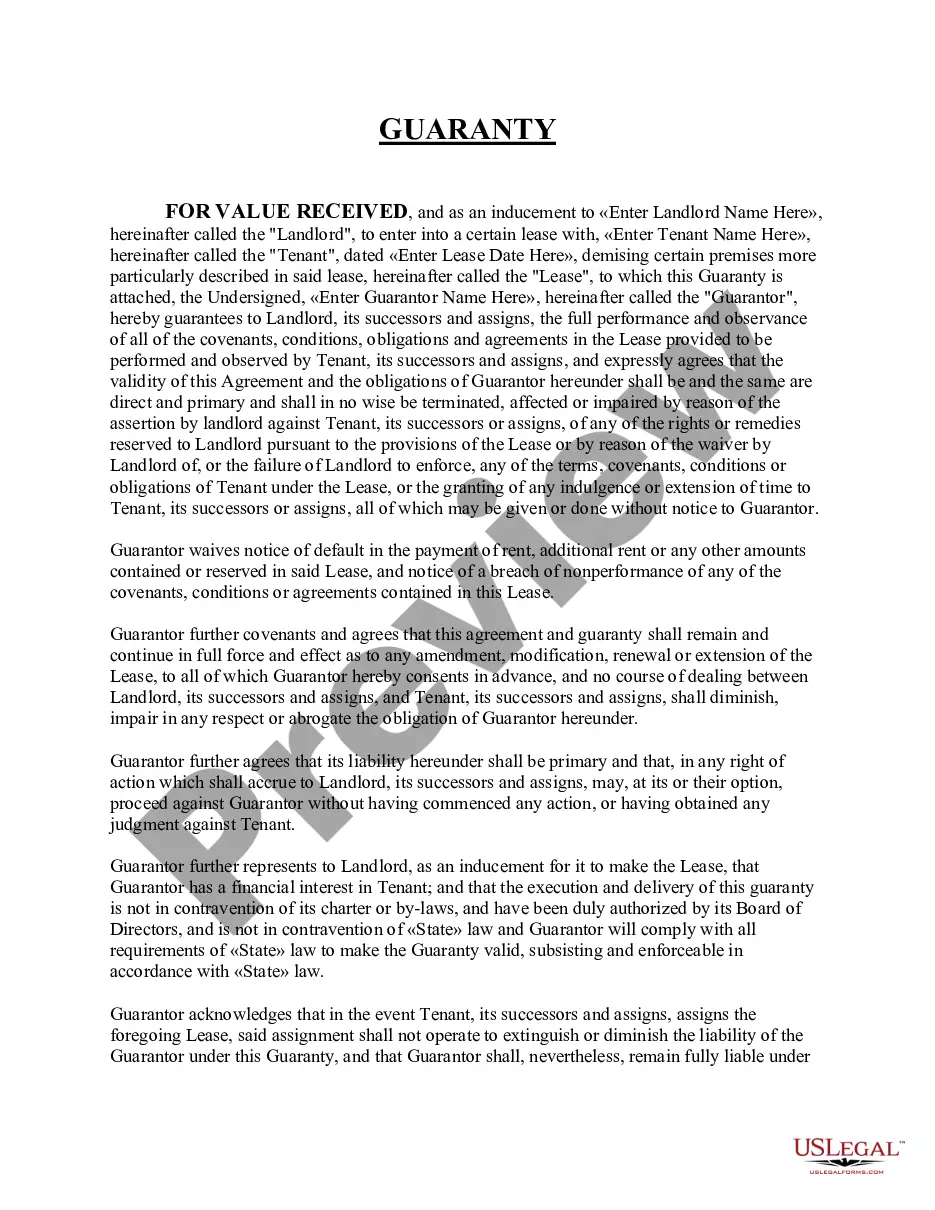
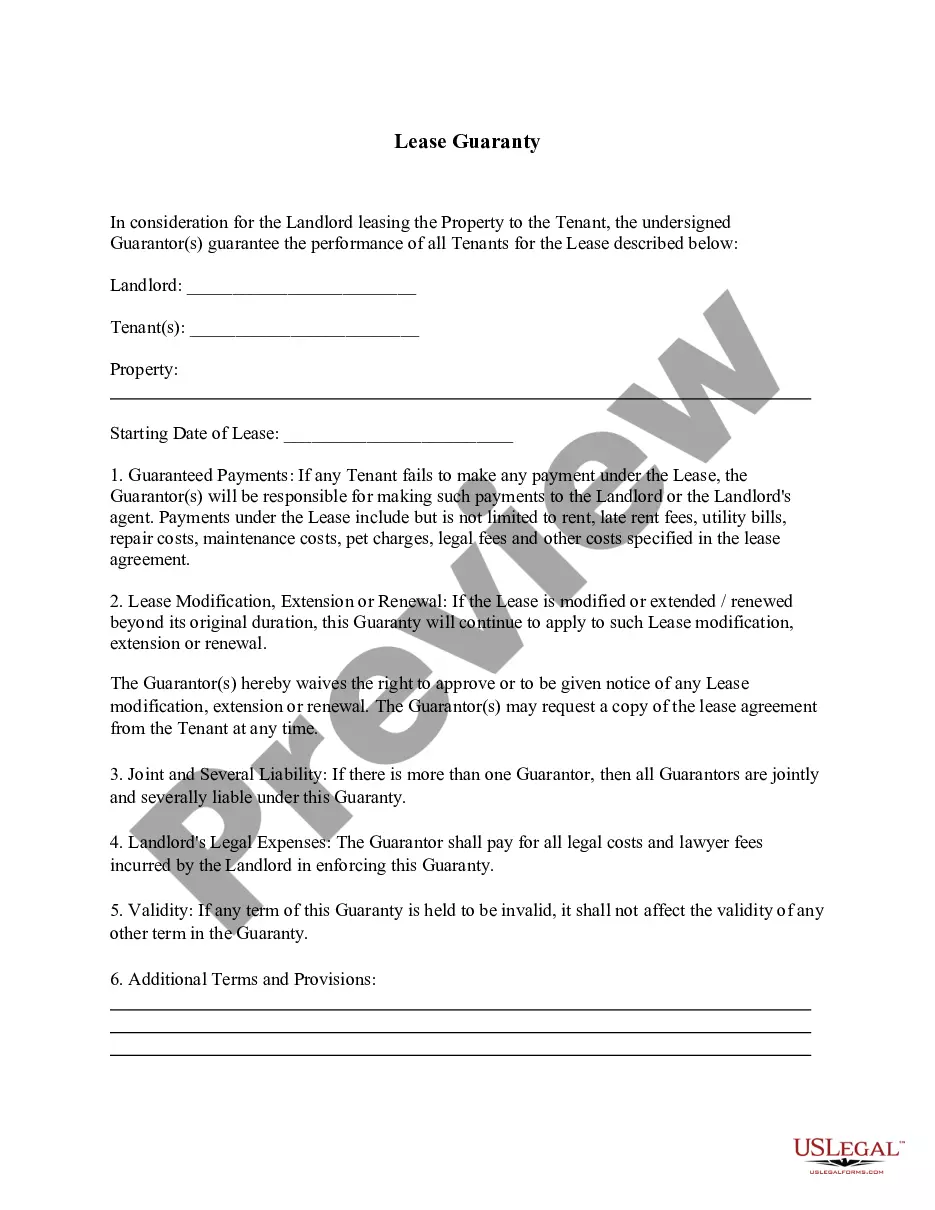
The Landlord Tenant Lease Co-Signer Agreement is a legal document that establishes a cosigner's responsibilities in the event that a tenant fails to meet their lease obligations, such as paying rent or covering damages. Unlike a standard lease agreement, this form specifically details the liability of the cosigner, who may also be known as a guarantor. This form protects the landlord by ensuring that if the tenant defaults, the cosigner assumes financial responsibility, providing an added layer of security for the rental agreement.
What’s included in this form
- Date of the agreement
- Identification of the tenant, landlord, and cosigner
- Property address
- Responsibilities of the cosigner regarding the tenant's lease obligations
- Terms for assignment or subleasing by the tenant
- Provision for attorney fees in case of legal disputes
Situations where this form applies
This form should be used when a landlord requires an additional party, the cosigner, to guarantee the terms of the lease. It is particularly useful in situations where the tenant may have a limited credit history, insufficient income, or if the landlord wants extra assurance that the rent will be paid consistently. Additionally, this agreement is essential when the tenant intends to sublease the property, as it ensures the cosigner remains liable for obligations that may arise during that time.
Who can use this document
This form is suitable for:
- Landlords who require a cosigner for rental agreements
- Tenants who need a cosigner to secure a lease
- Cosigners who agree to take on financial responsibility for a tenant's obligations
Instructions for completing this form
- Enter the date at the start of the agreement.
- Provide the names of the tenant, landlord, and cosigner.
- Specify the address of the rented premises.
- Review clauses related to liability and obligations carefully.
- Sign and date the agreement by all parties involved.
Is notarization required?
This form does not typically require notarization unless specified by local law. However, having it notarized can add an additional layer of verification to the agreement.
Get your form ready online
Our built-in tools help you complete, sign, share, and store your documents in one place.
Make edits, fill in missing information, and update formatting in US Legal Forms—just like you would in MS Word.
Download a copy, print it, send it by email, or mail it via USPS—whatever works best for your next step.
Sign and collect signatures with our SignNow integration. Send to multiple recipients, set reminders, and more. Go Premium to unlock E-Sign.
If this form requires notarization, complete it online through a secure video call—no need to meet a notary in person or wait for an appointment.
We protect your documents and personal data by following strict security and privacy standards.

Make edits, fill in missing information, and update formatting in US Legal Forms—just like you would in MS Word.

Download a copy, print it, send it by email, or mail it via USPS—whatever works best for your next step.

Sign and collect signatures with our SignNow integration. Send to multiple recipients, set reminders, and more. Go Premium to unlock E-Sign.

If this form requires notarization, complete it online through a secure video call—no need to meet a notary in person or wait for an appointment.

We protect your documents and personal data by following strict security and privacy standards.
Common mistakes
- Failing to include all parties' names accurately.
- Not specifying the property address completely.
- Overlooking the importance of reviewing the liability sections.
- Not signing the agreement by all necessary parties.
Benefits of using this form online
- Convenient download and editing capabilities.
- Reliable templates drafted by licensed attorneys.
- Quick access to necessary legal forms without the need to visit a lawyer in person.
- Instant updates to reflect changes in laws or requirements.
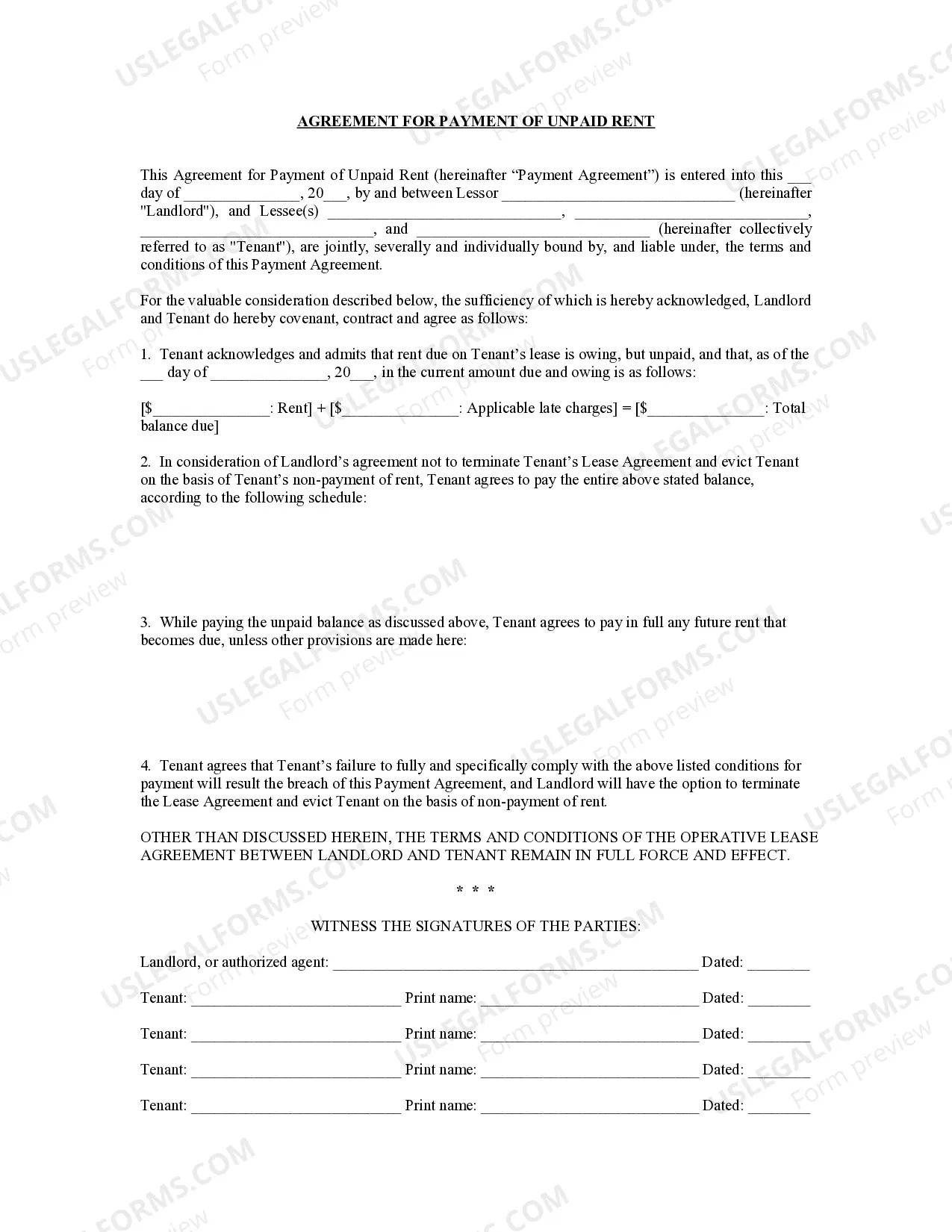
Looking for another form?
Form popularity
FAQ
In general, a co-signer remains on a lease until the lease term ends or until they are officially released by the landlord. If your lease requires renewal, the co-signer’s obligations might extend, depending on the landlord's policies. It is advisable to review the District of Columbia Landlord Tenant Lease Co-Signer Agreement for specific terms regarding co-signer duration. Understanding these details ensures you know what to expect.
signer can leave a lease early, but this usually requires the landlord's consent. The landlord may want to find a suitable replacement cosigner before agreeing to the change. Keep in mind that the terms of the District of Columbia Landlord Tenant Lease CoSigner Agreement may impact the process. It’s important to discuss options and find a resolution that works for everyone.
To add a co-signer to a rental lease in the District of Columbia, first, consult your lease agreement regarding co-signers. Next, contact your landlord to discuss your intention and receive any necessary forms. Once you have their approval, ensure that the co-signer signs the District of Columbia Landlord Tenant Lease Co-Signer Agreement, which will outline their responsibilities and obligations. Having everything documented protects all parties involved.
In the District of Columbia, a co-signer can only remove themselves from a lease with the landlord's approval. This typically involves the landlord finding a replacement co-signer. It is important to communicate openly with the landlord about your situation. Additionally, the District of Columbia Landlord Tenant Lease Co-Signer Agreement may specify terms for withdrawing, so reviewing that agreement is essential.
Rental properties in DC must be registered with the Department of Consumer and Regulatory Affairs. This registration is a legal requirement that helps maintain oversight of rental practices within the district. When entering a District of Columbia Landlord Tenant Lease Co-Signer Agreement, it's crucial for landlords to confirm that their property is properly registered to avoid potential penalties.
All DC landlords must adhere to the provisions outlined in the Rental Housing Act, including health and safety standards. Additionally, they should follow guidelines set forth by the Department of Consumer and Regulatory Affairs. By incorporating these regulations into the District of Columbia Landlord Tenant Lease Co-Signer Agreement, landlords can ensure they meet their legal obligations.
The DC Code for the Rental Housing Act is Title 14, Chapter 100. This code outlines the rights and responsibilities of both landlords and tenants in the District of Columbia, providing essential guidelines for rental agreements. It's important to review this code when drafting a District of Columbia Landlord Tenant Lease Co-Signer Agreement to ensure compliance with local laws.
Landlords in DC are generally not responsible for tenant-induced damage or personal belongings. They are also not liable for problems resulting from tenant negligence or failure to notify them about urgent repairs. Familiarizing yourself with these exclusions, especially when creating a District of Columbia Landlord Tenant Lease Co-Signer Agreement, is vital for ensuring that all parties understand their rights and duties.
DC landlords must comply with the Rental Housing Act and other local regulations regarding tenant rights, maintenance responsibilities, and safety standards. They must provide habitable living conditions and respond promptly to repair requests. Understanding these obligations is crucial when drafting a District of Columbia Landlord Tenant Lease Co-Signer Agreement, safeguarding both landlord and tenant interests.
To write a lease with a cosigner, include a section that explicitly outlines the cosigner's responsibilities and obligations. State the terms of the lease, including the rental amount and duration, and ensure that both parties sign the agreement. Utilizing the District of Columbia Landlord Tenant Lease Co-Signer Agreement template can help streamline this process, ensuring clarity for all parties involved.