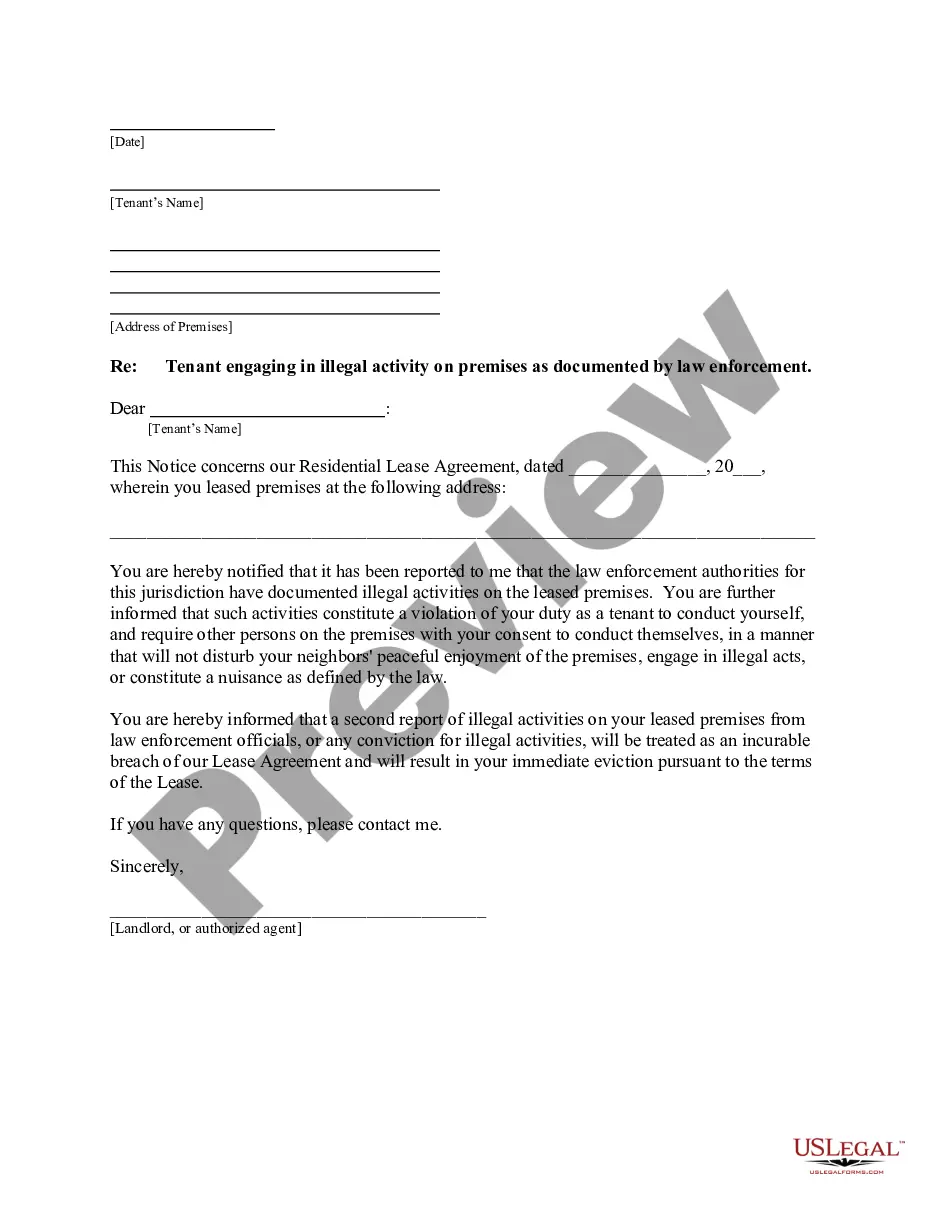
District of Columbia Letter from Landlord to Tenant about Tenant engaging in illegal activity in premises as documented by law enforcement and if repeated, lease terminates
About this form
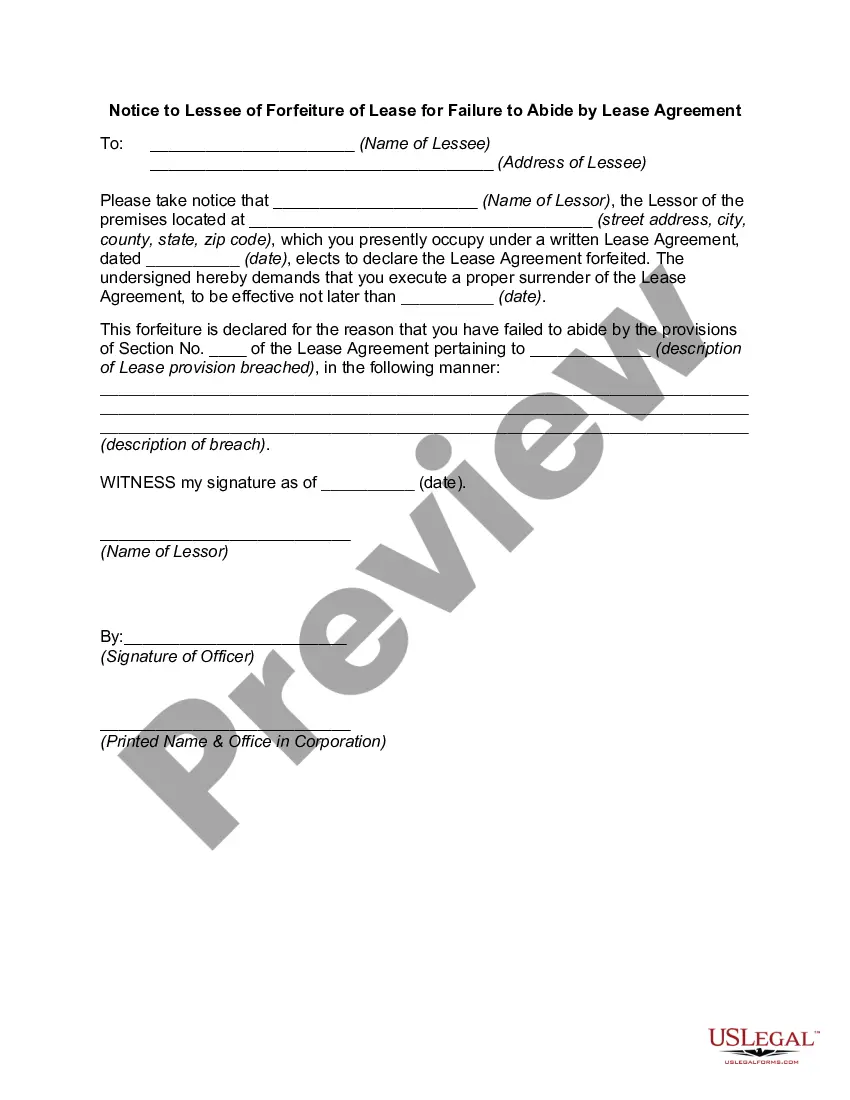
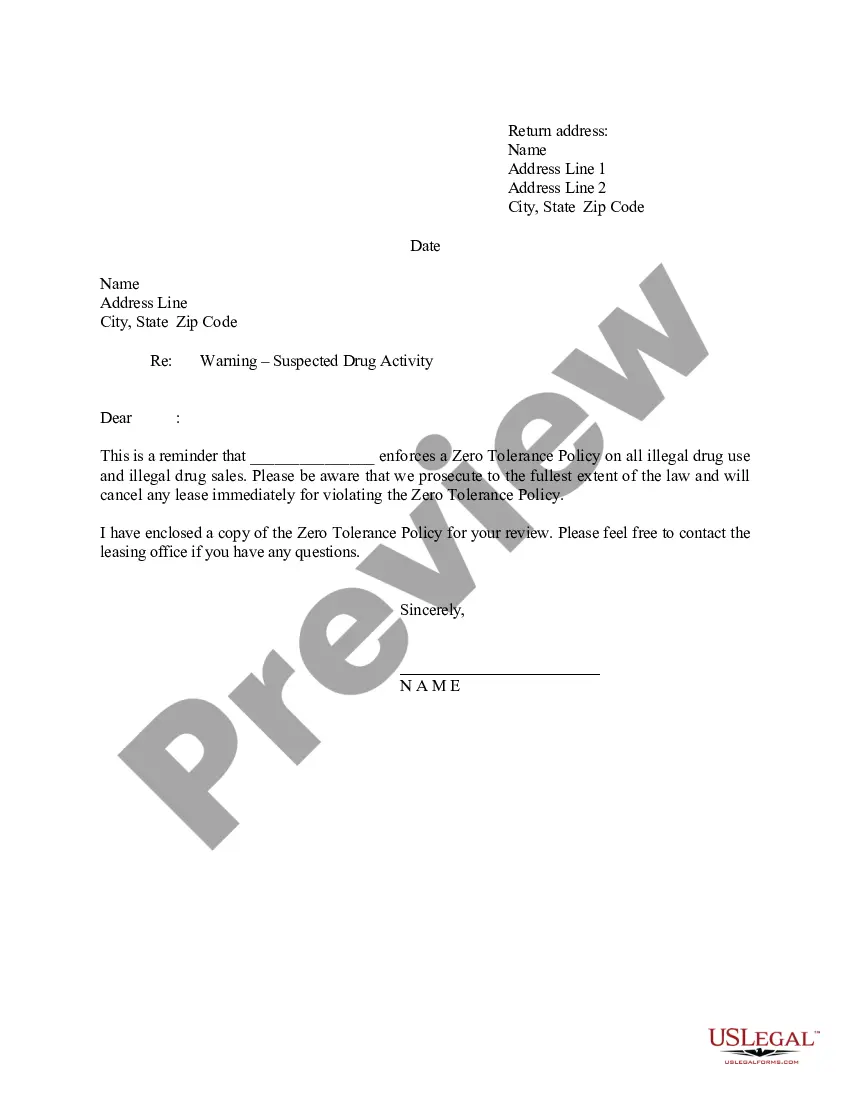
This form is a letter from the landlord to the tenant addressing illegal activities reported by law enforcement on the leased premises. Its purpose is to formally notify the tenant to cease such activities and inform them of the potential consequences if violations continue, including lease termination. This document specifically highlights issues of illegal conduct, setting it apart from other landlord-tenant correspondence.
Key parts of this document
- Notification of illegal activities documented by law enforcement.
- Statement of tenant's obligation to maintain peaceful enjoyment of the premises.
- Warning about consequences of repeated violations or convictions.
- Landlord's contact information for further inquiries.
- Signature line for the landlord to formally sign the letter.

When this form is needed
This letter should be used when a landlord has received reports from law enforcement regarding illegal activities occurring on the rental property. It serves as a crucial step in documenting the issue and formally notifying the tenant of their responsibilities and potential eviction if the activities continue.
Who needs this form
This letter is intended for:
- Landlords managing residential rental properties.
- Property managers who enforce lease agreements on behalf of landlords.
- Anyone needing to formally address illegal activities by tenants in a rental situation.
How to prepare this document
- Identify the parties involved, including the landlord and tenant.
- Specify the address of the leased premises.
- State the illegal activity reported by law enforcement clearly.
- Indicate the consequences of further violations, including potential eviction.
- Sign and date the letter for formal documentation.
Does this form need to be notarized?
This form does not typically require notarization unless specified by local law. Ensure you check your state's requirements regarding any additional documentation that may be necessary.
Get your form ready online
Our built-in tools help you complete, sign, share, and store your documents in one place.
Make edits, fill in missing information, and update formatting in US Legal Forms—just like you would in MS Word.
Download a copy, print it, send it by email, or mail it via USPS—whatever works best for your next step.
Sign and collect signatures with our SignNow integration. Send to multiple recipients, set reminders, and more. Go Premium to unlock E-Sign.
If this form requires notarization, complete it online through a secure video call—no need to meet a notary in person or wait for an appointment.
We protect your documents and personal data by following strict security and privacy standards.

Make edits, fill in missing information, and update formatting in US Legal Forms—just like you would in MS Word.

Download a copy, print it, send it by email, or mail it via USPS—whatever works best for your next step.

Sign and collect signatures with our SignNow integration. Send to multiple recipients, set reminders, and more. Go Premium to unlock E-Sign.

If this form requires notarization, complete it online through a secure video call—no need to meet a notary in person or wait for an appointment.

We protect your documents and personal data by following strict security and privacy standards.
Common mistakes to avoid
- Failing to specify the exact illegal activities reported.
- Not including a clear warning about the consequences of continued violations.
- Overlooking the need for proper documentation of previous incidents.
Advantages of online completion
- Easy access to professionally drafted templates tailored to your needs.
- Edit the form to suit your specific situation conveniently.
- Secure and reliable document storage for future reference.
Looking for another form?





Form popularity
FAQ
Tenancy by sufferance occurs without the landlord's consent when a tenant remains in the property after their lease expires. This situation often raises complications and requires careful handling from the landlord's side. Understanding how to approach these situations, particularly when it involves a District of Columbia Letter from Landlord to Tenant about Tenant engaging in illegal activity in premises as documented by law enforcement and if repeated, lease terminates, can be crucial.
To tell a tenant to move out nicely in a letter, maintain a friendly tone. Explain your reasons for needing them to vacate, show understanding of their situation, and offer assistance during the transition. By doing this, you can ensure a better response, particularly in cases mentioning a District of Columbia Letter from Landlord to Tenant about Tenant engaging in illegal activity in premises as documented by law enforcement and if repeated, lease terminates.
In the District of Columbia, tenants have rights, even if the landlord intends to sell the property. Tenants are entitled to a written notice of termination if the landlord does not wish to renew their lease. They also have the right to remain in the property until the lease expires unless there is a significant reason, like a District of Columbia Letter from Landlord to Tenant about Tenant engaging in illegal activity in premises as documented by law enforcement and if repeated, lease terminates.
Writing a letter to vacate a rental property involves stating your intention to leave, the date of your departure, and a note of appreciation for the rental period. You should also express your plans for the security deposit return. It's wise to refer to the lease terms, especially if you must address illegal activities, using a District of Columbia Letter from Landlord to Tenant about Tenant engaging in illegal activity in premises as documented by law enforcement and if repeated, lease terminates.
When writing a notice letter for moving out, keep it concise and straightforward. State your intent to leave, specify your last day in the rental, and express gratitude for their cooperation. For a more formal approach, considering a District of Columbia Letter from Landlord to Tenant about Tenant engaging in illegal activity in premises as documented by law enforcement and if repeated, lease terminates can also help clarify reasons behind the notice.
Begin the letter with a formal greeting, followed by an explanation of your request for the tenant to vacate. Clearly state the reasons, referring to any lease agreements if applicable. Including a specific deadline for vacating can also help set clear expectations, especially if the situation involves a District of Columbia Letter from Landlord to Tenant about Tenant engaging in illegal activity in premises as documented by law enforcement and if repeated, lease terminates.
To politely ask a tenant to move out, start with a respectful tone. You can explain your reasons clearly while referencing the lease agreement. It is important to mention their rights and provide them with a reasonable timeline to vacate. Consider using a District of Columbia Letter from Landlord to Tenant about Tenant engaging in illegal activity in premises as documented by law enforcement and if repeated, lease terminates, to formalize your request.
Writing a dispute letter to a landlord requires clarity and professionalism. Start with a formal greeting, clearly state your problem, and reference specific incidents. Include a request for action and a timeline for response. Tools like uslegalforms offer templates that can simplify this process and ensure all necessary elements are included.
Yes, a landlord can terminate a lease in DC under certain conditions. For example, if there is illegal activity, as outlined in the District of Columbia Letter from Landlord to Tenant about Tenant engaging in illegal activity in premises as documented by law enforcement and if repeated, lease terminates, the landlord has grounds for termination. It’s essential to follow the legal process for eviction to ensure that both parties’ rights are protected.
In Washington, DC, landlords must maintain the property in a habitable condition, respond promptly to repairs, and respect tenants’ rights to privacy. They are also required to provide the appropriate notices, especially in cases like the District of Columbia Letter from Landlord to Tenant about Tenant engaging in illegal activity in premises as documented by law enforcement and if repeated, lease terminates. Understanding these obligations can empower tenants to advocate for their rights.