District of Columbia Letter from Landlord to Tenant for Failure to keep premises as clean and safe as condition of premises permits - Remedy or lease terminates
What this document covers
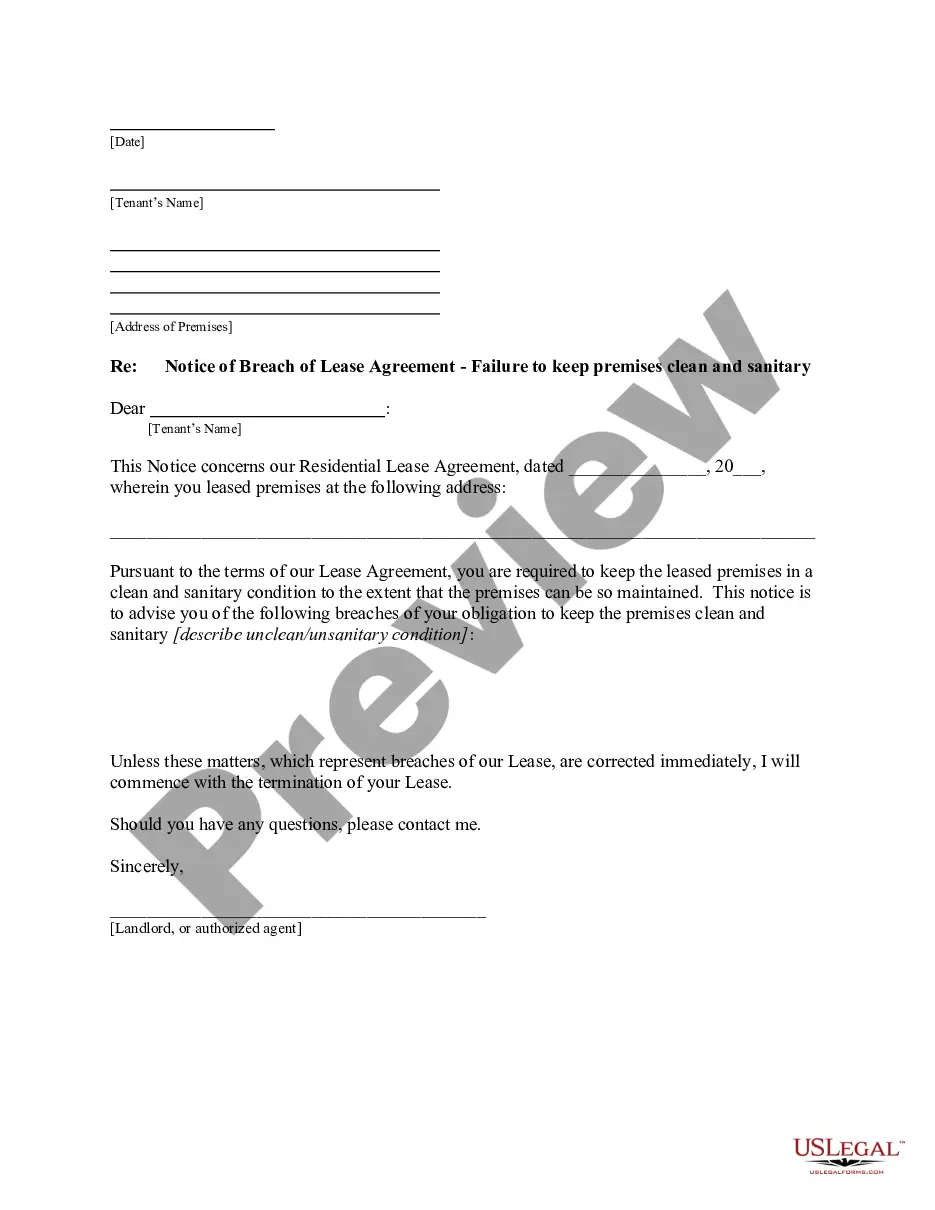
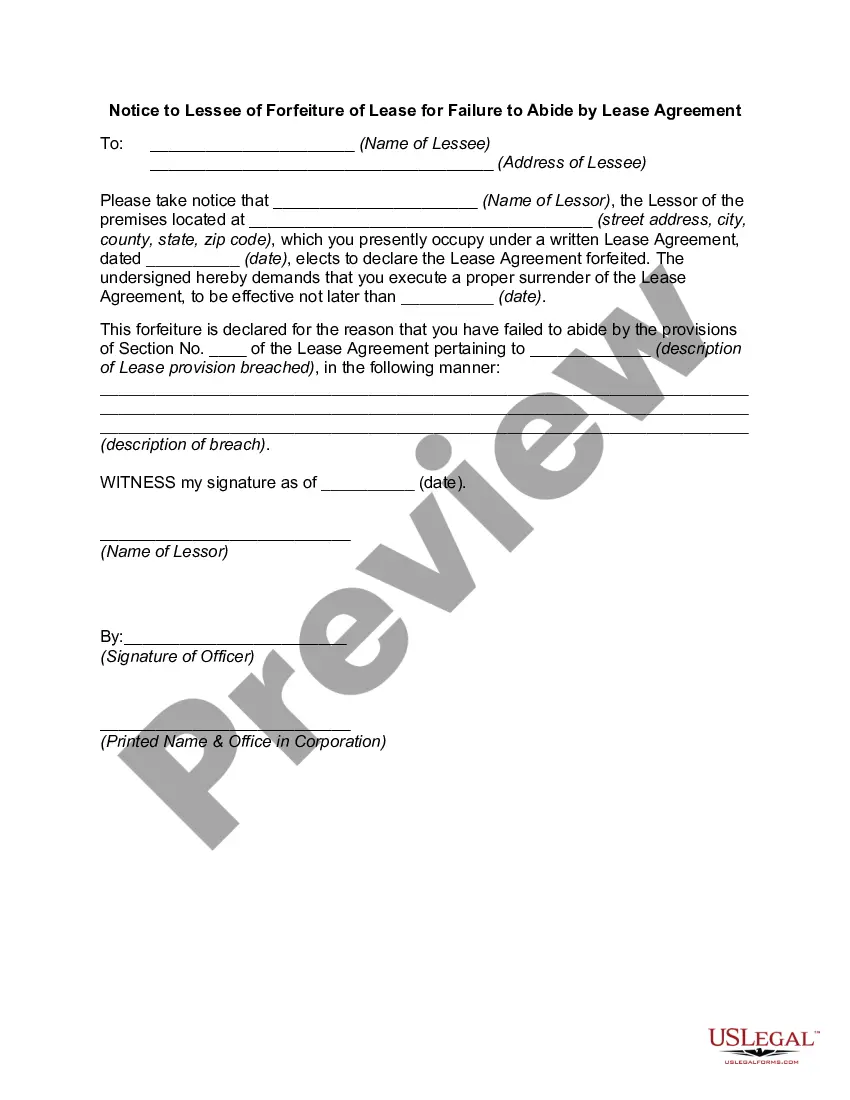
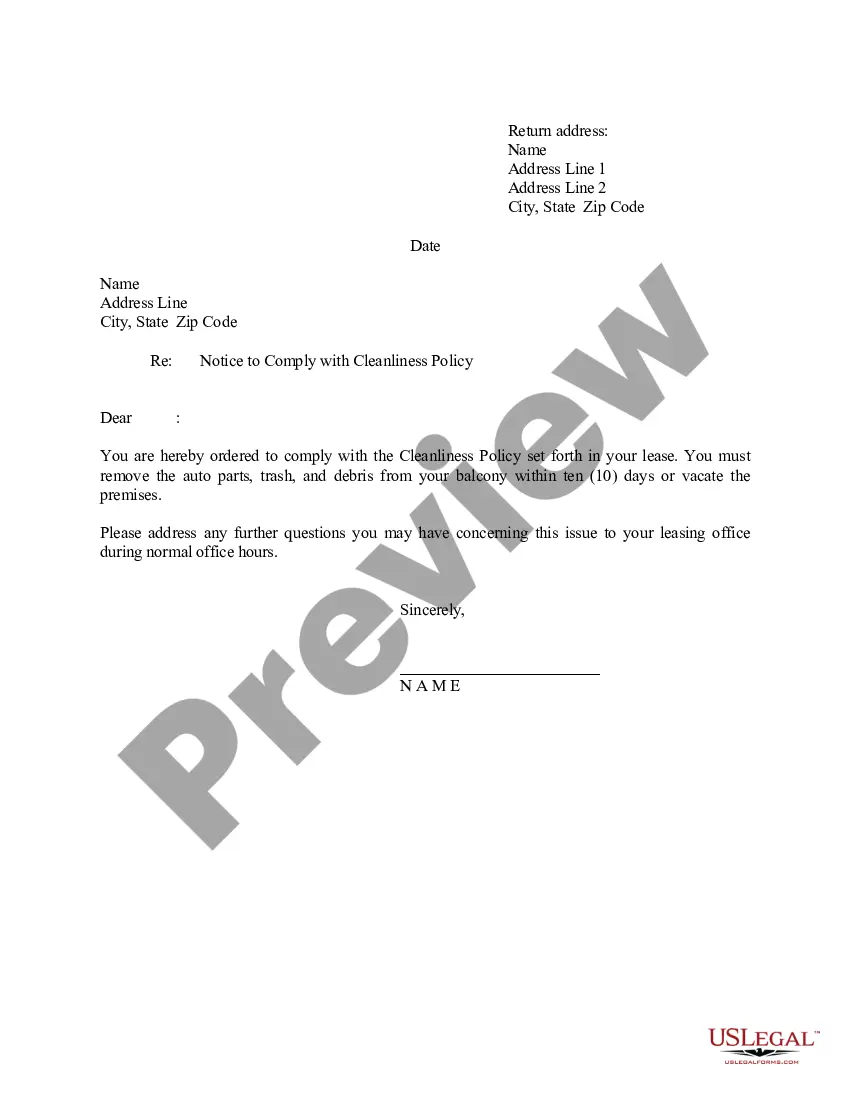
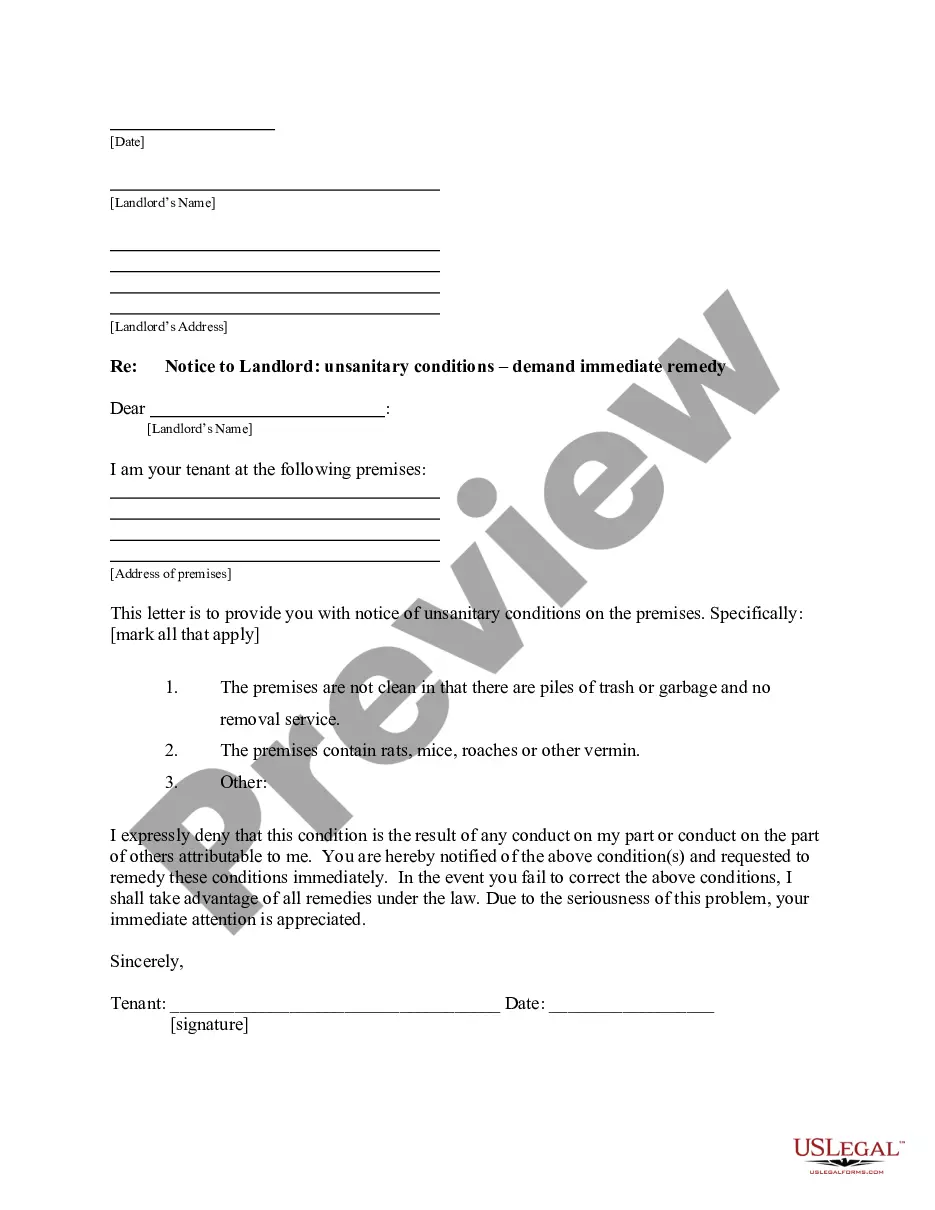
This form is a Letter from Landlord to Tenant for Failure to Keep Premises as Clean and Safe as Condition of Premises Permits. It serves as a notice from a landlord to a tenant, informing them of their responsibility to maintain the leased property in a clean and sanitary condition. This form specifically addresses any identified breaches in this obligation, distinguishing it from general rental agreements or eviction notices.
Form components explained
- Identification of the landlord and tenant.
- Description of the lease agreement terms regarding cleanliness.
- Specific breaches identified by the landlord.
- A statement of required action from the tenant.
- Consequences outlined if the issue is not remedied, including potential termination of the lease.


Situations where this form applies
This form is suitable for situations when a tenant fails to uphold their obligation to keep the rental property clean and safe. Use this letter to formally notify the tenant of specific cleanliness breaches, such as trash accumulation, unsanitary living conditions, or overall neglect that violates the lease agreement terms. This helps indicate that the issue needs rectification, potentially preventing further legal action.
Who can use this document
- Landlords who have tenants failing to maintain the property in accordance with the lease agreement.
- Property managers tasked with managing tenant relations and enforcing lease terms.
- Landlords seeking documentation of issues before pursuing eviction or lease termination.
How to complete this form
- Identify the parties involved by filling in the landlord's and tenant's names.
- Specify the property address where the issues exist.
- Detail the specific breaches observed in cleanliness or sanitation.
- State the required actions the tenant must take to remedy these breaches.
- Indicate the timeframe for compliance and potential outcomes if the issues remain unaddressed.
Does this form need to be notarized?
Notarization is not commonly needed for this form. However, certain documents or local rules may make it necessary. Our notarization service, powered by Notarize, allows you to finalize it securely online anytime, day or night.
Get your form ready online
Our built-in tools help you complete, sign, share, and store your documents in one place.
Make edits, fill in missing information, and update formatting in US Legal Forms—just like you would in MS Word.
Download a copy, print it, send it by email, or mail it via USPS—whatever works best for your next step.
Sign and collect signatures with our SignNow integration. Send to multiple recipients, set reminders, and more. Go Premium to unlock E-Sign.
If this form requires notarization, complete it online through a secure video call—no need to meet a notary in person or wait for an appointment.
We protect your documents and personal data by following strict security and privacy standards.

Make edits, fill in missing information, and update formatting in US Legal Forms—just like you would in MS Word.

Download a copy, print it, send it by email, or mail it via USPS—whatever works best for your next step.

Sign and collect signatures with our SignNow integration. Send to multiple recipients, set reminders, and more. Go Premium to unlock E-Sign.

If this form requires notarization, complete it online through a secure video call—no need to meet a notary in person or wait for an appointment.

We protect your documents and personal data by following strict security and privacy standards.
Common mistakes
- Failing to provide a clear description of the cleanliness issues.
- Not indicating a deadline for remedial action.
- Ignoring local laws regarding notification and communication with tenants.
Why complete this form online
- Convenience: Access and download the form anytime, from anywhere.
- Editability: Customize the form easily to fit specific situations.
- Reliability: Utilize templates drafted by licensed attorneys to ensure compliance with legal standards.
Legal use & context
Using this form helps ensure that landlords comply with legal requirements for notifying tenants of breaches, making it easier to enforce lease agreements when necessary. It also provides documentation of landlord-tenant communications regarding property maintenance issues.
Summary of main points
- The form serves as a formal notice regarding cleanliness issues in rental properties.
- Timely communication through this form can prevent further legal issues.
- Always tailor the form to the specific circumstances and state laws.
Looking for another form?
Form popularity
FAQ
When writing a formal letter to a tenant, start with your address and date, followed by the tenant's address. Use a respectful greeting, clearly outline the purpose of the letter, and include any relevant details, such as references to lease agreements. Finally, conclude with a polite sign-off and your contact information, possibly incorporating the District of Columbia Letter from Landlord to Tenant for Failure to keep premises as clean and safe as condition of premises permits - Remedy or lease terminates if applicable.
To encourage tenants to clean up, it's best to communicate clearly and directly about what is expected. A friendly reminder coupled with a written request, referencing the District of Columbia Letter from Landlord to Tenant for Failure to keep premises as clean and safe as condition of premises permits - Remedy or lease terminates, can effectively convey the seriousness of the issue. Offering help or resources can promote a positive response.
Massachusetts law mandates that landlords must provide tenants with a safe and sanitary living environment. This obligation includes addressing any cleanliness issues that might arise during the tenancy. If there are violations, landlords can use a District of Columbia Letter from Landlord to Tenant for Failure to keep premises as clean and safe as condition of premises permits - Remedy or lease terminates to take necessary actions.
A landlord is not responsible for tenant negligence, which includes failure to maintain the premises in a clean and safe condition. They are also not liable for damages caused by a tenant’s actions or lack of attention to cleanliness. If cleanliness becomes an issue, a formal notice might be sent referencing the District of Columbia Letter from Landlord to Tenant for Failure to keep premises as clean and safe as condition of premises permits - Remedy or lease terminates.
A cleanliness clause typically details the responsibilities of tenants regarding upkeep. For instance, it may state that tenants must keep the property in a neat and sanitary state. This clause can be referenced in a District of Columbia Letter from Landlord to Tenant for Failure to keep premises as clean and safe as condition of premises permits - Remedy or lease terminates if cleanliness issues arise.
Yes, a landlord can remind a tenant to maintain cleanliness in their rented space. It is essential to communicate specifics about what needs cleaning while referencing the terms in the lease agreement. If the tenant fails to comply, the landlord may issue a District of Columbia Letter from Landlord to Tenant for Failure to keep premises as clean and safe as condition of premises permits - Remedy or lease terminates.
To write a letter addressing cleanliness issues, begin with a friendly greeting. Clearly state the specific areas that require attention, using the primary keyword: District of Columbia Letter from Landlord to Tenant for Failure to keep premises as clean and safe as condition of premises permits - Remedy or lease terminates. Finish by outlining the steps the tenant should take and offer assistance if they have questions.
As a tenant in the District of Columbia, you have several rights, including the right to a safe and habitable living environment and protection against discrimination. You also have the right to privacy, meaning that your landlord must provide notice before entering your home. Understanding your rights can be bolstered by utilizing the District of Columbia Letter from Landlord to Tenant for Failure to keep premises as clean and safe as condition of premises permits - Remedy or lease terminates. Staying informed helps ensure you are treated fairly.
Filing a lawsuit against your landlord in the District of Columbia typically starts by gathering all relevant documentation, such as lease agreements and communication records. You must then file the case at the appropriate court, usually the Superior Court of the District of Columbia. Consider utilizing the District of Columbia Letter from Landlord to Tenant for Failure to keep premises as clean and safe as condition of premises permits - Remedy or lease terminates to support your position before escalating. Seeking legal advice can also help clarify your next steps.
An apartment can be considered uninhabitable in the District of Columbia if it has significant health and safety violations. Examples include severe plumbing issues, lack of heat, or extensive pest infestations. If you find yourself in such a situation, a District of Columbia Letter from Landlord to Tenant for Failure to keep premises as clean and safe as condition of premises permits - Remedy or lease terminates can serve as a useful document. Ensure that your living space meets legal standards for habitability.