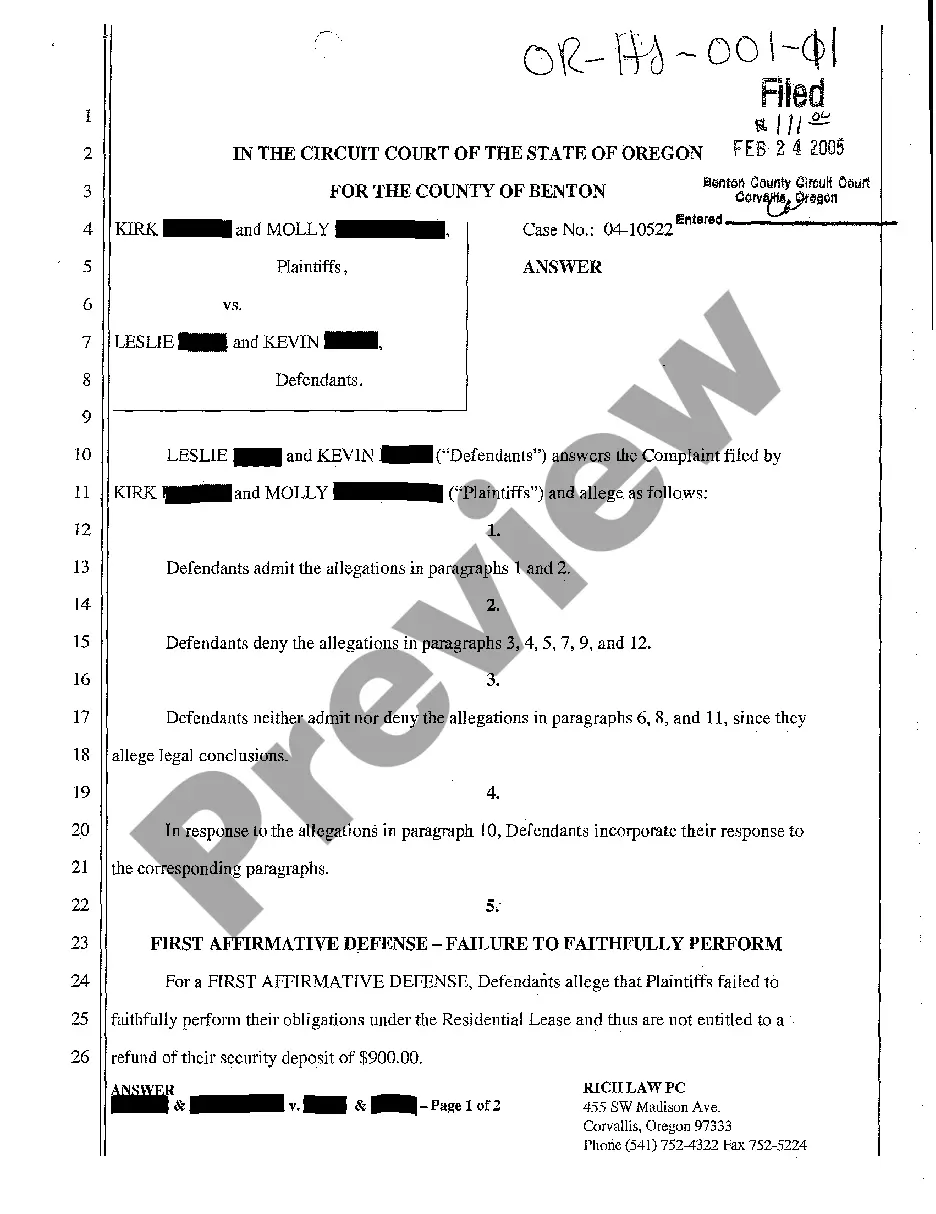
Connecticut Written Revocation of Will
What this document covers
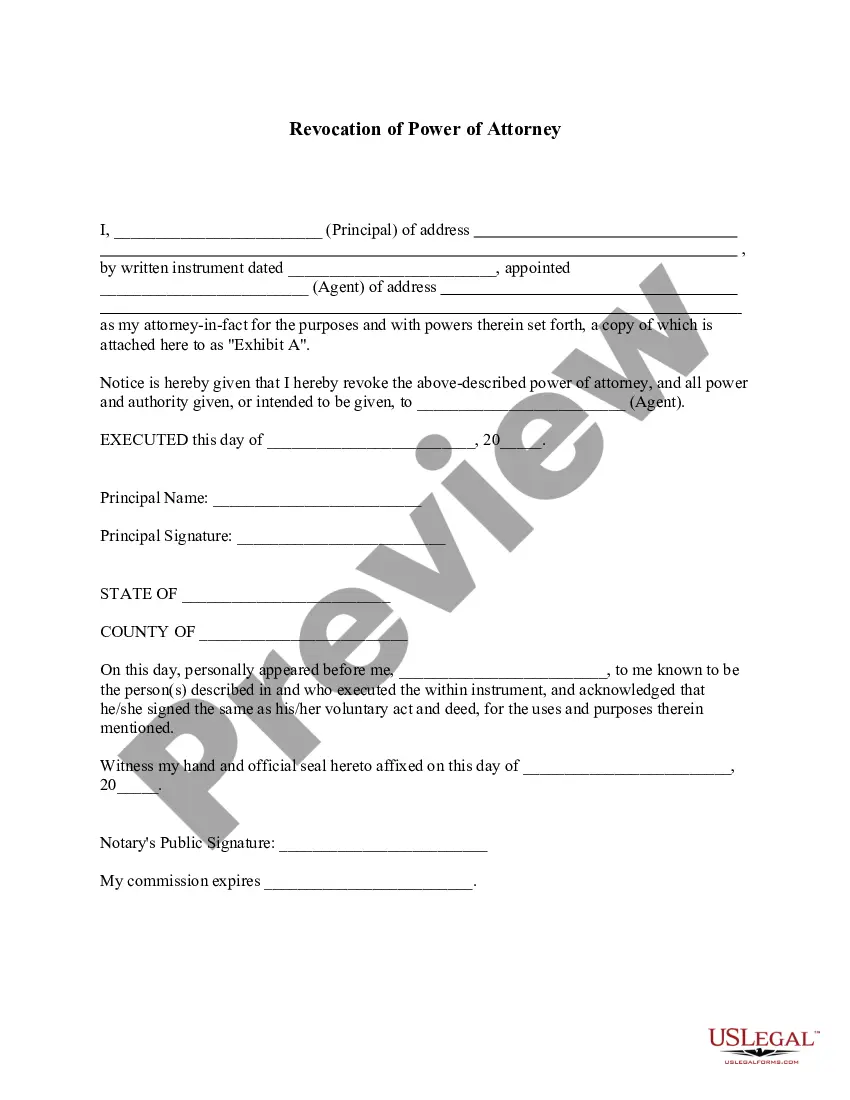
The Written Revocation of Will is a legal document that formally cancels any previous wills made by a testator. This form provides clarity by explicitly stating that prior wills should not be probated. It is particularly useful when creating a new will that may not contain a revocation clause, ensuring that heirs cannot claim an old will that is no longer valid.
Form components explained
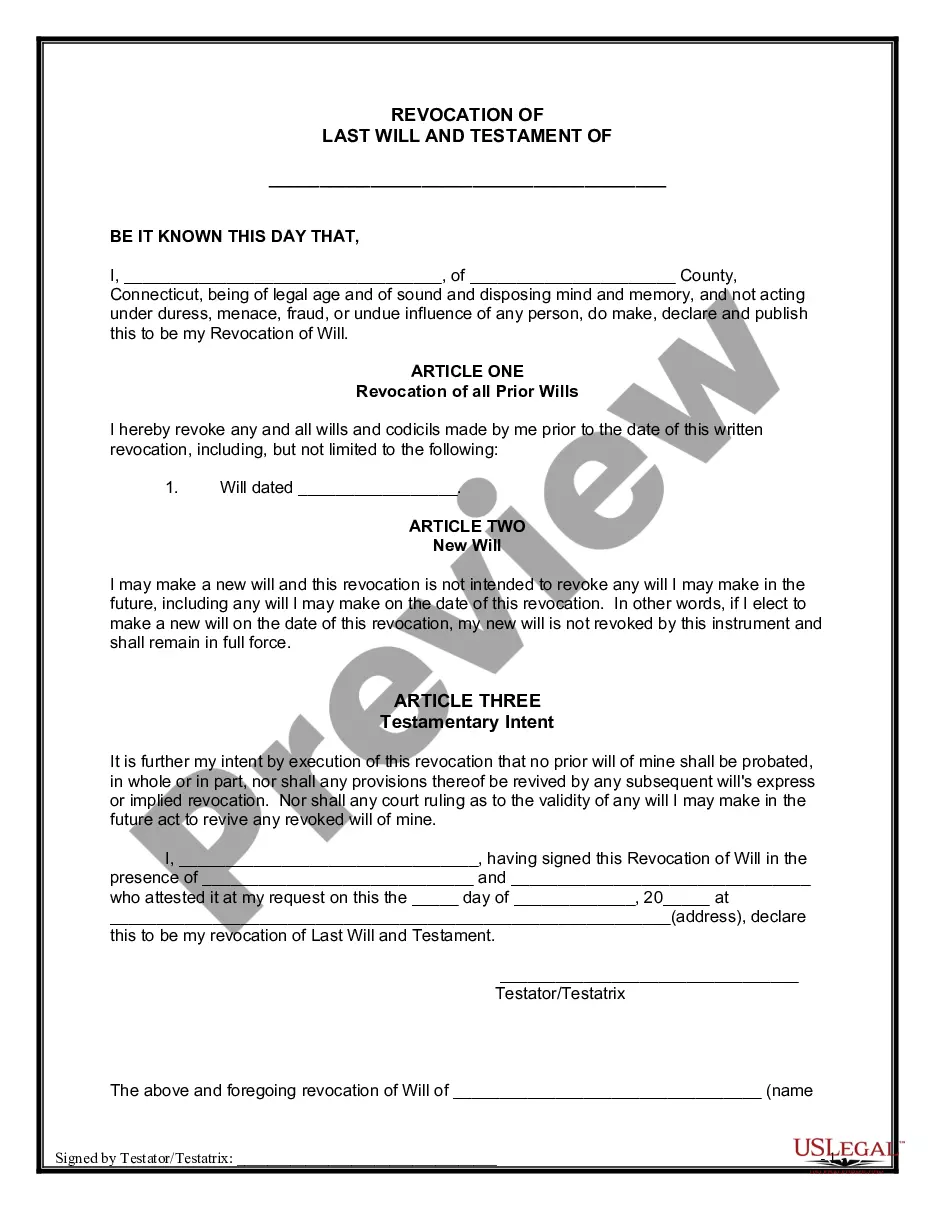
- Declaration of revocation: Clearly states that all prior wills and codicils are revoked.
- New will clause: Ensures that any future wills made by the testator remain valid.
- Testamentary intent: Affirms that the testator intends for no prior will to be probated.
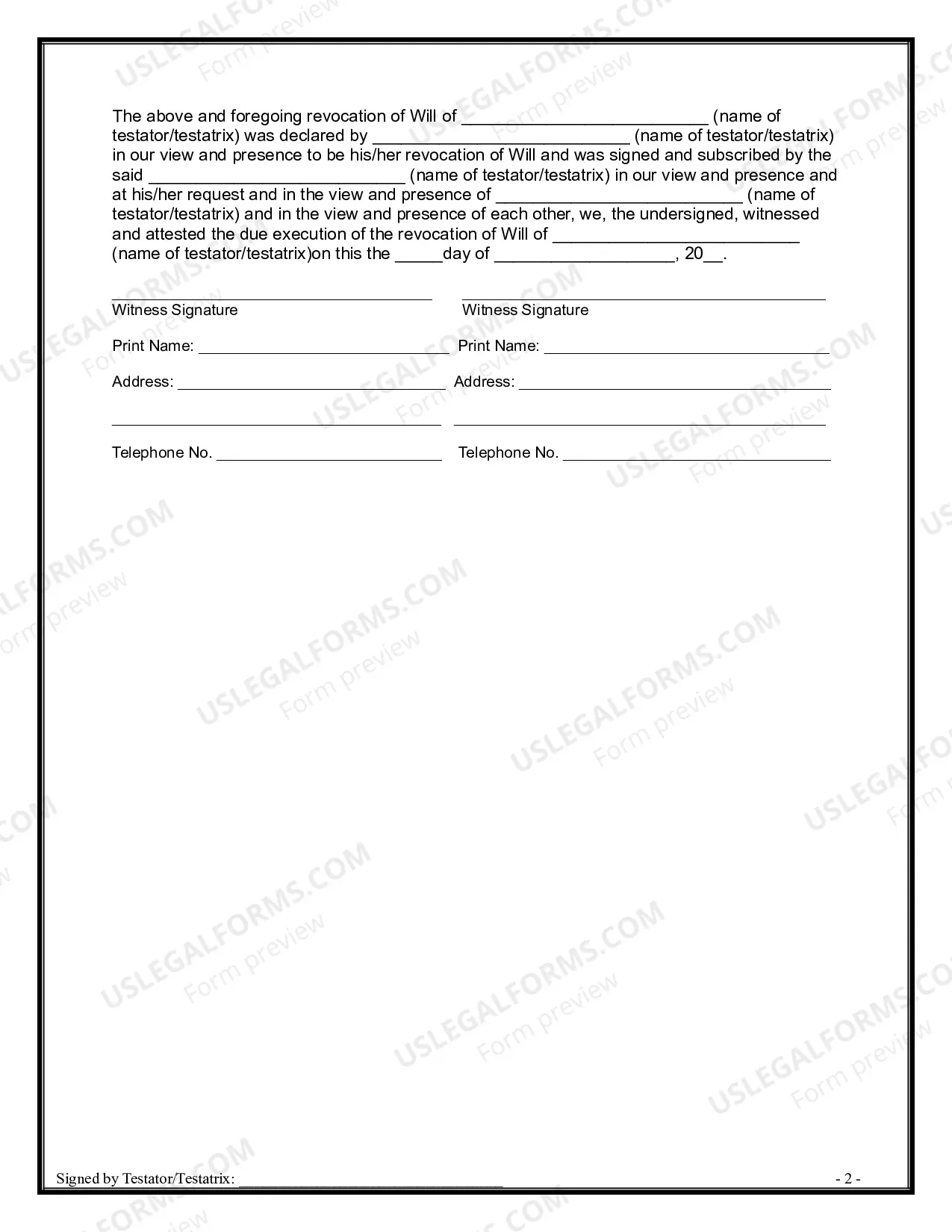
- Witness signatures: Requires signatures from witnesses to confirm the revocation's authenticity.
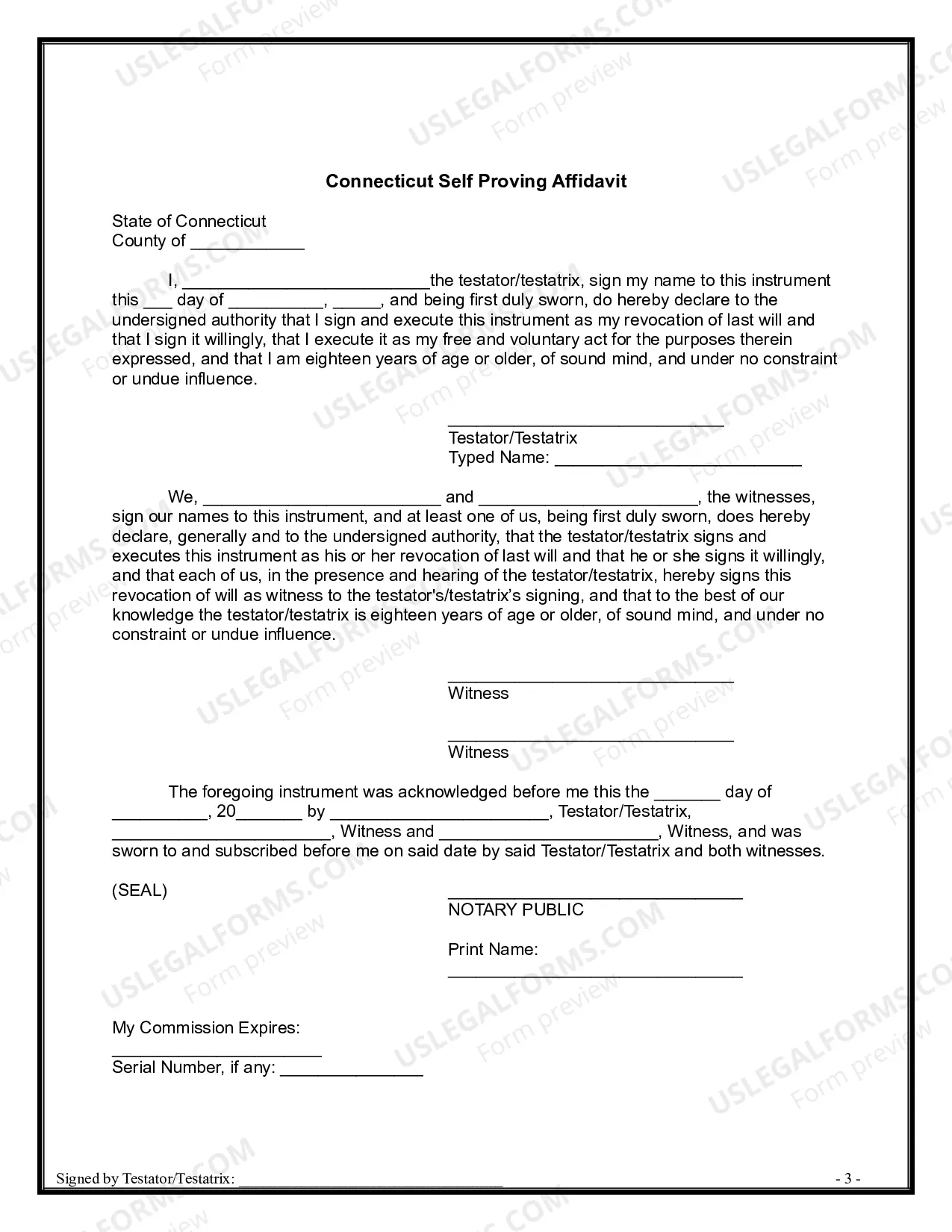
- Notarization: Includes a section for notarization to enhance the document's legal standing.

Common use cases
This form should be used in situations where an individual wishes to revoke their previous will or codicils, especially when creating a new will that may not clearly revoke all prior documents. It is important when there is potential confusion among heirs about which will should be considered valid.
Intended users of this form
- Individuals who have made a will that they wish to revoke.
- Persons creating a new will without a revocation clause.
- Those wanting to ensure their last wishes are clearly understood by heirs.
How to complete this form
- Identify the testator: Fill in the name and county of the individual revoking the will.
- Revocation statement: Clearly state the date and descriptions of any prior wills being revoked.
- Witnesses: Have at least two witnesses sign the document in the presence of the testator.
- Include notarization: if required, complete the notary section to validate the document.
- Final review: Ensure all fields are completed and accurate before filing.
Notarization guidance
Yes, this form must be notarized to be legally valid in Connecticut. US Legal Forms offers integrated online notarization for your convenience, ensuring a secure process that can be completed from home without the need for travel.
Get your form ready online
Our built-in tools help you complete, sign, share, and store your documents in one place.
Make edits, fill in missing information, and update formatting in US Legal Forms—just like you would in MS Word.
Download a copy, print it, send it by email, or mail it via USPS—whatever works best for your next step.
Sign and collect signatures with our SignNow integration. Send to multiple recipients, set reminders, and more. Go Premium to unlock E-Sign.
If this form requires notarization, complete it online through a secure video call—no need to meet a notary in person or wait for an appointment.
We protect your documents and personal data by following strict security and privacy standards.

Make edits, fill in missing information, and update formatting in US Legal Forms—just like you would in MS Word.

Download a copy, print it, send it by email, or mail it via USPS—whatever works best for your next step.

Sign and collect signatures with our SignNow integration. Send to multiple recipients, set reminders, and more. Go Premium to unlock E-Sign.

If this form requires notarization, complete it online through a secure video call—no need to meet a notary in person or wait for an appointment.

We protect your documents and personal data by following strict security and privacy standards.
Avoid these common issues
- Not having the document signed by the required number of witnesses.
- Failing to provide a clear statement identifying the wills being revoked.
- Inadequate notarization when required by state law.
Advantages of online completion
- Convenience of completing the form from home without needing a legal professional.
- Editability allows users to modify the document as necessary before finalizing.
- Reliability of using attorney-drafted templates that meet legal standards.
Key takeaways
- A Written Revocation of Will is essential for formally cancelling prior wills.
- This document provides clarity and prevents disputes regarding your wishes.
- Ensure proper execution with witness signatures and consider notarizing the form for added validity.
Looking for another form?

Form popularity
FAQ
It is a legal document that formally cancels any previous wills and codicils and states that those documents should not be probated. It’s useful when creating a new will that may not include a revocation clause, to prevent heirs from enforcing an outdated will.
It is intended for individuals who have made a will they wish to revoke, those creating a new will without a revocation clause, and anyone who wants to ensure their last wishes are clearly understood by heirs.
Use it when you want to revoke prior wills or codicils, especially if you are drafting a new will that may not clearly revoke older documents, to avoid confusion among heirs.
The form includes five components: a declaration of revocation; a new will clause; testamentary intent language; space for witness signatures; and a notarization section to enhance legal standing. Together, these elements revoke prior documents, confirm the testator's intent, support future validity, and help prevent challenges.
By explicitly revoking prior wills and stating that they should not be probated, the form clarifies which documents are valid and reduces disputes among heirs. The accompanying witness signatures and notarization strengthen authenticity and help ensure the testator's final wishes are followed.
It specifically revokes all prior wills and codicils and states that those old documents should not be probated, while a new will alone may not include a formal revocation. The form provides a dedicated declaration of revocation plus a separate new will clause.