Utah Assignment of Mortgage Package
What this form package covers
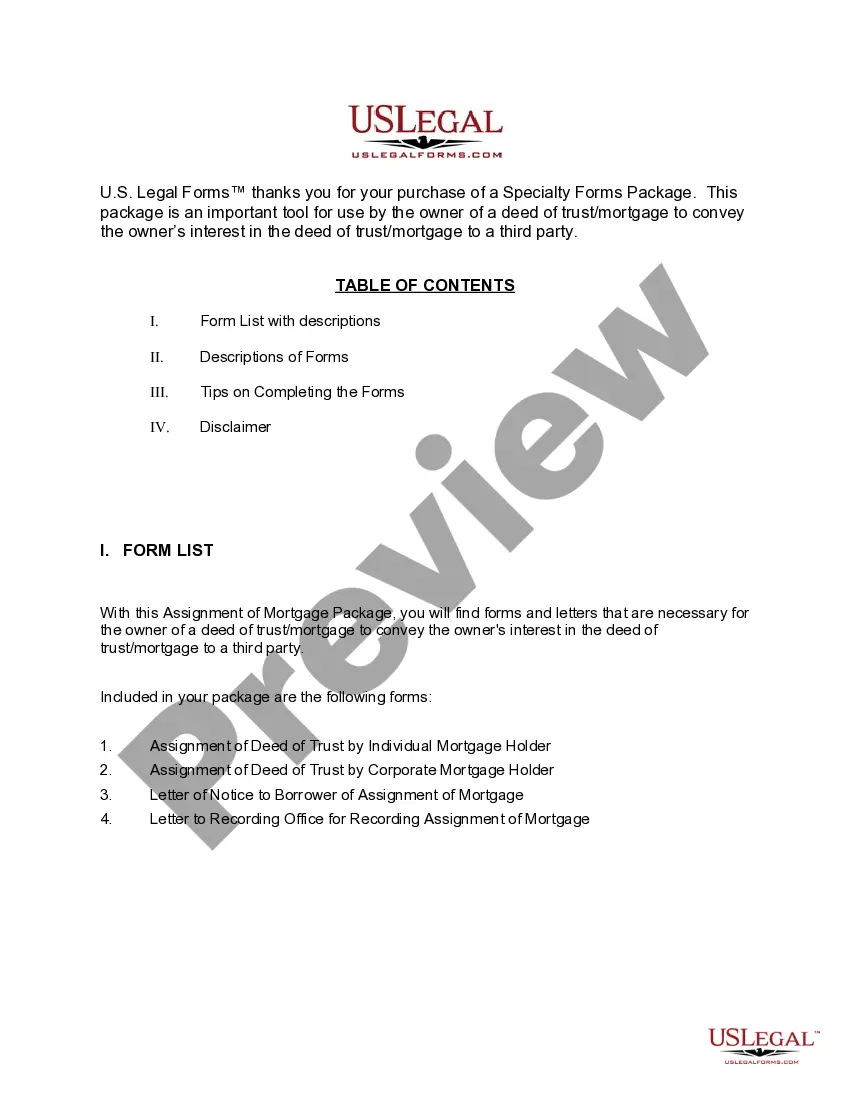
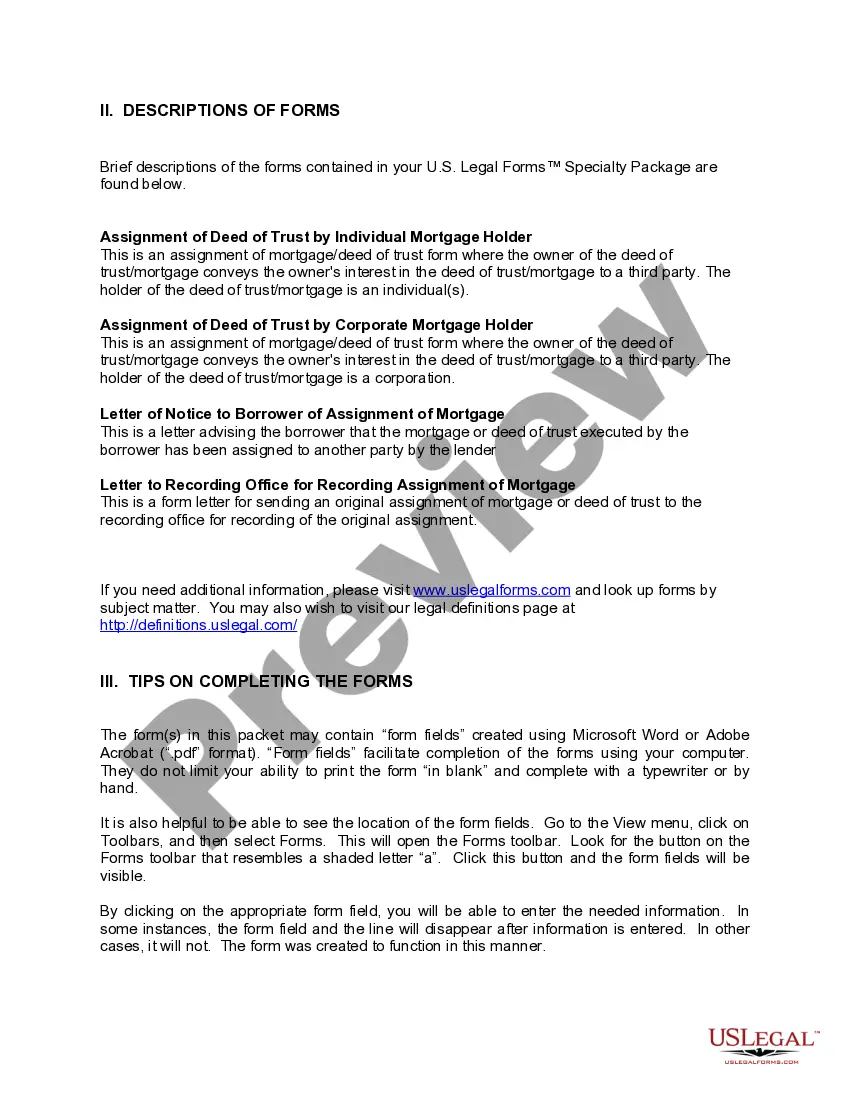
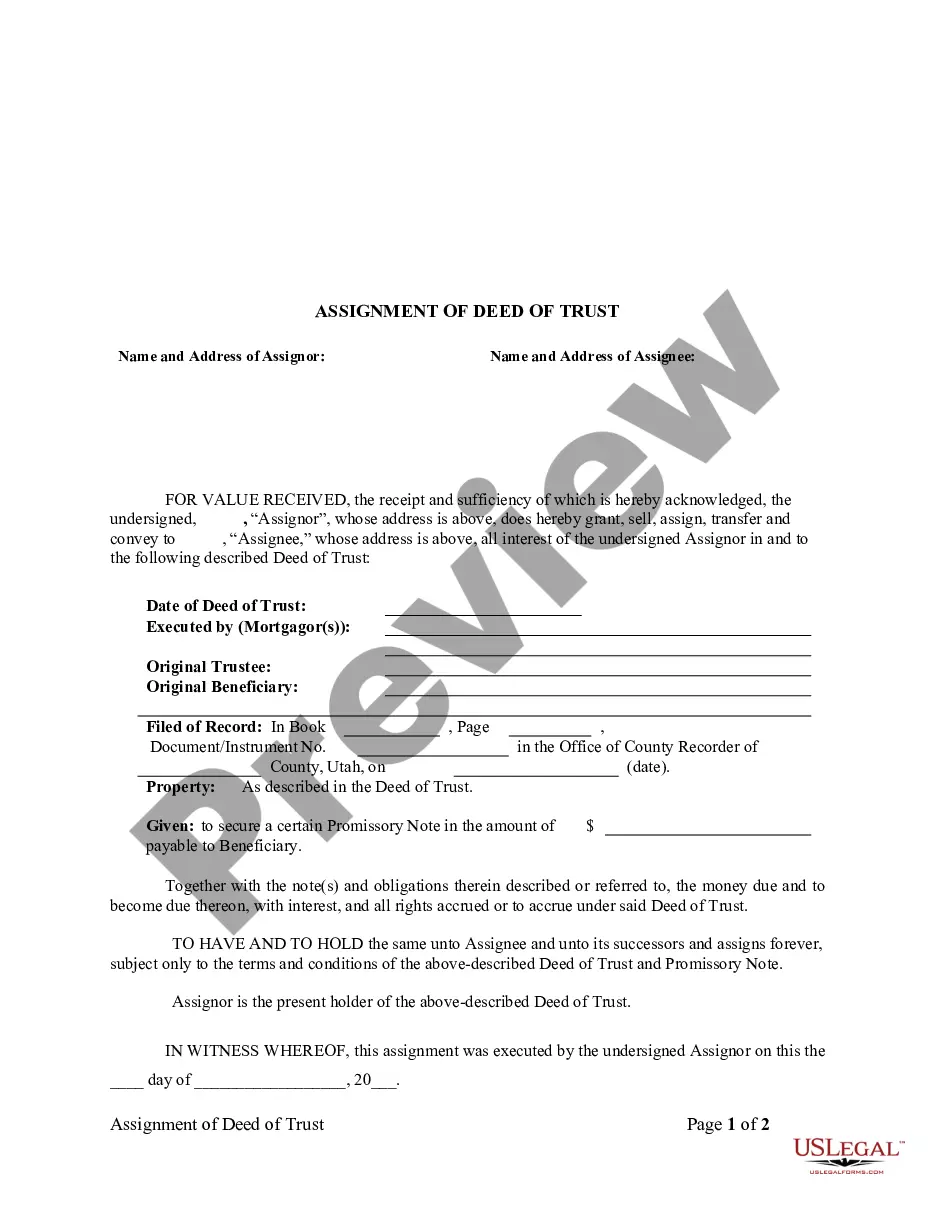
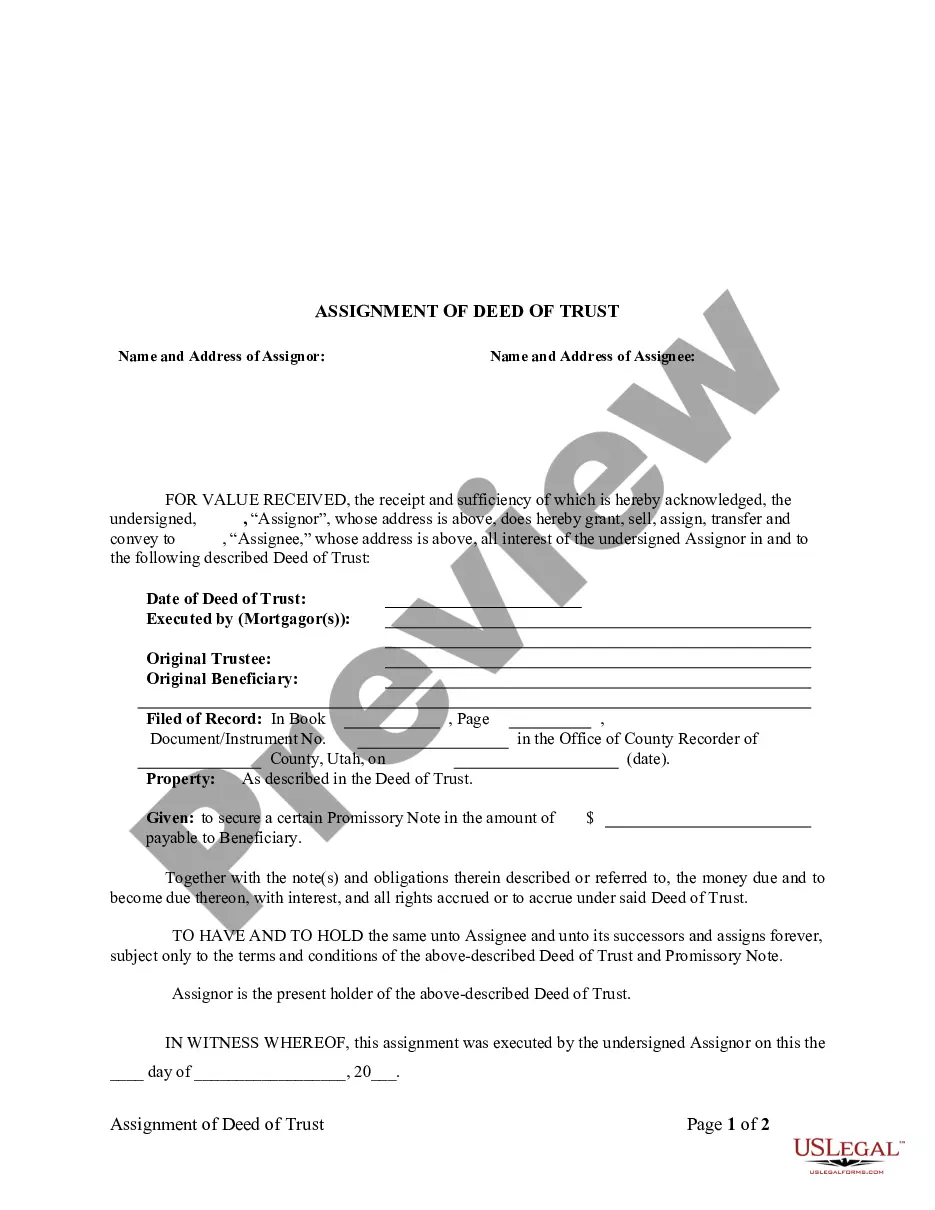
The Utah Assignment of Mortgage Package is a collection of legal forms that facilitates the transfer of ownership interest in a mortgage or deed of trust. This package is designed for individuals or corporations that need to assign their rights to a third party. By using this package, you can ensure that the transfer is legal, comprehensive, and compliant with Utah state laws, distinguishing it from other generic transfer forms.
Documents contained in this package
When to use this document
This package is essential in several scenarios, including:
- When a mortgage holder wants to sell or transfer their interest to another party.
- When a lender assigns a mortgage to a different financial institution.
- When a borrower is notified of changes in mortgage ownership.
Who needs this form package
- Individual mortgage holders looking to transfer their mortgage.
- Corporate entities that manage or hold mortgages.
- Borrowers who need to be informed about the assignment of their mortgage.
Instructions for completing these forms
- Review all included forms to understand their purpose.
- Determine whether you are assigning the mortgage as an individual or corporation.
- Gather necessary information, including the parties involved and property details.
- Fill out the Assignment of Deed of Trust forms accurately.
- Prepare notices to the borrower and recording office as needed.
- Ensure all forms are signed and dated where required.
Do forms in this package need to be notarized?
Forms in this package typically do not require notarization unless required by local law. However, it is advisable to consult the specific requirements for your situation to ensure compliance.
Get your form ready online
Our built-in tools help you complete, sign, share, and store your documents in one place.
Make edits, fill in missing information, and update formatting in US Legal Forms—just like you would in MS Word.
Download a copy, print it, send it by email, or mail it via USPS—whatever works best for your next step.
Sign and collect signatures with our SignNow integration. Send to multiple recipients, set reminders, and more. Go Premium to unlock E-Sign.
If this form requires notarization, complete it online through a secure video call—no need to meet a notary in person or wait for an appointment.
We protect your documents and personal data by following strict security and privacy standards.

Make edits, fill in missing information, and update formatting in US Legal Forms—just like you would in MS Word.

Download a copy, print it, send it by email, or mail it via USPS—whatever works best for your next step.

Sign and collect signatures with our SignNow integration. Send to multiple recipients, set reminders, and more. Go Premium to unlock E-Sign.

If this form requires notarization, complete it online through a secure video call—no need to meet a notary in person or wait for an appointment.

We protect your documents and personal data by following strict security and privacy standards.
Typical mistakes to avoid
- Failing to notify the borrower of the assignment.
- Omitting essential details on the assignment forms.
- Not obtaining signatures from all necessary parties.
- Neglecting to file the assignment in a timely manner with the recording office.
Benefits of completing this package online
- Convenience of downloading forms directly to your computer.
- Editability of forms makes it easy to customize for your needs.
- Reliability of forms drafted by licensed attorneys ensures legal compliance.
Legal use & context
- The forms included in this package are designed to convey the mortgage interest legally and effectively.
- Using this package helps in maintaining clear records of ownership and assignments.
- All forms comply with Utah law, enhancing their enforceability in legal matters.
What to keep in mind
- The Utah Assignment of Mortgage Package is essential for legally transferring mortgage interests.
- It's important to complete each form accurately and notify affected parties.
- This package is tailored to meet Utah's legal requirements.
Looking for another form?


Form popularity
FAQ
In contrast, a trust deed involves three parties: a borrower (or trustor), a lender (or beneficiary), and the trustee. The trustee holds title to the lien for the lender's benefit; if the borrower defaults, the trustee will initiate and complete the foreclosure process at the lender's request.
A Deed of Trust is essentially an agreement between a lender and a borrower to give the property to a neutral third party who will serve as a trustee. The trustee holds the property until the borrower pays off the debt.The trustee, however, holds the legal title to the property.
A deed of trust is an agreement between a home buyer and a lender at the closing of a property. It states that the home buyer will repay the loan and that the mortgage lender will hold the legal title to the property until the loan is fully paid.
To form a Trust, a Trust Deed is prepared and signed. The Trust Deed specifies who the Settlor, Trustees and Discretionary Beneficiaries are. The Trust Deed also provides the Trustees with a full range of administrative powers. This allows the Trustees to undertake virtually any action an individual could do.
Trust deeds can be a valuable aid to financial stability, but they are not right for everybody. They are best suited to people who have a regular income and can commit to regular payments.