Connecticut Last Will and Testament for a Single Person with Minor Children
What this document covers
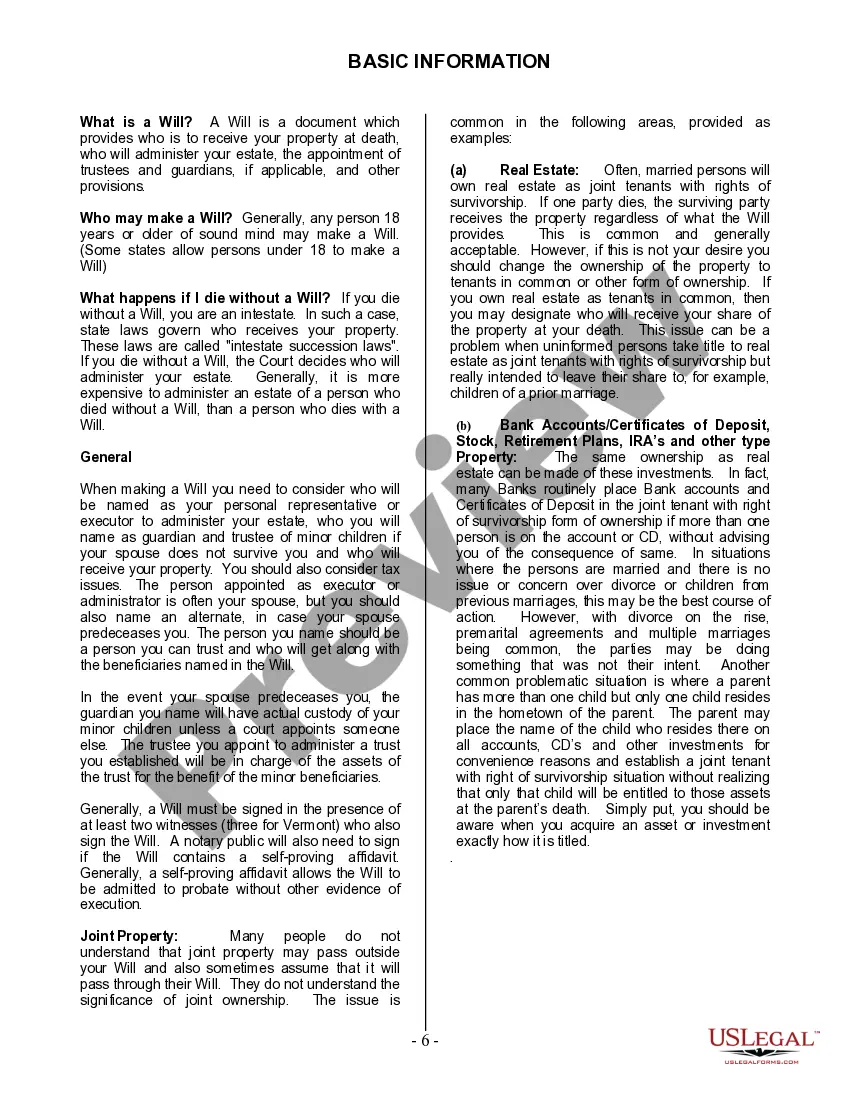
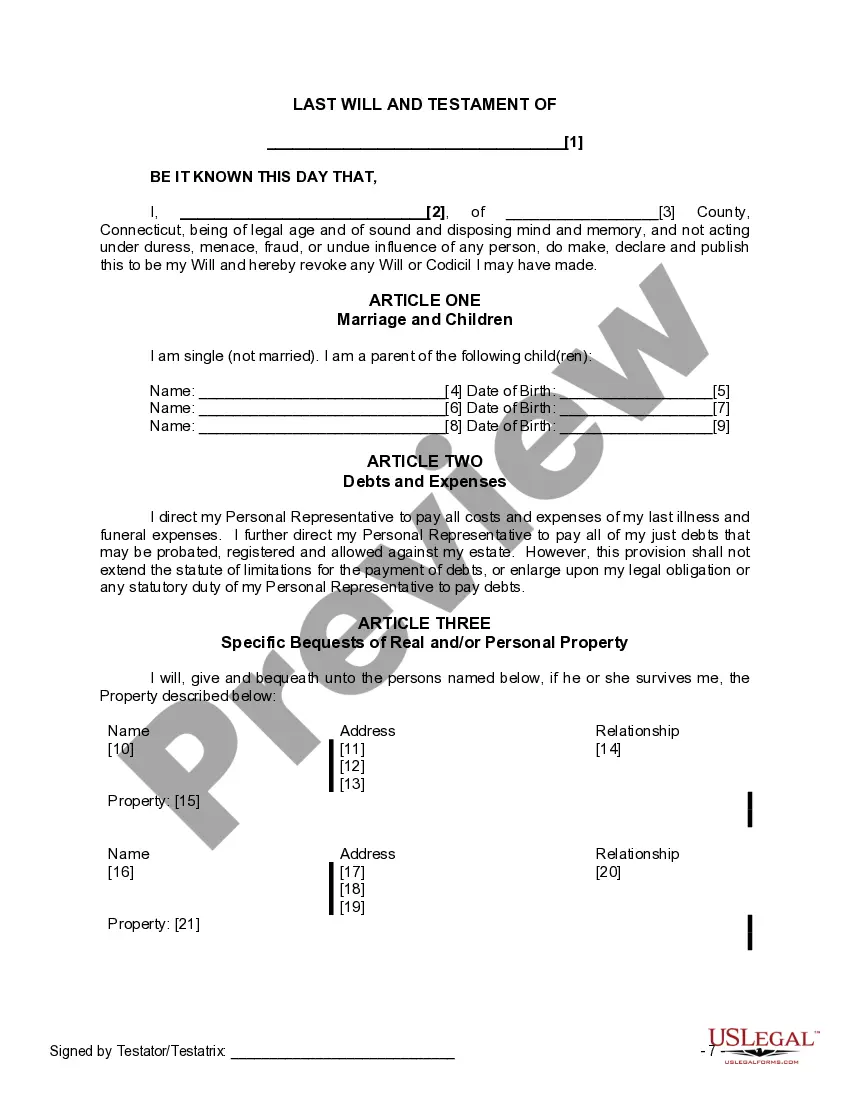
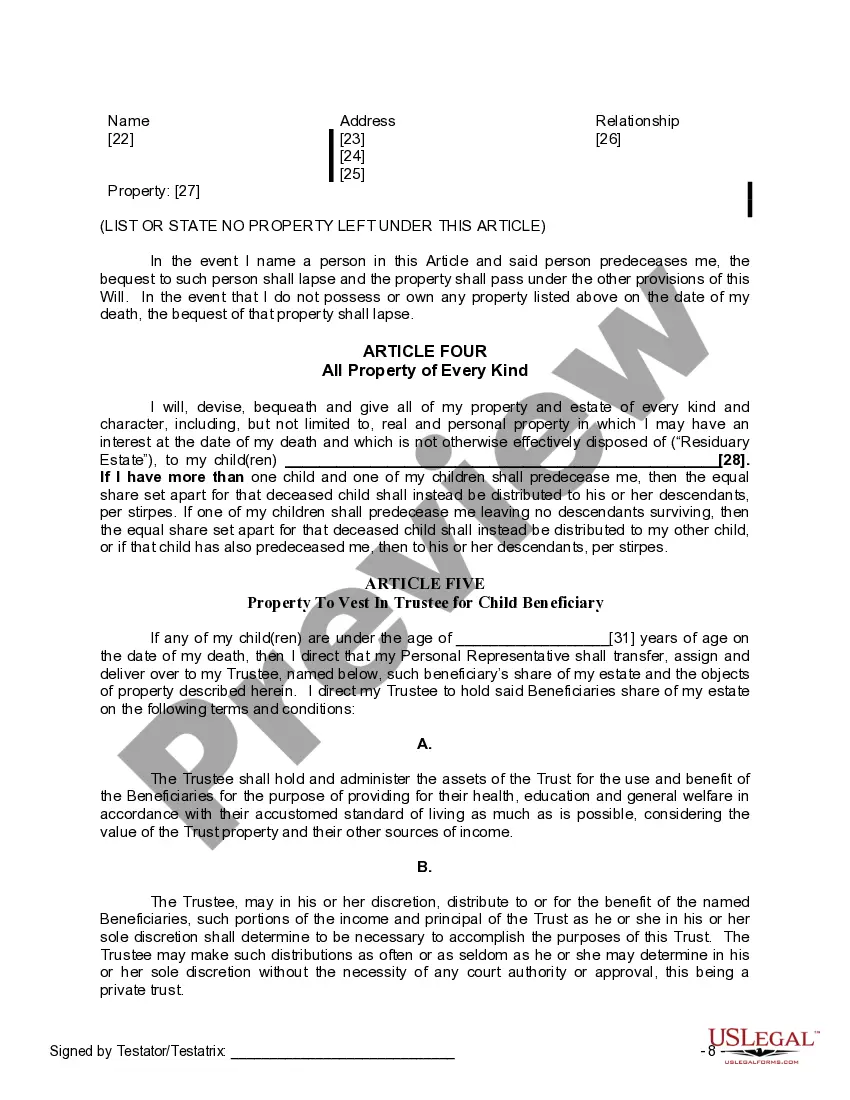
The Last Will and Testament for a Single Person with Minor Children is a legal document that outlines how a single parent wishes to distribute their assets upon death while also designating guardianship for their minor children. This form provides specific guidelines for appointing a personal representative, distributing property, and establishing trusts for minor beneficiaries, ensuring that your children's future welfare is safeguarded. It differs from other wills as it includes additional provisions specifically beneficial for guardianship and trusts applicable to minor children.
Key parts of this document
- Appointment of a personal representative or executor to administer the estate.
- Designation of specific beneficiaries, including children, for property distribution.
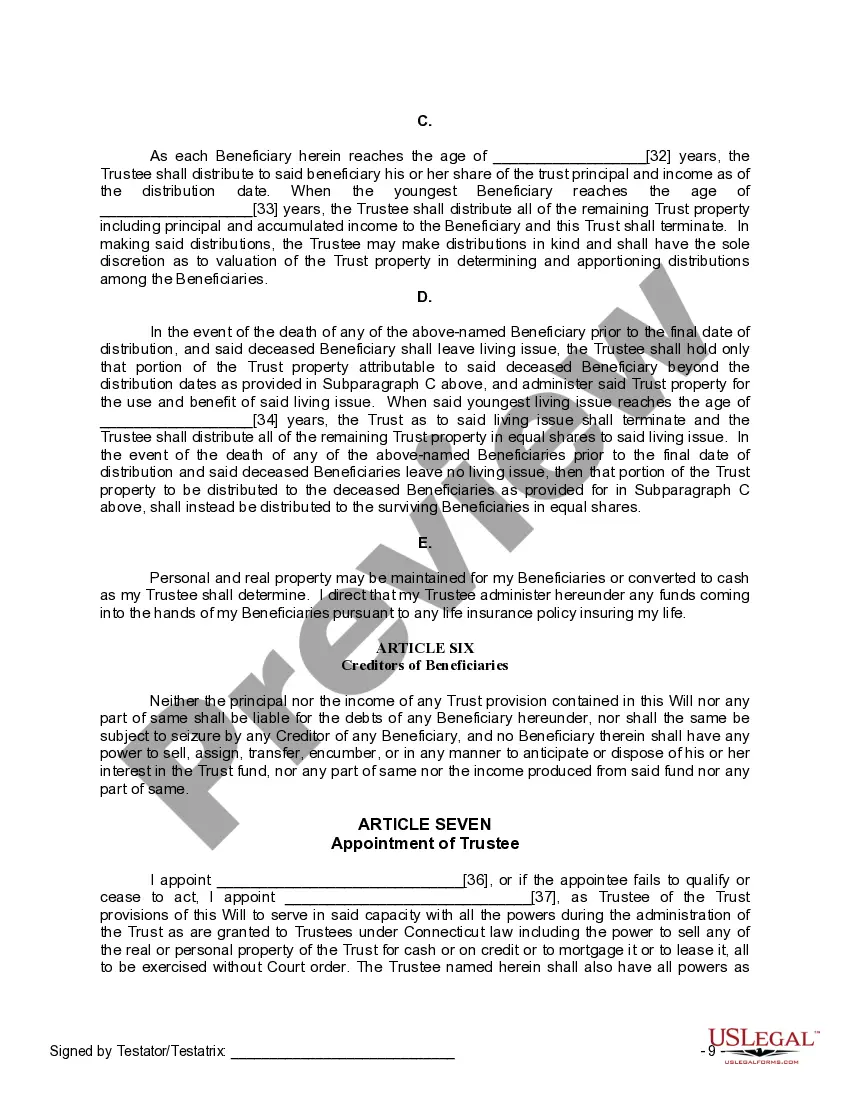
- Establishment of a trust for minor children to manage their inheritance until they reach a designated age.
- Appointment of a legal guardian for minor children to ensure their care and upbringing.
- Instruction on handling debts and expenses related to the estate.





Situations where this form applies
This form should be used when a single parent with minor children wishes to create a legally binding document specifying how their assets will be distributed after death. It is ideal in situations where the parent wants to ensure that their children are cared for, both financially and physically, and have specific wishes regarding property and guardian selection. This form should be completed sooner rather than later to provide peace of mind regarding your estate's management and your children's future security.
Who can use this document
- Single parents who have minor children and want to clearly outline their wishes regarding asset distribution.
- Individuals who wish to appoint a guardian for their minor children in the event of their untimely death.
- Those wanting to establish a trust to manage assets for the benefit of their minor children.
- Anyone seeking to ensure their specific wishes regarding property distribution are honored after their passing.
Completing this form step by step
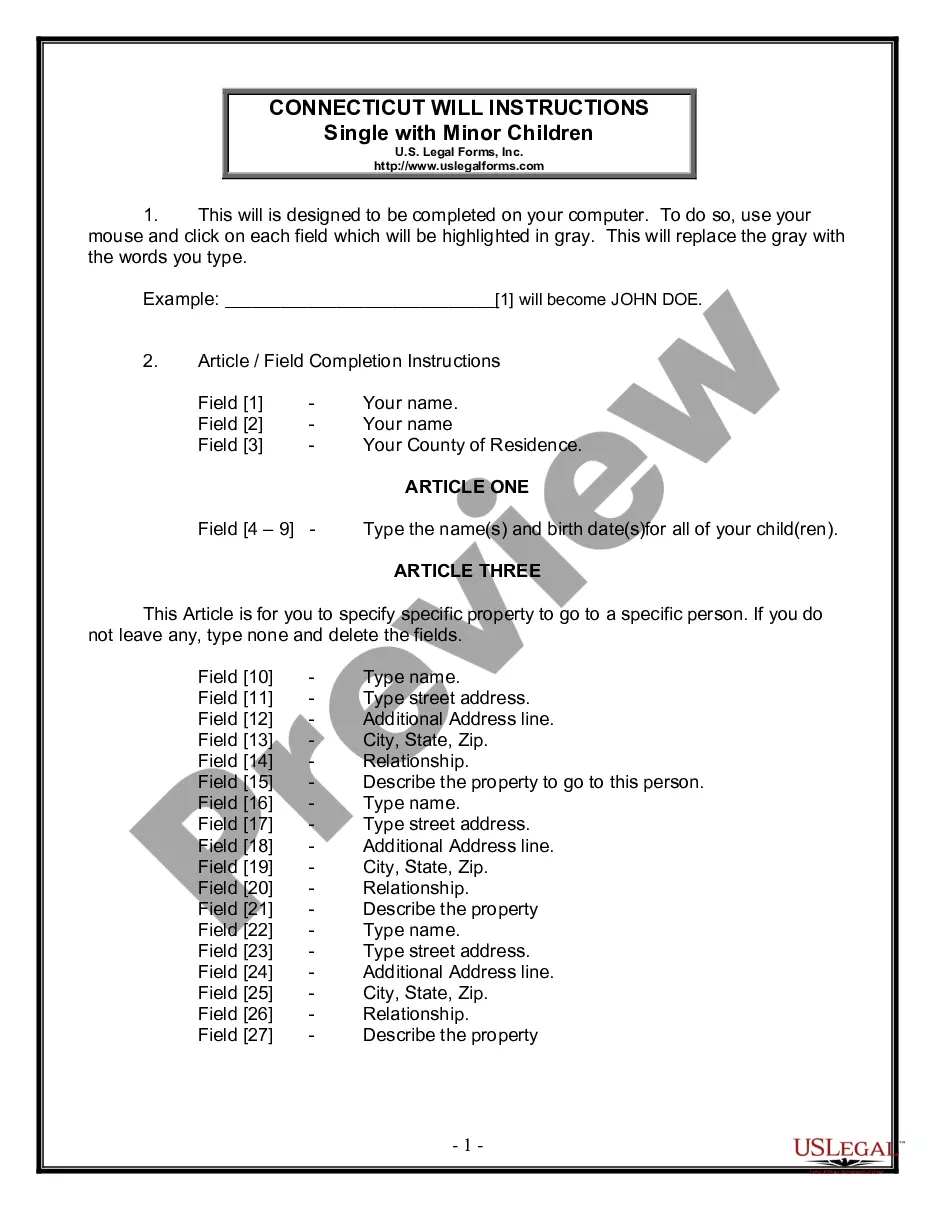
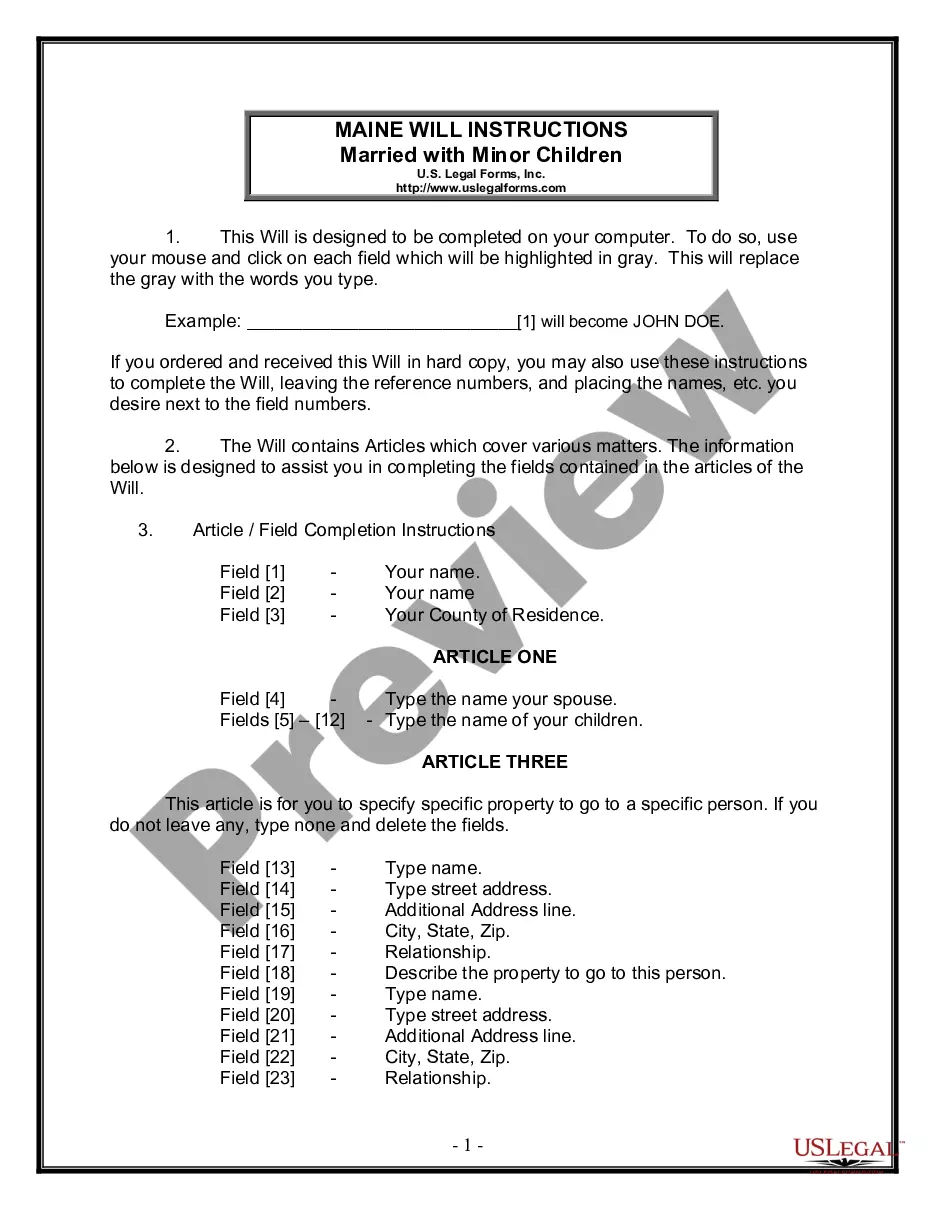
- Begin by entering your name and county of residence at the designated fields.
- List the names and birthdates of all your minor children to ensure they are recognized as beneficiaries.
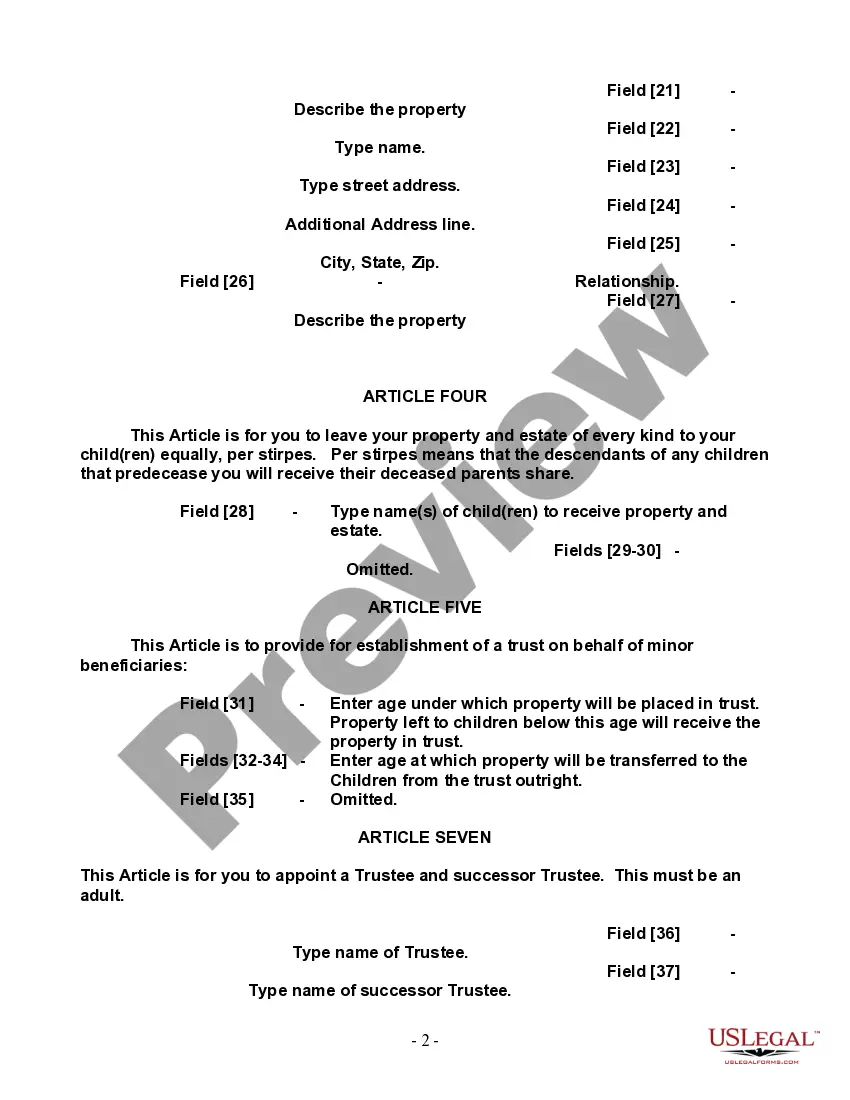
- Specify any specific bequests to individuals by detailing the property and the recipient.
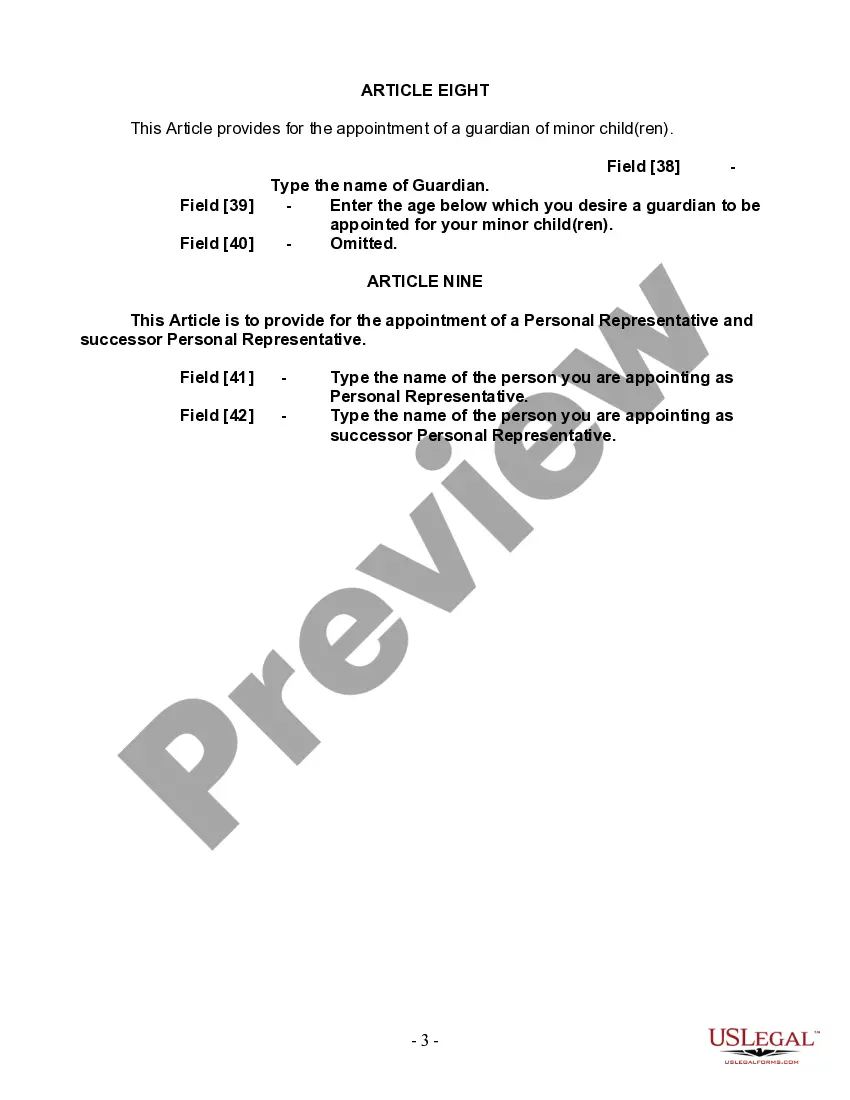
- Designate a guardian for your minor children as well as a trustee to manage any property left to them in trust.
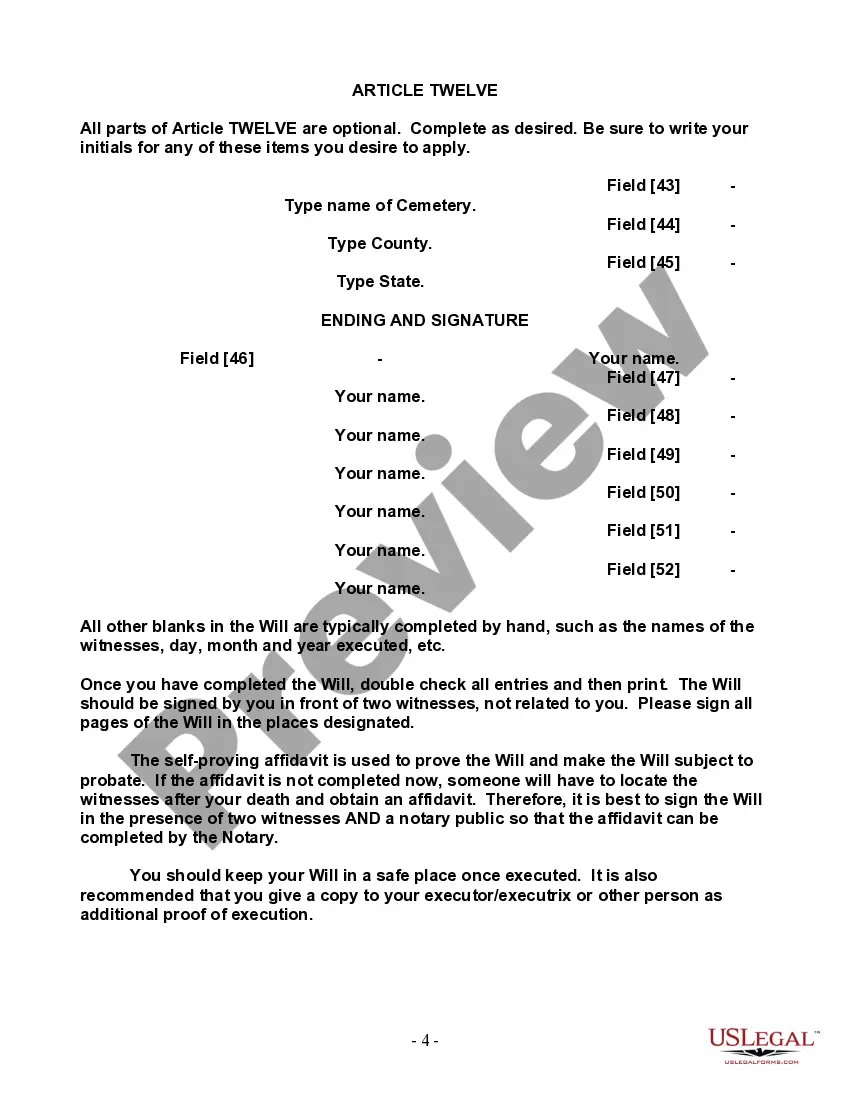
- Finalize the document by signing in front of two witnesses and a notary public if required, ensuring all signatures are in place.
Notarization guidance
Yes, this form must be notarized to be legally valid if it includes a self-proving affidavit. This can simplify the probate process by eliminating the need to find witnesses later. Consider taking advantage of US Legal Formsâ integrated online notarization service, which offers secure video calls with notaries, ensuring convenience and legality without needing to travel.
Get your form ready online
Our built-in tools help you complete, sign, share, and store your documents in one place.
Make edits, fill in missing information, and update formatting in US Legal Forms—just like you would in MS Word.
Download a copy, print it, send it by email, or mail it via USPS—whatever works best for your next step.
Sign and collect signatures with our SignNow integration. Send to multiple recipients, set reminders, and more. Go Premium to unlock E-Sign.
If this form requires notarization, complete it online through a secure video call—no need to meet a notary in person or wait for an appointment.
We protect your documents and personal data by following strict security and privacy standards.

Make edits, fill in missing information, and update formatting in US Legal Forms—just like you would in MS Word.

Download a copy, print it, send it by email, or mail it via USPS—whatever works best for your next step.

Sign and collect signatures with our SignNow integration. Send to multiple recipients, set reminders, and more. Go Premium to unlock E-Sign.

If this form requires notarization, complete it online through a secure video call—no need to meet a notary in person or wait for an appointment.

We protect your documents and personal data by following strict security and privacy standards.
Common mistakes to avoid
- Failing to accurately list all children or heirs can lead to disputes or unintentional disinheritance.
- Not naming a guardian for minor children may leave their care to a judgeâs discretion.
- Underestimating the importance of witnesses may invalidate the will if not legally formed.
- Neglecting to review or revise your will after significant life changes, like marriage or the birth of a child, can lead to outdated provisions.
Why use this form online
- Convenience of completing the form from home at your own pace.
- Ability to edit, save, and personalize the form easily according to specific needs.
- Access to legally drafted standard provisions tailored for single parents.
- Secure storage options to ensure your will is preserved safely until needed.
Main things to remember
- The Last Will and Testament for a Single Person with Minor Children outlines the distribution of assets and the appointment of guardianship for minor children.
- Using this form ensures that your wishes are documented clearly and legally.
- Complete the will with accurate details to avoid misinterpretations or disputes.
- Regularly review and update the will as life circumstances change.
Looking for another form?



Form popularity
FAQ
Yes, creating a Connecticut Last Will and Testament for a Single Person with Minor Children is essential, even if you have just one child. This document ensures that your child inherits your assets and provides clear instructions for their guardianship. Without a will, the state will decide how to distribute your property, which may not align with your wishes. By having a will, you can protect your child's future and provide peace of mind for yourself.
Yes, you can write your own will in Connecticut, but it must comply with state laws to be valid. A handwritten will, known as a holographic will, is acceptable if it meets specific requirements. Crafting a Connecticut Last Will and Testament for a Single Person with Minor Children on your own can come with challenges, which is why resources from US Legal Forms can provide the guidance you need to create a legally sound document.
Most wills in Connecticut need to go through probate, but there are exceptions. If the assets of the estate are below a certain threshold, it may be possible to avoid probate altogether. With a Connecticut Last Will and Testament for a Single Person with Minor Children, it's crucial to understand how your estate will be handled. US Legal Forms can assist you in navigating these processes to ensure a smooth transition for your loved ones.
To establish the validity of a will in Connecticut, you need to demonstrate that the document was properly signed and witnessed according to state law. The presence of two disinterested witnesses strengthens the case for a Connecticut Last Will and Testament for a Single Person with Minor Children. If there are any doubts, the probate court may require additional evidence. Utilizing tools from US Legal Forms can help in gathering necessary documentation and support.
A will is legal in Connecticut when it meets specific criteria. The individual creating the will must be at least 18 years old, of sound mind, and the document must be in writing. It's important to have two witnesses who are not beneficiaries to sign the will, solidifying its status as a valid Connecticut Last Will and Testament for a Single Person with Minor Children. Consulting with US Legal Forms can ensure you fulfill all these legalities properly.
In Connecticut, a will does not need to be notarized to be valid. However, adding a notarization can help streamline the process, especially when dealing with a Connecticut Last Will and Testament for a Single Person with Minor Children. By having witnesses sign your will, you strengthen its authenticity and reduce the chances of disputes. Consider using services from US Legal Forms to ensure all legal requirements are met.
In Connecticut, a handwritten will, also known as a holographic will, can be valid if it meets certain conditions. The will must be entirely in the handwriting of the person making it and should clearly state their intentions. However, using a Connecticut Last Will and Testament for a Single Person with Minor Children that follows legal guidelines is often a safer choice. Consider consulting resources like uslegalforms to ensure your will is properly crafted.
Yes, you can write your own will in Connecticut and have it notarized. However, it is important to ensure that the document meets all legal requirements to be considered valid. A Connecticut Last Will and Testament for a Single Person with Minor Children should clearly express your wishes regarding guardianship and asset distribution. If you're unsure, using a reliable platform like uslegalforms can help you draft a compliant will.
When a parent dies without a will in Connecticut, the law dictates how their estate is divided. Typically, minor children would inherit their parent's assets according to Connecticut's intestacy laws. This process can be lengthy and may not reflect the deceased parent's intended wishes. To avoid such complications, consider creating a Connecticut Last Will and Testament for a Single Person with Minor Children.
Yes, having a Connecticut Last Will and Testament for a Single Person with Minor Children is crucial once you have a child. A will allows you to designate guardians for your minor children and ensure your assets are distributed according to your wishes. Without a will, the state may determine how your assets and guardianship are handled, which may not align with your preferences. It is an important step to secure your children's future.