Connecticut Affidavit that designation of a standby guardian is in full force and effect
What this document covers
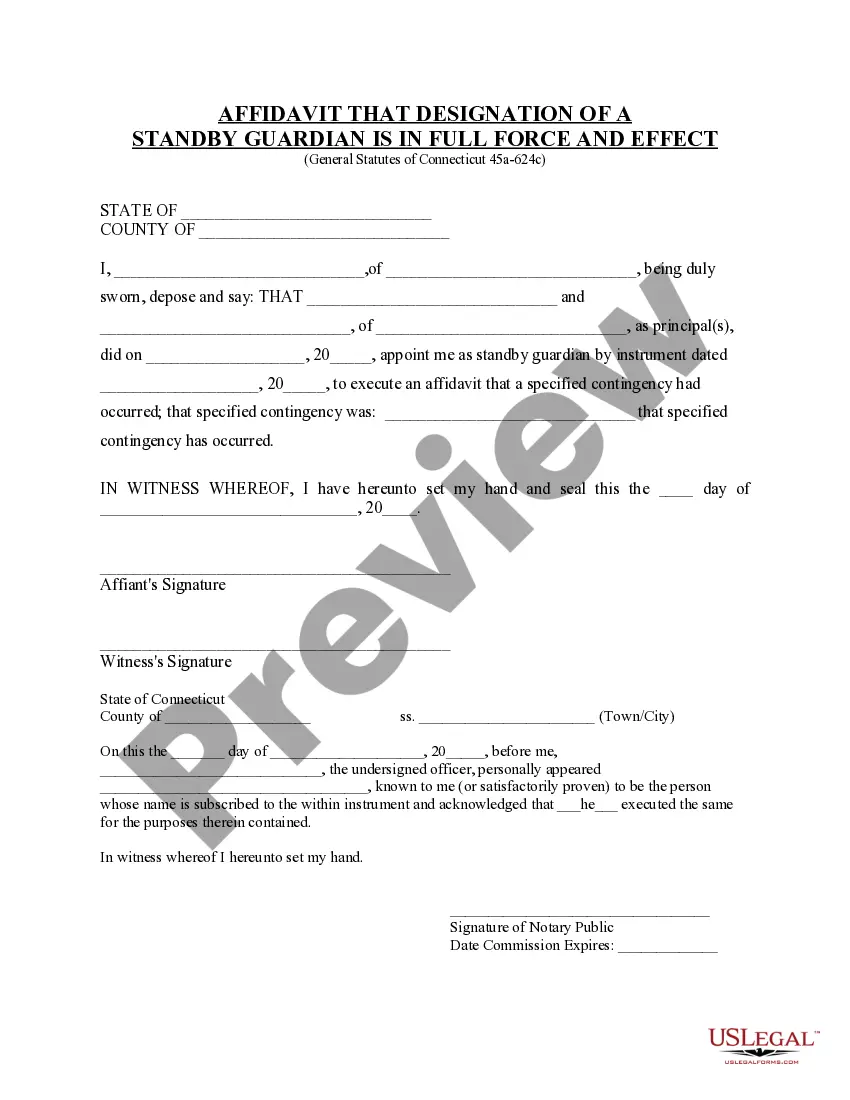
The Affidavit that designation of a standby guardian is in full force and effect is a legal document that confirms a standby guardian has been appointed and that the conditions required for this appointment have occurred. This affidavit serves to affirm that the previously established designation is currently valid, which is important in situations where a principal may undergo a contingency such as mental incapacity or death. This form differs from other guardianship documents in its focus on the acknowledgment of the occurrence of a specified event that activates the standby guardian's role.
What’s included in this form
- Identification of the affiant, who is the standby guardian.
- Details of the principal(s) who appointed the standby guardian.
- Date of the original appointment of the standby guardian.
- Specification of the contingency that has occurred, triggering this affidavit.
- Signatures of the affiant and a witness for validation.
- Notary public or court commissioner signature for legal acknowledgment.
Common use cases
This form is necessary when a principal has appointed a standby guardian and a specified contingency, such as their incapacitation or death, has occurred. The affidavit serves to activate the authority of the standby guardian. It is essential in situations where quick legal transitions of guardianship are required, ensuring that the guardian can promptly take over responsibilities without delays in legal validation.
Who should use this form
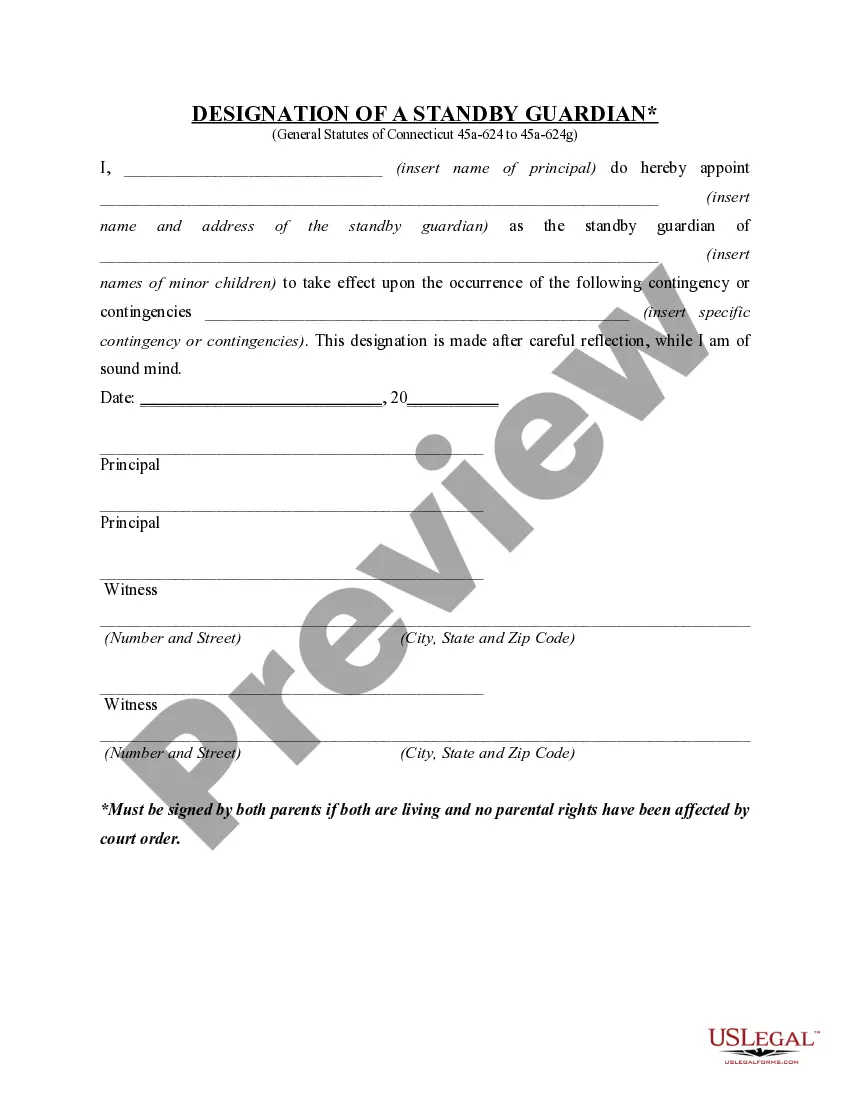
- Individuals who have appointed a standby guardian in their estate plan.
- Standby guardians seeking legal validation of their designation upon the occurrence of a specified contingency.
- Families facing a situation where the principal's ability to care for themselves is compromised.
How to prepare this document
- Identify yourself as the standby guardian at the top of the form.
- Input the full names and addresses of the principal(s) who designated you as guardian.
- Enter the date on which the original designation was made.
- Specify the contingency that has occurred, confirming it has taken place.
- Sign the affidavit and ensure a witness sign it as well.
- Have the document notarized or signed by a court commissioner to validate the affidavit legally.
Notarization requirements for this form
Yes, this form must be notarized to be legally valid. Notarization ensures that the signatures on the affidavit are verified and recognized by the law. You can utilize US Legal Formsâ integrated online notarization service, which offers 24/7 availability through secure video calls, ensuring your document is legally binding without the need to travel.
Get your form ready online
Our built-in tools help you complete, sign, share, and store your documents in one place.
Make edits, fill in missing information, and update formatting in US Legal Forms—just like you would in MS Word.
Download a copy, print it, send it by email, or mail it via USPS—whatever works best for your next step.
Sign and collect signatures with our SignNow integration. Send to multiple recipients, set reminders, and more. Go Premium to unlock E-Sign.
If this form requires notarization, complete it online through a secure video call—no need to meet a notary in person or wait for an appointment.
We protect your documents and personal data by following strict security and privacy standards.

Make edits, fill in missing information, and update formatting in US Legal Forms—just like you would in MS Word.

Download a copy, print it, send it by email, or mail it via USPS—whatever works best for your next step.

Sign and collect signatures with our SignNow integration. Send to multiple recipients, set reminders, and more. Go Premium to unlock E-Sign.

If this form requires notarization, complete it online through a secure video call—no need to meet a notary in person or wait for an appointment.

We protect your documents and personal data by following strict security and privacy standards.
Common mistakes
- Failing to accurately specify the contingency that has occurred.
- Omitting signatures from the affiant or the witness.
- Not having the document notarized when necessary.
- Using outdated versions of the form that may not comply with current laws.
Why use this form online
- Convenience of accessing and downloading the form from anywhere at any time.
- Editable format that allows users to fill in their details easily before printing.
- Reliability, as the document is drafted by licensed attorneys to ensure legal compliance.
What to keep in mind
- The affidavit confirms that the standby guardian designation is active after a specified contingency.
- It is essential for legal authority and clarity regarding guardianship arrangements.
- Complete the form diligently to avoid common errors, and ensure notarization for validity.
Looking for another form?

Form popularity
FAQ
A standby guardian has the authority to make important decisions regarding a child's care, education, and overall welfare, as specified in the Connecticut Affidavit that designation of a standby guardian is in full force and effect. These rights become applicable when the parents are incapacitated or unavailable. It's essential for parents to clearly outline the scope of these rights in the affidavit to prevent misunderstandings. Engaging with platforms like USLegalForms can simplify the process of setting up this vital legal documentation.
Standby guardianship begins when parents file a Connecticut Affidavit that designation of a standby guardian is in full force and effect, which outlines the designated person's responsibilities. This arrangement becomes effective if parents are unable to care for their child due to unforeseen circumstances, such as illness or unexpected absence. The standby guardian can access important decisions about the child's welfare, ensuring they remain safe and supported. Utilizing this legal provision provides parents with peace of mind.
A guardian is someone appointed by the court to care for a child when the parents are unable to do so. In contrast, a standby guardian is typically named by the parents themselves through a Connecticut Affidavit that designation of a standby guardian is in full force and effect, allowing them to step in when needed. This proactive arrangement ensures that children have a reliable caregiver available at critical times, without requiring court intervention for every situation. Knowing these distinctions helps ensure proper care for your children.
In Connecticut, guardianship can affect parental rights, depending on the situation. When a Connecticut Affidavit that designation of a standby guardian is in full force and effect, the standby guardian gains specific responsibilities for the child's well-being. However, parental rights do not disappear entirely unless the court issues a ruling that terminates them. It's crucial to understand the implications before establishing such arrangements.
An example of a type of guardianship is a limited guardianship, which restricts the guardian's authority to specific tasks or decisions. This approach allows for a tailored solution that fits individual needs without imposing broad powers. Understanding the choices in guardianship, including standby guardianship, is essential for effective planning.
An affidavit of guardianship is a legal document that outlines the authority granted to a guardian concerning a specific individual. This document is essential in formalizing the arrangement and ensuring that the guardian's rights and responsibilities are clear. Utilizing a Connecticut Affidavit that designation of a standby guardian is in full force and effect can streamline this process.
The designation of a standby guardian is a legal arrangement allowing a specified individual to assume guardianship duties temporarily when the primary guardian is unavailable. This designation can be formalized with a Connecticut Affidavit that designation of a standby guardian is in full force and effect, ensuring clarity and legality in the arrangement. This proactive measure can provide peace of mind for parents.
A better alternative to guardianship may be setting up a standby guardian designation or a power of attorney. These options often provide more flexibility and control without the need for a court-appointed guardian. A Connecticut Affidavit that designation of a standby guardian is in full force and effect can ensure that trusted individuals can make decisions without enduring the complexities of guardianship.
Guardianship in Connecticut involves a legal process where a court appoints a guardian to oversee the well-being of a minor or an incapacitated adult. The process generally requires filing a petition and demonstrating the need for guardianship. By understanding these steps, you can more effectively navigate the legal landscape surrounding guardianships, including those established through a Connecticut Affidavit.
In Connecticut, there are several types of guardianships, including standby guardianship, plenary guardianship, and limited guardianship. Each type addresses specific needs and situations, whether for minors or incapacitated adults. Knowing these distinctions is crucial, especially when navigating options in connection with a Connecticut Affidavit that designation of a standby guardian is in full force and effect.