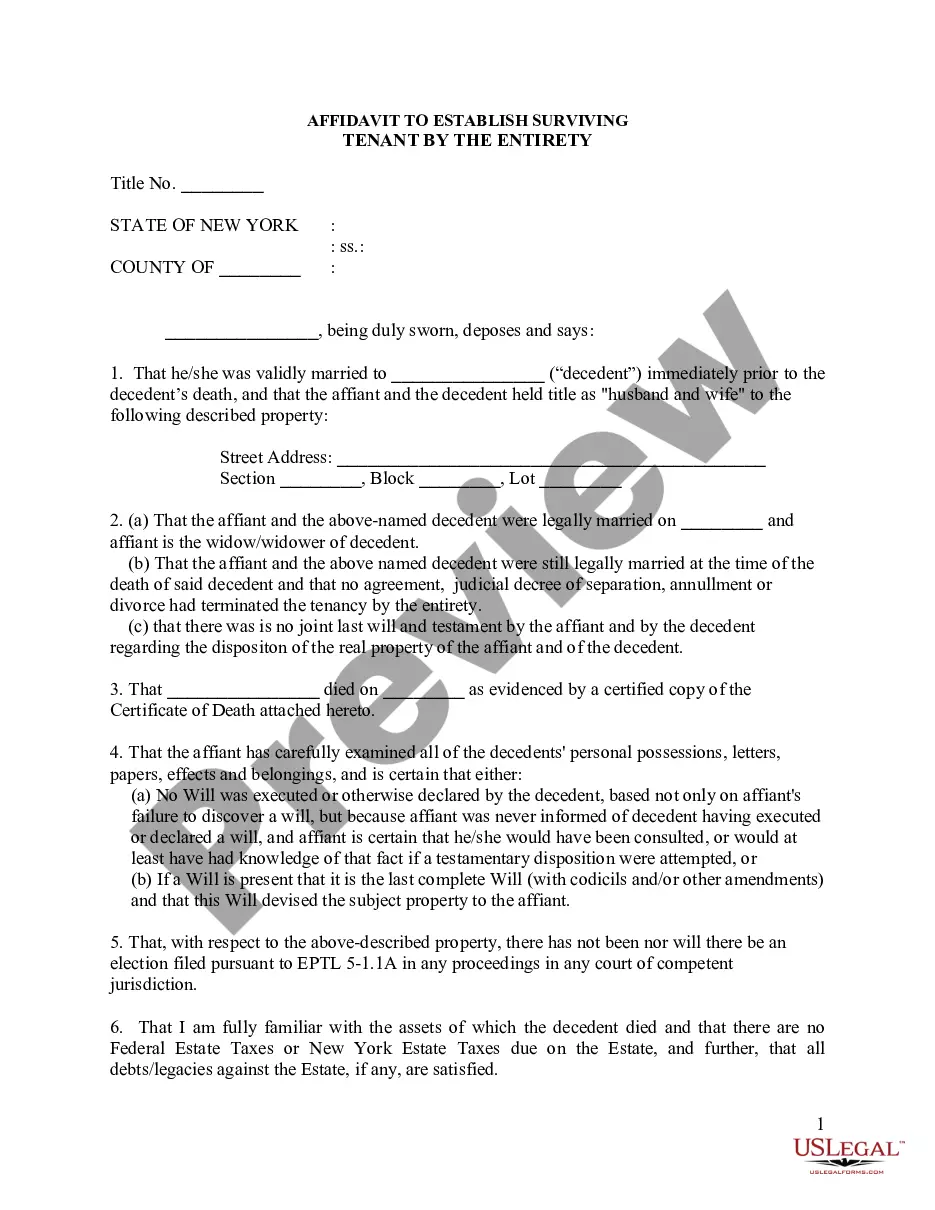
Connecticut Bill of Sale with Warranty for Corporate Seller
What this document covers
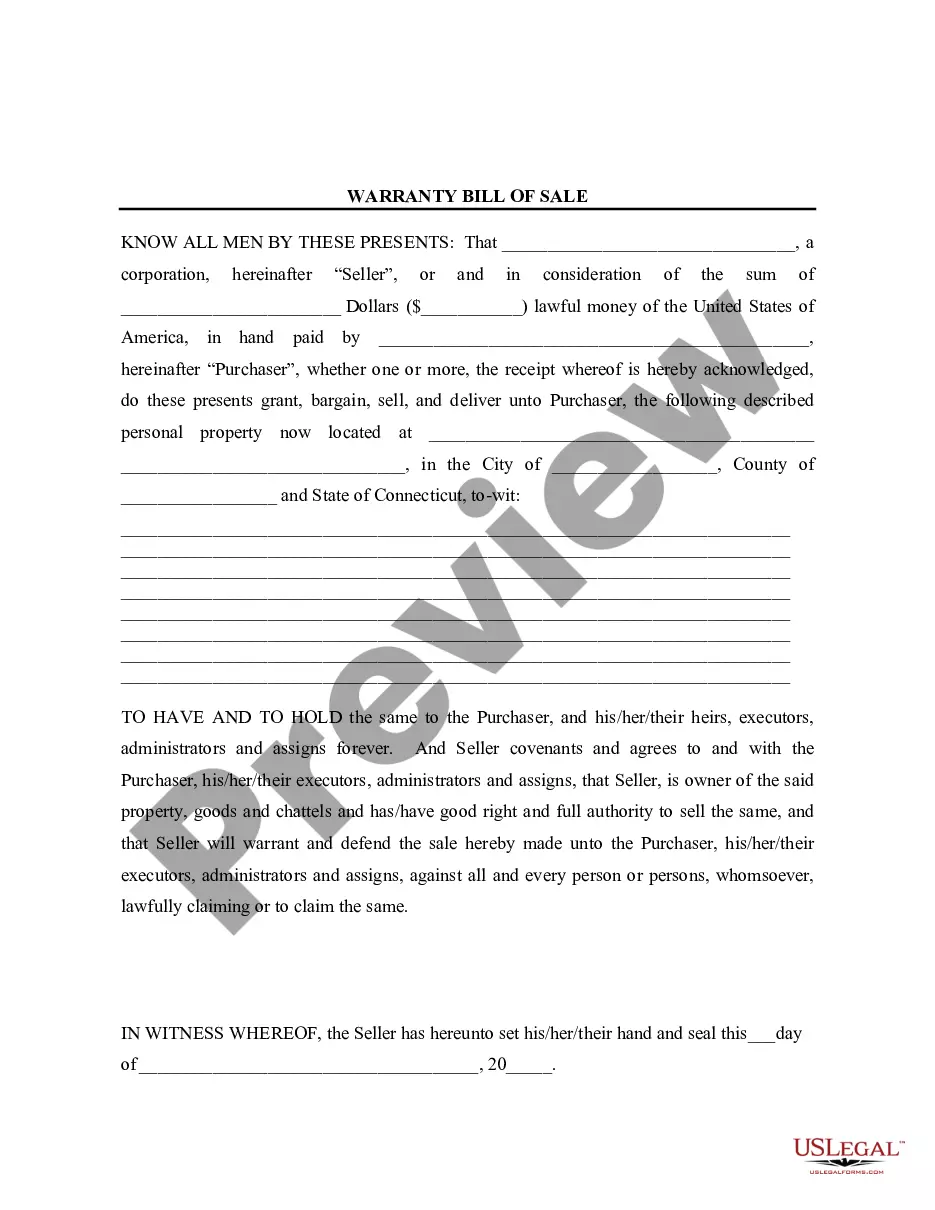
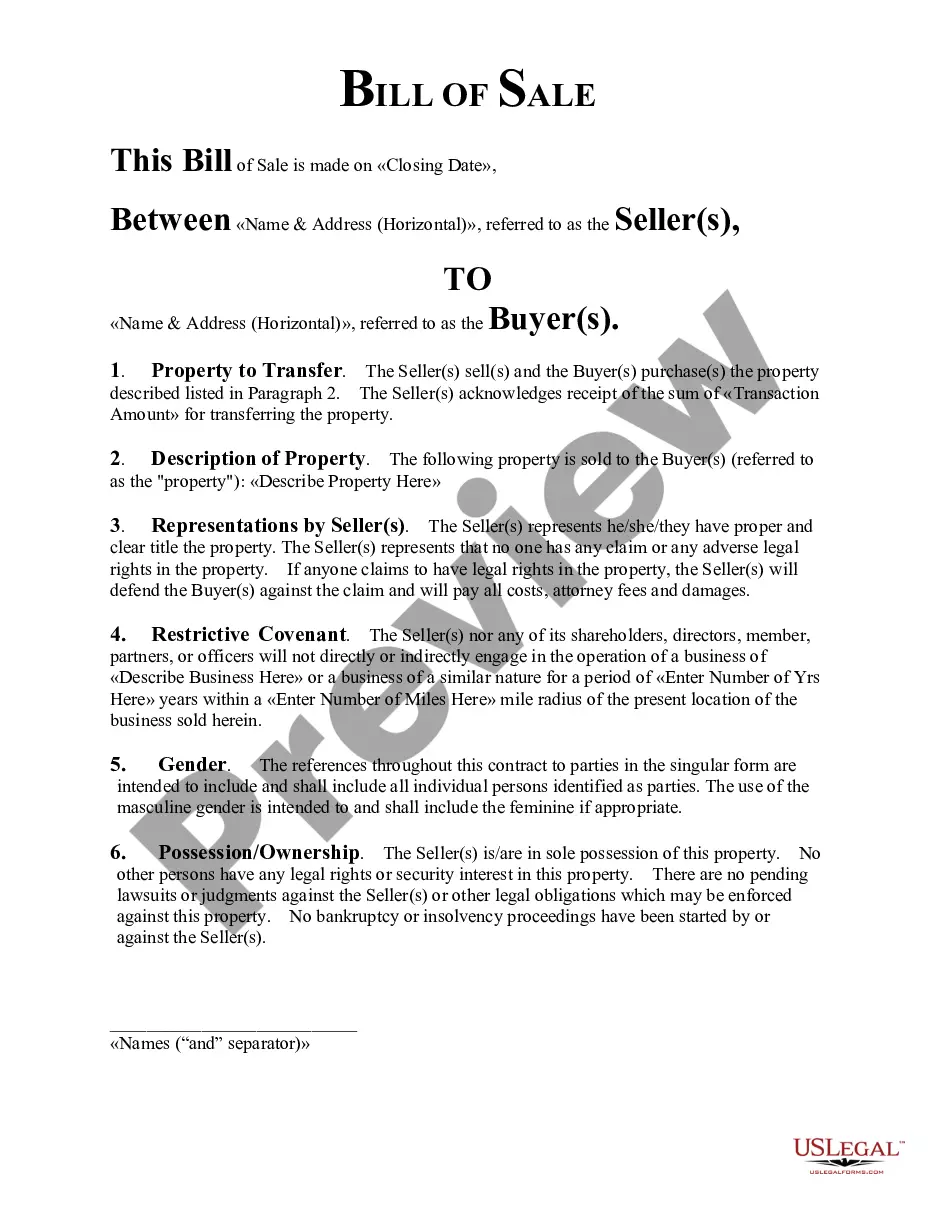
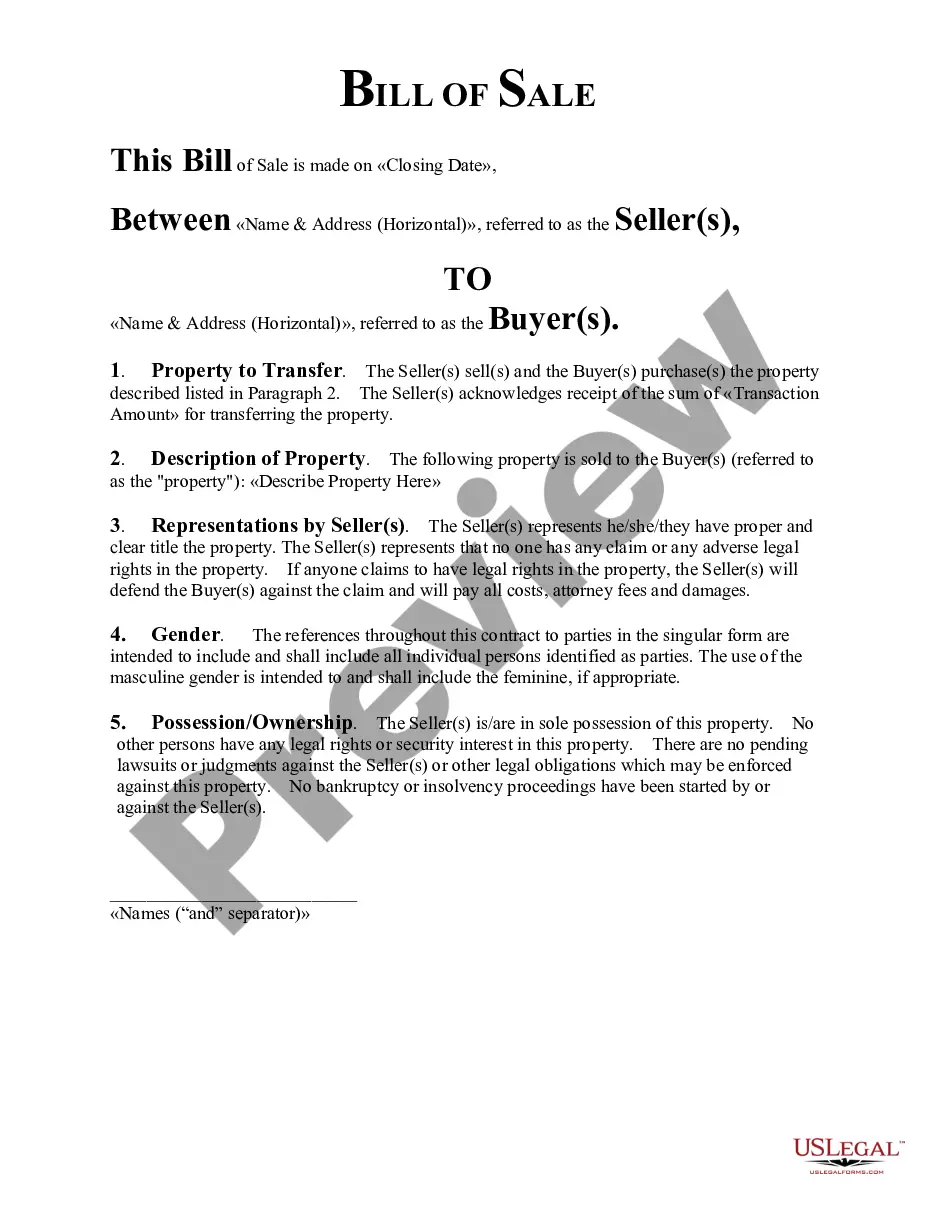
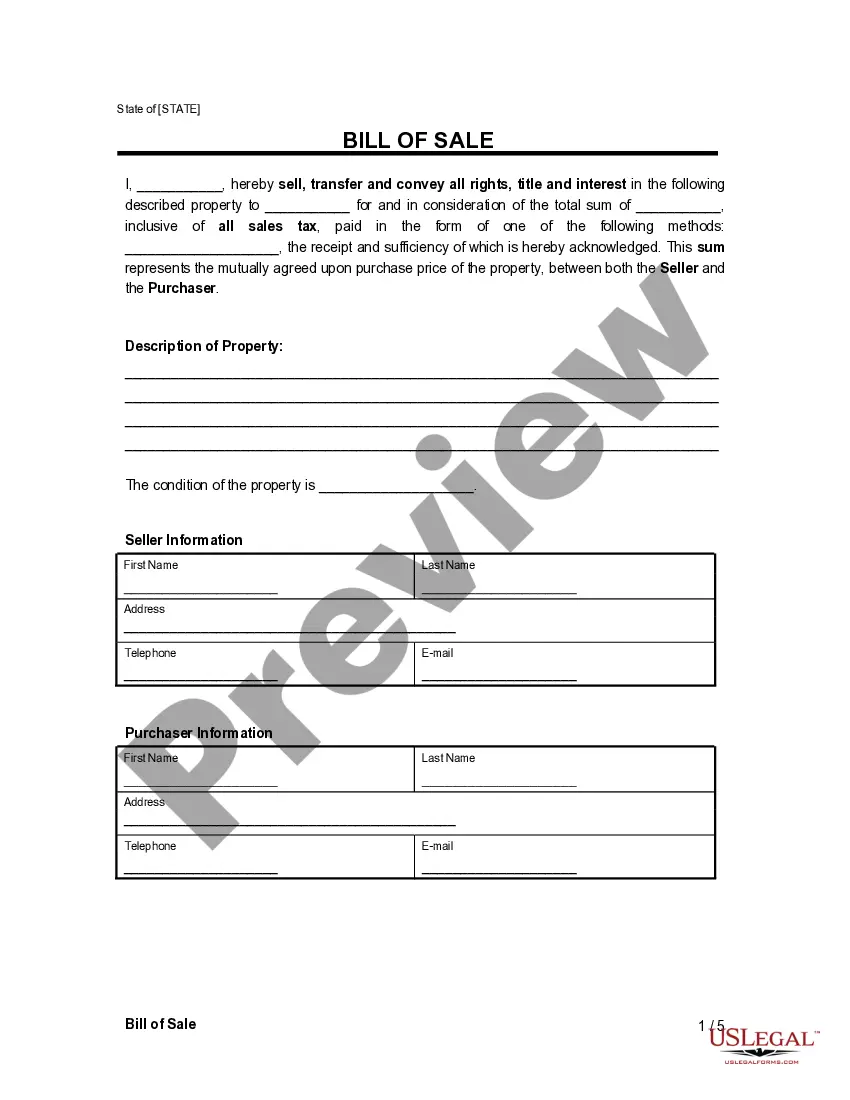
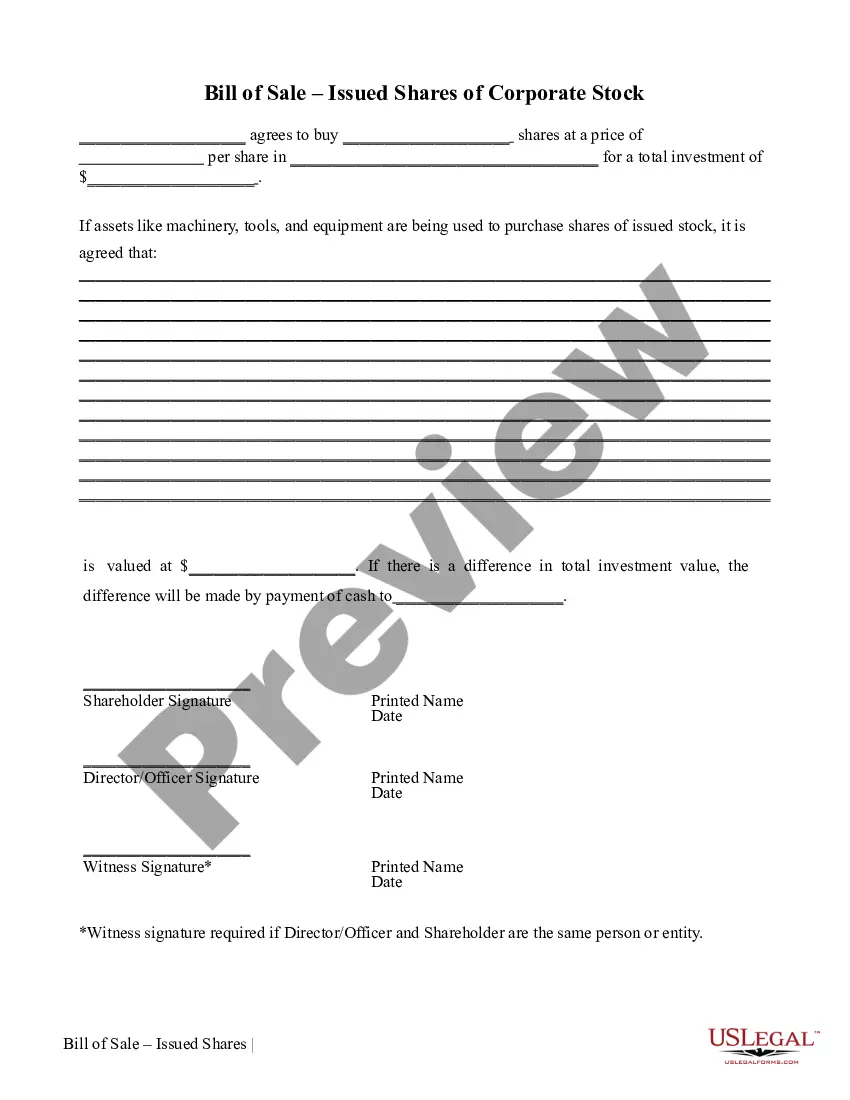
The Bill of Sale with Warranty for Corporate Seller is a legal document used when a corporation sells personal property to a buyer. This form provides a warranty conveyance, ensuring the buyer receives the right to the property, unlike a quitclaim conveyance that offers less protection. This bill of sale complies with applicable state laws, making it a reliable option for corporate transactions.
Key parts of this document
- Identification of the seller as a corporation and the buyer.
- Detailed description of the personal property being sold.
- The purchase price stated in dollars.
- Seller's warranty of ownership and authority to sell the property.
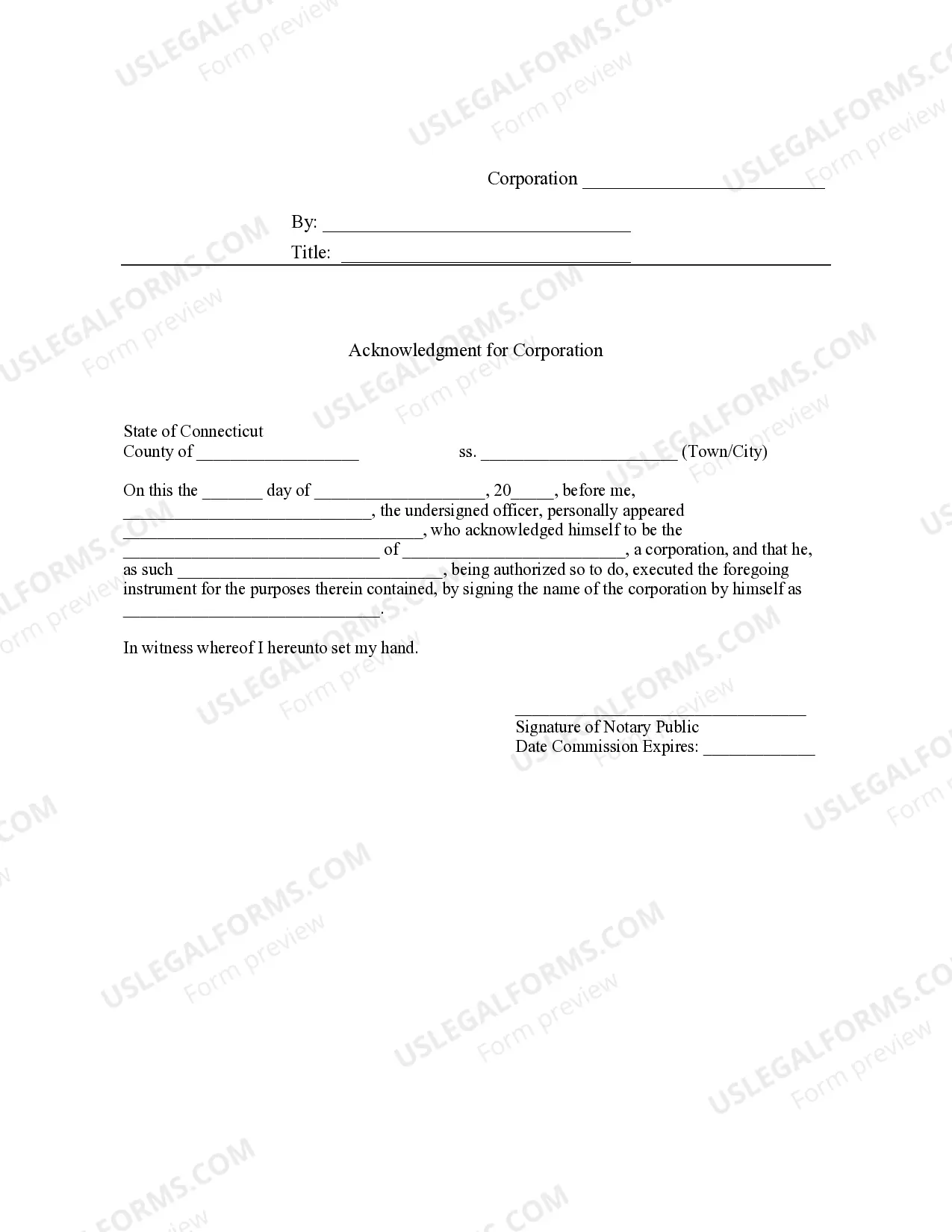
- Execution by a corporate officer and acknowledgment by a notary public.
Common use cases
This bill of sale should be used when a corporation transfers ownership of personal property to another party, particularly when a warranty is desired to protect the buyer from future claims to the property. It is particularly applicable in situations where significant assets are involved, such as equipment, vehicles, or intellectual property, allowing both parties to document the transaction and ensure legal compliance.
Who needs this form
- Corporations selling personal property.
- Buyers purchasing property from a corporate seller.
- Corporate officers designated to execute the sale.
- Legal representatives acting on behalf of a corporation.
How to complete this form
- Identify the parties involved: the selling corporation and the purchaser.
- Specify the property being sold, including all relevant details and location.
- Enter the purchase price in words and numerals.
- Have the corporate officer sign and date the document with their title.
- Include a notary acknowledgment to validate the transaction.
Notarization guidance
This document requires notarization to meet legal standards. US Legal Forms provides secure online notarization powered by Notarize, allowing you to complete the process through a verified video call, available 24/7.
Get your form ready online
Our built-in tools help you complete, sign, share, and store your documents in one place.
Make edits, fill in missing information, and update formatting in US Legal Forms—just like you would in MS Word.
Download a copy, print it, send it by email, or mail it via USPS—whatever works best for your next step.
Sign and collect signatures with our SignNow integration. Send to multiple recipients, set reminders, and more. Go Premium to unlock E-Sign.
If this form requires notarization, complete it online through a secure video call—no need to meet a notary in person or wait for an appointment.
We protect your documents and personal data by following strict security and privacy standards.

Make edits, fill in missing information, and update formatting in US Legal Forms—just like you would in MS Word.

Download a copy, print it, send it by email, or mail it via USPS—whatever works best for your next step.

Sign and collect signatures with our SignNow integration. Send to multiple recipients, set reminders, and more. Go Premium to unlock E-Sign.

If this form requires notarization, complete it online through a secure video call—no need to meet a notary in person or wait for an appointment.

We protect your documents and personal data by following strict security and privacy standards.
Mistakes to watch out for
- Failing to accurately describe the property being sold.
- Omitting the purchase price or providing inconsistent amounts.
- Not having the appropriate corporate officer sign the document.
- Neglecting to obtain notarization when required.
Why use this form online
- Convenience of downloading the form for immediate use.
- Editability allows customization for specific transactions.
- Reliability, as the forms are drafted by licensed attorneys.
Looking for another form?
Form popularity
FAQ
An example of a warranty disclaimer in the context of a Connecticut Bill of Sale with Warranty for Corporate Seller might state that the seller disclaims any and all express or implied warranties, including the implied warranty of merchantability. This means the seller is not responsible for issues that may arise after the sale. Buyers should carefully read these disclaimers to know their rights and responsibilities before completing the transaction.
A disclaimer of warranty on a bill of sale indicates that the seller does not guarantee the condition or performance of the item being sold. In the Connecticut Bill of Sale with Warranty for Corporate Seller, a disclaimer may state that the buyer accepts the item 'as is' without any assurances from the seller. This disclaimer can limit liability for the seller but also shifts risk onto the buyer. It is vital to understand these terms before finalizing a transaction.
Representations and warranties in a bill of sale affirm specific facts about the item being sold. In the case of the Connecticut Bill of Sale with Warranty for Corporate Seller, these statements might include details about the asset's condition and ownership status. By accepting these representations, buyers can make informed decisions while ensuring they have legal recourse if any issues arise. This adds a layer of security for both buyers and sellers.
A bill of sale with warranty of title is a legal document that conveys ownership of an asset, stating that the seller guarantees they have the right to sell that item. In the context of the Connecticut Bill of Sale with Warranty for Corporate Seller, this document protects buyers by ensuring that the seller has clear rights to transfer ownership. It also provides a safeguard against future legal claims on the property. This feature is essential when conducting business transactions.
Connecticut does not legally require a bill of sale for all transactions, but it strongly recommends one for clarity and record-keeping. When engaging in significant transactions, especially those involving corporate sellers, a Connecticut Bill of Sale with Warranty for Corporate Seller is highly beneficial. It protects both parties by providing documented proof of the transaction and details regarding the sale.
A notarized bill of sale is generally viewed as more credible in court because a notary public verifies the authenticity of the signatures. Utilizing a Connecticut Bill of Sale with Warranty for Corporate Seller and getting it notarized can further strengthen your position if disputes arise. Courts often favor documents that include notarization, making it a wise choice for corporate transactions.
Yes, you can use a handwritten bill of sale in Connecticut, as long as it clearly states the necessary details regarding the transaction. However, using a Connecticut Bill of Sale with Warranty for Corporate Seller can provide a more structured and legally sound option. It ensures that all terms are explicitly defined and reduces the risk of misunderstanding between parties.
A bill of sale may be deemed invalid for several reasons, including lack of signatures, incorrect or missing information, or if it does not comply with Connecticut state laws. For instance, improper dates or insufficient descriptions of the item could render the document unenforceable. When creating a Connecticut Bill of Sale with Warranty for Corporate Seller, ensure all details are accurate to avoid issues.
A bill of sale is a general document that records a transaction between a buyer and seller. Conversely, a warranty bill of sale provides additional assurances, explicitly detailing any guarantees about the item’s condition or ownership. If you are a corporate seller, utilizing a Connecticut Bill of Sale with Warranty for Corporate Seller helps clarify these terms and protects your interests.
To get your bill of sale notarized, bring your completed document to a notary public along with valid identification. The notary will verify your identity and witness your signature. If you are utilizing a Connecticut Bill of Sale with Warranty for Corporate Seller, ensure all parties are present during the notarization for it to be valid.